DD
MM
YYYY

PAGES

DD
MM
YYYY

spot_img

PAGES

Home Blog Page 39

U.S. Grants Samsung and SK Hynix One-year License To Ship Chipmaking Tools to China

0

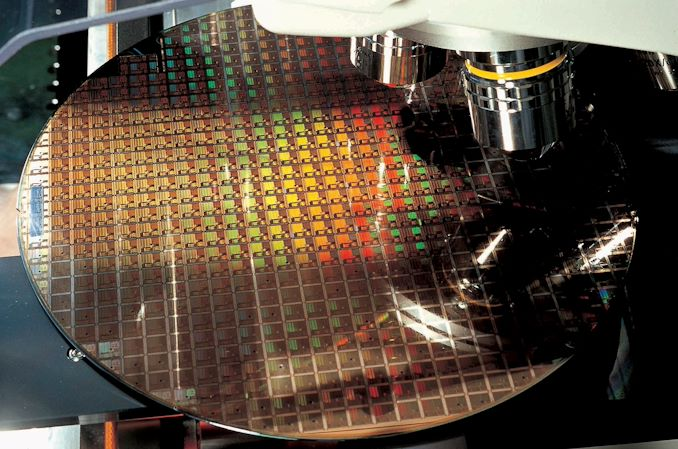
The U.S. government has granted Samsung Electronics and SK Hynix annual licenses allowing them to import American chip manufacturing equipment into their Chinese factories through 2026, offering limited relief to the South Korean chipmakers as Washington tightens its export control regime.

But the decision is believed to offer short-term operational certainty and signals a more restrictive and conditional phase in Washington’s technology policy toward Beijing.

According to people familiar with the matter who spoke to Reuters, the licenses follow Washington’s move earlier this year to revoke broad waivers that had allowed select global chipmakers to operate in China with minimal regulatory friction. Under the new system, approvals will be granted on a year-by-year basis, giving U.S. authorities greater leverage and oversight over the flow of sensitive semiconductor equipment into the country.

For Samsung and SK Hynix, the approval prevents an abrupt disruption to factories that play a crucial role in the global memory chip market. Both companies rely heavily on China as a production base for legacy memory chips, including DRAM and NAND, which are less advanced than cutting-edge logic chips but remain essential to smartphones, consumer electronics, and data centers. Demand for these products has surged alongside the rapid expansion of AI infrastructure, tightening supplies and lifting prices worldwide.

However, the shift away from the “validated end user” status represents a structural change rather than a temporary policy tweak. That privilege, which will expire on December 31, allowed firms such as Samsung, SK Hynix, and TSMC to import U.S.-origin tools without seeking case-by-case approval. Once it lapses, every shipment of American chipmaking equipment to their China facilities will require an export license, adding layers of uncertainty to routine operations such as tool replacement, capacity optimization, and yield improvements.

Industry executives and analysts say semiconductor manufacturing is uniquely sensitive to regulatory delays. Even mature-node fabs depend on a steady flow of spare parts, upgrades, and servicing tools to maintain efficiency. An annual approval regime means long-term investment decisions could increasingly hinge on geopolitical considerations rather than purely commercial logic.

The move also highlights the Trump administration’s effort to recalibrate U.S. export controls. Officials have been reviewing measures they believe did not go far enough in limiting China’s access to advanced American technology under the Biden administration. While the current licenses stop short of forcing South Korean firms to scale back their China operations, they reinforce a broader message that continued access to U.S. technology is conditional and revocable.

For South Korea, the issue carries economic and diplomatic weight. Samsung Electronics is the world’s largest memory chipmaker, while SK Hynix ranks second globally. Any prolonged disruption to their China operations could ripple through global supply chains and potentially inflate memory prices further, affecting downstream industries from smartphones to cloud computing.

At the same time, Washington appears keen to avoid an outright shock to the semiconductor ecosystem. Granting annual licenses allows the U.S. to tighten controls without immediately undermining allied firms or destabilizing markets. It also preserves negotiating leverage, giving regulators flexibility to adjust approvals based on evolving strategic priorities.

Looking ahead, analysts believe the licenses underscore a growing dilemma for global chipmakers: China remains too large and too deeply embedded in semiconductor supply chains to exit quickly, yet operating there now comes with rising political risk. For Samsung and SK Hynix, the one-year approvals buy time, but they also reinforce the need to diversify manufacturing footprints and reduce exposure to policy shifts.

SoftBank Completes $40bn OpenAI Bet, Cementing One of the Largest AI Investments in History

0

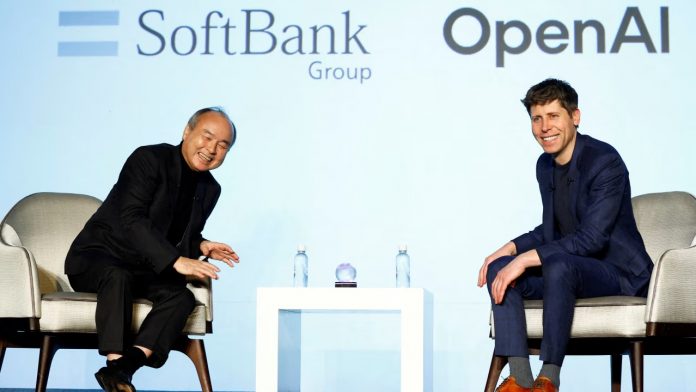
SoftBank has completed its sweeping $40 billion investment commitment to OpenAI, marking a defining moment in the global race to dominate artificial intelligence infrastructure and applications, sources familiar with the matter told CNBC.

According to people close to the transaction, the Japanese investment group transferred a final tranche of between $22 billion and $22.5 billion to the ChatGPT maker last week. The sources spoke on condition of anonymity because the details have not been publicly disclosed. Combined with earlier funding, the move lifts SoftBank’s total exposure to OpenAI above the $40 billion mark and gives the conglomerate a stake of more than 10% in the company.

SoftBank had previously invested $8 billion directly into OpenAI and syndicated an additional $10 billion alongside co-investors. CNBC reported in February that the group was finalizing the broader $40 billion investment at a pre-money valuation of about $260 billion, placing OpenAI among the most valuable private companies in the world, on par with the biggest names in global technology.

At the time, the funding was expected to be paid out over a 12- to 24-month period, with part of the capital earmarked for OpenAI’s expanding artificial intelligence infrastructure ambitions. That includes Stargate, a major joint venture involving OpenAI, Oracle, and SoftBank, designed to build massive computing capacity to meet soaring demand for advanced AI models.

The investment underscores the scale at which OpenAI is now operating. The company has committed more than $1.4 trillion in infrastructure spending over the coming years, according to CNBC, locking in long-term agreements with chipmakers including Nvidia, Advanced Micro Devices, and Broadcom. Those commitments reflect the enormous compute requirements of next-generation AI systems, as competition intensifies among tech giants and startups alike.

SoftBank’s move fits squarely within founder Masayoshi Son’s long-standing thesis that artificial intelligence will underpin the next phase of global economic growth. The group has a long history of bold technology bets and was an early investor in Nvidia, now one of the biggest beneficiaries of the AI boom. That relationship, however, has evolved. Last month, SoftBank liquidated its entire $5.8 billion stake in Nvidia, a decision that raised eyebrows given the chipmaker’s central role in AI computing.

A separate source familiar with the sale told CNBC that the Nvidia exit, along with other liquidity measures, was partly aimed at freeing up capital to support SoftBank’s massive OpenAI investment. This month, the conglomerate also agreed to pay $4 billion to acquire data center investment firm DigitalBridge, strengthening its control over the physical infrastructure required to power AI workloads.

For OpenAI, SoftBank’s backing adds to an already formidable roster of supporters. Microsoft remains a cornerstone investor and strategic partner, having poured billions into the company over several funding rounds. CNBC has also reported that OpenAI is exploring the possibility of securing more than $10 billion in additional funding from Amazon, further underscoring the intense competition among Big Tech firms to align themselves with the AI leader.

Beyond cloud and enterprise partnerships, OpenAI has been broadening its commercial reach. Disney recently invested $1 billion in the company, striking a deal that allows users of OpenAI’s video-generation tool Sora to create content featuring licensed characters such as Mickey Mouse. The agreement highlights how OpenAI’s technology is increasingly being woven into media, entertainment, and consumer-facing products.

The company is also widely expected to be laying the groundwork for a future initial public offering, though no timeline has been formally announced. If and when that happens, SoftBank’s $40 billion bet could become one of the most consequential wagers in its history, rivaling earlier high-profile investments that defined the group’s legacy.

The completed funding cements SoftBank’s position as one of OpenAI’s most influential backers, at least for now, and signals just how far investors are willing to go to secure a foothold in what many see as the most transformative technology wave of the century.

The Best New Year Resolution!

1

I do not believe in New Year resolutions. It is an illusion to think that flipping a digit, from 2025 to 2026, will magically deliver new outcomes when you have not examined, redesigned, and deepened what truly matters: your processes.

Good People, one of the greatest victories in life is the victory over time. Time is allocated equally to all of us, 24 hours a day. Yet even in its seeming abundance, time is the scarcest resource we have. Until you learn to win over time through better processes, your future will remain unresolved. So, forget grand New Year resolutions. Focus instead on fixing your daily and weekly non-optimal processes.

The richest among us spend money to save time; they fly. The poorest among us spend time to save money; they take the road. It is not just about transport; it is optimizing processes. In the same way, wealth builders convert money into capital; they invest. But the wishers want capital-like outcomes from money without conversion; they gamble, driven by a wager spirit. One group uses resources to compress time and compound value. The other trades time away and hopes for miracles.

Check carefully, process is the difference. How do we get better on processes? Consider this simple framework. Buy an exercise book or diary. Every Sunday night, take ten minutes to list the most important things you want to accomplish in the week. Then, each night before bed, or early each morning, write down the key tasks for the day. As the week unfolds, cross out what you complete. Then reflect: what worked, what did not, and how can you do it better next time? Keep optimizing. Keep refining. And track just two indicators: quality and speed.

In the professional world, those who thrive are not necessarily the smartest. They are the ones who can deliver high-quality outcomes in the shortest time. That is the edge. That is how careers rise. And that edge comes from process, not merely from brilliance. It is not about being the best graduating student in your class. Grades matter, yes, but what matters more is the process that produced those grades.

If you are naturally gifted and coast to an A, you may feel confident. But if that same talent leads you to a C because your process is weak and you refuse to change it, you could be in trouble. Compare that with someone who struggled, worked relentlessly, and still earned a C. That person has built tenacity and discipline into their process. And when that same effort is applied to other areas of life, results will follow. Yes, in the long run, process beats raw undeveloped talent.

At work, how can you beat deadlines while improving depth and clarity, signaling that you are ready for greater responsibility? Largely, when you resolve your processes, mountain-sized New Year resolutions become irrelevant. So as the year turns, I wish you a happy new one, but more importantly, I wish you a year where New Year resolutions become unnecessary, because every day, you are already resolving your processes. Indeed, make New Year resolutions unnecessary because you are resolved daily!

The Flow Blockchain Suffered a Security Exploit Resulting to $3.9M Losses

0

The Flow blockchain suffered a security exploit in its execution layer, allowing an attacker to mint unauthorized tokens including FLOW, wrapped BTC, ETH, and stablecoins and drain approximately $3.9 million in assets.

The funds were primarily bridged out via protocols like Celer, deBridge, Relay, and Stargate before validators coordinated a network halt to prevent further losses. Validators paused the chain and initially proposed a rollback reverting to a pre-exploit checkpoint, which would erase several hours of transactions.

This plan drew sharp criticism from ecosystem partners, including bridge operators like deBridge founder Alex Smirnov, who argued it was rushed, lacked coordination, and could cause greater harm—such as doubled balances for some users or unbacked assets on bridges—while undermining blockchain immutability and decentralization principles.

Revised Plan After Backlash

Following intense community and partner backlash, the Flow Foundation scrapped the rollback on December 29. Instead, it adopted an “isolated recovery plan”: Restart from the last sealed block before the halt, preserving legitimate transaction history.

Temporarily restrict accounts that received fraudulent tokens. Use independent forensics to verify illicit assets, then burn them on-chain via a validator-approved software upgrade.
Phased restoration: Non-EVM (Cadence) environment relaunched first, with EVM in read-only mode initially; over 99.9% of accounts unaffected.

The network has entered Phase 1 recovery, with validators deploying fixes and coordination ongoing. The incident triggered a sharp sell-off, with the $FLOW token dropping over 40% from ~$0.17 to as low as $0.09–$0.10, reflecting eroded confidence. Total value locked (TVL) briefly dipped but partially recovered.

This event highlights ongoing tensions in blockchain governance: balancing rapid crisis response with decentralization and immutability. While the revised approach avoids rewriting history, recovery of the stolen funds remains uncertain, depending on off-chain cooperation.

The Flow mainnet has successfully entered Phase 1 of recovery. The Cadence (non-EVM) environment is fully operational, with over 99.9% of accounts restored to normal functionality. The EVM layer remains in read-only mode, and a small number of accounts linked to fraudulent tokens are temporarily restricted.

Phase 2: remediation via token burns is ongoing expected 24-48 hours, followed by full EVM restoration and bridge resumptions. This phased approach minimizes disruptions for most users. Partial recovery occurred, but the token remains volatile and down significantly, reflecting immediate loss of confidence. TVL dipped ~31% before partial rebound.

The ~$3.9M stolen assets were bridged out mostly to Ethereum/Bitcoin and laundered via protocols like THORChain/Chainflip. Recovery is uncertain—freeze requests were sent to issuers/exchanges, but much has already moved off-chain.

The initial rollback proposal triggered backlash from bridge operators, like deBridge and community, accusing the team of poor coordination and risking decentralization. Scrapping it in favor of an “isolated recovery” targeted restrictions + burns via validator-approved upgrade preserved immutability and was praised by some analysts as a balanced response.

However, temporary admin-like powers like freezing accounts, burning tokens have drawn criticism as undermining decentralization principles, even if revocable and opt-in. Bridges, DEXs, and apps like NBA Top Shot users reporting issues faced temporary disruptions.

Better coordination in future crises could strengthen partnerships, but perceived centralization risks may deter developers or users seeking “pure” decentralization. The exploit exposed a vulnerability in the execution layer likely related to minting/proxy issues. A full post-mortem is promised within days.

This may lead to audits, bug bounties, and upgrades, but repeated incidents could slow growth in consumer-focused apps. This incident highlights tensions in blockchain crisis management: rapid action vs. immutability/decentralization.

Flow’s pivot to community feedback sets a positive example for responsive governance but raises questions about validator power in emergencies. Flow, built for consumer/NFT/DeFi scale by Dapper Labs, has struggled post-2021 hype. Amid 2025’s $3B+ hack wave, this could exacerbate challenges in attracting TVL/institutional interest if confidence lingers low.

Conversely, resilient recovery could demonstrate maturity. Its reinforces 2025 trends—rising exploits, bridge risks, and debates over rollbacks echoing past Ethereum discussions. May push regulators toward stricter accountability and networks toward proactive forensics/coordination tools.

While user funds were largely protected and the revised plan avoided worse outcomes, the event erodes short-term trust. Full recovery depends on transparent remediation, post-mortem insights, and sustained ecosystem activity. Flow’s consumer focus gives it resilience potential, but rebuilding momentum will be key.

Key Implications of Uniswap’s UNIfication and Fee Changes

0

Uniswap Labs has officially removed all interface fees previously charged on the Uniswap web app, mobile wallet, and API from their front-end products. This change took effect around December 27–29, 2025, as part of the “UNIfication” governance proposal execution.

The UNIfication proposal passed overwhelmingly on December 25, 2025— 99.9% approval. After a short timelock, on-chain execution included: Burning 100 million UNI tokens from the treasury worth ~$596M at the time.

Activating the long-awaited protocol fee switch often called the “back-end” or “backend” fees on Uniswap v2 pools and select high-volume v3 pools on Ethereum mainnet. A portion of trading fees now accrues to the protocol like 0.05% on v2, fractions on v3, which is used programmatically to burn more UNI over time.

Setting all Uniswap Labs front-end/interface fees to zero, shifting focus from app-layer monetization to protocol-level growth. Uniswap Labs announced this directly on X: December 27: “UNIfication has officially been executed onchain, Labs interface fees are set to zero…” December 28: “All interface fees have been set to zero across Uniswap apps and API”. December 29: Confirmation of no more interface fees.

This makes swapping on official Uniswap products completely fee-free at the interface level aside from gas and protocol/LP fees, while the newly activated protocol fees create deflationary pressure on UNI supply. The move aligns incentives toward protocol sustainability and has been positively received in the community, with UNI holding gains post-activation.

The removal of all interface fees on the Uniswap web app, mobile wallet, and API combined with the activation of protocol fees marks a pivotal shift in Uniswap’s economics, governance, and competitive positioning. This stems from the overwhelmingly approved UNIfication proposal executed on-chain.

For Users and Traders

Cheaper swapping on official Uniswap products: No more interface fees means swaps are effectively free at the front-end level only gas + LP/protocol fees apply. This reduces friction, encourages higher volume, and makes the official app/wallet more attractive vs. third-party aggregators.

Slightly higher costs in some pools: Protocol fees now take a cut like 0.05% on v2 pools, 1/4 or 1/6 on select v3 pools, but this is minimal and only on activated pools initially v2 all + high-volume v3 on Ethereum mainnet, covering 80–95% of fees. More user-friendly experience, potentially driving adoption and volume growth.

Deflationary pressure created: One-time burn of 100 million UNI ~$596M–$635M value, reducing supply by ~16%. Protocol fees flow into a mechanism that programmatically burns UNI via “TokenJar” and “Firepit” contracts. Unichain sequencer fees also contribute after costs.

Value accrual shift: UNI transitions from a pure governance token to one directly tied to protocol revenue and usage. Higher trading volume = more burns = potential scarcity-driven appreciation. Price impact so far: UNI surged 20–30% during/after voting but has stabilized around $5.90–$6.40 post-burn minor pullback from highs. Long-term bullish if volume sustains.

Reduced earnings in activated pools:v2: LP fees drop from 0.30% to 0.25% protocol takes 0.05%. v3 select pools: Protocol takes 1/4 (low-fee tiers) or 1/6 (higher tiers) of LP fees. Some LPs may migrate to non-fee pools, other DEXs, or v4 not yet activated if yields drop significantly. Community/governance will monitor and may adjust.

Uniswap’s dominant liquidity and brand may retain most LPs; higher overall volume from zero interface fees could boost total fees earned. Labs drops interface revenue previously ~$125M/year to focus on protocol growth. Funded by a new annual growth budget for development, integrations, and expansion.

Foundation teams transition to Labs for streamlined efforts like v4 hooks, Unichain, aggregators. Positions Uniswap as a “public good” at the front-end while capturing value sustainably at the protocol level. Aligns with DeFi maturity and reduced regulatory concerns.

Precedent for mature protocols: Shows DAOs can execute complex, value-accruing changes fee switches, burns after years of debate. Potential volume flywheel: Zero front-end fees + deflationary UNI could attract more traders/developers, increasing dominance.

Short-term LP outflows if fees deter providers; execution monitoring needed for adjustments. Analysts estimate ~$130M annual burn potential at current volumes. Positive reception: Community largely views this as aligning incentives for long-term sustainability, with UNI holding gains amid broader market conditions.

This makes Uniswap more accessible and user-focused while creating real economic utility for UNI through deflation. Early data shows burns already underway beyond the initial 100M. The true test will be sustained volume and LP retention in 2026.