DD
MM
YYYY

PAGES

DD
MM
YYYY

spot_img

PAGES

Home Blog Page 3905

Central Bank of Nigeria Lifts Ban on Cryptocurrency, Introduces Regulatory Framework

0

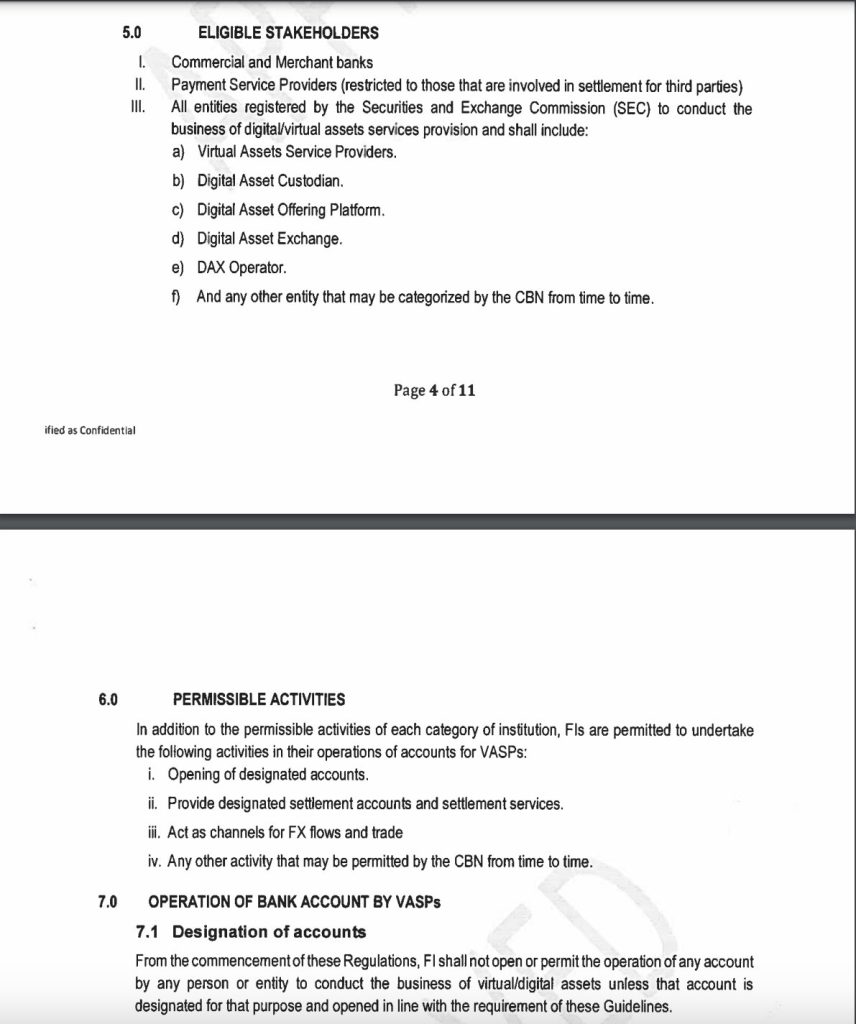
The Central Bank of Nigeria (CBN) has announced a monumental policy shift, effectively lifting its longstanding ban on cryptocurrency transactions within the country.

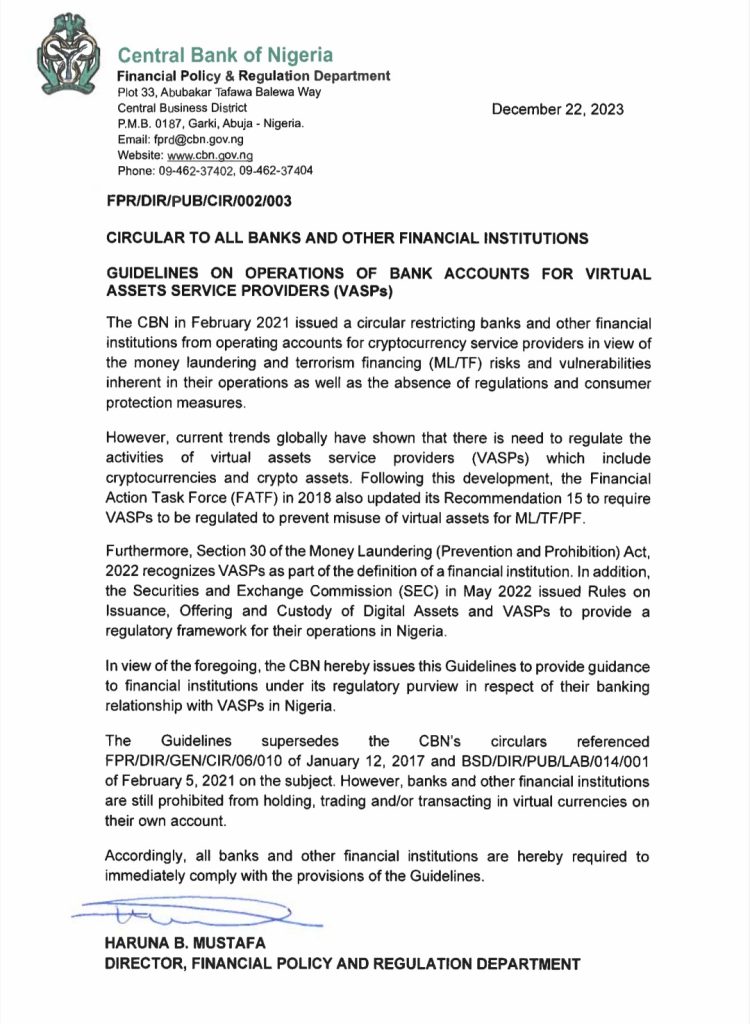
This move comes as the CBN introduces a regulatory framework, aimed at both managing the associated risks of virtual assets and leveraging their immense potential. The announcement surfaced through Circular FPR/DIR/PUB/CIR/002/003, signed by Haruna Mustapha, the CBN’s Director of Financial Policy and Regulation.

The circular underlines the necessity for regulated operations concerning Virtual Assets Service Providers (VASPs), encompassing cryptocurrencies and crypto assets. Global trends and international directives, particularly the Financial Action Task Force’s (FATF) Recommendation 15, acknowledge the imperative nature of regulating VASPs to curb financial crimes like money laundering and terrorism financing.

Moreover, the circular explicitly references Section 30 of the Money Laundering (Prevention and Prohibition) Act, 2022, recognizing VASPs as part of the financial institution definition. Additionally, it acknowledges the Securities and Exchange Commission’s (SEC) regulations unveiled in May 2022, which established a robust framework for digital asset issuance and VASPs operating in Nigeria.

The newly introduced guidelines within the circular supersede previous directives from the CBN. While maintaining the prohibition for banks and financial institutions from directly holding, trading, or transacting in virtual currencies for their accounts, the directive mandates immediate compliance with the new provisions outlined.

Haruna B. Mustapha, the Director of the Financial Policy and Regulation Department at the CBN, noted the pivotal role of these guidelines in fostering banking relationships between financial institutions and VASPs in Nigeria.

This significant decision represents a monumental departure from the CBN’s earlier stance on cryptocurrencies. Notably, in February 2021, the CBN mandated all banks in the nation to close accounts engaged in crypto-related transactions, citing the risks inherently associated with cryptocurrency transactions in reference to a 2017 cautionary circular on crypto issued by the bank.

Despite the Nigerian Security and Exchange Commission (SEC) acknowledging cryptocurrency as an asset and introducing regulations for digital asset issuance, the CBN had persistently maintained its ban, thereby impeding the full operationalization of the SEC’s guidelines.

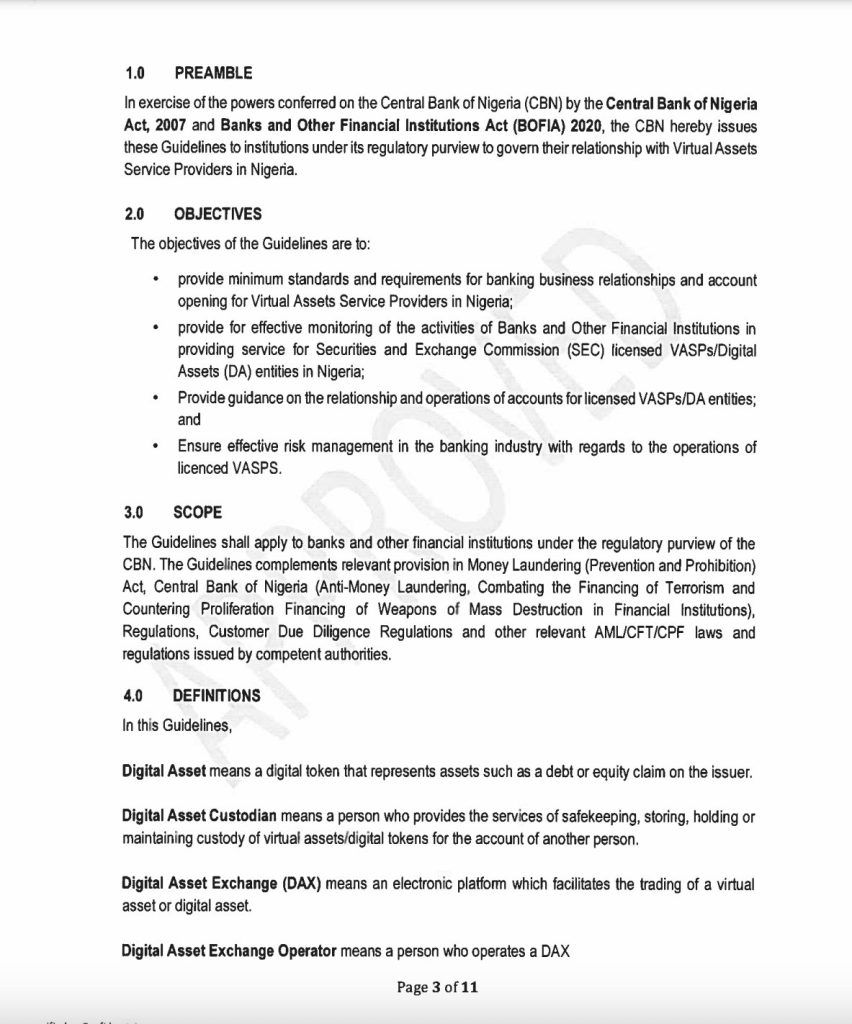
Under this new development, while banks and regulated financial institutions remain prohibited from directly engaging with cryptocurrencies, the circular opens avenues for crypto-native fintechs, possessing SEC authorization such as Virtual Assets Service Providers (VASPs) and Digital Assets Exchanges (DAX), to collaboratively enable fiat on-ramp and off-ramp solutions with banks and eligible financial institutions through the establishment of designated accounts.

This transformative step is expected to redefine Nigeria’s digital asset market, facilitating more structured and regulated crypto-related operations. It signifies a progressive bridging of the gap between traditional financial institutions and the burgeoning digital assets industry, marking a significant milestone in Nigeria’s financial evolution.
 

Still Waiting for Nigeria To Declassify the Lessons Learned from the Closure of Southern Land Borders

1

When the Nigerian government closed the southern land borders, I wrote that it was a very bad policy. I argued that closing the land borders because the Nigerian Customs was struggling with curtailing petrol smugglers was a bad strategy. Yes, they should have fired the workers,  and replaced them with people who were ready to do their work.

As the heat on why the border was closed intensified, the government shifted that it closed the border to stop the inflow of terrorists. Another nonsensical call since terrorists were not using legal entry points to enter Nigeria. Fellow Citizens, across all indicators, there was no single serious reason why Nigeria should have closed its land borders, considering the fact that Nigeria is the center of West Africa, and the economic fulcrum of the region. The Onitsha Main Market does not serve just Nigeria; it serves West Africa, as the largest open market in Africa on the  volume of trade.

When the land border problem ended, Onitsha, Ibadan, Ife, Aba and most markets in Lagos lost significant customers to other markets as Togo, Benin, and others rerouted their trading patterns. We’re yet to recover from that border policy; Morocco was rewarded and even applied to become a member of ECOWAS even though it was not geographically located in West Africa.

 I served on the Board of a logistics company and I knew the trading pattern; pre- and post-closure trading volumes were significant. And if you extrapolate, the Central Bank of Nigeria began to lose the ability to defend the Naira immediately the closure began. Look at the date and check the correlation.

Understand that Nigeria is an informal economy and many of our market indicators  are never captured in the government statistics. That explains why our stock market is worth about $50 billion when South Africa’s is close to $1 trillion. Nigeria does many things in the informal economy and that economy is BIG. Where am I going? The inflow of USD dollars through the land borders was significant, and when that stopped, reducing supply,  Naira paid the price via poor Naira positioning.

In the spirit of the recent disclosures, I am asking the federal government to share the Lessons Learned from that Land Border Closure. Sure, it has been reopened but I still want to understand the logic of that mindless economic policy where we intentionally disarmed and destroyed hundreds of light manufacturers whose markets were in our neighbouring countries.

In other words, I want to read what was achieved and not achieved, and what the nation could do to avoid mindless policies in the future. Largely, I am looking for any thesis why the nation could have done that, to begin with. If they have good points, I will write and commend them. Nigerian government: why did you close the southern land borders only to re-open them without any explanation?

Comment on Feed

Comment 1: You raise excellent points on the damaging economic impacts of the border closure, especially for small businesses and retailers reliant on cross-border trade. As an e-commerce consultant, I saw many Nigerian merchants struggle when trade flows were disrupted in the region.

Online sellers depending on customers from neighboring countries were severely affected. And as you mentioned, important informal trading channels were severed, restricting access to foreign currency critical for defending the Naira.
There is no doubt the policy created significant unintended consequences.

I hope the government does further analysis on the lessons learned and works to implement more targeted policies in the future that clamp down on smuggling without obstructing legal trade.

Thanks for sharing

Southeast Nigeria Development Commission Bill Passes Third Reading in the House of Representatives

0

The long-debated South-East Development Commission Bill successfully passed the third reading at the House of Representatives on Thursday, marking a historic moment after facing multiple rejections over the years.

Sponsored by the Deputy Speaker, Benjamin Kalu, alongside other lawmakers from the South East region, the bill’s explanatory memorandum outlines the commission’s crucial role in receiving and managing funds from the Federation Account. These funds are earmarked for the reconstruction and rehabilitation of roads, houses, and other infrastructure damaged during the civil war.

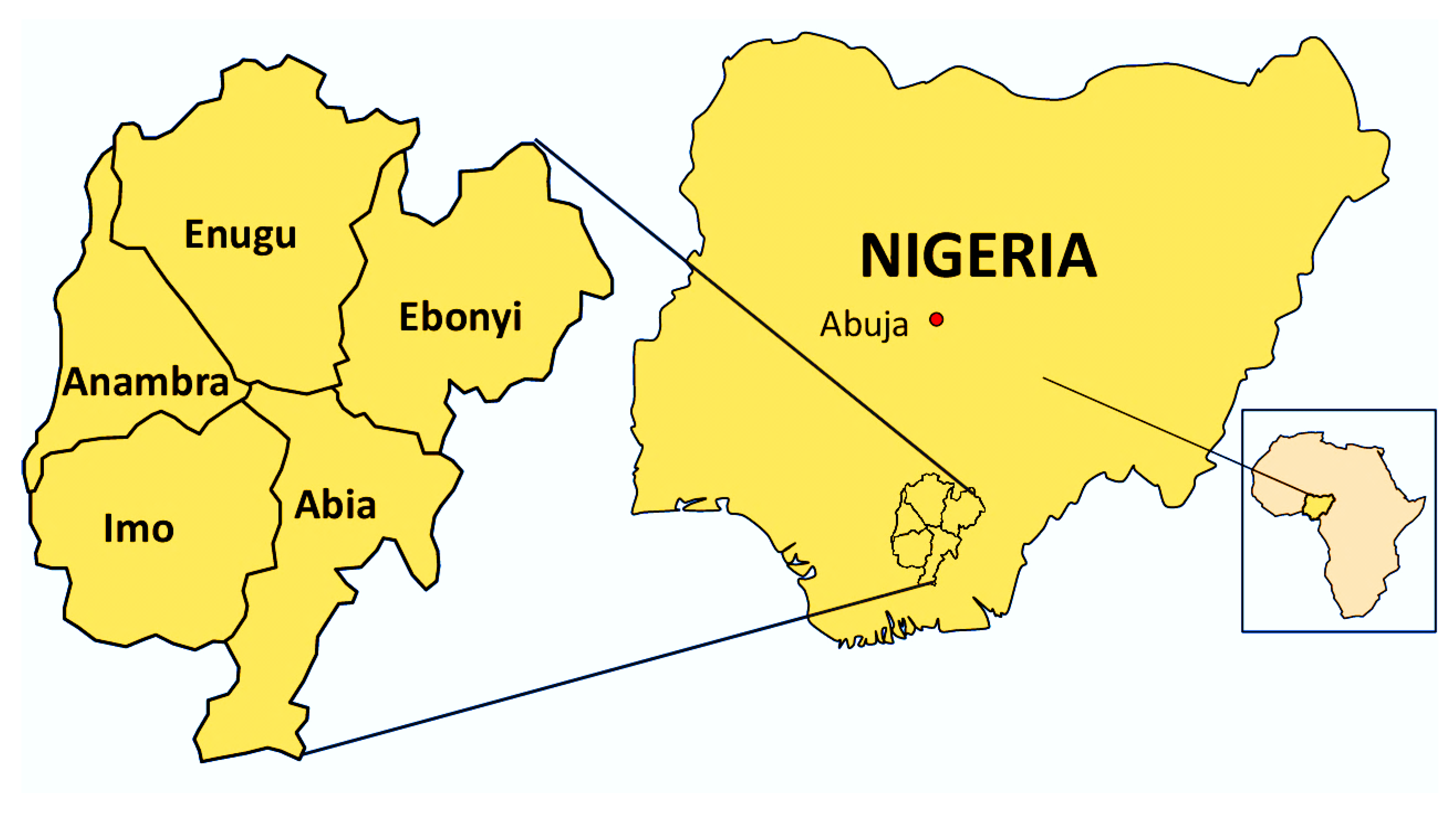
According to a statement from the Chief Press Secretary to the Deputy Speaker, Mr. Levinus Nwabughiogu, the commission, when established, will have the mandate to address not only the physical reconstruction but also ecological problems and other environmental or developmental challenges faced by the Southeast States—Abia, Imo, Enugu, Anambra, and Ebonyi.

“The passage of the bill is coming at a time members of the National Assembly from the region led by the Deputy Speaker are championing a new initiative known as Peace in South East Project,” the statement read.

This initiative seeks a non-kinetic approach to resolving socio-economic and sociological challenges while concurrently boosting the infrastructural development of the region.

The successful third reading of the bill now paves the way for it to move to the Senate for concurrence before being transmitted to President Bola Tinubu for his assent, ultimately transforming it into law.

Since the end of the Nigerian civil war in 1970, the development of the Southeast region through a regional development commission has remained a contentious issue. In 2017, The House of Representatives was thrown into a rowdy session, forcing a hasty adjournment of proceedings. The cause of the rowdiness was the rejection of a bill seeking to establish a South-East Development Commission.

The lawmakers had been debating the need for the Southeast geopolitical zone to have a commission to develop collapsed infrastructure and the damage suffered by the zone as a result of the Nigerian Civil War.

However, the bill failed at the session, which was presided over by the Speaker, Yakubu Dogara, after it had been debated. South-East lawmakers protested the decision because the House could have, at least, allowed the bill to pass the second reading for more views to be collated from Nigerians at a public hearing.

A similar bill to establish the North-East Development Commission had since been passed by the National Assembly and was hastily assented to by President Muhammadu Buhari.

The 2017 failed attempt to pass the bill in the House was proceeded by other failed attempts. Also, after the bill was passed by the Senate in 2018, it failed to scale opposition hurdles to become a law. Buhari was once accused of refusing to sign the bill into law.

With secession agitation, led by the Indigenous People of Biafra (IPOB), heightened in the Southeast since 2015 – calls to revisit the bill as a way of mitigating the tension and insecurity in the region have been on high.

The passage of this bill is believed to be signifying a crucial step towards addressing historical grievances, fostering development, and promoting peace in the South East region of Nigeria.

Is It Too Late To Buy Sei (SEI) And Bitget Token (BGB)? Experts Say This Rising Altcoin Has Greater Potential

0

Timing is of the essence when it comes to investing in cryptocurrencies. Since the crypto market is quite dynamic, investors need to be attentive, and ensure they do not miss any golden opportunity. Recently, Sei (SEI) and Bitget Token (BGB) gave significant returns to their investors.

However, you can get more profits by investing in a new project, Everlodge. This new project has become a hot asset due to its enormous growth potential. Therefore, investors are trying to lock their presale ELDG tokens as early as possible.

Sei (SEI) Hits A New All-time High

The Sei (SEI) community is on cloud nine as the network has reached its new all-time high. At the time of writing, Sei (SEI) is trading at $0.37. Notably, the market value of Sei (SEI) has pumped by around 54% in the past week.

The market cap of Sei (SEI) has also surged to more than $849 million, making it the 81st largest cryptocurrency. Analysts say that the rising trading volume of Sei has helped the price movement of SEI.

The data from Santiment shows that Sei’s (SEI) daily trading volume increased by 433% in 24 hours on December 19. Besides, the social volume of Sei (SEI) soared by 154% during the same period.

Bitget Token (BGB) Announces New Listings

Bitget Token (BGB) aims to increase the trading volume on its exchange through new listings. Recently, Bitget Token (BGB) announced that it will list JITO tokens built on Solana. Prior to that, Bitget Token (BGB) had announced the listing of SEAM tokens in its Launchpool. Through these measures, Bitget Token (BGB) aims to provide its users with more options and deeper liquidity.

These announcements have also helped Bitget Token (BGB) improve its standing on the price chart. During the previous seven days, the market value of Bitget Token (BGB) has increased by 35%. Therefore, the current trading price of Bitget Token (BGB) has reached $0.67.

Everlodge – Your Ticket To Vacation Property Investment

In recent years, the hospitality industry has exploded. An STR report suggests that there are more than 17.5 million guest rooms in over 187,000 hotels across the globe. Thus, the ongoing market trends suggest the industry will grow further. Hence, several investors are taking an interest in this sector. Everlodge, a new blockchain-powered property marketplace, has made this sector more appealing.

The platform mixes the concept of owning a holiday property, and the blockchain. It enables people to own a part of a luxury vacation stay for just $100. The platform will use NFT technology, and mint digital tokens against real-world properties. It will also break these digital tokens. Thus, lots of people can own part of the same property.

Notably, these digital tokens will have the backing of the real-world properties they represent. Thus, their prices will be immune to wild market fluctuations, and will go up as time passes. Additionally, the platform will partner with renowned hotels and realtors to add the best properties to its ecosystem.

Interestingly, the platform has taken preventive measures to avoid any pullouts. The project has locked the liquidity pool for 8 years, and team tokens for 2 years.

ELDG will serve as the native crypto of the project. The initial seven stages of its presale phase are sold out. Subsequently, the value of a token has reached $0.027. This is a 170% increase from its introductory price of $0.01.

Crypto experts are confident that the market value of the token will go up by 280% during the presale. Furthermore, it can skyrocket by 3000% once the tokens hit major exchanges like Uniswap.

Visit Everlodge

The Central Bank of Nigeria’s Fudge Factors to Destroy Nigeria’s Economy

0

In engineering, there is what they call a fudge factor (“a figure included in a calculation to account for some unquantified but significant phenomenon or to ensure a desired result”). And the factors are bad things across many domains of designs. It turns out that the financial engineering in the Central Bank of Nigeria (CBN) had many fudge factors.

Yes, I wrote here that many things the CBN was doing did not make sense. And it was surprising because it was largely the same team which stabilized the Naira around 2013 to early 2015. So, how could they have lost the exchange rate gravitational pull which was pulling Naira down?

Now, it seems that we have an answer: in the financial engineering of the Nigerian economy and the apex bank, the leaders introduced many fudge factors: “The report, titled ‘Report of the Special Investigation on CBN and Related Entities (Chargeable offences)’, delivered to President Tinubu on December 9, has exposed a labyrinth of financial misconduct allegedly perpetrated during the tenure of former CBN Governor, Godwin Emefiele.”

Those were part of the things which did not allow the Naira and the economy to balance. The pain here was the desired result was to destroy the economy of Nigeria and using those fudge factors, they executed the mission.

Good People, this is still early as Emefiele and the CBN did not operate alone. As I have said, the Nigerian economy does not obey the economic “laws” of Adam Smith and AO Lawal (he wrote a great secondary school economics textbook), and the reason that remains the case is that in our finance-first economy, we have many fudge factors structured to destroy Nigeria, by those tasked to lead and manage.

Comment on Feed

Comment: Ndubuisi Ekekwe You were a banker and now financial expert. We both worked in Diamond Bank. I cannot remember a time when an audit report was submitted to the management in respect of a person, team or business unit without the input of the entity concerned. How many of the personalities involved in this matter were invited for interrogation before a verdict was passed? How competent is the investigator in this matter? What was the basis for this investigation?

While not holding forth for the previous managers of the CBN (all government institutions in Nigeria are collectively a basket case) the fact, in my view, that the report did not give the people being interrogated/investigated the opportunity to defend themselves makes it incomplete.

As you have rightly pointed out, Nigeria economy does not respect even the simplest rule of economics and that is only because the mangers made it so. So far, the management of the Nigeria economy, nay the whole of its affairs, has been nothing short of brigandage.

My Response: unfortunately, there is no history of Nigeria and its central bank operating the way the private sector works. In EFCC, they arrest the person and then ask the person to give them the info to destroy the person. For this one though, the simple thing is always to refuse via a press release. Nigeria does not have a history of asking the accused for response because this is a political theater. Those accused can respond because that is how Nigeria operates, unfortunately.

Alleged Financial Mismanagement Rocks Nigeria’s Central Bank as Investigator’s Report Exposes High-Level Fraud