DD
MM
YYYY

PAGES

DD
MM
YYYY

spot_img

PAGES

Home Blog Page 3911

Volkswagen Plans to launch ChatGPT in its cars by 2025 as Boeing Shares dips after Plane Window Blowout

0

Volkswagen, the German automaker, has announced that it will equip its future vehicles with ChatGPT, a conversational artificial intelligence system that can interact with drivers and passengers. ChatGPT, developed by OpenAI, is a deep learning model that can generate natural language responses based on the context and the user’s input. Volkswagen claims that ChatGPT will enhance the driving experience by providing information, entertainment, and assistance.

According to Volkswagen, ChatGPT will be integrated with the car’s infotainment system, navigation system, and voice control system. Drivers and passengers will be able to access ChatGPT through a touch screen, a microphone, or a steering wheel button.

ChatGPT will be able to answer questions about the car’s features, functions, and status, as well as provide directions, traffic updates, weather forecasts, and nearby points of interest. ChatGPT will also be able to play music, podcasts, audiobooks, and games based on the user’s preferences and mood.

Volkswagen says that ChatGPT will not only be a smart assistant, but also a friendly companion. ChatGPT will be able to engage in casual conversations, tell jokes, stories, and trivia, and even generate original content such as poems, lyrics, and code.

ChatGPT will also be able to adapt to the user’s personality, style, and feedback, and learn from their interactions over time. Volkswagen hopes that ChatGPT will make driving more enjoyable, relaxing, and safe.

Volkswagen plans to launch ChatGPT in its cars by 2025. The company says that it will ensure that ChatGPT respects the user’s privacy and data protection rights, and that it complies with the ethical and legal standards of each market. Volkswagen also says that it will monitor and update ChatGPT regularly to improve its performance and quality.

Volkswagen is putting ChatGPT in its cars to create a new generation of smart and connected vehicles. The company believes that ChatGPT will revolutionize the way people interact with their cars and with each other. Volkswagen invites its customers to join them in this exciting journey of innovation and discovery.

Boeing Shares dips after Plane Window Blowout

The aviation giant Boeing faced another setback on Monday, when one of its 787 Dreamliner jets had to make an emergency landing in Japan due to a window blowout. The incident, which occurred on a flight from Tokyo to San Francisco, caused no injuries but sparked panic among the passengers and crew.

The window blowout was the latest in a series of problems that have plagued the 787 Dreamliner, which is Boeing’s most advanced and fuel-efficient aircraft. The plane has been grounded several times in the past due to issues with its batteries, engines, software and wiring.

The latest incident also came at a time when Boeing is struggling to recover from the fallout of two fatal crashes involving its 737 Max jets, which killed 346 people and led to a global grounding of the model. Boeing has been facing lawsuits, investigations and regulatory scrutiny over its handling of the 737 Max crisis, as well as delays in delivering new orders.

Boeing’s shares fell by 4.3% on Monday, wiping out $9 billion from its market value. Analysts said the window blowout could further damage Boeing’s reputation and customer confidence, as well as increase its costs and liabilities.

“Boeing is already under immense pressure from the 737 Max debacle, and this new incident adds to its woes,” said Richard Aboulafia, an aviation analyst at Teal Group. “The 787 Dreamliner is supposed to be Boeing’s flagship product, but it has been plagued by reliability issues since its launch. This could hurt Boeing’s sales and profits in the long run.”

Boeing said it was aware of the incident and was working with the airline and the authorities to determine the cause. It also said it was confident in the safety and performance of the 787 Dreamliner, which has flown more than 1.3 billion passengers since 2011.

“We are committed to providing the highest quality products and services to our customers,” Boeing said in a statement. “We are working closely with our customers and suppliers to ensure that our fleet meets the highest standards of safety and reliability.”

One of the factors that may affect Boeing’s recovery is its production rate. According to Statista, Boeing delivered 480 aircraft in 2022, up from 340 in 2021. However, this is still far below its peak of 806 deliveries in 2018. How many planes does Boeing make per year? This is a question that many investors and analysts are asking, as it reflects Boeing’s ability to meet the demand for its products and generate revenue.

Access Bank Completes Acquisition of Atlas Mara Zambia, Marking New Milestone in African Banking

0

Access Bank Zambia Limited (Access Bank) proudly announced the successful culmination of its acquisition of African Banking Corporation Zambia Limited, rebranded as Atlas Mara Zambia (Atlas Mara).

With the attainment of all requisite regulatory approvals, this acquisition solidifies Atlas Mara as a wholly-owned subsidiary of Access Bank Zambia, marking a significant stride in the realm of African banking.

In an official statement, Access Bank affirmed its commitment to maintain separate operations until the seamless integration processes are finalized. This strategic maneuver propels the combined entities towards a vision of ascending to the upper echelons of Zambia’s banking industry, aspiring to secure a position among the top five banks by revenue, with an ambitious target to claim a top-three spot by 2027.

Roosevelt Ogbonna, the astute Managing Director/Chief Executive Officer of Access Bank Plc, hailed this acquisition as a monumental milestone. “This marks a significant milestone for Access Bank Plc as we work towards achieving our vision of being the world’s most respected African bank,” he said.

Ogbonna reiterated the bank’s commitment to synergizing the strengths, heritage, and shared values of both entities to usher in extensive opportunities for stakeholders in Zambia and the broader Southern African Development Community (SADC) region.

“We are poised for success by harmonizing the robust brands, rich heritage, shared values, and best practices of both companies in creating opportunities that extend to all our stakeholders in Zambia and the SADC region,” he added.

Lishala Situmbeko, the visionary CEO of Access Bank Zambia, echoed Ogbonna’s sentiments, noting the transaction’s closure as a pivotal moment for the banking sector. Situmbeko articulated the potential of synergizing operational and cultural strengths, a fusion aimed at benefiting all stakeholders while contributing significantly to Zambia’s economic resurgence.

“We look forward to leveraging the operational and cultural strengths of both businesses to benefit all stakeholders. As we continue to finalize the alignment of our products and services, we will ensure that our customers continue to enjoy the benefits of the broader product suite in the future,” he said.

Upon integration, customers will gain access to an expansive network comprising over 60 branches, 5 cash centers, 8 agencies, more than 5,300 Tenga Express Agents, and an extensive network of over 240 ATMs across Zambia. Corporate clients stand to benefit from an amplified balance sheet, an expanded international footprint and augmented access to diverse financial services that include trade finance, treasury offerings, and seamless international payments.

Access Bank’s notable presence in pivotal trade corridors connecting Africa with diverse global markets, including the United Kingdom, UAE, China, Lebanon, France, Hong Kong, and India, underlines promising prospects for stakeholders seeking amplified international opportunities.

Bobbline Cheembela, the astute Acting Managing Director of Atlas Mara, highlighted the tremendous potential unlocked by joining forces with Access Bank.

“Atlas Mara’s expansive network and contribution to the public sector and capability in global markets and treasury, combined with Access Bank’s focus on SMEs and making trade finance, treasury, and corporate lending expertise available to Zambian MNCs and SMEs has not only created an industry leader, but a champion for our country.

“We now have a better rounded and more comprehensive skill set available to us as a combined business and this enables us to better serve our customers and other stakeholders.”

“Ultimately, we want to continue to deliver a holistic service offering that benefits our customers from a shared focus on financial inclusion and digital banking” Situmbeko noted.

The collaboration aims to deliver comprehensive services with a shared emphasis on financial inclusion and digital banking, striving to provide a holistic service suite aligned with the evolving needs of the Zambian market.

This acquisition signifies a pivotal juncture in Zambia’s banking industry, poised to drive sustainable growth and usher in innovative strides in the country’s financial sector, setting the stage for a transformative era in African banking.

Key trends and issues that shape the US labor market in 2020 and beyond

0

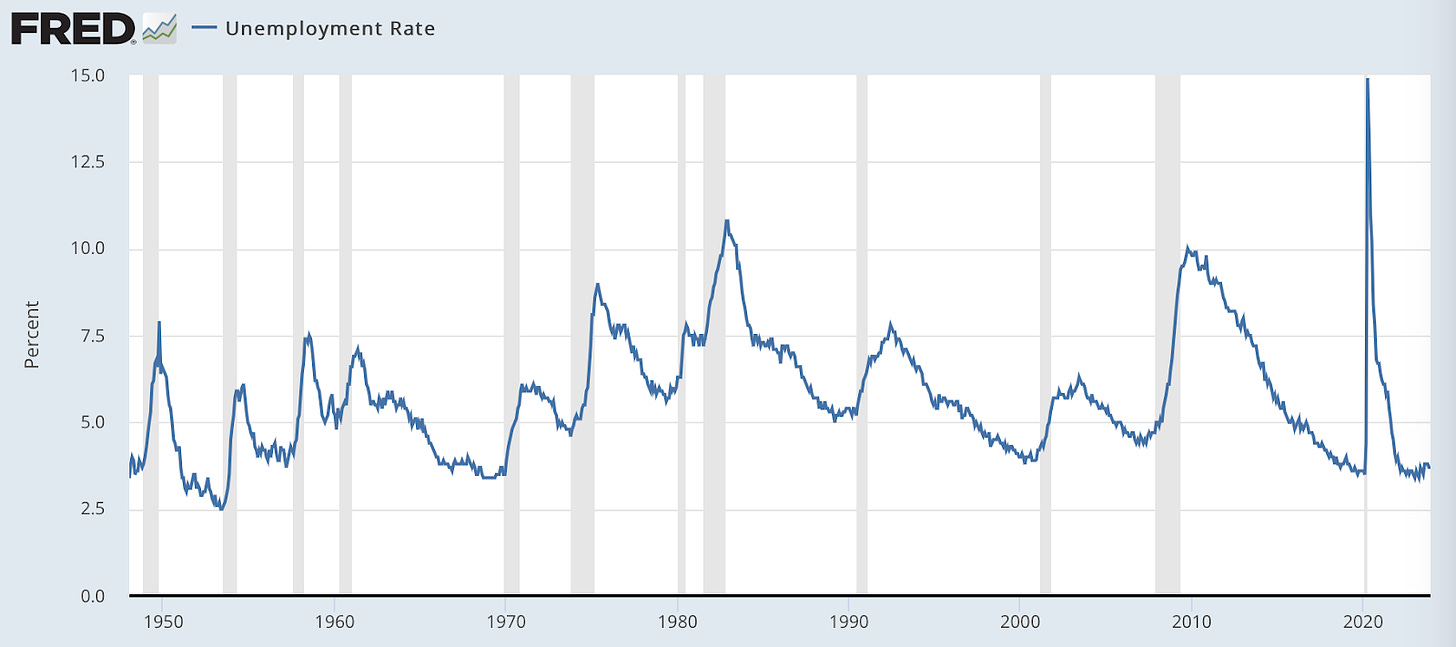
One year ago, the US economy was booming, with a record-low unemployment rate of 3.5%. Many analysts predicted that the trend would continue, as the country enjoyed a period of stability and growth. However, things changed dramatically in the past 12 months, as the world faced an unprecedented crisis that disrupted every aspect of life.

The pandemic, the lockdowns, the social unrest, the political turmoil, and the environmental disasters all took a toll on the US economy, forcing millions of people to lose their jobs or face reduced hours and income. Despite the efforts of the government and the Federal Reserve to provide stimulus and relief, the unemployment rate soared to 14.8% in April 2020, the highest level since the Great Depression.

Since then, the situation has improved somewhat, as some sectors of the economy have reopened and recovered. The latest data from the Bureau of Labor Statistics shows that the unemployment rate in December 2023 was 3.7%, down from 6.7% in November. This is a remarkable achievement, considering the magnitude of the shock that hit the economy.

However, it is still higher than the pre-pandemic level, and there are still many challenges and uncertainties ahead. The labor market is not fully healed, and many workers are still struggling to find jobs or make ends meet. The recovery is uneven and fragile, and depends on many factors, such as the speed and effectiveness of the vaccination campaign, the evolution of the virus and its variants, the fiscal and monetary policy responses, and the consumer and business confidence.

Trend 1: Remote work is here to stay.

One of the most visible and profound impacts of the pandemic on the US labor market was the widespread shift to remote work. According to a Pew Research Center survey, about 71% of workers who could work from home did so most or all of the time in December 2020, up from 20% before the pandemic.

While some workers may return to their offices as the health situation improves, many employers and employees have embraced the benefits of remote work, such as increased flexibility, productivity, and cost savings.

A PwC survey found that 83% of employers said the shift to remote work was successful for their company, and 55% of employees said they would prefer to work remotely at least three days a week after the pandemic.

Trend 2: Automation and digitalization are reshaping jobs and skills.
Another major trend that has been accelerated by the pandemic is the adoption of automation and digitalization technologies, such as artificial intelligence, robotics, cloud computing, and e-commerce. These technologies have enabled businesses to operate more efficiently, resiliently, and competitively in the face of uncertainty and disruption.

However, they have also created challenges for workers, as some jobs may become obsolete or require new skills. According to a McKinsey report, about 17 million workers in the US may need to change occupations by 2030 due to automation and digitalization. Moreover, workers across all occupations will need to upgrade their digital skills, as well as their social and emotional skills, such as creativity, communication, and collaboration.

Trend 3: Diversity, equity, and inclusion are becoming more important.

The third trend that is shaping the US labor market is the growing awareness and demand for diversity, equity, and inclusion (DEI) in the workplace. The social justice movements of 2020, such as Black Lives Matter and Me Too, have highlighted the persistent inequalities and discrimination faced by marginalized groups in society and in the labor market.

According to a Glassdoor survey, 76% of employees and job seekers said that a diverse workforce was important to them when evaluating companies and job offers. Moreover, research has shown that diverse teams can enhance innovation, performance, and customer satisfaction. Therefore, employers who want to attract and retain talent, as well as improve their reputation and profitability, need to invest in DEI initiatives and practices.

These are some of the key trends and issues that shape the US labor market in 2020 and beyond. They pose both opportunities and challenges for workers and employers alike. To succeed in this dynamic environment, both parties need to adapt to the changing needs and expectations of each other, as well as leverage the potential of new technologies and new ways of working.

Prices are deflating and interest rates are falling

The economic outlook for the new year is bright, according to the latest data from the Bureau of Labor Statistics and the Federal Reserve. Prices are deflating, employment is rising, interest rates are falling, and consumer confidence is soaring. These are all signs of a healthy and robust economy that is poised for growth and prosperity.

I will analyze the main factors behind this positive trend and what it means for businesses and consumers. I will also discuss some of the challenges and risks that could derail the recovery and how to prepare for them.

First, let’s look at the inflation rate, which measures the change in the average level of prices of goods and services over time. Inflation can erode the purchasing power of money and reduce the real value of wages and savings. It can also distort the signals that prices send to producers and consumers, leading to inefficient allocation of resources and lower economic growth.

The inflation rate in December 2023 was -0.1%, meaning that prices actually fell slightly compared to a year ago. This is the first time since 2015 that the inflation rate has turned negative, and it reflects a combination of factors such as lower energy costs, increased competition, and technological innovation. A moderate amount of deflation can be beneficial for the economy, as it increases the real income of consumers and lowers the cost of production for businesses.

However, too much deflation can also be harmful, as it can create a downward spiral of falling prices, lower profits, reduced output, and higher unemployment. This can lead to a deflationary trap, where people postpone spending and investment in anticipation of further price declines, which in turn reduces aggregate demand and pushes prices down even more. This is what happened during the Great Depression of the 1930s and the Great Recession of 2008-2009.

To avoid this scenario, the Federal Reserve has been pursuing an expansionary monetary policy, which aims to increase the money supply and lower interest rates in order to stimulate spending and borrowing. The Fed has kept its benchmark interest rate near zero since March 2020, when the coronavirus pandemic hit the economy hard. It has also been buying large amounts of government bonds and other securities to inject liquidity into the financial system and support credit markets.

The Fed’s policy has been effective in preventing a deflationary spiral and boosting economic activity. The low interest rates have made borrowing cheaper for households and businesses, which has increased their spending power and investment opportunities. The low interest rates have also encouraged investors to seek higher returns in riskier assets such as stocks, which has supported the stock market rally.

The Fed has also signaled that it will keep its accommodative stance until the economy reaches its goals of maximum employment and stable inflation around 2%. The Fed expects that these conditions will be met by late 2024 or early 2025, which means that interest rates will remain low for a while longer.

The low interest rates have also contributed to another positive indicator: the unemployment rate, which measures the percentage of people who are actively looking for work but cannot find a job. The unemployment rate in December 2023 was 3.9%, down from 6.7% a year ago and from a peak of 14.8% in April 2020. This is the lowest level since September 2019, before the pandemic started.

The decline in unemployment reflects the strong recovery of the labor market, which has added 19.4 million jobs since May 2020, more than offsetting the 22.4 million jobs lost between February and April 2020. The job gains have been broad-based across sectors and regions, with especially strong growth in leisure and hospitality, retail trade, professional and business services, education and health services, and construction.

The improvement in employment has also boosted consumer confidence, which measures how optimistic or pessimistic people are about their current and future economic situation. Consumer confidence in December 2023 was 113.8, up from 88.6 a year ago and from a low of 85.7 in April 2020. This is the highest level since August 2019, before the trade war with China escalated.

Consumer confidence is important for the economy because it influences how much people spend on goods and services, which accounts for about two-thirds of GDP. Higher consumer confidence means that people are more willing to spend their income and savings on discretionary items such as travel, entertainment, clothing, and durable goods. This increases aggregate demand and stimulates economic growth.

The economy is in good shape as we enter 2024, thanks to a combination of factors such as deflation, low interest rates, high employment, and high consumer confidence. These are all positive signs for businesses and consumers alike.

Some of these include.

The emergence of new variants of COVID-19 that could evade vaccines and cause new outbreaks and lockdowns. The possibility of inflationary pressures arising from supply chain disruptions, labor shortages, higher commodity prices, and excess demand. The potential for financial instability and asset bubbles resulting from excessive risk-taking and leverage in the markets.

The uncertainty and volatility associated with the upcoming midterm elections and the geopolitical tensions with China, Russia, Iran, and North Korea.

What is a Solar Storm and why is it dangerous?

0

The year 2024 may bring a major challenge for our civilization: a massive solar storm that could knock out the power grid for months. This is not a science fiction scenario, but a realistic possibility based on scientific evidence and historical precedents.

A solar storm, also known as a coronal mass ejection (CME), is a huge burst of plasma and magnetic fields from the sun that travels through space at speeds of up to several million miles per hour. When a CME hits the Earth’s magnetosphere, it can cause geomagnetic disturbances that affect the electric currents in the atmosphere and on the ground.

A severe solar storm can damage or destroy satellites, communication systems, navigation systems, and power grids. The most famous example of such an event is the Carrington Event of 1859, which caused widespread telegraph failures and auroras visible as far as the Caribbean. A similar event today would have much more devastating consequences, as our society relies heavily on electricity and technology.

According to a 2008 report by the National Academy of Sciences, a severe solar storm could cause up to $2 trillion in damages and take up to 10 years to recover from. The report estimated that about 130 million people in the US alone could lose power for months or years. The economic and social impacts would be enormous, affecting everything from food production and distribution to health care, education, transportation, and security.

How likely is a severe solar storm in 2024?

The sun goes through cycles of activity that last about 11 years. During the peak of each cycle, known as the solar maximum, the sun produces more sunspots, flares, and CMEs. The next solar maximum is expected to occur around 2024-2025, which means that the risk of a severe solar storm is higher during that period.

However, predicting the exact timing and intensity of a solar storm is very difficult, as there are many factors involved. Some scientists have suggested that the next solar cycle could be weaker than average, while others have warned that it could be stronger than expected. There is also a possibility that a rogue CME could occur at any time, regardless of the solar cycle. Therefore, it is important to be prepared for any scenario, as the consequences of being unprepared could be catastrophic.

How to prepare for a solar storm?

There are several steps that businesses and individuals can take to reduce the impact of a solar storm and increase their resilience. Here are some of them:

Have a backup power source: A generator, solar panels, batteries, or other alternative energy sources can provide electricity in case of a grid failure. Make sure to have enough fuel or storage capacity to last for several weeks or months.

Have an emergency kit: A basic emergency kit should include water, food, medicine, flashlight, radio, first aid kit, and other essential items. Store enough supplies for at least two weeks per person.

Have a communication plan: A landline phone, ham radio, satellite phone, or other communication devices can help you stay in touch with your family, friends, and colleagues in case of a network outage. Have a list of emergency contacts and backup options.

Protect your electronics: A surge protector, a Faraday cage, or other shielding devices can protect your electronics from damage caused by electromagnetic pulses (EMP). Unplug your devices when not in use and store them in a safe place.

Have a contingency plan: A contingency plan should outline how you will cope with various scenarios such as loss of power, water, communication, transportation, or income. Identify your priorities, risks, resources, and alternatives. Review and update your plan regularly.

Stay informed: Monitor the space weather forecasts and alerts from reliable sources such as NOAA’s Space Weather Prediction Center (SWPC) or NASA’s Solar Dynamics Observatory (SDO). Follow the instructions from local authorities in case of an emergency.

A massive solar storm in 2024 may be inevitable, but it does not have to be disastrous. By taking proactive measures to prepare for it, you can minimize its impact on your life and business and increase your chances of survival and recovery.

Nigeria Must Fix Its Vocational Education to Advance Economic Development

1

The biggest latent opportunity in the African informal economy is building a grassroot of makers and builders through a world-class vocational program. Around 1976, the Ovim Community League (OCL) conceived a secondary school,  and named it Secondary Technical School Ovim, my alma mater. The plan was to provide pathways to train and develop young people who could pursue both vocational and professional careers.

As early as the 1980s, the school was offering courses on Woodwork Technology, Automotive Technology and the typical. It was a great school as the village hired supporting external teachers and experts, outside the government ones,  to operate equipment and machinery in the school workshops. Then WAEC happened and distorted the whole plan, just like other technical colleges across Nigeria.

Yes, a student who studied Auto tech could not use it to enter a university to study Mechanical Engineering via JAMB. Parents picked the signal that all those courses were largely useless because JAMB made them irrelevant for anyone to use them meaningfully for future aspirations. During my time in the school, there were three tracks – Arts, Science and Technology. Today,  the Technology part has severely degraded because of the JAMB bottleneck. (The village recently commissioned a new technology building).

Where am I going? Through structural designs, technology and a broad vocational program across Nigeria has been destroyed because those on that path cannot see a pathway to grow if they hope to dream in the future. You can be a mechanic today, but you may also want to study engineering in a university later. To do that, you have to go back to Physics and Chemistry with no exceptions.

Interestingly, the needs for those vocational guys are high. From plumbers to tilers to bricklayers, Nigeria and the world need them. Denmark now wants to import them because they help to fix nations from the bottom up: “Denmark is looking for skilled workers in various sectors and has announced a new visa scheme to attract them. The Danish government has launched the Positive List 2024, which includes 34 occupations that are in high demand and face a shortage of qualified professionals.”

Nigeria has that shortage today but no one is fixing the paralysis. We have relied on Togolese for our tiling, plumbing, etc, but now many of them are returning home since the Naira collapsed.

*That reminds me, if you are an industrial welder, Egoras has a job for you. The lack of industrial welders is affecting the company’s growth in Nigeria right now. Of course, it can look for Togolese except that many of them are returning home since Naira collapsed.

Denmark announces visas for welders, bricklayers, mechanics, teachers, others