DD
MM
YYYY

PAGES

DD
MM
YYYY

spot_img

PAGES

Home Blog Page 3916

Can Cardano Price Prediction Hit $1 This Year? ADA Success Can Alter Polygon & Signuptoken.com’s Fate

0

Crypto investors are like kids in a candy store, always eager to unwrap the latest blockchain updates. And this time, we have the most delicious treat in the crypto town as the Cardano price prediction takes centre stage with the dazzling Mithril protocol update. In the other barrel, Polygon (MATIC) has been brewing some magic of its own with recent developments that are bound to attract investors like bees to pollen. These remarkable improvements in well-established projects like Cardano and Polygon create a magnetic pull for emerging presales like Signuptoken.com (SIGN). The stage is set, and the spotlight shines bright on SIGN, as it gears up to explode with potential in 2023!

Are You Ready For A Crazy Cardano Price Prediction?

Cardano has recently released its latest protocol update, Mithril, to enhance the scalability and sustainability of the ADA ecosystem. With such improvements, Cardano price prediction has become a hot topic among investors. Experts believe that if the project maintains its steady progress, hitting $1 this year is entirely plausible.

Other important figures in the crypto world have shared their opinions. Crypto Capital Venture founder Dan Cambardello commented that the next bull run a year from now may shoot up an eye-popping 2,390% for the Cardano price prediction, with a predicted price of a whopping $7.80. So, is Cardano a good investment? We have all the right to believe that it is!

Polygon: Catching Up In Style

While the Cardano price prediction is making strides with its Mithril protocol, Polygon, a major player in the industry, has not been left behind. Polygon’s recent developments have garnered substantial attention and investment interest. The project aims to address the scalability challenges faced by many blockchains, making it a promising contender for significant growth.

Polygon’s approach of providing Layer 2 solutions for Ethereum has earned it the moniker “Ethereum’s Internet of Blockchains.” Its interoperability and ease of integration make it an attractive option for developers looking to build decentralized applications (dApps) on the Ethereum network without incurring high gas fees.

The ROI Revolution: SignUp Token’s 72x Explosion

Amidst the buzz surrounding Polygon and the Cardano price prediction, SignUp Token (SIGN) emerges as a potential gem for crypto investors seeking early-stage opportunities. As a crypto presale, SignUp Token offers investors the chance to get in on the ground floor and benefit from its impressive potential growth.

SignUp Token’s unique approach to growth relies on incentivizing users to refer family and friends. By building a strong and genuine community, the project is creating a solid foundation for its future success. The team behind SignUp Token ensures transparency and reliability, giving investors confidence in the project’s long-term prospects.

With an approved audit and a promise of 72x ROI, SignUp Token stands out among other emerging presales. Its clear roadmap and straightforward process set it apart from multi-stage projects, making it an attractive option for those looking to invest early for maximum returns.

FOMO? What Is That? It’s Time To Sign Up For Success!

Cardano’s and Polygon’s recent developments have generated significant interest among crypto investors. Both projects exhibit strong potential for growth and represent promising investment opportunities. While the Cardano price prediction and partnerships give it a competitive edge, Polygon’s scalable solutions make it a key player in the DeFi landscape.

However, if you’re looking for trending coins and high ROI opportunities, keep a close eye on SignUp Token. This project brings something distinctive to the table, and considering the market sentiment, SignUp Token’s potential for explosive growth in 2023 is worth considering.

Embrace crypto investments with SignUp Token. Visit their website and social media to learn more, and sign up today!

Signuptoken.com:

Website: https://www.signuptoken.com

Twitter: https://twitter.com/_SignUpToken_

Telegram: https://t.me/SignUpToken
The Political Economy of Moral Entrepreneurs Against Information Pollution in Election Campaigns

0

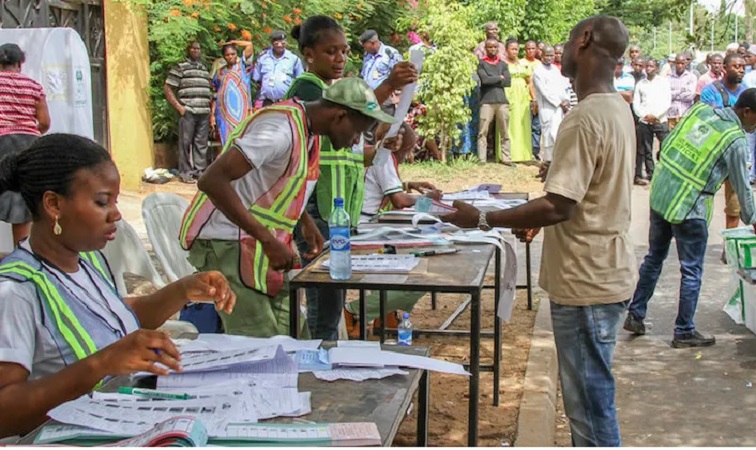
In an era dominated by the rapid flow of information, the battleground of elections has expanded into the digital realm, giving rise to a new adversary: information pollution. The intricate web of fake news, misinformation, and disinformation threatens the very essence of democratic processes. However, a group of individuals, often overlooked but rapidly gaining prominence, is stepping forward to safeguard the integrity of election campaigns. These unsung heroes, known as moral entrepreneurs, are not only changing the dynamics of political discourse but also shaping the political economy of information pollution during election campaigns.

As part of disseminating the findings of my study conducted during my research fellowship at RUDN University in Moscow, Russia, I delve into the underlying political economy that drives their influence.

The Dynamics of Moral Entrepreneurship

Moral entrepreneurs are a diverse ensemble, including academics, NGOs, CSOs, traditional rulers, and religious leaders. Their collective mission is clear: to enforce adherence to existing legal rules and election campaign guidelines, aiming to maintain a clean and transparent campaign environment. This seemingly altruistic endeavour has a deeper impact on the political economy of elections.

Shaping Political Behaviour

Moral entrepreneurs play a role beyond just challenging unethical behaviours; they influence the very behaviour of political actors. By emphasizing the importance of rule enforcement, these entrepreneurs redefine the political landscape. Their focus on ‘rule enforcement entrepreneurs’ signifies the political economy of accountability. When political actors are held accountable for their information dissemination, a higher level of discourse emerges. In this political ecosystem, the cost of misinformation rises, promoting a more responsible approach.

Fact-Checking as a Currency

Fact-checking and awareness campaigns are the currency that moral entrepreneurs invest in to counter information pollution. They recognize that information is the cornerstone of political power. By championing fact-checking practices and encouraging responsible reporting, these entrepreneurs reshape the political economy of information credibility. In this new paradigm, credible information becomes a valuable commodity, shaping public opinion and influencing voting behaviour.

Collaborative Capitalism

The collaboration between moral entrepreneurs, media practitioners, journalists, and stakeholders transforms the landscape of political discourse. This partnership is the bedrock of a new form of collaborative capitalism, where information reliability becomes a shared interest. Media practitioners collaborate with moral entrepreneurs to prioritize fact-checking processes and ensure accurate information reaches the public. In return, these collaborations elevate the stature of media organizations as purveyors of truth.

The Power of Influence

Moral entrepreneurs not only challenge political actors but also impact government agencies, electoral bodies, and voters. Their recommendations transcend mere suggestions; they shape the very structure of the election environment. Government agencies and electoral bodies are urged to actively enforce laws that combat information pollution, shaping the legal framework around election campaigns. Voters are reminded of their role as gatekeepers, entrusted with the power to critically evaluate and fact-check information, reducing the impact of misinformation.

Upholding Democracy: The Ultimate Return

In a democratic society, the currency of influence transcends monetary gain. The true return on investment for moral entrepreneurs is a democracy fortified by ethical campaigns, credible information, and responsible political behaviour. Their actions not only shape the outcome of elections but also the political economy of the nation itself. Collaborative efforts among stakeholders, from media practitioners and politicians to voters and government agencies, cement the foundation of democratic principles.

The rise of moral entrepreneurs marks a paradigm shift in the political economy of information pollution during election campaigns. Their influence extends beyond the election period, shaping the trajectory of democracy itself. As Nigeria’s democratic landscape continues to evolve, the significance of these moral entrepreneurs will only grow, propelling the nation toward a future where integrity, accountability, and ethical conduct form the pillars of its political economy.

Kenyan Logistics Startup Sendy, Shuts Down Operations, Explores Sales of Assets

0

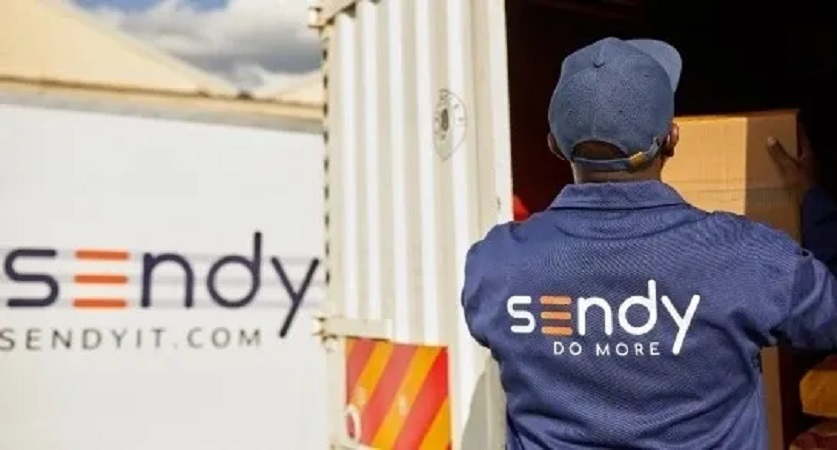
Kenya’s end-to-end logistics solution that enables thousands of businesses to move any type of goods, Sendy, is shutting down operations and is reportedly exploring the sale of its assets.

Announcing the sale of the startup, Sendy co-founder Meshack Alloys said,

“We are in the middle of an acquisition process. So yes, Sendy is being acquired. We will issue a formal joint statement in two weeks or so. In the meantime, we are unable to comment on further details at this time”.

Several sources disclosed that the logistics startup ran out of funds two months ago and had been scrambling to cut costs for the past year to remain afloat. Last July, it announced a 10% cut in its workforce, which the company’s CEO noted was in response to the current realities impacting tech companies globally.

Sendy was forced to restructure on a funding drought that hit Kenyan start-ups, as developed economies raised the cost of lending. Since then, the company’s workforce has been pruned further with more cost-cutting measures. That funding drought has come as markets change even in places like the US where banks are experiencing stress due to many factors..

Moody’s Investors Service warned late Monday that it may downgrade six big banks, including U.S. Bancorp, Bank of New York Mellon, State Street and Truist Financial, and lowered its credit ratings for 10 small and midsize U.S. lenders. The move comes amid growing pressures on the finance industry following the recent collapse of Silicon Valley Bank and the ensuing crisis of confidence it triggered. As interest rates rise, banks continue to grapple with higher funding costs, potential regulatory capital weaknesses and risks linked to commercial real estate loans, Moody’s said.

Last October, the Kenyan startup laid off 54 employees and wound down its supply service.  In late 2022, Sendy secured an undisclosed financial support from MOL PLUS, the venture capital division of Japanese transport firm Mitsui O.S.K Lines, Ltd.

This funding, seemingly acting as a rescue fund, aimed to stabilize Sendy, while the logistics startup strategized its future moves.

Meanwhile, in February this year, the startup terminated its on-the-ground operations in Nigeria to find the right market.

The company which started operations as a delivery service before spinning off e-commerce and retail supply platforms, shut down the latter business line to focus on sellers placing goods in its warehouses for marketing and delivery.

Sendy said it wanted to focus on fulfillment centers and transport businesses to leverage on uptake of digital commerce.

Since its inception, the startup has raised $26.5 million in disclosed funding from several investors, which include, Toyota Tsusho, Atlantica Ventures, VestedWorld, Keppel Capital, Enza Capital, AAICA Investment Pte Ltd, Sunu Capital, and Goodwill Investments.

Founded in 2014 by Meshack Alloys, Evanson Biwott, and Don Okoth, Sendy’s platform connects individuals and businesses with delivery drivers who use motorcycles, tuk-tuks, and vans to deliver packages and goods across various locations.

Sendy’s model is often compared to ride-sharing services like Uber, but instead of transporting people, the company focuses on delivering goods. The company makes use of a  a mobile app, and a web platform to facilitate the process of requesting deliveries, tracking them in real-time, and handling payments.

It aimed to address challenges related to inefficient logistics and transportation in many African cities. By providing a technology-driven solution, Sendy aimed to streamline and optimize the delivery process, helping businesses and individuals move goods more effectively.

ECOWAS Announces New Sanctions Against Niger As the Junta Forms New Govt

0
Empty white clear flag waving against clean blue sky, close up, isolated with clipping path mask alpha channel transparency

The Economic Community of West Africa States (ECOWAS) has imposed fresh sanctions on Niger Republic, following the expiration of the 7-day deadline issued to the military junta by the bloc.

The fresh sanctions announced by the presidential spokesperson Njuri Ngeale, come before the August 10 meeting scheduled by ECOWAS to deliberate on the next line of action to take.

Following the coup in Niger Republic, ECOWAS, backed by Western leaders issued a 7-day ultimatum to the junta to reinstate President Mohamed Bazoum or risk sanctions with potential military action.

However, the coup plotters disregarded ECOWAS’ warnings and asserted their determination to oppose any external interference within their borders.

They also cut diplomatic relations with Nigeria, Togo, France, and the United States, while imposing an indefinite closure of Nigerien airspace. Their defiance amid overwhelming antiwar calls forced ECOWAS to seek a new approach.

Ngeale, said Tuesday while addressing State House correspondents that more sanctions had been imposed on the individuals and entities relating to the military junta. According to him, the new sanctions are being imposed through the Central Bank of Nigeria.

He said without giving details: “I can also report that following the expiration of the deadline of the ultimatum and standing on the preexisting consensus position of financial sanctions meted out on the military junta in Niger Republic by the bloc of ECOWAS Heads of State, His Excellency, President Bola Ahmed Tinubu has ordered an additional sway of financial sanctions through the Central Bank of Nigeria (CBN) on entities and individuals related to or involved with the military junta in Niger Republic.”

“The ECOWAS mandate and ultimatum is not a Nigerian ultimatum. It is not a Nigerian mandate and the office of His Excellency President Bola Ahmed Tinubu, also serving as the chairman of ECOWAS seeks to emphasize this point. That is due to certain domestic and international media coverage, tending toward personalization of the ECOWAS sub-regional position to his Person and to our nation individually.

“It is because of this that Mr. President has deemed it necessary to state unequivocally that the mandate and ultimatum by issued ECOWAS is that of ECOWAS’s position. While His Excellency, President Bola Ahmed Tinubu has assumed the ECOWAS chairmanship, the position of ECOWAS conveys the consensus position of member heads of state. And a coup will not occur in one’s backyard, without one being particularly aware of it.

“The president in recent days, particularly following the expiration of the ultimatum given by ECOWAS has widened consultations internationally but most especially domestically, including interfaces with state governors in Nigeria, who govern states bordering Niger Republic on the various fallouts and outcomes of the unfortunate situation that has unfolded in Niger Republic.

“But President Bola Ahmed Tinubu, wishes to emphasize to this distinguished audience that the response of ECOWAS to the military coup in Niger has been and will remain devoid of ethnic and religious sentiments and considerations.

“The regional bloc is made up of all sub regional ethnic groups, religious groups, and all other forms of human diversity. And the response of ECOWAS, therefore, represents all of these groups, and not any of these groups individually.”

Meanwhile, the junta, ignoring the drum of sanctions, is constituting a new government. A former Minister of Economy and Finance Ali Mahaman Lamine Zeine has been named Niger Republic‘s new Prime Minister.

He was officially appointed by the self-proclaimed Head of State, Abdourahmane Tiani, according to an announcement made by a spokesperson for the military junta via a late-night television statement on Monday.

The freshly appointed Prime Minister previously held a position in the cabinet of then-President Mamadou Tandja, who was ousted by the nation’s military in 2010.

Zeine assumes the role, succeeding Mahamadou Ouhoumoudou, who happened to be in Europe during the coup.

In addition, the junta has designated Amadou Didilli to lead the nation’s High Authority for Peace Consolidation (HACP), while Abou Tague Mahamadou has been selected as the inspector-general overseeing the army and national gendarmerie.

Ibro Amadou Bachirou takes on the role of the Chief of Staff for the junta leader’s private office, and Habibou Assoumane is appointed as the commander of the presidential guard.

Tiani, until his new role as Niger’s head of state, had led the presidential guard which had held democratically elected President Mohamed Bazoum hostage since July 26.

WhatsApp Video Goes After Zoom with Screen Share – But Zoom Should Be Fine!

1

WhatsApp is coming after Zoom: ”WhatsApp today introduced screen sharing as its latest feature to enhance the video calling experience on its platform — taking on traditional video conferencing apps including Microsoft Meet, Google Meet, and Zoom as well as Apple’s FaceTime.” 

Yet, I do not think this is significant as I am not sure I have used WhatsApp video in the last 6 months! So, Zoom should be fine. But what Zoom may not be fine is that WhatsApp Video may not be great to be successful.  Yes, provided that it keeps WhatsApp users to stay within the ecosystem, that will do.

This is the new strategy in bigtech: you try to offer everything so that you can keep your customers, with the understanding that the most important product feature is that many people use it. Period, that is the job to be done

I used to use Dropbox but when Microsoft provided OneDrive which is not as great as Dropbox, but with its core features being bundled with Microsoft 365, I had to cancel Dropbox for Microsoft. WhatsApp does not want to lose any business subscriber because of screen share, and today it has that as part of the product!

In the industrial economy, they taught us core competency. In the age of bigtech, it is ALL competency because everyone is doing everything, if not now, wait for tomorrow.

The new feature, announced this morning by Meta CEO Mark Zuckerberg through a Facebook post and on his Instagram channel, will allow you to share your documents, photos, and even your shopping cart with contacts available on video calls.

First released for some beta testers on Android in late May, screen sharing on WhatsApp can be accessed by tapping or clicking the ‘Share’ icon. Users can choose between sharing a specific app or their entire screen. This is similar to how screen sharing works on typical video conferencing platforms like Google Meet and Zoom.

https://twitter.com/elviscumez/status/1689002707384930306

Comment on Feed

Comment 1: As technology advances and companies expand their offerings, the concept of core competency has shifted. In the age of big tech, it’s about all-encompassing competency, where companies excel in multiple areas and cater to diverse user needs. Adaptability is crucial in an environment where technological advancements and user preferences change rapidly.

Comment 2: I think this new development by Mark will eat into Zoom’s Obtainable and addressable market. Small groups would no longer have to patronize Zoom with the desire to evade Zoom’s 40mins access limit.

The fact that we have WhatsApp Web should give Zoom more worries. It would become a game changer if this innovation is made totally free, and like Google Meet, introduce premium access either in number of participants or duration.

Recording, storage, security etc would become some crucial elements that WhatsApp must consider if it desires to disrupt the market.

He who has the data wins always!

Comment 3: I’ve been using the screen share feature on my mobile for about a month now and I don’t think it’s such a big deal. I mean, what are the chances that I need to show someone my screen while on a video call with them.
However, I think the feature can make a reasonable impact on their desktop version.

Comment 4: “Interesting perspective, Ndubuisi! While WhatsApp may be targeting Zoom, it’s true that customer habits play a crucial role in adoption. All competency is indeed the hallmark in the age of big tech. Can’t wait to see how this feature develops.”