DD
MM
YYYY

PAGES

DD
MM
YYYY

spot_img

PAGES

Home Blog Page 3922

How To Set Up A Licensed Private Polytechnic in Nigeria

0

Polytechnics are typically centers of higher education specialised in science and technology-based academic courses, making them qualify as specialised manpower production centers. 

This article will be focused on how to set up a privately-owned polytechnic in Nigeria, with a focus on the topics of :-

– The regulatory framework governing polytechnics in Nigeria

– Who can own/set-up a private polytechnic in Nigeria

– The requirements for setting up a private polytechnic in Nigeria

– The procedures involved in setting up a private polytechnic in Nigeria

Who can own a polytechnic in Nigeria?

A polytechnic in Nigeria can be set up or/and owned by :-

– The federal government as well as a state or local government

– A company registered in Nigeria

– An individual or association of individuals who are citizens of Nigeria and who satisfy the criteria set out by the relevant regulations.

Which regulatory agency is in charge of licensing private universities in Nigeria?

Polytechnics are Nigeria are licensed by the National Board For Technical Education (NBTE).

What are the requirements for setting up a licensed private university in Nigeria?

The requirements for setting up a private polytechnic in Nigeria are :-

– A completed application form and application letter (preferably through legal counsel)

– A master plan

– An academic plan

– A needs assessment/feasibility survey

– A bank guarantee of 100 Million Naira minimum

– A Certificate of Occupancy (C of O) in the name of the institution. The site of the proposed polytechnic should be at least 5 (Five) hectares

– A financial plan

What are the regulatory procedures involved in licensing a polytechnic?

The procedural steps involved in licensing a polytechnic are as follows:-

Submission of Licensing Application

– This should be done by the proprietor of the proposed institution through a lawyer and should be followed by submission of application forms and the obtaining of relevant guidelines from the polytechnic/monotechnic programmes departments of the NBTE.

Analysis of Licensing Application & Inspection Visit

– The completed forms and attached documents are analysed by the NBTE

– A team of NBTE specialists visit the site of the proposed institution to confirm the correctness of the submissions made by the proprietor. This team shall pay particular attention to :-

a).The proposed curriculum of the institution

b). The physical teaching and accommodation facilities – offices, classrooms, workshops, farms, laboratories, studios and libraries as appropriate for the proposed programmes to be offered by the institution, their adequacy for size of classes proposed, environment and the complement of equipment required.

c). The adequacy of financial resources to support capital and recurrent expenditure

d). Availability of human resources – administrative, teaching and support staff in quality, number and mix (?) for the programmes to be mounted in the first and second years of existence of the institution

e). The institution’s library – well-furnished and stocked with book and non-book items for the proposed programmes of a size adequate to accommodate its readership

f). Availability of regular water and power supplies and provisions for gas in the case of science, engineering and other technology-based programmes.

Post-Visit NBTE Recommendations

– The report of the inspection shall be considered by the NBTE along with the completed application forms in relation to meeting the provisions of the Education Act.

– The recommendation of the management is then submitted to the board for consideration and recommendation to the minister of education to approve the establishment of the institution.

NBTE’s Action on the Minister’s Decision

– Where the NBTE is satisfied that the institution has not met the conditions for approval, it shall inform the proprietor to carry out such required remedial actions before the institution is recommended to the Minister of Education for approval.

– The NBTE shall inform the proprietor of the decision of the Minister of Education where the application is unsuccessful. The letter to the proprietor shall state reasons for denying approval of the licensing application. 

Can a polytechnic licensing application be resent after being initially rejected?

Yes it can after making sure that all deficiencies and errors highlighted in the earlier rejected application have been corrected.

What are the requirements for academic programme accreditation or mounting by the NBTE?

Any programme offered by a polytechnic or monotechnic which leads to the award of an Ordinary National Diploma (OND) or Higher National Diploma (HND) must be accredited before making the award. This award consists of 2 stages which are :- 

a). An approval to mount the programme

b). Full accreditation

To mount a new programme, an application (preferably through legal counsel) must be made to the NBTE showing :-

– A justification for the proposed programme

– Evidence of demand for manpower in the discipline of proposed programme in the country and in the world

– Statistics on the availability of students for the programme

– Evidence of availability of physical resources for the proposed programme.
Merely Incorporating A Name Will Not Preserve It From Being Used By Another Fellow

0
CAC

There is this general misconception amongst business owners and Chief executive officers of companies that incorporation or registration of their businesses with the Corporate Affairs Commission reserves the business or company name exclusively for their use. To them, once they have registered or incorporated the business name with the Corporate Affairs Commission, the name of the business becomes reserved exclusively for their use and not to be used by another person. 

I am sorry to let you know that this is not the case neither is it the practice or the law: An incorporated name that was not trademarked by the business owner can still be used or even trademarked by another fellow. The other fellow may only be prohibited from incorporating a business using the same name already been incorporated by another business but the other fellow is at liberty to use the name for some other purposes. 

For instance, if Tekedia Institute is merely incorporated with the Corporate Affairs Commission in Nigeria and the name Tekedia was not trademarked, another person is at liberty to trademark the name “Tekedia” for their use. 

In fact, it is the law that a trademarked name takes priority over an incorporated name; this is to say that another fellow who has trademarked Tekedia can write to the Corporate Affairs Commission demanding them to ask Tekedia institute to change their name so as not to be in conflict with their trademarked name. This is the practice and there is a judicial precedent to this effect. 

In the most recent case of Sanofi v Sanofi Nigeria Enterprise & Ors, the Federal High Court sitting in Abuja ordered the Corporate Affairs Commission to de-register a company using a name that was trademarked by another company thereby infringing on the trademarked name.

In that case, a French pharmaceutical company trademarked the name Sanofi, they found out that there are some Nigerian companies incorporated with the Corporate Affairs Commission with the name SANOFI Integrated Services Limited, SANOFI Nigeria Enterprises Limited, and SANOFI Nigerian Enterprise. The French company wrote to the Corporate Affairs Commission notifying them that they already trademarked the name “Sanofi” and incorporating a company with the name Sanofi or anything similar is an infringement of their trademark. 

They requested the corporate affairs commission to ask those companies to therefore change their names to something else. The companies refused to change their names and the French pharmaceutical company took those companies to court for trademark infringement. 

The court held in their favor and mandated the Corporate Affairs Commission to quickly de-register the other companies infringing on the trademarked name or that those companies should change their names. 

By this recent judgment of the court, it is a wake-up call to business and company owners to take further steps in trademarking the names of their businesses and companies after incorporating it so as not to lose the name to another fellow who has trademarked it before them. 

The take home from this is that incorporating a company or business does not reserve that name exclusively from being used by other fellows; it is trademarking of a name that reserves it exclusively from being used by other fellows. 

VIRTUAL NEANDERTHALISM – THE GIANT WAR OF IRRELEVANCE

0

So.. ok.. I’m here, and I start seeing this stuff about Zuck starting a Twitter. Guy even has the audacity to use the ‘@’ sign (which Twitter actually coined as the character to use for tagging), and make it into a rectangle shape to represent their logo. Meanwhile, the birdie is gone and X marks the spot!

Yeah ok… all good.

The question that has to be asked though, is why is this actually ‘news’.

Big Drama, with Zuck announcing 10 million new subscribers in the last ‘x’ amount of hours, but maybe y’all confused which league y’all playing in.

Scroll back to the ending of last year, and the events of the takeover of Twitter by Musk.

I have to say a lot of people have a fairly shallow memory about this. Many have the view that Musk tried to change things that were not broken.

That’s generally an isolationist user perception. Just because the UX seemed great to majority of users, doesn’t mean the basics of a business was working. That’s something with a capital ‘V’ – VIABILITY. Twitter was losing money – and big time.

Musk is a ‘tinkerer’ an experimenter. He is experimenting with a path to viability. But just understand that if Musk didn’t buy it, the Twitter you used to know would be dead already. It had already passed a point of no return on sustainability. Twitter pre-Musk was no longer an option; it is either a ‘Muskified Twitter’ or no Twitter.

It’s limping still, and it might have undergone some genetic modification, but it is still alive. Twitter ‘die hards’ can thank Musk for that.

But what everyone is not understanding, is that this space is no longer about a few legacy technology behemoths.

This goes back to a discussion I have had many times… that ‘Web 2’ – something that Twitter,  Meta and a few others like are purportedly part of – never really existed.

Was there ever really an evolution between the original web and the next iteration of it?

Well, that depends on your perspective. The first iteration, some would argue, were proprietary rather than open-source networks, carrying data to various ‘nodes’ or user stations within a network.  They started out with simple collaboration tools, and operated over network cables to computers in the same building, or over standard (PSTN) phone lines to computers somewhere else.

The first intranet was created by the US Department of Defence Advanced Research Projects Agency (ARPANET) in the 1960s   

Modern intranets may have search engines, user profiles, blogs, mobile apps with notifications, events planning and PM tools within their infrastructure. They may also have permission access structures that allow customers and partnering contractors to access certain aspects of their networks such as CRM and ERP services, over an ordinary internet connection.

Open internets didn’t come until the 1990s, so whether an ‘Intranet’ can be called Web1 and ‘The Internet’ be called Web 2 is a fair question.

The next innovation came in the second half of the 1990’s. This was a big change which separated the frequency of the internet connection on a PSTN (fixed) line, long before mobile communications were common.

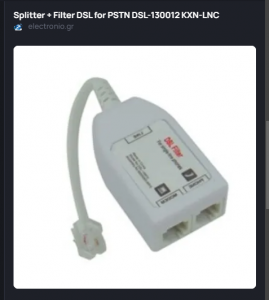
This meant that with a small device called a ‘splitter’, for the first time, people could use the internet over the same fixed line, and still have their phone line open to calls.

This led to the acceleration of internet speeds, and with that, newer technologies such as DSL and ADSL.

Going into the 2k’s, on the API development side we had developments like SAX and TrAX, which I used academically at the time.

Other advances followed at the transport layer, such as MPLS and SDWAN (Software Defined Wide Area Networks), which in turn supported ‘cloud’ architectures.

Social Media grew in complexity over the period, fuelled by faster and higher capacity internet services and data transport networks, and an ever collapsing cost and higher capacity of storage and data centre networks. Hardware system memory (RAM), processor, and graphics rendering speeds continued to increase in capability while falling in price.

By 2k, ‘Portal’ systems like AOL, MSN, and Yahoo were adding voice, but had yet to accommodate video.

Eventually, a tipping point was reached where large multi-media corporations such as Google, Meta, Amazon, Microsoft, X, Apple, and others, were able to develop ‘silos’ built within the constantly evolving state of web.

They don’t represent a collective evolution of web in themselves.

The first Social Media recognised as such was Six Degrees in 1997.

‘Web’ since the advent of open internet (post INTRANET), seems to have been an evolution continuum, with users (including corporate users such as Google or Meta), incrementally tweaking how they use it and monetize it.

Google, for example, ‘rents’ ‘google.com’ from Verisign under the auspices of ICANN, a central authority that has existed since 1985!

AT&T, Deutch Telekom, TATA Communications and NTT Japan are still examples of Tier 1 (Internet Mirrors), while Fibre Optic Cable and Satellites still remain the only physical layer that enable cross continent data to move.

All the way back to the 1990s, the Blockchain is the single new technology that has moved the needle.

The nonsense about a Web 2 that never existed, being retrospectively created, started around 2020 when new blockchain products were being created without a decentralized access path.

Blockchain product marketers wanted to find a plausible way to present their products as ‘Web 3’ and cash in, without making the harder, and less lucrative task of decentralized access happen.

On March 15, 1985, the first dot-com  (ICANN) domain, symbolics.com, was registered by Symbolics, a Massachusetts-based computer company.  Today, OpenSea operates off opensea.io, an ICANN domain. Same centralized domain authority system! And Google? Well, just another internet user!

‘Google is just a guest on the web, as we all are… Guests don’t make the rules!’


Back to Musk and Zuckerberg, and Ndubuisi Ekekwe of Tekedia Institute has serially reported on the various twists since wars of words erupted in online media between the pair,

Ever since Musk first expressed interest in X, (formerly Twitter) the future of the platform has been marred with problems and controversy.

Twitter had been in deep financial trouble and would have been dead in the water by November 2022 if nobody had stepped in.

Elon changed his mind about buying Twitter, but got sued by the management, and was issued with a court directive to go ahead with the purchase.

Last year, I related how in November, so many people jumped from Twitter to a new decentralized platform with comparable features in the confusion that the sign-up volume almost crashed their servers.

That platform is Mastodon.

Click to visit article

Musk has hit back at the development of DAO, data democracy, and data self-sovereignty based platform communities by introducing a user earning feature called ‘xcreate’ and a multi-value instrument trading platform in partnership with eToro.

Zuckerbergs’ new ‘Threads’ has not been without its’ problems. Prof Ekekwe reported that the dramatic early adoption was for the large part, not users new to Meta. There was a predominance of Instagram users.

Ekekwe explained that the revenue dynamic meant if Threads uptake was at a detriment to time spent on Instagram, this translates to overall losses for Meta.

Threads has now seen a significant retention problem. Does this collapse mean former Instagram users have simply gone back there, or does it mean they have been lost to Meta altogether? If it is the latter, then it means more blood loss for Meta.

But Meta has brought a new weapon to the table – A commitment to integrate with the same open protocols used by other distributed social media alternatives, such as Mastodon. This is the ‘pet’ strategy of Instagram CEO Adam Mosseri.

It’s intended to give users the option to migrate their accounts, along with all their follower data intact, to a rival like Mastodon that isn’t controlled by Meta.

While that interoperability isn’t available yet, Mosseri has repeatedly highlighted it as a priority on his to-do list.

When and if it happens, that could be a significant step. What may appear now as an audience grab by Meta could someday wind up being how millions of people were onboarded to a massive, decentralized social networking infrastructure that is not controlled by any single company, individual or organization.

“This is why we think interoperability requirements are so important,” said Charlotte Slaiman, a competition expert at the Washington-based consumer group Public Knowledge. If users could port their entire social graph from one rival to another whenever they wanted, she said, “we could have more fair competition based on the quality of the product, not just incumbency advantage.”

With both X and Meta taking the issue of platforms offering data sovereignty so seriously, perhaps more users should start thinking ahead, and invest some time in being earlier adopters on a few of these platforms.

After all, they have ruffled some feathers so much, X marks the spot where the bird died!

It is time for us to move on, and time for old things to move over!


9ja Cosmos is here… 

Get your .9jacom and .9javerse Web 3 domains  for $2 at:

.9jacom Domains

.9javerse Domains

Visit 9ja Cosmos

Follow us on LinkedIn HERE

All reference sites accessed 21-23/08/2023

techspot.com/article/2484-yahoo-messenger/

create.twitter.com/en/goals/monetization

en.wikipedia.org//wiki/Tier_1_network

cnbc.com/2023/04/13/twitter-to-let-users-access-stocks-crypto-via-etoro-in-finance-push.html

edition.cnn.com/2023/07/07/tech/meta-social-media-dominance-threads/index.html

theneweuropean.co.uk/the-slow-sad-death-of-twitter/

stackoverflow.com/questions/72586417/validating-xml-with-relaxng-and-sax

fortinet.com/resources/cyberglossary/sd-wan-architecture

Thailand warns Facebook to tackle Crypto-related Scams, As Cheongju in South Korea to Seize Crypto from Tax Evaders

0

The Thai government has issued a stern warning to Facebook, the social media giant, to take action against the rampant cryptocurrency scams that are plaguing its platform. The Ministry of Digital Economy and Society (MDES) said that if Facebook fails to comply with its request, it could face a possible shutdown in the country.

According to the MDES, there are more than 600 Facebook pages and groups that promote fraudulent schemes involving cryptocurrencies, such as fake initial coin offerings (ICOs), Ponzi schemes, and phishing attacks. These scams have caused significant losses to unsuspecting investors and damaged the reputation of the legitimate crypto industry in Thailand.

The MDES said that it has repeatedly asked Facebook to remove or block these pages and groups, but the company has been slow or reluctant to do so. The ministry said that it has the legal authority to order internet service providers to shut down access to Facebook if it continues to ignore its warnings.

The MDES also urged the public to be vigilant and report any suspicious activities related to crypto scams on Facebook. The ministry said that it is working closely with the Securities and Exchange Commission (SEC), the Bank of Thailand (BOT), and other relevant agencies to combat the crypto fraud problem and protect the interests of the Thai people.

The city of Cheongju in South Korea has announced a new policy to crack down on tax evaders who hold cryptocurrency assets. According to a press release from the city government, the policy will allow the authorities to seize crypto assets from delinquent taxpayers, even if they are stored in digital wallets or overseas exchanges.

The policy is based on a legal interpretation that crypto assets are intangible property that can be confiscated by the state. The city government said that it has identified 1,566 individuals who owe more than 10 million won ($8,500) in taxes and have crypto holdings. The authorities will use various methods to track down their crypto assets, such as requesting information from local exchanges, analyzing transaction records, and collaborating with foreign agencies.

The city government said that the policy is aimed at creating a fair and transparent tax system and preventing tax evasion. It also said that it will provide guidance and education to taxpayers on how to properly declare and pay taxes on their crypto income. The policy will be implemented from September 2023.

The policy is the latest move by South Korea to regulate the crypto industry and collect taxes from it. The country has introduced a 20% tax on crypto profits above 2.5 million won ($2,100) starting from January 2024. It has also required all crypto exchanges to register with the financial authorities and comply with anti-money laundering rules by September 2023.

Crypto taxation is one of the most important and urgent issues that need to be addressed in South Korea. The current tax regime is complex, ambiguous and inconsistent, and creates a lot of uncertainty and confusion for the crypto community. By adopting more clear and consistent definitions, harmonizing tax rates and thresholds, and coordinating between national and local tax authorities, South Korea can improve its crypto taxation system, and foster a more conducive environment for the development and adoption of blockchain technology and digital assets.

Appeal to Remove Sanctions on Tornado Cash Denied Amid SEC Filing on Titan Global Capital Management

0

The US Federal Court has rejected the appeal of Tornado Cash, a decentralized privacy protocol, to lift the sanctions imposed by the Securities and Exchange Commission (SEC) for violating the securities laws. The court ruled that Tornado Cash failed to demonstrate that the sanctions were arbitrary, capricious, or an abuse of discretion.

Tornado Cash is a protocol that allows users to send and receive Ethereum transactions anonymously, using zero-knowledge proofs and smart contracts. The SEC alleged that Tornado Cash sold unregistered securities in the form of governance tokens (TORN) to US investors, without complying with the disclosure and registration requirements. The SEC also claimed that Tornado Cash misled investors about the risks and rewards of using the protocol, and that it operated as an unlicensed money transmitter.

In response, Tornado Cash filed an appeal to the Federal Court, arguing that the SEC had no jurisdiction over its activities, that TORN tokens were not securities, and that the sanctions were excessive and unjustified. Tornado Cash also claimed that the SEC violated its due process rights by freezing its assets and preventing it from accessing its legal counsel.

However, the Federal Court dismissed these arguments, finding that the SEC had sufficient evidence to support its allegations, and that Tornado Cash did not show any error or abuse of discretion in the SEC’s decision. The court also noted that Tornado Cash did not cooperate with the SEC’s investigation, and that it continued to operate its protocol despite the sanctions.

The court’s ruling is a setback for Tornado Cash and its supporters, who hoped to challenge the SEC’s authority over decentralized protocols. It also signals that the SEC is determined to enforce its regulations on the emerging crypto industry, regardless of its claims of decentralization and privacy.

In a similar twist, the Securities and Exchange Commission (SEC) has filed a complaint against Titan Global Capital Management LLC, a hedge fund manager based in New York, and its principals, alleging that they engaged in a fraudulent scheme to inflate the value of their funds and mislead investors.

According to the SEC, Titan and its principals misrepresented the performance and assets of their funds, which invested in distressed debt and private equity. The SEC claims that Titan used fake documents, sham transactions, and inflated valuations to create the illusion of high returns and attract new investors.

The SEC also alleges that Titan misappropriated investor funds for personal expenses, such as luxury cars, jewelry, and vacations. The SEC further alleges that Titan failed to disclose material conflicts of interest, such as Smith’s ownership of a company that received fees from Titan’s funds.

The SEC’s complaint, filed in the U.S. District Court for the Southern District of New York, charges Titan and its principals with violating the antifraud provisions of the federal securities laws. The SEC seeks permanent injunctions, disgorgement of ill-gotten gains, civil penalties, and other relief. The SEC’s investigation was conducted by the New York Regional Office and the Asset Management Unit.

The SEC’s order [PDF] states:

Titan did not disclose in the advertisements that the 2,700 percent annualized return was based on a purely hypothetical account in which no actual trading had occurred, that this annualized return had been extrapolated from a period of only three weeks (from August 10, 2021 to August 31, 2021), that the hypothetical return for this three-week period was calculated at 21 percent, that the projected 2,700 percent annualized return was based on the assumption that the Titan Crypto strategy would continuously generate a 21 percent return every three weeks for an entire year, or Titan’s views as to the likelihood that this assumption would bear out.