DD
MM
YYYY

PAGES

DD
MM
YYYY

spot_img

PAGES

Home Blog Page 3928

For Nigeria Youth: Learn from Carlos Slim and Templeton, and Believe the FUTURE [video]

1

As Nigeria goes through a challenging season of economic paralysis, I want you to remember that nations rarely kaput. In this video, I introduce two men I study – Carlos Slim (Mexican billionaire) and Franklin Templeton (stock picker of the 20th century). These men demonstrated tenacity at a time their respective nations were under stress. Yes, even in the miry clay, they saw an unbounded future – and believed. The green pastures came for them, and you can also experience the same because the sun will always rise, from the eastern corridor. Rarely rarely kaput!

Franklin Templeton began a firm in 1947, against all odds, at the ruins of World War II. Mr Slim bought anything in his sight at one of the lowest points in Mexican history – the peso was down and markets in ruins. Templeton trusted the human race and bought “useless” stocks. Slim’s father told him that countries do not fail; they always come back.

Becoming successful in life is not about being busy; it is understanding things and making sense of them, more meaningfully. There are acres of diamond in Nigeria today, across many areas. Look for them. If you do not believe in humans and the aspiration spirits, it is unlikely you can see opportunities in life. 

This moment will go and like the cryolite, the beautiful gems out of periwinkle, new moments will emerge. Unless you crack the periwinkle, the cryolite rarely emerges. Do not lose confidence because abundance remains in the future. The key is productive exploration of opportunities. Think and thrive; Nigeria has acres of “diamond” you can mine.

KPMG Report Highlights Bitcoin’s Contributions to Environmental, Social and Governance (ESG) Goals

0

Environmental, Social and Governance (ESG) goals are becoming increasingly important for businesses and investors around the world. ESG goals refer to the criteria that measure the sustainability and social impact of an organization’s activities, such as reducing greenhouse gas emissions, promoting diversity and inclusion, and ensuring ethical governance practices.

Bitcoin, the leading cryptocurrency, has often been criticized for its perceived negative impact on some of these goals, especially the environmental one. Bitcoin’s energy consumption and carbon footprint have been widely debated and scrutinized, as the network relies on a proof-of-work (Pow) consensus mechanism that requires a large amount of computing power to secure transactions and generate new coins.

However, a recent report by KPMG, one of the Big Four accounting firms, challenges this narrative and highlights how Bitcoin can actually contribute to ESG goals in various ways. The report, titled “Bitcoin: A catalyst for ESG innovation”, was published in July 2023 and explores the potential benefits of Bitcoin for the environment, society and governance. Some of the key points from the report are:

Bitcoin can enable renewable energy adoption and innovation. Bitcoin miners, who are incentivized to find the cheapest and most reliable sources of electricity, can act as flexible demand for renewable energy sources that are intermittent and variable, such as solar and wind. By providing a steady and predictable revenue stream for renewable energy producers, Bitcoin can help them overcome some of the challenges they face in competing with fossil fuels. Moreover, Bitcoin can also spur innovation in renewable energy technologies, such as battery storage, microgrids and smart contracts, as miners seek to optimize their operations and reduce costs.

Bitcoin can foster financial inclusion and social empowerment. Bitcoin’s decentralized and permissionless nature allows anyone with an internet connection and a smartphone to access a global and open financial system, without intermediaries or barriers. This can benefit millions of people who are unbanked or underbanked, especially in developing countries where traditional financial services are scarce, expensive or unreliable. Bitcoin can also enable peer-to-peer transactions, remittances, micropayments, crowdfunding and charitable donations, among other use cases, that can empower individuals and communities to improve their economic and social well-being.

Bitcoin can enhance transparency and accountability in governance. Bitcoin’s public and immutable ledger provides a verifiable record of all transactions that take place on the network, which can increase trust and reduce fraud and corruption. Bitcoin can also enable new forms of governance that are more democratic, participatory and inclusive, such as decentralized autonomous organizations (DAOs), which are entities that operate according to predefined rules encoded in smart contracts, without human intervention or hierarchy. DAOs can facilitate collective decision-making, resource allocation and coordination among stakeholders, such as investors, customers, employees and suppliers.

The report concludes that Bitcoin is not only a disruptive technology that challenges the status quo of the existing financial system, but also a catalyst for ESG innovation that can create positive change for the environment, society and governance. The report also acknowledges that Bitcoin still faces some challenges and risks in achieving its full potential, such as regulatory uncertainty, scalability issues, cyberattacks and public perception. However, it argues that these challenges can be overcome with collaboration and innovation from various stakeholders, including policymakers, regulators, industry players, academics and civil society.

Bitcoin Impacts to ESG

Environmental, social and governance (ESG) criteria are increasingly important for investors and consumers who want to align their values with their financial decisions. However, Bitcoin, the most popular cryptocurrency, poses some challenges for ESG performance.

Environmental Impact

The most obvious and controversial impact of Bitcoin is its environmental footprint. Bitcoin relies on a network of computers, called miners, that compete to solve complex mathematical problems and validate transactions. This process consumes a lot of electricity, which in turn generates greenhouse gas emissions. According to the Cambridge Bitcoin Electricity Consumption Index, Bitcoin consumes more electricity than some countries, such as Argentina or Norway. Moreover, most of the mining activity is concentrated in China, where coal is the main source of power generation.

There are some initiatives to reduce the environmental impact of Bitcoin, such as using renewable energy sources, improving the efficiency of mining hardware, or switching to alternative consensus mechanisms that do not require so much computation. However, these solutions are not widely adopted or implemented yet, and the demand for Bitcoin continues to grow.

Social Impact

The social impact of Bitcoin is more nuanced and depends on the perspective of the stakeholders involved. On one hand, Bitcoin can have positive social effects, such as providing financial inclusion, empowerment and innovation for people who lack access to traditional banking systems or face political instability or censorship. Bitcoin can also foster social movements and causes that challenge the status quo or support human rights and democracy.

On the other hand, Bitcoin can also have negative social effects, such as facilitating illicit activities, such as money laundering, terrorism financing or cybercrime. Bitcoin can also exacerbate social inequalities and conflicts, as it is highly volatile, speculative and concentrated in the hands of a few wealthy individuals or entities. Moreover, Bitcoin can pose ethical dilemmas and trade-offs for investors and consumers who have to balance their financial interests with their social values.

Governance Impact

The governance impact of Bitcoin is also complex and controversial. Bitcoin is designed to be decentralized, transparent and democratic, meaning that no central authority controls or regulates it, and that anyone can participate and verify its transactions and rules. This can have positive governance effects, such as enhancing accountability, trust and innovation in the financial system. Bitcoin can also challenge and disrupt the existing power structures and institutions that govern money and finance.

However, Bitcoin also faces some governance challenges and risks, such as lack of oversight, coordination and representation. Bitcoin is vulnerable to technical glitches, security breaches and malicious attacks that can compromise its functionality and integrity. Bitcoin also suffers from scalability issues, meaning that it cannot process a large number of transactions quickly and cheaply. Moreover, Bitcoin is subject to conflicts and disputes among its stakeholders over its vision, direction and governance model. These conflicts can result in forks, splits or changes in the protocol that can affect its performance and value.

NNPCL Partners NIPCO to Establish 35 CNG Stations Across Nigeria

0

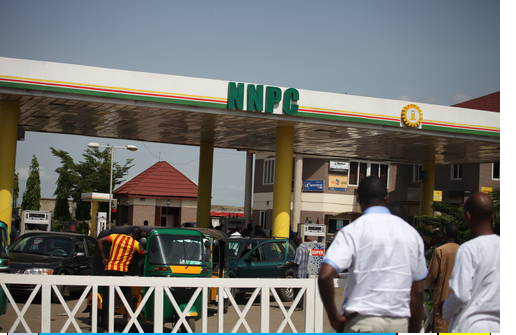
In search of a solution to the high cost of petrol, instigated by the removal of fuel subsidy that has for years ensured that Nigerians purchase petroleum products at cheap rates, the Nigerian National Petroleum Company (NNPC) Limited is teaming up with NIPCO Gas Limited to construct 35 compressed natural gas (CNG) stations across the country.

The move follows the announcement by President Bola Tinubu on Tuesday, during his nationwide broadcast, that his administration has made provision to invest N100 billion between now and March 2024 to acquire 3,000 units of 20-seater buses powered by compressed natural gas (CNG).

The initiative is geared toward reducing the cost of transport, by offering commuters cheaper alternatives to expensive fuel.

Compressed Natural Gas is a viable fuel substitute for conventional petrol, diesel, and liquefied petroleum gas (LPG). It finds application in both conventional internal combustion engine vehicles as well as purpose-built CNG vehicles.

In a statement issued on Thursday, Garba Deen Muhammad, the spokesperson for NNPC, revealed that the collaboration is focused on offering a more affordable alternative fuel option to Nigerian motorists, aligning with President Bola Tinubu’s directive.

“As part of the Nigerian National Petroleum Company (NNPC) Limited’s commitment to providing cheaper alternative fuel to motorists, the company is happy to announce a strategic partnership with NIPCO Gas Limited to deploy compressed natural gas (CNG) stations across the country,” the statement reads.

“This landmark collaboration aims to expand our CNG infrastructure, improve access to CNG, and accelerate the adoption of cheaper and cleaner alternative fuel for buses, cars, and Keke NAPEP, which will significantly reduce the cost of transportation and engender sustainable national economic growth.”

Muhammad explained that as part of the NNPC-NIPCO strategic collaboration, a total of 35 modern CNG stations, including three primary stations, will be built across the country. This project will be executed in a phased approach, according to the NNPC spokesperson.

“Once fully operational, the stations can service over 200,000 vehicles daily, thereby significantly reducing the cost of automobile fuel for Nigerians and the cost of transportation,” he said.

“The first phase, comprising 21 CNG stations, will support intra-city transportation and be ready by the first quarter of 2024; while the second phase, comprising 35 CNG stations, will support inter-city transformation and will be ready by late 2024. This will be further complemented by an additional 56 stations to be deployed by NNPC Retail across the country.

“This initiative will leverage Nigeria’s abundant natural gas resources to bring multiple benefits to Nigerians, including access to cheaper fuel, reduced cost of transportation, reduced carbon emissions, create new business value chains and streams of job opportunities.”

Per the statement, NIPCO Gas Limited presently operates 14 CNG stations across Nigeria and has successfully converted more than 7,000 vehicles to utilize CNG as fuel.

The national oil company further emphasized that NIPCO’s strong technical expertise and hands-on experience will enhance the effectiveness of the initiative and enhance its favorable contributions to the country’s economy.

Convex Finance Launches New CRV Liquidity Pool with Added CVX Incentives

0

Convex Finance, a platform that optimizes yield farming on Curve Finance, has announced the launch of a new liquidity pool for CRV, the native token of Curve. The pool allows users to stake their CRV tokens and earn rewards in both CRV and CVX, the governance token of Convex.

The new pool is designed to provide more liquidity and stability for CRV, which has been suffering from high inflation and low demand. By locking up their CRV tokens in the pool, users can reduce the selling pressure on the market and benefit from the compounding effect of earning both CRV and CVX rewards.

The pool also offers an attractive opportunity for CVX holders, who can boost their voting power and influence on the Convex platform. By staking their CVX tokens in the pool, they can earn more CVX and increase their share of the Convex ecosystem. Additionally, they can also earn CRV rewards, which they can use to stake in other pools or swap for other tokens.

The new pool is expected to launch on August 5th, 2023, and will have a four-week liquidity mining program with 200,000 CVX allocated as incentives. The rewards will be distributed proportionally to the users’ stake in the pool and will be claimable after the program ends.

To participate in the pool, users need to have CRV or CVX tokens in their wallets. They can then visit the Convex website and connect their wallets to the platform. From there, they can select the CRV pool and deposit their tokens. The platform will automatically mint and stake cvxCRV tokens, which represent the users’ share of the pool. Users can withdraw their tokens at any time, but they will forfeit their rewards if they do so before the program ends.

The new pool is another example of how Convex Finance is innovating and expanding its offerings to attract more users and liquidity to the Curve ecosystem. By providing more incentives and options for CRV and CVX holders, convex aims to create a positive feedback loop that benefits both platforms and their communities.

Xinhuo Technology Holdings Rebrands as Sinohope Technology Holdings Limited

Xinhuo Technology Holdings, a leading provider of cloud computing, artificial intelligence, and big data solutions in China, announced today that it has changed its name to Sinohope Technology Holdings Limited. The name change reflects the company’s vision to expand its global presence and enhance its brand recognition in the international market.

The company was founded in 2010 by Mr. Li Wei, a former engineer at Alibaba, and a team of talented and passionate professionals. The company started as a small start-up that offered cloud-based software development services to local businesses. Over the years, the company grew rapidly and diversified its product portfolio to include cloud infrastructure, cloud platform, cloud security, artificial intelligence, big data analytics, and smart city solutions. The company has served more than 10,000 customers across various industries, such as e-commerce, finance, education, healthcare, and government. The company has also established strategic partnerships with leading technology companies, such as Microsoft, Huawei, Tencent, and Baidu.

The company’s CEO, Mr. Li Wei, said in a press release: “We are proud of our achievements as Xinhuo Technology Holdings, but we believe that Sinohope Technology Holdings Limited better represents our core values and aspirations. Sinohope is a combination of ‘Sino’, which means China, and ‘hope’, which signifies our optimism and confidence in the future. We hope to bring more value to our customers, partners, shareholders, and society with our innovative and reliable technology solutions.”

The name change will not affect the company’s operations, products, services, or contracts. The company will continue to operate under its current legal entity name, Xinhuo Technology Holdings Co., Ltd., until the completion of the necessary registration procedures. The company’s stock code on the Shenzhen Stock Exchange will remain unchanged as 300725.

The company also unveiled a new logo and website as part of its rebranding strategy. The new logo features a stylized letter ‘S’ in blue and green, symbolizing the company’s focus on sustainability and social responsibility. The new website provides more information about the company’s vision, mission, values, products, and services.

Mr. Li Wei added: “We are excited to embark on this new chapter of our journey as Sinohope Technology Holdings Limited. We will continue to leverage our strengths in cloud computing, artificial intelligence, and big data to deliver cutting-edge solutions that empower our customers and create positive impact for the world.”

Amazon Reports Second Quarter Earnings, Returns to Double-Digit Revenue Growth

0

Giant e-commerce company Amazon has reported its second quarter (Q2) earnings, showing a return to double-digit revenue growth.

Amazon recorded a double-digit growth after expansion was mired in the single digits for five of the past six quarters. The company’s CEO Andy Jassy, who took over the helm from founder Jeff Bezos in July 2021, attributed some of the improvement to AWS, which had previously been seeing clients slow their spending due to economic uncertainty.

He said in a statement, “Our AWS growth stabilized as customers started shifting from cost optimization to new workload deployment”.

Amazon’s second-quarter result surpassed analysts’ estimates and issued guidance that points to accelerating revenue growth.

The e-commerce company delighted investors on Thursday, posting earnings of 65 cents a share, surpassing analysts’ estimate of 35 cents a share. The company’s stock surged almost 9% in extended trading.

Amazon reported a revenue growth of 11% $134.4 billion surpassing $131.5 expected. Advertising hit $10.7 billion vs $10.4 billion in revenue.  Advertising continues to be a booming business for Amazon, with quarterly revenue jumping 22% in the period to $10.7 billion.

Amazon Web Services (AWS) recorded $22.1 billion compared to analysts’ expectations of $21.8 billion. In its earnings release, Amazon said AI products from AWS are being used by numerous customers, which include; Royal Philips, 3M, Old Mutual, and HSBC. AWS accounted for 70% of Amazon’s $7.7 billion operating profit.

Reports disclosed that Amazon’s second-quarter earnings is the biggest earnings beat since its report for the fourth quarter of 2020. This indicates that CEO Andy Jassy’s cost-cutting measures at the company have so far been effective.

Recall that under Jassy, Amazon since last fall, cut 27,000 jobs and froze hiring, as the CEO looked to trim expenses in units across the company. Global headcount fell 4% year over year to 1.46 million people as of the end of the second quarter.

Amid growing anxiety over the potential for a recession, Amazon in the past few months shut down a subsidiary that’s been selling fabrics for nearly 30 years and shuttered its hybrid virtual, in-home care service Amazon Care among the cost-cutting moves.

Jazzy has morphed the company into a leaner version of itself, following a decline in sales and a challenging economy that pushed the company to perform abysmally.

More so, the firm is adding AI in Alexa and other products, notes LinkedIn News

Amazon wants to use artificial intelligence to revitalize its Alexa voice assistant. The company plans to announce new AI-powered devices for the home at a Sept. 20 event, Axios reports. The goal: Allowing users to interact with Alexa more conversationally as they seek help with tasks around the home. More than half a billion devices currently use Alexa, Axios notes, making Amazon’s focus on putting AI in users’ homes a tall task. Generative AI at scale is expensive, demanding vast computing resources. The tech giant says it is also eager to limit time lags in responses by Alexa.

Forecasting a third quarter (Q3) report, Amazon has predicted a bright (Q3) on resilient cloud sales, and shopping trends. For the third quarter, Amazon expects sales of between $138 billion and $143 billion or growth of between 9% and 13%.

Amazon’s report, along with Apple’s on Thursday, wraps up earnings season among the mega-cap tech companies. Apple’s results topped Wall Street expectations for both earnings and sales, driven by the services business.

Meanwhile, Meta is not giving up on its Ray-Ban smart glasses, reports LinkedIn News.

Meta is working on a second generation of its Ray-Ban smart glasses as it looks to move on from the tepid consumer reaction to its first iteration. The tech giant launched Ray-Ban Stories in 2021, allowing users to take photos and listen to music through their glasses, but two years later, less than 10% of the 300,000 units it sold are still actively in use. Customers reported problems such as poor connectivity and short battery life, The Wall Street Journal writes, though Meta is hoping a new version of Ray-Ban Stories will engage and retain users. First-generation Ray-Ban Stories currently retails for up to $299. Meta’s Reality Labs division, which reported $8 billion in losses in the first half of 2023, created the glasses.

Last week, Meta reported a robust advertising revenue. “Shares of Meta climbed in early trading Thursday, after the Facebook parent reported a 12% surge in second-quarter revenue Wednesday — its first double-digit growth since the end of 2021 — and boosted its outlook for the third quarter. The company’s ad-targeting efforts, now augmented by artificial intelligence, are helping it regain ground after Apple’s privacy-policy changes stifled much of that revenue last year. Meta’s Reels, short-form videos on Facebook and Instagram that compete directly with TikTok, are also helping lure new users and advertisers. Reality Labs, Meta’s metaverse business, reported an operating loss of $3.7 billion due to “ongoing product development efforts … and investments to further scale our ecosystem,” the company said. Google parent Alphabet posted robust earnings earlier this week, partially thanks to ad dollars from its search engine and YouTube.”