DD
MM
YYYY

PAGES

DD
MM
YYYY

spot_img

PAGES

Home Blog Page 3931

Nigeria’s Corporate Affairs Commission to Delist Over 91,000 Companies for Failure to File Annual Returns

0
CAC

In a resolute move to combat tax evasion and enforce regulatory compliance, the Corporate Affairs Commission (CAC) of Nigeria is poised to delist a staggering 91,843 companies from its register for neglecting to submit their annual returns.

This stern action by the government agency reflects a commitment to holding businesses accountable and curbing tax irregularities.

A tax return is a crucial document filed with a tax authority, detailing income, expenses, and other pertinent tax information. It enables taxpayers to compute their tax liability, schedule payments, or seek refunds for overpaid taxes. In many jurisdictions, individuals and businesses with reportable income, encompassing wages, interest, dividends, capital gains, or other profits, must annually file tax returns.

The CAC, in a list published on its website, unveiled the names of the companies slated for delisting. The figure of 91,843 is marginally lower than the initial count of 94,581 released in August. Notably, this reduction is also beneath the previously announced 100,000 companies earmarked for removal, underscoring the stringent approach adopted by the CAC.

Garba Abubakar, the Registrar-General and CEO of the CAC, had declared in July that the commission would expunge 100,000 registered businesses from its database due to their failure to file annual returns. Abubakar emphasized adherence to section 692 of the Companies and Allied Matters Act (CAMA) of 2020, noting that affected companies would receive notices before any action was taken.

“Further to its earlier notice of the commencement of striking off the names of Companies from the Register of Companies and published on August 2, 2023, the Commission hereby notifies the General Public that the list of Companies that have failed to comply with the provisions of the Companies and Allied Matters Act 2020, to file up to date annual returns is now ready for publication in accordance with the provisions of Section 692 of the Act,” he said.

In an update on December 5, the CAC reiterated its intent to strike off companies that did not comply with the CAMA 2020 provisions regarding annual returns. The commission urged companies that had submitted complete annual returns in response to the earlier publication to verify their removal from the delisting list. The updated list is available on the commission’s website.

The CAC also outlined a process for businesses erroneously included in the list to rectify the situation. Companies that had filed full annual returns but remained on the list were instructed to email compliance@cac.gov.ng within 30 days, providing proof of filing. Additionally, the CAC emphasized that companies removed from the register cannot engage in business activities until the Federal High Court orders their reinstatement.

The taxable year in Nigeria aligns with the fiscal year, spanning from January 1 to December 31. The CAC requires the submission of tax returns to the relevant tax authority within 90 days of the fiscal year’s conclusion.

Businesses with an income of NGN 30,000 or less are exempt from mandatory tax return filing. Moreover, every employer is obligated to submit a return of all emoluments paid to employees by January 31 each year, covering the preceding year’s employment.
Duplication, Missing Details: BudgIT Raises Alarm Over Discrepancies, Corruption in Tinubu’s Proposed 2024 Budget

0

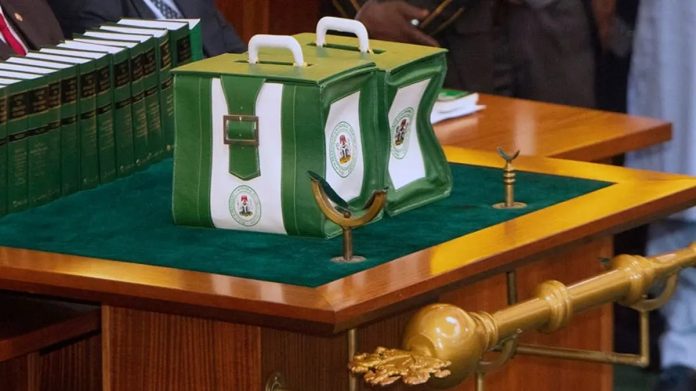
In a fervent pursuit of fiscal transparency and accountability, BudgIT Foundation, a prominent civic-tech organization in Nigeria, has intensified its critique of the proposed 2024 budget presented by President Bola Tinubu to the National Assembly.

Flagging what they describe as alarming discrepancies and crucial omissions, BudgIT called for an urgent review of the budgetary allocations.

Nancy Odimegwu, the Communications Associate at BudgIT, emphasized the organization’s concerns, recalling their earlier warnings to the Tinubu administration regarding budgetary practices detrimental to Nigeria’s progress. She said the foundation itemized ten plagues that the Tinubu administration should avoid in the 2024 budget and budget process to ensure value for money, curb expenditure inefficiency and waste, enforce accountability, and put Nigeria on the pathway of prosperity, economic growth, and development.

“Unfortunately,” Odimegwu stated, “our review of the proposed 2024 Appropriation Bill reveals that some deleterious budget practices from previous regimes persist, fostering corruption, underdevelopment, unemployment, and multidimensional poverty.”

“One significant observation is the absence of crucial budget breakdowns from the National Assembly, Government-Owned Enterprises, and some Ministry Departments and Agencies in the 2024 budget proposal.

“For instance, there is no breakdown of the National Assembly, the Niger Delta Development Commission and the North East Development Commission’s budget.

“For emphasis, the budgets of key revenue-generating government entities-including the Nigeria Ports Authority, Nigeria Customs Service, Nigerian Maritime Administration and Safety Agency (NIMASA), National Petroleum Investment Management Services (NAPIMS), Nigerian Security Printing and Minting Plc (NSPM), to mention a few-are conspicuously missing from the proposed 2024 budget presented to the National Assembly,” she added.

“Furthermore, the proposed budget’s total sum is N24.08 trillion, indicating a discrepancy of N3.42 trillion compared to the N27.5 trillion aggregate budget presented. We suspect that the difference above comprises the aggregate budgets of the Government-Owned Enterprises.”

The foundation highlighted significant gaps in budget breakdowns, specifically calling out the absence of critical financial details from entities such as the National Assembly, Government-Owned Enterprises (GOEs), and various Ministries, Departments, and Agencies (MDAs). Notably, the budgets of key revenue-generating entities like the Nigeria Ports Authority, Nigeria Customs Service, and others were conspicuously missing.

A startling N3.42 trillion discrepancy was identified in the proposed N24.08 trillion budget, indicating potential hidden allocations within GOEs. BudgIT stressed the urgency for disaggregated revenue and expenditure details from these entities, historically absent from formal budget presentations.

BudgIT also highlighted unfulfilled promises, pointing out that former President Buhari pledged to include MDA and GOE budgets in the annual appropriation bill for public defense and assent. These promises remained unfulfilled, carrying over into the current administration’s practices, indicating a glaring need for increased transparency in GOEs’ budget implementation.

The foundation’s detailed analysis uncovered duplications in allocations, particularly in renovations to presidential and vice-presidential quarters. A staggering N28.3 billion was allocated for these purposes, surpassing the combined capital budgets of key ministries, raising eyebrows regarding the allocation of funds.

“Similarly, the Vice President’s quarters in Lagos and Abuja, which got a cumulative sum of N5.5 billion in the 2023 supplementary budget for renovation, equally got allocations of N4 billion, N300 million, and N5 billion each in the 2024 budget.

“Cumulatively, the President and Vice President have a total allocation of N28.3 billion to either renovate or construct their quarters in Lagos and Abuja and another N10 billion to digitize those quarters,” it said.

Moreover, concerns were raised about the budget’s borrowing plans of $7.8 billion and €100 million (approximately N6 trillion) to fund the Medium-Term Expenditure Framework (MTEF). BudgIT questioned the rationale behind seeking approval to borrow for future budgets that currently do not exist, urging for more realistic and pragmatic revenue projections aligned with fiscal realities.

“Additionally, the proposed Appropriation Bill indicates plans to borrow $7.8 billion and €100 million (approximately N6 trillion) to fund the Medium-Term Expenditure Framework (MTEF).

“The Federal Government has projected a foreign borrowing of N1.77 trillion to finance the fiscal deficit of the 2024 budget; hence, should the government be seeking approval to borrow to fund budgets (2025 and 2026) that are not currently in existence?

“Another concern is the revenue projections, which have generally been ambitious and unmet, even in aggregate. The budget needs revenue projections aligned with fiscal realities, which must be done realistically and pragmatically,” BudgIT stated.

Drawing attention away from unreliable sources like net oil revenue, BudgIT emphasized the need for a broader fiscal focus. They highlighted the exponential growth of the service-wide vote, reaching N4.41 trillion in the 2024 budget, containing vague budget lines prone to impropriety and corruption.

“In addition, the service-wide vote provision contains budget lines that should be captured within MDAs’ budgets and vague budget lines that create loopholes for impropriety and/or corruption,” it said.

“For example, the service-wide vote envelope in the 2024 appropriation bill contains N108 billion for “special projects” with the project code “ERGP9213044.

“To worsen the situation, the federal government budget implementation reports often contain no information on how service-wide votes are utilized.”

Urging the National Assembly to recognize the budget’s pivotal role as a policy instrument, BudgIT called for a comprehensive review prioritizing economic growth, poverty reduction, infrastructure development, and human capital investment. Their unwavering stance aimed to steer Nigeria toward a transparent and accountable fiscal future.

Nigeria Plans to Increase 2024 Budget Amid Challenging Economic Realities

0

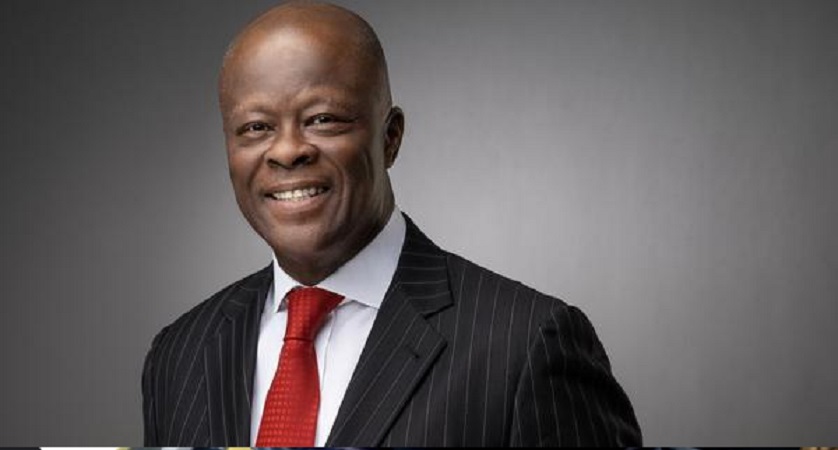
In a bid to bolster the 2024 budget, Nigeria’s Minister of Finance and Coordinating Minister of Economy, Wale Edun, has indicated that the Federal Government may seek additional appropriations from the National Assembly if the country experiences robust revenue performance next year.

Edun made this announcement on Monday, during his appearance before the Senate Committee on Finance to defend his ministry’s budget.

The minister, who also disclosed that the 2023 supplementary budget would be executed concurrently with the 2024 budget, outlined the government’s strategy, stating that savings would be utilized to enhance the availability of funds for the 2024 budget. He said the budget would be increased to reflect the government’s commitment to addressing economic needs and priorities.

The Senate Committee urged the finance minister to eliminate bottlenecks causing delays in budget implementation once passed. Chairman Sani Musa expressed concerns over the sluggish progress in executing the 2023 supplementary budget.

President Bola Tinubu presented the 2024 budget estimates of N27.5 trillion to the National Assembly on November 29, 2023. The budget breakdown included recurrent non-debt expenditure at N9.92 trillion, capital expenditure at N8.73 trillion, debt service at N8.25 trillion, revenue at N18.32 trillion, new borrowings at N7.83 trillion, and a deficit at N9.18 trillion.

The President projected economic growth at 3.76%, with an expected moderation of inflation to 21.4% in 2024.

Edun emphasized the importance of fiscal policy review and tax reforms to augment revenue generation. He assured that the government is not trying to increase, or introduce new taxes but enact reforms that will boost tax revenues.

He stressed that these measures would not only fortify the nation’s economy but also attract domestic and foreign direct investments, fostering job creation and wealth generation.

This development is coming amid growing criticism of the 2024 budget dubbed ‘Budget of Renewed Hope’ by experts, who believe it lacks the wits to address Nigeria’s current economic challenges.

Last week, Ben Akabueze, the Director-General of the Budget Office of the Federation, said that the proposed N27.5 trillion budget for 2024, awaiting approval in the National Assembly, is “too small” to adequately address Nigeria’s economic needs.

“I’m always first to acknowledge that the budget of the Federal Government of Nigeria is way too small relative to our needs and our requirements but it is now a case of cutting out coats according to our cloth rather than our size,” noted Akabueze.

Besides this concern, prominent Nigerians have expressed worry over the features of the budget, with some calling it extravagant. Peter Obi, the Labour Party presidential candidate in the last general election, said the priorities outlined in the budget fail to tackle the most pressing need of Nigerians, citing significant allocation for trips and renovations.

Obi urged a comprehensive review and revision of the budget to align with the urgent needs of the country.

BudgIT Foundation, a prominent civic-tech organization advocating for transparency, accountability, and efficient service delivery in Nigeria, has voiced apprehensions regarding the 2024 budget proposed by President Bola Tinubu and presented to the National Assembly for approval.

The organization said it identified what it deems as alarming issues and discrepancies within the 2024 budget, prompting a call for a thorough review of its contents.

“Unfortunately, having reviewed the proposed 2024 Appropriation Bill breakdown, we observed that the Bola Ahmed Tinubu administration has continued with some deleterious budget practices from previous regimes that have fostered corruption, underdevelopment, unemployment, and multidimensional poverty,” the foundation said.

The budget assumptions and Nigeria’s economic realities

Besides the backdrop of volume and features, the budget is significantly based on economic assumptions that experts fear may not be attained. For instance, the budget’s projections anticipate an average crude oil price of $73.96 per barrel in the global market and Nigeria’s oil production at an average of 1.78 million barrels per day, with an estimated exchange rate of N700/$1.

However, these forecasts contrast starkly with the current realities of underwhelming oil output, the weakening performance of the naira in the forex market, and a persistent upward trend in inflation.

Since 2022, Nigeria has struggled to maintain a daily oil production average of 1.2 million barrels per day. Achieving a significant daily increase of over 500,000 barrels within a year poses a considerable challenge, particularly considering the recent decline in oil production, illegal refining activities, oil theft, and a lack of confidence in the government’s capacity to reverse these detrimental economic trends.

Though there has been an uptick in oil production recently, with about 1.5mbd, the Nigerian National Petroleum Company Limited (NNPCL) said on Tuesday that Nigeria recorded 127 crude oil theft incidents between December 2 and 8, underscoring a possibility of production decline.

Also, the realities are stacking up against the N700/$1 exchange rate projection made in the budget. As of Tuesday, the naira is trading at N864.29/$1 at the official market and N1,210/$1 at the parallel market.

With the government’s efforts to boost dollar liquidity yet to yield the desired results, experts have called for the 2024 budget to be reviewed in line with the nation’s economic realities.

“We call for a comprehensive review that prioritizes broad-based economic growth, reduces inequality, addresses poverty, tackles insecurity, bridges Nigeria’s infrastructure gap, and invests in human capital development,” BudgIT said.

Federal Court Rules Against Google in Epic Games Antitrust Case, Threatening App Store Monopoly

0

In a pivotal court battle that could redefine the mobile app landscape, Google faced a significant blow as a federal court jury sided with Fortnite maker Epic Games Inc. in an antitrust case, potentially disrupting the mobile app economy and posing a substantial financial challenge for the tech giant.

The jury’s decision, reached after a nearly month long trial in San Francisco, concluded that Google Play had wielded monopoly power through anticompetitive practices. US District Judge James Donato will now determine whether Google must permit alternate payment and app distribution methods outside its exclusive app store.

Epic Games, having previously confronted Apple Inc. in a similar challenge (albeit with less success), sought not monetary damages but a transformation in app store policies.

Google, in response to the verdict, expressed intentions to contest the ruling.

Wilson White, Google’s vice president of Government Affairs & Public Policy, defended the company’s stance, stating, “Android and Google Play provide more choice and openness than any other major mobile platform.” He emphasized Google’s competition with Apple and other app stores on various platforms.

Tim Sweeney, CEO of Epic Games, reacted positively to the ruling, signaling the company’s intent to seek tangible alterations in Google’s app store policies. However, Sweeney refrained from divulging specific remedies, highlighting the need for substantial changes despite the court’s decision favoring Epic.

Legal experts and analysts anticipate significant ramifications following this verdict, anticipating potential alterations not just for Epic but for the broader internet ecosystem. Stanford University law professor Mark Lemley emphasized the case’s potential to disrupt the trend toward closed internet environments, potentially impacting market concentration.

He said the verdict “has the potential to be a very big deal — not just for Epic, which will get the ability to sell directly on Android phones — but for the entire internet.”

“The last two decades have seen a profound shift away from the open internet towards walled gardens,” he said. “That is one of the things that have kept the internet market so concentrated. This verdict just knocked a big hole in the garden wall.”

Paul Swanson, a technology and antitrust law specialist at Holland & Hart, suggested that Google might find it challenging to reverse such a sweeping verdict through post-trial procedures or appeals, indicating the substantial impact of the court’s decision.

This ruling arrives amid heightened scrutiny of Google’s business practices, coinciding with a separate antitrust case by the US Justice Department targeting the company’s search business.

Epic’s lawsuit, initiated three years ago, accused Google of monopolizing the Android app distribution market through restrictive agreements and anti-competitive maneuvers. Google defended its partnerships as measures to bolster Android phones against competitors like Apple’s iPhone.

“Epic wants you to give them a deal that they don’t have and they haven’t been able to get anywhere else,” Jonathan Kravis, a lawyer for Google, told the jury in his closing argument. “A deal that would effectively let them use the Play Store for free.”

The trial presented confidential internal communications and documents, offering insights into Google Play’s strategies and dealings with mobile device manufacturers and game developers. Jurors found Google guilty of restraining trade through revenue-sharing agreements and developer policies that hindered competition and limited alternate app distribution methods.

Alphabet had also countersued Epic, alleging contractual breaches and bad faith in Epic’s attempt to establish its own app store. However, the court opted to omit ruling on Google’s counterclaims following Epic’s executives’ admission of seeking alternatives to the Play Store.

The outcome of this trial, designated as ‘In Re Google Play Store Antitrust Litigation,’ has the potential to reshape the app market, pending Judge Donato’s forthcoming decision on remedial actions against Google.

Google has been running its Android app store and Google Play billing system as an “illegal monopoly,”a jury decided Monday in federal court in San Francisco. It’s a “historic victory” for Epic Games, owner of the popular game Fortnite, which filed a lawsuit accusing the tech giant of using “secret revenue sharing deals” to snuff out rival app stores, per The Verge. The implications of the verdict remain unclear, pending a decision on remedies by the judge in the case, and Google parent Alphabet is likely to appeal.

  • Epic was not seeking monetary damages, but CEO Tim Sweeney testified that it could save “billions” in fees if users weren’t routed to Google’s billing service.

  • The developer has been unsuccessful with a similar suit against Apple.

IMF Urges Central Bank of Nigeria to Raise Interest Rates to Tackle High Inflation

0

The International Monetary Fund (IMF) has recommended that the Central Bank of Nigeria (CBN) should raise interest rates in the next Monetary Policy Committee (MPC) meeting to address the country’s high inflation rate.

The call was made by Julie Kozack, the Director of the Communications Department at the IMF, during a press conference.

Citing Nigeria’s 27 percent inflation rate, Kozack pointed out that the CBN’s policy of mopping up excess liquidity from the system has contributed to the nation’s rising inflation.

“The Central bank, under its new leadership, has started to withdraw excess liquidity that was in the system and contributing to high inflation. The next Monetary Policy Committee meeting should further raise the policy interest rate. So, the Central bank is taking action to try to address the high inflation problem,” she said.

She highlighted the importance of addressing the high inflation rate, and the IMF’s call aligns with its previous recommendations during the Article IV Consultation held in February 2023.

Kozack emphasized the need for Nigeria to raise revenue, considering its low revenue-to-GDP ratio of 9%, which she deemed insufficient to support robust social safety nets and development spending.

“The next Monetary Policy Committee meeting should further raise the policy interest rate. So, the Central bank is taking action to try to address the high inflation problem. As we mentioned in our Article IV Consultation, which was held in February of 2023, raising revenue from the very current low revenue-to-GDP ratio of 9 percent is essential to create fiscal space for social and development spending.

“Nine percent of GDP is a very low revenue to GDP ratio, and it is really not high enough to be able to support strong social safety nets, and development spending, to help protect vulnerable households and also to meet Nigeria’s development needs,” she said

She acknowledged that the 2024 budget aims to reduce the fiscal deficit while creating space for priority spending on social and development initiatives.

However, since its Monetary Policy Meeting in July, when it raised the Monetary Policy Rate (MPR), which measures interest rate, from 18.5 percent to 18.75 percent, the central bank has failed to hold another MPC meeting. In September, the CBN, under acting governor, Folashodun Shonubi, postponed the 293rd MPC meeting scheduled for Monday and Tuesday, September 25 and 26, 2023.

Although the postponement was attributed to the non-confirmation of the newly appointed governor Yemi Cardoso and deputy governors of the bank by the Senate, months have gone by since then with the central bank not attempting to hold the MPC.

The newly appointed governor, Cardoso, said the MPC meeting of the apex bank has not been effective, adding that his focus is to make it effective.

“For quite some time, there has been a dislocation of our monetary transmission mechanisms rendering the MPC meetings largely ineffective,” he said.

“For the avoidance of doubt, the Central Bank of Nigeria Act 2007 requires that the meeting of the Monetary Policy Committee of the Bank be held at least four times a year, and the Bank has satisfied this requirement for 2023. Our focus has been on ensuring these meetings are useful and effective.”

“Our focus is on ensuring that these meetings are useful and effective,” he stressed.

Against this backdrop, the IMF call for the increase of interest may likely not be heeded, even though Nigeria’s inflation rate has been consistently rising. The inflation rate surged to 27.33% in October, marking an increase from the previous month’s rate of 26.72%, according to the latest report published by the Nigerian Bureau of Statistics (NBS).