DD
MM
YYYY

PAGES

DD
MM
YYYY

spot_img

PAGES

Home Blog Page 3932

Binance User Base Surges 30% in 2023, Amid Regulatory Challenges And Step Down of CEO Zhao Changpeng

0

World’s leading cryptocurrency exchange Binance has reported a 30% surge in its user base in 2023, amid regulatory challenges and the step down of the company’s CEO Zhao Changpeng.

The exchange’s current CEO Richard Teng said that the significant growth in Binance’s user base signifies strength and a positive outlook as the company looks past its regulatory hurdles with regulators.

In 2023, Binance welcomed more than 40 million users saw steady growth in its key services, and introduced new products and features built for the next stage of the blockchain industry’s development.

These expansions indicated Binance’s successful penetration into various segments of the crypto market, appealing to a broader range of users. The interest from institutional investors also saw a notable rise, as disclosed by the CEO, highlighting the growing mainstream acceptance of cryptocurrency as a viable asset class.

2023 was indeed a significant year for Binance in terms of regulatory compliance. The company allocated $213 million towards compliance measures, marking a 35% increase from the previous year.

This investment was directed towards enhancing surveillance against wash trading on the exchange and NFT marketplaces, developing an in-house case management system for transaction monitoring, and conducting a security audit completed recently.

These measures were part of Binance’s broader strategy to align with regulatory expectations, especially following the settlement with U.S. authorities.

The agreement included a hefty fine for violating U.S. banking laws and the implementation of a U.S. government-approved compliance monitor for the next five years. This commitment to compliance is a response to past challenges and a proactive measure to ensure future regulatory alignment.

In the same year, Binance Feed evolved into Binance Square, a social platform designed to be the single touchpoint for the Web3 content universe, facilitating the conversation and enabling everyone to generate compelling content. Over the past year, Binance Square went from 1,200 to 11,000 creators and from under 700K to 1.6M+ active daily users.

In addition to financial investment, Binance’s regulatory liaison team was actively engaged with global law enforcement, processing nearly 60,000 requests and conducting 120 training sessions. This level of engagement reflects the company’s dedication to collaborating with regulatory and law enforcement agencies, further strengthening its compliance posture.

CEO Richard Teng emphasized the company’s commitment to long-term stability and growth amid these developments.

Although crypto markets spent much of the year in recovery mode, Binance products and services enabling payments, real-world purchases, and gifting saw a steady rise in user numbers. More people use digital assets to pay for goods and services online and in-store, facilitated by a growing number of merchants supporting this functionality.

• The number of people who sent crypto to their loved ones using Binance Gift Card went up by a factor of 3.5 compared to last year.

• In 2023, the number of fiat currencies supported on Binance reached 69, with 30 fiat channels available to users across the globe.

• Binance P2P grew the number of payment methods and fiat currencies supported to 970 and 112, respectively, and facilitated 18% more trades between 39% more users than in 2022.

Throughout 2023, the crypto exchange continued to engage with regulators to ensure it meets the most rigorous standards in the jurisdictions where it operates. As of the end of the year, Binance disclosed that it held licenses, registrations, and authorizations in 18 jurisdictions around the world more than ever before.
Chinese Tech Giant Baidu Discloses Its ChatGPT Rival Ernie Bot, Has Reached Over 100 Million Users

0

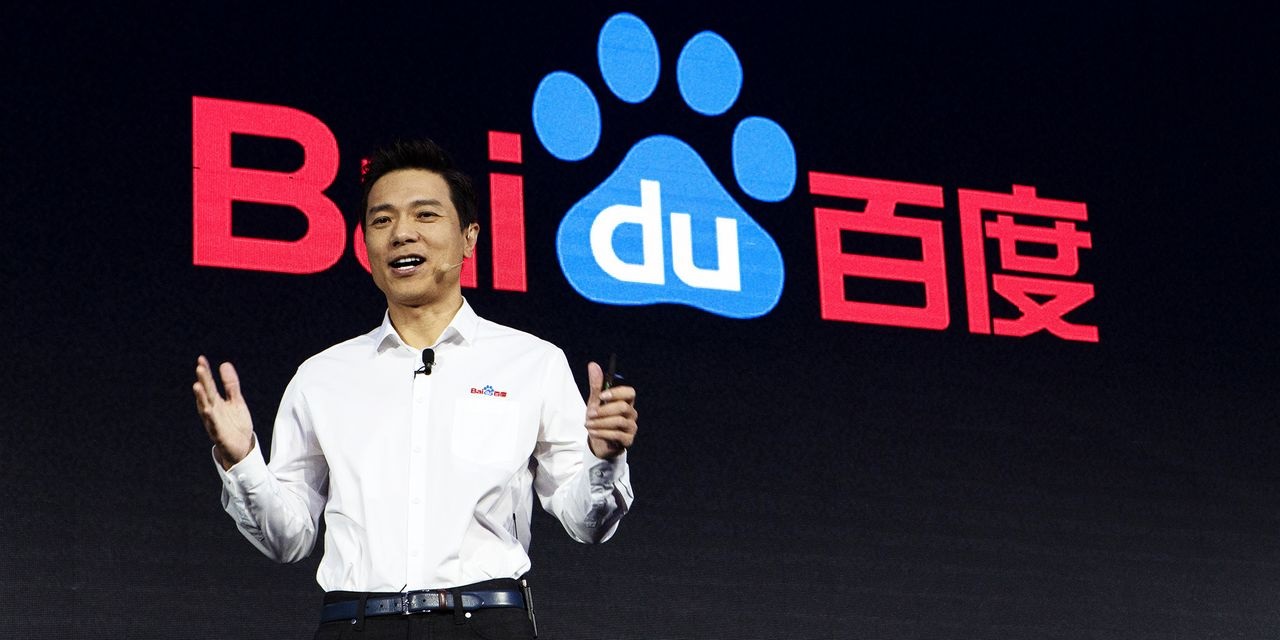
Chinese multinational technology company that specializes in Internet-related services, products, and artificial intelligence, Baidu, has announced that its ChatGPT rival Ernie Bot now has more than 100 million users.

The company announced this milestone on Thursday, at a deep-learning summit in Beijing. The news is coming about five months after Ernie Bot was officially launched to the public in August 2023. Before the launch, Baidu‘s Ernie bot ranked first in popularity on Apple’s app store in China after the Chinese tech giant disclosed that it was releasing its ChatGPT-like chatbot to the public.

The company generated $17.9 billion in revenue from its applications during its last fiscal year, after making Ernie Bot generally available in August this year.

Baidu’s ChatGPT rival Ernie Bot is based on an internally developed large language model called ERNIE. The model supports many of the same use cases such as OpenAI’s GPT-4, which is capable of writing and rewriting text, summarizing existing documents, and generating code.

A few weeks after its launch, Baidu introduced an upgraded version of Ernie Bot powered by a new AI system dubbed Ernie 4.0. The company disclosed that the upgraded chatbot offers drastically improved performance in understanding, generation, reasoning, and memory.

The tech giant also integrated Al features into its existing services. Baidu also debuted a tool that allows users of its cloud-based file storage service to retrievedocuments with natural language prompts.

According to Baidu’s CEO Robin Li, he explicitly stated that the company positioned ERNIE 4.0 as a direct competitor to OpenAl’s ChatGPT, stating that the chatbot is not inferior in any aspect to GPT-4, making it a strong contender in the Al chatbot arena.

Also, Li has on several occasion noted that the company will continuously collect massive valuable, real-world human feedback to improve its chatbot model, and bring more innovation to the Ernie Bot. 

Baidu’s focus on enhancing and expanding its AI capabilities with Ernie Bot echoes the tech industry’s broader push towards more sophisticated and integrated artificial intelligence solutions. The company’s rapid development and deployment of Ernie Bot demonstrate the competitive nature of the AI and tech space, where innovation and user-base growth are key indicators of success.

Notably, Baidu has been a frontrunner in China’s efforts to benefit from the excitement surrounding generative Al, which is the technology behind systems like ChatGPT and its successor, GPT-4.

With the World Bank estimating China’s 2023 population to be 1.4 billion people, Ernie Bot’s recent milestone of hitting over 100 million users, represents a significant market penetration, reaching potentially 7% of the people in China.

Chinese tech giant Huawei expects to post a 9% increase in revenue, or $98 billion, in 2023 in a rebound from crippling U.S. sanctions. That’s according to an internal note from Ken Hu, Huawei’s rotating chairman, who said the company is “pretty much back on track.” The Trump administration imposed sanctions on the company in 2019 to curtail Chinese access to state-of-the-art microchips over national security concerns. Sales of the company’s smartphones, which are thought to use its own chips, resumed in August. Shipments jumped more than 80% in October year-over-year, per Counterpoint. (LinkedIn News)

Nigeria has between $300 billion and $900 billion worth of dead capital

0

According to a report by PwC, Nigeria is sitting on a huge amount of untapped wealth in its residential and agricultural sectors. The report estimates that the value of dead capital in these sectors ranges from $300 billion to $900 billion, meaning that these assets are not legally registered or cannot be used as collateral for loans. This is a major challenge for the Nigerian economy, as it limits the access to finance and investment opportunities for millions of people.

Dead capital refers to assets that are not recognized by the formal legal system or that cannot be easily converted into cash. In other words, these are assets that have economic value but are not productive or liquid. For example, a house that is not registered with the government or a land that has no clear title cannot be used as collateral for a loan, sold to another party, or inherited by heirs. These assets are essentially “dead” in the sense that they do not generate income or wealth for their owners or the society.

Why is dead capital a problem for Nigeria?

Nigeria has one of the largest stocks of dead capital in the world, especially in its residential real estate and agricultural land sectors. According to PwC, about 97% of land in Nigeria is held under customary tenure, which means that it is governed by local rules and traditions rather than by formal laws.

This makes it difficult to prove ownership, transfer rights, or access credit using land as security. Similarly, many residential properties in Nigeria are not properly registered or documented, making them vulnerable to disputes, fraud, or expropriation.

The problem of dead capital in Nigeria has serious implications for the economic development and social welfare of the country. First, it reduces the availability of credit and capital for individuals and businesses, as they cannot use their assets as collateral for loans or as equity for investments.

This limits their ability to start or expand their enterprises, create jobs, or improve their living standards. Second, it reduces the efficiency and transparency of the property market, as it creates information asymmetries, transaction costs, and risks for buyers and sellers. This discourages investment and innovation in the real estate and agricultural sectors, which are vital for economic growth and diversification.

Third, it reduces the tax revenue and public services for the government, as it makes it harder to identify and collect taxes from property owners or users. This affects the quality and quantity of public goods and infrastructure that the government can provide to its citizens.

What can be done to unlock the potential of dead capital in Nigeria?

The solution to the problem of dead capital in Nigeria lies in improving the legal and institutional framework for property rights and registration in the country. This involves several steps, such as:

Simplifying and harmonizing the laws and regulations governing land and property ownership and transactions in Nigeria, to make them more consistent, clear, and accessible.

Strengthening and modernizing the land administration system in Nigeria, to make it more efficient, reliable, and digitalized.

Increasing the awareness and education of property owners and users on the benefits and procedures of formalizing their property rights and registering their assets.

Providing incentives and support for property owners and users to formalize their property rights and register their assets, such as reducing fees, streamlining processes, offering subsidies, or granting amnesty.

Enhancing the enforcement and protection of property rights in Nigeria, to ensure that property owners and users can enjoy their rights without fear of losing them.

These reforms would not only increase the economic value of the assets, but also create more opportunities for income generation, job creation, infrastructure development, poverty reduction, and social stability. PwC also cites some examples of countries that have successfully implemented similar reforms, such as Rwanda, India, and Peru.

These countries have shown that with political will, institutional reforms, and technological innovation, it is possible to unlock the wealth hidden in dead capital and create more prosperity and well-being for the people.

At PwC, we have extensive experience and expertise in helping clients to address the challenges of dead capital in Nigeria. We have worked with various stakeholders, such as governments, private sector actors, civil society organizations, and international donors, to design and implement solutions that improve the legal and institutional framework for property rights and registration in Nigeria.

We have also helped clients to leverage their assets for economic growth by providing services such as valuation, due diligence, advisory, financing, taxation, audit, assurance, and more.

FCCPC Accrued N56 Billion in Internally Generated Revenue Through Penalties Imposed on Businesses in 2023

0

The Federal Competition and Consumer Protection Commission (FCCPC), disclosed that it accrued the sum of N56 billion as internally generated revenue (IGR) in 2023, with 90% derived through penalties imposed on businesses.

This was disclosed by the Executive Vice Chairman of the Commission, Mr Babatunde Irukera during a media chat in Abuja on Thursday.

Mr. Babatunde disclosed that the FCCPC remitted N22.4 billion to the federation’s account.

He further stated that the FCCPC is not hell-bent on closing down businesses, but rather, the commission has adopted a system of holding businesses and companies accountable to ensure a stable market.

In his words,

What makes the market stable is holding businesses accountable. Consequence management system is what we have adopted. We are not trying to close businesses, but they must know that if you snooze, you lose. You cannot distort the market and expect that there will be no consequences”.

Speaking on the FCCPC budgetary allocation since 2017, he disclosed that the commission received a government budget of N1.0 billion and generated an Internally Generated Revenue (IGR) of N154 million in that year.

“In 2018 and 2019, the Commission received government budgets of N3.3 billion and N1.3 billion, respectively, while accruing an IGR of N377 million in 2019. Furthermore, in 2020, the Commission’s government budget amounted to N887 million, accompanied by an IGR of N864 million.

“By 2021, the government approved a budget of N1.8 billion to the Commission and the agency generated N4 billion and remitted N1.6 billion. What the government released from the treasury that year for the agency was N1.3 billion, so the agency gave the government more money than it got from it.

“In 2022, the government budget was N1.3 billion for the agency, the agency did not touch a single kobo of the operational or capital expense, the agency made N5.2 billion and remitted N2.6 billion. In 2023, our IGR is N56 billion, and we remitted to the government N22.4 billion”.

The FCCPC has continued to emphasize its commitment to promoting consumer interest as well as ensuring fair market practices. 

The significant generation of revenue from fines imposed on businesses reflects the commission’s commitment and desire to enforce the law and hold businesses accountable.

Recall that recently, the FCCPC on Wednesday sanctioned British American Tobacco (BAT) Nigeria and its affiliate companies a $110 million fine over the violations of the Commission Act and other regulations.

The commission asserted that the implicated companies had transgressed both corporate regulations and the National Tobacco Control Act, alongside other legal instruments. 

According to FCCPC, the alleged offenses involve BAT’s actions to impede competitors and impose penalties on retailers ensuring fair opportunities for rival products. Apart from the fine imposed on the company, other penalties were imposed for the violation. 

The commission has on several occasions stated that Competition regulation and consumer protection are not only to regulate big companies, but to also regulate the formal sector.

Avalanche Foundation considers buying meme coins, OKX to delist privacy tokens on Jan. 5

0

In a surprising move, the Avalanche Foundation, the non-profit organization behind the Avalanche blockchain platform, has announced that it is considering investing in meme coins. Meme coins are cryptocurrencies that are created as jokes or for fun, often featuring humorous names, logos or themes. Some examples of meme coins are Dogecoin, Shiba Inu, Floki Inu and Baby Doge.

Avalanche protocol, which is a novel consensus mechanism that enables high throughput, low latency and low fees for transactions. The Avalanche protocol is powered by a unique algorithm family that combines the best features of classical and Nakamoto consensus mechanisms.

The Avalanche protocol supports multiple blockchains, smart contracts, decentralized applications and interoperability with other crypto platforms. The foundation also funds grants, scholarships and research projects related to Avalanche.

The Avalanche Foundation said that it is exploring the possibility of buying meme coins as a way to diversify its portfolio, support innovation and creativity in the crypto space, and engage with new and existing communities. The foundation also said that it believes that meme coins have the potential to generate positive social impact, such as raising awareness and funds for charitable causes.

The foundation did not disclose how much it plans to invest in meme coins, or which ones it is interested in. However, it said that it will conduct thorough research and due diligence before making any decisions. It also said that it will adhere to its mission and vision of creating an open, decentralized and scalable platform for launching any kind of applications and assets.

The announcement has received mixed reactions from the crypto community. Some praised the foundation for being open-minded and adventurous, while others criticized it for being irresponsible and unprofessional. Some also questioned the legitimacy and credibility of the foundation, suggesting that it might be a prank or a publicity stunt.

Some of the reasons why people criticize the foundation are:

They think that meme coins are not serious or valuable investments, but rather speculative and volatile assets that can lose their value quickly. They think that meme coins are not aligned with the foundation’s goals and values, but rather contradict its vision of building a secure and reliable platform for decentralized applications.

They think that meme coins are not compatible with the foundation’s reputation and image, but rather damage its credibility and trustworthiness among potential users and partners. They think that meme coins are not beneficial for the crypto ecosystem, but rather distract from more important and meaningful projects and initiatives.

The Avalanche Foundation was founded in 2018 by a team of researchers and developers led by Emin Gün Sirer, a professor of computer science at Cornell University. The foundation is responsible for developing and maintaining the Avalanche protocol, which is a novel consensus mechanism that enables high throughput, low latency and low fees for transactions.

The Avalanche network supports multiple blockchains, smart contracts, decentralized applications and interoperability with other crypto platforms. The foundation also funds grants, scholarships and research projects related to Avalanche.

OKX to delist privacy tokens on Jan. 5

OKX, one of the leading cryptocurrency exchanges in the world, has announced that it will delist four privacy tokens from its platform on January 5, 2024. The tokens are Monero (XMR), Zcash (ZEC), Dash (DASH) and Horizen (ZEN).

According to a blog post published by OKX on December 29, 2023, the decision to remove these tokens was made in compliance with the regulatory requirements of the Financial Action Task Force (FATF), an intergovernmental organization that sets standards for combating money laundering and terrorist financing.

The FATF has issued guidance for virtual asset service providers (VASPs), such as cryptocurrency exchanges, to implement the “travel rule”, which requires them to collect and share information about the originators and beneficiaries of crypto transactions above a certain threshold. The FATF also considers privacy coins, which obscure the identities and transaction histories of their users, as high-risk assets that pose challenges for VASPs to comply with the travel rule.

OKX stated that it values the privacy and security of its users, but it also has to abide by the laws and regulations of the jurisdictions where it operates. The exchange added that it will continue to monitor the development of the global regulatory environment and adjust its policies accordingly.

The delisting of the privacy tokens will take effect at 10:00 AM (UTC) on January 5, 2024. OKX users who hold these tokens are advised to withdraw them to other platforms or wallets before the deadline. After the delisting, OKX will not support any deposits, withdrawals, transfers or trading of these tokens.

The announcement by OKX follows a similar move by another major cryptocurrency exchange, Binance, which delisted the same four privacy tokens from its Singapore platform in November 2023. Binance cited compliance with local regulations as the reason for its action.

Some people use privacy coins because they value their financial privacy and do not want their transactions to be tracked or traced by third parties, such as governments, corporations, hackers or criminals. Privacy coins can also enable people to access financial services that are otherwise unavailable or restricted in their regions, such as remittances, donations, crowdfunding or peer-to-peer lending. Privacy coins can also help people to avoid censorship, discrimination or persecution based on their political views, religious beliefs, sexual orientation or personal preferences.

The delisting of privacy coins by some of the largest cryptocurrency exchanges in the world could have a significant impact on the liquidity and market value of these tokens, as well as on the privacy and anonymity of their users. However, some experts and advocates argue that privacy coins are not inherently illicit or criminal, and that they serve a legitimate and important function in protecting the human rights and freedoms of people who live under oppressive regimes or face censorship and surveillance.