DD
MM
YYYY

PAGES

DD
MM
YYYY

spot_img

PAGES

Home Blog Page 3956

Alleged Financial Mismanagement Rocks Nigeria’s Central Bank as Investigator’s Report Exposes High-Level Fraud

2

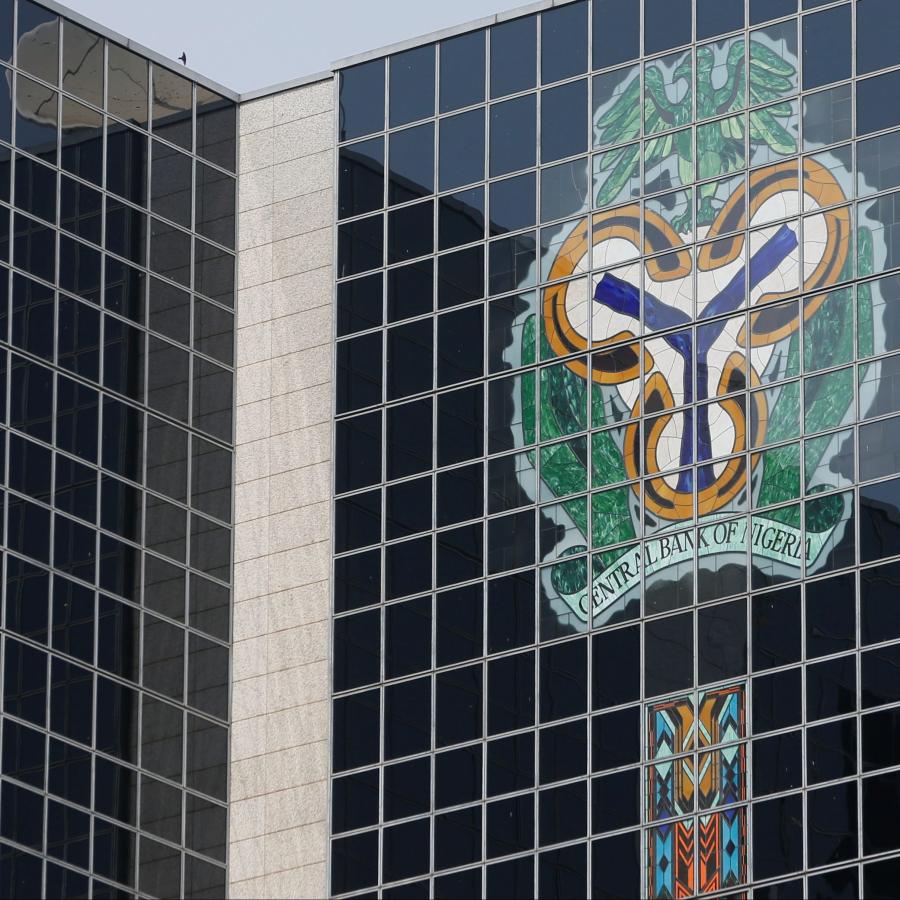
The Central Bank of Nigeria (CBN) has been thrust into a maelstrom of controversy following a comprehensive investigation by Special Investigator Jim Obazee, appointed by President Bola Tinubu.

The report, titled ‘Report of the Special Investigation on CBN and Related Entities (Chargeable offences)’, delivered to President Tinubu on December 9, has exposed a labyrinth of financial misconduct allegedly perpetrated during the tenure of former CBN Governor, Godwin Emefiele.

Unauthorized Overseas Accounts and Fraudulent Transactions

A staggering revelation emerged from the investigation—593 bank accounts scattered across the United States, United Kingdom, and China, purportedly housing Nigerian funds. Shockingly, these accounts were allegedly operated without proper authorization from the CBN’s Board and Investment Committee. Among the highlighted discrepancies was a contentious $6.23 million cash withdrawal (approximately N2.9 billion) linked to Emefiele and other officials.

Emefiele, as per the report, allegedly held 543.4 million pounds in fixed deposit accounts in the UK while being accused of manipulating the Naira exchange rate and orchestrating fraudulent activities tied to the CBN’s e-Naira project. It further alleged that Emefiele manipulated the Naira exchange rate and was involved in fraudulent activities within the CBN’s e-Naira project.

Financial irregularities under the naira redesign

The report delved into the controversial redesign of the Nigerian currency in October 2022. Obazee’s investigation alleged that this redesign carried out without requisite approvals from the CBN Board or President Muhammadu Buhari as mandated by the CBN Act, incurred a staggering N61.5 billion in expenses. Additionally, an alarming N1.7 billion was purportedly spent on dubious legal fees, raising red flags about financial impropriety and procedural violations.

“It was a conspiracy against the Nigerian people and specifically the political class by the then CBN Governor (Mr Godwin Emefiele) and one of the erstwhile CBN Deputy Governor (Mr Folashodun Shonubi). The idea was that Mr. Shonubi (claiming interwoven challenges) and Mr Godwin Emefiele designed and approved the currency on 19th October 2022.

“It was indeed meant to frustrate the political class and make their election agenda very difficult. It turned out to be a huge punishment to Nigerians and the Nigerian Economy coincidentally,” the report said.

 Abuse of power and other offenses

Multiple grave “chargeable offenses” were outlined in the report, notably the fraudulent use of “Ways and Means” totaling an astronomical N26.627 trillion. This financial instrument, intended for temporary government advances, allegedly fell prey to misuse by Emefiele, former Minister of Finance, deputy CBN governors, and other high-ranking officials, leading to substantial financial irregularities.

Section 38 of the CBN Act, 2007 authorizes the CBN to offer temporary advances to the Federal Government to cover shortfalls in budget revenue, subject to interest. This practice is commonly known as “Ways and Means.”

Additionally, the same section specifies that these advances must be repaid by the end of the Federal Government’s financial year in which they were provided. Failure to repay within this timeframe results in the CBN being barred from granting such advances in subsequent years. Importantly, repayment cannot occur through methods like Promissory notes, Securitization, or the issuance of Treasury Bills.

“It was a surprise, Mr President, that under the last administration, the noble outlet became a huge source of fraudulent drain pipe for the then Minister of Finance, Mrs Zainab Ahmed, the erstwhile CBN Governor, all the four deputy CBN Governors (under the guise of COG), the Permanent Secretary of the Ministry of Finance, the Accountant General of the Federation and even the then Chief of Staff, In an instance, they padded what the former President Muhammadu Buhari approved with N198,963,162,187 (approximating an approval of N801,036,937,813 to N1 trillion),” the report said.

“There are instances where no approvals are received from the former President Muhammadu Buhari and yet, N500 billion is taken and debited to Ways and Means.

“There are more shocking instances when the erstwhile CBN Governor and his four deputy Governors connived to steal out-rightly in order to balance the books of the CBN. This was by violently taking (sic) money from the Consolidated Revenue Fund (CRF) account and then charging it to “Ways and Means,” They even created the narration as a Presidential subsidy and expanded the “Ways and Means” portfolio to accommodate the crime.

Obazee noted that the CBN officers and even the then Acting CBN Governor could not produce the Presidential Approval of most of the expenses described as “Ways and Means”.  He reported that when confronted to provide the breakdown of the supposed N22,719,703,774,306.90 that was presented to the 9th National Assembly to illegally securitize the “Ways and Means” financing, they were only able to partially explain a total of N9,063,286,720,318.92 or N9,258,040,720,318.92 (depending on which official you are considering his submission) and an unreasonable attribution of non-negotiated/unadvised interest element of N6,678,874,321,541,97.

“This shows that this was the point where the officers of the immediate past administration as well as the erstwhile CBN Governor and his four Deputy Governors connived, defrauded, and stole from the commonwealth of the country with the aid of civil servants,” he said in the report.

The report added that the true position of the “Ways and Means” as documented from the reconciliation between the CBN and the Ministry of Finance at the time, is N4,449,149,411,584.54.

Furthermore, the investigation uncovered an alleged theft of $6.23 million from the CBN’s vault. Purportedly executed under the guise of funding foreign election observer missions, CCTV footage reportedly captured individuals within the CBN involved in the removal of the funds, raising serious concerns about transparency and accountability.

“As of date, Abdulwaheed Muhammed has admitted in a written statement that he acted in collaboration with one Bashirdeen Mohammed Maisanu, an assistant director in the Banking Supervision Department of the Central Bank of Nigeria and some persons he is yet to identify, to conceive and carry out the act of stealing the sum of $6.23 million out of the vault of the Central Bank of Nigeria.

“A fraudulent cash withdrawal of $6.23 million perpetrated since February 8th 2023, was not discovered nor taken seriously till the 4th of December when a Request for Information was issued by the Office of the Special Investigator. There is therefore an appearance of concealment by officers …”, the report stated.

On July 28, President Bola Tinubu appointed Mr. Obazee as a Special Investigator tasked with examining the operations of the Central Bank of Nigeria (CBN) and associated entities. Mr. Obazee was instructed to assemble a proficient team and collaborate with relevant security and anti-corruption agencies for the investigation. The appointment was grounded in the fundamental objectives outlined in Section 15(5) of the Nigerian constitution and aligned with the nation’s anti-corruption efforts.

President Tinubu also directed Mr. Obazee, the former CEO of the Financial Reporting Council of Nigeria (FRCN) from 2011 to 2017, to promptly enhance the integrity of key Government Business Entities (GBEs) and curtail financial leakages within the CBN and related GBEs.

Additionally, Mr. Obazee was mandated to furnish a comprehensive report on the current status of public wealth held by both corrupt individuals and entities, whether in the private or public sector.

The Special Investigator uncovered additional offenses, such as the deceptive intervention programs, improper spending on COVID-19, and misrepresentation of presidential approval regarding the NESI Stabilization Strategy Ltd.

As the report awaits further action, including potential prosecutions and reforms within the CBN and related agencies, attempts to reach Emefiele and other implicated individuals for comment have been unsuccessful.

The seismic revelations unleashed by this investigation have cast a dark cloud over one of Nigeria’s pivotal financial institutions. Urgent calls for accountability, sweeping reforms, and potential legal actions echo across the nation to address the alleged financial misconduct purportedly entrenched within the CBN.

Mr. Obazee recommended the prosecution of Mr. Emefiele and a minimum of 13 other individuals, including his deputy governors, on charges of serious financial offenses.


London Court Quashes $11 Billion P&ID’s Claim Against Nigeria Over Corrupt Gas Deal

0

In a landmark decision that reverberates through international business circles, a London court has nullified the $11 billion damages sought by Process & Industrial Developments (P&ID) Limited against Nigeria. The ruling comes as a culmination of a protracted legal battle over a failed gas processing project in Cross River, Nigeria.

Judge Robin Knowles, presiding over the case, delivered a damning judgment, pointing to the procurement of the gas processing project through bribery involving Nigeria’s oil ministry officials. The court found that P&ID had failed to disclose these corrupt practices during the arbitration against Nigeria.

“Today’s judgment unequivocally declares the damages null and void without delay,” emphasized Judge Robin Knowles, rejecting P&ID’s plea to revert the case to arbitration.

This decision follows a prior ruling in October, where the High Court deemed the contract obtained by P&ID as a product of bribery and fraud. Judge Knowles, in a separate judgment earlier this month, ordered P&ID to pay £20 million in damages and compensation to the Nigerian government.

P&ID’s attempts to revive their claims against Nigeria through fresh arbitration hit a roadblock as the court insisted that proceedings couldn’t proceed with the 2023 judgment standing firm.

The crux of the matter lies in the allegations that P&ID had paid bribes to Nigerian officials involved in drafting the gas supply and processing agreement (GSPA) back in 2010. This revelation has cast a shadow of doubt over the legitimacy of the entire agreement.

The long-drawn legal battle traces its origins to a 2017 tribunal ruling that demanded Nigeria to compensate P&ID with $6.6 billion in damages, along with substantial interest rates. Subsequently, in September 2020, Judge Ross Cranston approved this application.

However, Nigeria’s legal representatives countered these claims, alleging P&ID’s involvement in bribery to secure the contract. P&ID vehemently denied these accusations, countering them as baseless conspiracy theories.

Throughout the legal proceedings, Nigeria consistently argued that the contract was procured through deceitful means, including bribery and perjury. They contended that the ballooning arbitration award, now reaching $11 billion due to accrued interest, should be invalidated.

Judge Robin Knowles sided with Nigeria, delivering a resounding victory in court by affirming the invalidation of the claimed damages.

“I have not accepted all of Nigeria’s allegations,” the judge said. “However, the arbitration awards were obtained by fraud and the awards were, and the way in which they were procured was, contrary to public policy”.

Why comparing Blockchains by transaction metrics is a fishing expedition

0

Transactions are signed messages recorded on blockchains. Every block has a limited amount of storage space.

Not all blocks get completed in the same time. Not all transactions require the same amount of data, and depending on the blockchain, those that keep it running – Miners or Validators – can place criteria, such as the transaction size, or the fee available, on which transactions they will agree to process.

The average of all of these variables leads to a rating, called ‘Transactions Per Second’ (TPS) – for blockchains, or other ‘crypto-architectures’. Web 3 journalists and content creators are sometimes obsessed with this variable, and over stress its significance compared to security.

‘Scaling’ is a term generally in business that means to do the same thing faster (and possibly cheaper). One method of approaching this with blockchains, is to use other ‘crypto-architectures’ on top of them. These split the transaction into two unequal parts. They mimic the node functions of the blockchain, and ‘mint’ the larger part onto their ‘off chain’ network, sending only a small piece of ‘meta data’ on to the blockchain itself.

Since the meta data is only a fraction of the transaction size, a lot more transactions can be accommodated on the block.

At the moment, there are a lot of rumours of renewed building on these other ‘crypto-architectures’ , and about plans to build new ones.

There is also talk about an imminent ‘bull run’ in Web 3, though this is mostly affected by a recent surge in the value of Bitcoin compared to the $USD. The popularity of Bitcoin as a store of value has more to do with world events, and lack of confidence in other instruments.

This does not necessarily stimulate the market in supporting the minting of other types of assets to ‘crypto-architectures’. If indeed, new building is going on, it is important to understand building is an indicator of renewed investment risk taking, not evidence of sales.

But when, instead of full transactions, meta data is being added to blocks, we are not always being given data that represents consumer confidence, coin/token exchange or crypto-asset purchases.

When we see data comparing different blockchains, we need to look at what specific information is being shared about transaction types, in order to make fair comparisons.

The person holding a fishing rod, the rod, the reel, the line, the hook and the bait, are all fishing transactions if they move, but movement in itself, does not mean there is a fish on the line.

Some blockchain transactions really do mean a fish is reaching somebody’s plate. Many of them can be ‘just fishing’.

9ja Cosmos is here…

Get your .9jacom and .9javerse Web 3 domains  for $2 at:

.9jacom Domains

.9javerse Domains

Visit 9ja Cosmos LinkedIn Page

Visit 9ja Cosmos Website

Preview our Sino Amazon/Sinosignia releases

The BEST New Resolution Is Making Sure It’s Not Necessary!

1

I do not believe in new year resolutions. Yes, it is an illusion to think that switching of a digit from 2023 to 2024 will deliver a new outcome, when you have not investigated, and resolved, to fix and deepen what matters: processes. One of the greatest victories in life is the victory over time, and that time is allocated to all of us, equally (24 hours in a day). Time, even in its limitless form, is the most scarce resource out there. Until you can win over it, via your processes, you cannot resolve your future.

Leave new year resolutions, focus on resolving your daily and weekly non-optimal processes. Buy an exercise book. Every Sunday night, take 10 minutes to list important things you want to get done in that week. Then every night before you go to bed, or if you prefer, early in the morning, list important tasks for the day. As the days go and the week passes, cross-out the completed ones. Keep optimizing those processes, keep improving on how you execute the tasks, and track these two indicators: quality and speed.

In most things in the professional domain, those who can deliver high quality outcomes at the shortest time thrive. So, you must keep improving your processes while reducing the time required to execute tasks.

If you blog, how can you take 30 minutes to put that content over 2 hours without loss of quality? If you send a management report, how can you beat the deadline with high quality results, and demonstrate that you are ready for more responsibilities? Those simple resolutions will make the mountain-size new year resolutions irrelevant.

Happy new year ahead, and make new year resolutions unnecessary by constantly resolving your processes.

El Salvador Retains Top Spot in Bitcoin’s Interest by Region

0

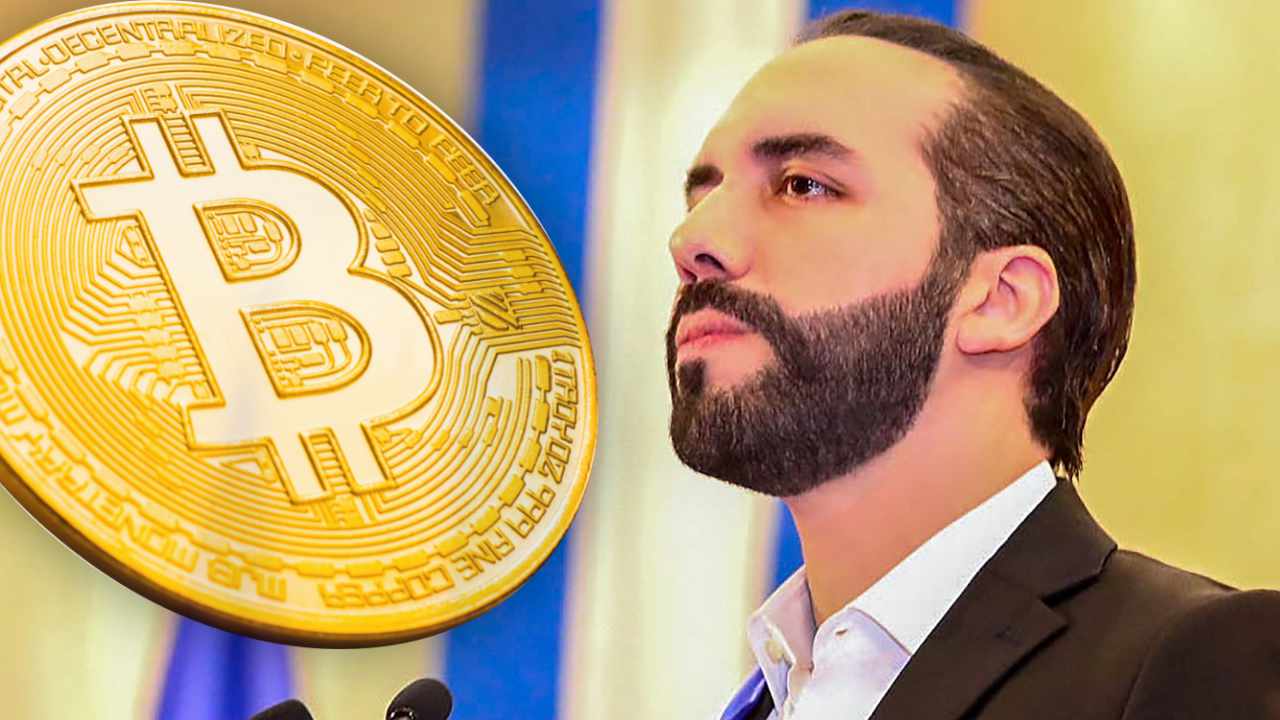
In recent data from Google Trends, Central American country El Salvador has retained the top spot in Bitcoin’s interest by region, as the country intensifies investment in the crypto asset.

El Salvador is followed closely by Brazil and Nigeria, occupying the top three positions of countries with the most interest in Bitcoin.

El Salvador’s dominance as the top country with Bitcoin interest is largely attributed to the country’s solidification of Bitcoin investments, into its economic framework.

A notable stride to the country’s Bitcoin investment can be seen when the government under the leadership of Bukele Nayib, on December 8, 2023, introduced a citizenship-by-investment program as part of its digital economy expansion drive.

The El Salvador government, in partnership with stablecoin issuer Tether, launched the Freedom Visa-a citizenship-by-donation program that grants residency and a pathway to citizenship for 1,000 people willing to put down a $1 million Bitcoin (BTC) or Tether (USDT) donation toward the country development.

Announcing the launch of a freedom visa, the country wrote on its official site,

Experience Freedom, Security, and a Bitcoin lifestyle by adopting El Salvador as your home. El Salvador has been reborn as the land of economic liberty. But this is just the beginning. Come help us build the future you want to see. The Freedom Visa has the technological support of Tether UsDT 0.0%, my current employer. The fees of the program can be paid in BTC or the stablecoin USDT”.

The country’s adoption of a visa program announced in collaboration with stablecoin issuer Tether, aims to grant citizenship to wealthy foreign investors. To be eligible, participants must commit $1 million in Bitcoin or USDT investment with an additional $999 non-refundable deposit counting toward the total investment.

El Salvador intends to push this innovative approach to using cryptocurrency investments to attract investors seeking citizenship and rebuild the country’s economy. The expected gain for the citizenship-by-investment program is predicted to generate up to $1 billion if fully subscribed, and will also transform El Salvador into a critical revenue stream comparable to other countries with similar initiatives.

Despite the high costs of its citizenship-by-investment programs, the Central American country is an attractive market for crypto investors due to its pro-Bitcoin initiatives. Recall that the country’s President Nayib Bukele made headlines after he announced Bitcoin as a legal tender and provided tax breaks on income and capital gains for tech firms that invest in the country over the next 15 years.

After Bitcoin hit a new all-time high of $41,000 this year, President Bukele revealed that the country’s investment in Bitcoin is currently in profit.

He further disclosed that with the current Bitcoin market price, if the country is to sell its Bitcoin investments, it would not only recover 100% of its investment but also make a profit of $ 3,620 277.13 USD. He however noted that there is no intention to resell, as it has never been the objective.

Meanwhile, Bukele’s stance on holding Bitcoin as part of a long-term strategy is consistent with the country’s leadership vision to integrate cryptocurrencies into its economy. The Central Africa Republic (CAR) is the only country that has so far followed El Salvador’s footsteps in adopting Bitcoin as a legal tender.