DD
MM
YYYY

PAGES

DD
MM
YYYY

spot_img

PAGES

Home Blog Page 3957

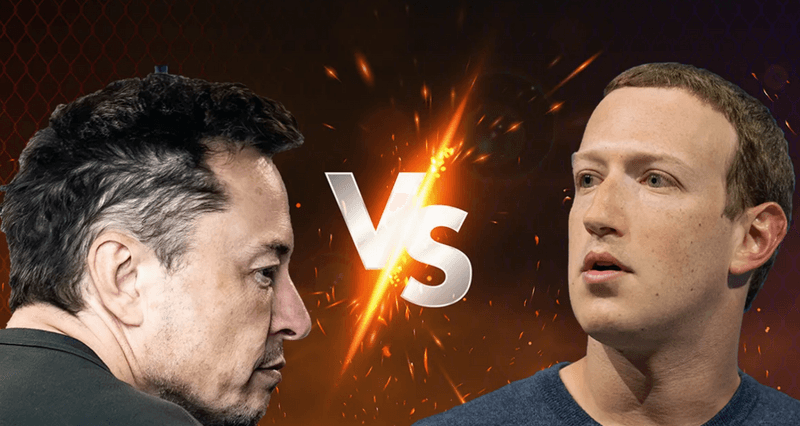
Musk Said Fight with Zuckerberg will Happen in “Epic Location” in Italy

0

The proposed fight between X (Twitter) owner Elon Musk and Meta’s CEO Mark Zuckerberg is nearing its day, according to a post made by Musk on Friday.

The world’s richest man said contrary to some media reports, the fight will be managed by his and ‘Zuck’s foundations’, not the UFC.

Musk said that he has spoken to the PM of Italy and the Minister of Culture. “They have agreed on an epic location.” He added that the fight will be livestreamed on X (Twitter) and Meta (Facebook or Instagram). 

“Everything in camera frame will be ancient Rome, so nothing modern at all,” he said. 

The fight which started like a joke followed Meta’s plan to launch Threads, a text-based platform that copied Twitter. Zuckerberg said he created the copycat platform because there is a need for a bigger platform for real-time conversation.

“It will take some time, but I think there should be a public conversation app with 1 billion+ on it. Twitter has had the opportunity to do this but hasn’t nailed it. Hopefully, we will,” he said on Threads.

In response to Threads’ launch, Twitter had in early July, threatened to sue Meta – accusing the social media behemoth of engaging in “systematic, willful, and unlawful misappropriation of Twitter’s trade secrets and other intellectual property.”

In June, Musk responded to a tweet about Meta’s plan to launch Threads saying: “I’m sure Earth can’t wait to be exclusively under Zuck’s thumb with no other options.” He followed up with a tweet teasing a cage fight with Zuckerberg.

The Meta’s chief executive, posting a screenshot of Musk’s tweet overlaid in an Instagram story, fired back with the caption: “Send Me Location.”

Since then, speculations have circled the seriousness of the American tech billionaires, especially as Musk, in his usual way, has been making posts of humor about the fight.

“For fighting preparation, I’ll use technique of famous Inspector Clouseau & have Cato attack me at random moments,” he said in July.

The fight story was revitalized last week when Musk started posting about his preparatory workout.

He said last week that he’s “lifting weights throughout the day, preparing for the fight” because he doesn’t have “time to work out, so I just bring them to work.”

Full details of the fight are yet to be announced by Musk and Zuckerberg’s foundations.

Last month, a picture of Zuckerberg training with kickboxing champions Israel Adesanya and Alexander Volkanovski surfaced online. Zuckerberg 39, is trained in martial arts and recently won gold and silver medals at his very first Brazilian jiu-jitsu tournament in Redwood City, California. 

Musk 52, is taking other steps in preparation of the fight. He said Friday that he spent 3 hours in an MRI machine on Monday.

“Bottom line is that my C5/C6 fusion is solid, so not an issue,” he said.

“However, there is a problem with my right shoulder blade rubbing against my ribs, which requires minor surgery. Recovery will only take a few months,” he said.
The Waves of News Pranking in Nigeria’s Digital Sphere

0

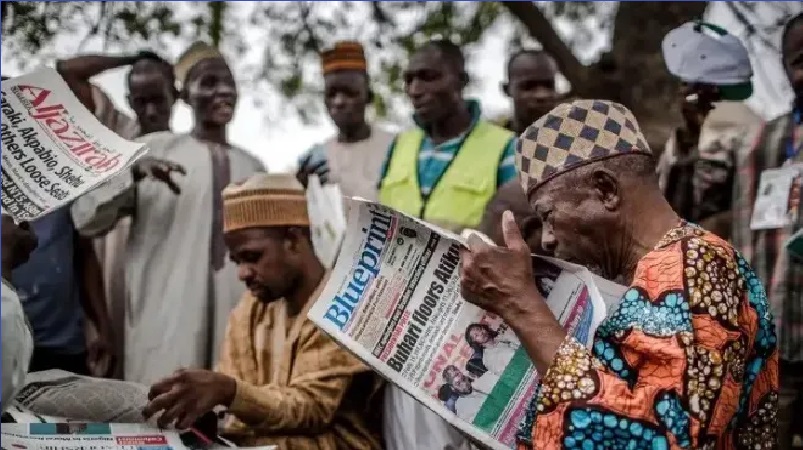
In the bustling world of information and media, where digital platforms have rewired the very fabric of news production and consumption, a curious trend has taken root in Nigeria’s evolving landscape – the rise of “news pranking”. This novel phenomenon introduces a fresh perspective on news dissemination, challenging traditional norms and raising crucial questions about the role of media, the authenticity of information, and the empowerment of citizen voices in this digital era.

Picture this: news stories that are not just informative, but are also laced with satire, parody, and exaggeration. This is the essence of news pranking, a departure from the traditional reporting that aims to present events as they unfold. In the realm of alternative voices and citizen journalism, news pranking has found its foothold, disrupting the established order and offering a new lens through which to view the world. Meanwhile, beneath this captivating trend lies a labyrinth of implications and nuances that deserve our attention:

Imagine a world where the lines between factual news and satirical content blur almost imperceptibly. In the deluge of information, audiences often find it challenging to distinguish between genuine news stories and those crafted with prank strategies. The result? A potential breeding ground for misinformation, where facts and fabrications intermingle freely.

News pranking thrives on engagement and the allure of clickbait. By sensationalizing headlines and amping up the drama, content creators draw in more clicks, shares, and likes. This, in turn, fuels the virality of pranked news stories, driving conversations and discussions across the digital realm. However, this intriguing evolution of news delivery poses its own set of dilemmas, especially in a nation like Nigeria

Journalistic integrity, a cornerstone of responsible reporting, faces a new set of challenges. News pranking often invites the infusion of personal opinions, biases, and perspectives, detracting from the objective nature of traditional journalism. This blending of news and commentary risks eroding the credibility of the information presented.

The trust that the public places in media institutions is under siege. As news pranking muddles the waters between reality and illusion, people might turn to less-than-reliable sources for information, deepening the already existing quagmire of misinformation.

This narrative of news pranking isn’t just a story; it’s a lesson and a reflection of the transformative power of digital platforms. It beckons us to rethink how we approach information, media, and society in a world where everyone can be a content creator:

Media literacy emerges as an indispensable skill in this era of news pranking. As individuals, we must equip ourselves with the tools to critically assess sources, discern truth from satire, and navigate the labyrinth of information.

The journalistic world, anchored in its principles of objectivity and verification, must adapt to this evolving landscape. By maintaining rigorous standards of responsible reporting, traditional media outlets can remain steadfast in the face of prank-driven competition.

The ongoing discourse about content regulation and ethical standards gains newfound urgency. Striking a balance between artistic expression and credible content is a delicate art that demands careful consideration, as misinformation becomes an ever-present threat.

Amidst this shifting landscape, the democratization of voices remains a vital narrative thread. While news pranking ushers in a diversity of perspectives and ideas, content creators bear the responsibility of weaving creativity and accuracy into a cohesive fabric that enriches public discourse.

In the grand tapestry of Nigeria’s digital sphere, news pranking is a vivid and complex thread. It’s a testament to the power of innovation and the need for tradition. As citizens, creators, and institutions embark on this uncharted voyage, the destination – a well-informed society where truth is paramount – remains the guiding star.

Pathway to Revitalization of the Education System: The Role of the New Student Loan Act 2023 in Nigeria

0

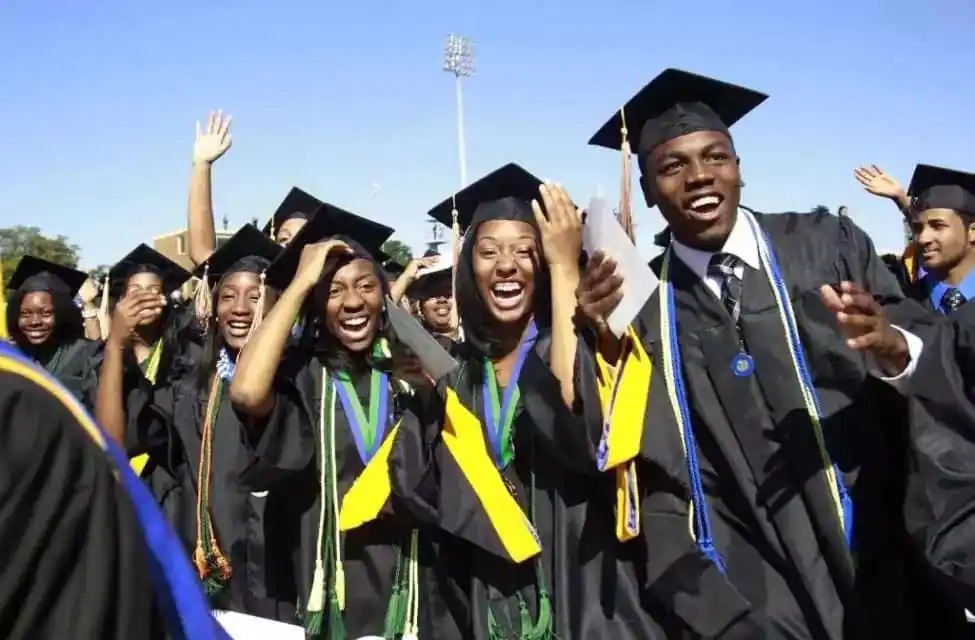
In a bid for an inclusive education for all, in particular at the tertiary level, the Nigerian government heralds the Student Loan Act 2023. With a widespread consensus that education represents a critical component in the human capital development process, this initiative is a welcome development. However, advancement in the digital landscape is reshaping the educational space, which calls for a synergy of purpose for the successful delivery of mandates in this sector.

Productivity and economic prosperity of any nation are in tune with its level of technological development vis-à-vis the inherent innovation capability of its citizens, who, of course, reside across all tiers of educational level. However, this pathway to the supposed delivery has been hampered by poor funding, which is essential for equitable enrolment and learning in academic institutions. As a result, the new Student Loan Act is a positive step forward. The Student Loan (Access to Higher Education) Act, 2023, promises easy access to higher education for indigent Nigerians through interest-free loans from the Nigerian Education Loan Fund. A promise waiting for fulfilment in the minds of our tertiary students.

The Key Highlights from the Act

The Nigeria Education Bank Fund promises inclusive access to education at any public institution of higher learning in Nigeria with an equal right to access to qualified students without any discrimination arising from gender, religion, tribe, position, or disability of any kind. This minimizes the cost of tertiary education as the financial assistance will increase the enrolment of indigent students constrained by funds to pursue their higher education. Critical to the application procedure are certain terms and conditions inherent in a loan portfolio.

The eligibility criteria are that the applicant’s income or family income must be less than N500,000 per annum, while the guarantor system to access the funds includes civil servants of at least level 12 in the service, experienced lawyers, judicial officers, or justices of peace. Although inclusive literacy and advocacy with financial advice on educational matters for stakeholders (institutions of higher education, parents, and educational investors) are stated, a common platform to initiate this remains a question. The disbursement window period of within 30 days’ dictates a timely use of funds; provision for accountability in the terms of appropriation of applicants rules for disqualification (exam malpractice, fraud, criminal convictions, drug offenses, and the like) is established.

The student loan scheme offers proper monitoring of the academic records of grantees of the loans to obtain information on their year of graduation, national service, and employment and to ensure that grantees of the loans commence repayment of the loans as soon as they are due. The informed repayment process starts two years after the completion of the National Youth Service Corps program with a direct deduction of 10% of
the beneficiaries’ salary at source by the employer and credited to the Fund. Provisional defaulters are liable on conviction to a fine of N500,000, imprisonment for a term of two years, or both.

Appropriating the Act 2023 for long-term, sustainable delivery

Key aspect of this game-changing policy on higher education will increase the enrolment rate and foster inclusive learning. This provision encourages more individuals to pursue higher education, leading to an increase in the number of educated professionals across fields of study. Increased literacy in the nation through the tertiary educational system will also drive human capital development geared towards social and economic growth. Improved skilled professionals will deliver impact initiatives to drive sustainable economic growth and, subsequently, increase returns on quality education. The scheme promotes diversity and inclusivity within educational institutions, fostering a vibrant and enriched learning environment through sustainable access to funding.

However, a number of critical questions come to mind from the New Student Loan Act. Firstly, is there a chance of being gainfully employed afterwards for repayment purposes, and is there a specific limit to years of loan taking, even with students having extra years of study due to uncertainties? In another way, is the student loan fund a means to an end or an end in itself in the education ecosystem? What role will digital technology play in the application process for seamless operation within the fund management space? Although the disbursement process is underway, answers to these questions on the New Student Loan Act might be tailored into the amendment process for long-term delivery. Meanwhile, as a way of thinking, considering the high unemployment rate in the country, are there any prospects for innovation and entrepreneurship to scale startups and spinouts in tertiary institutions towards meeting loan repayment periods?

I suggest revitalization of the educational system for long-term human capital development should focus on innovation-centered interventions. A cursory look at digital advancement shows that technology and innovation play a pivotal role in transforming the educational landscape. For instance, support for edTech initiatives presents innovative digital tools and platforms, enhancing teaching methods and enriching the out-of-classroom learning experience.

This support can also incorporate interactive multimedia, robotics, and artificial intelligence (AI) into the educational curriculum, fostering engagement, critical thinking, and creativity among students. Investment in science, technology, engineering, and mathematics (STEM) has enormous opportunities and closely connects all fields of study across all tiers of education (primary, secondary, and tertiary). Aside from this fact, the addition of another acronym, I-innovation, (STEMI) thus suggests the strategic position of innovation as a propelling force towards an inclusive educational sector. The perception should complement the ultimate goals of the new Student Loan Act.

In conclusion, the Student Loan Act of 2023 presents a catalyst for an inclusive tertiary education ecosystem. There is a need to factor in technological and innovation enhancement strategies needed for sustained growth, which are critical to the loan scheme’s long-term viability. Appropriating the identified gaps will enable students from all backgrounds to leverage technology for research, collaboration, and skill development, bridging the digital divide and promoting the human capital and economic development that the educational sector upholds.

Telecom Operators in Nigeria Generated A Total of N53.6 Billion From SMS in 2022

0

Data from the Nigerian Communications Commission (NCC), revealed that telecommunications operators in Nigeria, comprising MTN, Airtel, Glo, 9Mobile, and Smile Communications, generated a total of N53.6 billion from SMS in 2022.

The NCC disclosed that a total of 14.08 billion text messages were sent by subscribers on all the networks in 2022. At a fixed rate of N4.00 per SMS, this amounts to approximately N56.3 billion for the operators.

NCC data also reveals a significant 48.8% surge in the number of text messages exchanged by subscribers last year. This surge saw an increase from 9.46 billion SMS in 2021, to an impressive 14.08 billion in 2022.

Correspondingly, the volume of text messages received experienced an 11.06% boost to reach 11.8 billion, ultimately culminating in a combined tally of 25.9 billion SMS sent and received during the year.

Check Out NCC Data Insights on How Each Telecommunications Company Performed

MTN stood as the leader, recording the largest number of SMS sent and received locally within the year. The number of SMS sent and received on the telco’s network stood at 8.3 billion and 8.7 billion respectively. The company raked in N33.3 billion from the messages sent.

Globacom occupied the second position with 3.6 billion SMS sent over its network, amounting to N14.5 billion and 777.2 million received in 2022.

The third largest operator by subscriber number, Airtel, recorded 1.8 billion sent messages at N7.5 billion and 2 billion messages received.

On 9 Mobile, the total SMS sent on the network in 2022 stood at 234.8 million (N93.9 million) while a total of 235 million messages were

received.

Smile Communications recorded the least SMS count, as 173,607 (N694,428) messages were sent and 766,588 received on the network in the year under review.

As regards international SMS, all the operators recorded a total of 518.9 million in international SMS in 2022. This comprised 59.5 million sent messages and 459.3 million received SMS.

With the proliferation of Over The Top (OTT) services such as WhatsApp, Facebook Messenger, Telegram and other messaging platforms, telecom operators in Nigeria have expressed concern over the decline in revenue from calls and SMS.

The rise of these social media platforms and messaging apps, has indeed changed the way people communicate, and this shift has had an impact on traditional SMS usage and pricing.

As people have increasingly turned to these platforms, the demand for SMS has declined. This change in communication habits has led to some adjustments in SMS pricing and plans by telecommunications providers in some regions.

However, industry analysts noted that while the rate at which telecom subscribers use SMS might have reduced due to the embrace of OTTs, its use cannot be completely taken over by the free messaging platforms.

Despite the rise of messaging apps, SMS remains relevant for various purposes, such as sending messages to individuals without internet access, and sending and receiving verification codes, amongst other uses.

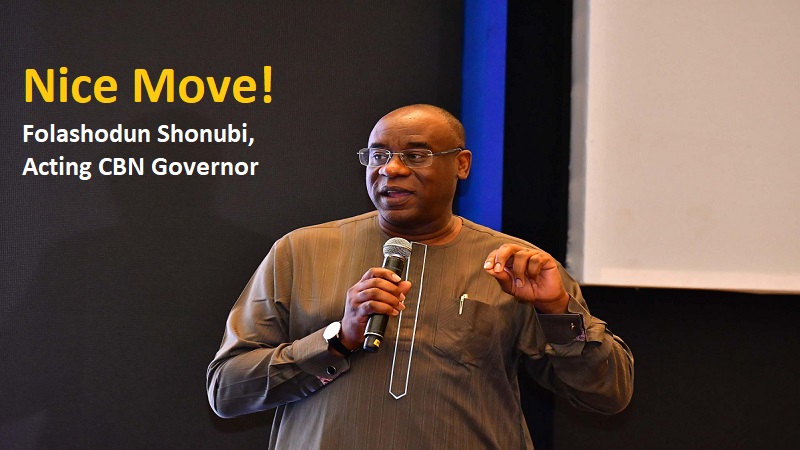
Well Done Folashodun Shonubi, Acting CBN Governor; Truly Brilliant Move

2

Good People, join me to commend this gentleman: Folashodun Shonubi, acting governor of Nigeria’s central bank. He impressed me today. Yes, since 2016 when they froze the publication of the Central Bank of Nigeria financial statements, I have written and challenged the government to obey the CBN Act: publish those documents for We The People. Today,  the documents have been published, and Shonubi is bringing Nigeria to the old order, at least in one area.

Read this: “The Group entered into a securities lending agreement with Goldman Sachs and J. P. Morgan and as part of the agreement, the Group pledged its holdings on foreign securities in return for cash. The cash received from Goldman Sachs is N0.23tn ($500m), 2021: N0.22tn ($500m), and JP Morgan N3.23tn ($7bn), 2021: N3.05tn ($7bn) is recognised in other foreign securities.”

So, when they told you that we had no money to pay doctors, nurses, lecturers, etc, even as they raked $billions in debts from American banks, it was all vapour lies. Without going political: Buhari took Nigeria backward by miles. He just held the “President” as a title!

That a general would allow that kind of rascality was simply unfortunate. In my village of Ovim, we have many military  generals, and we respect these men because even in their Isi-agu native dresses, you know they’re men of steel. What did they do with this money is the question we need to ask Buhari and his government because nothing was largely achieved?

And you know the unfortunate? More revelations are coming… Shonubi, go ahead and publish more. Of course, we also need the books to be audited.

Comment on Feed

Comment from user: I do appreciate your various posts and regular contributions. On the last one regarding the CBN’s books and loans, aren’t we missing part of the equation? You’re saying that the debt the CBN took was “rascality”. Wouldn’t it depend on whether the loans were taken for valid reasons? Were the funds used to grant loans for capex projects (in which case they’re not necessarily bad IF these projects are executed) OR were they squandered for subsidy and landed in the pocket of the few (which would be mayhem like you suggest). I think it’d be fair to add this point to your argument to drive the reasoning even further !

My Response: They were not disclosed until now. That is the rascality. It was hidden from Nigerians. This is not the sovereign debt.

Comment 1R: Ah OK. The fact they weren’t disclosed. Agreed. CBN were cowboys for sure. I really wonder how we’re going to get out of the mess we’re in. Subsidies destroy value as we’re totally incapable of managing properly. Lack therefore is the naira going into a tailspin.

My Response: I agree with you. But note that the subsidy is not really that bad. What is bad is the corruption in subsidy.