DD
MM
YYYY

PAGES

DD
MM
YYYY

spot_img

PAGES

Home Blog Page 3978

Lifting Import Restrictions Could Uplift 1.3 Million Nigerians Out of Poverty – World Bank

0

The recently released Nigeria Development Update (NDU) report by the World Bank for December 2023 has brought to light a potential breakthrough in poverty alleviation in Nigeria.

The report, titled ‘Turning The Corner (from Reforms and Renewed Hope to Results), which was read on Wednesday, forecasts that the removal of import restrictions within the country has the potential to lift around 1.3 million individuals out of poverty, addressing the disproportionate impact these limitations have on the most vulnerable households.

Lead Economist for Nigeria at the World Bank, Alex Sienaert, highlighted the significance of this move, stating, “Import restrictions disproportionately affect goods that are consumed more by the poorer households. Recent World Bank estimates show that removing import restrictions could lower the prices of affected items by 4.7 percent.”

Sienaert further elaborated, “This would lead to an overall increase in purchasing power which, in turn, would lift about 1.3 million people (around 0.6 percent of the population) out of poverty.”

The report highlighted the critical role played by staple items, such as rice, in the lives of Nigerian households, emphasizing that these commodities have been subject to price escalations due to import restrictions. With the removal of such limitations, the World Bank anticipates a marked reduction in the cost of these essential items, thereby directly benefiting the poorer sections of society.

In commending recent policy shifts, particularly the Central Bank of Nigeria’s (CBN) action to lift foreign exchange prohibitions on key items like rice, fertilizer, and cement, the World Bank emphasized the positive impact on consumer welfare.

“Recent reforms, such as the lifting of foreign exchange prohibitions, are seen as pro-poor measures that enhance consumer welfare,” Sienaert noted.

However, the report also highlighted regional disparities in the impact of this policy change. States like Kaduna, Ekiti, Enugu, FCT, Kwara, Anambra, Adamawa, Cross River, and Kebbi are projected as major beneficiaries, while others like Rivers, Akwa Ibom, Ondo, Abia, Imo, and Ebonyi may experience a smaller-scale impact.

Moreover, the report addressed the challenging trends in poverty over the past five years, with approximately 24 million Nigerians slipping below the poverty line between 2018 and 2023. The World Bank anticipates that ongoing reforms will gradually reverse this trend from 2024 onward.

“The number of poor rose from 79 million in 2018 to 104 million in 2023, with urban poor—more exposed to inflation—increasing from 13 to 20 million, while the number of poor people in rural areas increased from 67 to 84 million.

“In the medium term, the reforms will reverse this trend through higher growth and lower inflation, but to a limited extent, with poverty rates decreasing from 46 per cent in 2024 to 44 percent in 2026,” the world financial body wrote.

Additionally, Sienaert highlighted concerns regarding fuel pricing during the presentation, suggesting that the Nigerian government is still paying fuel subsidy even after announcing its total removal in May.

“If we estimate what is the cost reflective of retail PMS price of the would-be and assume that importation is done at the official FX rate, it does seem that petrol prices are not fully adjusting to market conditions so that hints at the partial return of the subsidy,” Sienaert said.

“Of course, the liberalization is happening with the parallel rates, the main supplier. The price would be even higher. These are just estimates to give you a sense of what cost-reflective pricing most likely looks like.

“We think the petrol price should be around N750 per liter more than the N650 per liter currently paid by Nigerians.”

Transformative Cryptos You May Not Have Already Bought Yet, Toncoin, Everlodge, Optimism

0

While most mainstream headlines focus on Bitcoin and Ethereum, there are hundreds of DeFi projects that offer huge potential. Three projects that have been praised for their transformative designs are Toncoin, Everloge, and Optimism. Each project has an extremely strong foundation, and being more affordable than some of DeFi’s largest cryptos, could be a strong investment for new investors.

Optimism’s Value Soars In 2023

Optimism is quickly becoming one of the most talked about crypto projects. In 2023, its value increased by 130%, and the project is now the 18th most traded cryptocurrency in the world. Given its potential, crypto experts believe Optimism’s current price of ??$2.33 is still undervalued, with many expecting OP to hit $3 by the end of Q1.

According to market analysts, Optimism is just finalizing its accumulation stage, and is now preparing for another price rally in the new year. Despite many DeFi projects taking a hit over the last week, Optimism has increased in value by 33%, suggesting that the project may continue to outperform the market. This has created much anticipation around Optimism, which can be seen by its increase in daily trading volume, and recently hit $588 million.

Toncoin Struggles Following New Protocol Release

In an earlier test this year, the Toncoin development team announced that the blockchain could cope with speeds of over 100,000 transactions per second. This created immediate hype around Toncoin, with some experts suggesting that Toncoin could one day be used for everyday transactions. However, after being put to the test with a new protocol release, Toncoin has failed to perform.

The protocol was released last Tuesday and triggered an immediate spike in activity on the Toncoin network. The network quickly crashed, processing just 1 transaction per second by Thursday. This poor speed caused a build-up of over 2.5 million pending transactions, and popular Toncoin wallets such as Tonkeeper had to suspend their services.

Many experts are now questioning the scalability of Toncoin and its value has fallen by over 8% in the last week. Nonetheless, the Toncoin community remains positive and believes the project will perform better in the future.

Everlodge Hits A New ATH As Momentum Builds

Everlodge is one of the most transformative DeFi projects in the market. Designed to revolutionize the travel property industry, Everlodge lets investors fractionally invest in some of the world’s best travel properties for as little as $100.

Historically this market is difficult to penetrate, with investors needing six to seven figures just to get started. With Everlodge, however, buying equity in a travel property has never been easier. To begin, investors need to create a profile with Everlodge. Once created, they can search the property marketplace, find a property they like and invest. But how exactly does it work?

Each property is minted as an NFT and fractionalized to allow multiple investors to invest in a single property. Investors will generate a passive income based on the amount of a property they own, and will benefit from any appreciation in value.

This process offers several benefits, including no border limitations, no paperwork, and no hidden fees or credit checks. The concept behind Everlodge has already proven to be extremely popular. The project quickly sold out 7 presale rounds, and now stage eight is becoming its fastest-selling yet. With additional price increases expected before the end of the year, now is the perfect time to invest in ELDG tokens and earn a spot in Everlodge’s private members club.

Visit Everlodge

The Abia State Budget of Industrial Transformation

0

You need to go way back to the days of Michael Iheonukara Okpara (Premier of Eastern Nigeria during the First Republic) to see a resemblance of what Abia State has in the 2024 budget. Chief Okpara built Aba and made it a hub of making things.

This is the sankofa moment and Abia is going back to the past, to learn, in order to improve the future. In the 2024 budget, Abia will put 84% to capital expenditure. Of course, civil servants will receive pay raises and all the support they need.

Abia State has a literacy rate of above 95% but we can get to 99%. So, education takes 20% of the budget: “Capital Expenditure took the lion’s share, claiming 84% of the total budget, while 16% was allocated to Recurrent Expenditure. This allocation pattern signifies a considerable commitment to boosting infrastructure and growth in the state. Notably, 20% was allocated to education and 15% to healthcare, underlining the government’s dedication to these critical sectors.”

#InvestInAbia – we’re open for Business.

Warren’s anti crypto “Digital Asset anti-Money Laundering Act” receives boost from more senators

0

The crypto community is facing a new threat from the US Congress, as five more senators have joined Elizabeth Warren in co-sponsoring the “Digital Asset anti-Money Laundering Act”. This bill, if passed, would impose draconian regulations on the crypto industry, stifling innovation and harming millions of users.

According to Warren, crypto is a highly volatile and speculative asset class that is prone to manipulation, fraud, and hacking. She cited several examples of crypto-related scams, thefts, and ransomware attacks that have harmed millions of investors and users. She also claimed that crypto is undermining the authority and effectiveness of central banks and regulators, who are responsible for ensuring the safety and soundness of the monetary system.

She cited examples of how crypto markets have crashed due to hacking, technical glitches, or rumors, and how these events have wiped out billions of dollars of value and harmed investors and consumers. She also warned that crypto could undermine the effectiveness of monetary policy and fiscal stimulus, as well as the role of the US dollar as the global reserve currency.

Warren also claimed that crypto is a danger to consumer protection, because it lacks the safeguards and guarantees that traditional financial products and services offer. She pointed out that crypto users have no recourse if they lose their private keys, get scammed, or face technical issues.

The bill would require all crypto transactions over $10,000 to be reported to the Financial Crimes Enforcement Network (FinCEN), regardless of whether they involve fiat currency or not. It would also expand the definition of “money transmitter” to include any entity that facilitates the transfer, exchange, or storage of digital assets, such as wallets, exchanges, and decentralized platforms. This would subject them to onerous licensing and compliance requirements, as well as potential criminal penalties for non-compliance.

The bill’s sponsors claim that it is necessary to combat money laundering, terrorism financing, and tax evasion using crypto. However, these claims are based on false assumptions and outdated stereotypes. Crypto is not inherently more prone to illicit activity than fiat currency, and in fact, it offers more transparency and traceability than cash.

Moreover, the existing anti-money laundering (AML) framework already covers crypto transactions that involve fiat currency, and there are many legitimate use cases for crypto that do not involve fiat currency at all.

The bill would effectively create a surveillance state for crypto users, violating their privacy and civil liberties. It would also create a barrier to entry for new and innovative crypto projects, especially those that are decentralized and permissionless.

It would discourage investment and adoption of crypto in the US, while giving an advantage to other countries that are more friendly and supportive of the crypto industry.

The bill is a clear example of how some lawmakers are out of touch with the reality and potential of crypto. It is based on fear and ignorance, rather than facts and evidence. It is an attack on the crypto community and its values of freedom, innovation, and inclusion. It must be opposed and defeated by all who care about the future of finance and technology.

Abia State Governor Presents Ambitious N567 Billion 2024 Budget with 84% Capital Expenditure

3

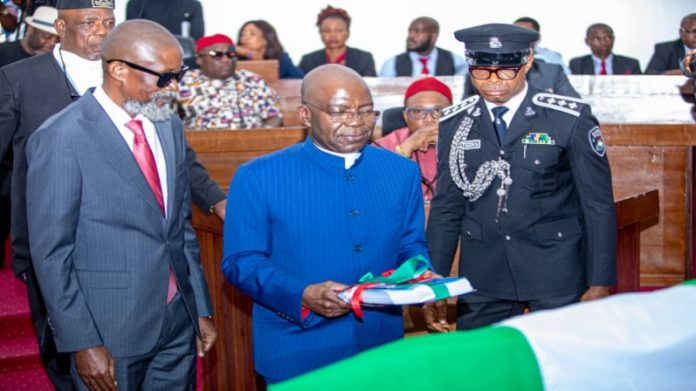
Abia State Governor Alex Otti has made an audacious move by presenting a robust budget of N567,240,095,972 for the year 2024. Dodoh Okafor, the Senior Special Assistant to the governor on Public Communication, confirmed this significant budget presentation to the State House of Assembly.

The breakdown of the “Budget of New Beginning” underscores a striking focus on infrastructure and development, setting Abia apart as the only state in Nigeria with such a significant emphasis on these areas within its budget structure.

“We are determined to start afresh, construct roads, eradicate insecurity, and make our state conducive for investment both local and foreign to flow into the economy. This requires a lot of thinking, and doing things differently to ensure there is a clear departure from the past,” Otti said.

Capital Expenditure took the lion’s share, claiming 84% of the total budget, while 16% was allocated to Recurrent Expenditure. This allocation pattern signifies a considerable commitment to boosting infrastructure and growth in the state. Notably, 20% was allocated to education and 15% to healthcare, underlining the government’s dedication to these critical sectors.

Governor Otti’s budget estimate breakdown is as follows:

Capital Expenditure: N476,011,317,893.00: The bulk of this allocation will be directed towards road infrastructure, the construction of new schools, and equipping hospitals, emphasizing a clear vision for tangible development projects.

Recurrent Expenditure: N91,228,778,070.01: This allocation addresses the increase in the state’s salary package, reflecting the governor’s commitment to aligning the state’s wage structure with current economic realities.

Budget Financing and Deficit Handling:

Expected Revenue: N166,077,717,058: This includes internally generated revenue (IGR), earnings from the Federation Accounts Allocation Committee (FAAC), grants from multilateral and donor agencies, and other revenue sources.

Financing the Deficit: The deficit of N401,162,378,914 will be covered by new borrowings estimated at N385,271,027,214. Of this amount, half will be sourced externally, with the remaining acquired domestically.

To assuage concerns about the prudent use of borrowed funds, Dodoh Okafor outlined Otti’s strict guidelines:

Capital-focused Borrowing: Funds will be exclusively channeled towards capital projects, avoiding any borrowing for recurrent spending.

Transparency and Accountability: Citizens will have oversight over fund utilization and project execution in their communities.

Responsible Borrowing: Loans will only be acquired at concessional rates, dedicated solely to projects directly impacting the state’s economic and social development.

While concerns have been raised about the state’s ability to secure a substantial loan to cover the deficit, financial analysts are optimistic about the budget’s potential to attract adequate funding.

Notably, the unprecedented 84% allocation to Capital Expenditure, particularly in road construction, has been praised as a stimulant for local job creation, value addition, and heightened economic productivity, signaling a positive trajectory for Abia State.

“This is the first budget I have seen in Nigeria with an 84% allocation to Capital Expenditure with a specific focus on road construction.

“This means local jobs, value addition, means stimulative consumption. Hopefully, this maximizes productivity in the state and then drives wealth creation,” Financial analyst, Kalu Aja said.

The budget’s allocation and strategic focus on infrastructure have sparked optimism as well as discussions about Abia State’s potential to attract the necessary funding for sustainable growth.