DD
MM
YYYY

PAGES

DD
MM
YYYY

spot_img

PAGES

Home Blog Page 3995

NFT Paris Announces $NFTPARIS Loyalty Token as Yuga Labs reveals Prizes for HV-MTL Season 6

0

NFT Paris, the leading platform for buying and selling digital art and collectibles in France, is excited to announce the launch of its own loyalty token, $NFTPARIS. The token will reward loyal customers and creators who use the platform, as well as incentivize new users to join the NFT revolution.

The $NFTPARIS token will be based on the Binance Smart Chain (BSC), a fast and low-cost blockchain that supports smart contracts and decentralized applications. The token will have a total supply of 100 million, with 50% allocated to the platform’s users and creators, 25% to the team and advisors, 15% to marketing and partnerships, and 10% to a reserve fund.

The token will have multiple use cases, such as:

Staking: Users can stake their $NFTPARIS tokens to earn rewards in BNB, the native currency of BSC. The rewards will be proportional to the amount and duration of staking.

Governance: Users can vote on important decisions regarding the platform’s development, such as new features, fees, and partnerships. Each $NFTPARIS token will represent one vote.

Discounts: Users can pay lower fees when buying or selling NFTs on the platform by using $NFTPARIS tokens. The discounts will depend on the number of tokens held by the user.

Access: Users can access exclusive NFTs and events on the platform by holding a certain amount of $NFTPARIS tokens. These NFTs and events will be curated by the platform’s team and partners.

The $NFTPARIS token will be distributed gradually to the platform’s users and creators over a period of 12 months, starting from November 1st, 2023. The distribution will be based on various factors, such as:

Activity: Users and creators who are active on the platform, such as buying, selling, creating, or sharing NFTs, will receive more tokens than inactive ones.

Loyalty: Users and creators who have been using the platform for a longer time will receive more tokens than new ones.

Quality: Users and creators who produce or purchase high-quality NFTs, as determined by the platform’s algorithm and community feedback, will receive more tokens than low-quality ones.

The $NFTPARIS token is a way for NFT Paris to thank its loyal customers and creators for their support and trust, as well as to attract new ones who want to join the growing NFT market in France. The token will also help the platform to improve its services and features, as well as to expand its network and reach.

NFT Paris is proud to be one of the first platforms in France to launch its own loyalty token and hopes that it will bring more value and benefits to its users and creators. The platform invites everyone who is interested in NFTs to join its community and participate in its token launch.

Yuga labs reveals prizes for HV-MTL season 6 leaving many players disappointed.

Yuga labs, the company behind the popular online game HV-MTL, has announced the prizes for the upcoming season 6 of the competitive mode. The prizes include exclusive skins, badges, and in-game currency for the top-ranked players. However, many players have expressed their dissatisfaction with the prizes, claiming that they are not worth the effort and time required to reach the high ranks. Some of the complaints from the players are:

The skins are too similar to the ones from previous seasons and do not reflect the theme of season 6. The badges are too small and hard to notice on the profile page. The in-game currency is not enough to buy anything meaningful from the shop. The prizes do not match the level of difficulty and skill required to compete in HV-MTL.

Yuga labs has not responded to the criticism yet, but some fans have defended the company, saying that the prizes are just a bonus and that the real reward is the fun and challenge of playing HV-MTL. They also argue that Yuga labs has to balance the prizes with the game’s economy and sustainability.

What do you think of the prizes for season 6 of HV-MTL? Are you excited to play or are you disappointed? Let us know in the comments below!


Australia proposes Crypto Exchange Regulation with Existing Laws

0

The Australian government has announced its intention to regulate cryptocurrency exchanges under the existing Anti-Money Laundering and Counter-Terrorism Financing Act 2006 (AML/CTF Act). This move is part of a broader reform package to strengthen the country’s financial intelligence and regulatory capabilities, as well as to align with international standards and best practices.

According to the government’s consultation paper, the proposed amendments to the AML/CTF Act would require cryptocurrency exchanges to register with the Australian Transaction Reports and Analysis Centre (AUSTRAC), the country’s financial intelligence agency. They would also have to comply with customer due diligence, record-keeping, reporting, and program obligations, similar to other regulated entities such as banks and remittance providers.

The government argues that this approach would provide legal certainty and consumer protection for the cryptocurrency sector, while also addressing the risks of money laundering, terrorism financing, tax evasion, and cybercrime. It would also enable AUSTRAC to monitor and supervise the compliance of cryptocurrency exchanges, and to impose civil penalties or criminal sanctions for breaches of the law.

The government acknowledges that the proposed regulation would impose additional costs and obligations on cryptocurrency exchanges but claims that these would be proportionate to the risks and benefits involved. It also notes that the regulation would not apply to other types of crypto-assets or activities, such as initial coin offerings (ICOs), decentralized exchanges, or peer-to-peer transactions.

The consultation paper is open for public feedback until November 20, 2023. The government intends to introduce the legislation to Parliament in early 2024, subject to the outcome of the consultation process. If passed, the regulation would come into effect six months after the enactment of the law.

In the United States, a new bill introduced by US Congressman Don Beyer aims to regulate the cryptocurrency industry and impose stricter reporting requirements for off-chain transactions. The bill, titled the Digital Asset Market Structure and Investor Protection Act, would create a statutory definition of digital assets and digital asset securities, and establish a framework for their regulation by the Securities and Exchange Commission (SEC) and the Commodity Futures Trading Commission (CFTC).

One of the most controversial provisions of the bill is the requirement for any person who engages in a transaction involving a digital asset that is not recorded on a distributed ledger or platform to report such transaction to a registered digital asset trade repository within 24 hours. The bill defines a digital asset trade repository as an entity that collects and maintains information on digital asset transactions and makes it available to regulators and the public.

The bill also requires any person who transfers more than $10,000 worth of digital assets in a single transaction or in aggregate over a one-year period to report such transfers to the Internal Revenue Service (IRS) and the Financial Crimes Enforcement Network (FinCEN). The bill would also subject digital assets to anti-money laundering and countering the financing of terrorism rules and impose sanctions on foreign persons who use digital assets to evade US sanctions or engage in illicit activities.

The bill’s sponsor, Congressman Beyer, said in a press release that the bill “would protect consumers, promote innovation, and ensure that America remains a leader in the digital asset space.” He added that “digital assets and blockchain technology hold great promise, but it is clear that the market needs a legal framework to prevent abuse and ensure that investors are protected.”

However, the bill has also faced criticism from some industry experts and advocates, who argue that it would stifle innovation, impose excessive compliance costs, and infringe on the privacy and autonomy of crypto users. They claim that the bill would create a centralized database of all off-chain crypto transactions, which could be vulnerable to hacking, surveillance, or misuse by authorities.

They also contend that the bill would impose unrealistic reporting requirements that would be impossible to comply with for many types of off-chain transactions, such as peer-to-peer transfers, atomic swaps, or transactions involving privacy coins or decentralized exchanges.

Some critics have also questioned the need for such a sweeping regulation of the crypto industry, given that existing laws already cover most aspects of digital asset transactions. They point out that the SEC and the CFTC already have jurisdiction over digital asset securities and derivatives, respectively, and that FinCEN already requires crypto exchanges and custodians to register as money services businesses and comply with anti-money laundering rules. They also note that the IRS already treats digital assets as property for tax purposes, and that crypto users already have to report their gains and losses on their tax returns.

The bill is currently pending before the House Committee on Financial Services, where it will likely face further scrutiny and debate. It is unclear whether it will gain enough support to pass the House, let alone the Senate, where it would need 60 votes to overcome a filibuster. The bill’s fate may also depend on the Biden administration’s stance on crypto regulation, which has yet to be fully articulated.


Nigeria’s inflation hits 26.72% in September 2023

0

The National Bureau of Statistics (NBS) has released the latest Consumer Price Index (CPI) report, which shows that Nigeria’s inflation rate rose to 26.72% year-on-year in September 2023, from 25.98% in August 2023. This is the highest inflation rate recorded in the country since April 2017, when it reached 27.4%.

The CPI measures the average change in prices of goods and services consumed by people over a period of time. The NBS report indicates that the prices of food, housing, water, electricity, gas and other fuels, transport, education, health, clothing and footwear increased significantly in September 2023 compared to the same month in 2022.

The food inflation sub-index rose to 32.45% in September 2023, from 31.14% in August 2023, driven by the high cost of bread, cereals, meat, fish, oils and fats, fruits, vegetables and tubers. The food inflation sub-index accounts for over 50% of the total CPI.

The core inflation sub-index, which excludes the prices of volatile agricultural products, increased to 19.21% in September 2023, from 18.64% in August 2023. The core inflation sub-index was affected by the rise in prices of medical services, pharmaceutical products, hospital services, dental services, motor cars, vehicle spare parts, maintenance and repair of personal transport equipment, air transport and passenger transport by road.

The urban inflation rate increased to 28.15% year-on-year in September 2023, from 27.35% in August 2023, while the rural inflation rate increased to 25.41% in September 2023, from 24.73% in August 2023.

According to the NBS report, the highest increases were recorded in prices of bread and cereals; meat; oils and fats; potatoes; yam and other tubers; fish; fruits; milk; cheese and eggs; vegetables; soft drinks; clothing materials; shoes and other footwear; furniture and furnishings; carpets and other floor coverings.

Household textiles; household appliances; glassware; tableware and household utensils; tools and equipment for house and garden; books and stationery; newspapers and periodicals; education services; medical services; pharmaceutical products; hospital services; dental services; motor cars; vehicle spare parts; maintenance and repair of personal transport equipment; air transport and passenger transport by road.

The NBS report also shows that all items inflation on a month-on-month basis was higher in September 2023 than in August 2023, increasing by 2.37% in September 2023 from 2.15% in August 2023.

The NBS attributed the persistent rise in inflation to several factors, including the insecurity situation in some parts of the country that has disrupted agricultural activities and supply chains; the depreciation of the naira against major currencies that has increased the cost of imported goods and services; the high energy costs that have affected production and transportation costs; the impact of the coronavirus pandemic on global and domestic economic activities; and the low base effect of the previous year.

The International Monetary Fund (IMF) has been pressuring the world’s poorest countries to adopt harsh austerity measures in exchange for debt relief. This means cutting spending on health, education, and social services, while raising taxes and prices on basic goods. The result? Millions of people are facing hunger, malnutrition, and disease, while the rich get richer.

This is not a new story. The IMF has been doing this for decades, imposing its neoliberal agenda on the Global South. But the COVID-19 pandemic has made things worse, as many countries have seen their economies collapse and their debts soar. The IMF claims that it is helping these countries by providing loans and grants, but the reality is that it is pushing them deeper into a debt trap.

The IMF’s policies are not only immoral, but also ineffective. They fail to address the root causes of poverty and inequality, such as unfair trade rules, tax evasion, corruption, and climate change. They also ignore the voices and needs of the people who are most affected by them. Instead of promoting democracy and human rights, they undermine them.

We cannot let this continue. We need to stand in solidarity with the people of the Global South, and demand that the IMF stop its destructive practices. We need to call for a cancellation of all illegitimate and odious debts, and a fair and transparent system of debt restructuring. We need to support alternative models of development that are based on social justice, environmental sustainability, and people’s participation.

The NBS stated that it will continue to monitor the price movements of goods and services across the country and provide timely and accurate data for policy formulation and decision making.

Israel-Hamas: Former Israeli Prime Minister says “destroying Hamas” is Unrealistic

0

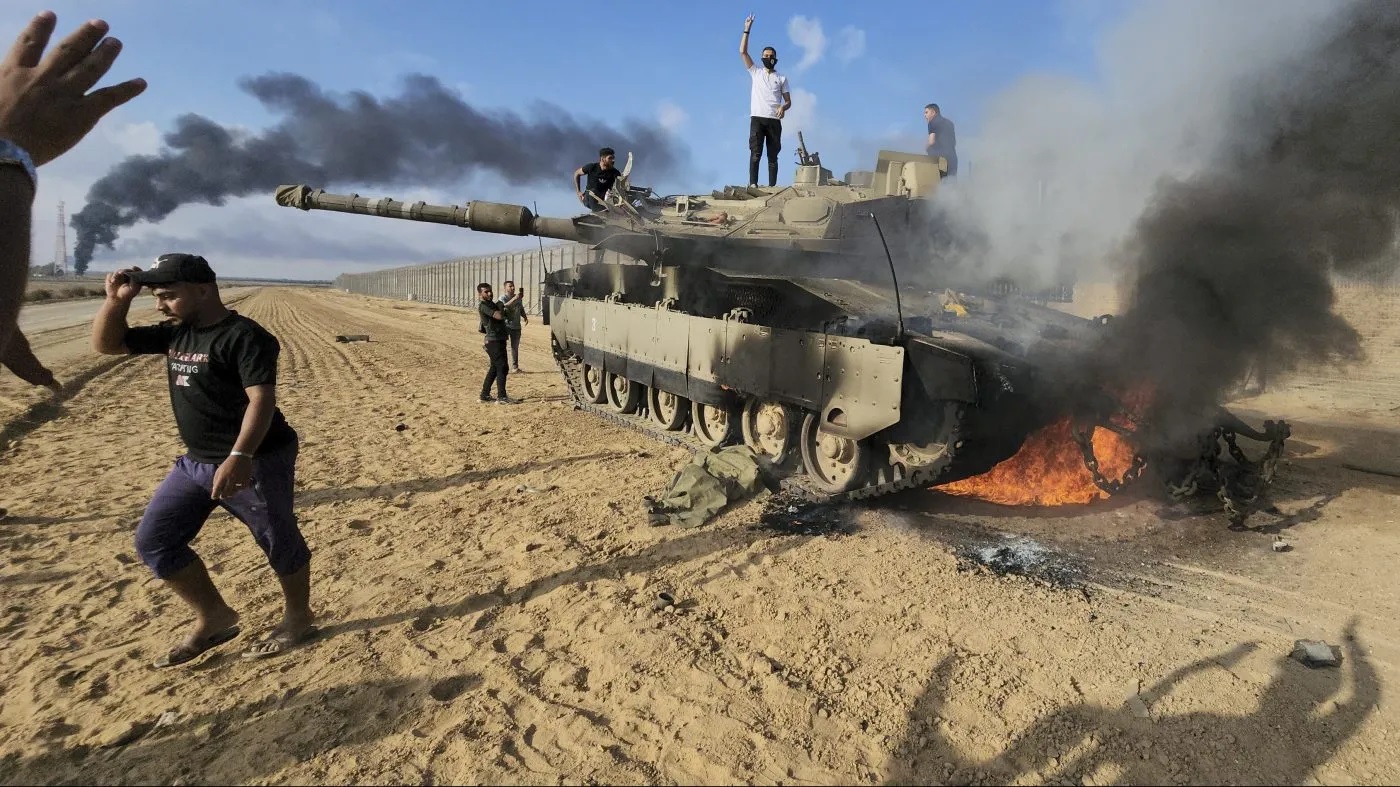
The recent escalation of violence between Israel and Hamas, the militant group that controls the Gaza Strip, has resulted in thousands of deaths and injuries, and widespread destruction of properties. The conflict, which lasted for 11 days in May 2021, was the worst since the 2014 Gaza war and even worst in 2023 killing and destroying lives and properties amounting to billion in dollars and has raised fears of a full-scale global impacts.

In a recent interview with the Jerusalem Post, former Israeli prime minister Ehud Olmert said that the goal of “destroying Hamas” is unrealistic and counterproductive. He argued that Israel should instead pursue a political solution that would end the conflict and improve the lives of both Israelis and Palestinians.

Olmert, who served as prime minister from 2006 to 2009, said that he had tried to achieve a comprehensive peace agreement with the Palestinian Authority during his tenure, but was unable to finalize it due to the opposition of Hamas, which controls the Gaza Strip. He said that he still believes that such an agreement is possible and necessary, and that it would require mutual recognition, security arrangements, territorial compromises, and a resolution of the refugee issue.

He criticized the current Israeli government for its lack of vision and strategy, and for its reliance on military force as the only way to deal with Hamas. He said that this approach has failed to achieve any lasting results and has only increased the suffering and resentment of the Palestinian population. He also warned that the continued expansion of Israeli settlements in the West Bank and East Jerusalem is undermining the prospects of a two-state solution and is creating a reality of one state with unequal rights for its citizens.

Olmert said that he is not naive about the challenges and risks involved in negotiating with Hamas, but he said that Israel has no choice but to try. He said that Hamas is not a monolithic entity, and that there are pragmatic elements within it that are willing to engage in dialogue. He said that Israel should explore these possibilities and offer incentives and concessions that would encourage moderation and cooperation. He said that this would also strengthen the moderate forces within the Palestinian Authority and create a more favorable environment for peace.

The United Nations estimated that more than 75,000 people were displaced and in need of emergency shelter and assistance. The war also affected the lives of millions of Israelis, who faced constant rocket fire from Hamas and other militant groups in Gaza. More than 10 people were killed in Israel, including two children, and hundreds were injured by rockets or shrapnel. Many Israelis also suffered from trauma, anxiety, and stress due to the frequent sirens and explosions.

The war triggered a flurry of diplomatic efforts to broker a ceasefire and prevent further escalation. The United States, Egypt, Qatar, the United Nations, and other regional and international actors played key roles in mediating between Israel and Hamas.

The war also had significant implications for the regional dynamics in the Middle East. On one hand, it exposed the limitations of the Abraham Accords, the normalization agreements signed by Israel with four Arab countries (the United Arab Emirates, Bahrain, Sudan, and Morocco) in 2020. Despite their rhetoric of promoting peace and stability in the region, these countries did not play an active role in ending the violence or supporting the Palestinians.

On the other hand, it highlighted the influence of Iran, which is a major supporter of Hamas and other militant groups in Gaza. Iran reportedly supplied weapons, funds, and training to Hamas and praised its resistance against Israel. The war also boosted the popularity of Hamas among Palestinians and Arabs as a defender of Jerusalem and Gaza, while undermining the credibility of the Palestinian Authority (PA), which is led by President Mahmoud Abbas and based in the West Bank.

Long term implications:

Prospects for peace: The war further diminished the prospects for a lasting peace between Israel and the Palestinians based on a two-state solution. The war deepened the mistrust and hostility between the two sides and widened the gap between their positions on core issues such as borders, security, refugees, and Jerusalem. The war also weakened the role of the PA as a potential partner for peace with Israel and increased the influence of Hamas as a spoiler.

Moreover, the war reduced the incentives for Israel to resume negotiations with the Palestinians or to make any concessions on its settlement expansion or annexation plans in the West Bank. The war also showed that the international community has limited leverage or willingness to pressure Israel or Hamas to end their conflict or to comply with international law.

The war raised several questions about the future scenarios for Israel and the Palestinians. Will there be another round of violence in the near future? Will there be a renewed push for reconciliation between Hamas and the PA? Will there be a change in leadership or policy in Israel or among the Palestinians?

Will there be a new diplomatic initiative by the US or other actors to revive the peace process? These questions are difficult to answer given the complexity and uncertainty of the situation. However, one thing is clear: without addressing the root causes of the conflict and ensuring justice and dignity for both peoples, there will be no lasting peace or security in the region.

The former Israeli’s PM concluded by saying that “destroying Hamas” is not only unrealistic, but also immoral. He said that Israel has a moral obligation to respect the human rights and dignity of the Palestinian people, and to seek a peaceful resolution of the conflict. He said that this is not only in the best interest of Israel, but also of the entire region and the world.

Thank You Letter from Ndubuisi; Tekedia Capital Cycle Moves To Investment & Payment Mode

0

Chairman of Tekedia Capital sent this to primary emails; we’re sharing here for others, including members of investment clubs, syndicates, etc within our ecosystem.

Good People,

Thank you so much for your responses despite the economic paralysis in Nigeria, and around the world. When we opened this investment cycle, we did not know that it could be this successful. I want to thank our members for this partnership.

If you look at many indicators, our records are far better than any state government in Nigeria or any African state on FDI. In other words, we have unlocked the wealth of the diasporas and the homelands more than any non-federal government in Africa. And this year, Tekedia Capital was ranked the most active indigenous investor into African startups, only behind the governments of US, Canada and Germany.

Our sub-goal remains that no one will lose money working with Tekedia Capital. We have built many defenses to ensure risks are mitigated. Part of the playbook was when we jointly created Cinderbuild and asked experts to run the business. The position we have in Cinderbuild is largely to secure your investments. And as I write, we are doing the same in the United States, building an amazing company to also give us geographical diversification towards risk mitigation. We will tell you about it in Q1 2024, and this business has the capacity to further protect your investments. Visa and some great brands are working with us. Yes, if something bad happens in any startup [we’re lucky so far and we hope it remains that way], we can sell equities in Cinderbuild and this firm to cover the risks.

Of course, we do not hope for bad things to happen. And our founders understand that they cannot let us down. Yet, despite our confidence in them, Tekedia Capital is doing all it can to have another layer of protection. Our goal is that by 2023, we will have an organic capacity to secure any kobo or cent that passes through us, irrespective of whatever happens in the startups.  We can innovate in this business, and across many domains, we have done just that. That is why we are the largest syndicate in Africa today.

So, once the US firm is launched, we will set up a trust with our legal custodians on the strengths of these entities.  Later, we will also work out a mechanism to bring liquidity so that people can exit easily. We have many playbooks ahead.

I want to thank everyone for this partnership. We’re building together and during the harvest period, we will harvest together.For all the challenges in the world, I was touched that men and women are making these decisions, through us. We appreciate the confidence. Thanks.

The Oct-Nov 2023 cycle continues and if you have not responded, please check the recorded Demo Day video, pitch decks, overview videos, make your picks, and communicate with our team at capital@tekedia.com. The bank accounts and all the startups are here: https://capital.tekedia.com/lesson/active/ . Our custodial lawyer firm (NICCOM LLP)  has opened the investment portal and soon the master agreements will start dropping for already invested members.

Have a great week ahead and THANK YOU again!

Regards,

Ndubuisi