
DD
MM
YYYY

PAGES

DD
MM
YYYY

spot_img

PAGES

Home Blog Page 3997

Effective Strategies To Networking

0

Motivational speakers often say that the easiest way to move up in your career is through networking. They often back it up with the cliche; “your network determines your net worth” or this other interesting one; “nobody cares about your certificate or what you graduated with, what matters is who you know and not what you know”. 

While all these are interesting theories and some have proven them to be true, what these folks always forget or intentionally ignore to tell you is that networking itself is an art and an expensive one that requires strategies to execute. 

I will tell you for free that networking itself is very expensive and it is an art that has to be mastered or else you will be seen as a hustler or a pest and people will tend to avoid you. Learn the strategies before you engage. 

The most important thing about effective networking is that for you to properly network, you need to learn to have an open budget, hence why it is expensive. For instance, most of the events or meetings where you expect your prospects to be are paid events; Some of their starting price is over 100k and there is no guarantee that the person you are hoping to meet there will even grant you the audience; if they are not paid events, you will definitely spend money to get yourself there.

I have hosted prospects and treated some to a nice dinner in expensive restaurants and years down the line I can tell you that it was a wasted investment. Not just me, if other business owners tell you how much they have invested in networking alone you will be amused. I remember someone I flew in from Lagos to Abuja and took him to nice spots with the hope that a business relationship would come out of it but nothing came out of it. The funny thing is some folks you hope to network with the thought that they are the right persons who make decisions in their organization will sometimes start asking you for help. 

One thing I have found out is that for you to network very well and for your networking to bear positive fruits you need some strategies and here are some strategies I know of that may be of help to you. 

  1. Be ready to spend money; be ready to attend events, especially paid events. Be ready to host your prospect for treats, it works magic. 
  2. If you are an introvert, you will need to come out of your shell. Networking is not for introverted persons. Learn to start a conversation and sustain a conversation, learn to compliment extravagantly and learn to take compliments with grace. 
  3. You need to have some values you are adding because nobody wants to associate with a parasite, there must be something valuable you should be bringing to the table before people will grant you an audience. 
  4. Research the prospect before you meet with the person. Find out what the person fancies; find out what helps the person to unwind; if it is football talk, politics or whatnot and gear your conversation starter towards that direction to get the prospect feel comfortable. 
  5. Finally, look for a connector. It is always easier when someone introduces you to the other person that you have been looking forward to connecting with. I remember someone who had been sending me a bunch of emails and messages on LinkedIn on how he has been looking forward to meeting with me and working with me, I saw all of it but ignored them because I get tons of similar messages on a daily basis and I usually don’t make much of them but the guy found out that that we share a mutual friend together, he told the mutual friend how he’s been trying to connect with me but it has not been working, the lady who is the mutual friend sent me a message on WhatsApp and asked me to grant him an audience and I immediately did because there was a connector who made the introduction. It is always easier when someone else who is close to that prospect links you both up. 

All these are not guarantees that your networking will click or bear positive results but it will get you started on something.

Who are Jinns?

0

The Qur’an and Hadeeth are the first two sources of religious principles, regulation, and instruction for Muslims. These two sources are expected to direct all of their activities beyond this planet. Jinns are described as God’s creatures in these two traditions, although their origin comes from flames of fire. Jinns, like humans, have a varied range of tribes, beliefs, and attitudes. They are invisible to us, but they see us; they can fly millions of miles in seconds; they can inhabit human bodies; and they can speak any language that the possessed person speaks. The list is a progression.

Jinns, like us, eat, drink, marry, and breed. Their food (for example, bones) differs from ours. Their marriages and procreation patterns differ slightly from ours. We’ve read and seen incidents where Jinns told Islamic exorcists that they had fathered or mothered children for possessed people. Those kids would be in Jinn’s world! We’ll go over this further later.

What exactly do Jinns do?

According to Islamic literature, Jinns are divided into two groups based on their faith: believers and non-believers. Most of the time, non-believer Jinns cause chaos and are manipulated by malevolent people. In rare cases, believing Jinns with poor Godliness may possess humans; these Jinns simply leave the possessed body when the possessed listens to a self-Ruqyah or the Jinns listen to sermons of an Islamic exorcist during Ruqyah.

When non-believer Jinns attack the human body, it is usually the brain that is the first to be penetrated. When they acquire control of the brain, the possessed person goes mentally insane. Uncontrollable fury, irresistible sexual desire, psychosis, suicidal ideation, taciturnity, unexplained sleeplessness, continual fear and anxiety, perpetual withdrawal and loneliness, and hatred for specific persons, among other symptoms, may appear. In reality, this type of Jinn can create unexplained divorce between a husband and wife, hostility between two admirers (e.g., father and son, mother and daughter, in-law and wife, etc.), and overwhelming love or passion between two or more people.

As a result, it is critical to understand that these Jinns may take humans voluntarily or be dispatched by a demon that has formed covenants with Jinns. The more extreme the evil person acts against Divine Law, the more active the Jinns that send them messages. You may wonder how Jinns voluntarily possess human bodies. This is where we will continue our discussion from next week.

Umar Olansile Ajetunmobian independent, interdisciplinary researcher with special interests in political, (mental) health, development, and digital media communication, contributes to the development of this piece through his skills and knowledge garnered over the years. 

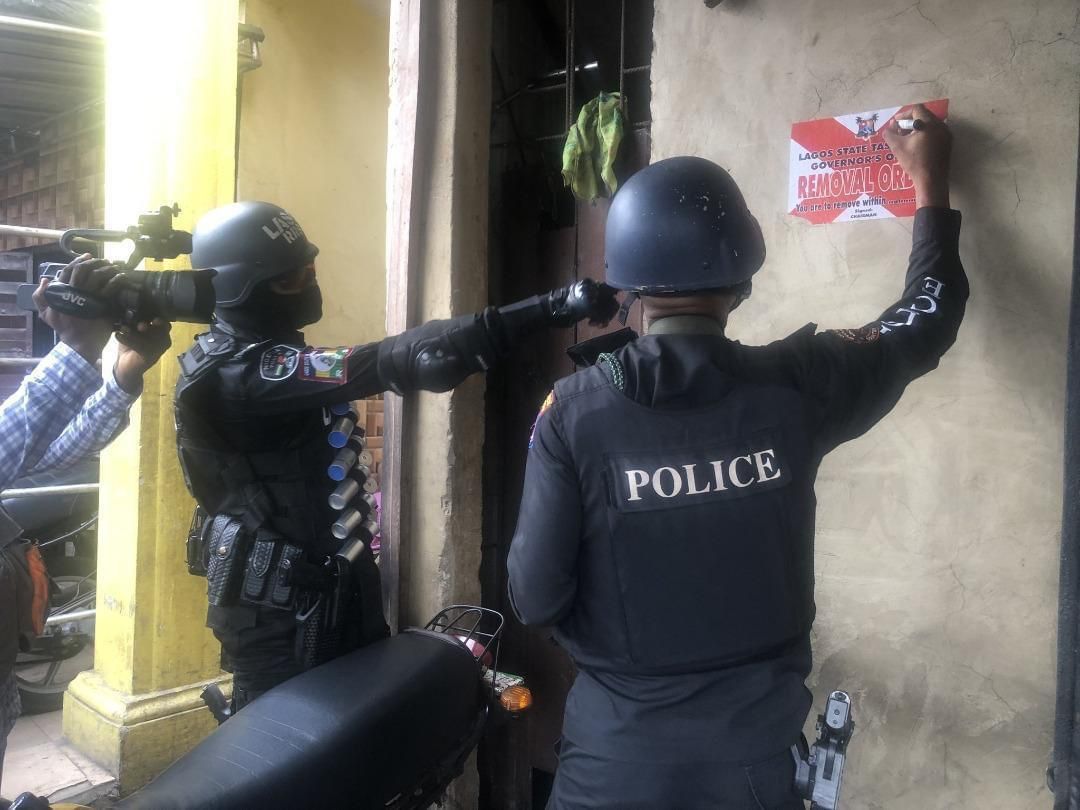
The Nigerian Police Is Not A Debt Recovery Institution

0

I am currently handling a matter with the police, specifically the Special Investigation Unit (SIU) of the Force Criminal Investigation Department (FCID), force headquarters, Abuja. 

Unfortunately, whenever I have an interaction with the police or have a matter with the police my morale always gets dampened because I am constantly reminded by the actions and the inactions of the police officers that the Nigerian police is far from changing for the good. They will always remain a bunch of corrupt, power-drunk and lawless individuals, even the ones who pride themselves as elite police officers; they are all birds of a feather. 

The crux of the matter that I’m currently handling with the police is that my client (who is now the suspect) collected money from an acquaintance, (the complainant) and the agreed time that he ought to give back the money passed and he didn’t give back the money; after so much back and forth, the lender decided to report the matter to police. 

Mind you, what transpired between them as you can see from the summarized version of the brief is totally a matter of simple contract which is totally under the purview of civil dispute which the police have no jurisdiction over; the police by law have no jurisdiction to entertain any civil dispute no matter how prolific or high profile it appears, once it is civil in nature, it is no longer it’s no longer the purview of the police. 

The core functions of the Nigeria police force as provided in section 4 of the Police Act, 2020 is to fight crime, prevent the commission of crimes and protect the lives of citizens and their properties. Debt recovery or delving into the arena of civil dispute is not covered as one of their functions and whenever the police delve into a civil dispute they are acting ultra vires (i.e. beyond their power) which is only orchestrated by corruption and abuse of power. 

I remember a senior police officer who is also a friend asking me one time while I was in her office how she can twist a civil dispute into a crime so that she can step in and act because she was interested in the matter. Being interested in the matter could only mean that she’s likely to have collected money from the complainant or have entered a deal of what she will get with the complainant and this is why most police officers always try to get involved in civil disputes, especially in debt recovery; they often enter into a deal with the complainant to take off a certain amount of percentage from the money when the money have been recovered. I have seen it happen many times and I’m sure no police officer can feign ignorance to this. 

There have been a series of directives from the Inspector General of Police charging police officers not to get involved in debt recovery. A police officer becoming a debt collector makes a total mockery of the force but due to corruption in the force, those directives from different Inspector Generals are yet to yield fruitful results. 

This is also an indictment on the citizens who help police abuse their powers by taking civil disputes to the police. The proper procedure is, if you are being owed or if you are aggrieved by anything else that falls under the purview of civil dispute is for you to go to court. Go to court for the recovery of the debts and seek other accruing damages the court can grant, the court has the jurisdiction and never the police. Go to court for your civil disputes, the court has jurisdiction and never the police. The police are not a debt recovery institution. The court in so many cases has awarded damages against the Nigerian police force and its officers for jumping into the arena of civil disputes to act as a judge and as an executioner. 


US Stock Surge After House of Representatives Passed a Bill to Avoid a Government Shutdown

0

Investors breathed a sigh of relief on Wednesday morning, as US stock futures indicated a higher open for the major indexes. The positive sentiment came after the House of Representatives approved a bill late Tuesday night that would fund the government through December 3, averting a potential shutdown that could have disrupted the economy and the markets.

The bill, which passed by a vote of 220 to 211, with no Republicans supporting it, now heads to the Senate, where it faces an uncertain fate. The Senate must act by Thursday night to prevent a lapse in federal funding that would affect millions of workers and services. The bill also includes a suspension of the debt ceiling until December 2022, which would allow the government to continue paying its bills and avoid a default that could trigger a global financial crisis.

However, some Republican senators have vowed to block the bill, arguing that raising the debt limit would enable more spending by the Democrats, who are pursuing a $3.5 trillion social and environmental package. The Democrats have said they will not negotiate with the Republicans over the debt ceiling, which they say is a bipartisan responsibility that has been raised dozens of times under both parties.

The impasse over the debt ceiling could overshadow the positive news from the House vote, which lifted some of the uncertainty that has weighed on the markets in recent weeks. The Dow Jones Industrial Average futures rose 0.4%, while the S&P 500 futures and the Nasdaq 100 futures gained 0.5% and 0.6%, respectively, as of 6:30 a.m. ET Wednesday.

The market rally also reflected optimism about the economic recovery, as data showed that consumer confidence rebounded in September after a sharp drop in August. The Conference Board’s consumer confidence index rose to 109.3 from 115.2 in August, beating expectations of 115.0. The index measures consumers’ assessment of current economic conditions and their outlook for the next six months.

The improvement in consumer confidence could bode well for consumer spending, which accounts for about 70% of US economic activity. Consumer spending has been resilient despite the surge in Covid-19 cases due to the Delta variant, which has dampened business activity and hiring. The Commerce Department reported on Tuesday that personal income rose 0.2% in August, while personal spending increased 0.8%, both beating estimates.

The market will also be watching for new clues on the Federal Reserve’s monetary policy plans, as Fed Chair Jerome Powell testifies before the House Financial Services Committee. Powell is expected to reiterate his message from last week’s Fed meeting, where he said that the central bank could start tapering its $120 billion monthly bond purchases as soon as November, if the economy continues to improve.

However, he also stressed that tapering does not mean tightening, and that interest rates will remain near zero until inflation and employment reach the Fed’s goals. Investors will get more clues about the state of the economy from the ADP private payrolls report, which is expected to show that employers added 428,000 jobs in September, up from 374,000 in August.

The report is seen as a precursor to Friday’s nonfarm payrolls report, which is one of the most closely watched indicators of the health of the labor market and the recovery. The consensus estimate is for 488,000 jobs added in September, down from 235,000 in August. The unemployment rate is expected to drop to 5.1% from 5.2%. Other data on tap for Wednesday include the final reading of second-quarter GDP growth, which is expected to be unchanged at 6.6%, and pending home sales for August, which are expected to rise by 0.4% after falling by 1.8% in July.

Argentina’s Inflation Rises to 143%

0

Argentina is facing a deepening economic and social crisis as its annual inflation rate reached 143% in October, the highest in the world. The country has been struggling with chronic inflation for decades, but the situation has deteriorated sharply since the onset of the Covid-19 pandemic, which has triggered a collapse in economic activity, a surge in public spending, and a loss of confidence in the peso.

The government of President Alberto Fernández has tried to contain the inflationary spiral by imposing price controls, subsidies, and exchange rate restrictions, but these measures have failed to address the underlying causes of the problem and have created distortions and shortages in the market.

Moreover, the government has been unable to secure a new deal with the International Monetary Fund (IMF) to restructure its $45 billion debt, which has increased the uncertainty and risk aversion among investors and consumers.

The consequences of hyperinflation are devastating for the population, especially for the poor and vulnerable groups. According to official data, poverty increased from 35.5% in 2019 to 42% in 2020 and is expected to rise further this year. The purchasing power of wages and pensions has eroded dramatically, while basic goods and services have become unaffordable for many. Social unrest and political instability are also growing, as people express their frustration and anger with the government’s policies and performance.

History of Argentina’s inflation problem

Argentina is currently facing the worst inflation crisis in the world, with an annual rate of 143% in October. This is not a new phenomenon, however, as the country has a long and painful history of high and volatile inflation, dating back to the 1940s.

The first episode of hyperinflation occurred in 1989-1990, when prices rose by more than 3000% per year, as a result of fiscal imbalances, monetary expansion, and external shocks. The government of Carlos Menem implemented a radical stabilization plan, known as the Convertibility Plan, which fixed the exchange rate at one peso per dollar and eliminated the central bank’s autonomy. This brought inflation down to single digits, but also created a rigid and unsustainable economic system that collapsed in 2001-2002, after a severe recession and a massive debt default.

The second episode of hyperinflation took place in 2002-2003, when prices increased by more than 1000% per year, as a consequence of the devaluation of the peso, the breakdown of the banking system, and the social and political turmoil. The government of Néstor Kirchner adopted a heterodox approach, based on fiscal surpluses, export taxes, price controls, and exchange rate interventions. This allowed for a rapid recovery and growth, but also generated distortions and imbalances that undermined the credibility and effectiveness of the policy framework.

The third episode of hyperinflation is happening now, since 2018, when inflation accelerated from 25% to over 140% per year, as a result of fiscal deficits, monetary emission, and external vulnerabilities. The government of Mauricio Macri sought to restore macroeconomic stability and confidence, with the support of a $45 billion loan from the IMF but failed to achieve its targets and faced a severe currency crisis and recession.

The current government of Alberto Fernández has inherited a difficult situation, worsened by the Covid-19 pandemic, and has not been able to implement a coherent and consistent strategy to reduce inflation and restore growth.

Argentina’s inflation problem is not only an economic issue, but also a social and political one. It affects the living standards and well-being of millions of people, especially the poor and vulnerable groups. It also erodes the trust and legitimacy of the institutions and authorities responsible for managing the economy.

It requires a comprehensive and long-term solution, based on fiscal and monetary discipline, structural reforms, and social consensus. Without these elements, Argentina will continue to suffer from chronic inflation and instability.

The outlook for Argentina is bleak, unless there is a radical change in the economic strategy and a credible commitment to fiscal and monetary discipline. The country needs to restore macroeconomic stability, reduce inflation expectations, and regain access to international financing.

This will require tough decisions and sacrifices, but also a broad consensus and dialogue among all sectors of society. Only then can Argentina hope to overcome its chronic inflation problem and achieve sustainable and inclusive growth.