DD
MM
YYYY

PAGES

DD
MM
YYYY

spot_img

PAGES

Home Blog Page 3997

Shoptreo, A Tekedia Capital Portfolio, Is Africa’s Leading B2B Fashion Ecommerce Startup

0

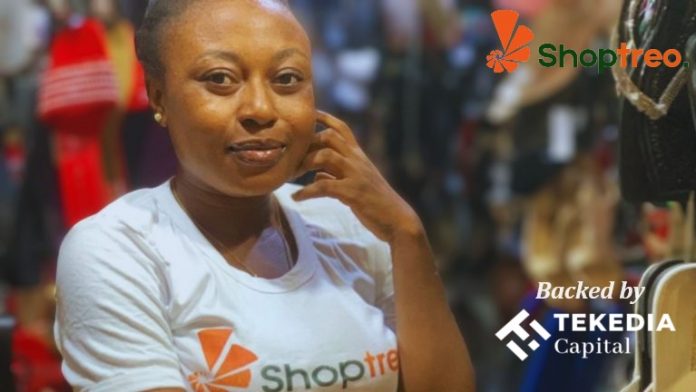
I am very excited to welcome the Aba boys to Tekedia Capital. Shoptreo is a pioneering B2B fashion platform in Nigeria, which connects fashion manufacturers (yes, tailors, shoemakers, etc) in the informal sector to distributors and bulk sellers globally. Powered by the trio of innovation, customer-centricity, and pursuit of excellence, they have great results.

They’ve also expanded to Kano for textile, and recently closed a deal to supply 10,000 pairs of shoes to Jamaican companies, providing enormous economic opportunities to shoe manufacturers in Nigeria.

Made in Nigeria and Made in Africa, being scaled. Welcome Shoptreo, backed by Tekedia Capital, Africa’s most active investment powerhouse for startups. To learn more about Shoptreo, go here  and for Tekedia Capital here .

Sam Altman’s Effect: Tech Giant Microsoft Shares Hit Record High

0

Tech giant, Microsoft, has seen its share price hit a record high after the company swiftly hired ousted OpenAI CEO Sam Altman and ex-president Greg Brockman, to lead its new Advanced AI team.

This move by Microsoft was cheered by investors who pushed the company shares to a record high of 2.1%, to an all-time high close of $377.44 on Monday, surpassing the previous record of $376.17.

This is coming after shares of Microsoft fell 1.7% on Friday when Altman was sacked from his position as CEO of OpenAI. Altman and Greg’s appointments sent Microsoft’s valuation at £2.2 trillion.

Notably, Microsoft shares are up about 56% for the year. The stock is one of the “Magnificient Seven” that have powered the lion’s share of the market’s return this year, boosted by Wall Street’s bet that Artificial Intelligence is the next big thing in tech.

Wedbush Securities tech analyst Dan Ives, in a note published on Monday, commented on the drama that ensued between OpenAI and Altman over the weekend.

He wrote that  the OpenAI board was at the kid’s poker table and thought they won until Nadella and Microsoft took it all over in a World Series of Poker move for the ages with the Valley and Wall Street watching with white knuckles Sunday night/Monday early am.

“We view Microsoft now even in a STRONGER position from an Al perspective with Altman and Brockmam at Microsoft running Al,” he added.

Also commenting on the swift appointment of Altman by Microsoft, Aaron Levie, CEO of cloud sharing and management company Box, said via X, that it was an incredible execution by Satya in one of the most dynamic situations in tech history.

Aviral Bhatnagar, an investor at Venture Highway, had a similar view, which he described Microsoft CEO Nadella as one of the greatest CEOs.

He wrote in a post on X,

“You now understand why Satya Nadella is one of the greatest tech CEOs of this generation. Kept Altman in the fold, kept the transition as neat as possible, managed the chaos and the wild board decision making, didn’t destroy OpenAI”.

The recent upheavals that has so far rocked OpenAI have also been criticized by the company’s interim CEO, Emmett Shear.

He said the process and communications around which Sam’s removal, was handled very badly, which has seriously damaged the company’s trust.

Shear suggested he would launch an investigation to examine the process that led to the recent events and produce a report on them within his first 30 days at OpenAI.

He wrote,

“I have a three point plan for the next 30 days: 

– Hire an independent investigator to dig into the entire process leading up to this point and generate a full report.

– Continue to speak to as many of our employees, partners, investors, and customers as possible, take good notes, and share the key takeaways.

Reform the management and leadership team in light of recent departures into an effective force to drive results for our customers.

“Depending on the results everything we learn from these, I will drive changes in the organization — up to and including pushing strongly for significant governance changes if necessary. I will be rolling these out as they become clear over the 30 day period. OpenAI’s stability and success are too important to allow turmoil to disrupt them like this. I will endeavor to address the key concerns as well, although in many cases I believe it may take longer than a month to achieve true progress”.

The current situation at OpenAI has been echoed by experts, who said that the situation could severely damage the company’s reputation and undermine public confidence.

During Altman’s tenure at OpenAI, his exceptional leadership style and capabilities helped push the company towards commercial endeavors.

The chaos around his exit, near reinstatement, and subsequent replacement will no doubt give investors pause after OpenAI had hoped to sell its shares at an $86bn valuation.

I Did My Best, Nigerians Are Extremely Difficult People – Buhari said in First Interview Since Leaving Office

0

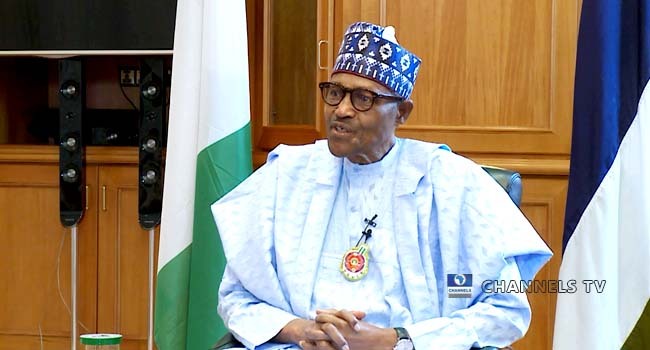
In a reflective interview with the state-owned Nigerian Television Authority (NTA), former Nigerian President Muhammadu Buhari delved into his presidency, challenges faced, and decisions made during his eight-year tenure.

This marks his first interview since stepping down from office roughly six months ago. The interview provided a rare glimpse into Buhari’s perspective on his presidency, the challenges faced, and the decisions made during his tenure, offering insight into his motivations and reflections post-leadership.

Buhari, while maintaining that he did his best during his two terms in office, expressed uncertainty about whether the expected results were achieved.

“God gave me the opportunity to serve my country, but I did my best. But whether my best was good enough, I leave for people to judge,” he stressed.

Speaking about the controversial naira redesign policy endorsed in the twilight of his administration, he asserted that it was to safeguard his integrity and demonstrate to Nigerians that success doesn’t come through shortcuts.

Addressing the complexities of governing Nigeria, Buhari characterized Nigerians as a challenging population, noting that while they often know the right actions, they frequently refuse to follow through, believing they know better than their leaders.

“Nigerians are extremely difficult. People know their rights. They think they should be there, not you. So, they monitor virtually your every step. And you have to struggle day and night to ensure that you are competent enough,“ he added.

When pressed about the integrity of individuals surrounding him during his tenure, the former president dismissed concerns, attributing it to being “their problem” and questioning the critics’ own actions in fighting corruption at their levels.

Responding to inquiries about a perceived cabal influencing his government, Buhari conceded the possibility but emphasized that he wasn’t aware of anyone breaking rules without consequences.

Regarding his leadership style, Buhari defended his approach, stating that he allowed individuals to carry out their assigned tasks, indicating that he wouldn’t change his methods if given another chance under Nigeria’s current system.

Throughout the interview, Buhari occasionally veered off-topic but reiterated his efforts to maintain accountability during his administration.

He disclosed being persistently ‘harassed’ by visitors to his residence daily, implying that he would have left Nigeria if not for the border closure with a neighboring country. However, he expressed contentment with the freedom to wake up at his leisure, emphasizing that he doesn’t miss anything after leaving office.

Reflecting on his tenure’s achievements, Buhari admitted uncertainty about meeting all his goals but highlighted progress in combatting Boko Haram in Borno state and the northeast, claiming significant degradation of the terrorist group during his tenure.

Regarding foreign matters, the former president acknowledged being primarily occupied with local issues, citing national security as his greatest challenge.

Buhari distanced himself from acquiring excessive wealth during his presidency, attributing his peaceful post-office life to this conscious decision. He claimed that attempts to lure him into compromising situations were avoided to prevent exploitation of the country and maintain his integrity.

In a poignant moment, Buhari reflected on past electoral losses, expressing gratitude for the introduction of technology in the 2015 elections, which aided his victory. He recalled the hardships faced due to lack of financial influence but emphasized his faith in divine intervention.

“Instead of people expressing sympathy, people laughed at me because I didn’t have money, because I couldn’t buy influence in any form, either from influential people or others. And I said ‘God dey’. And he sent the Permanent Voter Card (PVC). Meaning you now have only one vote,“ he stated.

Addressing the naira policy’s criticism, Buhari said Nigeria’s status as an underdeveloped nation and highlighted the need to tackle materialism and unethical wealth acquisition. He underscored that the policy aimed to emphasize the absence of shortcuts to effective leadership.

“Whether Nigerians believe it or not, we are an underdeveloped country. And in that sort of situation, there’s materialism and sometimes ruthlessly they didn’t care how they made the money.

“…I still feel that the only way I could deprive these people was just to make sure that my integrity became unquestionable…I think as a developing country we still have a long way to go.

“The motivation (for introducing the policy) was to try and make Nigerians believe that there is no shortcut to successful leadership,” he added.

On the Ethiopian/Nigerian Air debacle, Buhari admitted to providing individuals with a free hand to carry out their responsibilities, potentially acknowledging a shortcoming in his oversight.

The Neuromorphic Systems of Coming Centuries and A Lecture on Afro-longevity

0

On the invitation of the Royal Netherlands Academy of Arts and Sciences, I was to share a component of my PhD thesis at Johns Hopkins University. I got into Amsterdam and it was a red carpet, because I was going to share how humans could mimic biology and invent immortality through computational systems, by replicating the event-driven asynchronous parallelism of the central nervous system.

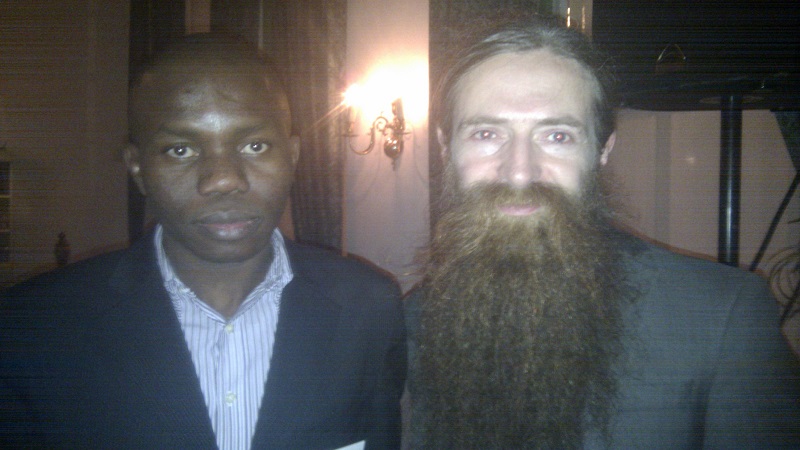
I met a man in the program and he was working to stop aging and possibly usher in human immortality. Aubrey De Grey. I was the baby in the game, positing a future where in 300 years you could go to Amazon, Jumia, etc and buy new retina, cochlea, etc and replace the one you have. In short, you can “redownload” your brain and it could be pay-on-delivery! The speech went great. (There was a line: if the Good Lord sends the datasheets which man was made, everything could become possible, including curing death.)

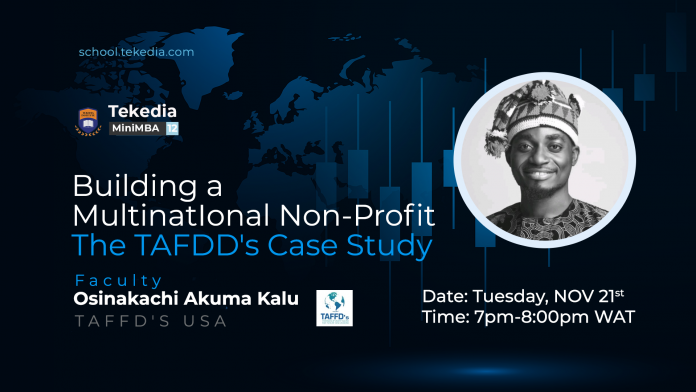
But somehow someone shared the news in Ovim and my grandmother complained before the bishop and he sent a note: “Ndubuisi, we did not send you to America to play God, leave that”. Today, at Tekedia Institute, we will have a lecture from a young man who built a multinational non-profit on the whole construct of Afro-Longevity. Time here.  We will focus on the strategy aspect of his achievement. (I pulled this photo because this course today reminds me of journeys taken.)

How To Build Multinational Non-Profits | Tekedia Mini-MBA

1

Today at Tekedia Institute, we will have a lecture from a young man who has been on a mission to deepen our understanding of singularity, anti-aging, and other esoteric components of natural philosophy and metaphysics.  Ósìnàkáchì Ákùmà Kálù built one of the most prominent non-profits in this space, and has successfully mobilized hundreds of eminent scholars and researchers from around the world.

So, we asked him: come to Tekedia Mini-MBA and explain how you were able to build Transdisciplinary Agora for Future Discussions taffds.org and share lessons for those who may be looking to build a global non-profit (NGO).

Yes, at Tekedia Institute, we do not just teach you how to build for-profit businesses, we also have in our curriculum, how you can expand your NGO.