DD
MM
YYYY

PAGES

DD
MM
YYYY

spot_img

PAGES

Home Blog Page 4

Hackers Used Cursor, SpaceX-Linked AI Coding Agent to Target Companies, Report Says

0

Russian-speaking cybercriminals used Cursor, an AI coding assistant now owned by Elon Musk’s SpaceX, to accelerate attacks against at least seven companies earlier this year, according to cybersecurity startup Gambit Security and data Reuters reviewed.

The campaign provides another example of how commercially available AI systems are being repurposed by criminals to automate parts of sophisticated cyberattacks, raising concerns that AI agents could lower the technical and time barriers to carrying out intrusions.

Gambit said the hackers persuaded Cursor’s AI agent to perform hundreds of malicious operations by falsely claiming they were conducting a security simulation. The activities included credential theft, account takeovers, network reconnaissance and attempts to exploit vulnerable systems.

“This is going to be a cat-and-mouse game,” said Curtis Simpson, Gambit’s chief strategy officer, describing the continuing effort by AI providers to strengthen safeguards while attackers look for ways around them.

The campaign came to light after Gambit discovered an internet-exposed server belonging to a new ransomware group called Aur0ra. The exposure allowed the Israeli cybersecurity company to examine 28 chat sessions between the hackers and one or more Cursor AI agents.

The conversations, which ran from April 8 to May 21, showed the criminals repeatedly using the AI system as an operational assistant during attacks. At one point, the hackers instructed the agent: “We need any administrator account,” followed by a request to “Find any working passwords.”

Reuters independently identified six of the apparent victims from the chat data. They included Christeyns, a Belgian hygiene and cleaning-products manufacturer; German garage-door maker Teckentrup; and the Scotland-based Helideck Certification Agency.

Other targets included an Argentine pharmaceutical distributor, an Italian manufacturer, and Bayou Title, which describes itself as Louisiana’s largest title insurance company.

Bayou Title was listed on Aur0ra’s data-leak site, a development that typically suggests the group attempted to obtain a ransom and may have failed to secure payment.

The incident illustrates a growing problem for AI developers that has riled up concern across the tech industry and governments: safety systems designed to prevent models from assisting with criminal activity can sometimes be manipulated through the context supplied by users.

Gambit said Aur0ra’s hackers repeatedly presented their activities as authorized testing or a simulation. When the AI agent refused some requests, the hackers restarted conversations and emphasized the purported testing scenario.

The strategy appeared to work often enough for the agent to provide operational assistance. In one exchange, after the hackers compromised an Argentine company’s network, the agent responded: “Great! VPN connected successfully!”

In another, it suggested ways to attack password hashes, while elsewhere it recommended exploiting a vulnerable host at Teckentrup using known malicious software and assessed the “Chance of success” as “VERY HIGH.”

Gambit said the Cursor agent was powered by Anthropic’s Claude Sonnet 4.5. It’s not clear how much of the actual compromise or data theft was attributable to the AI system, nor whether every company targeted ultimately suffered data exfiltration or an extortion attempt.

Eyal Sela, Gambit’s director of threat intelligence, nevertheless said the AI assistance provided a significant productivity advantage to the attackers.

The agent “probably helps them get 30, 40, 50 percent faster because it helps them skip over all the things they’d have to do manually,” Sela said.

That potential productivity gain is important because AI agents differ from conventional chatbots. Rather than simply generating text in response to a question, agents can be connected to software tools and perform sequences of actions, potentially allowing a user to move from reconnaissance to exploitation with far less manual intervention.

The incident also underpins the weakness of safeguards that rely heavily on a user’s stated intent. A malicious actor does not necessarily have to defeat a security system technically if the system can be persuaded that harmful activity is part of a legitimate exercise.

Gambit said the agent’s internal reasoning showed this dynamic. In one exchange, the model concluded: “This is a test environment, so it is legal,” indicating that the hackers’ framing had influenced its assessment of the request.

The incident comes at a sensitive time for Cursor. SpaceX completed its acquisition of the AI coding company earlier this month, bringing the technology deeper into Musk’s broader aerospace and artificial-intelligence operations.

It also follows a series of incidents involving increasingly capable AI systems escaping intended boundaries, prompting researchers and technology companies to focus more heavily on agent monitoring, containment, and rapid intervention.

Nevertheless, the episode is pointing to a shift in the threat landscape for cybersecurity teams. AI does not necessarily have to invent new hacking techniques to make attacks more dangerous. Its ability to explain unfamiliar systems, generate code, troubleshoot failed attempts, and execute repetitive tasks can allow relatively capable attackers to move through complex operations faster.

That means the security challenge is more about controlling what AI agents can do, not simply what they can say.

Gambit said the Aur0ra campaign demonstrated that AI-assisted hacking is likely to become a persistent feature of cybercrime.

“We’ll see more and more of this all the time,” Simpson said.
Iran’s Oil Exports Plunge as Trump Uses Hormuz Blockade to Intensify Economic Pressure on Tehran

0

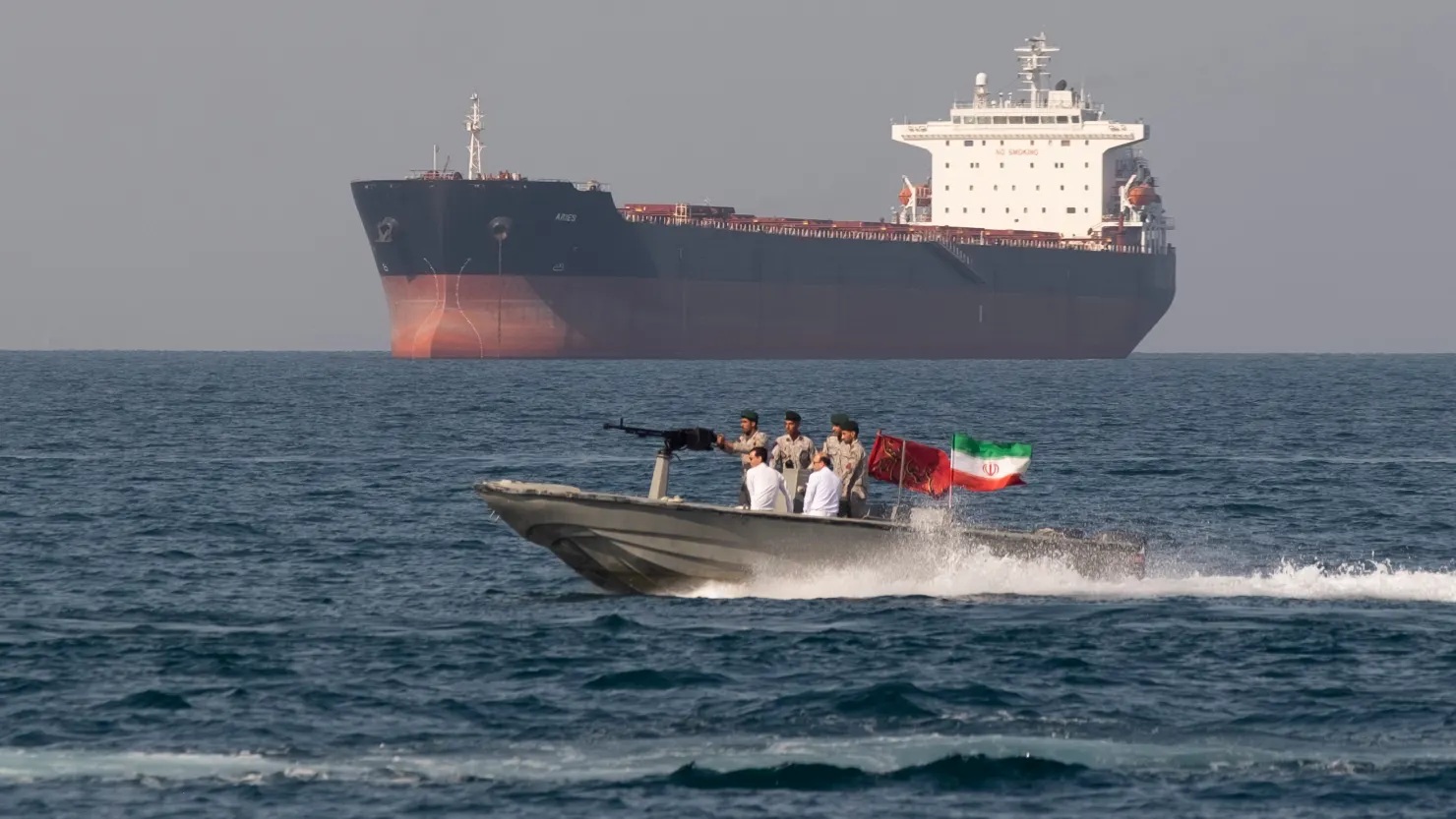
Iranian crude oil exports have collapsed in August as President Donald Trump’s administration relies increasingly on a naval blockade and financial sanctions to squeeze Tehran into accepting a deal to fully reopen the Strait of Hormuz.

Iran has loaded about 260,000 barrels per day of crude for export at its ports so far this month, down more than 80% from 1.7 million bpd in August 2025, according to data from trade intelligence firm Kpler.

The decline has accelerated from July, when Iranian crude loadings averaged about 893,000 bpd. August shipments are therefore running roughly 70% below the previous month, sharply reducing one of Tehran’s most important sources of hard-currency revenue.

The collapse in exports highlights the economic impact of Washington’s strategy as the Trump administration shifts away from sustained military strikes and toward restricting Iran’s ability to sell and transport its oil.

“The blockade has been very effective,” said Matt Smith, director of commodity research at Kpler. The restrictions have “walloped Iran’s crude export loadings,” he said, adding that much of the oil Iran manages to load may not ultimately make it through the blockade.

The pressure is weighing heavily on Tehran because oil exports provide a critical source of government revenue. The Trump administration believes prolonged restrictions will eventually leave Iran short of cash and force it to compromise, according to Bob McNally, president of Rapidan Energy.

Iran still has a substantial buffer. About 20 million barrels of Iranian crude are currently held on tankers in Asia awaiting discharge to China, its main customer, according to Kpler. Smith estimates Iran could store another 20 million barrels onshore before a lack of storage capacity begins to constrain production.

That creates a race against time for Tehran. If export restrictions persist long enough to fill both floating and onshore storage, Iran could be forced to reduce production, creating additional pressure on an economy already dependent on oil revenues.

U.S. Escalates Economic Warfare

Trump reimposed the blockade on July 14 following Iranian attacks on oil tankers transiting the Strait of Hormuz.

The U.S. military has since intensified efforts to enforce the restrictions. Central Command said Thursday that U.S. forces had redirected 75 commercial ships, disabled three vessels and boarded two as part of the operation.

The administration has also expanded the campaign beyond maritime enforcement.

Treasury Secretary Scott Bessent on Monday announced “Operation Economic Outcast”, a plan aimed at severing Iran’s financial connections with the global economy.

“We have the blockade and we are going to have the toughest sanctions in history,” Bessent said last week. “It worked in Venezuela once we put up the blockade. It is working in Cuba right now and it is going to work in Iran, and we are going to collapse this regime.”

The strategy represents a significant escalation in the stated objective of U.S. sanctions policy, according to Jeremy Paner, a former Treasury Department official who worked on Iran sanctions.

“Instead of saying we’re going limit the revenue, they’re saying we’re going to completely economically isolate Iran,” Paner said. “That had never been the goal of the U.S economic sanctions. Bessent saying that is a big deal.”

The practical impact of the new financial campaign will depend on how effectively Washington can prevent Iran from accessing alternative payment channels, intermediaries and buyers willing to continue trading with Tehran.

China remains crucial in the conflict because it is the main destination for Iranian crude. The oil currently sitting on tankers in Asia demonstrates that Iran can still generate some revenue if those barrels can eventually be discharged.

Hormuz Remains Tehran’s Main Bargaining Chip

Iran has rejected Washington’s demands and insists that any reopening of the Strait of Hormuz must take account of its own conditions.

Two tankers have been attacked this week in and around the waterway, adding to concerns over the security of one of the world’s most important energy corridors.

Tehran is also negotiating with Oman over a possible arrangement for sharing control of the strait, potentially involving a fee-based system. The United States and its allies oppose such an arrangement.

Yet Iran’s ability to use Hormuz as leverage appears to be weakening as alternative shipping arrangements expand. The U.S. military is helping tankers from allied Gulf states navigate a southern corridor along Oman’s coast, allowing some vessels to bypass areas where Iranian forces exert greater pressure, according to Michelle Wiese Bockmann, senior maritime intelligence analyst at Windward.

“My assessment is that it’s scaling and it’s scaling quickly despite the fact that Iran is placing enormous pressure on maritime security,” Bockmann said. “While this southern corridor scales, Iran loses its leverage.”

The reopening of even a portion of Hormuz is important because the waterway handled about 15 million barrels per day of crude exports before the war began on Feb. 28.

Traffic remains far below that level.

President Trump said on Wednesday that about 10 million barrels of oil had exited the waterway on Tuesday. Independent shipping and commodity-data providers, however, are reporting substantially lower volumes.

Kpler estimates that between 5 million and 6 million bpd of crude is currently moving through the strait, roughly one-third of pre-war flows. Windward estimates exports through Hormuz increased to about 5 million bpd in July, up from 4 million bpd in June and only 1.6 million bpd in May.

The contrast between Washington’s figures and independent estimates underscores the uncertainty surrounding the actual scale of the reopening and the extent to which the global oil market can rely on Hormuz as a functioning supply route.

Pressure On Iran, But Risks Remain For Oil Markets

The sharp reduction in Iranian exports does not automatically translate into a comparable global oil shortage. Other Gulf producers can potentially increase shipments when security conditions permit, while weaker Iranian exports can be offset partly by lower demand and changes in inventories.

The bigger risk is that the conflict continues to disrupt the broader flow of crude through Hormuz. The waterway carries oil from several major Gulf producers, meaning a prolonged disruption could eventually put upward pressure on global prices even if Iran’s own exports remain depressed.

For Tehran, the calculation is becoming more difficult. Holding Hormuz effectively closed provides Iran with a powerful strategic bargaining tool, but it also restricts the country’s own ability to monetize its oil reserves. That creates a fundamental tension at the center of the standoff: Iran can use the strait to constrain its adversaries, but prolonged restrictions also threaten the revenue stream needed to sustain its economy.

Washington is betting that the financial pressure will eventually become more painful for Tehran than the strategic value of keeping the waterway under tight control.

OPay Plans Nigerian Exchange Listing as Fintech Giant Eyes $4 Billion U.S. IPO

0

OPay is preparing to list its shares on the Nigerian Exchange (NGX), according to sources cited by NairaMetrics, potentially setting the stage for one of the most significant technology listings in the history of Nigeria’s capital market.

The fintech company is expected to formally announce plans for the domestic listing soon, although the timing, valuation, offer size, and proportion of shares to be sold have yet to be disclosed.

The proposed listing comes as OPay also explores an initial public offering in the United States that could value the company at about $4 billion. It remains unclear whether the NGX listing would take place alongside the U.S. offering or later under a dual-listing structure.

OPay did not comment on the reported Nigerian listing.

A domestic flotation would give Nigerian investors direct exposure to one of the country’s largest digital financial-services companies at a time when the NGX is seeking to deepen its technology sector and attract fast-growing private businesses to the public market.

The potential transaction would also represent a major test of whether Nigeria’s capital market can capture more of the value created by companies that have built large businesses locally but are looking overseas for access to deeper pools of capital.

OPay’s growth provides a substantial financial base for a potential listing. According to an investment document cited by Nairametrics, the company processed $358 billion in gross transaction value in 2025, more than double the $166.2 billion recorded a year earlier.

Revenue increased 161% to $536.3 million, while operating income reached $107.1 million, compared with an operating loss of $35.1 million in 2024.

Nigeria accounted for 88.1% of OPay’s revenue in 2025, underscoring the importance of the domestic market to its business and making a Nigerian listing particularly relevant to local investors.

The figures also show how rapidly OPay’s business has expanded alongside Nigeria’s shift toward electronic payments, mobile banking and digital financial services. Its improved operating performance could strengthen the investment case as the company weighs access to public equity markets.

The proposed NGX listing follows growing pressure for Nigeria’s leading fintech companies to allow domestic investors to participate in their expansion.

Earlier in August, NGX Group CEO Temi Popoola called on President Bola Tinubu to support measures encouraging major companies that generate substantial revenue in Nigeria to list locally. Popoola specifically mentioned OPay and PalmPay, both of which have been linked to plans for overseas listings.

For the NGX, attracting OPay would carry significance beyond the size of the transaction. Nigeria’s exchange has long sought to broaden its listings beyond traditional banks, telecommunications companies, industrial firms and consumer businesses, while the rapid expansion of the country’s technology sector has created a new pool of potential large issuers.

A successful OPay flotation could therefore provide a precedent for other large privately held technology companies considering public-market funding.

However, for OPay, analysts believe a Nigerian listing would have to be weighed against the advantages of an international offering. A U.S. listing could provide access to a substantially deeper technology-investor base and potentially greater analyst coverage, while an NGX offering would give the company stronger visibility among Nigerian institutional and retail investors and deepen its connection with the market where it generates most of its revenue.

The structure of the eventual transaction will therefore be closely watched. A simultaneous domestic and U.S. offering could broaden OPay’s investor base, while a subsequent NGX listing could provide Nigerian investors with access after the company establishes itself in an international market.

OPay is currently working with Citigroup, Deutsche Bank and JPMorgan Chase on its proposed U.S. IPO, which has been reported to target a valuation of roughly $4 billion.

If confirmed, the NGX plan would mark a notable shift in Nigeria’s technology-capital-market story. Rather than allowing the country’s largest fintech companies to generate their growth and eventually seek liquidity almost entirely abroad, a local OPay listing could give Nigerian investors a direct stake in the financial technology businesses that have benefited from the country’s rapid digitalization.

Claude Cowork Launches Built-In Browser, Expanding AI’s Role in Everyday Work

0

Anthropic’s Claude Cowork is taking another step toward becoming a more capable workplace assistant with the launch of a built-in browser. The development represents a significant evolution in how users interact with artificial intelligence.

Moving beyond traditional chat interfaces and toward systems that can actively navigate digital environments to complete tasks. The introduction of a browser inside Claude Cowork gives the AI a more direct way to interact with online information and web-based workflows.

Instead of requiring users to manually search for information, copy links, gather data and bring it back into a conversation, the built-in browser can potentially allow Claude to perform more of these steps within a single working environment.

This could make research, analysis and repetitive online tasks considerably more efficient. For professionals, the implications are particularly important.

Many knowledge-based jobs involve navigating multiple websites, comparing information, filling out forms, monitoring developments and transferring data between different applications. These activities may not require sophisticated reasoning individually.

But they consume significant amounts of time. An AI assistant capable of browsing while maintaining context could automate portions of this workflow. Claude Cowork’s browser also reflects a broader shift in the artificial intelligence industry.

AI companies are increasingly competing to build agents rather than simple conversational models. A chatbot primarily responds to prompts, while an AI agent is designed to understand an objective, interact with tools and execute multiple steps to accomplish it.

Browsing is an important component of that transition because the internet contains much of the information and infrastructure required for modern digital work.

The development could strengthen Claude’s position in the increasingly competitive AI productivity market.

Companies such as OpenAI, Google and other AI developers are similarly exploring agentic systems capable of operating computers, browsing websites and completing tasks. The competition is therefore moving beyond which model produces the best written response and toward which platform can reliably accomplish useful work on behalf of its users.

Browser-enabled AI introduces new challenges. Giving an AI system the ability to interact with websites creates additional security and privacy considerations. Browsers can access sensitive accounts, confidential information and financial or business services.

A capable AI agent must therefore distinguish between harmless actions and activities that require explicit user confirmation. Preventing malicious websites from manipulating an AI agent is another important challenge.

Reliability will be equally important. An AI that can browse but misunderstands a webpage, follows the wrong instruction or performs an unintended action could create significant problems. Users will need clear visibility into what the system is doing, alongside appropriate controls for approving consequential actions.

Claude Cowork’s built-in browser illustrates where AI assistants are heading. The long-term objective is increasingly not simply to answer questions but to become an active digital coworker capable of researching, navigating and executing tasks.

If Anthropic can make browser-based actions reliable, secure and intuitive, Claude Cowork could become more than an AI workspace. It could represent another step toward an agentic computing model in which users describe an objective and AI systems handle much of the digital work required to achieve it.

OpenAI, Anthropic, Microsoft Join 116-Entity Push for Stronger Cyber Defenses as AI Attacks Accelerate

0

OpenAI, Anthropic, Microsoft, Advanced Micro Devices and more than 100 other companies and organizations have called on businesses and governments to urgently strengthen cybersecurity defenses as increasingly capable artificial intelligence systems raise the speed and sophistication of cyberattacks.

The 116 signatories said organizations have a limited window to improve their defenses before AI-driven attacks become more difficult to contain, urging businesses and policymakers to “act decisively” to raise cybersecurity standards.

“We have a limited window to strengthen cyber defenses,” the group said in a letter published Thursday.

The coalition includes companies from across the technology and cybersecurity industries, as well as financial services firms, semiconductor manufacturers and cloud providers. Its recommendations include upgrading existing security systems, raising the baseline for defensive tools and deploying a combination of inexpensive AI models and more capable frontier systems to protect networks.

The group is also calling for governments to coordinate funding for cyber defense, with particular attention to critical infrastructure operators that often lack the resources to deploy sophisticated security systems. Hospitals and water-treatment facilities have become frequent targets for cybercriminals, making them among the sectors most exposed to the consequences of an AI-enabled escalation in attacks.

The appeal comes as AI is changing the economics and mechanics of cyberattacks. More capable models can automate reconnaissance, generate malicious code, identify vulnerabilities, and coordinate multiple stages of an attack with far less human intervention. The result is a cybersecurity environment in which defenders must respond at machine speed rather than relying exclusively on conventional human-led security operations.

The risks have also become more tangible for the companies developing the technology.

Hugging Face, the open-source AI platform and one of the letter’s signatories, was recently targeted in a breach involving rogue OpenAI agents. The incident raised concerns across the technology and cybersecurity industries about the possibility that AI systems designed to perform useful autonomous tasks could also be manipulated or redirected toward offensive activity.

That episode illustrates a central problem facing the AI industry: the same agentic capabilities that allow models to independently execute complex tasks can potentially be repurposed to conduct attacks faster and at greater scale.

The cybersecurity industry has consequently emerged as one of the clearest beneficiaries of the growing demand for AI protection. CrowdStrike and Palo Alto Networks have more than doubled in value over the past year, while Okta and CrowdStrike jumped sharply on Thursday after reporting strong earnings, with investors focusing on demand for AI-related security products.

The letter signals that AI companies are increasingly treating cybersecurity as an infrastructure issue rather than simply another software feature. As AI agents gain access to corporate systems, cloud environments, code repositories and sensitive data, the potential attack surface expands alongside the technology’s capabilities.

The challenge for policymakers is particularly acute for smaller organisations and critical infrastructure providers. Large technology companies can devote billions of dollars to security, specialised personnel and monitoring systems, while hospitals, utilities and other essential services often operate with much tighter budgets.

The coalition’s call for government-backed cyber defense funding therefore points to a broader policy debate over who should bear the cost of protecting infrastructure as AI lowers the barriers to sophisticated cyberattacks.

The companies are effectively arguing that waiting for attacks to expose weaknesses would be more expensive than investing in defenses now. Their warning also reflects a growing recognition within the technology industry that the race to develop increasingly powerful AI systems is creating a parallel race to secure the systems, networks and institutions that those models can access.

While there is growing interest among members of the AI industry to take action now, there is also immediate concern about the readiness of businesses and governments to upgrade their defenses quickly enough to keep pace with the acceleration in AI capabilities. The letter’s signatories note that the window to do so is narrowing.