DD
MM
YYYY

PAGES

DD
MM
YYYY

spot_img

PAGES

Home Blog Page 4

Crypto Industry Entering What Many Executives Describe as a New Era for Consumer Access to Finance

0

The cryptocurrency industry is entering what many executives describe as a new era, one where digital asset platforms are no longer built solely for professional traders and blockchain developers, but for mainstream consumers who want seamless access to financial markets.

That vision was recently reinforced by Jito CEO Lucas Bruder, who argued that crypto users are moving toward a future where they can trade anything and everything through decentralized infrastructure. His comments reflect a broader transformation underway across the crypto ecosystem as platforms evolve from niche financial experiments into comprehensive digital marketplaces.

Jito, one of the leading infrastructure projects within the Solana ecosystem, initially gained prominence through liquid staking and maximum extractable value (MEV) optimization. However, the company’s latest strategic direction signals an ambition far beyond blockchain backend services.

By pushing deeper into consumer-facing products, Jito aims to position itself at the center of a rapidly expanding onchain economy where users can trade not only cryptocurrencies, but also tokenized stocks, commodities, real-world assets, prediction markets, and digital collectibles from a single ecosystem.

This shift represents a major philosophical evolution for crypto. During the industry’s early years, decentralized finance primarily focused on replacing traditional banking functions such as lending, borrowing, and token swapping. Today, the ambition is much larger. Platforms increasingly want to become universal financial operating systems capable of hosting every type of asset and transaction.

Bruder’s statement captures this momentum: the future crypto user may no longer distinguish between traditional finance and decentralized finance because both worlds could eventually converge onchain. Several trends are accelerating this transition. First is the rapid rise of tokenization. Major financial institutions are now exploring blockchain-based representations of stocks, bonds, treasury products, and commodities.

Tokenization allows assets to trade 24/7 with near-instant settlement, lower fees, and global accessibility. This infrastructure aligns perfectly with crypto-native platforms such as Jito that are optimized for speed and scalability. Second is the maturation of user experience. Earlier crypto applications often required technical expertise, complicated wallet setups, and tolerance for high risk.

Consumer-oriented platforms are now prioritizing simplicity, mobile accessibility, and integrated financial tools that resemble modern fintech apps. Jito’s consumer push reflects the understanding that mass adoption will only occur when blockchain interactions become nearly invisible to users.

Another key factor is the evolution of Solana itself. The network has increasingly positioned itself as a high-performance blockchain capable of supporting large-scale consumer applications. Fast transaction speeds and low fees make Solana attractive for trading environments where users may execute frequent microtransactions across numerous asset classes.

Jito’s growth is closely tied to this infrastructure advantage, allowing it to build products aimed at retail-scale participation rather than only institutional users. The idea that users will trade anything and everything also reflects changing investor behavior. Younger generations increasingly expect financial systems to be open, programmable, and globally accessible. They are comfortable moving between cryptocurrencies, tokenized assets, gaming economies, and social-finance applications without seeing rigid boundaries between them.

Crypto platforms are adapting to this mindset by building ecosystems where all digital value can coexist and circulate seamlessly. Yet challenges remain. Regulatory uncertainty continues to shape how quickly tokenized securities and cross-market trading can expand. Security concerns, market volatility, and consumer protection issues also remain central debates for policymakers and industry leaders alike.

For companies like Jito, success will depend not only on technological innovation, but also on building trust and reliability at scale. Bruder’s remarks underline a defining reality of the current market cycle: crypto is no longer content with being an alternative financial niche. The industry is increasingly attempting to become the infrastructure layer for global digital commerce itself.
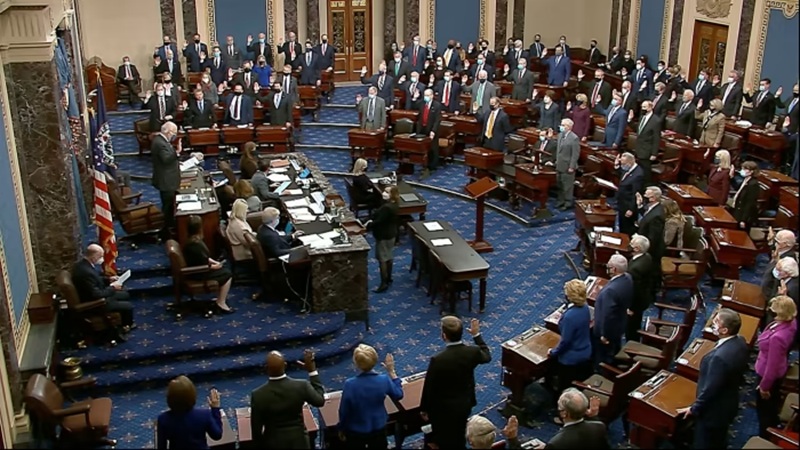

US Senate Committee’s Approval Marks a Procedural Milestone for the Crypto Industry

0

The US Senate committee’s approval of a crypto market structure bill marks a procedural milestone, but it does not yet translate into durable legislative momentum. The bill now enters a far more complex phase—one defined less by technical drafting and more by entrenched jurisdictional conflict, institutional lobbying, and unresolved policy questions about how digital asset markets should be governed in the United States.

The legislation attempts to delineate regulatory authority between the Securities and Exchange Commission (SEC) and the Commodity Futures Trading Commission (CFTC). This is not a new ambition. For years, both agencies have operated in overlapping and often ambiguous territory, particularly as crypto assets blur the traditional distinction between securities and commodities. The bill seeks to formalize a taxonomy for digital assets and establish clearer registration pathways for exchanges, brokers, and token issuers.

In theory, this would reduce regulatory uncertainty and bring digital asset markets closer to a compliant institutional framework. However, the Senate committee win masks the scale of disagreement that still exists within Congress. The most immediate hurdle is intra-legislative fragmentation.

Even among lawmakers broadly supportive of crypto regulation, there is no consensus on the balance between innovation and investor protection. Some factions prioritize rapid integration of digital assets into the financial system through lighter-touch oversight, while others advocate for stricter disclosure requirements and expanded enforcement authority for the SEC.

These differences are not cosmetic; they directly affect how token classifications, decentralized finance (DeFi) protocols, and stablecoin issuance would be treated under law. Beyond Congress, institutional resistance further complicates the bill’s trajectory. Both the SEC and CFTC have historically defended their jurisdictional boundaries, and neither is eager to concede authority without significant safeguards.

The SEC, in particular, has maintained an expansive interpretation of what constitutes a security in the crypto sector, while the CFTC has positioned itself as a more innovation-friendly regulator for commodities-like digital assets. Any statutory realignment will therefore require not only legislative clarity but also institutional recalibration—an inherently slow and contested process.

Industry lobbying also plays a dual role. Major crypto exchanges and infrastructure providers support clearer rules, viewing regulatory ambiguity as a barrier to institutional adoption. At the same time, the industry is not monolithic. Different segments—centralized exchanges, DeFi developers, custodians, and stablecoin issuers—have divergent preferences regarding compliance thresholds and decentralization standards.

This fragmentation weakens the industry’s ability to present a unified position during negotiations. Political timing adds another layer of uncertainty. With election cycles approaching and broader economic concerns dominating legislative priorities, crypto regulation risks being deprioritized or reshaped into a broader financial services bill.

Historically, complex financial regulatory reforms in the United States tend to slow significantly once they move beyond committee stages, often requiring multiple sessions of Congress to reach final passage.

The Senate committee approval should be viewed as an opening move rather than a decisive breakthrough. The bill has successfully entered the formal legislative pipeline, but the path ahead is constrained by institutional rivalry, ideological division, and the inherent difficulty of codifying rapidly evolving financial technology.

Whether it becomes landmark legislation or stalls as another incomplete reform effort will depend on whether policymakers can reconcile competing visions of what crypto markets should become—not just how they should be regulated.

The Juxtaposition of Harvard’s Ether ETF Reduction and Abu Dhabi’s Bitcoin Accumulation

0

Harvard’s reported decision to reduce exposure to an Ether-based exchange-traded fund (ETF) while an Abu Dhabi sovereign wealth fund continues accumulating Bitcoin positions highlights a widening divergence in institutional crypto strategy.

Rather than signaling a uniform retreat or expansion in digital assets, these moves underscore how endowments and sovereign investors are increasingly segmenting their exposure across distinct crypto narratives: yield-bearing blockchain platforms on one side, and monetary-grade Bitcoin exposure on the other. Harvard Management Company, which oversees the university’s endowment, has historically favored diversified alternative assets, including venture capital, private equity, and selective technology bets.

Its reported exit from an Ether ETF position suggests a recalibration of risk appetite toward Ethereum-linked exposure. While Ethereum has matured into the dominant smart contract platform powering decentralized finance and tokenization infrastructure, it remains structurally tied to network activity cycles, fee volatility, and evolving regulatory classification debates. For some conservative institutional allocators, that translates into a less predictable return profile compared to Bitcoin.

In contrast, Abu Dhabi’s sovereign investment apparatus—often associated with entities such as the Abu Dhabi Investment Authority (ADIA) and related state-linked capital vehicles—has been increasingly associated with accumulation strategies in Bitcoin. This approach reflects a growing sovereign thesis: Bitcoin as a macro reserve-like asset rather than a technology bet.

Bitcoin is treated less as a platform for decentralized applications and more as a non-sovereign store of value, with properties akin to digital gold. Its fixed supply, global liquidity, and deepening institutional custody infrastructure make it particularly attractive to long-horizon capital pools seeking hedges against fiat currency debasement and geopolitical uncertainty. The divergence between Ether ETF reduction and Bitcoin accumulation also reflects a broader segmentation emerging across institutional crypto allocation models.

Ethereum exposure is increasingly viewed through the lens of technology risk—dependent on throughput scaling, layer-2 competition, regulatory treatment of staking yields, and shifting developer ecosystems. Bitcoin exposure, by contrast, is consolidating into a simpler narrative centered on monetary scarcity and passive appreciation, making it more suitable for sovereign balance sheets that prioritize macro stability over innovation upside. This split is also reinforced by evolving ETF structures in the United States and beyond.

Bitcoin ETFs have experienced sustained inflows since approval, driven by allocators seeking clean, regulated exposure to digital gold. Ether ETFs, while significant in expanding access to smart contract assets, have not yet achieved the same uniform institutional conviction, partly due to questions around yield classification and the complexity of Ethereum’s evolving roadmap.

The strategic behavior of sovereign funds in the Gulf region further amplifies this trend. These entities often operate with multi-decade horizons and geopolitical diversification mandates. For them, incremental Bitcoin accumulation is not merely a speculative position but a strategic hedge within a broader sovereign wealth architecture that already spans energy, infrastructure, equities, and real estate.

The juxtaposition of Harvard’s Ether ETF reduction and Abu Dhabi’s Bitcoin accumulation reflects a maturing crypto market where institutional capital is no longer treating digital assets as a single category. Instead, Bitcoin and Ethereum are increasingly being separated into distinct asset classes with fundamentally different roles.

Bitcoin as macro monetary collateral, and Ethereum as programmable digital infrastructure. As this segmentation deepens, capital flows are likely to become more polarized, driven less by crypto exposure as a theme and more by precise risk function within institutional portfolios.

Victims of Iran-linked Terrorist Attacks Seek US Court Order to Seize $344M Frozen by Tether

0

The growing intersection between cryptocurrency, geopolitics, and international law has taken another dramatic turn as victims of Iran-linked terrorist attacks seek a U.S. court order to seize $344 million worth of frozen USDT issued by Tether. The legal action represents one of the most significant attempts yet to use stablecoin infrastructure as a mechanism for enforcing terrorism-related judgments.

According to court filings in the Southern District of New York, a group of terrorism judgment creditors — individuals and families holding unpaid judgments against Iran for attacks allegedly linked to the Islamic Revolutionary Guard Corps (IRGC) — are asking the court to compel Tether to transfer frozen USDT tied to sanctioned wallets. The assets, totaling approximately 344 million USDT, were frozen after the U.S. Treasury’s Office of Foreign Assets Control (OFAC) sanctioned wallet addresses associated with the IRGC.

The plaintiffs argue that because Tether has direct administrative control over USDT, the company possesses both the technical capability and legal obligation to reissue the frozen tokens to wallets controlled by the victims. Their claim relies heavily on previous examples in which Tether cooperated with U.S. authorities by freezing, burning, and reissuing tokens during law enforcement operations.

The motion specifically references earlier FBI-related seizure cases in 2025 where Tether complied with government warrants. At the center of the dispute is a fundamental question about the nature of stablecoins. Decentralized cryptocurrencies such as Bitcoin, USDT operates with centralized issuer controls. Tether can blacklist wallet addresses and effectively immobilize tokens. Critics of centralized stablecoins have long argued that such systems function more like traditional banking instruments than censorship-resistant digital currencies.

This case may strengthen that argument considerably. The plaintiffs are reportedly seeking enforcement of approximately $2.42 billion in compensatory and punitive damages awarded across multiple terrorism-related cases over the past two decades. By targeting frozen digital assets connected to sanctioned entities, the victims hope to recover at least a portion of those unpaid judgments. The case also highlights how stablecoins have become deeply integrated into global financial surveillance and compliance systems.

Tether has increasingly worked alongside regulators and law enforcement agencies worldwide, claiming cooperation with hundreds of agencies across dozens of countries. The company has frozen billions in assets tied to sanctions violations, fraud, and illicit finance investigations.

Beyond the courtroom, the lawsuit carries major implications for the crypto industry. If the court rules in favor of the plaintiffs, it could establish a precedent allowing private judgment creditors to pursue frozen stablecoin assets linked to sanctioned entities. That would significantly expand the legal exposure of centralized stablecoin issuers and further blur the line between traditional finance and blockchain infrastructure.

For the broader cryptocurrency market, the case serves as another reminder that not all digital assets operate equally. While decentralized cryptocurrencies emphasize censorship resistance and user sovereignty, centralized stablecoins like Tether USDt remain subject to issuer discretion, regulatory oversight, and geopolitical enforcement actions.

As governments tighten oversight of digital assets, the battle over the frozen $344 million in USDT may become a landmark moment in defining the future relationship between crypto, sanctions enforcement, and international justice.

When Energy Security Arrives, Climate Ideals Retreat: Africa Must Learn the Lesson

1

Good People, geopolitics has a way of exposing the difference between ideals and interests. We are now reading that the Iran conflict is triggering a global return to coal as nations scramble to replace disrupted crude oil and natural gas supplies. With major LNG flows through the Strait of Hormuz affected, countries that spent years preaching aggressive climate transitions are adjusting rapidly. Taiwan is reactivating idle coal plants. South Korea significantly increased coal-fired electricity generation. Environmental targets are suddenly meeting energy realities.

The Iran war is triggering a global resurgence in coal consumption as countries scramble to replace lost natural gas supplies, The Wall Street Journal reports. With the Strait of Hormuz effectively closed, roughly 20% of global LNG shipments have been cut off, pushing some countries back toward coal. Taiwan has reactivated idle coal plants, while South Korea increased coal-fired electricity generation by over a third in April. Analysts warn the return to coal could have environmental consequences for climate goals worldwide.

This reminds me of the point I made recently when Canada moved to remove major federal climate rules. Policies often appear absolute until national interests become threatened. Once energy security, economic growth, industrial competitiveness, or political stability enters the equation, governments recalibrate quickly.

The lesson is not that climate concerns are unimportant. Far from it. Climate change remains real and environmental stewardship matters. But nations do not operate primarily on moral philosophy; nations operate on strategic interests.

Adam Smith explained the Invisible Hand in economics, but there is also an invisible hand in geopolitics: self-preservation. When circumstances change, countries adjust policies to protect their economies and citizens. In moments of uncertainty, governments choose energy availability over climate orthodoxy because factories must run, homes require electricity, and economies cannot pause.

This is why Africa must study the world carefully. For years, many African countries have faced pressure to move rapidly away from hydrocarbons and traditional energy systems despite having some of the world’s largest untapped energy resources and despite still confronting fundamental development challenges. Yet when crises emerge, many of the same advanced economies quietly return to the energy options they previously discouraged others from pursuing.

The issue here is not hypocrisy; it is realism. Nations protect themselves first.

And that means Africa must therefore be pragmatic, not naïve. In climate geopolitics, there is no absolute climate “right” or “wrong”, only national interest. Let us protect our environment, but let us also protect our development, understanding that global players will always choose themselves first.