Economists expect slower but still robust export growth, with investors watching whether external demand can offset weakness in the domestic economy
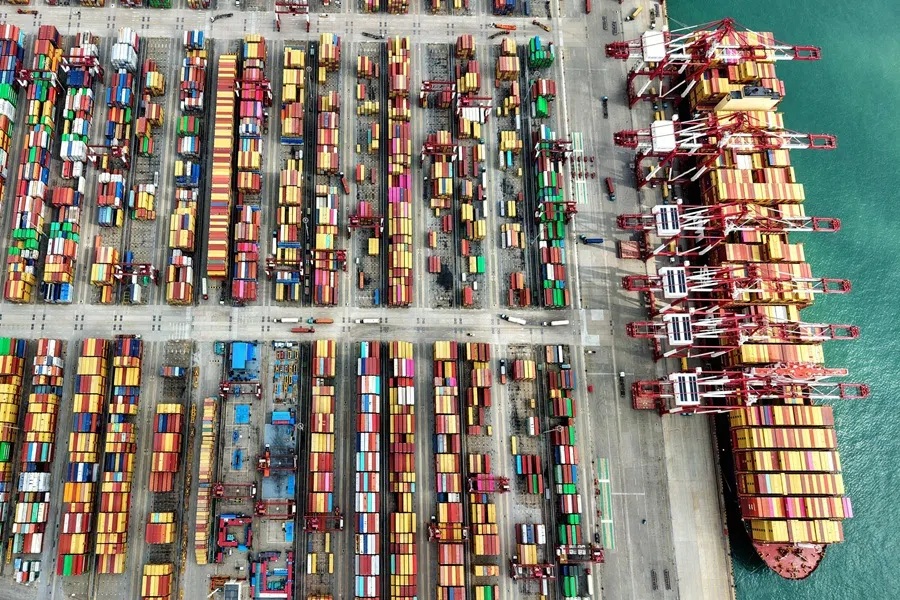
China’s export growth likely moderated in July after posting its strongest increase in months in June, although overseas shipments are expected to remain exceptionally strong as booming global demand for artificial intelligence-related products and a rush by businesses to ship goods ahead of higher U.S. tariffs continued to support the world’s largest exporting nation.
Trade data due on Friday from China’s General Administration of Customs will provide one of the first major indicators of economic activity in the second half of the year, offering investors fresh insight into whether resilient overseas demand can continue to cushion an economy facing persistent weakness at home.
According to a Reuters poll of 35 economists, China’s exports are expected to have risen 22.2% year-on-year in July, measured in U.S. dollar terms. While that would represent a slowdown from June’s 27% surge, it would still rank among the strongest export performances in recent years.
Imports are forecast to increase 27.9% from a year earlier, easing from June’s 36% jump but pointing to continued solid demand for commodities, intermediate goods and components used in manufacturing.
China’s monthly trade surplus is expected to narrow to about $107 billion from $125.62 billion in June, although it would remain historically elevated and continue to underscore the country’s dominance in global manufacturing.
The export sector has become one of the Chinese economy’s most important sources of resilience as policymakers struggle to revive domestic demand following a prolonged property downturn, subdued consumer spending and weak private-sector confidence.
While household consumption and the real estate sector continue to weigh on economic growth, manufacturers have increasingly relied on overseas markets to sustain production, investment and employment.
A key driver of that resilience has been the rapid expansion of global investment in artificial intelligence infrastructure.
Chinese manufacturers have benefited from rising international demand for AI-related hardware, including servers, networking equipment, industrial electronics, batteries, power management systems and other components used in building data centers. The AI investment cycle has created new export opportunities for Chinese suppliers across the technology supply chain, helping offset slower demand in more traditional manufacturing sectors.
At the same time, analysts say a significant portion of recent export strength has been driven by “frontloading,” as companies accelerate shipments before higher U.S. tariffs take effect.
Both Chinese exporters and American importers have sought to move goods across the Pacific ahead of new trade restrictions, temporarily boosting export volumes beyond underlying demand. That trend intensified after the United States imposed a new 12.5% tariff on Chinese imports on July 24, replacing a temporary 10% levy that had expired. The tariff forms part of the Trump administration’s broader effort to reshape global trade by targeting countries Washington says have failed to address forced labor concerns.
The administration is also conducting a separate investigation into industrial overcapacity among key trading partners, a process that analysts expect could result in additional tariffs on Chinese exports in the coming months.
The prospect of further trade barriers has encouraged manufacturers to accelerate shipments while existing tariff rates remain relatively manageable.
However, several factors are expected to have tempered trade activity during July.
Analysts say severe weather, including typhoons that disrupted logistics along parts of China’s coastline, likely reduced port throughput, delayed shipping schedules and temporarily constrained both exports and imports. Those disruptions came as other economic indicators pointed to a broader slowdown in domestic activity.
Official purchasing managers’ index (PMI) data released in late July showed that manufacturing activity contracted for another month, while services and construction also weakened, suggesting softer demand across multiple sectors of the economy.
Private-sector business surveys painted a similar picture, indicating slower expansion in both manufacturing and services as companies grappled with subdued domestic orders and continuing uncertainty over global trade conditions.
The mixed economic backdrop has intensified pressure on Beijing to introduce additional policy support.
At a meeting in late July, the Communist Party’s Politburo, China’s highest decision-making body, pledged to accelerate fiscal spending and make timely adjustments to monetary policy tools to support economic growth. The statement signaled policymakers remain prepared to provide further stimulus if economic momentum weakens.
However, the leadership stopped short of announcing large-scale measures aimed at boosting household consumption or implementing broader structural reforms that many economists believe are necessary to place China’s economy on a more sustainable growth path.
The absence of stronger consumer-focused stimulus has reinforced expectations that exports will continue to shoulder much of the burden of supporting economic expansion.
China’s trade performance is also attracting increasing international scrutiny.
The country recorded a trade surplus exceeding $1 trillion last year, fueling criticism from the United States and several other trading partners, which note that China’s export-led growth model contributes to persistent global trade imbalances and excess industrial capacity.
Those concerns have translated into a growing wave of tariffs, export restrictions and trade investigations targeting Chinese products, particularly in sectors such as electric vehicles, batteries, semiconductors and advanced manufacturing.
Friday’s trade figures will be closely watched by investors not only as a measure of China’s external demand but also as an indicator of the broader health of the global economy.
Analysts expect another month of robust export growth to boost expectations that AI-driven investment and tariff frontloading continue to provide powerful support for Chinese manufacturers.