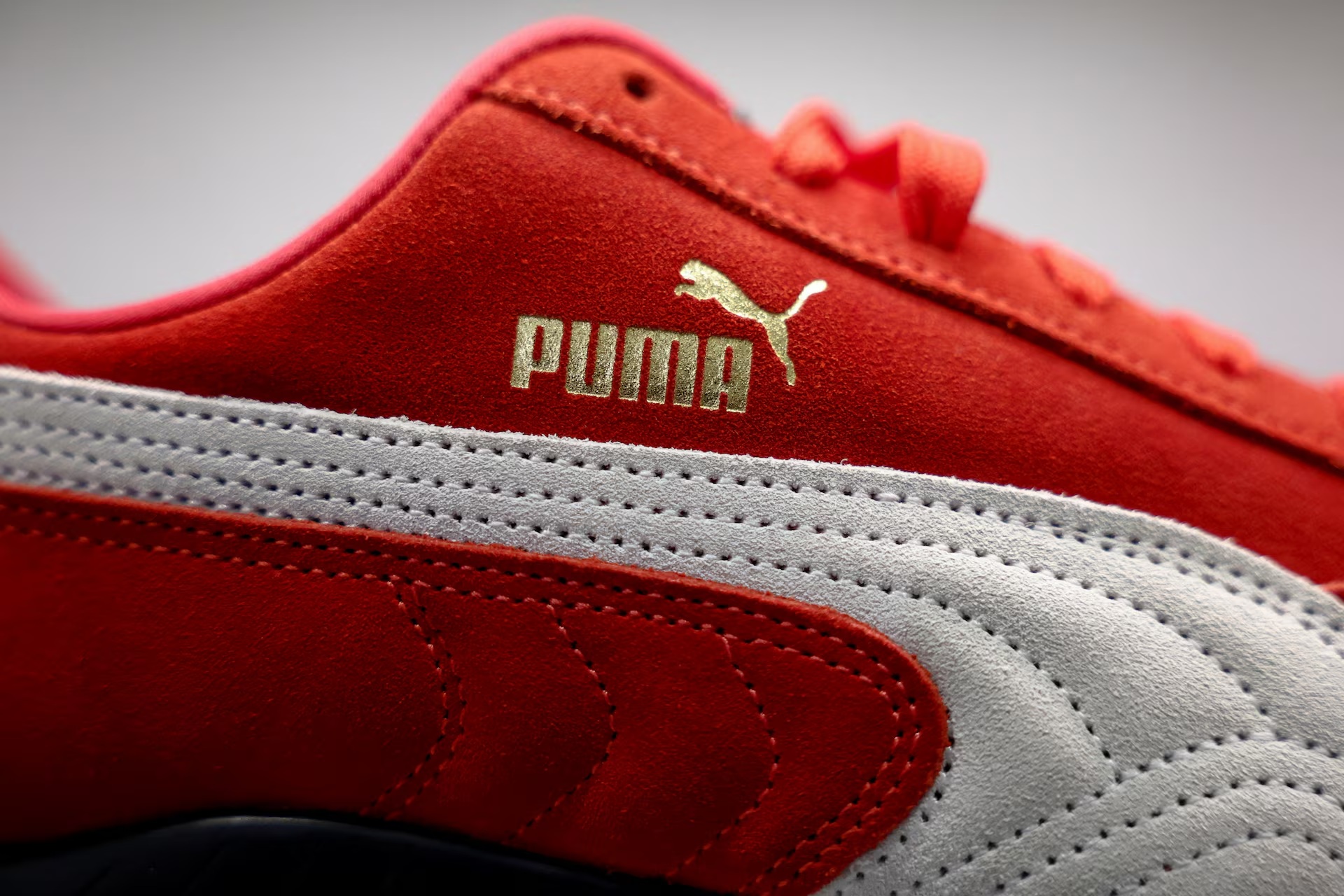
Investors welcomed a surprise shareholder shake-up at Puma on Tuesday after China’s Anta Sports agreed to buy a sizeable minority stake in the German sportswear group, a move widely seen as a vote of confidence in a brand that has struggled to regain momentum in a crowded and unforgiving global market.
According to CNBC, Anta Sports agreed to pay €1.5 billion for a near-30% stake in Puma, prompting the sportswear maker’s shares to jump sharply. Investors rushed to reassess the brand’s prospects, and analysts began recalibrating what the deal could mean for the balance of power in the global sportswear industry.
Beyond the price action, however, the transaction offers a window into how global consumer brands are being reshaped by slowing growth, shifting trade dynamics, and the growing influence of Chinese capital.
Anta’s purchase of a 29.06% stake from Artémis, the holding company of France’s Pinault family, makes the Chinese group Puma’s largest shareholder without crossing the 30% threshold that would force a mandatory takeover under German law. Anta was quick to stress that it has no current plan to launch a full bid, a point reinforced by analysts who describe the move as strategic rather than acquisitive.
Puma has been struggling to regain relevance in a fiercely competitive market dominated by Nike and Adidas, while newer and nimbler players crowd the middle and lower ends of the market. Under chief executive Arthur Hoeld, who took over last year after a long career at Adidas, Puma has embarked on a painful reset. Jobs have been cut, the product portfolio narrowed, and marketing overhauled, with management acknowledging that years of strategic drift left the company bloated and unfocused.
But that reset has come at a cost. Puma’s shares fell nearly 50% last year, weighed down by weak sales, margin pressure, and investor anxiety over U.S. President Donald Trump’s tariff policy, which has unsettled global retailers and complicated supply chains. Even after Tuesday’s rally, the stock remains close to a 10-year low, highlighting how fragile confidence has been.
Anta’s entry changes the conversation. The group has built a reputation as a disciplined, long-term owner of brands, combining local market insight in China with an increasingly sophisticated global playbook. Its 2019 acquisition of Amer Sports is often cited as proof of concept. After taking control of a portfolio that included Wilson, Arc’teryx, and Salomon, Anta invested heavily in product development, supply chains, and brand positioning, eventually taking Amer public again at a valuation that rewarded patient capital.
Analysts see parallels with Puma. “Anta is essentially buying a heritage brand at a distressed valuation,” said Melinda Hu, a China consumer analyst at Bernstein, noting that the €1.5 billion price looks reasonable relative to sector peers given Puma’s loss-making position. The attraction, she said, lies in Puma’s deep product DNA and global recognition, assets that are hard to replicate even for well-capitalized rivals.
Geography is another factor. Puma remains strong in Europe and Latin America but has struggled to gain traction in China and North America, two of the most important growth markets for sportswear. Anta, by contrast, dominates at home in China but has been seeking ways to diversify revenues and reduce exposure to an increasingly competitive domestic market.
“Puma fills a strategic gap,” said Julia Zhu, partner and head of consumer retail at consultancy firm CIC.
She described Puma as sitting squarely in the mass-market athletic footwear and lifestyle segment, positioned between premium global giants and lower-priced local brands. The limited overlap between Anta’s existing portfolio and Puma’s core strengths creates room for cooperation rather than cannibalization.
Still, the deal raises questions about governance and influence. With nearly 30% ownership, Anta will have significant sway, even if Puma remains formally independent. Reuters reported that Anta executives planned to speak with Puma management immediately after the announcement, suggesting early discussions on board representation and strategic priorities. How much influence Anta chooses to exert, and how receptive Puma’s leadership proves to external input, will shape the partnership’s success.
The transaction also has ripple effects beyond Puma. UBS analysts said the deal could sharpen competitive pressure on Adidas, particularly in Europe and Asia, where Anta’s operational discipline could help Puma close execution gaps. Adidas shares edged lower on the day, reflecting investor caution about a potentially more formidable rival.
The sale offers balance-sheet relief for Artémis. The holding company’s financial position has been under scrutiny alongside that of luxury group Kering, where Artémis is the main shareholder. UBS noted that the deal could be read as a modest positive for Kering, giving its new chief executive more room to focus on long-term strategy rather than short-term financial constraints.
More broadly, the Anta–Puma deal fits into a wider rebound in global mergers and acquisitions. Companies across sectors are reassessing where to deploy capital as technology disruption, supply-chain reconfiguration, and geopolitical uncertainty reshape risk calculations. Bain & Company estimates that global deal value jumped 40% last year to $4.9 trillion, one of the strongest totals on record, and expects momentum to continue into 2026 as firms streamline portfolios and seek growth through consolidation.
In that context, Anta’s move looks less like an opportunistic punt and more like a calculated bet on where value can be created in a fragmented global sportswear market. For Puma, the investment does not guarantee a turnaround. Execution risks remain high, consumer tastes are fickle, and competition is relentless. But the presence of a committed, well-capitalized strategic shareholder changes the backdrop, giving the brand time, resources, and credibility it has been sorely lacking.
First Abu Dhabi Bank Caps Transformative 2025 with Record 22% Profits, Signaling Strength in UAE’s Diversifying Economy
First Abu Dhabi Bank (FAB.AD), the United Arab Emirates’ preeminent financial institution by assets, concluded 2025 on a high note, posting a fourth-quarter net profit of 5.1 billion dirhams ($1.39 billion)—a robust 22% increase year-on-year—that surpassed analyst expectations of 4.9 billion dirhams, as compiled by LSEG.
The performance, announced on Wednesday, was driven by sustained business expansion, a 36% increase in non-interest income, and resilient operating income amid the UAE’s efforts to diversify its economy beyond hydrocarbons.
For the full year 2025, FAB achieved an unprecedented group net profit of 21.11 billion dirhams ($5.75 billion), marking a 24% rise from 2024 and setting a new benchmark for the bank. Total revenue climbed 16% to 36.68 billion dirhams, with net interest income edging up to 17,859 million dirhams from 17,474 million dirhams the prior year.
The earnings composition reflected a strategic pivot toward diversified, non-funded sources, as non-interest income contributed significantly to the uplift.
“The composition of earnings continued to evolve positively, with a higher contribution from non-funded income and steady delivery across business lines and geographies,” CFO Lars Kramer said in a statement.
This resilience highlights FAB’s ability to navigate a maturing interest-rate environment while capitalizing on regional growth drivers. Balance sheet metrics reinforced the bank’s solid footing. Loans and advances expanded 17% to 616 billion dirhams, fueled by demand in non-oil sectors like tourism, infrastructure, and technology. Customer deposits grew 7% to 841 billion dirhams, bolstering total assets to 1.4 trillion dirhams by December 31, 2025.
The bank’s liquidity coverage ratio and capital adequacy remained strong, supporting ongoing investments. In recognition of the year’s achievements, the Board proposed a record cash dividend of 80 fils per share, totaling 8.84 billion dirhams—the highest payout in FAB’s history. This distribution equates to a 4.6% yield based on recent share prices, underscoring the commitment to shareholder value while preserving capital for growth.
Quarterly breakdowns illustrate consistent progress. In the first half of 2025, net profit reached 10.63 billion dirhams, up 26% year-on-year, with a return on tangible equity (RoTE) of 20.5%. The third quarter added another layer of strength, with operating income rising 14% and net profit advancing 21%, alongside loans growing 12.9% and deposits increasing 3.5%.
These figures, detailed in FAB’s investor presentations and financial statements, demonstrate broad-based momentum across consumer banking, corporate finance, and international operations. FAB’s performance mirrors the UAE’s economic vitality, with GDP growth estimated at 5.2% for 2025 and projected to accelerate to 5.6% in 2026, per the bank’s own outlook. Banks have thrived on rising credit demand tied to diversification initiatives, including investments in tourism hubs, infrastructure projects, and tech ecosystems.
As the UAE reduces oil dependency, FAB—backed by top shareholder Mubadala Investment Company—has positioned itself as a facilitator of cross-border flows, with operations in 20 markets across five continents. Strategic expansions in 2025 included new branches in high-potential regions like Nigeria, Turkey, and India, enhancing FAB’s role as a global connector for trade and investment.
The bank’s investor relations reports emphasize AI-driven efficiencies and a focus on sustainable finance, aligning with the UAE’s net-zero ambitions. Comparisons to peers highlight FAB’s outperformance. While the UAE banking sector profits grew around 15-20% in 2025, FAB’s 24% net profit increase and record results set it apart, benefiting from its scale and diversified revenue mix.
Looking ahead, FAB’s 2026 guidance signals continued optimism, with expectations for sustained growth in non-interest income and balance sheet expansion. The bank’s “franchise-wide execution” notably positions it well to capitalize on emerging opportunities in a dynamic economic environment. Some analysts see the FAB’s 2025 results as affirmation of its status as a cornerstone of the UAE’s financial ecosystem, poised for further advancement in 2026.
Like this:
Like Loading...