
DD
MM
YYYY

PAGES

DD
MM
YYYY

spot_img

PAGES

Home Blog Page 4

China Targets 100tn Yuan Services Economy by 2030 in Shift From Investment-Led Growth

0

China has set a 100 trillion yuan ($14.67 trillion) target for its services sector by 2030, in what amounts to one of its clearest attempts yet to rewire the foundations of growth away from investment-heavy expansion toward a more consumption-driven model.

In a policy blueprint released by the State Council, authorities outlined a multi-layered strategy to expand the scale, sophistication, and global competitiveness of the sector, positioning services not just as a supplement to manufacturing but as a central pillar of economic sustainability.

“By 2030, notable progress will be achieved in the high-quality development of the services sector, with the sector’s total size reaching the 100 trillion yuan mark,” the cabinet said, adding that it aims to cultivate internationally recognized “China Services” brands.

The ambition is believed to be a reflection of mounting pressure on China’s traditional growth engines. Infrastructure and property-led expansion, long the backbone of the economy, are yielding diminishing returns, while weak consumer demand continues to weigh on recovery. Redirecting policy support toward services is intended to address both challenges simultaneously by stimulating domestic consumption and generating employment at scale.

The numbers illustrate the gap Beijing is trying to close. China’s services sector reached 80.89 trillion yuan in 2025, growing 5.4% year-on-year. Yet services still account for a smaller share of overall consumption compared with advanced economies. Per-capita services spending stood at 46.1% of total consumption, far below the roughly 70% level in the United States, highlighting both the headroom for expansion and the structural constraints that have limited it.

The policy framework attempts to tackle those constraints from multiple angles. On the supply side, authorities are prioritizing business services that can enhance industrial productivity, including research and development, logistics, software, supply-chain finance, and green services. These segments are expected to act as force multipliers, improving efficiency across manufacturing and helping Chinese firms move up the value chain.

On the demand side, the focus is on expanding consumer-oriented services such as healthcare, elderly care, childcare, tourism, retail, and cultural industries. These sectors are labor-intensive and closely tied to household spending patterns, making them critical to Beijing’s objective of boosting employment and reducing the economy’s reliance on exports and heavy industry.

President Xi Jinping has reinforced this direction, calling for a demand-driven approach anchored in reform and technological advancement. The emphasis signals a recognition that previous stimulus efforts, often channeled into construction and industrial capacity, have not translated into sustained consumption growth.

Financing mechanisms are being recalibrated to support the shift. The State Council pledged expanded use of fiscal tools, including loan interest subsidies, relending facilities, and government-backed investment funds. Notably, the plan also calls for broader adoption of services-sector real estate investment trusts, an effort to mobilize long-term capital into areas such as logistics infrastructure, healthcare facilities, and commercial services.

This underlines a broader evolution in China’s financial strategy. Policymakers are attempting to crowd in private capital and create market-based funding channels for service industries, which have historically been underdeveloped compared with manufacturing, rather than relying predominantly on state-led investment.

The policy also signals greater openness, with commitments to reduce institutional barriers and align market forces more closely with government support. This could include easing market entry restrictions, improving regulatory clarity, and encouraging foreign participation in selected service sectors, particularly those linked to technology and high-value services.

However, the transition is complex. Services-led growth typically requires stronger consumer confidence, higher disposable incomes, and more robust social safety nets. Chinese households have tended to maintain high savings rates, partly due to concerns over healthcare, education, and retirement costs. Economists note that without addressing these underlying factors, the expansion of services may face demand-side limitations.

There is also a productivity question. While services are often seen as less efficient than manufacturing, China is betting that digitalization and artificial intelligence can narrow that gap. Integrating advanced technologies into logistics, finance, and healthcare could raise productivity and create new high-value segments within the services economy.

But the shift also has geopolitical and trade implications. As China moves to strengthen domestic consumption and services, it may reduce its dependence on external demand, potentially reshaping global trade flows. The development of competitive “China Services” brands also suggests an ambition to export services in areas such as technology, finance, and digital platforms.

The risks are not negligible because structural barriers, including regional disparities, regulatory fragmentation, and entrenched state dominance in some sectors, could slow implementation. Moreover, reallocating resources from established industries to emerging service sectors may create transitional friction in employment and investment patterns.

Still, the direction is increasingly defined as China’s leadership is attempting to engineer a gradual but decisive rebalancing of the economy, with services at its core. The 100 trillion yuan target serves less as a fixed endpoint than as a signal of policy intent: to build a growth model that is more consumption-driven, innovation-led, and less dependent on the investment cycles that have defined the past two decades.

The Middle East Escalation is Squeezing Fertilizer Economics, Raising Alarm about Global Food Security

0

Since late February 2026, following U.S. and Israeli military actions against Iran, Iran has effectively closed or severely restricted shipping through the Strait of Hormuz—a narrow chokepoint between the Persian Gulf and the Indian Ocean. Shipping traffic has dropped dramatically often near standstill, with attacks on vessels and insurance issues deterring transit, though limited Iranian-linked shipments sometimes continue.

The strait normally carries: – ~20-35% of global seaborne crude oil, ~20% of liquefied natural gas (LNG), 20-30%+ of internationally traded fertilizers especially nitrogen-based like urea and ammonia, plus phosphates. This stems from Gulf produce like Qatar, Iran, UAE being major exporters of both energy and fertilizers. Nitrogen fertilizers rely heavily on natural gas as a feedstock and energy source for production.

Two main channels amplify the risk: Fertilizer exports from the Gulf are bottled up. Ships laden with product sit idle, and rerouting is costly or impossible in the short term. This hits importers hard, especially in Asia, Africa, and parts of Latin America. The LNG shortfall drives up global natural gas prices. Since natural gas is the primary input for ammonia and urea production often >70% of costs, fertilizer manufacturing becomes more expensive worldwide—not just in the Gulf, but in Europe, India, and elsewhere where plants rely on imported LNG or compete for gas.

Higher fuel costs also inflate shipping, farming and processing expenses. FAO Chief Economist Máximo Torero and others have described this as a double shock to farmers: pricier inputs + uncertainty during key planting seasons. If prolonged (beyond a few months), reduced fertilizer application could lower crop yields for staples like wheat, corn, and rice, tightening global supplies and pushing food prices higher.

Recent estimates and warnings include: Fertilizer prices (urea, etc.) already up 15-28%+ in spots, with potential for more. Risks of grain price surges; analysts have flagged 6%+ potential in some cases. Broader food inflation of 12-18% by end-2026 in some projections if unresolved. Heightened acute food insecurity for up to tens of millions, especially in import-dependent low-income regions.

Vulnerable groups include smallholder farmers in developing countries and net food importers. U.S. and European farmers may face higher input costs but are somewhat more insulated by domestic production alternatives; however, global ripple effects via trade and energy still matter. Transport and logistics costs add another layer, as higher bunker fuel prices raise the expense of moving food itself.

The strait remains largely closed or chaotic, with brief optimistic windows quickly reversing due to ongoing tensions, blockades, and security risks. Oil and gas prices have spiked and remain volatile. Traders at events like the FT Commodities Summit describe the situation as on borrowed time, warning that competing sectors (industry, power) may outbid agriculture for scarce gas and logistics.

Global food stocks provide some buffer for now, but a multi-month disruption could trigger more severe effects, echoing but potentially compounding past shocks like the 2022 Ukraine-related fertilizer crisis. This is part of wider geopolitical fallout from the Iran conflict, affecting energy markets first and foremost. Secondary effects on food are real but lagged—yield impacts from this planting season would hit harvests later in 2026 and into 2027.

Not every region feels it equally; drought, policy responses (subsidies, alternative sourcing), and substitution could mitigate or worsen outcomes. The warnings are serious and grounded in supply-chain realities, but outcomes depend heavily on how quickly the strait reopens or alternative routes and supplies scale up. Markets are pricing in risk, and organizations like UNCTAD and the World Bank continue monitoring for inflationary and humanitarian spillovers.

In short, yes—the disruption is squeezing fertilizer economics and raising legitimate alarms about global food security, particularly if the conflict drags on.

Contisx Live, Contisx Academic & Research Network (CARN)

0

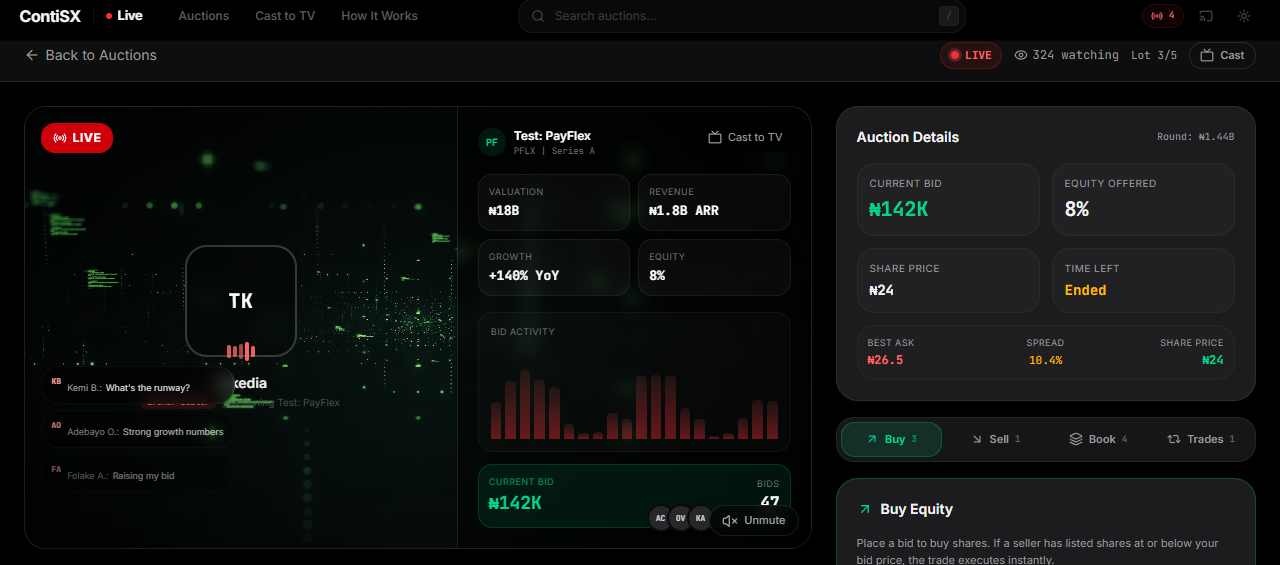
Mr. Wa Zo Bia, CEO of Wazobia AllUniverse Ltd, has received approval from the SEC to issue securities into the Nigerian capital market. In collaboration with his brokers, Contisx Exchange* has been selected as the platform for this issuance.

On Contisx, a presentation date is scheduled on Contisx Live. On that date and time, Mr. Bia and his broker will present the offering. Through Contisx Live, the event will be broadcast across our website and connected to mobile devices, smart TVs, and other digital platforms, enabling broad participation from anywhere.

During the live session, the issuer will take questions, provide insights, and engage directly with the market. At the same time, registered investors, onboarded through brokers and dealers, can place bids, make offers, and trade in real time, from their approved brokerage accounts.

For bonds, commercial papers, equities, and most securities, Contisx Live will bring issuers and investors closer together, enhancing transparency, access, and market confidence. Issuers can also use Contisx Live to present financial results and engage shareholders, removing information asymmetry.

Contisx Academic and Research Network

The Contisx Academic and Research Network (CARN) is a community of universities, researchers, students, regulators, and non-profits working together to advance capital market innovation, investment inclusion, risk management and market infrastructure development.

Inspired by leading academic-industry ecosystems where technology and education converge, CARN provides access to Contisx technologies, data, and market systems, enabling institutions to bridge the gap between theory and real-world financial markets.

In the next coming weeks, we will open for Nigerian universities with capital market and engineering related programs to apply and partner with us. Contisx will provide access to sandboxes, APIs, data and Contisx Codex, enabling students to learn and build with real-world tools. We expect to understand risks, asset classes, etc deeper by working with our universities.

Meanwhile, visit Contisx Live knowing that we are yet to launch as we only have an AIP now. But we are speaking and building relationships with operators and the communities ahead of launch.

Please reach out and let us explore how we can work together. We’re onboarding brokers, dealers, broker-dealers, fund managers and other stakeholders.

Contisx — exchanging prosperity.

*launching in Sept 2026

Osun 2026: RAVE FM and the Question of Media Neutrality

0

The debate over media neutrality in Osun State has resurfaced following the controversy surrounding the reported appointment of Dr. Femi Adefila, Chief Executive Officer of Rave 91.7FM, to the campaign council of Governor Ademola Adeleke. Although the campaign council later issued a public disclaimer stating that Adefila’s inclusion in the list was an error, the incident has sparked renewed discussion about the role of privately owned media in politically competitive environments ahead of the 2026 Osun governorship election.

The issue began when a widely circulated campaign structure for the reelection bid of Governor Ademola Adeleke listed Dr. Adefila as Chairman of the Professional Bodies, Organized Private Sector and NGO Engagement Committee. The role suggested responsibility for coordinating engagement with professional associations, private sector organizations and civil society groups. Given Dr. Adefila’s position as the head of one of the most influential radio stations in Osun State, the inclusion immediately drew public attention.

Shortly after the list began trending on social media, the campaign council released a disclaimer stating that Dr. Adefila was not a member of the campaign committee and that his name had been included in error. The statement urged the public to disregard the earlier information and apologized for any confusion.

Despite the clarification, the incident triggered a wave of public reactions online. An analysis of over twenty publicly shared comments responding to the development reveals a divided public sentiment. Approximately 45 percent of the comments expressed skepticism about the explanation that the inclusion was a mistake. Several commentators questioned how a full name and a specific committee position could appear on an official document without verification. Statements such as “Which type of mistake was that?” and “Even when his full name was written?” reflect the level of doubt among some observers.

Another segment of the reactions, representing roughly 30 percent of the comments, framed the issue within the broader context of political rivalry between the Peoples Democratic Party (PDP) and the All Progressives Congress (APC). These responses suggested that the controversy could reinforce existing allegations of partisan leanings among media outlets. Some commenters argued that if a media executive were to join a campaign team, rival parties might interpret this as evidence of editorial bias. Such perceptions, whether accurate or not, can influence how audiences interpret political coverage during an election cycle.

Supportive voices also emerged in the discussion. About 20 percent of the comments defended Governor Adeleke and downplayed the significance of the controversy. These responses focused on the governor’s political popularity and ongoing development narratives in the state rather than the issue of media neutrality. Phrases like “Adeleke is the people’s choice” and “Imole till 2030” illustrate how partisan loyalty can shape public interpretation of political developments.

The remaining reactions were largely humorous or dismissive, using sarcasm and informal language to mock the situation rather than engage in substantive analysis. While these comments may appear trivial, they highlight the role of social media as both a political arena and a space for public satire during election periods.

Beyond the immediate controversy, the incident raises broader questions about the relationship between media institutions and political actors in Nigeria’s subnational politics. Radio remains one of the most influential sources of information in many Nigerian states, particularly at the community level. Stations such as Rave FM command significant listenership due to their accessibility, language diversity and strong local programming. Because of this influence, any perceived alignment between media executives and political campaigns can quickly become a matter of public debate.

Media neutrality is particularly sensitive during election cycles. Audiences expect news organizations to provide balanced coverage of candidates, parties and policy debates. When individuals associated with media institutions appear to take on political roles, even indirectly, it can create perceptions of bias that undermine public trust. For journalists and media managers, maintaining a clear boundary between professional responsibilities and political engagement is therefore critical.

At the same time, Nigeria’s political environment often blurs the lines between media, politics and business. Many media organizations are privately owned, and their owners sometimes maintain political relationships that shape public perceptions of editorial independence. This reality makes transparency and prompt clarification essential when controversies arise.

As Osun State gradually approaches the 2026 governorship election, the debate surrounding Rave FM and the reported campaign appointment illustrates how quickly questions about media neutrality can emerge. Even when an explanation is provided, public skepticism can persist, especially in highly polarized political environments.

Australian Startup Syenta Raises $26m to Break Advanced Packaging Bottleneck for AI Chips

0

Syenta, a little-known Australian semiconductor startup, announced Tuesday it has secured $26 million to commercialize a new manufacturing technique that promises to ease one of the most stubborn bottlenecks in the artificial intelligence chip supply chain: advanced packaging.

The funding round, led by Silicon Valley firm Playground Global, also brings two significant moves: Syenta will open a new office in Arizona, right in the backyard of Intel and Taiwan Semiconductor Manufacturing Co (TSMC), and former Intel CEO Pat Gelsinger will join its board of directors.

Modern AI chips from companies like Nvidia and Google are no longer single monolithic pieces of silicon. They are complex assemblies of multiple smaller chips bonded together using advanced packaging technology. Most of that critical packaging work is currently dominated by TSMC, creating a choke point that has slowed production and driven up costs as demand for AI accelerators explodes.

The conventional approach involves building a large base layer, essentially a very big chip in its own right, that connects all the smaller dies. That process is slow, expensive, and difficult to scale.

Syenta is taking a radically simpler route. CEO and co-founder Jekaterina Viktorova describes it as “somewhat like a stamp” that electrochemically transfers the necessary copper wiring onto the base layer. The process cuts manufacturing steps by about 40% and requires no exotic tools, allowing far more base layers to be produced per day.

“This process takes minutes, as opposed to several hours, so it’s a massive difference in how you build your copper interconnects,” Viktorova said in an interview.

Pat Gelsinger, who now invests through Playground Global and led the financing, believes the technology offers more than just speed.

“You open up a much bigger, more standardized, more available supply chain, yet with the density and performance” gains that originally drove chipmakers toward these complex multi-chip designs, he said.

The startup is already working with several undisclosed chip designers and aims to reach high-volume production by 2028. Australia’s government-owned National Reconstruction Fund co-led the round alongside Playground Global, with participation from existing investors Investible, Salus Ventures, Jelix Ventures, and Wollemi Capital.

The raise comes when advanced packaging has become one of the hottest constraints in the AI race. Even as chip designers push the boundaries of transistor density, the ability to efficiently connect multiple chips together has lagged, creating real bottlenecks for companies trying to ramp up output of the most powerful AI systems.

By simplifying and speeding up the interconnect process, Syenta is targeting a niche that sits right at the intersection of performance and scalability. It is hoped that if the technology delivers on its promise, it could help relieve pressure on TSMC’s dominant position and give chipmakers more flexibility in where and how they build their next-generation AI hardware.

For an Australian company, the deal represents a significant leap onto the global stage. Australia has been trying to carve out a role in the semiconductor supply chain, and the National Reconstruction Fund’s participation signals government interest in building domestic capabilities that feed into the broader allied effort to reduce reliance on any single country.

The AI hardware race has created enormous demand for faster, cheaper, and more resilient ways to package the silicon that powers everything from data centers to autonomous systems. With fresh capital, a high-profile board member, and a clear target in one of the industry’s most painful pain points, Syenta has quietly placed itself in a position to matter.

The $26 million round may look modest next to the billions being thrown at AI model training, but in the gritty world of semiconductor manufacturing, solving packaging bottlenecks is often where the real leverage lies.