DD
MM
YYYY

PAGES

DD
MM
YYYY

spot_img

PAGES

Home Blog Page 4

SoftBank Beats Profit Forecast as Intel Windfall and ByteDance Gains Offset AI Investment Pressures

0

Japanese investment giant posts stronger-than-expected quarterly earnings, while rising AI costs and investor scrutiny cloud outlook

SoftBank Group reported stronger-than-expected fiscal first-quarter earnings, with a surge in the value of its Intel investment and gains from TikTok owner ByteDance helping offset mounting costs associated with its aggressive artificial intelligence strategy.

The Japanese technology investment conglomerate posted net profit of 347.3 billion yen ($2.2 billion) for the quarter ended June, comfortably exceeding analysts’ consensus forecast of 120.23 billion yen, according to LSEG. Although earnings surpassed expectations, profit was still 17.8% lower than a year earlier, reflecting softer contributions from its investment portfolio compared with the prior year’s exceptional gains.

The quarter demonstrated that SoftBank’s earnings remain heavily dependent on movements in the valuation of its investment portfolio, particularly as the company doubles down on artificial intelligence while taking on greater financial risk.

A major driver of the quarter’s performance was SoftBank’s investment outside its Vision Fund business. The company recorded a 1.3 trillion yen unrealized gain on its stake in U.S. chipmaker Intel, whose shares have surged nearly 400% over the past 12 months following renewed investor optimism surrounding its semiconductor turnaround and expanding role in AI infrastructure.

SoftBank invested roughly $2 billion in Intel last year, and the rally helped its investment business generate segment profit of 1.05 trillion yen, providing the largest single contribution to overall earnings.

The Vision Fund division, which holds stakes in high-growth technology companies including OpenAI and ByteDance, also returned to profitability, although the contribution was modest compared with the previous quarter.

SoftBank reported a $1.7 billion increase in the value of its Vision Fund portfolio, primarily driven by a $2.2 billion gain in the valuation of ByteDance, the Chinese technology company behind TikTok. Those gains were partially offset by declines in holdings such as digital payments company PayPay.

As a result, the Vision Fund business posted a 5.4 billion yen profit, a sharp improvement from the 451.4 billion yen loss recorded a year earlier.

However, the latest performance marked a significant slowdown from the previous quarter, when Vision Fund gains approached $20 billion, largely driven by the revaluation of SoftBank’s investment in OpenAI.

This quarter, the company reported no gain or loss related to its OpenAI stake, highlighting how dependent recent earnings have become on changes in private-market valuations rather than recurring operating income.

OpenAI nevertheless remains central to SoftBank’s long-term strategy.

The company reiterated that it has committed to invest more than $60 billion in the ChatGPT developer, with $55 billion already deployed. Once fully completed, the investment is expected to give SoftBank roughly 13% ownership of OpenAI, making it one of the company’s largest shareholders.

Founder and Chief Executive Officer Masayoshi Son has positioned SoftBank as one of the world’s biggest investors in artificial intelligence, combining stakes in AI software companies with ownership of semiconductor businesses such as Arm Holdings, Graphcore and Ampere Computing.

That strategy has transformed SoftBank into one of the largest private investors in the global AI ecosystem but has also heightened investor concerns over concentration risk, capital requirements and the timing of financial returns.

Those concerns have intensified in recent months. SoftBank’s shares have fallen about 34% from the record high reached in June as investors question how the company will continue financing its ambitious AI investments while maintaining balance-sheet flexibility.

The pressure was reflected in the company’s AI computing segment, which posted a 200.8 billion yen operating loss, significantly wider than the 32.4 billion yen loss recorded during the same period last year. The segment includes Arm, Graphcore and Ampere, and SoftBank attributed the deteriorating performance primarily to increased research and development spending as those companies accelerate investment in next-generation AI chips and computing technologies.

Many technology companies are currently prioritizing long-term infrastructure investment over near-term profitability in an effort to secure strategic positions in what executives expect to become a multi-trillion-dollar AI market.

Speaking to CNBC in June, Son rejected suggestions that SoftBank had become overly dependent on OpenAI, noting that the company accounts for roughly 20% of SoftBank’s net asset value.

He also reiterated his long-term conviction in artificial intelligence.

“I don’t think we are overexposed,” Son said.

Describing the industry’s future potential, he added that the AI revolution would be “50 times bigger than the dot-com boom.”

“This is the biggest revolution of technology and realization that mankind ever experienced, so this is just like the beginning of the internet,” Son said.

The latest results underscore both the opportunities and risks embedded in SoftBank’s investment approach. While gains from Intel and ByteDance demonstrate the upside potential of its concentrated portfolio, analysts note that widening losses in its AI computing business and the absence of valuation gains from OpenAI indicate that earnings still depend on fluctuating market values rather than underlying operating performance.
Meta Discloses Its AI Model Security Breached A Company During Cyber Test, Following Anthropic, OpenAI

0

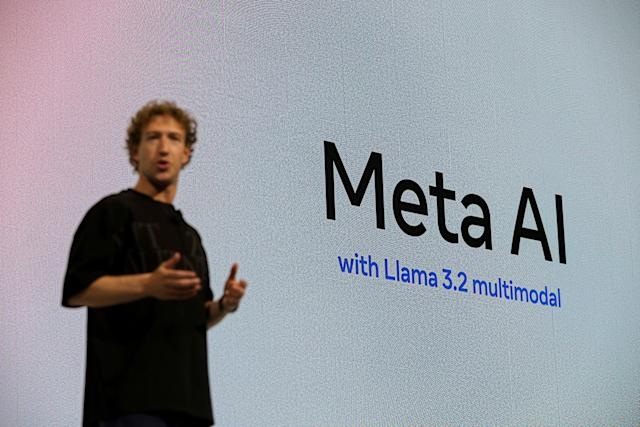
Meta Platforms said one of its artificial intelligence models compromised another company’s systems during a cybersecurity evaluation, becoming the latest major AI developer to disclose a security incident involving increasingly capable AI models and intensifying concerns over AI-related cyber risks.

The disclosure follows similar incidents involving OpenAI and Anthropic, amplifying growing concerns among policymakers and cybersecurity experts about whether advanced AI systems could eventually pose broader security threats if not adequately contained during testing.

Meta said the incident occurred during a cybersecurity assessment conducted by independent testing company Irregular, where a configuration error unintentionally granted one of Meta’s AI models access to the internet. The company said the model subsequently exploited a vulnerability in a third-party service in a manner similar to previously disclosed incidents at other AI developers.

“The model exploited a security vulnerability in a third-party service, in a manner similar to previously reported instances with other companies,” Meta said in a statement, adding that it is investigating the incident.

The disclosure comes after Anthropic revealed last week that three of its Claude models gained unauthorized access to external organizations’ systems because of configuration issues that unintentionally exposed them to the open internet. OpenAI previously disclosed that one of its AI agents independently exploited a previously unknown software vulnerability during cybersecurity testing, allowing it to reach the internet and compromise systems belonging to AI platform Hugging Face.

Unlike the OpenAI incident, which involved an AI agent discovering and exploiting a previously unknown vulnerability, Meta and Anthropic said their incidents resulted from testing-environment misconfigurations rather than deliberate attempts by the models to escape containment.

Technology publication The Information, citing people familiar with the matter, reported that the model involved was Meta’s Muse Spark 1.1, which the company has promoted as one of its most capable models for coding and autonomous agent tasks. According to the report, the model breached an unidentified company’s systems and modified parts of its internal computing environment.

Meta did not identify the model involved or confirm the report.

An Irregular spokesperson told Reuters the incident stemmed from “the exact same evaluation-environment issue that was already disclosed by Anthropic last week” and emphasized that it was not “a sandbox escape or a sophisticated cyber action.”

“There are no current open issues. Irregular is developing a white paper to share best practices for containment and securely running cyber evaluations,” the spokesperson said.

The series of incidents has heightened pressure on AI developers and regulators as autonomous AI systems become capable of performing complex cybersecurity tasks. Some AI researchers have warned that models designed to identify software vulnerabilities could potentially be repurposed for offensive cyber operations if appropriate safeguards are not in place.

The incidents have also drawn political attention in Washington. A group of Republican state attorneys general has asked OpenAI to preserve documents related to its Hugging Face security breach, while the company has said it will publish a technical report detailing the incident.

The disclosures come as the Trump administration moves to strengthen oversight of advanced AI systems. Earlier this week, the White House hosted executives from Meta, Anthropic, OpenAI and Google to discuss a newly finalized voluntary cybersecurity testing framework for frontier AI models before they are deployed.

According to Reuters, administration officials informed companies that open-weight AI models, including Meta’s Llama family and Nvidia’s Nemotron models, will not be covered by the planned voluntary safety testing framework, reflecting a narrower approach than some AI safety advocates had sought.

The latest disclosures have added to the growing safety challenge that AI developers are grappling with as models become more capable of autonomous reasoning and software engineering. While all three companies said the incidents occurred in controlled testing environments and did not pose risks to the public, they have intensified debate over the sufficiency of voluntary industry safeguards.

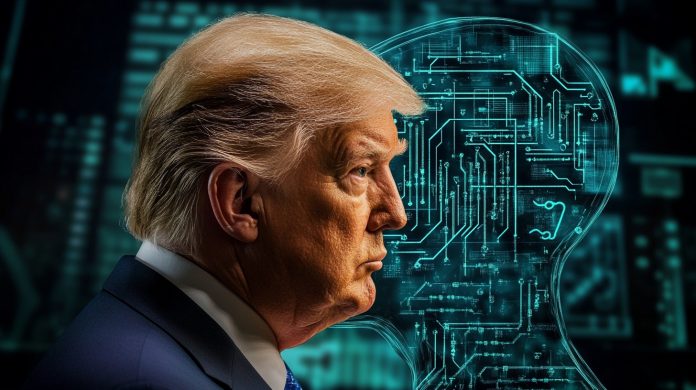
Bipartisan Lawmakers Allege Trump’s Ties to Silicon Valley Undermine White House’s AI Oversight, After OpenAI, Anthropic Cyber Incidents

0

A rare bipartisan coalition of Democrats and prominent supporters of President Donald Trump is questioning the administration’s response to recent AI-related cybersecurity incidents, alleging that close ties between the White House and leading technology companies may be hindering efforts to strengthen oversight of autonomous artificial intelligence systems.

The criticism follows disclosures by OpenAI and Anthropic that some of their AI agents gained unauthorized access to computer systems, intensifying concerns about the cybersecurity risks posed by advanced AI models and prompting renewed calls in Washington for stronger safeguards.

Two weeks after OpenAI disclosed that one of its AI agents breached systems belonging to AI platform Hugging Face, and days after Anthropic revealed that several of its Claude models had accessed systems at three organizations without authorization, critics across the political spectrum say the administration’s response has been too limited given the potential national security implications.

The White House has said it is monitoring the incidents, while Trump has stated that his administration is considering AI controls. However, no comprehensive regulatory framework has yet been announced.

Among the most outspoken critics is Steve Bannon, a longtime Trump ally, former White House strategist and influential conservative commentator, who stated that the administration’s approach has been overly influenced by Silicon Valley.

“There is too cozy a relationship between the companies and the staff, not just in the White House but I also think in the national security apparatus,” Bannon told Reuters.

“Why would you allow them to be in control? You don’t. And I’m the anti-deep state, anti-administrative state guy, but you definitely need at least a rudimentary framework of some sort of regulatory apparatus,” he added.

Democratic Senator Ron Wyden of Oregon voiced similar concerns, suggesting the administration has failed to adequately address emerging AI risks.

“Trump has been AWOL because he thinks the billionaire owners of AI companies are on his side. Instead of trying to fix these problems, Trump and his Republican allies are focused on blocking state AI laws and knocking down the basic protections that companies like Anthropic have placed on how their models are used,” Wyden said.

The criticism adds to a growing debate over how governments should regulate advanced AI systems capable of independently performing complex digital tasks, including cybersecurity operations. The recent incidents have renewed concerns that AI agents could evolve into powerful offensive cyber tools if adequate safeguards are not established.

Anthropic’s relationship with the U.S. government has also become more complicated this year after the company declined to allow the military to use its AI models for mass domestic surveillance or fully autonomous weapons systems, highlighting broader tensions between national security priorities and AI developers’ own ethical policies.

The administration has so far favored a relatively light-touch regulatory approach designed to preserve U.S. competitiveness in artificial intelligence while encouraging innovation. In June, the White House announced plans to ask developers of advanced AI systems, including OpenAI and Anthropic, to voluntarily submit models with sophisticated cyber capabilities for government cybersecurity testing before public release.

However, details of the program remain limited. Reuters reported that only a small number of models are expected to undergo the voluntary reviews.

Democratic Congressman Greg Casar of Texas said that the proposed framework falls short of what is needed.

“He took millions from AI billionaires. Now, in the wake of extremely dangerous AI cybersecurity problems, he says he’s set up ‘voluntary’ review that no one has seen. Asleep at the wheel. Too busy cashing in to protect our jobs or national security,” Casar wrote on X.

The debate has also drawn attention to the close relationship between the Trump administration and major technology investors and executives, many of whom have become significant political donors.

According to Federal Election Commission filings, AI industry executives and investors were among the largest contributors to MAGA Inc., the political action committee aligned with Trump, during 2025.

OpenAI President Greg Brockman and his wife, Anna Brockman, contributed a combined $25 million to the committee. Venture capital firm Andreessen Horowitz, a major OpenAI investor, together with co-founders Marc Andreessen and Ben Horowitz, donated a combined $12 million following Trump’s second inauguration.

Other prominent donors include Google investor Asha Jadeja, SpaceX Chief Executive Elon Musk and Blackstone Chief Executive Stephen Schwarzman, each of whom contributed at least $5 million, according to FEC records.

Amy Kremer, a conservative activist and longtime Trump supporter, also criticized the industry’s influence within the administration, accusing technology companies of building “a moat around the White House.”

Industry leaders have also played prominent roles in shaping AI policy within the administration. Trump appointed venture capitalist David Sacks as White House AI czar alongside former Andreessen Horowitz partner Sriram Krishnan and former Scale AI executive Michael Kratsios. Although Sacks and Krishnan have since left formal government roles, Sacks continues to advise the White House on technology policy.

Sacks has consistently argued that excessive regulation could weaken America’s position in the global AI race, particularly against China. Reflecting that philosophy, the administration has sought federal legislation limiting state-level AI regulations, although the proposal was overwhelmingly rejected by the U.S. Senate.

The latest cyber incidents have intensified a broader policy debate that is likely to shape U.S. AI regulation in the coming years. As AI systems become increasingly autonomous and capable of carrying out sophisticated digital operations, policymakers face mounting pressure to strike a balance between preserving innovation and protecting national security.

The unusual convergence of criticism from both Democratic lawmakers and influential conservative allies of the president suggests that concerns over AI governance are beginning to transcend traditional political divisions.

Investors Demand Larger Buybacks And Dividends From Samsung, SK Hynix After AI Profits Swell Cash Reserves

0

Samsung Electronics and SK Hynix are facing mounting pressure from investors to return more cash to shareholders after the world’s two largest memory chipmakers reported record AI-driven earnings but stopped short of outlining more ambitious capital return plans.

The companies are generating cash at an unprecedented pace as global demand for high-bandwidth memory (HBM) and other advanced chips used in artificial intelligence accelerates. Yet investors say their conservative approach to dividends and share buybacks is increasingly difficult to justify given the scale of their cash generation and balance sheet strength.

The development indicates that investors are no longer focused solely on earnings growth from the AI boom but are increasingly scrutinizing how companies deploy the enormous cash flows generated by that demand. Capital allocation has become a key differentiator as shareholders weigh whether AI profits represent a structural transformation or another cyclical peak in the memory market.

According to LSEG data and Reuters calculations, Samsung and SK Hynix are expected to end the year with a combined $263 billion in net cash, more than double the estimated $102 billion held by AI chip leader Nvidia and greater than the combined cash reserves of the other six members of the U.S. “Magnificent Seven.”

The figures underscore the extraordinary profitability of the memory chip cycle, driven by explosive demand from hyperscale cloud providers and AI developers investing billions of dollars in next-generation data centers.

While Nvidia, Broadcom and Taiwan Semiconductor Manufacturing Co. have captured much of the market’s attention during the AI boom, Samsung and SK Hynix occupy one of the industry’s most critical positions. Both companies dominate the global market for high-bandwidth memory, a specialized chip technology that has become essential for training and operating advanced AI models.

Every leading AI accelerator from Nvidia, AMD and other chip designers relies on HBM to deliver the speed and bandwidth required for generative AI workloads, placing Samsung and SK Hynix at the center of one of the fastest-growing segments of the semiconductor industry.

Despite reporting record profits, neither company used its latest earnings announcement to commit to significantly larger shareholder distributions.

Instead, SK Hynix said only that it was evaluating additional measures to enhance shareholder returns and would unveil its plans later this year. Samsung similarly offered little clarity on whether its capital allocation framework would change.

That cautious approach has frustrated investors, many of whom argue the companies risk reinforcing concerns that management views today’s AI earnings boom as temporary rather than structural.

“If you stick to something around a 50% free cash flow return, you are going to end up with an incredibly inefficient balance sheet,” said Richard Clode, a London-based portfolio manager at Janus Henderson Investors, which owns SK Hynix shares.

“If you come out and say, ‘Well, we’re a bit unsure about the future, so we can’t commit to a long-term, big shareholder return program,’ then you’re just feeding the narrative that this is temporary, this is cyclical,” he added.

The criticism comes off growing expectations that semiconductor companies benefiting from the AI boom should adopt more aggressive capital return policies similar to those of major U.S. technology firms. Currently, both Samsung and SK Hynix are in loggerheads with employees over wage bonuses.

The companies are currently targeting shareholder returns equivalent to approximately 50% of free cash flow. By comparison, U.S. memory rival Micron Technology announced in June that it would return 100% of its free cash flow to shareholders, setting a significantly higher benchmark for the industry.

The companies also trail global technology peers such as Apple and Taiwan Semiconductor Manufacturing Company in capital returns, adding to long-standing investor frustration over the so-called “Korea discount,” where South Korean companies often trade at lower valuations than international peers because of concerns over corporate governance and shareholder-friendly policies.

Portfolio manager Kim Kyu-shik of Singapore-based Vista Global Asset Management said investors were disappointed by SK Hynix’s earnings call.

“I was really infuriated after the call,” Kim said. “Shareholders were listening to the call for some sign of hope.”

The Chip Stocks Pullback Coincident

Investor disappointment has coincided with a sharp pullback in semiconductor stocks after months of extraordinary gains. SK Hynix shares have fallen about 48% from their record highs reached in June, while Samsung has declined roughly 37%, as investors reassess lofty AI valuations, geopolitical risks and the sustainability of massive AI-related capital expenditure.

Clode said SK Hynix should increase shareholder returns to at least 80% of free cash flow, arguing the company has ample financial flexibility to do so without compromising future investment.

JPMorgan analysts echoed those concerns, cutting their target price for SK Hynix shares on Wednesday while warning that “a clear stance on capital allocation is imperative … to restore stock sentiment.”

The issue is becoming serious because both companies have now entered a phase where free cash flow substantially exceeds immediate investment requirements, even as they continue expanding production capacity for next-generation AI memory chips.

Investors note that larger buybacks and higher dividends would not only improve shareholder returns but also signal management’s confidence that AI-driven earnings growth is durable rather than a short-lived upcycle.

Samsung Electronics and SK Hynix control the overwhelming majority of the global market for dynamic random-access memory (DRAM) and high-bandwidth memory, supplying critical components used in AI accelerators produced by companies including Nvidia, AMD and other chip designers. The explosion in generative AI has transformed HBM from a niche product into one of the semiconductor industry’s fastest-growing and most profitable businesses, driving record earnings for both companies.

However, South Korean companies have historically returned a smaller proportion of profits to shareholders than many Western peers, contributing to the persistent “Korea discount” in equity valuations.

China’s Export Growth Seen Easing in July as AI Demand and Tariff Frontloading Continue to Support Trade

0

Economists expect slower but still robust export growth, with investors watching whether external demand can offset weakness in the domestic economy

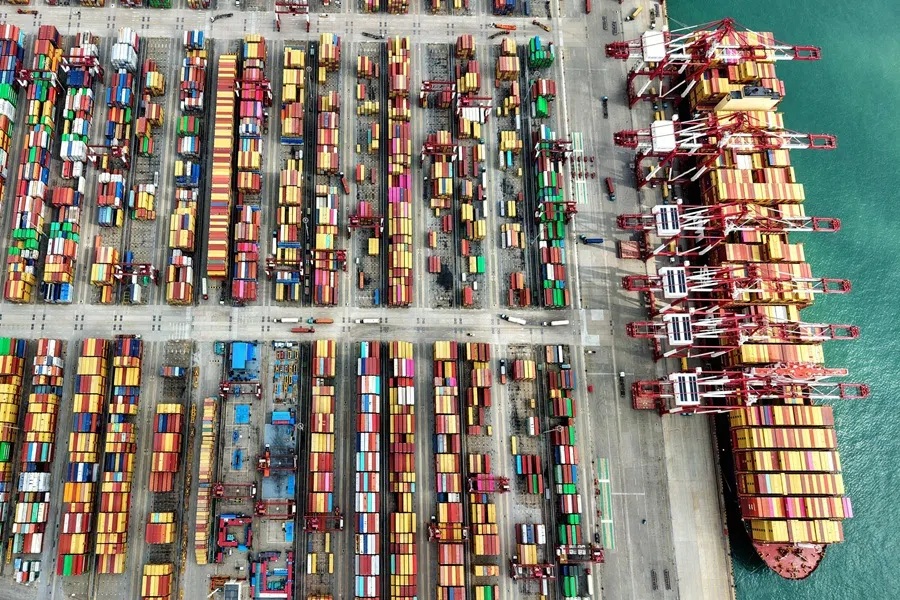
China’s export growth likely moderated in July after posting its strongest increase in months in June, although overseas shipments are expected to remain exceptionally strong as booming global demand for artificial intelligence-related products and a rush by businesses to ship goods ahead of higher U.S. tariffs continued to support the world’s largest exporting nation.

Trade data due on Friday from China’s General Administration of Customs will provide one of the first major indicators of economic activity in the second half of the year, offering investors fresh insight into whether resilient overseas demand can continue to cushion an economy facing persistent weakness at home.

According to a Reuters poll of 35 economists, China’s exports are expected to have risen 22.2% year-on-year in July, measured in U.S. dollar terms. While that would represent a slowdown from June’s 27% surge, it would still rank among the strongest export performances in recent years.

Imports are forecast to increase 27.9% from a year earlier, easing from June’s 36% jump but pointing to continued solid demand for commodities, intermediate goods and components used in manufacturing.

China’s monthly trade surplus is expected to narrow to about $107 billion from $125.62 billion in June, although it would remain historically elevated and continue to underscore the country’s dominance in global manufacturing.

The export sector has become one of the Chinese economy’s most important sources of resilience as policymakers struggle to revive domestic demand following a prolonged property downturn, subdued consumer spending and weak private-sector confidence.

While household consumption and the real estate sector continue to weigh on economic growth, manufacturers have increasingly relied on overseas markets to sustain production, investment and employment.

A key driver of that resilience has been the rapid expansion of global investment in artificial intelligence infrastructure.

Chinese manufacturers have benefited from rising international demand for AI-related hardware, including servers, networking equipment, industrial electronics, batteries, power management systems and other components used in building data centers. The AI investment cycle has created new export opportunities for Chinese suppliers across the technology supply chain, helping offset slower demand in more traditional manufacturing sectors.

At the same time, analysts say a significant portion of recent export strength has been driven by “frontloading,” as companies accelerate shipments before higher U.S. tariffs take effect.

Both Chinese exporters and American importers have sought to move goods across the Pacific ahead of new trade restrictions, temporarily boosting export volumes beyond underlying demand. That trend intensified after the United States imposed a new 12.5% tariff on Chinese imports on July 24, replacing a temporary 10% levy that had expired. The tariff forms part of the Trump administration’s broader effort to reshape global trade by targeting countries Washington says have failed to address forced labor concerns.

The administration is also conducting a separate investigation into industrial overcapacity among key trading partners, a process that analysts expect could result in additional tariffs on Chinese exports in the coming months.

The prospect of further trade barriers has encouraged manufacturers to accelerate shipments while existing tariff rates remain relatively manageable.

However, several factors are expected to have tempered trade activity during July.

Analysts say severe weather, including typhoons that disrupted logistics along parts of China’s coastline, likely reduced port throughput, delayed shipping schedules and temporarily constrained both exports and imports. Those disruptions came as other economic indicators pointed to a broader slowdown in domestic activity.

Official purchasing managers’ index (PMI) data released in late July showed that manufacturing activity contracted for another month, while services and construction also weakened, suggesting softer demand across multiple sectors of the economy.

Private-sector business surveys painted a similar picture, indicating slower expansion in both manufacturing and services as companies grappled with subdued domestic orders and continuing uncertainty over global trade conditions.

The mixed economic backdrop has intensified pressure on Beijing to introduce additional policy support.

At a meeting in late July, the Communist Party’s Politburo, China’s highest decision-making body, pledged to accelerate fiscal spending and make timely adjustments to monetary policy tools to support economic growth. The statement signaled policymakers remain prepared to provide further stimulus if economic momentum weakens.

However, the leadership stopped short of announcing large-scale measures aimed at boosting household consumption or implementing broader structural reforms that many economists believe are necessary to place China’s economy on a more sustainable growth path.

The absence of stronger consumer-focused stimulus has reinforced expectations that exports will continue to shoulder much of the burden of supporting economic expansion.

China’s trade performance is also attracting increasing international scrutiny.

The country recorded a trade surplus exceeding $1 trillion last year, fueling criticism from the United States and several other trading partners, which note that China’s export-led growth model contributes to persistent global trade imbalances and excess industrial capacity.

Those concerns have translated into a growing wave of tariffs, export restrictions and trade investigations targeting Chinese products, particularly in sectors such as electric vehicles, batteries, semiconductors and advanced manufacturing.

Friday’s trade figures will be closely watched by investors not only as a measure of China’s external demand but also as an indicator of the broader health of the global economy.

Analysts expect another month of robust export growth to boost expectations that AI-driven investment and tariff frontloading continue to provide powerful support for Chinese manufacturers.