DD
MM
YYYY

PAGES

DD
MM
YYYY

spot_img

PAGES

Home Blog Page 4

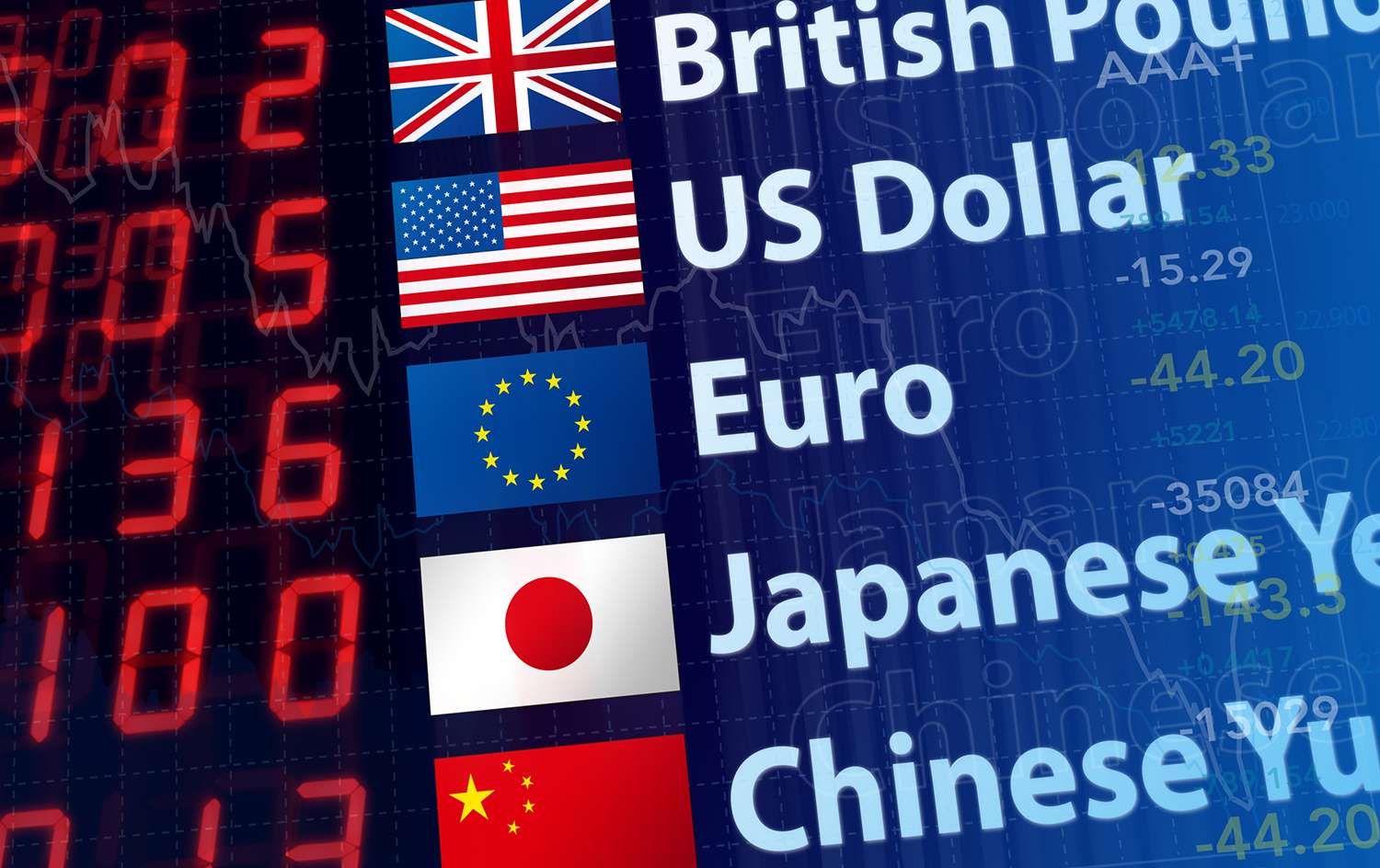
Dollar Holds Firm, Yen Slides to 40-Year Low as Middle East War Fuels Oil Rally and Rate Expectations

0

The U.S. dollar remained resilient on Thursday, hovering near multi-month highs against major currencies as escalating conflict in the Middle East drove oil prices higher, boosted U.S. Treasury yields and prompted investors to scale back expectations for Federal Reserve interest rate cuts.

The greenback edged slightly lower against the euro ahead of the European Central Bank’s policy decision but climbed to its strongest level against the Japanese yen since 1986, underscoring widening policy and economic divergences among the world’s largest economies.

Markets remain focused on the fallout from the U.S.-Israeli war on Iran, which has severely disrupted shipping through the Strait of Hormuz while attacks by Yemen’s Houthi movement in the Red Sea have heightened fears of a broader energy supply shock. The twin threats to two of the world’s most important oil transit routes have sent crude prices sharply higher, amplifying inflation concerns and reshaping expectations for monetary policy across global markets.

The U.S. dollar index, which measures the currency against a basket of six major peers including the euro and yen, slipped marginally by 0.08% to 101.06. However, the modest decline masked continued strength in the dollar, which has benefited from its traditional safe-haven status and the relative resilience of the U.S. economy to higher energy prices.

Unlike Europe and Japan, which rely heavily on imported energy, the United States has become one of the world’s largest oil and natural gas producers. That has reduced its vulnerability to external energy shocks and strengthened the dollar whenever geopolitical tensions push oil prices higher.

The latest surge in crude prices has also complicated the outlook for interest rates. Investors increasingly believe the Federal Reserve will have less room to ease monetary policy if higher energy costs feed into broader inflation, helping support U.S. Treasury yields and the dollar.

Attention on Thursday also centered on the European Central Bank, which is widely expected to leave interest rates unchanged while maintaining a tightening bias amid renewed inflation risks stemming from the Middle East conflict.

Markets have already priced in two ECB rate increases by early 2027, leaving investors focused on whether policymakers will signal an even more hawkish stance.

“We cannot fully discount the tail risk of an early 25 bps hike (today),” said Michiel Tukker, senior strategist at ING.

“The question is whether markets would interpret this as a hawkish policy turn or whether the move would be perceived as front-loading September’s move.”

The euro traded 0.09% higher at $1.1423 ahead of the policy announcement.

Yen Still Under Pressure

The Japanese yen remained under the greatest pressure among major currencies, falling to its weakest level against the dollar since December 1986. The currency was last trading at 163.30 per dollar, extending a prolonged decline that has become a growing concern for Japanese policymakers.

While many analysts have attributed the yen’s weakness to the Bank of Japan’s cautious pace of monetary tightening, others argue that Japan’s deteriorating economic outlook is playing an equally important role.

“The consensus view blames a timid BOJ (for the recent yen fall), but I think the problem is that higher oil prices have dashed hopes of 1.5% GDP growth this year,” said Kit Juckes, strategist at Societe Generale, noting that the yen has become the weakest-performing currency in the G10 group.

Japan imports nearly all of its crude oil, making the economy particularly vulnerable to sustained increases in global energy prices. A weaker yen further amplifies those costs by making dollar-denominated imports even more expensive, increasing inflationary pressure while squeezing consumers and businesses.

Ironically, expectations for additional Bank of Japan tightening have continued to grow. Japan’s two-year government bond yield climbed to a 31-year high on Thursday as investors increased bets that the central bank could accelerate the pace of future interest rate increases to contain inflation and stabilize the currency.

Nevertheless, the widening interest rate gap between Japan and the United States continues to favor the dollar, encouraging investors to borrow cheaply in yen and invest in higher-yielding dollar assets, a strategy that has weighed heavily on the Japanese currency.

Japanese authorities have stepped up efforts to curb speculative selling of the yen.

Finance Minister Katsunobu Kato reiterated on Thursday that the government stands ready to take decisive action in the foreign exchange market if necessary. Tokyo previously intervened directly in April and May after the yen weakened beyond the psychologically important 160-per-dollar threshold.

However, many analysts believe currency intervention alone may offer only temporary relief unless accompanied by broader policy measures.

Mallika Sachdeva, head of forex thematics at Deutsche Bank Research, said a key variable would be whether Japan’s Government Pension Investment Fund (GPIF), the world’s largest pension fund, is encouraged to increase domestic investments.

“If the Government Pension Investment Fund (GPIF) is mandated to bring money back into domestic assets, this could be very bullish for the yen,” she said.

“However, if the BOJ is coopted to support bonds through renewed JGB purchases, this could be very negative.”

Japan’s finance ministry has recently indicated it wants the country’s vast public pension funds to substantially increase investments in domestic assets, a move that could reduce capital outflows and provide structural support for the yen.

Investors are also closely monitoring Japan’s fiscal trajectory, which many strategists believe will become increasingly important in determining the currency’s long-term direction.

Treasury Continues to Scale Amid Oil Surge

Meanwhile, U.S. Treasury yields continued to climb as investors adjusted to the prospect of higher inflation and fewer Federal Reserve rate cuts.

The benchmark 10-year Treasury yield rose above 4.67%, while the policy-sensitive two-year yield climbed to 4.317%. The 30-year Treasury bond yield also moved above 5.16%, reflecting investor demands for higher compensation amid rising inflation expectations and growing government borrowing needs.

Bond yields and prices move inversely, and rising yields generally support the dollar by making U.S. assets more attractive to global investors.

Energy markets remained the principal driver of global financial sentiment.

Brent crude futures surged $3.80, or 4%, to $97.87 a barrel, reaching their highest level in more than a month and extending gains for a fifth consecutive session.

The rally reflects mounting fears that disruptions in the Middle East could significantly reduce global oil supplies.

Iran’s Revolutionary Guards said an oil tanker caught fire following an explosion while attempting to navigate a mined route near the Strait of Hormuz off Oman’s coast. Two additional tankers reportedly turned back.

The Guards also declared that the Strait of Hormuz remains under Iranian control and “completely closed” while U.S. military operations continue in the region, warning that no tanker would be permitted to transit the waterway without Tehran’s authorization.

The Strait of Hormuz is the world’s most important oil chokepoint, handling roughly one-fifth of global oil consumption. Any prolonged disruption could trigger severe supply shortages and sharp increases in energy prices worldwide.

Adding to market anxiety, Yemen’s Iran-backed Houthi movement has intensified attacks in the Bab el-Mandeb Strait, another critical maritime corridor connecting the Red Sea with the Gulf of Aden.

The Houthis said on Thursday they struck two Saudi oil tankers as part of what they described as a naval blockade targeting Saudi Arabia.

According to Goldman Sachs, nearly 9 million barrels of oil per day have passed through the Bab el-Mandeb Strait over the past month, including approximately 4 million barrels daily that would be difficult to reroute if multiple regional chokepoints remain blocked.

“The immediate outlook for crude oil remains supportive as markets price a worrying probability of supply interruptions in a second chokepoint,” said Pepperstone research strategist Ahmad Assiri.

The conflict continued to escalate militarily.

The U.S. military said it had completed a 12th consecutive night of strikes against Iranian targets, hours after President Donald Trump warned that the United States would destroy an Iranian bridge or power plant each time Iran attacks vessels transiting the Strait of Hormuz.

Goldman Sachs expects oil prices to retain most of their recent gains through July and August, citing declining global inventories, reduced Middle Eastern production, strong seasonal summer fuel demand and a slowdown in releases from strategic petroleum reserves.


Coinbase CEO Brian Armstrong Claims Legal Battle Exposed Coordinated Anti-Crypto Debanking Campaign

0

Coinbase CEO Brian Armstrong has hailed the cryptocurrency exchange’s legal battle against U.S. regulators as a landmark victory, claiming it uncovered what he described as a coordinated government campaign to restrict the crypto industry’s access to banking services.

According to Armstrong, documents obtained through the lawsuits revealed behind-the-scenes efforts by federal agencies to pressure banks into distancing themselves from crypto businesses, reinforcing long-standing allegations of an organized “debanking” campaign against the sector.

The claims have reignited debate over regulatory transparency and the relationship between financial institutions and digital asset firms.

Armstrong argued that the disclosures represent a significant step toward holding regulators accountable for actions that, he says, stifled innovation and limited lawful businesses’ access to the traditional banking system.

Through a series of Freedom of Information Act (FOIA) requests and subsequent lawsuits against both the Federal Deposit Insurance Corporation (FDIC) and the Securities and Exchange Commission (SEC), the exchange said it uncovered internal actions targeting crypto businesses that remained largely hidden from public scrutiny.

The FDIC faced the most direct scrutiny. Documents revealed that, beginning in 2022, the agency sent letters to nearly two dozen banks instructing them to pause or refrain from engaging in crypto-asset-related activities.

According to Coinbase, the communications effectively urged financial institutions not to expand Bitcoin-related services or launch new crypto products while regulators conducted internal reviews.

The company argued that these directives amounted to a behind-closed-doors debanking campaign that pressured banks without public debate or due process.

Initially, the FDIC denied the existence of such an effort. However, a February settlement following Coinbase’s FOIA lawsuit compelled the agency to release additional records, bringing the alleged campaign into public view.

The disclosures subsequently prompted congressional hearings, while a court ruled that the FDIC had violated federal law in its handling of the records requests.

On the SEC front, Coinbase challenged the agency’s aggressive enforcement approach under former Chairman Gary Gensler. Between April 2021 and January 2025, the SEC pursued more than 100 enforcement actions against crypto companies, resulting in billions of dollars in penalties.

When Coinbase requested records detailing the SEC’s interpretation of securities laws as they apply to digital assets, the agency resisted disclosure.

A lawsuit ultimately compelled the SEC to produce documents. During the process, however, the agency admitted that it had lost nearly a year’s worth of text messages from senior officials including Gensler because of an automatic data-wiping policy.

Officials also acknowledged difficulties recovering messages from multiple devices, exposing significant gaps in record preservation during one of the most consequential periods of the government’s crypto enforcement campaign.

The disclosure drew particular attention given that the SEC had previously imposed substantial penalties on private firms for similar record-keeping failures.

As part of the settlement, the SEC agreed to pay Coinbase $150,000 one of the largest FOIA-related awards in the agency’s history, and committed to strengthening its record retention policies.

Coinbase framed the legal victories as a broader defense of financial freedom, transparency, and government accountability.

In an accompanying video and public statements on X, the company highlighted what it described as key facts uncovered through the litigation, emphasizing that Americans have a right to know about government actions that affect lawful industries and economic innovation.

It also argued that the episode echoes long-standing criticisms surrounding what many in the crypto industry have described as “Operation Choke Point 2.0”, an alleged effort by regulators to pressure banks into cutting off services to lawful crypto businesses without due process or public accountability.

Commenting on the outcome, Armstrong said the case extends far beyond cryptocurrency.

“If regulators can secretly target one lawful industry, no business is safe,” he argued, adding that every American company and citizen deserves transparency from government agencies.

According to Armstrong, Coinbase’s legal challenge was not only about protecting the exchange’s operations but also about defending the broader principles of fair, open, and accountable regulation.

He said the outcome reinforces Americans’ right to know how government decisions affecting innovation and economic freedom are made.

Notably, Armstrong has been actively lobbying U.S. lawmakers to pass the CLARITY Act, a major cryptocurrency market structure bill that aims to establish definitive regulatory guidelines for digital assets.

He argues that clear federal laws are essential to protect consumers from bad actors, prevent the offshore migration of crypto businesses, and provide consumer protections that the current status quo fails to offer.

Meanwhile, JPMorgan Chase CEO Jamie Dimon has publicly criticized Coinbase CEO Brian Armstrong over his support for the CLARITY Act.

Dimon argued that if crypto companies want to offer services that resemble banking such as holding customer funds or issuing yield-bearing stablecoins they should be subject to the same stringent regulations as banks.

He said banks would “fight” the legislation in its current form and accused Armstrong of lobbying for rules that would create an uneven playing field.

These developments represent one of the crypto industry’s most significant legal pushbacks against what it views as opaque and overreaching regulation.

Coinbase believes the rulings and disclosures could establish important precedents for greater transparency, stronger oversight of regulatory agencies, and more open engagement between government institutions and emerging financial technology companies.

LemFi Partners With BVNK to Power Cross-Border Payments With Stablecoin Settlement

0

LemFi, a Nigerian financial service app that helps users send, receive, and manage money across countries, has partnered with BVNK to move cross-border settlements onto regulated stablecoin rails.

The collaboration is designed to improve the speed and efficiency of international remittances for more than two million LemFi customers across the United Kingdom, Europe, Australia, and North America, who send money to beneficiaries in Africa, Asia, and Latin America.

Also, the partnership moves LemFi’s cross-border settlement onto regulated stablecoin rails, delivering near-instant value transfers between markets at a fraction of the cost, without changing anything about how customers experience the app.

Traditionally, cross-border payments have relied on correspondent banking networks and SWIFT infrastructure, processes that often take several days to complete while adding costs at multiple stages.

These inefficiencies have become increasingly evident in the global remittance market, where migrants sending relatively small amounts of money to family members often bear disproportionately high fees.

This has fueled growing interest in alternative settlement technologies, including stablecoins, which enable near-instant value transfer on blockchain networks while reducing reliance on multiple banking intermediaries.

Through the partnership, LemFi will leverage BVNK’s regulated stablecoin infrastructure to settle transactions behind the scenes before disbursing funds in local currencies to recipients.

Speaking on the partnership, Ridwan Olalere, Co-founder and CEO of LemFi, said,

The money that crosses borders still moves on rails built decades ago, slow, expensive, and quietly taxing the people who can least afford it. We’re rebuilding those rails. Stablecoins let us settle near-instantly and reduce costs; BVNK provides the infrastructure to do so safely and at scale. It’s the start of something bigger; the financial system the diaspora economy should have had all along.”

Also commenting, Chris Harmse, co-founder and Chief Business Officer at BVNK, said,

“Stablecoins are becoming the base layer for how the world moves money, and remittances are one of the clearest places that shift changes lives. LemFi has built deep trust with the communities it serves across Africa, Asia and beyond. Powering their settlement with our infrastructure means faster, cheaper transfers reach real families exactly the kind of impact we built BVNK to deliver.”

BVNK was selected not only for its technology but also for its regulatory credentials. The company operates a compliance-focused enterprise payments platform backed by more than 25 licenses and regulatory approvals across the United Kingdom, Europe, and the United States, with payment coverage spanning more than 130 countries.

In 2025, BVNK won the best cross-border payment solution and is backed by leading investors including Visa Ventures, Coinbase Ventures, Tiger Global, Raba, amongst others.

The platform’s partnership with LemFi, aligns with a broader transformation in global payments, as stablecoins continue to evolve from cryptocurrency instruments into mainstream financial infrastructure.

Industry estimates show that real-world stablecoin payment volumes reached approximately $7.4 trillion over the past 12 months, while analysts project that stablecoins could account for as much as 20% of the cross-border payments market within the next decade, up from roughly 3% today.

The partnership advances LemFi’s stablecoin strategy unveiled in May 2026, following a strategic investment from Tether aimed at supporting the integration of USD? as a settlement layer across the company’s payment corridors.

Notably, it also forms part of LemFi’s broader strategy to evolve beyond remittances into a full-stack financial platform serving globally mobile communities. The company’s expanding offerings now include payments, savings, credit, and connectivity services.

The Equation That Makes Your Startup’s Growth Compound

0

There is a sentence I hear weekly from founders between seed and Series A:

“We had a great quarter. Then it just stopped. I have no idea why it worked.” 

That is not bad luck. That is a streak ending.

A streak is when something worked once and nobody can tell you why. A system is when the next customer is cheaper, faster, or more trusted to acquire than the last, by design. 

There are seven confusions between *PMF and *DMF. Streak vs system is the diagnosis running underneath the other six. This piece is about where the streak shows up first, and the equation that turns it into a system.

The equation that builds your growth system

How big your startup grows is a function of how many people you can reach. The general belief is that reach is a volume problem, so louder wins. So, when growth stops the instinct is to post more. Send more cold emails. Buy more ads.

Almost every time this is wrong.

Reach is an equation.

Reach = Surface × Repetition × Trust.

Let’s break down the equation:

  • Surface is where your buyer already gathers and trusts information, not where you wish they were.
  • Repetition is showing up on that surface often enough to become familiar.
  • Trust is the borrowed credibility of whoever carries your signal.

Prof. Ndubuisi Ekekwe made an adjacent point in Waiting for Pinduoduo of Nigeria. Pinduoduo digitised behaviour that already existed in Chinese physical markets. It did not teach the behaviour. It rode the surface.

Know the part of the “Reach” equation that fixes your growth

Most founders discover their broken term is Surface. Their content is on LinkedIn while the buyer decides on WhatsApp. Their outreach is by email while the buyer converts through referral.

Others discover it is Trust. No anchor logo, no industry endorsement, no reputable partner integration. The product may be excellent, but the buyer has no reason to believe it yet. Almost none discover it is Repetition.

Yet Repetition is what the dashboard measures, so it is what teams keep spending on. 

What to do this next

A good place to start is pulling your last ten paying customers. 

For each, list where they first heard about you, whose signal made them convert, and how many times they saw you before buying. Cross-reference against the top five surfaces you spend time or money on. To help you do this, I create a simple resource I am I am giving away to Tekedia readers called  The Post-PMF Handbook.  You can access it immediately, no email signup.

Kylie Jenner Debuts Meta Smart Glasses Amid Growing Privacy Concerns

0

Before Kylie Jenner even finished showing off her new Meta smart glasses, the internet had already split into two camps.

To some, the glasses represent the next leap in wearable technology, blending artificial intelligence, cameras, and voice assistance into an accessory that looks increasingly like ordinary eyewear.

To others, they symbolize a future where privacy is constantly at risk and surveillance becomes embedded in everyday life.

The backlash surrounding Jenner’s debut illustrates that the biggest challenge facing smart glasses is not the technology itself, but public trust. Meta has spent years refining its wearable ambitions.

Unlike earlier generations of bulky smart glasses, the latest models are designed to resemble fashionable eyewear while quietly integrating cameras, microphones, speakers, and AI-powered assistants.

Users can capture photos, record videos, answer calls, translate languages, receive navigation guidance, and interact with AI without ever reaching for a smartphone. From a technological standpoint, the devices represent significant progress toward hands-free computing.

Celebrity endorsements are central to Meta’s strategy. Kylie Jenner, with hundreds of millions of followers across social media platforms, offers the company unparalleled visibility among younger consumers.

By placing the glasses on one of the world’s most influential fashion icons, Meta hopes to reposition smart glasses from niche gadgets into mainstream lifestyle products.

Yet the reaction online revealed just how uneasy many people remain.

Critics quickly questioned whether those around the wearer would always know when they were being recorded. Although Meta includes an LED indicator that lights up during recording, skeptics argue that the signal can easily go unnoticed or be ignored in crowded environments.

For many observers, the concern is not simply whether the glasses comply with privacy standards but whether they normalize constant recording in public spaces. Others viewed the promotion through a broader cultural lens.

Jenner’s influence has long shaped fashion and consumer trends, meaning her endorsement could accelerate adoption among millions who may pay little attention to the ethical debates surrounding wearable AI.

Critics worry that normalizing camera-equipped glasses through celebrity culture may outpace society’s ability to establish clear social norms about consent, data collection, and digital privacy. The controversy also reflects growing skepticism toward Meta itself.

The company continues to carry the legacy of past privacy controversies involving user data and targeted advertising. As a result, every new hardware product faces heightened scrutiny.

Even if the technology functions exactly as advertised, many consumers remain reluctant to trust a company whose reputation has been shaped by years of debates over data protection and transparency.

Supporters, argue that the criticism overlooks the broader evolution of consumer technology. Smartphones initially faced similar concerns when cameras became ubiquitous.

Today, nearly everyone carries a device capable of recording high-quality video, yet society has largely adapted through evolving etiquette and legal frameworks. From this perspective, smart glasses may simply represent the next stage of personal computing, eventually becoming as common as wireless earbuds or smartwatches.

The debate extends beyond Meta. Apple, Google, Samsung, and numerous startups continue investing heavily in augmented reality and AI-powered wearables, convinced that glasses will eventually replace smartphones as the primary interface for digital interaction.

Success, will depend not only on engineering breakthroughs but also on convincing the public that these devices enhance daily life without compromising personal privacy.

Kylie Jenner’s Meta glasses debut therefore became more than a celebrity product showcase. It exposed the unresolved tension between technological innovation and public confidence. The future of wearable AI will not be determined solely by better cameras or smarter assistants.