DD
MM
YYYY

PAGES

DD
MM
YYYY

spot_img

PAGES

Home Blog Page 40

Chinese AI Firm MiniMax, Others, Launch $2.15bn Hong Kong IPO In Year-End Rush

0

Chinese artificial intelligence startup MiniMax Group has taken center stage in Hong Kong’s resurgent equity markets, spearheading six new listings worth a combined HK$16.7 billion ($2.15 billion) launched on Wednesday.

This is a fresh signal that AI developers and chipmakers are now driving the city’s IPO revival and shaping expectations for deal flow in 2026.

The flurry of offerings caps a blockbuster year for Hong Kong, which raised $36.5 billion from 114 new listings in 2025, its strongest performance since 2021 and more than triple the roughly $11.3 billion raised in 2024, according to LSEG data. Bankers and investors say the renewed momentum reflects a convergence of easing regulatory bottlenecks, pent-up demand from mainland firms, and surging investor appetite for companies positioned at the heart of China’s push for technological self-reliance.

MiniMax, one of the country’s most closely watched large language model developers, is seeking to raise up to HK$4.19 billion from the sale of 25.4 million shares priced between HK$151 and HK$165, ahead of its planned debut on January 9. At the top end of the range, the offering would value the company at about $6.5 billion, placing it firmly among the most valuable Chinese AI startups to tap public markets.

Founded in early 2022 by former SenseTime executive Yan Junjie, MiniMax develops multimodal AI systems capable of processing text, audio, images, video, and music. Its portfolio includes models such as MiniMax M1, Hailuo-02, Speech-02, and Music-01, which are increasingly being pitched as building blocks for consumer applications, enterprise tools, and creative content platforms.

The listing makes MiniMax one of the first Chinese large language model developers to seek a public flotation in Hong Kong, a milestone that analysts see as symbolically important for the sector.

Alongside MiniMax, semiconductor specialists OmniVision Integrated Circuits and GigaDevice Semiconductor have also kicked off bookbuilding for their Hong Kong IPOs, each aiming to raise about $600 million. Their presence underscores how chip designers are once again finding receptive capital markets, even as global semiconductor supply chains remain shaped by geopolitical constraints and export controls.

“The wave of IPO approvals does suggest a shift in accelerating AI startup development through capital market access,” said Lian Jye Su, chief analyst at tech research firm Omdia.

He added that while the United States still leads in frontier computing power and model performance because of its dominance in advanced chips, access to public funding allows China to “build a resilient, self-sufficient AI ecosystem with minimal impact from tech restrictions.”

Investor enthusiasm for Chinese AI stocks has been building steadily since the rise of DeepSeek, a domestic alternative to ChatGPT that reignited interest in homegrown AI capabilities. That momentum has been reinforced by recent global dealmaking, including Meta’s acquisition of Manus, which has fueled expectations that strategic investment and IPO activity in the sector will remain robust into 2026.

The demand is not limited to software-focused AI firms. Chinese memory chipmaker ChangXin Memory Technologies and Baidu’s AI chip unit Kunlunxin are among the companies exploring listings on domestic or Hong Kong exchanges, Reuters has reported, as capital markets reopen for hardware players critical to China’s AI ambitions.

Onshore, recent IPOs of AI chip firms Moore Threads and MetaX were thousands of times oversubscribed, with shares trading well above their offer prices even after recent pullbacks, highlighting the depth of retail and institutional demand.

MiniMax’s offering has attracted heavyweight cornerstone investors, including Alibaba, the Abu Dhabi Investment Authority, Boyu Capital, and Mirae Asset, according to its prospectus. The presence of both Chinese and global long-term investors is seen by bankers as a vote of confidence in the company’s technology roadmap and in Hong Kong’s ability to host large, internationally marketed tech listings.

Other issuers launching deals on Wednesday span a broad range of sectors, from biotech firm Suzhou Ribo Life Science to cathode copper producer Yunnan Jinxun Resources and logistics company Hongxing Coldchain (Hunan). Together, they illustrate how the IPO window has widened beyond a narrow set of technology names, even though AI and semiconductors remain the main draw for investors.

Looking ahead, the pipeline shows little sign of slowing. Semiconductor designer Shanghai Biren Technology is set to debut on Friday, effectively opening the 2026 listing calendar, followed by offerings from Zhipu AI, Shanghai Iluvatar CoreX Semiconductor, and surgical robotics maker Shenzhen Edge Medical on January 8. For market participants, the sequencing is deliberate: anchoring the new year with high-profile AI and chip listings is expected to reinforce confidence that Hong Kong’s equity markets have moved decisively out of their post-pandemic slump.

Proceeds from the latest wave of offerings will largely be channeled into research and development, product expansion, and working capital, company disclosures show. In a market increasingly defined by strategic competition in artificial intelligence and semiconductors, investors are betting that sustained funding access will be as critical as technological breakthroughs in determining which players emerge as long-term winners.

A Modern Solar Panel Solution for Roofs, Fleets, and Everyday Life

0

When people think about going solar, most imagine the big, heavy glass panels you see on houses or commercial rooftops. But the truth is, today’s solar industry is moving in a new direction – lighter, smarter, and easier solutions. And if you’re searching for a solar panel solution that fits your building, your fleet, or even your RV lifestyle, the flexible solar panel is becoming the upgrade everyone is talking about.

And let me be straight with you, this isn’t about replacing what works. It’s about giving people an option that fits the places where traditional glass panels simply can’t.

Let’s start from the basics so you see the picture clearly.

Why Flexible Solar Panels Even Matter Today

A lot of buildings out there can’t carry the weight of traditional glass panels. Warehouses, sports halls, greenhouses, old commercial structures- They all have one thing in common: lightweight roofs. These roofs can’t handle extra load. And even if they can, the installation process becomes expensive, complicated, and sometimes requires shutting down operations.

This is exactly where flexible solar panels step in. They weigh far less than glass. They sit smoothly on curved surfaces. And installation takes a fraction of the time because you don’t need heavy mounting systems or structural reinforcement.

So when someone asks for a solar panel solution for a roof with weight limits or a curved design, flexible solar panels simply check every box without creating new problems.

Now that you know the “why,” let’s move to the “where.”

Where Flexible Solar Panels Make the Biggest Difference

You’ll be surprised how many places can benefit from flexible panels.

  • Lightweight roofs.
  • Curved roofs.
  • Metallic roofs.

Places where glass panels just don’t fit the shape or the weight requirement.

And this doesn’t stop with buildings. Fleets have now stepped into the same direction. Today you’ll see flexible solar technology installed on:

  • RVs
  • Buses
  • Pickup trucks
  • Travel trailers
  • Semi-trucks
  • Delivery vans

This is why the term “solar power bus” is becoming more common. Bus operators use flexible solar panels not just for “green energy” but to keep electrical systems stable, reduce idle time, and cut fuel consumption without touching the engine.

And now that the fleet industry is adopting these panels fast, the same lightweight strength is available for everyday use too – especially for people who travel, work on the road, or live off-grid.

Flexible Panels vs. Traditional Glass Panels

People often ask, “Why not just install glass panels and be done with it?”

Here’s the clear answer:

Glass panels are strong, but they’re heavy, rigid, and need a full mounting system.

Flexible panels are the opposite:

  • Lightweight
  • Easy to install
  • Resistant to vibration
  • Ideal for limited-load roofs
  • Perfect for curved surfaces
  • Safe to install without stopping operations

In short, flexible panels open the door for anyone who couldn’t go solar before.

And now that you understand the core solution, let me introduce something new entering the market.

Solar Awnings – Shade and Power at the Same Time

This is the newest solar idea people are embracing – solar awnings.

Think of it like this: An awning that gives you shade, but at the same time, it generates clean energy.

You can mount it on balconies.

You can add it to RVs.

You can use it on home patios or outdoor workspaces.

And the best part?

Solar awnings open and close whenever you want.

Want shade? Extend it. Want full sunlight on the balcony? Close it. Want extra solar power while camping? Open it wide.

For full-time RV users, this becomes a game-changer. Roof space on an RV is limited, but a solar awning adds more solar surface area without touching the roof at all. Plus, it keeps the inside cooler – which means less load on the air conditioning system.

So now, the market basically offers three modern solar options:

  1. Flexible solar panels for buildings

  2. Flexible solar panels for fleets (RVs, trucks, buses, semis)

  3. Solar awnings for shade + power

All lightweight.

All easier to install.

All designed for today’s needs – not the old, heavy setups.

In the End

The solar world is changing, and it’s changing fast. People no longer want bulky systems, complicated mounting, or solutions that require construction-level work.

They want something simple. Something clean. Something that works without adding weight or stress to a roof or a vehicle.

Flexible solar panels and solar awnings give exactly that. A modern solar panel solution that fits more roofs, more vehicles, and more lifestyles than ever before.

Solar is no longer about “how big” the system is. It’s about how smart and how practical it can be for real life.


FAQs:

Will flexible panels actually produce enough power for my RV or fleet vehicle?

Many people worry that lighter, flexible panels can’t match the output of traditional glass panels. The reality is, flexible panels are designed to be efficient for their size. While they might not produce massive energy like rooftop glass arrays, they generate enough power to reliably run lights, appliances, and electronics. For RVs, buses, trucks, or trailers, they give you real, usable power without adding heavy weight or stress to your roof. It’s practical energy for real-world needs.

Are solar awnings really worth it, or is it just a gimmick? 

A lot of people think of awnings as just shade, not a solar solution. But a solar awning does double duty: it gives shade and generates clean energy. For RV users, balcony spaces, or outdoor setups, it’s actually a smart way to increase your solar surface without touching the roof. You can open it, close it, and get power while staying cooler inside. It’s not a gimmick – it’s a flexible solution that adds real convenience and energy independence.

What if my roof is curved or can’t handle extra weight?

This is the biggest worry for older buildings or lightweight roofs. Traditional glass panels are heavy and rigid – not safe for limited-load structures. Flexible solar panels solve this completely. They bend to fit curves, weigh much less, and are safe to install without extra support. So if you’ve been avoiding solar because of roof limits, this is the solution that finally makes it practical and worry-free.

Elon Musk Takes Aim at YouTube With Massive X Creator Pay Boost

0

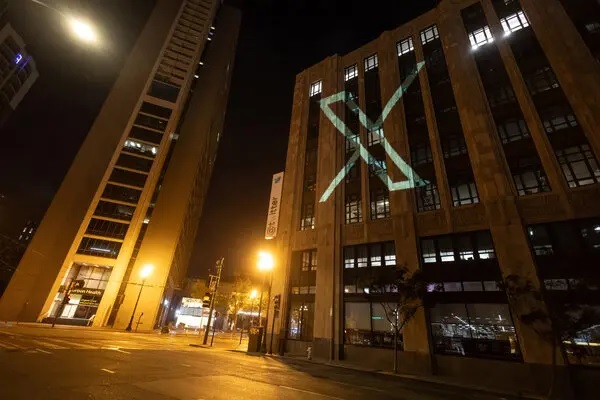
Elon Musk is raising the stakes in the creator economy, announcing a significant increase in earnings for creators on X in a bold challenge to YouTube’s long-held dominance.

The expanded payouts underscore X’s strategy to attract top video talent, positioning the platform as a more lucrative home for creators amid an increasingly competitive online video market.

Popular YouTuber Mr Beast in response to this move, noted that X competing with YouTube on payouts would be a difficult thing to achieve.

He wrote,

“Competing with YouTube revenue gonna be pretty hard, they’re the best platform to ever exist at this. I’ve done 9 figures in ad revenue on just one channel for example.”

X’s current revenue-sharing program, launched in 2023, has distributed over $100 million but lags YouTube’s $30 billion annual creator economy, prompting this escalation to attract video talent amid X’s 586 million monthly users versus YouTube’s 2.5 billion.

Plans to increase creator payouts has sparked widespread excitement across the platform, with users and creators hailing the move as a potential game changer for monetization. Many see the boost as a strong signal of X’s commitment to rewarding content creation, fueling optimism that the platform could emerge as a more competitive and creator-friendly alternative to YouTube.

Checkout some users reaction;

@nickshirleyy wrote,

“Yes this would be amazing, X so far hasn’t been able to compete with YouTube Adsense but is a much more effective platform for videos to be shared and seen by the masses without censorship. I’ve been telling my friends for months to be posting on X but they haven’t made the effort because their time is better used (monetarily) on other platforms.”

@TheRabbitHole wrote,

“This would be great. Especially for higher effort content like videos, spaces, and articles.”

@GeoffreyNwankpa wrote,

“X is about to become the biggest marketplace for content creators”.

While YouTube remains the undisputed leader in creator revenue, X’s increased payouts could shift creator behavior in meaningful ways. Unlike YouTube’s algorithm-heavy discovery system, X enables rapid content virality through reposts, conversations, and real-time trends. Higher payouts could incentivize creators to post premium video content directly on X rather than treating it as a secondary distribution channel.

By offering competitive or even superior earnings per view especially for high-engagement or viral content, X could attract creators who prioritize reach, speed, and direct audience interaction. The platform’s emphasis on real-time discussion, long-form video, Spaces, and articles also allows creators to monetize multiple content formats under one ecosystem, something YouTube largely separates across products.

In addition, Musk has positioned the payout increase as a way to encourage authentic, human-created content at a time when AI is rapidly scraping and reproducing online material. By financially rewarding original creators more aggressively, X could strengthen its role as a primary source of authoritative content rather than a redistribution platform.

Notably, Musk move to raise X’s creator payouts beyond YouTube levels aims to attract authentic content amid AI’s rapid consumption of online material, responding to a user’s pitch on preserving authoritative sources.

He however mandates strict anti-fraud measures to prevent system gaming, directly tasking X’s Head of Product Nikita Bier, who confirms a new detection method targeting 99% of abuse.

Recent reports indicate Musk’s hint at surpassing YouTube rates includes stricter anti-bot measures, potentially boosting authentic content but risking short-term payout delays as X refines its ad revenue model.

Outlook

X is unlikely to dethrone YouTube overnight, especially given YouTube’s unmatched scale, infrastructure, and advertiser ecosystem. However, higher payouts, combined with X’s real-time virality, fewer content barriers, and growing focus on original creators, could make the platform increasingly attractive—particularly for news-focused, commentary, finance, tech, and viral video creators.

If Musk successfully balances generous payouts with effective fraud prevention and improved ad monetization, X could emerge as the leading alternative creator economy platform, one that prioritizes speed, authenticity, and direct audience engagement over sheer scale.

Over time, this strategy could reshape how creators distribute content, reducing YouTube’s monopoly on creator earnings and redefining competition in the global video market

Michael Burry Says He’s not Shorting Tesla, Can’t Bet Against Musk

0

Michael Burry has moved to clear the air after reigniting debate around Tesla’s towering valuation, insisting that while he views the electric vehicle maker as “ridiculously overvalued,” he is not betting against the stock.

The Scion Asset Management founder made the clarification on Wednesday in a post on X, responding directly to a user who asked whether he was shorting Tesla shares.

“I am not short,” Burry wrote, drawing a clear line between his skepticism about Tesla’s valuation and an outright bearish position.

The comment followed an earlier post in which Burry described Tesla as dramatically overpriced, a view he had already shared with subscribers to his newly launched paid Substack newsletter earlier this month. The remarks quickly drew attention, given Burry’s reputation as the investor who foresaw the collapse of the U.S. housing market ahead of the 2008 global financial crisis, a bet later immortalized in the book and film The Big Short.

Burry’s Tesla remarks land at a sensitive moment for the company. Tesla recently took the unusual step of publishing its own compilation of analyst sales estimates, a move that appeared to temper market expectations. The company on Monday cited an average forecast of about 1.6 million vehicle deliveries for 2025, roughly 8% lower than its 2024 performance.

If borne out, that would mark a second consecutive annual decline in vehicle sales, an uncomfortable milestone for a company long priced as a high-growth juggernaut.

That softening outlook sits uneasily alongside Tesla’s stock performance. Shares recently touched an all-time closing high of $489.88, underscoring the disconnect that valuation-focused investors like Burry often point to. Tesla’s market capitalization continues to reflect expectations that stretch far beyond car sales, including autonomous driving, artificial intelligence, robotics, and energy storage — businesses that remain either early-stage or unproven at scale.

The stock’s journey this year has been anything but smooth. After a sharp selloff in the first quarter, driven by intensifying competition from Chinese electric vehicle manufacturers and reputational blowback tied to Elon Musk’s increasingly incendiary political rhetoric, Tesla shares rebounded strongly. Even so, the underlying pressures have not disappeared. Price cuts across key markets have squeezed margins, while rivals, particularly in China, have continued to roll out cheaper and increasingly sophisticated models.

Burry’s comments also come against the backdrop of his broader skepticism toward parts of the technology sector. He recently disclosed short positions targeting what he described as aggressive accounting practices at some of America’s largest companies, arguing that profits linked to the AI boom were being overstated. That context helps explain why his Tesla critique resonated, even without an accompanying short position.

For now, Burry appears content to voice concern without placing a direct wager. His message draws a distinction many investors grapple with: a stock can be seen as overvalued while remaining dangerously expensive to short, particularly one as volatile and narrative-driven as Tesla.

In premarket trading on Wednesday, Tesla shares were slightly lower. Despite the turbulence, the stock is still up more than 12.5% so far in 2025, underpinning that valuation warnings, even from famous skeptics, can take a long time to catch up with market momentum.

Meta’s $2bn Bet on Manus Sharpens the AI Revenue Question — and Washington’s China Lens

0

Meta Platforms’ acquisition of Manus for about $2 billion does more than add another artificial intelligence startup to Mark Zuckerberg’s expanding AI empire. It underscores a deeper shift now underway in Silicon Valley: after years of model demos, benchmarks, and eye-watering infrastructure spend, investors and regulators are zeroing in on which AI products actually make money — and where they come from.

Manus emerged into public view last spring with an unusually loud buzz for a relatively young startup. A demo video circulated widely among venture capitalists and engineers, showing AI agents performing end-to-end tasks that went beyond chat or simple retrieval. In the footage, Manus’ system screened job applicants, planned multi-leg vacations, and analyzed stock portfolios with minimal human guidance. The company said its technology outperformed OpenAI’s Deep Research, a claim that was not independently verified but nonetheless helped push Manus into elite AI conversations almost overnight.

Capital followed quickly. In April, Benchmark led a $75 million funding round that valued Manus at $500 million post-money, with Benchmark partner Chetan Puttagunta taking a board seat. Chinese media later reported that Manus had already secured backing from Tencent, ZhenFund, and HSG, formerly Sequoia China, through an earlier $10 million raise. That early mix of U.S. and Chinese capital would later become a sensitive issue.

By mid-December, Manus disclosed figures that few AI startups at its stage can point to. The company said it had attracted millions of users and was generating more than $100 million in annual recurring revenue from subscriptions to its membership service. At a time when much of the AI sector remains heavily loss-making, those numbers stood out. According to The Wall Street Journal, Meta began acquisition talks around that period, agreeing to pay roughly $2 billion — the valuation Manus was reportedly targeting for its next funding round.

For Zuckerberg, the appeal is straightforward. Meta has tied its future growth narrative to artificial intelligence, yet investors have grown uneasy about the scale of spending required to compete with rivals such as Microsoft, Google, and Amazon. Meta plans to spend around $60 billion on AI infrastructure, part of a broader, industry-wide surge in debt-backed investment in data centers, chips, and energy capacity. Manus offers a counterpoint to those concerns: a consumer-facing AI product that is already producing significant revenue.

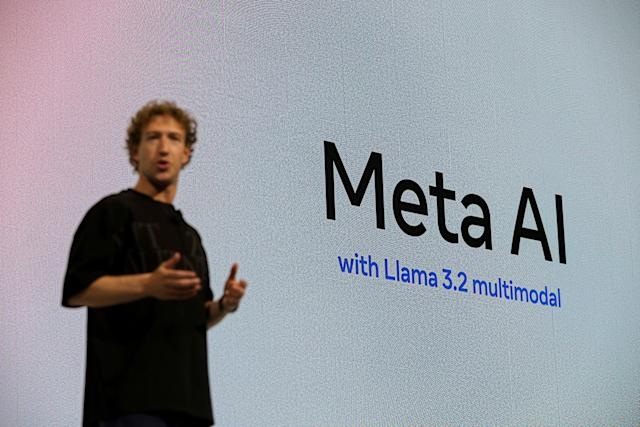
Meta said it will keep Manus operating independently while integrating its AI agents into Facebook, Instagram, and WhatsApp. Those platforms already host Meta AI, the company’s in-house chatbot, suggesting Manus’ technology may be used to power more autonomous, task-oriented features rather than simple conversational tools. If successful, that integration could help Meta demonstrate clearer returns on its AI spending by embedding monetizable services directly into its social platforms.

However, the deal also arrives with geopolitical baggage. Manus’ founders are Chinese nationals who launched its parent company, Butterfly Effect, in Beijing in 2022 before relocating to Singapore earlier this year. That background has already drawn scrutiny in Washington. Senator John Cornyn, a senior Republican on the Senate Intelligence Committee, criticized Benchmark’s investment in Manus in May, raising concerns about American capital supporting firms with Chinese origins.

Cornyn’s stance reflects a broader, bipartisan posture in Congress, where skepticism toward China’s role in advanced technologies has hardened. Lawmakers across party lines have increasingly called for tighter oversight of cross-border investments, especially in AI, semiconductors, and data-heavy platforms.

Meta has sought to pre-empt regulatory resistance. The company told Nikkei Asia that, after the acquisition, Manus will have no remaining Chinese ownership and will cease operations in China altogether.

“There will be no continuing Chinese ownership interests in Manus AI following the transaction, and Manus AI will discontinue its services and operations in China,” a Meta spokesperson said.

Whether those assurances will be enough remains an open question. U.S. regulators are paying closer attention not just to current ownership structures, but also to where technology was developed and how it might be repurposed. That scrutiny could shape how quickly Meta can close the deal and how Manus’ technology is deployed globally.

Beyond the politics, the acquisition highlights a turning point in the AI boom. The early phase was defined by spectacle — powerful demos, soaring valuations, and promises of transformation. Meta’s move suggests the next phase will be judged more harshly, with revenue, user adoption, and regulatory risk carrying far more weight.

In that environment, Manus is valuable not just for what its AI can do, but for what it represents, which is proof that, at least for some players, artificial intelligence is starting to pay its way.