

DD
MM
YYYY

PAGES

DD
MM
YYYY

spot_img

PAGES

Home Blog Page 4006

Moral Framing of Post-Fuel Subsidy Removal Economic Reforms

0

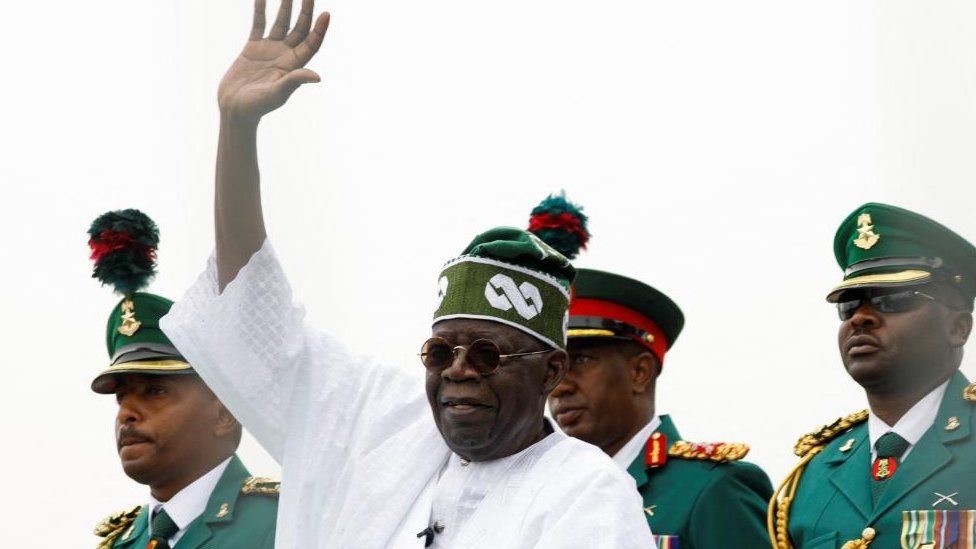
In this piece, our analyst examines President Bola Tinubu’s speech using the moral economy approach to shed light on the ethical dimensions of his economic reforms and the government’s responsibilities towards the well-being of Nigerians. The moral economy approach emphasizes the moral and normative aspects of economic policies and their impact on social justice, fairness, and the common good.

Equity and Social Justice: President Tinubu’s speech addresses the issue of equity and social justice by pointing out the inequality perpetuated by the fuel subsidy. He argues that the subsidy primarily benefits a select few, leading to a skewed distribution of resources. The removal of the subsidy is presented as a means to rectify this injustice and redirect resources towards more essential services like public transportation, healthcare, and education. The moral economy approach highlights the need for policies that promote fairness and equitable access to resources for all citizens.

Responsibility to the Vulnerable: The President’s emphasis on supporting the most vulnerable segments of society aligns with the moral economy approach’s focus on the responsibilities of the government towards those in need. By pledging interventions to cushion the economic impact on businesses, working-class citizens, and small-scale entrepreneurs, President Tinubu acknowledges the government’s moral obligation to protect and uplift those who are most affected by economic reforms.

Promotion of Human Dignity: The speech touches on themes of human dignity, as it recognizes the hardship faced by citizens due to increased fuel prices and rising costs. President Tinubu’s commitment to providing financial support to students pursuing higher education and investing in healthcare and education infrastructure reflects the moral economy’s concern for ensuring citizens’ well-being and preserving their dignity.

Inclusive Growth: The President’s emphasis on stimulating economic growth through support for small businesses and farmers reflects a moral economy approach that prioritizes inclusive growth. By targeting grassroots-level enterprises and promoting financial inclusion, the speech seeks to create a more equitable economic landscape that benefits a broader spectrum of the population.

Public Interest over Elite Interests: President Tinubu’s criticism of the influence of unelected elite groups on the nation’s political economy aligns with the moral economy approach’s call for prioritizing the public interest over the interests of privileged few. The speech implies that the government should safeguard the welfare of the majority and not allow a select group to wield excessive power and control over the nation’s resources.

Accountability and Transparency: The President’s commitment to addressing fiscal policies, multiple taxes, and corruption aligns with the moral economy’s call for accountability and transparency in governance. By acknowledging the flaws in the economic system and promising reforms, the speech emphasizes the importance of ethical leadership and responsible governance.

Overall, President Tinubu’s speech painted a vision of economic policies that prioritize the common good, fairness, and the well-being of the Nigerian people. It highlighted the government’s responsibility to ensure the equitable distribution of resources and to address the economic imbalances that have hindered the nation’s progress.

FIFA to Pay Women World Cup Prize Money Directly to Super Falcons to Avoid Embezzlement

0

The decision of the Federation of International Football Association (FIFA) to pay prize money directly to players has been revealed to be born of the organization’s desire to protect the money from being embezzled by corrupt Football Association officials.

The Secretary-General of FIFA, Ms Fatma Samoura revealed this while addressing Super Falcons of Nigeria at the ongoing FIFA Women’s World Cup. In the development that has been widely described as “embarrassing”, Samoura told the Falcons in their dressing room after their 0-0 with the Republic of Ireland that she knows “it has been tough” and that they had to “face the reality of Nigeria,” making reference to the deep-rooted corruption going on in the Nigerian Football Federation (NFF).

“It is because of you that for the first time in the history of FIFA, the FIFA women world cup prize money will be paid directly to you, the players,” Samoura said in a video posted on X by British-Nigerian journalist Osasu Obayiuwana.

https://twitter.com/osasuo/status/1686384642478510080?s=20

Obayiuwana further noted that Samoura had mandated FIFA’s Director for Africa, Gelson Fernandes, to ensure that the players received the money as she would be leaving soon after seven years as the highest-profile woman working in the world football governing body.

In May, the NFF admitted its failure to pay outstanding wages of several months to some players and officials across levels of the national teams. The officials and players include Jose Peseiro, Super Eagles head coach, and Randy Waldrum, Super Falcons head coach.

Waldrum is reportedly owed more than $100,000, including bonuses from last year’s Women’s Africa Cup of Nations (WAFCON).

The Super Falcons will not receive their tournament match bonuses, as FIFA has announced that all players will be paid approximately £15,760 (AUS$30,000) for participating in the group stages of the tournament.

Previously, there were supposed to be additional payments after each of Nigeria’s group games against Canada, Australia, and Ireland.

In response to the situation, the team had considered going on strike for their first match against Canada. Interestingly, Canada’s team is also embroiled in a pay dispute with their Football Association, as they seek equal pay and support similar to the men’s team.

Manager Waldrum has been vocal in expressing his criticisms regarding how the NFF is treating his players. He had previously complained about disputes over unpaid wages, substandard travel arrangements, and the cancellation of a pre-tournament camp ahead of the Women’s World Cup in Australia and New Zealand. The Nigerian squad even sought assistance from the global players’ union, FIFPRO, to address these issues.

Due to the NFF’s reputation, there is growing concern that the Super Falcons will be deprived of their wages and bonuses if left in the care of the federation.

A former Arsenal player and football pundit Ian Wright was among those who added voices to the call on the NFF to pay players, whose astonishing performance in the tournament so far has received so much praise.
“Pay them!!!!!” Ian wrote on X in support of the Super Falcons, tagging the NFF.

The Nigerian ladies beat the co-hosts of the tournament, Australia 3-2 on Thursday, to set up a duel with England in the round of 16 unbeaten.

Nigerian e-Commerce Platform, Traction, Announces Fundraise of $6m Seed Round to Scale Its Operations

0

Nigerian e-commerce platform Traction has announced the raise of $6 million in seed round to scale its Nigerian operations. The funding round was led by Multiply Partners and Ventures Platform, with participation from P1 ventures, amongst other investors.

Traction disclosed that it will use the funds raised to drive expansion, accelerate growth, and strengthen the company’s team.

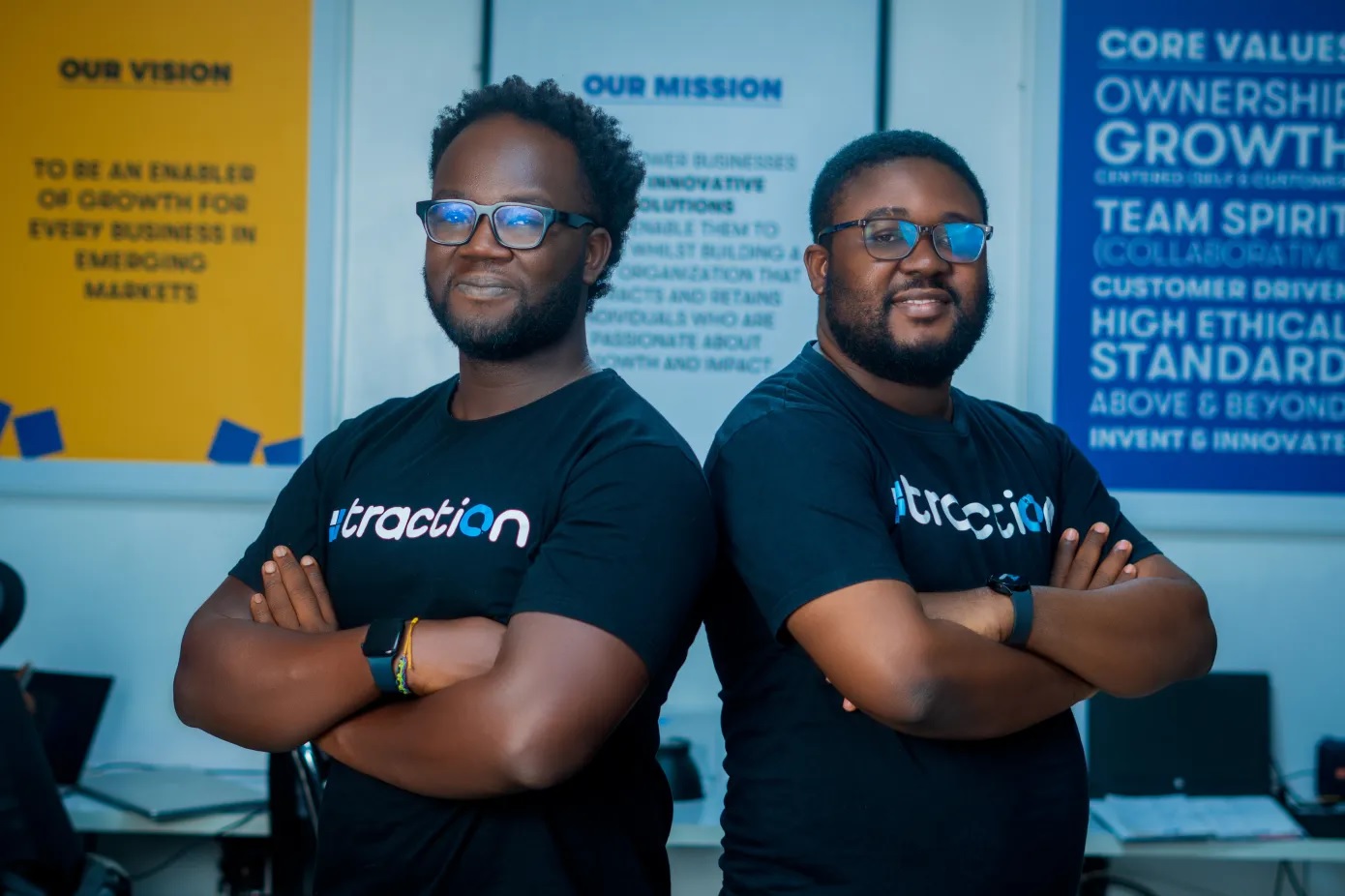
Speaking on the funds raised, Traction co-founder Mayowa Alli said,

“Our goal at Traction is to be the digital operating system for businesses on the continent. We want to help them digitize their operations, efficiently manage finances, and make beer-informed decisions”.

According to Alli, Traction serves two categories of merchants, which are classic and premium. He cited street food sellers and tiny neighborhood convenience stores as examples of this first category. He said that Traction is generally the first engagement with digital payment acceptance and financial services for these merchants, who comprise 75% of the platform’s user base.

Premium merchants, on the other hand, are more formal and have left banks in favor of Traction’s more appealing products. Notably, both categories occur in various sectors, including five verticals for which Traction has developed customized solutions: food and restaurants, FMCG and grocery chains, fashion, beauty, and lifestyle enterprises, electronics stores, and healthcare facilities.

Founded in 2020 by Mayowa Alli and Dolapo Adejuyigbe, Traction is a fintech company that allows merchants to receive payments, manage accounts, and access operational tools, which include invoicing, full retail POS system, and e-commerce.

Traction products meet the specific needs of its retail business owners, in contrast to platforms such as Opay, Moniepoint, and Nomba, which use agent-led models by distributing POS terminals before adding software and business tools to complement the terminals.

The startup said it has set itself apart in the competitive merchant acquiring space by maintaining a dedicated focus on businesses, unlike many agent-led models attempting to pivot toward business services. Its company’s industry-specific software, including its financial services marketplace, offers relevant business solutions, affordable capital, and insurance.

Traction says it has gained more merchants across Africa’s largest financial services sector than its competitors since its inception. The Fintech company reported a 7x increase in revenue and an 8x increase in transactions last year while serving over 70,000 businesses across Nigeria.  On the credit side, the founders noted that Traction has disbursed over N2 billion in loans, with one of the lowest NPL ratios in the industry.

Traction aims to maintain the upward growth trajectory, as it seeks to provide businesses with a seamless payment process and enhance their overall operations. 

Meanwhile, in this sector, Amazon has been accelerating its delivery efficiency at the global level.

Days before reporting second-quarter earnings, Amazon said it will double the number of its same-day delivery warehouses in “coming years.” The company also noted it had quadrupled the number of packages delivered the same day or within one day this year, to 1.8 billion, from the first half of 2019. While Amazon vies to stay ahead of rivals in the $1.4 trillion e-commerce market, the pace of online sales has slowed since the pandemic, pushing the company to become more dependent on its cloud-computing unit for profit.

As Amazon does that, Walmart is investing big in India.

Walmart has paid $1.4 billion to buy major investor Tiger Global’s remaining shares of Indian e-commerce giant Flipkart, The Wall Street Journal reports. While Walmart initially invested in the company in 2018, when it paid $16 billion for a 77% stake, its buy-in now gives it more exposure to the booming international digital-consumer market. Flipkart said last month its customer base stands at more than 450 million, while it sells over 150 million products across 80-plus categories through its marketplace.The transaction puts Flipkart’s value at $35 billion — down about $3 billion from 2021, when the company last sold shares to Walmart.

As Amazon and Walmart deepen their businesses, apps like Pinterest and TikTok are also accelerating ecommerce: “Pinterest’s latest earnings suggest its bid to inspire users may also be inspiring sales — and that it could have strong potential as a commerce player. The social media company posted better-than-expected revenue of $708 million in the second quarter, up from $666 million one year ago. The reason for the turnaround, according to CEO Bill Ready, is that “shopping is working on Pinterest” and helping spur engagement. Ready’s push to make Pinterest more shoppable, including a recent partnership with Amazon, has coincided with gains in monthly active users. Not all investors are happy, however, with some citing ballooning costs that are outpacing revenue growth.By 2026, U.S. sales on social media are expected to reach $130 billion. TikTok is also pursuing a social commerce strategy and is currently beta testing its TikTok Shop with U.S. users.”

Google Announces Plans to Lay off Employees in The Google Assistant Team to Refocus on Generative AI

0

Tech giant company, Google, has announced plans to lay off employees in the Google Assistant team, after it disclosed that it will help the company to refocus on generative AI.

In an email to employees, Google wants to supercharge its seven-year-old smart assistant using new advancements in generative artificial intelligence, as part of the latest major reorganization of the Assistant unit.

The exact number of layoffs is however unknown, and employees who are impacted are given 60 days to search for other jobs within Google.

Meanwhile, Peeyush Ranjan, Google’s Vice President of Engineering at Assistant, said the reshuffle will impact only a small number of employees.

Part of the email reads,

“As a team, we need to focus on delivering high-quality, critical product experiences for our users. We have also seen the profound potential of generative AI to transform people’s lives and see a huge opportunity to explore what a supercharged Assistant, powered by the LLM technology, would look like”.

A portion of the Assistant team has already started working on the efforts. As part of the reorganization, executives announced a dozen changes to the company’s speech team which oversees voice commands.

Reports disclose that Google has infused its underlying AI technology into more than 25 products and features. The company has also announced a host of new AI-powered tools coming to the cloud.

Since the launch of OpenAI’s chatbot, ChatGPT, it has given rise to the creation of several other chatbots and integration generative AI into tech products. The ensuing AI race has seen made headlines, with the technology enjoying a renaissance.

This is an interesting moment for AI, as almost every major tech company has been investing in AI to keep up with the pace and enhance users’ experience.

The field of problem-solving Al is maturing fast, as are the backend technologies that make conversational interfaces such as a potentially profound evolution in human-computer interaction. Notably, the companies best positioned for an Al-fueled future will be those with the foresight to act before the tides turn, not when the wave finally crashes upon them.

While AI has proven to improve efficiency and save time, on the flip side, it will displace so many jobs. A Goldman Sachs study found that generative AI tools would impact 300 million full-time jobs worldwide, which could lead to a significant disruption in the job market.

Media jobs across the board, including those in advertising, technical writing and journalism, and any role that involves content creation, may be affected by ChatGPT and similar forms of AI. Already, the media industry is experimenting with AI-generated content.

In addition, AI could change the nature of work. Many believe that in the future, a large portion of jobs will involve working with AI in some capacity. This doesn’t necessarily mean that AI is a threat to these jobs, but rather, these job roles may shift or evolve.

While AI has the potential to disrupt many jobs, it’s important to note that job displacement due to technological advancement is not a new phenomenon. Throughout history, many jobs have been made obsolete due to technological advancements, but new ones have also been created.

Monero and Aave price on the decline; is altseason over? Early Pomerdoge investors will get access to rare NFT collection

0

Monero (XMR) and Aave (AAVE), once prominent contenders in the market, are currently facing a downward trend. Investors wonder if the long-awaited alt season is over, leaving them seeking new opportunities. On the other hand, the emerging Pomerdoge (POMD) project has caught the attention of many. Notably, early investors in Pomerdoge will gain exclusive access to a rare NFT collection – causing interest in it to grow.

Click Here To Find Out More About The Pomerdoge (POMD) Presale

Monero (XMR) Witnesses a Downturn

Monero (XMR), known for its privacy-focused features, has witnessed a decrease in its value recently. In the past month alone, the Monero price fell by 4.4%.

This bearish trend has continued as its cost fell to $161.50 with a market cap of $2.9B, down 0.45% overnight. Moreover, the moving averages for Monero show sell signals.

As one of the leading privacy-centric cryptocurrencies, Monero’s price movement draws attention from traders and enthusiasts alike. With no real development news for Monero, experts predict this bearish trend will continue soon.

Why Is Aave (AAVE) Going Down?

Aave (AAVE), a prominent decentralized finance (DeFi) protocol, has been facing a downtrend in its price. In fact, the Aave crypto value decreased by 5.9% in the past 14 days. The recent decline in value has prompted speculation and concern among the cryptocurrency community.

On July 31, a reentrancy attack on Curve Finance caused Aave stablecoin GHO to depeg; it recovered within two hours. However, the Aave price has not. Currently, the token costs $70.90 with a market cap of $1B, falling 4.29% in the past 24 hours.

Furthermore, the Aave technical analysis shows bearish signs. All moving averages and technical indicators are showing sell signals. Therefore, many experts forecast that Aave could continue dropping.

Pomerdoge (POMD): The New Frontier of P2E Gaming

Amid the altcoin market turbulence, Pomerdoge has emerged as an intriguing new opportunity. The Pomerplace, a marketplace within the Pomerdoge ecosystem, allows players to buy, sell, and trade valuable in-game items. Additionally, the Pomergame will enable players to earn rewards while having a blast in an immersive gaming experience.

A Golden Opportunity: Exclusive NFT Collection

Pomerdoge has a unique offering for early investors that sets it apart from other projects. Those participating in the presale will be granted access to a limited collection of 7,777 NFTs. These NFTs represent one-of-a-kind digital assets, each with inherent value. As NFT benefits are kept secret until the launch, investors flock to secure their place in the Pomerdoge ecosystem.

Also, presale investors will receive a share of the game’s earnings equal to the tokens they possess. This innovative model aligns the interests of investors with the growth and prosperity of the Pomerdoge ecosystem.

In addition, SOLIDProof and Cyberscope have both audited this project. Also, the Pomerdoge team has announced they will lock liquidity forever while freezing team tokens for two years. Therefore, a completely safe and sound project that some experts even claim may outshine Pepe.

POMD – A Pomerdoge Necessity

While tokens like Monero and Aave experience ups and downs, Pomerdoge continues to build for the future. The P2E gaming concept, combined with the exclusive NFT collection, attracts gamers and investors seeking growth.

The only way to obtain the limited-edition NFTs is by holding the game’s native token, POMD. Currently, one POMD costs just $0.007. Thus, countless individuals are flooding the presale. With expected gains of 17x before its presale ends and weekly giveaways of $100,000, those who purchase it now will see tremendous growth. So, do not miss out – follow the links below.

Find out more about the Pomerdoge (POMD) Presale Today

Website: https://pomerdoge.com/

Telegram Community: https://t.me/pomerdoge