DD
MM
YYYY

PAGES

DD
MM
YYYY

spot_img

PAGES

Home Blog Page 4006

Nigeria’s Missing Remittances As Naira/USD Exchange Rate Recalibrates

0

Those bogus statistics are becoming bare. Yes, “Diaspora remittances to Nigeria witnessed a huge decline in H1 2023, according to the latest International Payment data released by the Central Bank of Nigeria. Compared to the $10.11 billion recorded in the same period last year, the decline has dealt a massive blow to Nigeria’s hope to boost its forex liquidity with Diaspora remittances.”

(The data quoted here seems not correct since Nigeria received about $20 billion remittances in 2022)

Add that to the bogus petrol consumption (has since dropped by more than 37%), you will see that Nigeria has a deep problem: guesswork policymaking.  Most of those “diaspora remittances” were round-tripped hard currency which agents of “the connected” were bringing back to the nation, at black market rate, after buying them at the original rate.

With the official and the parallel market rates getting to parity, that round-tripping will fade. But do not rejoice: they will invent another trick since nothing is punished in the nation.

As I noted in Tekedia Investment class on Saturday, the optimism in the banking stocks in the Nigerian stock exchange is not due to any fundamental redesign on what banks are doing, rather, people are buying into massive dividends which we expect to happen as banks reclassify foreign currency denominated assets, creating ephemeral > 40% profit overnight (it used to be N415/$, now you can use N700).  My thesis was that diasporas were not wiring money to buy equities (and CBN data just confirmed that, since we dropped from $10b to now $1b).

Until Nigeria begins to punish the connected who mess up the economy, nothing will change.

CBN Directs Banks to Issue FX Remittances in Naira As Diaspora Remittance Declines

0
Naira USD

Diaspora remittances to Nigeria witnessed a huge decline in H1 2023, according to the latest International Payment data released by the Central Bank of Nigeria. Compared to the $10.11 billion recorded in the same period last year, the decline has dealt a massive blow to Nigeria’s hope to boost its forex liquidity with Diaspora remittances. (The data quoted here seems not correct since Nigeria received about $20 billion remittances in 2022)

A detailed analysis of the data revealed that Nigeria witnessed a gradual increase in remittances over several months in 2023. In January, the country recorded $79.2 million in remittances, which slightly rose to $83.8 million in February. March witnessed a significant jump in total direct remittances, reaching $138.6 million.

In April, the country received $150 million as direct remittances, followed by a further increase to $202.9 million in May. By June 2023, total direct remittances reached $297.5 million, indicating a consistent upward trend in remittances.

The CBN did not give a reason for the decline, which has raised concerns about the nation’s chances of addressing its forex changes in the short term. However, Partner, Chief Economist, and Head of Research at KPMG Nigeria, Dr. Yemi Kale, attributed the decline to probably “election uncertainty and the CBN cash and forex drama in Q1.” He said he won’t be bothered till he sees “Q3 and Q4” remittance data.

Nigeria’s major source of forex inflow is crude oil export. But the crisis in the oil sector has seen a drastic reduction in the country’s earnings from crude oil export, forcing it to largely rely on Diaspora remittances, which is regarded as its second major source of forex.

In 2021, the CBN introduced the Naira4dollar remittance scheme, as a way to encourage Nigerians living abroad to send foreign currencies back home. Under the scheme, commercial banks were required to pay recipients of remittances the incentive of N5 for every $1 remitted and received.

There was also the RT200 FX Programme launched in early 2022, with a set of policies and plans for non-oil exports. The aim is to use the programme to attain the goal of $200 billion in FX repatriation, exclusively from non-oil exports, in 3-5 years.

In 2022, Nigeria recorded $20.16 billion in Diaspora remittances, augmenting the meager forex proceeds from crude oil sales.

The Naira4Dollar scheme and the RT200 FX Programme have been discontinued following the floating of the FX market last month.

Meanwhile, the central bank has issued a directive to International Money Transfer Operators (IMTOs) to begin disbursing remittances to beneficiaries in Naira, alongside foreign exchange.

The apex bank specified that the exchange rate used for determining the Naira pay-out should be based on the Investors and Exporters’ Window foreign exchange rate.

The directive was outlined in a circular, referenced as FED/FEM/PUB/FPC/001/004, issued by Dr. Ozoemena Nnaji, the Director of Trade and Exchange at the CBN.

The circular, dated July 10, 2023, builds upon a previous circular dated November 30, 2022, which introduced guidelines for the payout policy of Diaspora remittances to beneficiaries in Nigeria.

The November 30 circular facilitated the payment of remittances in U.S. dollars to beneficiaries through IMTOs, providing unrestricted access to their funds via their chosen designated bank.

The new circular emphasizes that the option of Naira payment is an additional choice available to recipients of Diaspora remittances, in addition to United States Dollars and E-Naira.

The CBN’s full circular states, “Further to the circular referenced FED/FEM/FPC/01/011 dated November 30, 2022, in respect of the above subject, the Central Bank of Nigeria hereby announces Naira as a payout option for receipts of proceeds of International Money Transfers.

“Accordingly, all recipients of Diaspora remittances through the CBN-approved International Money Transfer Operators (IMTOs) on the attached list shall henceforth have the option of receiving Naira payment in addition to USD and e-Naira as payout options.

“For the avoidance of doubt, IMTOs are required to pay out the proceeds using the Investors’ & Exporters’ window rate as the anchor rate on the date of the transaction.

“The regulation takes effect immediately.”

Tinubu Seeks Legislative Approval for N500bn for Subsidy Palliatives, Writes House of Reps

0

During Wednesday’s plenary session, President Bola Ahmed Tinubu submitted a letter to the House of Representatives, requesting a sum of N500 billion for palliative measures aimed at mitigating the impact of the removal of subsidy on Premium Motor Spirits (PMS), commonly known as petrol.

Additionally, Tinubu proposed an amendment to the 2022 supplementary appropriation Act, enabling the Federal Government (FG) to obtain the funds from the N819.5 billion allocated in the 2022 supplementary Appropriation Act.

The letter, which was read by Speaker Tajudeen Abbas, reads: “I write to request the approval of the House of Representatives for the amendment of the 2022 supplementary appropriation act in accordance with the attached.

“The request has become necessary in other to among other things source for funds necessary to provide palliatives to mitigate the effect of the recent removal of fuel subsidy on Nigerians.

“Thus the sum of N500 billion only has been extracted from the 2022 supplementary appropriation act of N819.536 billion for the provision of palliatives to Nigerians to cushion the effect of fuel subsidy removal. I hope that the House of Representatives will consider the request.”

The removal of fuel subsidy resulted in soaring costs of goods and services, igniting calls for the government to initiate palliative measures to mitigate the impact.

The government has been working with Civil Society Organizations (CSOs) to develop a framework that will address the concerns. The Nigerian Labour Congress (NLC) and the Trade Union Congress of Nigeria (TUC) had asked for an increment in the minimum wage, from the current N30,000 per month to N200,000 per month.

The TUC has called for tax holidays to be granted to employees, both in the public and private sectors, whose monthly earnings are below N200,000 or $500. They also emphasized the need to introduce a petrol allowance for individuals earning between N200,000 to N500,000 or $500 to $1,200 annually, whichever amount is higher.

Additionally, the TUC demanded that the Nigerian government provide mass transit vehicles for all segments of the population and undertake an immediate review of the National Health Insurance Scheme to extend coverage to a larger number of Nigerians.

In the medium term, the labor union urged the government to fulfill its previous commitment by implementing the nationwide deployment of Compressed Natural Gas (CNG).

Tinubu did not explain how the money will be disbursed; raising concern that it will be looted. Against this backdrop, many are calling for the money to be used to subsidize fuel, that way it will benefit all Nigerians.
Socio-Economic Rights & Accountability Project (SERAP), on Wednesday, asked the federal government to publish details of how it intends to use the fund.

“Following his request to the House of Representatives seeking approval to spend N500 billion as Palliative for Subsidy Removal, we urge President Tinubu to immediately publish the details of the spending including names of the beneficiaries,” it said.

OpenAI Rival Anthropic Announces Release of New Text-Generating AI Model Claude 2

0

Artificial intelligence company founded by former members of OpenAI, Anthropic, has rolled out the latest iteration of its generative AI Chatbot, Claude 2, which comes with improved safety and coding capabilities.

The Claude 2 is an upgrade of the Claude 1.3, as Anthropic claims that the newly upgraded version is slightly better in math, coding, and reasoning, in addition to being able to construct longer replies.

According to reports, Claude 2 can process up to 100,000 tokens, roughly equal to 75,000 words in a single request. This represents a significant increase over the chatbot’s prior 9,000 token cap.

The upgrade will see Claude 2 now able to respond in a more improved and contextual manner. Anthropic asserts that Claude 2’s behavior is easier to comprehend and easier to modify as necessary when compared to other models because of constitutional AI.

Speaking on the rollout of Claude 2, Anthropic CEO Daniela Amodei said,

“We have been focused on businesses, on making Claude as robustly safe as possible. We really feel that this is the safest version of Claude that we’ve developed so far, and so we’ve been very excited to get it into the hands of a wider range of both businesses and individual consumers.”

Claude 2 will initially only be available as a beta version to users in the U.S. and U.K., as Anthropic plans to expand availability in the coming months.

The improved chatbot model can also produce coherent responses of about 3 000 words, which is much longer than Claude 1.3’s limit of about 400 words. As a result, Claude can write much longer documents in response, including memos, letters, and stories all in one shot.

Unlike other Chatbots like Bard and Bing, Claude 2 isn’t connected to the internet and is trained on up-to-date data.

Claude 2 data includes updates in information from 2022 and early 2023, which means it has a lot more recent context about recent events than before. Its dataset is more recent than that of ChatGPT whose knowledge is only limited to 2021.

However, the company has advised users that the chatbot can still produce errors or generally be confused about topics that they might not be aware of. As a result, the team warned that Claude might still be prone to “confabulations” or “hallucinations” as chatbots can sometimes generate.

Additionally, Anthropic recently expanded Claude’s context window to around 75,000 words. This means that users can upload dozens of pages to the bot, or even an entire novel, for the bot to parse. So if they need a quick summary of a complicated and very long research paper, Claude 2 got them covered.

This feature will no doubt set it apart from other models that have much smaller limits, with ChatGPT, allowing a maximum of around 3,000 words.

Anthropic designed Claude’s large language model to address issues facing the generative AI market, as ChatGPT and other generative Al chatbots, are known to still produce incorrect answers, and bizarre conversational tangents.

With the rollout of a more enhanced Claude 2 version, Anthropic has intensified competition in the generative AI market, as different AI companies will seek to enhance their chatbots to even surpass that of Claude 2.

U.S. Court Rules in Favor of Microsoft in the FTC Suit Against Activision Blizzard Deal

0

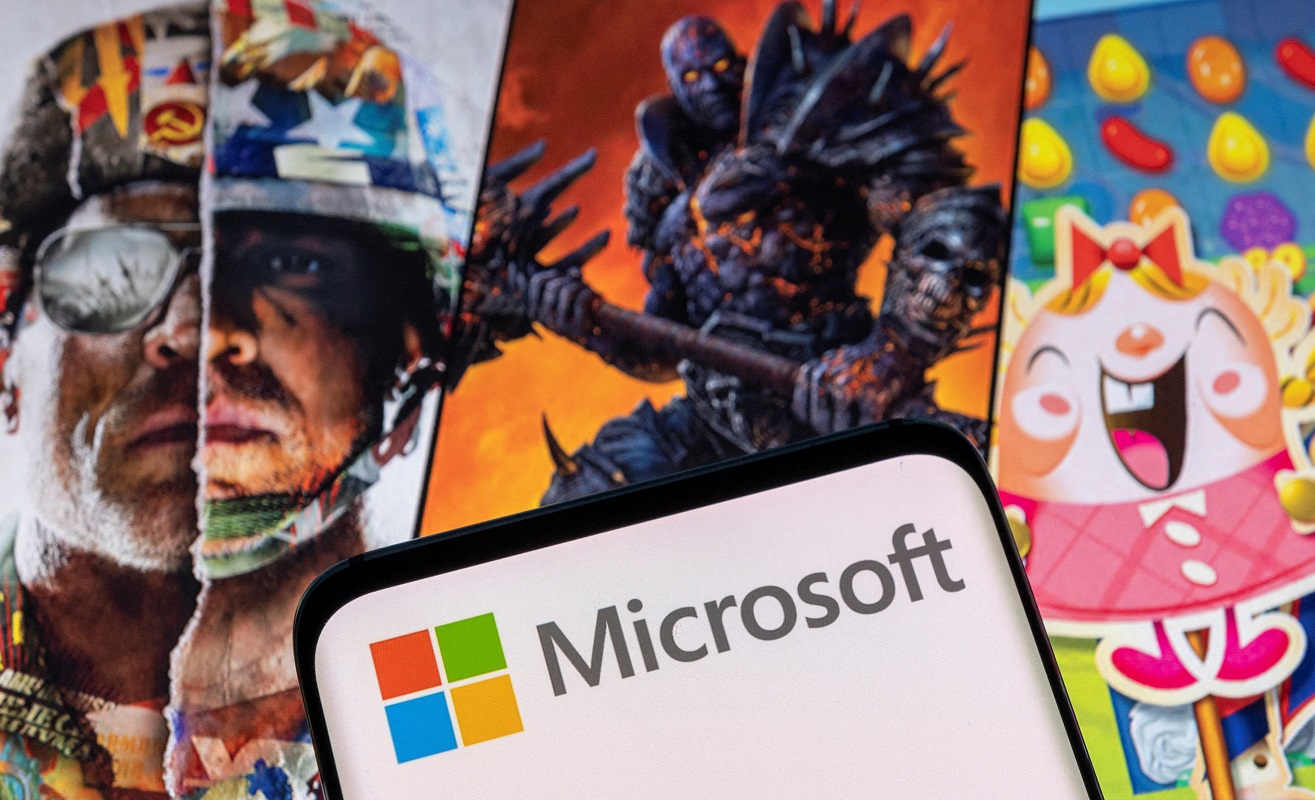
Microsoft has won the lawsuit with the Federal Trade Commission, allowing for the completion of its acquisition of Activision Blizzard deal which was halted following the regulator’s legal intervention last December.

US District Judge Jacqueline Scott Corley of San Francisco dismissed the FTC’s claim that the agreement would negatively impact consumers, as it would grant Microsoft, the maker of Xbox game consoles, sole access to popular games such as the highly sought-after Call of Duty.

The European Union Commission had last month approved the $69 billion deal, while the U.K.’s Competition and Markets Authority (CMA) and the FTC were opposed to it.

The regulators were all concerned that the deal will impact competition in the nascent cloud gaming market. The bone of contention is that by merging Activision Blizzard’s games with Microsoft’s cloud game streaming for Windows, Microsoft has the potential to diminish the competitiveness of other PC operating system providers in relation to its own Windows operating system.

The judgment is a huge blow for Sony, which pushed vigorously to prevent the deal – providing evidence to support the FTC’s anti-competition claims. Part of the PlayStation testimony is the argument by its boss, Jim Ryan, that Game Pass is bad for the industry. He said it is secretly but “unanimously” hated by game developers.

In its anti-competition argument, the FTC said if the deal goes through, it will enable Microsoft to leave rival console makers like Nintendo and market-leader Sony Group out in the cold – using the Activision games.

But the court disagreed. In her ruling, Judge Corley held that Microsoft has shown a level of commitment to keep games from Sony, adding that the FTC has failed to prove how the deal will lessen competition.

“The FTC has not shown it is likely to succeed on its assertion the combined firm will probably pull Call of Duty from Sony PlayStation, or that its ownership of Activision content will substantially lessen competition in the video game library subscription and cloud gaming markets,” she wrote.

“Microsoft has committed in writing, in public, and in court to keep Call of Duty on PlayStation for 10 years on parity with Xbox. The record evidence points to more consumer access to Call of Duty and other Activision content. The motion for a preliminary injunction is therefore DENIED.”

Activision shares surged 10 percent while Microsoft shares rose 64 cents to $332.47 following the ruling. The FTC has until Friday to appeal the decision.

The ruling is expected to make things easier for Microsoft in the U.K., after paving the way for the deal in the U.S. Following the US judge’s ruling, the CMA expressed its willingness to assess Microsoft’s proposals aimed at addressing antitrust issues within the UK. This suggests that there is a possibility of the two parties reaching a resolution.

In a statement, Microsoft said that its attention has now shifted back to the UK. Although the company maintained its disagreement with the CMA’s decision, it acknowledged that it is actively exploring potential modifications to the transaction in order to address the concerns raised by the authority.