DD
MM
YYYY

PAGES

DD
MM
YYYY

spot_img

PAGES

Home Blog Page 4011

Elon Musk Reveals Twitter Cash Flow Still Negative Despite Positive Expectations

0

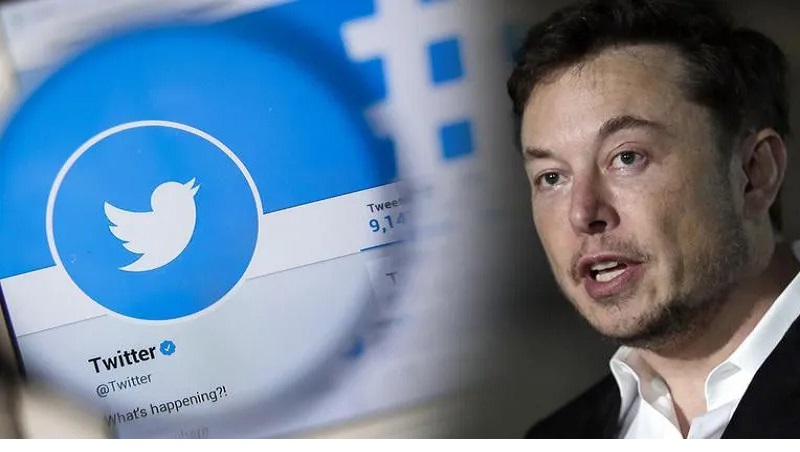
CEO of Twitter Elon Musk has revealed that Twitter’s cash flow remains negative due to a nearly 50% decline in advertising revenue and a heavy debt load, despite his positive expectations.

Responding to a Twitter user who suggested options on whether he should make the microblogging platform more of a public utility or a business meant to generate cash flow, Musk said, “Need to reach positive cash flow before we have the luxury of anything else”.

Twitter’s recent decline in cash flow is however not meeting Musk’s expectations who in March this year, said that the company had a shot at being cash flow-positive next quarter, as the social media platform has been aggressively cutting costs.

Following Musk’s takeover from Twitter last year October, about 50% of the platform’s top 1000 advertisers have paused advertisements on the app. The resounding sentiment was that brands were wary of content on Twitter, and therefore brand safety and suitability under the leadership of Musk, a self-proclaimed “free speech absolutist” was necessary.

In a bid to improve its cash flow, Twitter reduced its non-debt expenditures to $1.5 billion from a projected $4.5 billion in 2023, helped by cutting its cloud services bill by 40% and closing one data center. It has also laid off thousands of employees.

Musk also revealed that Twitter faces annual interest payments of about $1.5 billion as a result of the debt it took on in the take-private deal.

Making ads more relevant on the platform is one of Twitter’s main focus. While speaking at an investor’s conference in March this year, Musk made the disclosure that Twitter earns 5 to 6 cents per hour with users spending a combined “130 million hours of their time per day” on the platform. He further noted that the company could increase it to 15 to 20 cents.

Luring advertisers on Twitter is critical for Musk, after many fled in the early months after his takeover of the social media platform. In a bid to improve Twitter ads revenue, Musk appointed Linda Yaccarino, an NBC Universal executive with deep ties to the advertising industry to succeed him as Twitter’s CEO.

Following Yaccarino’s appointment, industry insiders applauded the move made by Musk to hire an extremely savvy and skilled leader which they revealed signals a positive change for Twitter.

They stated that the former NBC Universal executive completely understands how important it is to put valuable products on the market so that advertisers have an active and engaged audience to reach.

On resuming her duty as Twitter’s CEO, Yaccarino in June, told investors that Twitter plans to focus on video, creator, and commerce partnerships, and is in early talks with political and entertainment figures, payments services, and news and media publishers.

Just recently, Twitter began sharing advertising revenue with select verified users with large followings, with some of the initial $5 million in payouts going to far-right influencers.

This act has attracted tech giants who have embraced Twitter’s creator economy, especially with considerable headwinds gathering in the traditional advertising marketplace. Twitter is now trying to draw more content creators to the platform.
Seychelles Cites Drug Trafficking, Cyberfraud As Reasons for Banning Nigerian Tourists

0

Seychelles’ decision to close its ports of entry to Nigerian passport holders has stirred criticism, prompting the country’s Vice President Ahmed Afif to offer an explanation on why the tourist island made the decision.

The East African country announced it is tightening immigration policies for Nigerians, citing drug trafficking and cyberfraud as reasons.

Afif told reporters on Thursday that the travel restriction does not include Nigerians with diplomatic passports and active work or residency licenses issued by the island nation, according to NAN.

“For the others, the government will keep its eyes open and SEBS (Seychelles Electronic Border System) will analyze much more to find out what reasons they are coming, for example someone who is coming for a holiday for only one day. We have to ask questions because it is strange and we have seen that happening,” Afif said.

The matter was brought to light last Saturday, after a Twitter user shared a purported visa rejection by Seychelles, on the ground that the applicant is a Nigerian.

“We regret to inform you that your application has been denied, as per immigration regulation, for now, we are not accepting any Nigerian passport holder for holiday purposes,” a screenshot shared by the Twitter users reads.

In his explanation, Afif said that the decision was taken to stop the influx of Nigerians coming to the Island to commit fraud and carry out drug deals. He said that there were many instances where many Nigerians said they were coming for holidays but only for one or two days.

“When we checked the payments made for them to come to Seychelles, it is from only one source. This is for different people coming on different days which shows an organized syndicate,” he said.

The Vice President added that in recent months, particularly, the administration has seen a tendency that has been deemed as dangerous for border control and the economy, due to criminal activities happening in the country.

“We have seen a clear link between this with certain people from Nigeria. In the past two weeks, for example, 13 people coming from Nigeria have been arrested when entering Seychelles because they were carrying drugs into the country,” he said.

With the rising number of arrests and convictions recorded, Seychelles is trying to figure out how to hand over to the appropriate Nigerian authorities any Nigerians who have been convicted there.

Afif said the situation is putting businesses in the country at risk, and cannot be allowed to continue.

“In one case, 62 Nigerians who said they were on holiday used false credit cards, and the money was never credited to the accounts of these establishments. These establishments have lost money. These people spent free holidays in the country at the expense of the establishment owners and there is nothing that can be done for them.

“There are other online scams originating from Nigeria. We have seen that these people are also coming to Seychelles and doing those scams. We do not have a problem with Nigeria or its people though we do not tolerate such criminal activities in our country,” he said.

Seychelles is an archipelago of 115 islands in the Indian Ocean, off East Africa, with booming tourist centers that have become a go-to place for pleasure-seeking travelers from around the globe. Placing a ban on Nigerian tourists raised dust about the island’s diplomatic relationship with Nigeria, Africa’s largest economy.

Speaking on how the immigration policy targeting Nigerians was revealed, Afif acknowledged that there is a communication gap, but noted: “It should be noted that the information that was circulated was not official, coming from a system, and it was done in a non-coordinated manner.”

He also spoke on the steps Seychelles is taking to address the situation. Afif said Minister of Foreign Affairs and Tourism, Sylvestre Radegonde, will be meeting with the Nigerian ambassador for Seychelles to discuss the matter.

How to handle Nigerians caught in cyberfraud or drug trafficking on the island is understood to be among the issues to be discussed.

Lesson from Threads: Do Not Scale A Product Until You Can Attain Product-Market FIt and Able to Retain Customers

1

This is the rule: do not begin to scale a business until you have attained a product-market fit. A product-market fit is essentially reaching an equilibrium where what you offer as a product or service is what customers want. Simply, after you have launched that product, you have improved on it to the point users love it.

This is important in business since it is not always a given that the first version of a product will meet the core needs of the users. So, you have to modulate, and using the feedback received, improve the product.

Cutting the phases by launching and scaling with massive media blitz, promotions, advertising, etc will only get users to the platform, but once you cannot retain them, the vision begins to struggle. In other words, when the buzz ends, that product must deliver value to users. And where the value does not exist because there is no product-market fit, wahala dey.

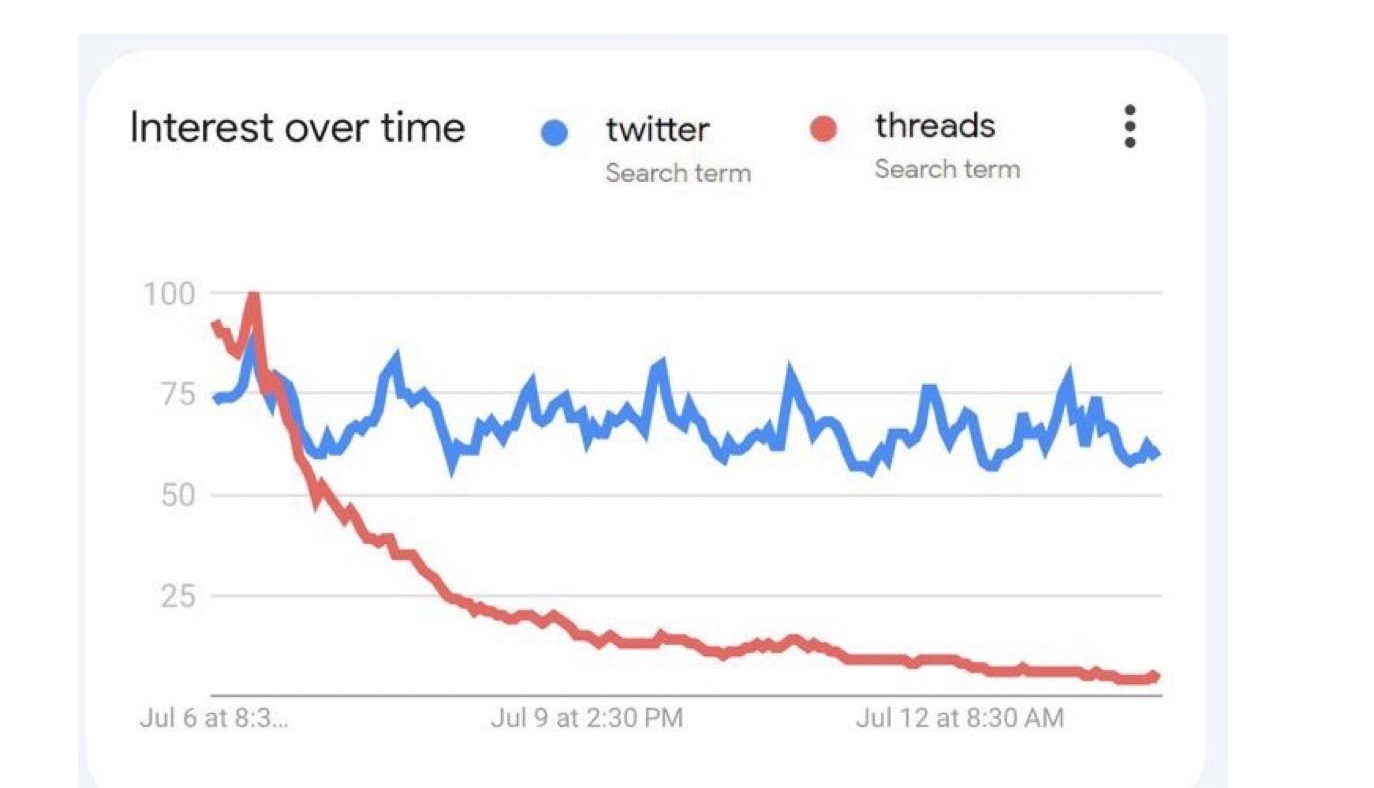
Can you think of a case study? Meta’s Threads. The microblogging platform was launched, but before it could attain a product-market fit, to deliver differentiated value to users (uniquely from Twitter), it was scaled.  Today, that buzz has faded and most users have gone. Imagine, if they have restricted access to the first 10,000 people as bigtech does, bake the products better with feedback, and then launch it. Of course, unlike a startup, they do not have to worry about wasting money on adverts since Meta’s bank account is huge and the blitz was largely free.

Meta failed Launch 101!

Money does not solve most fundamental growth problems; product improvements do! Work hard to understand your customers and do all to retain them before you begin to spend on massive scaling.

Never try to scale a business until you can retain customers. That customer retention is a validation of your business hypothesis via product-market fit.

A growth playbook which begins when a company cannot retain customers wastes resources. You are likely going to onboard customers, but the day that marketing or promotion blitz stops, the customers will move.

Build. Pursue product-market fit. Then Scale.

Yet, Twitter’s challenges remain: “Twitter owner Elon Musk revealed on Saturday that the platform still has a negative cash flow after a 50% decline in advertising revenue and a “heavy debt load.” Advertisers left the platform when Musk took over last year, but he said in April that “almost all of them” had returned or were planning to come back. Although Musk previously predicted that Twitter would be cash flow positive by June, he tweeted that “July is a bit more promising”for increased ad revenue. Twitter rolled out a new policy allowing creators on the site to pocket a portion of ad revenue they make from ads posted in replies to their tweets.”

Life and Value in a Moneyless Society

1

People have always placed value on what they exchange and receive because exchange, as a social contract, improves the lives of the giver and receiver in many ways. Prior to the use of bank notes and credit as forms of money, most transactions were carried out through the exchange of owned goods or services for lacking ones. This tradition endured until the world entered the modern industrial era, which prioritised the use of advanced technologies. 

However, this advancement, which does not abandon the use of water, energy, and fuel in the production of paper bank notes and coins, has resulted in mixed benefits for humanity. The world is paying the price for minting notes and mining coins. Several studies have found that the production and use of bank notes and coins emit a significant amount of CO2. This is the environmental cost of having money instead of barter and resources sharing. And, if we are truly serious about resolving the effects of overusing natural resources, we need to reconsider how we prioritised money as the only means of obtaining the necessary value in life. 

We need to think about a society where everyone’s needs are met without the need for money. We need to see it as a matter of urgency to embrace sustained communal resource sharing to reduce efforts expended on depleting natural resources towards satisfying interest in holding bank notes and coins. By embracing the benefits of shared resources while also managing their challenges, everyone can reap the rewards of a more collaborative and efficient world. In other words, efforts towards going cashless across ages, races, and continents should be vigorously pursued while we cheaply produce what we want without deploying sophisticated technologies to diminish natural resources to the extent of causing greater environmental damages.

We work for money because we want to achieve certain social and economic interests. We want our family members, colleagues at work, and friends to see that we are better off when we are at social gatherings with the materials, we have acquired from working tirelessly. Sometimes, situations like this push people with low incomes to feel unwelcome in society and think that life is meaningless. In a moneyless society, there are many ways to achieve sustained success and fulfilment. We do not really need money to make a positive impact on others or find fulfilment in our careers or personal lives.

To reduce the chase for money towards psychological and emotional fulfilment, we need to embrace universal basic income, which provides “a periodic cash payment unconditionally delivered to all on an individual basis, without means-test or work requirement,” that helps families stay afloat and also reduces inequality in our society. The cash payment should be done electronically. When this happens, we will not only save the planet, but we will also protect ourselves from the effects of carrying bank notes and coins around.

Naira’s Battle Ahead Looks Challenging And What Nigeria MUST Do

1

At 4pm WAT, I will deliver a two-hour presentation during the Tekedia investment course today. Among others, I will discuss positioning due to exchange rate volatility in Nigeria. My postulation (read here), despite what most investment banking institutions wrote, claiming shortly after the float, that the Naira would stabilize at N680 per USD, remains that the Naira will continue to struggle until we can attain parity with demand and supply of US dollars. 

And that means, we need to float companies (digital, physical, services, etc) with capacities to “create” US dollars in Nigeria, before we can attain any optimal equilibrium to stabilize the exchange rate. If we fail to do that, no financial engineering by the Central Bank of Nigeria (CBN) can help because the strength of Naira does not come from bank branches or CBN headquarters, but from warehouses and factories (the modern and the old).

We recorded  N829 per USD this week, according to the News Agency of Nigeria: “A spot exchange rate of N829 to the dollar was the highest rate recorded within the day’s trading before it settled at N803.90.”

Good People, in Lagos, the bank I worked for paid for a correspondence doctoral program on international currency.  Simply, there is no market where demand and supply work more than in currency business. If 20 people want each $100 and only 2 people have each $100, there is a big problem. Unless you can improve that supply, those two people will move the pricing equilibrium point. That is the issue in Nigeria even at the investors and exporters window.

From all indications, I expect the government to put a pedal, with a little “lever” on this unbounded float. In other words, a quasi official rate will be reborn within 3-6 months, otherwise, balance sheets in Nigeria will deteriorate and many will lose their jobs. 

(Expect bank shares to drop if there is no FX stabilization since modeling assets risks will become harder. The original exuberance will fade as yield optimism freezes for capital inadequacy and illiquidity concern)

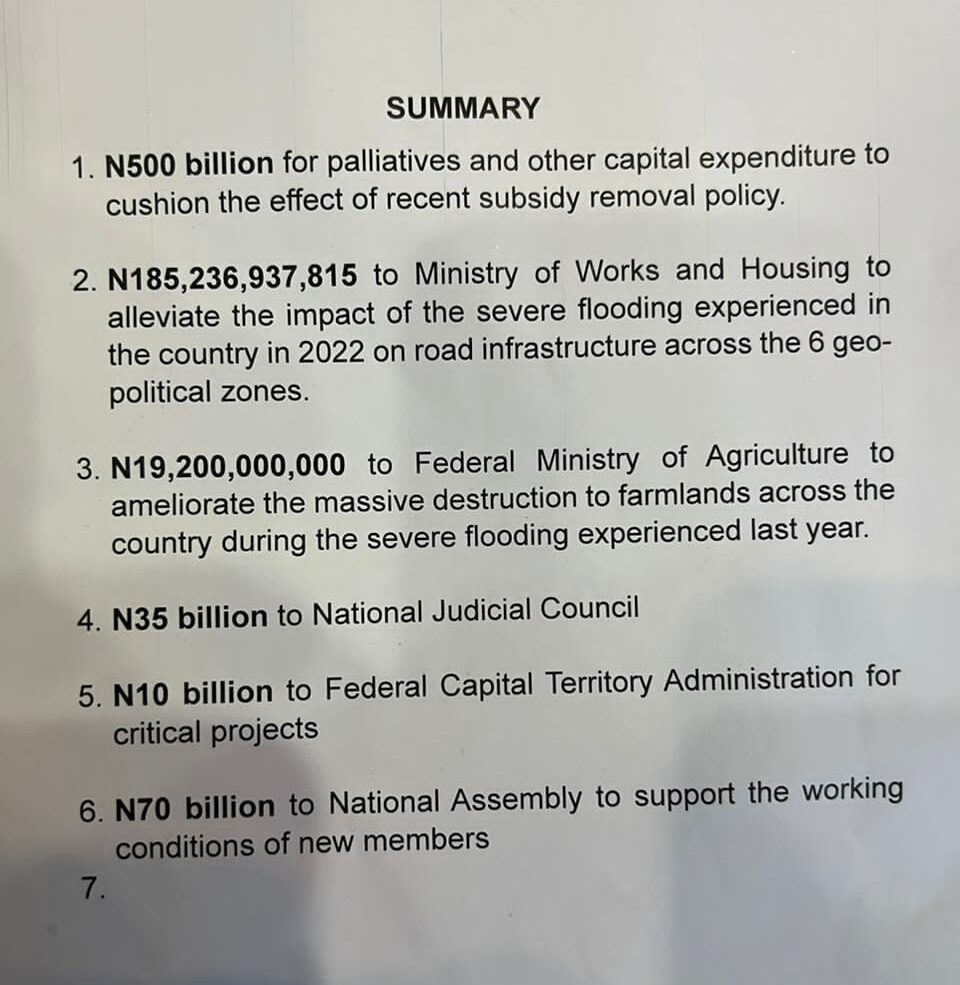
Nigeria needs to help the Naira and the immediate business in the National Assembly (the N70b for working conditions of senators and reps, bulletproof cars, N500b palliatives, etc)  will do nothing to help those factories and warehouses. If they fail therein, we could be in a big mess. Yes, I have expected a clear industrialization policy passage with fierce urgency and catalytic production-induced stimulus for things to be made in Nigeria.

—From NAN

The Naira on Friday depreciated against the United States dollar, exchanging at N803.90 at the investors and exporters window.

The Naira slipped by 7.72 per cent when compared with N746.28 which it exchanged for the dollar on Thursday.

The open indicative rate closed at N763.36 to one dollar on Friday.

A spot exchange rate of N829 to the dollar was the highest rate recorded within the day’s trading before it settled at N803.90.

Data gathered from the official window shows that the Naira sold for as low as N689.34 to the dollar within the day’s trading.