DD
MM
YYYY

PAGES

DD
MM
YYYY

spot_img

PAGES

Home Blog Page 4038

IRS orders Bitcoin Exchange Kraken to Turn Over its Users’ Information

0

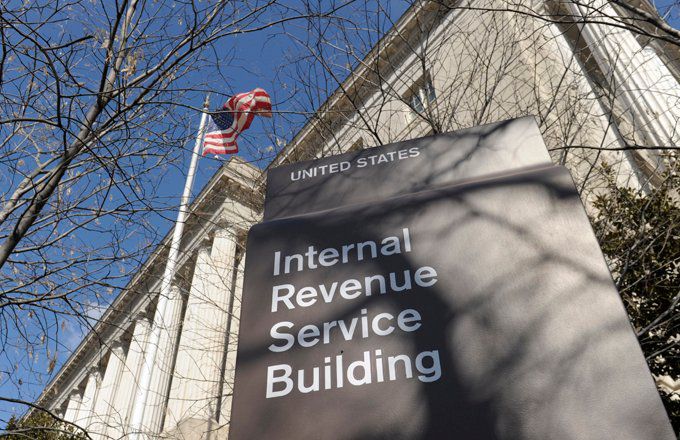
In a major blow to the privacy and anonymity of cryptocurrency users, the Internal Revenue Service (IRS) has obtained a court order to force Kraken, one of the largest and oldest Bitcoin exchanges in the world, to hand over the personal data of its customers.

Kraken is one of the largest and most popular crypto exchanges in the US. It allows users to trade over 50 different cryptocurrencies and offers advanced features such as margin trading, futures, and staking. To report your crypto transactions on Kraken, you need to download your transaction history from the platform and calculate your gains and losses for each trade.

You can use a third-party software or service to help you with this process, or do it manually using a spreadsheet. Once you have your gains and losses calculated, you need to report them on Form 8949 and Schedule D of your tax return. You also need to check if you have any foreign account reporting obligations, such as FinCEN Form 114 or Form 8938, depending on the value of your crypto holdings on Kraken.

The Internal Revenue Service (IRS) has issued a summons to Kraken, to provide information on its users who engaged in transactions worth $20,000 or more from 2016 to 2020. The IRS is seeking to identify and tax individuals who have not reported their income from crypto trading. Kraken has not yet responded to the summons, but it is expected to comply with the law and protect its customers’ privacy as much as possible.

The IRS treats cryptocurrencies as property, not as currency. This means that every time you buy, sell, or exchange crypto, you trigger a taxable event and have to report the capital gain or loss on your tax return. The amount of tax you owe depends on your income bracket and the holding period of the crypto. If you held the crypto for more than a year, it is considered a long-term capital gain and taxed at a lower rate than short-term capital gains, which apply to crypto held for less than a year.

Crypto taxation can be complex and confusing, especially if you have a lot of transactions or trade on multiple platforms. Here are some tips to help you stay compliant and avoid penalties from the IRS:

Keep track of your transactions and records throughout the year. Don’t wait until the last minute to gather your data and calculate your taxes.

Use a reliable and secure software or service to help you with your crypto tax reporting. Make sure it supports Kraken and other platforms you use, and that it can handle different types of transactions, such as margin trading, staking, or airdrops.

Review your transactions and reports carefully before filing. Make sure they are accurate and complete, and that they match the information on your Kraken account.

File your tax return on time and pay any taxes due. The deadline for filing your 2023 tax return is April 15, 2024, unless you request an extension. If you owe taxes, you can pay online or by mail using various payment options offered by the IRS.

The summons requires Kraken to provide the IRS with the name, address, phone number, email address, taxpayer identification number, account statements, and transaction histories of its users who meet the criteria. The IRS claims that this information is necessary to identify and correct the underreporting of income and payment of taxes from cryptocurrency transactions, which it estimates to be in the billions of dollars.

However, many cryptocurrency advocates and experts have criticized the IRS’s move as an invasion of privacy and a violation of the Fourth Amendment, which protects against unreasonable searches and seizures.

They argue that the IRS is casting too wide a net and requesting more information than it needs to enforce tax compliance. They also point out that cryptocurrency users have legitimate reasons to value their privacy and anonymity, such as avoiding censorship, discrimination, or persecution.

Kraken has not yet commented on the court order or indicated whether it will comply or challenge it. However, in the past, Kraken has been vocal about its commitment to protecting its users’ rights and interests.

In 2016, Kraken refused to comply with a similar request from the New York Attorney General’s office, which sought information on its operations and customers as part of an investigation into cryptocurrency exchanges. Kraken’s CEO Jesse Powell said at the time that the request was “insulting” and “unconstitutional”.

It remains to be seen how this legal battle will unfold and what implications it will have for the future of cryptocurrency and its users. For now, many Kraken customers are likely feeling anxious and betrayed by the IRS’s attempt to access their personal information.


Zuvy Raises $4.5 Million to Expand Invoice Financing in Nigeria and Beyond

0

Nigerian fintech startup Zuvy has raised $4.5 million seed to expand its reach and meet the growing demand from Nigerian vendors.

The funding round included investments from TLG Capital, Dunbar Capital, David Mussafer, chairman of Advert International, Next Chymia Consulting HK, Khalil Osman from Vicus Ventures, and several others.

Zuvy, which provides loans to customers, is changing the vendor-buyer relationship by offering cash upfront to vendors to meet their business needs and invoice management software for buyers to eliminate inefficiencies tied to traditional and pen and paper.

Speaking on the funds raised CEO OF Zuvy Angel Onuoha said, “Millions of small businesses on the African continent are hindered by their capital being tied up in receivables. Despite their economic significance, these enterprises remain strikingly underserved financially. Our primary goal is to empower businesses with the liquidity that they need when they need it. This flexibility ensures that these SMEs can better manage cash flow, expand their customer base and take on new contracts. We firmly believe that credit availability is the most potent growth catalyst for early-stage businesses, and as such, we strive to be the pre-eminent provider of accessible, tailored credit solutions for Africa’s SME factor”.

Also commenting on its investment in Zuvy, TLG Capital CEO Isaac Marshall said, “Factoring invoices represents a massive opportunity to bring capital to these small businesses, but only if you can build the tech stack to make it scalable. This problem is exactly what Zuvy is solving, building the capital capillaries to fund small businesses”.

Founded in 2021, by Angel Onuoha and Ahmad Shehu, Zuvy began as an invoice factoring company for small, and medium-sized enterprises, providing upfront cash for unpaid invoices.

The startup offers free invoice and purchase order management software that enables large businesses to streamline their procurement processes.

For small businesses in Nigeria, getting a loan from the bank is very difficult, as there are millions of these SMEs in the country that do not have access to formal financing. While these challenges prevent these businesses from obtaining loans from banks to cover their business needs, Zuvy offers more convenient access to funds by giving advance payments to vendors.

The startup aims to bridge this gap by offering a user-centric platform that connects buyers with their vendors, streamlining the invoice reconciliation process and coordinating payment schedules.

Zuvy’s platform enables vendors to liquidate outstanding invoices and access immediate capital when needed. This innovative solution provides SMEs with the liquidity necessary for growth expansion. The startup believes that credit availability is the most potent growth catalyst for businesses, and as such, strives to provide accessible and affordable credit solutions.

In addition to invoice financing, Zuvy offers free invoice management software that empowers businesses to create, manage, and send invoices to customers instantly. This software streamlines the invoicing process, enhancing efficiency and accuracy for SMEs.

With its user-centric platform, innovative solutions, and significant funding, Zuvy is poised to amplify invoice financing across Nigeria and provide SMEs with the necessary capital to thrive and contribute to Africa’s economic growth.

Notably, Zuvy operates within the fast-moving consumer goods (FMCG), health care, and supply chain sectors. The startup endeavors to provide essential invoicing software and working capital to enable its vendors to secure new contracts, digitize their operations and regulate their cash flow.

As its business continues to expand, Zuvy has since built a full suite of invoice creation, management, and payment tools that aid the process of procurement for small and large organizations.

Tesla Records Impressive Second Quarter of 2023, Surpassed Analysts’ Expectations With A Delivery of 466,140 Vehicles Globally

0

Giant Electric Vehicle automaker Tesla has recorded an impressive second quarter (Q2) of 2023, surpassing analysts’ expectations, after it delivered 466,140 vehicles globally from a production of 479,000 units.

Tesla’s Second quarter report, saw it up by 10% from the first quarter (Q1) report of 2023, where it delivered a total of 422,875 and up 83% year-over-year. Wall Street was expecting Tesla to report deliveries of 445,924 for the period ending June 30, 2023, while several other analysts expected deliveries of 448,000.

Analysts at Wedbush Securities said the delivery figure was a massive step in the right direction for Tesla, noting that the company maintained a $300 price target on the stock and said the numbers would put the bears back into hibernation mode.

Wedbush analysts Dan Ives wrote,

“We believe the sum-of-the-parts story for Tesla is another step towards coming into play with its newly released supercharger network OEM deals, energy business, Al- driven autonomous path, unmatched battery ecosystem, and increased próduction scale/scope globally adding to the Tesla golden EV success story”.

The second quarter of 2023, marked the fifth period in a row when Tesla reported a higher level of vehicles produced compared to deliveries. This saw the EV maker top Wall Street delivery estimates in Q2 of 2023.

Notably, Tesla delivered more of its Model 3 and Y vehicles. As disclosed in the company’s report, about 96% of the deliveries were more of its Model Y crossover and Model 3 entry-level sedan.

The EV maker produced a total of 460,211 Model 3 and Y Vehicles and delivered a total of 446,915 vehicles. Also, on its Model S and X vehicle models, it produced a total of 19,489 vehicles and delivered a total of 19,225 vehicles.

Data from the China Passenger Car Association (CPCA), revealed that half of Tesla’s deliveries came from its Shanghai gigafactory, which has for a long time played a significant role in the company’s production and sales, accounting for 50% of its output.

Tesla’s remarkable increase in vehicle delivery is attributed to the discounts and other incentives it implemented to boost sales of its cars. Recall that the EV maker repeatedly changed the prices of its vehicles this year, starting 2023 off by cutting prices, which some analysts said appeared to be the start of an EV price war, between Tesla and other automakers that have jumped on the EV bandwagon.

Some experts disclosed that Tesla’s price cuts appeared to be working, as demand was increasing for its cheaper vehicle models. The company’s sales rose 5 percent in the first three months of the year after it cut prices on its electric cars, helping to compensate for slowing economic growth and rising interest rates.

Tesla’s first-quarter vehicle sales rose 36 percent after the company cut prices twice in a bid to stimulate demand. The company is set to deliver more vehicles in the next quarter after its CEO Elon Musk said it will deliver its first cyber truck pickups this year.

He also revealed that Tesla is developing a new kind of drive unit and other technology that should allow it to deliver a more affordable electric vehicle in the future.

Tesla closed at $261.77 on Friday ahead of the second quarter deliveries report. The company said in a statement that it will post its financial results for the second quarter of 2023 after market close on Wednesday, July 19, 2023.

Also, it noted that it will issue a brief advisory containing a link to the Q2 2023 update, which will be available on Tesla’s investor relations website.

Tekedia Unveils Affiliate Program [JOIN]; Opens Registrations for Next Tekedia Mini-MBA (Sep 11 – Dec 2, 2023)

0

Tekedia Mini-MBA Opens Registrations for the next edition (Sep 11 –  Dec 2, 2023). Please go and register, beat the early bird deadline and save with awesome benefits.

Tekedia Institute offers Tekedia Mini-MBA, an innovation management 12-week program, optimized for business execution and growth, with digital operational overlay. It runs 100% online. The theme is Innovation, Growth & Digital Execution – Techniques for Building Category-King Companies . All contents are self-paced, recorded and archived which means participants do not have to be at any scheduled time to consume contents. Besides, programs are designed for ALL sectors, from fintech to construction, healthcare to manufacturing, agriculture to real estate, etc.

Similarly, Tekedia brands have launched an affiliate program for all our products and services. Yes,  Tekedia Hub for Affiliates and Resellers is an ecosystem where people and organizations work and earn, for promoting and closing sales on Tekedia products and services. Simply, your social media accounts, email contacts, etc can bring needed incomes and revenues via commissions.

I invite people and organizations interested to apply. If we approve you, you can earn up to 25% commission for digitally promoting and closing sales on Tekedia Mini-MBA, Tekedia Startup Masterclass, etc via your social media handles, emails, etc. Our technology tracks everything to give you credit as all sales therein are electronically executed. Begin here .

We will also give an additional N100,000 to the highest July affiliate/reseller by earnings. If you have questions, contact our team. Win with Tekedia.

Politics and Ethics of Manipulating JAMB’S Results

0

The Joint Admissions and Matriculation Board (JAMB) conducts entrance examinations for students seeking admission into tertiary institutions in Nigeria. Recently, an incident involving the manipulation of JAMB results for personal gain has sparked conversations about the intersection of politics and ethics in the education system.

A certain Ejikeme Mmesoma from Anambra state was awarded a prestigious scholarship after allegedly achieving the highest score in the JAMB examination. However, it was later revealed that Mmesoma had manually inflated her results, suggesting possible withdrawal of the scholarship offer by Innoson Vehicle Manufacturing Company. This incident has raised concerns about the integrity of the education system and the moral character of individuals involved in such manipulations.

The manipulation of JAMB results undermines the education system’s credibility and raises ethical concerns. Many tweets express disappointment in the individual’s actions, emphasizing the importance of honesty and integrity in academic pursuits. The incident highlights the negative consequences of unethical behaviour, including the loss of trust, reputation damage, and the denial of opportunities for deserving candidates.

One significant consequence of this manipulation is the potential harm caused to other students who worked hard and achieved genuine results. By falsely claiming the top score, Mmesoma not only deprived a more deserving candidate of the scholarship but also discredited the efforts of other students. This incident underscores the need for fair assessment and the importance of upholding ethical standards to ensure that deserving candidates are rewarded.

The JAMB withdrawal of Mmesoma’s scholarship sends a strong message about the consequences of unethical behaviour. However, it also raises questions about the effectiveness of the system in detecting and preventing such manipulations in the first place. The incident calls for stricter measures to safeguard the integrity of examination processes and ensure that scholarships are awarded based on merit and not through fraudulent means.

The manipulation of JAMB results for personal gain exposes the complex interplay between politics and ethics in the education system. This incident serves as a reminder of the importance of maintaining ethical standards in academia and upholding the integrity of examinations and scholarship programs. It is essential for educational institutions, policymakers, and society as a whole to work together to create a transparent and fair system that rewards genuine achievements and discourages unethical practices.