DD
MM
YYYY

PAGES

DD
MM
YYYY

spot_img

PAGES

Home Blog Page 4039

The #StopHateForProfit’’s Campaign on X Spreads

0

Walmart, the largest retailer in the United States, announced that it has suspended all advertising on X, a social media platform that has been accused of spreading misinformation and hate speech. The decision came after a coalition of civil rights groups launched a campaign called #StopHateForProfit, urging advertisers to boycott X until it takes more action to prevent harmful content on its site.

Walmart said in a statement that it values diversity and inclusion, and that it does not want its ads to appear next to content that does not align with its corporate values. “We have been concerned about the proliferation of extremist views and hateful rhetoric on X for some time, and we have repeatedly expressed our dissatisfaction to X’s leadership,” the statement read. “We have decided to pause our advertising on X until we see more meaningful changes that address the issues we have raised.”

Walmart joins other major companies such as Coca-Cola, Unilever, Starbucks, and Verizon, who have also pulled their ads from X in recent weeks. According to estimates by the research firm Pathmatics, X lost about $7.5 billion in ad revenue in July due to the boycott. X’s CEO, has defended his company’s policies, saying that X stands for free expression and that it does not benefit from hate speech. However, he also acknowledged that X has more work to do to combat misinformation and hate speech, and that he is committed to working with advertisers and civil rights groups to find solutions.

Twitter, the popular social media platform, has been facing a backlash from some of its advertisers after the news of Elon Musk’s acquisitions broke out. The billionaire entrepreneur, who is known for his ventures in space exploration, electric vehicles, and neural implants, has recently acquired several companies that are related to artificial intelligence, biotechnology, and blockchain. Some of these companies include OpenAI, Neuralink, and Starlink.

According to some reports, Musk plans to integrate these technologies into Twitter, creating a new platform that would allow users to communicate with each other using brain-computer interfaces, access satellite internet services, and participate in decentralized applications. Musk claims that this would enhance the user experience and create a more innovative and inclusive online community.

However, not everyone is happy with this vision. Some of the advertisers who rely on Twitter for reaching their target audiences have expressed their concerns and dissatisfaction with the potential changes. They argue that Musk’s acquisitions would disrupt the existing business model of Twitter, which is based on selling ads and data to third-party companies. They fear that they would lose their access to valuable user information and analytics, as well as their ability to customize and optimize their ads according to user preferences and behaviors.

Additionally, some advertisers worry that Musk’s acquisitions would alienate some of the existing users of Twitter, who may not be comfortable or interested in using the new technologies that Musk intends to introduce. They claim that this would reduce the size and diversity of the user base, which is one of the main attractions of Twitter for advertisers. They also question the ethical and social implications of Musk’s acquisitions, such as the potential risks of privacy violations, cyberattacks, and social polarization.

As a result of these concerns, some advertisers have decided to boycott Twitter or reduce their spending on the platform until they receive more clarity and assurance from Musk and Twitter’s management. Others have started to look for alternative platforms that can offer them similar or better services and opportunities. This has caused a significant drop in Twitter’s revenue and stock price, as well as a loss of trust and reputation among its stakeholders.

Twitter has not yet responded officially to the advertisers’ complaints or Musk’s acquisitions. However, some sources suggest that Twitter is in talks with Musk and his companies to negotiate the terms and conditions of the integration. They also indicate that Twitter is working on developing new features and policies that would address some of the advertisers’ concerns and retain their loyalty and satisfaction. It remains to be seen how Twitter will balance the interests and expectations of its different stakeholders in the face of this unprecedented challenge.

The #StopHateForProfit campaign has praised Walmart for its decision, calling it a “powerful signal” that X needs to change its ways. “Walmart is sending a clear message that it will not tolerate X’s failure to protect its users from hate, racism, and violence,” the campaign said in a statement. “We hope that more advertisers will follow Walmart’s lead and hold X accountable for its harmful actions.”

Notable Provisions of The Production, Curtailment & Domestic Crude Oil Supply Obligation Regulations

0

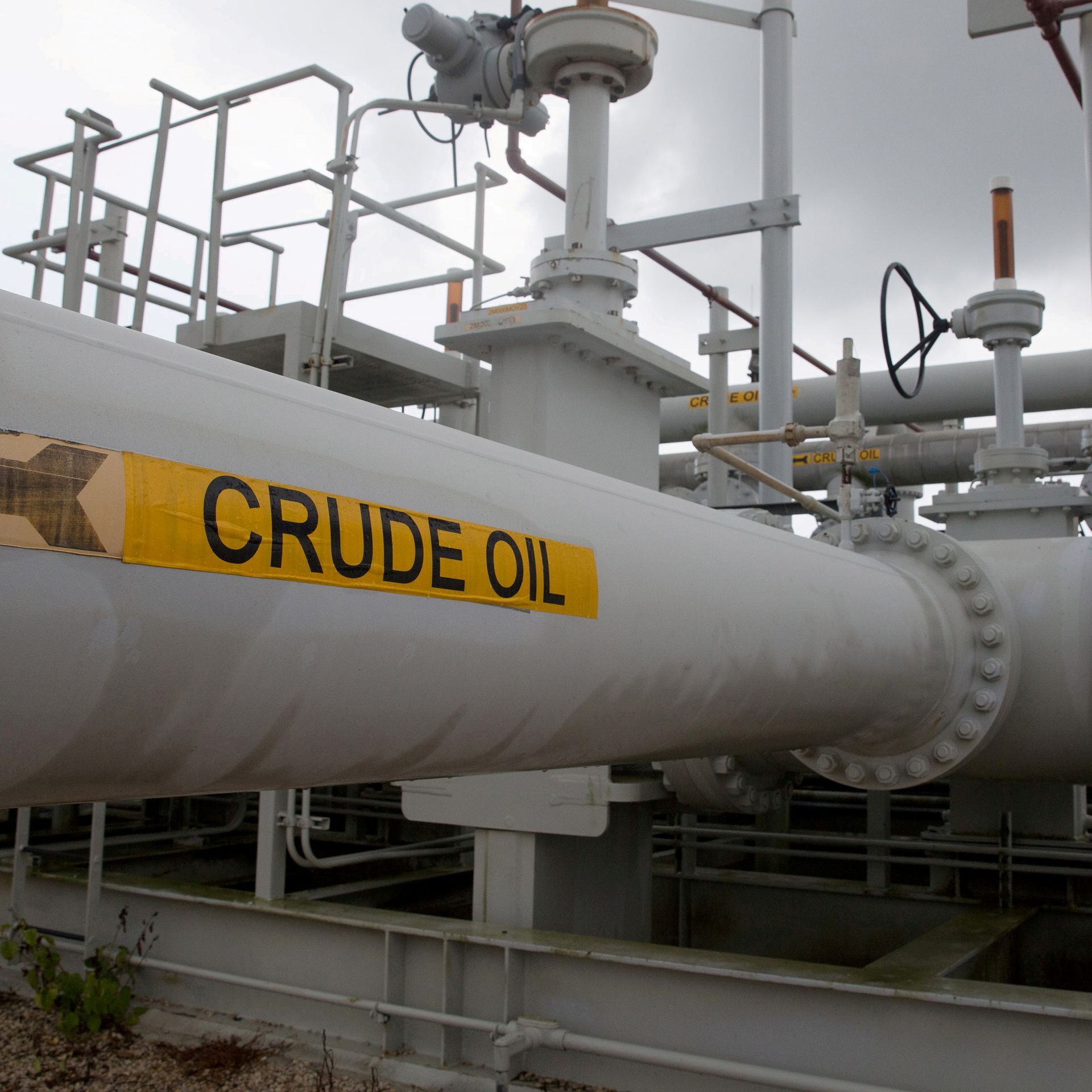
This first part of a 3-article series talks about the new regulations of the Nigerian Upstream Petroleum Regulatory Commission (“The Commission” or “NUPRC”) on Domestic Crude Oil Supply, Production & Curtailment obligations. This article will be focused on the following provisions :

– Objective of the regulations

– Application scope

– Regular production of petroleum from a well

– TAR determination procedures

– NUPRC allocation quotas

– Production quota and curtailment

Objective

– The objective of these regulations is to provide the general rules for production curtailment and utilization of the produced petroleum in relation to export and domestic crude oil supply obligations pursuant to Sections 8 & 109 of the Petroleum Industry Act.

Application Scope

– These regulations apply to production curtailment and utilization of petroleum in relation to export and domestic crude oil supply obligations pursuant to Sections 8 & 109 of the Petroleum Industry Act.

Regular Production of Petroleum From a Well

– Regular production of petroleum from a well shall be based on the Technical Allowable Rate (TAR) and production quota issued by the NUPRC.

– The TAR shall be based on the report of Maximum Efficiency Rate(MER) tests conducted by a lessee and submitted to the commission.

– The MER test shall be witnessed by an officer authorized by the commission.

– A lessee shall not obtain regular production from a well without an approved TAR & production quota from the NUPRC.

Procedure for determination of Technical Allowable Rate (TAR)

– The commission shall allocate TAR for regular production from a well for a duration not exceeding a 6-month cycle as follows –

a). January- June of every year.

b). July- December of every year.

– Notwithstanding the provisions above, every TAR issued less than 6 months to the end of the year by the commission shall terminate by the 31st  of December of the year the TAR was issued.

Allocation of Production Quota by NUPRC

– The commission shall allocate production quota to lessees, from time to time, based on :

a). TAR for each well in a lease

b). Production performance of each well in a lease

c). Any other consideration as the NUPRC may determine

– Production quotas shall be issued for a period of not more than 6 months.

Production Quota & Production Curtailment

– A lessee shall not produce petroleum from a well in a lease area above the production quota assigned by the commission.

– The commission shall use TAR and production quota in the assessment of the performance of a well.

– Where the minister gives directives in line with the Petroleum Industry Act to the commission to cut back production, the commission shall revise the allocated production quota to conform with the directive of the minister. 

Section II

This second installment of the NUPRC regulations focuses on their provisions regarding :-

-The failure to utilize allocated production quotas.

–  Periodic reporting requirements.

– The notification of domestic crude refining requirements.

– Notifications of Crude Oil supply shortages/situations of inadequate supply.

– Regulations on the existence of shortages or inadequate supply conditions.

Failure to utilize allocated production quota

– A lessee shall ensure full utilization of allocated production quotas for any given period.

– Where a lessee is unable to utilize or is under-utilizing allocated production quota for 7 consecutive days, the lessee shall within 48 hours notify the commission in writing, stating the reason for such failure.

– A lessee who fails to notify the NUPRC in line with the provision above, contravenes the regulations and is liable to an administrative penalty of $55,000.00 for every day the contravention subsists.

Periodic Reporting 

– A lessee shall, in addition to the requirement to notify the commission as explained above, include in its monthly report to the commission, any failure or underutilization of its production quota within the period covered by the report.

Imposition of domestic crude oil supply obligation and export control

– Crude oil produced by a lessee shall be subject to domestic crude oil supply obligations (DCSO) imposed by the commission, provided that the lessee shall be entitled to export any volume of crude oil more than its domestic crude oil supply obligation.

Notification of domestic crude refining requirements

– The commission shall publish on its official website and in 3 national newspapers the domestic crude refining requirement of operating refineries in Nigeria based on information provided to the commission by the authority on the crude oil requirements of refineries in operation in Nigeria pursuant to the Petroleum Industry Act.

-The information published by the commission pursuant to this regulation shall be to facilitate crude oil sales transactions between producers and operating refineries in Nigeria.

Notification of crude oil supply shortage or inadequate supply conditions

– The commission, upon receipt of a notification from the authority pursuant to the Petroleum Industry Act of shortage in the supply of crude oil to operating refineries in Nigeria or the existence of inadequate crude oil supply conditions to operating refineries in Nigeria, shall require the authority to provide a written confirmation of the supply shortage or inadequate supply conditions to the NUPRC, stating the :- 

a). Volume of the shortage.

b). Refineries affected by the shortage.

c). Specification or grade of crude oil in short supply.

d). Reason, if any, for the shortage.

e). Any other conditions causing the shortage or inadequate supply condition.

Existence of shortage or inadequate supply conditions

– The NUPRC shall, upon receipt of the information pursuant to these regulations, issue a Request For Quotations (RFQ) to all producing licenses and lessees requiring them to submit a quotation for the supply of any required volume to meet the shortage or close the inadequate supply condition.

Section III

This article is the final installment in the Domestic Crude Oil Supply Obligation Regulations series and focuses on its provisions concerning :

– Conditions for the imposition of the obligation to supply.

– Sale of Crude Oil by lessee.

– Export of crude oil by lessee.

– Submission of reports by lessee.

– Penalties for non-compliance.

What are the conditions for the imposition of the obligation to supply?

– The NUPRC shall impose the obligation to supply by identification and selection of producing licensees and lessees based on –

a). The proximity and accessibility of the supply location to the refiner’s location.

b). Matching of the licensee’s or lessee’s crude specification to the grade requirements for domestic supply.

– Where more than 1 licensee or lessee meet the requirement mentioned above, the commission shall impose the obligation to supply by allocating volumes to each producer based on the weighted proportion of its total production and taking into consideration –

a). Any existing refinery supply contracts it may have.

b). Any existing crude export contract it may have.

c). Its TAR & production quota per lessee.

What do the regulations say on the sale of crude oil by a lessee?

– A lessee on whom a DCSO has been allocated shall sell the allocated volumes of crude oil to the specific refinery nominated by the NUPRC under the regulations.

What are the provisions of the regulations on the export of crude oil by lessee?

– Where production for any given quarter falls below the allocated quota for that quarter, a lessee shall first fulfill its obligation to supply to the domestic market before any export may be permitted by the commission, provided that where there is no demand by any refinery license holder in that quarter, the lessee may export all the production for that quarter.

What are the provisions of the regulations on the submission of reports by a lessee?

– A lessee shall submit a monthly report, in the form and manner prescribed by the NUPRC , relating to the following –

a). Production performance based on the allocated quota.

b). Utilization of production in terms of DCSO and export.

What are the penalties for non-compliance with the regulations?

– A licensee or lessee who fails to submit an RFQ or submits an RFQ outside the time specified is liable to pay an administrative fine of $10,000.00.

Requirements & Procedures For Upstream Gas Exploration & Development Permits In Nigeria – Gas Field Development Plans (GFDPs) & Temporary Gas Flaring Permits/Waivers

This article will be looking at the requirements and procedures involved in granting permits for Gas Field Development Plans and Temporary Gas Flaring Permits as prescribed by the NUPRC Gas Exploration and Development Permit (Requirements & Procedures) Regulations.

Gas Field Development Plans – Requirements & Procedures

– The proposed gas field development programme (GFDP) must be submitted at least 30 working days before the commencement of any part of it and shall be in accordance with the Petroleum Drilling and Production Regulations and its amendments.

– The GFDP shall contain but not limited to the following :-

1). A minimum of 3 wells must have been drilled and a field study carried out detailing the static and dynamic reservoir model.

2). Concept study and reasons for choice of proposed development plan.

3). Seismic and Geologic prognosis.

4). Field reserves and ultimate recovery.

5). A structural map of all gas bearing sands on a scale of 1:25,000

6). Reservoir geologic modeling.

7). Reservoir engineering simulation studies.

8). Well location optimisation/depletion plan.

9). Well bore utility.

10). The production profile and the anticipated dive mechanism.

11). Gas utilization plan in line with the Federal Government policy of zero flare.

12). Cost estimates of the development.

13). Surface facilities.

14). HSE strategy/case.

15). Field abandonment plan.

16). Applicable Processing fee payment to the NUPRC.

– Satisfactory development programmes would then be evaluated and approved.

– However where strong objections exist, the company would be informed. Individual well location proposals still require to be approved on their merits. Also , approvals to drill do not necessarily imply that the target completion zones have been approved.

– Completions are separately considered for approval.

Temporary Gas Flaring Permit/Waiver – Requirements

– The permit for gas flaring waiver application should contain the following:

a). Name of field and facility where flaring is expected.

b). The reason and justification for the temporary Gas flaring exercise.

c). Actions/processes already put in place to reduce the flare volumes before seeking the permit/waiver.

d). The duration over which gas will be flared and total volume of gas expected to be flared.

e). Any other information/supporting facts to justify the application for.

COP28: Nigeria Announces Plan to Roll Out 100 Electric Buses

0

In a significant stride towards a sustainable and eco-friendly future, Nigeria’s President Bola Tinubu has announced plans to roll out 100 electric buses during the COP28 climate summit in Dubai.

Described as a “pioneering initiative,” this move aims to substantially reduce Nigeria’s carbon footprint and modernize the nation’s transportation systems.

President Tinubu highlighted the groundbreaking nature of the initiative, emphasizing its role in environmental stewardship and collaboration with the Africa Carbon Market Initiative. The visionary plan is positioned to guide Nigeria towards becoming an investment-friendly destination for carbon market investments.

Acknowledging the imperative of fostering an environment that attracts investments and upholds standardized and sustainable industrial practices, Tinubu expressed the commitment to implementing robust policies and frameworks. These initiatives aim to catalyze the burgeoning growth of the carbon market within Nigeria’s national borders.

”This initiative stands as a testament to our dedication to environmental stewardship as clearly exemplified through our collaboration with the Africa Carbon Market Initiative. Our visionary plan is a strategic guidepost, directing Nigeria towards becoming an investment-friendly destination for carbon market investments,” presidential spokesman Ajuri Ngelale quoted his principal as saying.

”We recognize the imperative of fostering an environment that not only attracts investment but also upholds standardized and sustainable industrial practices. As a manifestation of our forward-thinking approach, we are actively looking to implement robust, enabling policies and frameworks that will serve as the catalyst for the burgeoning growth of the carbon market within our national borders.”

To oversee the Nigeria Carbon Market Activation Plan, President Tinubu appointed Zacch Adedeji, the Executive Chairman of the Federal Inland Revenue Service (FIRS), and Dahiru Salisu, the Director-General of the National Council on Climate Change (NCCC), as co-chairs. This move aligns with broader efforts to position Nigeria and Africa as pioneers in green manufacturing and industrialization.

Tinubu urged other countries on the continent to follow Nigeria’s lead, presenting the nation as a beacon of innovative solutions to climate-related challenges. He challenged nations worldwide to emulate Nigeria’s strides in mapping out sustainable futures, emphasizing the country’s plans for a greener and cleaner economy as an inspirational narrative.

The president emphasized the comprehensive approach rooted in visionary leadership, pragmatic action, and technical partnerships. He positioned Nigeria’s initiatives as poised to become a blueprint for countries aspiring to develop and catalyze their markets for sustainable growth.

“Our comprehensive approach, rooted in visionary leadership and pragmatic action supported by our technical partners, is poised to become a blueprint for countries aspiring to also develop and catalyze their markets for sustainable growth,” the president added.

While Tinubu’s announcement signals a strong commitment to environmental responsibility and positions Nigeria as a leader in embracing innovative solutions for a greener future, concerns remain about the sustainability of the initiative. The concerns emanate from Nigeria’s infrastructural deficiency – particularly in the power sector.

For decades, Nigeria has been grappling with unstable electricity supply – stymieing its economic development. Thus, questions have surrounded the nation’s ability to sustain electric vehicles projects.

Tinubu Presented Box Without Documents for 2024 Appropriation Bill – Nigerian Lawmakers Say

0

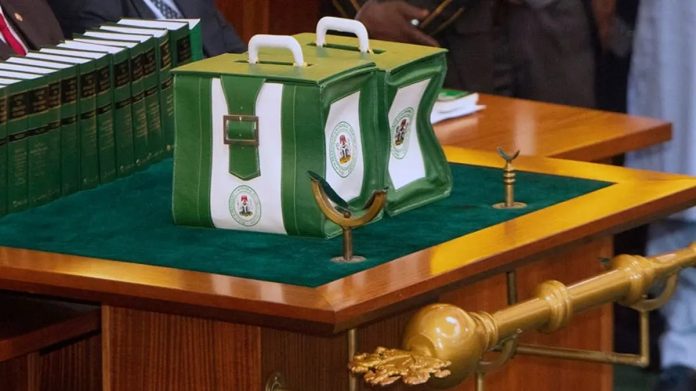
Federal lawmakers in Nigeria have raised concerns over the 2024 appropriation bill presentation by President Bola Tinubu, alleging that he submitted an empty box without backup documents during the joint parliamentary session on Wednesday.

Two lawmakers, speaking anonymously to the Peoples Gazette, expressed frustration over the lack of detailed information on the proposed budget, calling it detrimental to the social contract between the parliament, the presidency, and the people of Nigeria.

According to one lawmaker, “No lawmakers can say they have seen what the president presented to the National Assembly on Wednesday.”

“They made us debate the matter yesterday (Thursday) and today (Friday) without showing us the facts and figures of the president’s proposals. This is unfortunate for the federal republic,” he told Peoples Gazette.

Another legislator said that Nigerians should demand transparency and accountability, urging the president to present all details before the National Assembly, which holds the power of appropriation.

“Nigerians should cry out and ask the president and his people when they would tell us what happened to his 2024 budget.

“He needs to present everything before us because we have the power of appropriation as members of the National Assembly,” the lawmaker said.

Both lawmakers spoke anonymously to avoid potential repercussions from the ethics committee of the assembly. One of them cited ties to the president as a reason for not openly commenting on the matter, fearing it could strain relations with the presidency.

Rumor went out on Friday about the incident after Yusuf Galambi, another federal lawmaker, accused President Tinubu of sending empty boxes without the 2024 budget to the National Assembly. In an interview with BBC Hausa Service, Galambi expressed confusion and labeled the situation as deceitful, questioning why the president presented the budget without providing the accompanying documents.

The legislators criticized Senate President Godswill Akpabio and other principal officers for allegedly allowing the president to present an overhead summary without the detailed breakdown traditionally provided in bulky paperwork.

President Tinubu presented a proposed appropriation of N27.6 trillion on September 29 but omitted the detailed breakdown to avoid scrutiny ahead of crucial votes. Lawmakers engaged in debates on Thursday and Friday without having access to the budget details, further deepening their frustration.

This incident comes amid historical challenges in Nigeria’s annual appropriation season, known for controversies and sharp practices.

President Tinubu’s failure to present a budget document to the parliament days after reading from it on live television has sparked serious concerns, drawing parallels to the public ridicule faced by the country in 2016 when a budget document presented by President Muhammadu Buhari was allegedly stolen, leading to a prolonged conflict between the parliament and the presidency.

The 2024 appropriation bill has passed second reading in the House, raising concerns about the diligence and effectiveness of Nigerian lawmakers in fulfilling their oversight responsibilities.

Congrats Tekedia Mini-MBA Edition 12: You’re #Ready2Lead

0

Amazing People, thank you for co-learning with us, to master the mechanics of the market system. Knowledge brings the liberation of the mind, and I am confident that we delivered as promised, through our world-class program in Tekedia Mini-MBA. #Win the future. You are #ready2lead the world. Congratulations.