
DD
MM
YYYY

PAGES

DD
MM
YYYY

spot_img

PAGES

Home Blog Page 4040

Hong Kong Urged to Issue Stablecoin to Compete with USDT and USDC

0

Stablecoins are digital tokens that are pegged to a fiat currency, such as the US dollar, and aim to provide a stable and reliable medium of exchange in the crypto ecosystem. They are widely used for trading, payments, remittances, and other use cases that require low volatility and fast settlement.

However, not all stablecoins are created equal. Some of them, such as Tether (USDT) and USD Coin (USDC), are backed by centralized entities that claim to hold reserves of fiat currency in bank accounts, but do not provide sufficient transparency or auditability to verify their claims. These stablecoins pose risks to users and regulators, as they may face liquidity issues, legal challenges, or even insolvency in case of a black swan event.

That is why some experts have urged Hong Kong to issue its own stablecoin, based on its local currency, the Hong Kong dollar (HKD). An HKD-pegged stablecoin would offer several benefits for Hong Kong and its crypto community, such as:

Enhancing Hong Kong’s status as a global financial hub and a leader in fintech innovation.

Providing a more trustworthy and compliant alternative to USDT and USDC, which are subject to US jurisdiction and sanctions.

Supporting the development of the Greater Bay Area, a regional economic integration initiative that involves Hong Kong, Macau, and nine cities in mainland China.

Facilitating cross-border trade and investment between Hong Kong and other countries, especially in Asia.

Empowering Hong Kong citizens and businesses to access the global crypto market and benefit from its opportunities.

To issue an HKD-pegged stablecoin, Hong Kong could leverage its existing infrastructure and regulatory framework, such as: The Hong Kong Monetary Authority (HKMA), which is the central bank and currency board of Hong Kong and has the authority and responsibility to issue and maintain the HKD.

The Faster Payment System (FPS), which is a real-time payment platform that connects banks and e-wallets in Hong Kong and supports both HKD and RMB transactions.

The Stored Value Facilities (SVF) license, which is a type of regulatory approval for non-bank entities that provide stored value or e-money services in Hong Kong.

By using these elements, Hong Kong could create a stablecoin that is fully backed by HKD reserves held by the HKMA, and that can be easily exchanged with HKD or RMB through the FPS. The stablecoin could also comply with the SVF license requirements, such as anti-money laundering (AML) and consumer protection rules.

An HKD-pegged stablecoin would not only compete with USDT and USDC, but also complement them, as it would offer more diversity and choice for crypto users. It would also enhance Hong Kong’s role in the global crypto space, and foster innovation and growth in its local crypto industry.

Mark Zuckerberg’s Meta Launches Threads, Twitter’s Rival

0

Mark Zuckerberg’s Meta has on Wednesday, officially launched the much-anticipated Twitter-like app called Threads, setting up a rivalry with Twitter by offering a space for real-time conversations online.

Threads function, which is notably Twitter’s key selling point, now creates an alternative for Twitter users who are disgruntled by the changes brought by Elon Musk.

Zuckerberg who owns a social media conglomerate that includes Facebook and Instagram decided to release the app 15 hours earlier than planned, launching it at 7 pm EDT in the US and midnight in the UK. It is now accessible in 100 countries through the Apple and Google app stores. However, due to regulatory concerns, the app will not be available in the EU.

The app bears numerous similarities to Twitter, including its layout and product description. The listing, initially teased earlier this week, highlights its ability to attract a following and facilitate connections with like-minded individuals.

“The vision for Threads is to create an option and friendly public space for conversation,” Meta CEO Mark Zuckerberg said in a Threads post following the launch. “We hope to take what Instagram does best and create a new experience around text, ideas, and discussing what’s on your mind.”

According to the app’s listing, Threads is a place where communities can come together to discuss everything from the topics they care about today to what’s trending, mirroring Twitter’s core functions.

“Whatever it is you’re interested in, you can follow and connect directly with your favorite creators and others who love the same things — or build a loyal following of your own to share your ideas, opinions and creativity with the world,” it reads.

Meta announced that messages posted on Threads would be limited to 500 characters. The company also stated that the app would be available in 100 countries through Apple’s iOS and Android platforms.

Upon downloading the app, users are prompted to connect their Instagram accounts, personalize their profiles, and follow the same accounts they already follow on Instagram.

The app’s interface resembles Twitter, featuring a familiar layout, a text-based feed, and the ability to repost and quote other Thread posts. Additionally, it incorporates Instagram’s visual style and allows for seamless sharing of Thread posts directly to Instagram Stories. Verified Instagram accounts are automatically verified on Threads, and users can choose to make their Thread accounts public or private.

As Meta, with its extensive resources and massive user base, enters the market, Threads joins a growing list of Twitter competitors, potentially posing a significant threat to Twitter’s dominance.

The anticipated fight between Musk and Zuckerberg was orchestrated by the former’s move to create a similar app to Twitter.

Last month, Musk responded to a tweet about Threads saying: “I’m sure Earth can’t wait to be exclusively under Zuck’s thumb with no other options,” and followed up with a tweet teasing a cage fight Zuckerberg.

Zuckerberg, posting a screenshot of Musk’s tweet overlaid in an Instagram story, fired back with the caption: “Send Me Location.”

But before the cage fight, Zuckerberg has thrown the first punch with the launch of Threads. The launch of Threads coincides with Twitter’s period of chaos that was amplified during the weekend by Musk’s decision to put temporary limits on the number of tweets users can view within the app.

Though Musk said the restrictions had been applied “to address extreme levels of data scraping and system manipulation,” it stirred resentment from Twitter users.

The development added to the many grudges several Twitter users hold against Musk for introducing unpopular changes since he took over late last year.

Musk has also had a fallout with advertisers who have left Twitter in droves because of his style of running the platform. With a growing number of Twitter users who are dissatisfied with the way Musk is running the platform, Threads may become the sane alternative.

“It will take some time, but I think there should be a public conversation app with 1 billion+ on it. Twitter has had the opportunity to do this but hasn’t nailed it. Hopefully, we will,” Zuckerberg said on Threads.

Twitter-like Platform Bluesky Raises $8.8 Million in Seed Funding Round, Launches Custom Domains

0
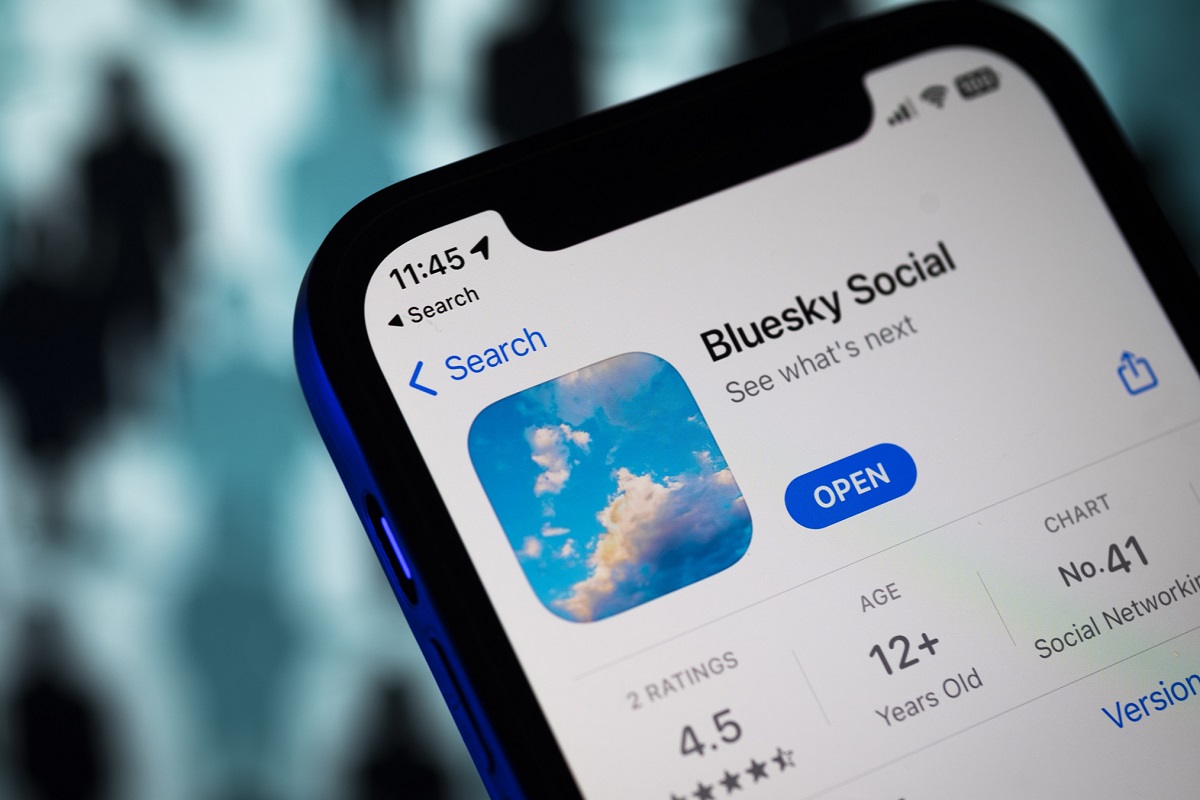
The Bluesky social media app logo is seen on a mobile device in this photo illustration in Warsaw, Poland on 21 April, 2023. Founder Jack Dorsey of twitter has released the Bluesky application on Android. (Photo by Jaap Arriens / Sipa USA)(Sipa via AP Images)

Decentralized social media Twitter-like Platform, Bluesky, which was conceptualized by former Twitter CEO Jack Dorsey, has announced that it has raised $8.8 million in a seed round.

This is followed by a launch of its paid service that will provide custom domains for end users who want to have a unique domain as their handle on the platform.

The seed round was led by Neo, a community-led firm with notable partners such as Ali Partovi, co-founder of Code.org, and former Twitter PM Suzanne Xie.

The round also included investments from various angel investors, which include Amjad Masad of Replit, Joe Beda (co-creator of Kubernetes), Bob Young of Red Hat, Brad Fitzpatrick, Katelyn Donnelly, Ali Evans, Stav, Erez, and several others.

With the funds raised, Bluesky plans to expand its team, handle operational and infrastructure expenses, as well as develop the AT Protocol used by the app.

The company wrote via a blog post,

“Last fall, we started building our client app to drive the adoption and development of the AT Protocol. This summer, we converted from a public benefit LLC to a public benefit C Corp to gain more independence from the legacy of the past. Our mission and board have stayed the same, but along with this conversion, we’ve raised funding from an array of values-aligned investors who share our vision for an open and decentralized commons for public conversation.

“Our goal for this raise was to find new partners and to give ourselves room to grow the network and experiment with new business models. With this funding, we can expand our team, manage increasing operation and infrastructure costs, and grow the AT Protocol ecosystem as well as the Bluesky app.

“It’s a lot to tackle at once, but we’re excited to have seasoned allies who want to help us realize our vision of an open commons for public conversation. Just as we’ve made the source code for the protocol and the client public, we also want to be transparent about our business plans. We’ll be experimenting with different strategies and services to see what provides real value to our users, and will continue to share what we learn as we build a sustainable social network”.

Bluesky has disclosed that its business model will not be like the regular social media apps, rather, it will be fundamentally different in the sense that it will run a public social network and all its code will be open source.

The platform has set out to build a protocol where users can own their data and always have the freedom to leave, and this approach means that advertising won’t be its dominant business model. Therefore, the app has been exploring other avenues of monetization.

Bluesky believes that there must be better strategies to sustain social networks that don’t require selling user data for ads. Its first step in another direction is paid services, and it is starting with custom domains. While setting up a custom domain to use with Bluesky and the AT Protocol is fairly straightforward, it does require some familiarity with domain registrars and DNS settings.

The company has therefore partnered with Namecheap, a popular domain registrar, to offer a service for easy domain purchasing and management. With this, people can set a custom domain as their handle on Bluesky and the AT Protocol in under a few minutes.

Of the domain registrars, Namecheap has one of the best reputations for defending their users against unauthorized domain transfers and protecting their domain names.

Notably, Bluesky has been dubbed as a viable Twitter rival. The app which is still in the Beta phase has continued to amass thousands of users on its waitlist. In April 2023, it was reported that it had 35,000 users and 1.2 million people on the waiting list.

Just recently, the app disclosed it experienced a high rate of sign-ups following Twitter CEO Elon Musk’s introduction of limits to users’ tweet engagements.

This saw the Twitter-like app witnessa high influx of users on its platform on Saturday after Musk wrote via a tweet that “due to extreme levels of data scraping and system manipulation, verified accounts, unverified accounts, and the new unverified accounts will be subject to different limits on the social media site”.

Several experts have described Bluesky as a potential Twitter replacement, since Elon Musk’s takeover of the social media app, with his incessant revamps on Twitter that have seen several users search for alternative platforms.

Threads App vs. Twitter: Is the World Experiencing Fragmented Social Network Space?

0
Social media

In the fast-paced world of social media, staying ahead of the curve is crucial for platforms to remain relevant. The recent launch of the Threads App by Meta, the parent company of Instagram, has sparked both excitement and skepticism among users. As people share their opinions and experiences on various social media platforms, it’s important to critically examine what they are saying about Thread App and its potential implications for Twitter and networked social environment.

The Buzz and Trending Conversations

A quick glance at the trending conversations on platforms like Twitter reveals that the Threads App has generated considerable attention. Users are discussing everything from the app’s features, usability, and potential impact on the social media landscape. Some express enthusiasm for the new app, praising its ability to combine the immediacy of SMS with the richness of social media, while others remain skeptical, considering it a mere imitation of Twitter.

The Potential Impact on Twitter

Twitter, known for its concise and real-time nature, has established itself as a go-to platform for news, discussions, and public discourse. With the introduction of the Threads App, many wonder how this might affect Twitter’s user base and engagement levels. Some users express concerns that Threads App’s emergence could lead to a migration of active users and conversations away from Twitter, potentially diluting the platform’s unique value proposition.

Differentiating Factors

One factor that sets Threads App apart from Twitter is its emphasis on threading conversations. Users can create and engage in threaded discussions, allowing for more comprehensive and structured conversations. This stands in contrast to Twitter’s linear format, where users are limited to short, sequential tweets. While some appreciate the organized nature of threaded discussions, others argue that Twitter’s brevity is what makes it so distinct and appealing.

The User Experience

As with any new platform, users’ experience with the Threads App varies. Some embrace it as a fresh alternative, appreciating the additional space for in-depth conversations. They find the app user-friendly, with a clear interface and intuitive navigation. On the other hand, there are those who struggle to adapt to the new format, finding it overwhelming or unnecessary. They argue that Twitter’s limited character count forces users to be concise and creative in their expression, promoting a unique form of communication.

Complementary or Competitive?

While some users see the Threads App as a direct competitor to Twitter, others perceive it as a complementary platform that offers a different experience. Threads App’s emphasis on threaded discussions caters to users who desire more space and organization, enabling them to delve deeper into topics. Twitter, on the other hand, continues to provide a real-time, rapid-fire atmosphere, catering to those who value brevity and instant engagement. It remains to be seen how these platforms will coexist and potentially influence each other in the long run.

The Future of Online Communication

As social media platforms evolve and new ones emerge, the way we communicate and connect online continues to evolve. The Threads App’s launch and the conversations surrounding it underscore the dynamic nature of the digital landscape. While it is uncertain how this app will shape the future of online communication, it serves as a reminder that innovation is constant, and platforms must adapt to meet changing user expectations.

The Threads App’s arrival has triggered diverse conversations and opinions among users, particularly regarding its implications for Twitter. As users explore the features and dynamics of the app, they weigh its potential impact on Twitter’s user base, engagement, and unique value proposition. Whether seen as a competitor or complementary platform, the Thread App represents the ever-evolving nature of social media and highlights the need for platforms to continuously adapt to meet user demands. Only time will tell how these platforms coexist and shape the future of online  communication.

Ekiti State Government Bans “Kiss-A-thon” Guinness World Record Event Due to Health and Moral Concerns

0

Since Nigeria’s Hilda Baci won the 2023 Guinness World Record for the longest cooking marathon by an individual in June with a time of 93 hours 11 minutes, displacing a previously set record of 87 hours 45 minutes by an Indian chef, Lata Tondon in 2019, many other Nigerians have been jumping on the GWR trend, proposing and attempting marathons in various endeavours including cooking and body massage, among other activities.

In the spirit of the trend, a proposed three-day “Kissing Marathon Event” called “Kiss-a-Thon” had been announced to take place in Ekiti state by a group identified as Sugartee to break the Guinness World Record for the longest kissing Marathon. The 72-hour Kiss-a-Thon was scheduled to run from Friday, July 7 to Monday, July 10.

However, the Ekiti State Government through the Ministry of Arts, Culture and Tourism on Wednesday has issued a ban on the proposed event, warning the hoteliers’ association in the state against the activity which was described as not only unhealthy and immoral but inimical to the image of the state.

In a letter addressed to the Secretary, Ekiti State Hoteliers’ Association and signed by Adelusi A. L, for the Permanent Secretary, Dele Ogunsemoyin, the Ministry of Arts, Culture, and Tourism, the government warned hoteliers against such unhealthy and immoral acts in their facilities.

The letter reads: “Kiss-A-Thon, as an event is not only absurd, unhealthy, immoral and capable of denigrating the image of the state, it is a programme that runs counter to the values of the people of the state and therefore capable of plunging our youths morally backward.

“The Ministry of Arts, Culture and Tourism hereby prohibits the hosting of such event or any other events like it in any facility that wishes to continue to operate lawfully in Ekiti State.

“You are hereby requested to convey the content of this notice to the members of Ekiti State Hoteliers’ Association to effectively monitor their outlets against being used negatively to cause embarrassment to the government and people of Ekiti State.”