DD
MM
YYYY

PAGES

DD
MM
YYYY

spot_img

PAGES

Home Blog Page 4047

Mobility Startup Moove Secures $8 Million Funds From Absa to Expand Vehicle Fleet in Ghana

0

Mobility company that provides revenue-based vehicle financing to mobility entrepreneurs, democratizing vehicle ownership across Africa, Moove, has secured $8 million in funds from Absa Corporate and Investment Banking to expand its vehicle fleet in Ghana.

This brings Moove’s total funding from Absa to $28 million, after it secured $20 million in July 2022.

The recent funds received will be used to break down the barriers to a wealth of employment opportunities and further empower Ghana’s emerging class of mobility entrepreneurs. Also, Moove will significantly boost its existing fleet of brand-new, fuel-efficient Suzuki vehicles, which will be assembled in Ghana.

Speaking on the funds raised from Absa, Moove’s country manager for Ghana Jephthah Datsomor said,

“We’re delighted to be strengthening our partnership with Absa, whose support has played a pivotal role in accelerating Move’s growth since becoming our first bank partner in 2022. Our latest collaboration not only reinforces our shared commitment to driving our local economies forward but also the transformative role that the provision of affordable, high-quality vehicles can play in achieving this goal.

“In light of Ghana’s current economic challenges, there arguably hasn’t been a more critical time in recent years to invest in the potential of its young people. With this in mind, we’re proud to be in an even stronger position to break down the barriers to a wealth of employment opportunities and further empower Ghana’s emerging class of mobility entrepreneurs”.

Also commenting on its investment in Moove, Managing Principal for Corporate and Investment Banking Ghana, Ellen Ohene-Afoakwa said,

“As one of Africa’s largest financial services groups, we have a huge responsibility to continue leveraging innovative technologies that will empower more people across the continent to bring their dreams and aspirations to life. Our partnership with Moove has been a crucial driver of this mission, opening the door to a huge influx of opportunities for Ghana and South Africa’s gig economy drivers. We look forward to continuing our work alongside the Moove team and leveraging our on-the-ground expertise to further generate massive value for its local stakeholders.”

Moove is firmly positioned to rapidly expand its fleet following its partnership with CFAO Motors, Africa’s largest automotive distribution network in 2022.

Through its agreement with CFAO Motors, it will be able to provide a range of Suzuki cars including the Alto, Swift, Célerio, Baleno, Dzire, and S-Presso models across Ghana and Nigeria to strengthen its drive to provide new, fuel-efficient vehicles across Africa at scale. Moove has also made a commitment to ensure at least 60% of vehicles it finances are EVs or hybrid models.

Founded in 2020 by Ladi Delano and Jide Odunsi, Moove is democratizing access to vehicle ownership and empowering mobility entrepreneurs.

The exclusive vehicle financing and vehicle supply partner for Uber in sub-Saharan Africa, has amassed more than 50% month-over-month growth since launch.

As of 2022, Moove-financed cars have completed over 2.6 million trips with over 30 million kilometers traveled across 6 markets which include Lagos, Accra, Johannesburg, Cape Town, Nairobi, and Ibadan.

The company is taking its revenue-based financing model globally to serve the millions of mobility entrepreneurs in emerging markets around the world who have limited or no access to vehicle or vehicle financing.

Moove has the vision to build the largest Integrated Vehicle Financing platform for mobility Entrepreneurs using technology and future productivity. Its mission is to drive productivity and success for the world’s mobility entrepreneurs by democratizing access to vehicle ownership.

Bank of America Praises Ripple for Impact on Cross-Border Payments

0

Meta’s Twitter-like platform Threads, has debuted on China’s App Store, ranking fifth in the social networking category.

Currently, the app is trailing behind Chinese social media giants like Xiaohongshu, WeChat, QQ, and Weibo, all of which boast hundreds of millions of active users.

Threads’ entry into China has defied the ban placed on Meta platforms by the Chinese government. This implies that despite being banned in the country, several Chinese citizens are using VPNs and other censorship-circumvention tools to access it.

GreatFire (GreatFire.org) an advocacy group that helps internet users inside China bypass blocks on censored content, indicated that the domain www.threads.net has been blocked in China since the 4th of July before its launch. How threads evaded through the organization’s firewall is still uncertain.

The unexpected debut of Threads on China’s Apple App Store no doubt signifies the growing population of the app and the traction it has continued to gain across countries where it is present.

While it remains to be seen how Chinese censors will tackle Threads, past experiences with Western social apps suggests that once they gain substantial traction, they tend to attract the attention of the Chinese authorities.

As Threads app achieves one of the top 5 positions on Apple’s China App Store, trailing only after Chinese social giants, all eyes are on the app, as it has surprisingly carved out a space for itself in the competitive Chinese social media landscape.

It is only a matter of time before the Chinese government takes notice and likely demands that Apple take down Threads from China’s app store.  Apple is known to regularly comply with China’s demands to remove software from the App Store, which includes News, VPNs, and Social media apps.

Meanwhile, experts disclose that Censoring Threads could be tricky because the app plans to operate on a decentralized infrastructure powered by ActivityPub, the protocol that powers another Twitter competitor Mastodon.

Notably, Threads has been listed in the US and the UK but has no foreseeable launch date in the EU yet as the company worries about the bloc’s privacy regulations.

The app is not yet running in the EU, and they might never run, as the bloc has stricter privacy rules than most other countries, and it has given Meta a few problems to cope with in recent years.

The release of Threads in the European Union was postponed amid regulatory uncertainty about how the app will use personal data. This is because of the E.U.’s Digital Markets Act, which includes provisions for sharing user data across multiple platforms.

According to the app’s data privacy disclosure, Threads can collect information about a user’s health, finance, contacts, search history, location, and other sensitive information via their digital activity.

Meta must therefore await approval from the European Commission, the E.U.’s executive arm before it can launch Threads in E.U. countries.

Sources close to Meta said that the company isn’t offering the app in the union’s member states because it’s not sure about the requirements set out by the Digital Markets Act (DMA), the EU’s new competition rules governing how large online platforms use their market power.

Cross-border payments are a vital part of the global economy, but they are often slow, costly and inefficient. Traditional payment systems rely on intermediaries, such as correspondent banks, that add fees, delays and complexity to the process. Moreover, these systems lack transparency and standardization, making it hard for customers to track their transactions and ensure compliance.

Ripple is a blockchain-based platform that aims to solve these problems by providing a fast, secure and low-cost way to send and receive money across borders. Ripple connects banks, payment providers, digital asset exchanges and corporates through its network, called RippleNet, which enables them to exchange value using a common ledger and a native digital asset, XRP.

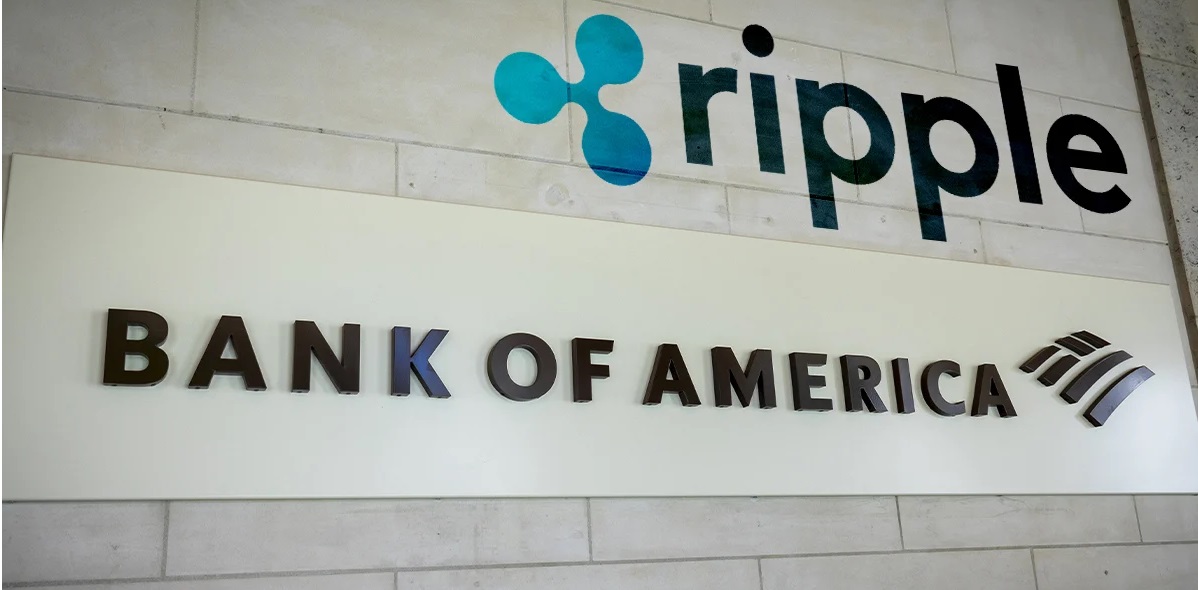
Bank Of America (BOA), one of the largest financial institutions in the world, has recently praised Ripple for its impact on cross-border payments. In a report titled “The Future of Payments”, BOA highlighted how Ripple can help its customers improve their payment experience and reduce costs. The report stated:

“Ripple offers a solution that leverages blockchain technology to streamline cross-border payments. It allows banks to provide real-time, end-to-end visibility into the status of a payment, from the moment it is sent until it is confirmed. It also reduces the number of intermediaries involved, which lowers the cost and risk of errors.”

BOA also noted that Ripple can help its customers access new markets and offer new services, such as on-demand liquidity (ODL). ODL is a service that uses XRP as a bridge currency to eliminate the need for pre-funding accounts in foreign currencies. This frees up capital and reduces exchange rate risk. BOA stated:

“Ripple’s ODL service allows banks to support cross-border payments without holding foreign currency in nostro accounts. This reduces the amount of trapped capital and enables banks to offer more competitive pricing and faster settlement times.”

BOA is not the only financial institution that recognizes the benefits of Ripple. According to Ripple’s website, more than 300 customers across 40+ countries and six continents are using its platform to process over $10 billion in transactions per day. Some of these customers include Santander, Standard Chartered, MoneyGram, American Express and SBI Remit.

Ripple is clearly making a positive impact on the cross-border payments industry, and BOA is one of its biggest supporters. By leveraging Ripple’s technology, BOA can offer its customers a better way to send and receive money across borders, while saving time, money and resources.

Threads Debuts on China’s App Store, Ranks Fifth in The Social Networking Category

0

Meta’s Twitter-like platform Threads, has debuted on China’s App Store, ranking fifth in the social networking category.

Currently, the app is trailing behind Chinese social media giants like Xiaohongshu, WeChat, QQ, and Weibo, all of which boast hundreds of millions of active users.

Threads entry into China has defied the ban placed on Meta platforms by the Chinese government. This implies that despite being banned in the country, several Chinese citizens are using VPNs and other censorship-circumvention tools to access it.

GreatFire (GreatFire.org) an advocacy group that helps internet users inside China bypass blocks on censored content, indicated that the domain www.threads.net has been blocked in China since the 4th of July before its launch. How threads evaded through the organization’s firewall is still uncertain.

The unexpected debut of Threads on China’s Apple App Store no doubt signifies the growing population of the app and the traction it has continued to gain across countries where it is present.

While it remains to be seen how Chinese censors will tackle Threads, past experiences with Western social apps suggests that once they gain substantial traction, they tend to attract the attention of the Chinese authorities.

As Threads app achieves one of the top 5 positions on Apple’s China App Store, trailing only after Chinese social giants, all eyes are on the app, as it has surprisingly carved out a space for itself in the competitive Chinese social media landscape.

It is only a matter of time before the Chinese government takes notice and likely demands that Apple take down Threads from China’s app store.  Apple is known to regularly comply with China’s demands to remove software from the App Store, which includes News, VPNs, and Social media apps.

Meanwhile, experts disclose that Censoring Threads could be tricky because the app plans to operate on a decentralized infrastructure powered by ActivityPub, the protocol that powers another Twitter competitor Mastodon.

Notably, Threads has been listed in the US and the UK but has no foreseeable launch date in the EU yet as the company worries about the bloc’s privacy regulations.

The app is not yet running in the EU, and they might never run, as the bloc has stricter privacy rules than most other countries, and it has given Meta a few problems to cope with in recent years.

The release of Threads in the European Union was postponed amid regulatory uncertainty about how the app will use personal data. This is because of the E.U.’s Digital Markets Act, which includes provisions for sharing user data across multiple platforms.

According to the app’s data privacy disclosure, Threads can collect information about a user’s health, finance, contacts, search history, location, and other sensitive information via their digital activity.

Meta must therefore await approval from the European Commission, the E.U.’s executive arm before it can launch Threads in E.U. countries.

Sources close to Meta said that the company isn’t offering the app in the union’s member states because it’s not sure about the requirements set out by the Digital Markets Act (DMA), the EU’s new competition rules governing how large online platforms use their market power.

Provisions of The SEC/CBN Guidelines on Securities Settlement in Nigeria

0

Pursuant to the powers of the Securities & Exchange Commission (SEC) conferred on it by section 13 and further section 312 (3) of the ISA 2007 and in exercise of the powers conferred on the Central Bank of Nigeria (CBN) by section 47 (2) of the CBN Act 2007 to promote and facilitate the development of efficient and effective systems for settlement of transactions, the SEC and the CBN hereby issue the following guidelines for the settlement of all types of securities in Nigeria.

This article will be looking at the notable provisions of these guidelines. 

What are the objectives of the guidelines?

The main aim of this guideline is to promote competitive, efficient, safe and sound post trading arrangements in Nigeria.

This should ultimately lead to greater confidence in securities markets and better investor protection and should in turn limit systemic risk. 

In addition, the guidelines seek to improve the efficiency of the market infrastructure, which should in turn promote and sustain the integration and competitiveness of the Nigerian securities markets.

What is the applicability scope of the guidelines?

The guidelines set out the procedures for the settlement of securities in Nigeria, including the rights and obligations of the parties. It also covers the settlement procedures and settlement cycle for the trades executed in the following exchanges:

  • The Nigerian Stock Exchange traded securities. 
  • FMDQ Over The Counter (OTC) Securities.
  • NASD Over The Counter (OTC) Securities
  • Nigerian Commodity Exchange (NCX) traded securities.
  • Afex Commodities Exchange.

Who are the parties to securities settlement in Nigeria as recognized by the guidelines?

Parties to Securities Settlement in Nigeria shall include but not limited to:

– Capital Market Registrars.

– The Central Bank of Nigeria.

– The Central Securities Clearing System (CSCS) PLC (Central Securities DepositoryClearing & Settlement Agent).

– Custodians.

– Dealing Members Firms.

What are the securities settlement rules and procedures outlined by the guidelines?

As a general rule, any securities transaction must trade or be reported through a licensed exchange in line with the standard settlement guidelines . Consult your lawyer for further information on this.

What is the Investors Payments Procedure outlined by the guidelines?

-Customers account should be credited with proceeds from sale of their securities directly into their bank account or deposit into their stock broking account or other acceptable payment modes.

Payments shall reach the beneficiary’s account not later than the next working day after settlement.

What are the rights and responsibilities of the relevant parties involved in securities settlement in Nigeria?

Registrars

The Registrar shall have the following responsibilities to :

-Select the bank or service provider for electronic payments.

– Provide the basic infrastructure requirements for electronic payments.

– Define and adhere to appropriate operational processes for initiating electronic payments.

Rights and Responsibilities of CSCS (The Central Securities Clearing System) Plc.

– To be the financial market infrastructure that provides Central Securities Depository (CSD) and sub-registry services for Nigerian Capital markets.

-Provides electronic clearing and settlement services for all eligible Securities on the principle of Delivery versus Payment (DVP).

– Define requirements for Settlement Banks.

– Advice Settlement Banks and NIBSS/CBN on dealing member firms financial obligations arising from Securities transactions.

Rights and Responsibilities of Custodians

-Custodians as clearing members are to ensure that bank accounts are funded on or before Settlement day.

-To ensure asset separation between Custodians and clients at all times.

– To provide periodic account updates to the investors.

Rights and Responsibilities of PDMMS

– To act as dealers to fund their settlement account on behalf of their clients on/before settlement day.

– To act as dealers to transmit proceeds to investors latest by the next day after settlement.

Rights and Responsibilities of Investors

An Investor has the following responsibilities:

– To maintain an account with a DMB.

– To confirm and provide proper details of the account to the Registrar and Stockbrokers.

– To alert the Registrar or Stockbroker if payment is not effected after being advised.

Rights and Responsibilities of Banks

Banks have the following responsibilities:

– To process electronic payments instructions in accordance with the terms defined by the payments system. 

– To provide correct account numbers and bank sort codes to beneficiaries.

– To provide timely information on customer enquiries.

Payment Service Providers

The Payment Service Providers have responsibility for the payment initiation platform and the electronic reporting system used by the Registrars and Stockbrokers. Their other responsibilities include:

– The provision of a secure electronic platform for payment initiation and online transaction reporting.

– Implementation and support of the electronic payment platform.

What is the dispute resolution mechanism and procedure prescribed by the guidelines?

Dispute Resolution in respect of securities settlement shall be governed by the relevant rules issued by CBN, SEC, The Exchanges, CIS and IST’s directives.

What are the provisions of the guidelines for sanctions?

Regulatory bodies shall review and apply appropriate sanctions in the event of default and/or infractions in securities settlement.

Winning in Africa in the Bigtech Era

1

As I noted in a Tekedia Mini-MBA module on Competition, if your core playbook is to go to court to sue and blast your competitor into submission, on the grounds of IP (intellectual property) thefts, your mission might have expired. Simply, you rarely win markets via the court as a startup because the legal system is so convoluted that you may not even survive it, no matter the merit or demerit anchored on it.

This is not to say you should not defend yourself when your intellectual properties are used illegally. My point is that unless you make great products and services which customers find useful enough at the price points you are offering them, the court will not change the outcome for you! Young companies win on products and nothing more!

As Twitter plans to seek help from the court on Threads, in this age everyone does everything, including the bigtech integrating that product you have worked for years into an add-on, into their core products, what would you do as an African startup? In this Harvard Business Review article, I provide some tips on how you can compete in the age of Google, Facebook and bigtech when they seem to be doing everything and everywhere.

In that piece, I asked a question – “Can African Tech Startups Succeed in a World Dominated by Facebook and Google?” My big answer is YES because those companies can also help you succeed. As I noted, see them as ICT utilities. In other words, just like your electricity company, water board, etc which you have to rely on, in your city, the asymmetric dominance of Google, Meta (Facebook), Amazon, Microsoft, Apple, etc means you have to recalibrate to operate in their worlds. And if you do effectively, there is a huge opportunity therein.

In a newsletter, Firstbase shared how to identify promising business opportunities, via a wide variety of primary and secondary data sources that will ensure you’re on the right path to building a business that is positioned for long-term success. In the examples, you can see that bigtech can also help because they’re data reservoirs.

Customers: We guide you through one-on-one interviews, surveys, and observation. These methods will help you validate your business idea and gain a deeper understanding of your market.

Industry Associations: Discover how industry associations can serve as a valuable resource for finding market research reports and gaining industry-specific knowledge.

Investor Data : Explore the portfolios of venture capital and private equity firms, public market data, and aggregated investment data to find fresh business ideas and understand industry growth prospects.

Consultant Data : Market research consultants can provide a wealth of information about potential business opportunities. We’ll share tips on accessing free reports from renowned consulting firms.

Marketplace Data : Learn how to utilize Amazon and other platform marketplaces to gain insights into customer demands, product offerings, and pricing trends.

Search Data : Discover the power of Google Trends, keyword analysis, and social media platforms in understanding consumer behavior and identifying market trends.

My Response: It is like an oil well. If you do not have the tech to unlock the hydrocarbon, it means nothing. Africa has many latent opportunities but most times we may not have the resources to unlock them.

When business models work, moments happen as in the “America’s highest-paid CEOs” roll call.

America’s best-paid CEOs are not necessarily running its biggest companies. In 2022, six of the 10 highest-paid CEOs were not at the helm of S&P 500 companies, said The Wall Street Journal, citing C-Suite Comp data. While Tim Cook, CEO of Apple — the first company to close with a market value of above $3 trillion — made $99 million last year, the CEOs of Hertz, Peloton and Pinterest all earned more than $100 million, beating almost every S&P 500 chief. No one made more than Blackstone boss Stephen Schwarzman, however, who walked away with $253 million last year, beating Alphabet CEO Sundar Pichai’s $226 million. Meanwhile, the world’s 500 richest people added $852 billion to their wallets in the first half of 2023, according to Bloomberg’s Billionaires Index. Elon Musk, the world’s richest person, saw his net worth increase the most — adding $96.6 billion to his pocket in the last six months.