DD
MM
YYYY

PAGES

DD
MM
YYYY

spot_img

PAGES

Home Blog Page 4055

Meme Coin Madness: Comparing BEASTS Coin with Floki Inu and Babydoge

0

The rise of meme coins has taken the cryptocurrency market by storm, captivating a new generation of investors and revolutionizing the way we perceive digital currencies. Among the countless meme coins that have emerged, Floki Inu and Babydoge have gained significant attention for their unique qualities and promising potential. In this comparative analysis, we will delve into the similarities and differences between Floki Inu, Babydoge, and the intriguing BEASTS Coin. By exploring their impact on the market and the captivating nature of meme coins, we will uncover the factors that set BEASTS Coin apart and make it an enticing prospect.

Floki Inu: Riding the Musk Wave

Floki Inu, inspired by Elon Musk’s beloved Shiba Inu dog, has quickly garnered a massive following due to its community-driven approach. This meme coin aims to foster a tight-knit community and emphasizes active engagement. With frequent community events, such as social media competitions and giveaways, Floki Inu has successfully captivated its audience and generated significant brand awareness. The project’s commitment to engaging with its supporters has contributed to its widespread popularity and established it as a serious contender in the meme coin market.

Babydoge: The Power of Social Influence

Another notable meme coin that has captured the attention of crypto enthusiasts is Babydoge. Born from the success of its predecessor, Dogecoin, Babydoge incorporates similar elements while offering a fresh and unique approach. Its adorable canine mascot has become a symbol of the coin’s charm, attracting a broad audience, including both newcomers and experienced investors. Babydoge’s emphasis on social influence and the power of its community has enabled it to create a strong brand presence and instill a sense of loyalty among its supporters.

BEASTS Coin: A New Era For Meme Coins

While Floki Inu and Babydoge have made significant waves in the meme coin world, BEASTS Coin introduces a captivating concept that sets it apart. Created by Rabbit 4001, the project revolves around genetically mutated animals, known as Caged Beasts, which aim to reclaim control of the world from humans. Each presale stage of BEASTS Coin unveils a new beast, fostering community engagement and excitement. Investors are enticed by the concept’s engaging nature and the promise of witnessing the growth and development of these creatures throughout the project’s lifecycle.

In addition to its unique storyline, BEASTS Coin goes beyond traditional meme coins by infusing creative elements and captivating its community through frequent social media competitions and giveaways. By actively involving its supporters, BEASTS Coin nurtures a sense of belonging and encourages long-term commitment to the project. The absence of a staking function adds to its distinctive identity, emphasizing its focus on the overall concept rather than conventional investment strategies.

Embracing the Crypto World’s Next Big Investment

For readers seeking the next big crypto investment, meme coins with utility and a strong community presence hold tremendous appeal. Both Floki Inu and Babydoge have demonstrated their ability to attract and retain a dedicated following. Their active engagement with supporters and frequent community events have played a significant role in their success.

However, BEASTS Coin offers a fresh and captivating alternative. Its imaginative concept, coupled with a commitment to community engagement and a unique referral system, positions it as an enticing investment opportunity. As Rabbit 4001 continues to unveil new beasts and engage the community throughout the project’s presale stages, BEASTS Coin offers investors the chance to be part of an evolving narrative and witness the growth and development of these extraordinary creatures.

Floki Inu and Babydoge have made their mark by harnessing the power of community and social influence. However, BEASTS Coin emerges as a compelling contender, offering a captivating concept that sets it apart from its counterparts. With its engaging storyline, commitment to community activities, and unique approach to the meme coin market, BEASTS Coin invites crypto enthusiasts and investors to embark on a thrilling journey of growth and discovery.

To explore the fascinating world of BEASTS Coin and become part of its burgeoning community, register your email and join the presale today. Don’t miss out on the opportunity to witness the evolution of these extraordinary creatures and be part of a brand new project that promises to captivate its community and unleash the power of meme coins in the crypto world.

Register your email and buy the presale now at BEASTS Coins website.


BEASTS Coin

Website: https://cagedbeasts.com

Twitter: https://twitter.com/CAGED_BEASTS

Telegram: https://t.me/CAGEDBEASTS

Amazon Dropshipping vs BEASTS Coin Referral System: Which Path Leads to Financial Freedom?

0

In the pursuit of financial freedom through passive income, individuals are constantly exploring new opportunities. Two prominent avenues that have gained attention are Amazon dropshipping and the BEASTS Coin referral system. While both offer the potential for generating income, they operate in vastly different domains – one in the e-commerce industry and the other in the realm of cryptocurrency. In this comparative analysis, we will delve into the similarities and differences between these two models and determine which one holds more promise for readers looking to make lucrative investments and engage with an exciting community.

Amazon Dropshipping: Expanding Opportunities In E-Commerce

What is Amazon Dropshipping?

Amazon dropshipping refers to a business model where sellers leverage the vast marketplace of Amazon to list and sell products without the need for holding inventory. Instead, they partner with suppliers who handle storage and shipping, allowing sellers to focus on marketing and customer acquisition. Dropshipping has gained popularity due to its low barrier to entry and the potential for scalability.

How Does Amazon Dropshipping Work?

Sellers start by identifying profitable products, researching market trends, and identifying reliable suppliers. They create product listings on Amazon and promote these items to attract customers. Once a sale is made, the seller forwards the order details to the supplier, who then fulfills the shipment directly to the customer. The seller earns the difference between the wholesale price and the retail price.

When to Choose Amazon Dropshipping?

Amazon dropshipping is suitable for individuals seeking a hands-on approach to e-commerce. It requires entrepreneurial skills, market research, and effective marketing strategies. It offers the advantage of tapping into Amazon’s massive customer base and utilizing their robust infrastructure for order fulfillment. Dropshipping can be a profitable venture, but success relies on thorough market analysis, product selection, and marketing expertise.

BEASTS Coin Referral System: Unleashing Crypto Potential

The Concept of BEASTS Coin

BEASTS Coin is a unique cryptocurrency project developed by Rabbit 4001 with the aim of empowering a community and offering an engaging investment opportunity. The project revolves around the creation of genetically mutated animals called BEASTS Coin, which are intended to reclaim control of the world from humans. As the project progresses, each presale stage introduces a new Caged Beast, fostering community engagement and providing investors with growth potential.

Building a Thriving Community

BEASTS Coin focuses on community activities, making it more than just a cryptocurrency investment. Through frequent social media competitions, giveaways, and interactive events, the project ensures an engaging and inclusive experience for its community members. The project’s unique narrative, involving Dr. Jekyll, Dr. Rabbit Hyde, and the fight against human infection, captivates the imagination and instills a sense of belonging among its supporters.

Advantages of BEASTS Coin Referral System

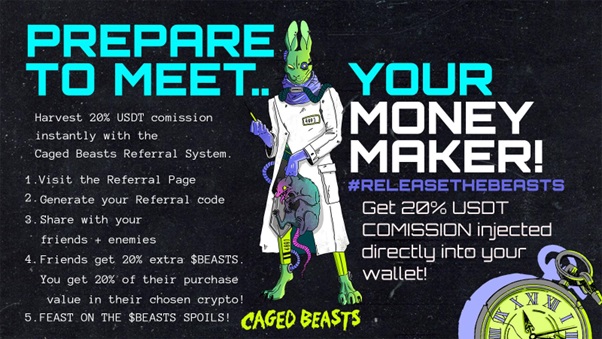
Unlike many other cryptocurrency projects, BEASTS Coin implements a referral system that rewards participants for bringing new members to the community. This approach not only drives brand awareness but also fosters a sense of camaraderie and incentivizes active participation. Investors who join early have the opportunity to witness the growth and development of the BEASTS Coin from their initial stages, creating a strong sense of anticipation and excitement.

In the quest for financial freedom through passive income, the BEASTS Coin referral system stands out as a unique and compelling opportunity. Its captivating narrative, combined with an engaging community and the potential for growth, sets it apart from traditional investment avenues like Amazon dropshipping. While dropshipping offers its own advantages in the e-commerce realm, BEASTS Coin offers a chance to be part of a revolutionary project that combines cryptocurrency, community-building, and the allure of genetically mutated creatures.

To embark on this thrilling journey to financial freedom, we invite you to register your email and participate in the BEASTS Coin presale. By joining the community, you not only gain a potential investment opportunity but also become part of a vibrant and supportive ecosystem. Don’t miss the chance to experience the excitement and potential returns offered by BEASTS Coin.

Register your email and buy the presale today at BEASTS Coins’ website and be part of a revolutionary crypto experience.

BEASTS Coin

Website: https://cagedbeasts.com

Twitter: https://twitter.com/CAGED_BEASTS

Telegram: https://t.me/CAGEDBEASTS

Dogetti Launches! Is It the Ultimate Meme Coin? Exploring the Success of Floki and Pepe and the Rise of Dogetti

0

The crypto market is no stranger to the rise of meme coins. In recent times, Pepe and Floki have captured the attention of investors and enthusiasts alike with their meteoric rise. However, as the hype surrounding Pepe and Floki coins settles, the recent completion of Dogetti’s presale and its official launch TODAY, marks an exciting milestone. With a strong emphasis on community and practical utility, Dogetti (DETI) aims to capture the meme market’s attention and establish itself as a prominent player.

But there is much more to the world of meme coins than meets the eye, so we must delve into it.

Dogetti – The Emphasis on Community

As the hype around Pepe and Floki subsides, Dogetti enters the arena with a unique proposition. Dogetti launched to much anticipation at 4pm GMT on 29th June! Dogetti boldly unfurls its wings, ready to reshape the very fabric of the crypto cosmos. With its resounding launch on the revolutionary Dogetti SWAP, where transactions dance tax-free and trades shimmer with an astounding 20% discount, and its storied presence on the illustrious Uniswap exchange, Dogetti surges forth, heralding a new era of possibility. Dogetti strongly emphasises building a loyal community, just like Pepe. However, Dogetti’s focus on utility and practical applications within the crypto ecosystem sets it apart.

Dogetti aims to create a community-driven platform that rewards users for their participation and loyalty. With Dogetti, meme coins enthusiasts can engage in activities such as staking, voting on community proposals, and participating in decentralised applications. This utility-driven approach positions Dogetti as a meme coin with a purpose beyond mere speculation.

By fostering a loyal community and offering tangible benefits, Dogetti has the potential to stand out among meme coins, setting a course to take over the meme market. Its successful presale and recent launch provide a solid foundation for Dogetti to make its mark and attract investors and enthusiasts seeking the next big meme coin with long-term potential.

Floki Slows, Pepe Thrives: Comparing Meme Attributes with Dogetti and Doge

Floki coin, despite experiencing a slowdown in its growth, continues to maintain its position on the CoinMarketCap leaderboard for meme coins. This achievement demonstrates the coin’s resilience and enduring popularity within the crypto community. On the other hand, the Pepe coin is also holding its ground, showcasing its strength and sustained interest among investors.

When comparing the meme attributes of Floki, Pepe, and Dogetti, it is important to reference the godfather of meme coins, Doge. Dogecoin, featuring the iconic Shiba Inu dog meme, holds a special place in the history of meme coins and has paved the way for subsequent projects.

However, the coin’s strong community and dedicated followers have contributed to its staying power. Floki’s meme attributes go beyond its name, as its community actively engages in meme creation and shares humorous content related to the coin. This dynamic engagement fosters a sense of unity and camaraderie among Floki supporters.

Pepe coin, known for its distinctive frog meme, has also managed to maintain its position on the leaderboard. The coin’s meme attributes revolve around the iconic Pepe character, a symbol of internet culture. Pepe coin’s popularity is a testament to the enduring appeal of this widely recognised meme.

In comparison, Dogetti takes a unique approach to meme attributes. While it acknowledges the significance of meme culture, Dogetti strongly emphasises community building and practical utility. Dogetti aims to foster an environment of active participation and engagement by focusing on creating a loyal community. The coin rewards community members for their involvement and encourages them to contribute to the project’s growth. This emphasis on community loyalty sets Dogetti apart from Floki and Pepe.

When considering the range of meme attributes, Floki, Pepe, and Dogetti bring their distinct flavour to the meme coin space. Floki capitalises on its association with Elon Musk and the active meme creation within its community. Pepe coin draws on the recognisable Pepe character, a symbol of internet memes. Dogetti, however, focuses on building a loyal community while offering practical utility within its ecosystem.

Dogetti (DETI):

Website: https://dogetti.io/

Telegram: https://t.me/Dogetti

Twitter: https://twitter.com/_Dogetti_

DogeMiyagi, Cosmos and Apecoin: Uniting Crypto Communities for Growth

0

Behind the best and most successful crypto coins lies a thriving community. Providing support, engagement and advocacy for projects, a strong community can drive adoption and project development, especially for new crypto coins. Buying community-driven crypto tokens like Cosmos (ATOM), Apecoin (APE), and DogeMiyagi (MIYAGI) offers users an enhanced user experience, from unique token allocation systems to enhanced decentralisation. 

Apecoin: Embracing the Strength of Community

Apecoin burst onto the scene following the success of the renowned Bored Ape Yacht Club (BAYC) NFT collection. The Apecoin community has played a pivotal role in its growth and development, making it a force to be reckoned with in the crypto space. The token’s creators recognised the importance of fostering a sense of belonging and encouraging open dialogue among their community members. Community-building tactics include active engagement on social media platforms like Twitter, where Apecoin constantly interacts with its followers, shares milestones, and announces events and giveaways.

Buying Apecoin also gives users access to its decentralised autonomous organisation (DAO), which gives the community a chance to participate in governance decisions. By embracing an inclusive approach, Apecoin ensures that its audience feels included in the project’s progress and growth, fostering a shared sense of ownership. This engagement strategy has given Apecoin a competitive edge, establishing its community as a driving force behind its success.

Cosmos: Uniting Blockchains and Empowering Community

Cosmos, often referred to as the next-gen blockchain, has made a significant impact on the crypto market by solving the fundamental challenge of interoperability. This project aims to create an interconnected ecosystem by enabling different blockchains to communicate and transact seamlessly. However, none of this would be possible without its ever-growing community of developers and innovators.

Cosmos takes an informative and educational approach, engaging the community through social media and catering to the needs of its audience by providing valuable insights, updates, articles, tutorials, and analyses. By offering a reliable source of information, Cosmos fosters trust and drives traffic to its platforms, ensuring that its community remains engaged and well-informed. This community-driven strategy empowers developers and fuels collaboration and creativity within the crypto community.

DogeMiyagi: The Power of Community in the Meme Coin Revolution

DogeMiyagi, a captivating new meme coin, has taken the crypto-verse by storm. Inspired by the legendary martial arts master from the Karate Kids franchise, DogeMiyagi, celebrates the power of camaraderie. By harnessing the power of memes and tapping into nostalgia, DogeMiyagi brings together like-minded individuals, injecting humour and unity into the crypto space.

This unique approach amplifies its potential for growth while also providing a secure and enjoyable experience for its community. DogeMiyagi will actively encourage community participation with giveaways, rewards and a DAO. The DAO empowers users to actively participate in the direction of the project by voting on key project decisions. DogeMiyagi also boasts an innovative referral system which rewards investors for inviting new community members. When a successful referral is made, users will receive a 10% bonus. This will encourage organic community growth, creating a thriving ecosystem where everyone benefits.

The power of community in crypto cannot be understated, and it can have a major impact on a project’s success. Apecoin, Cosmos, and DogeMiyagi have each recognised the importance of community engagement, implementing diverse strategies to fuel their growth and success. By fostering a sense of belonging, encouraging open dialogue, and leveraging social media platforms, these projects have cultivated passionate communities that drive their progress.


For more about DogeMiyagi:

Website: https://dogemiyagi.com

Twitter: https://twitter.com/_Dogemiyagi_

Telegram: https://t.me/dogemiyagi

How to Establish Breach of Duty of Care in Negligence against Electricity Distribution Companies and other regulatory agencies in the Power sector in Nigeria.

0

How to Establish Breach of Duty of Care in Negligence against Electricity Distribution Companies and other regulatory agencies in the Power sector in Nigeria.

Introduction:

Breach of duty of care in negligence occurs when a duty of care exists and was not followed. Breach of duty of care is an important component in negligence cases and to establish breach of duty of care, the underlisted court cases as well as sections of the EPSR Act, 2005; NERC Regulations and Consumer Protection Council Act, have been considered with respect to the duties of electricity distribution companies (Discos), NERC and minister of power in the power sector in Nigeria.

Who are Electricity Distribution Companies?

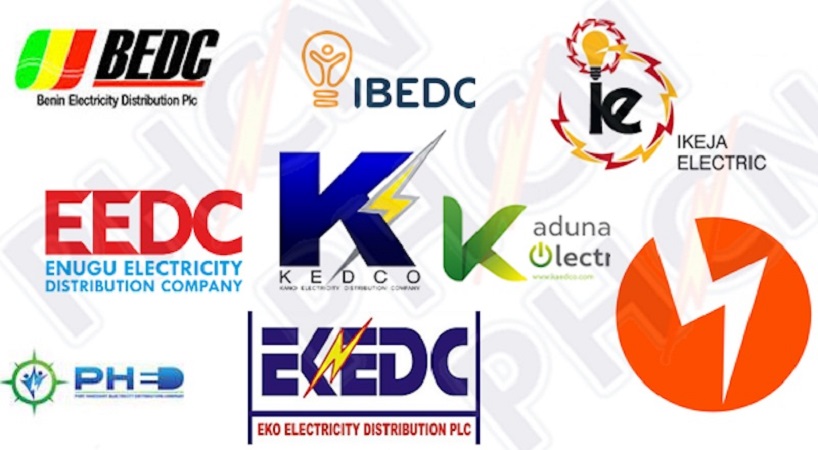
Electricity distribution companies are responsible for the network of power lines, underground cables, substations and low-tension cables that get electricity to home or business in the area where you live. They can be in breach of duty of care to individuals and businesses by virtue and pursuant to the following provisions of these relevant sections of laws guiding the electricity and power industry:

  1. Section 67 of the Electric Power Sector Reform Act, 2005 which states as follows:

“Subject to such terms and conditions as the Commission may fix in the licence, a distribution licence shall authorize the licensee to construct, operate and maintain a distribution system and facilities, including, but not limited to, the following;

The connection of customers for the purpose of receiving a supply of electricity; The installation, maintenance and reading of meters, billing and collection; and

Such other distribution services as may be prescribed for the purposes of this section.” 

  1. Section 7 (3) (h) of the NERC reporting compliance regulations, 2009 which states as follows:

“Distribution licensee (h) Customer Complaints

“Distribution licensee shall submit to the Commission a monthly customer complaints report and a monthly customer register in accordance with the requirement on Schedule 4A and Schedule 4B to these regulations.”

  1. Most times electricity distribution companies are in violation of NERC, Customer Service Standards of performance for Distribution Companies Regulations No. 40 2007 pursuant to section 32 (e) of the Electric Power Sector Reform Act, 2005 which states as follows:

“To ensure the safety, security, reliability and quality of service in the production and delivery of electricity to consumers.” 

Who is Nigerian Electricity Regulatory Commission (NERC)?
NERC is an independent regulatory body with authority for the regulation of the electric power industry in Nigeria. In some circumstance, this regulatory body can be held in breach of the following sections of the laws:

  1. “Section 80 of the Electric Power Sector Act, 2005 which states as follows:

“The Commission shall develop in consultation with the licensees, the following materials –

Customer service standards; Customer complaint handling standards and procedures…etc”

  1. Section 81 of the Electric Power Sector Act, 2005 which states as follows:

“The Commission shall develop, in consultation with the licensees and other interested parties, the following performance standards and codes –

Standards of overall performance in connection with the provision of electricity supply services and in connection with the promotion of the efficient use of electricity by consumers.”

Where an electricity consumer suffers damages or loss of property due to the negligence and breach of duty of care as a result of faulty electricity supply or installation, such an individual or company could seek legal redress in court against the electricity distribution company, Nigerian Electricity Regulatory Commission (NERC) and the Minister for Power by virtue and pursuant to section 9 and 12 (b) of the Consumer Protection Act CAP C25, Laws of the Federation of Nigeria, 2004 which states as follows:

Section 9 – Unforeseen hazard and duty to inform public:

(1)      “it shall be the duty of the manufacturer or distributor of a product, on becoming aware after such product has been placed on the market, of an unforeseen hazard arising from use of such product, to notify immediately the public of such risk or danger and cause to be withdrawn from market such product.”

Section 12 – Contravention of enactment protecting consumer:

“Any person who, in contravention of any enactment whatsoever for the protection of the consumer –

(b)     Provides any service or proffers any information or advertisement thereby causing injury or loss to a consumer,

is guilty of an offence under this Act and liable on conviction to a fine of N50, 000.00 or to imprisonment for a term of five years or to both such fine and imprisonment.”

The above statutory provisions exist in addition to the right of affected electricity consumers to institute civil suits for compensation and restitution, which the Consumer Protection Council guarantees. Furthermore, section 8 of the Consumer Protection Council Act, CAP C25, LFN, 2004 states as follows:

“Whereupon an investigation by the Council or State Committee of a complaint by a consumer it is provided that –

A consumer’s right has been violated; or

That a wrong has been committed by way of trade, provision of services, supply of information or advertisement, thereby causing injury or loss to the consumer, the consumer shall, in addition to the redress which the State Committee, subject to the approval of the Council, may impose, have a right of civil action for compensation or restitution in any competent court.” 

Who qualifies as a consumer of electricity?

The courts have held in Amadi v. Essien (1994) 7 NWLR (Pt.354) 91 that for a person to qualify as a consumer of NEPA (electricity distribution companies), he needs not to be a registered consumer of the National Electric Power Authority. Thus, the court held as follows:

“To entitle a person to invoke judicial power, he must show that either his personal interest will immediately be or has been adversely affected by the action or that he has sustained or is in immediately danger of sustaining an injury to himself” 

It is not in every case whether there is no direct contractual relationship between the consumer and electricity distribution company that an action cannot be founded. The relationship may not be contractual in nature, but the law will be correct to read into the relationship of the parties an implied undertaking on the part of the electricity distribution company not to injure the consumer.

Sufficient interest to ground locus to the consumer to sue is an interest which is peculiar to the consumer, an interest which he does not necessarily share with the members of the public. The interest in the subject matter must be over and above what the ordinary members of the society have. The interest must be unique and proprietary. See also the case of Center for Oil Pollution Watch v. NNPC (2019) 5 NWLR (Pt. 1666) 518.

However, section 100 (1) (10) of the Electric Power Sector Reform Act, states that:

“Consumer” means any end-user of electricity who is a customer of a distribution licensee that is not an eligible customer and, for the purposes of filing a complaint with the Commission and for any other reason that the Commission may determine, a person who is temporally disconnected or otherwise without service, provided that a person who has applied for, but had yet to receive, service shall also be deemed to be a consumer”. 
However, the word “customer” and “consumers” are used interchangeably though accorded different meanings under the EPSR Act and Regulations. For instance, the NERC, Regulation 2 (8) on Customer Complaints Handling: Standards and Procedure 2006, defines a CUSTOMER as:

“Any person or organization supplied with electricity for his own use by a distribution licensee or by any other person engaged in the business of supplying electricity to the public under the Electric Power Sector Reform Act or any other law for the time being in force and includes any person whose premises are for the time being connected for the purpose of receiving electricity from a distribution licensee or such other person as the case may be”. 

The above cited section of the law seeks to protect electricity consumers from defects in electricity services by licensees and other electricity trading companies. Though the Act does not define what constitutes ‘a defect’ in the electric power sector, however, the definitional gaps have been filled by the NERC, Regulation 2 (1) on Customer Complaints Handling: Standards and Procedure 2006 which defines “defect” for the purpose of Consumer Protection as:

“a fault, imperfection or shortcoming in the quality, standards of service, equipment or material which is required to be by or under any law or regulation for the time being in force or under any contract or as claimed by the customer in relation to electricity service”. 

The regulation under section 2 (12) also defines deficiency in relation to the Electric Power Sector as:

“Any fault, imperfection, shortcomings or inadequacy in the quality of service which is required to be maintained by or under any law or regulation or has been undertaken to be performed by a distribution licensee in pursuance of a contract agreement or otherwise in relation to electricity service or performance standards, viz; interruptions, failure of power supply, voltage complaints, metering problems of power supply to the customer in contravention of the EPSR Act, 2005.” 

What causes electric spark on electricity cables?

Having established, the customer relationship between consumer and electricity distribution company, our next issue is to highlight the possible causes of electric cable spark that is capable of cutting a high-tension or low-tension wire.

Sparking cables, loose connections and snapping wires have been identified as some of the major causes of damages or injuries to customers of electricity distribution companies. To curb such incidents from occurring, electricity distribution companies always provided 24/7 customer care lines to report faulty cable and sparking light from their installations, but unfortunately, there is always slow pace in response or feedback from the electricity distribution companies.

It is also not in doubt that the electricity distribution companies usually experience bureaucratic bottlenecks in getting the necessary approvals or materials from their high ranks to salvage situation or fix repairs which might lead to injuries or damages to customer.

The causes of electric spark are:

  1. Deterioration of component due to elongated period of spark:

Electricity is generated at various power stations and then sent through transmission lines which provide electric power to homes and businesses. The flow of electricity and electrical current is supplied through electrical wiring which begins the path that allows the flow of electrical power through each circuit. The flow of electricity is referred to as “LOAD” which describes the amount of electricity that is flowing through the circuit. This amount of electricity can be measured in watts and amperes also known as amps.

A spark occurs when power is turned on or off. When a device or equipment is connected to an electrical circuit and is in the ON position, there is an electrical load that is being produced which causes the flow of electricity. When the flow is started or stopped, it can produce a spark of electricity between the two components which provide the connection of electricity.

Common components that provide electricity where a spark may be produced are circuit breakers, switches, outlet and cord plugs or any two components which complete the circuit and provide the flow of electricity.

An electric spark which can over time, cause deterioration between the points of contact, which can then produce a failure of connection which was necessitated by the inefficiency of the electricity distribution company to replace the bad receptacle outlet where the contacts wear out due to this electrical spark, which is also known as arcing.

It is important to note that the higher the electrical load, the bigger the spark and faster the deterioration of the joint of the two components. For instance, the size of an electrical spark that is produced when a device or equipment is turned on or off will depend on the amount of electricity that will be required by the device or equipment. Thus, a switch that turns on a light fixture with a standard 60watt light bulb will produce a smaller spark than 11KV electric cable and the resultant effect will ultimately be fatal on any person or appliance it comes in contact with.

  1. Old outlets and electrical components:

Furthermore, old electrical outlets pose serious problems to smooth distribution of power by electricity distribution companies. Some of these electricity poles, aluminum conductors/cable and installations must have been around for over 30 years and as a general rule, electrical outlets gradually wear out over time. As the years pass, the connections will gradually loosen, increasing the chances that a short circuit will occur and start a fire or give off a spark. Thus, the electric cables and installations which some of the electricity distribution companies are currently making use of are obviously old, worn out and pose serious hazards which is susceptible to causing injuries and damages to consumers.

Under section 32 (2) (b) (c) and (d) of the Electric Power Sector Reform Act, NERC is empowered to undertake the following objects and functions –

For the furtherance of the objects referred to in subsection (1) of this section, the Commission shall perform the following functions –

“(b)   Establish or, as the case may be, approve appropriate operating codes and safety, security, reliability and quality standards;

(c)      Establish appropriate consumer rights and obligations regarding the provision and use of electric services;

(d)     Licence and regulate persons engaged in the generation, transmission, system operation, distribution and trading of electricity.”

Other penalties that electricity distribution companies may face as a result of breach of duty of care and negligence would be where the Minister of Power pursuant to section 26 (3) (c) (i) (ii) (iii) and (d) of the EPSR, Act may issue direction to terminate, suspend or restrict electricity distribution company’s right to participate in the electricity and ancillary services within the power distribution sector for breach of duty care and non-compliance with the NERC regulations and the extant provisions of the Act. NERC may also be penalized by the minister of power for breach of monitoring the activities of electricity distribution companies and as empowered by its establishing Act.

How to establish breach of duty of care in negligence?

Negligence is any conduct that falls below the standard established to protect others against unreasonable risk of harm and to establish liability for breach of duty in negligence and placing reliance on the cases of Donoghue v. Stevenson [1932] A.C. 562 at 577 and Merchantile Bank v. Abusomwan (1986) 2 NWLR (Part 22), a plaintiff must prove:

  1. The defendant owed a duty of care to the plaintiff.
  2. The defendant breached that duty.
  3. The breach caused harm to the plaintiff.
  4. The plaintiff suffered an injury/damage.

The above principles highlight the standard of what a “reasonable person” would have done in the circumstances of the case in order to decide whether a person has broken his/her duty of care in the tort of negligence.

Finally, in situations where the electricity distribution companies or NERC are investigated and found to be in breach of duty of care or negligent in the discharge of their obligations to consumers pursuant to sections 32 (e) and 67 (b) of the EPSR, Act, 2005 which was expressly couched to ensure the safety, security, reliability and quality of service in the production and delivery of electricity to consumers, they will be liable to pay damages commensurable to the quantum of loss that the consumer have suffered where there is sufficient proof of evidence to back up such losses.

For further legal assistance on topical legal issues, do not hesitate to contact the author:

Kingsley Izimah, Esq.

Principal Partner,

SK Solicitors

0806-809-5282

www.sk-solictorsng.com

sksolicitors.ng@gmail.com or

info@sk-solicitorsng.com