DD
MM
YYYY

PAGES

DD
MM
YYYY

spot_img

PAGES

Home Blog Page 4076

Bank of America Suffered Unrealized Loss of $131.6 Billion

0

In a shocking announcement, Bank of America revealed that it suffered a massive unrealized loss of $131.6 billion on its securities portfolio in the third quarter. This is the largest quarterly loss ever reported by a U.S. bank and represents a significant deterioration of its financial position.

The loss was mainly driven by a sharp decline in the value of its holdings of U.S. Treasury bonds, corporate bonds, mortgage-backed securities and other fixed-income assets. The bank attributed the loss to the unprecedented rise in interest rates and inflation expectations, which negatively affected the prices of these securities.

The bank said that the loss was unrealized, meaning that it did not affect its cash flow or earnings, and that it could reverse in the future if market conditions improve. However, the loss also reduced the bank’s regulatory capital ratios, which measure its ability to absorb losses and comply with regulatory requirements. The bank said that it remained well capitalized and above the minimum thresholds, but that it would take actions to strengthen its capital position.

The announcement sent shockwaves across the financial markets, as investors feared that other banks could face similar losses and that the banking system could face a liquidity crisis. Bank of America’s stock price plunged by more than 10% on the news, dragging down other financial stocks and the broader market indices. The yield on the 10-year Treasury bond spiked to 3.5%, the highest level since 2019, reflecting the increased risk premium demanded by investors.

The loss also raised questions about the bank’s risk management practices and its exposure to interest rate risk. Some analysts criticized the bank for holding such a large portfolio of securities with long maturities and low yields, which made it vulnerable to rising rates. They also questioned the bank’s hedging strategies and its use of derivatives to mitigate its risk.

The loss had a major impact on Bank of America’s balance sheet and capital adequacy. The loss reduced the bank’s book value by 15%, erasing the gains it had made in the previous quarters. The loss also lowered the bank’s regulatory capital ratios, which measure its ability to absorb losses and comply with regulatory requirements. The bank said that it remained well capitalized and above the minimum thresholds, but that it would take actions to strengthen its capital position.

Bank of America’s CEO Brian Moynihan defended the bank’s strategy and said that it was well prepared for different scenarios. He said that the bank had a diversified portfolio of securities that provided stable income and liquidity, and that it had taken steps to reduce its duration and increase its yield. He also said that the bank had adequate hedges and derivatives to offset its interest rate risk, and that it had stress-tested its portfolio under various assumptions.

Moynihan said that he was confident that the bank would overcome this challenge and continue to deliver value to its shareholders, customers and employees. He said that the bank had a strong core business with solid growth prospects, and that it was investing in digital transformation, innovation and social responsibility. He said that the bank was committed to supporting the economic recovery and addressing the climate change challenge.

The Wale Edun’s Speech And The Reorganization of Nigeria’s Economy

0

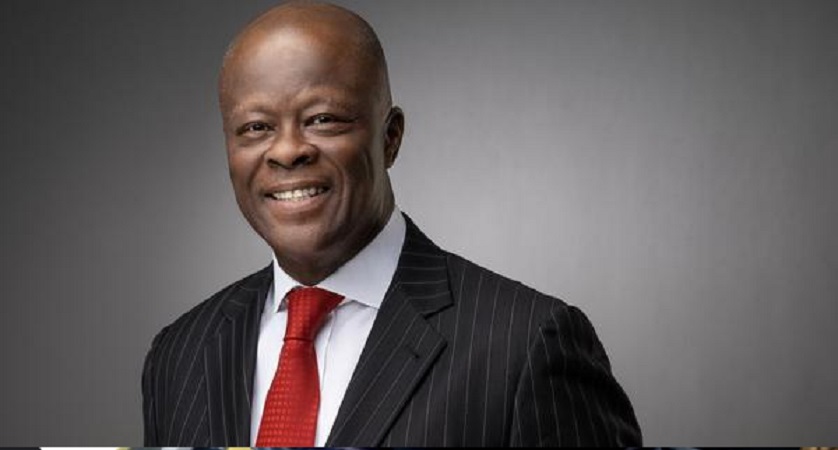
Wale Edun, Nigeria’s Finance Minister, is really very promising. His speech at a recent World Bank/IMF event showed a man who just wants to get things done, no politics. If the government could isolate him from the vagaries and miry clay of politics, something great could happen from him.

Of course, this is not to say that 2024 will not be challenging, but if they give him room to work, things will improve. At N26 trillion for the 2024 fiscal year, the budget is VERY low, since about 50% will likely go into debts servicing. By the time you remove emoluments for workers and defense allocations, Nigeria may not have any funds for any serious capital project.

Interestingly, that may be for a purpose, and by that I mean massive reorganization of the economy where the private sector takes more positions. He dropped a hint while in Morocco for the World Bank/IMF event: “We emphasized access to investment capital,  particularly from the private sector and at a large scale, as well as the need to support private sector development”.

Nations rarely kaput; we’re hoping that Nigeria’s economy gets back to life. 

Comment on Feed

My ResponseWe went to the world bank/ IMF meeting and said that the institutions don’t have funds to lend to us .judging from what I have seen and heard so far” – people are frustrated with me because I am apolitical and non-partisan. I can attack today, and praise today, depending on how I evaluate policies. At my age, I should be very comfortable that I can speak my feelings because I do not need anything from any government or politician.

Your challenge is that he needs to be against the government. While I do not defend Tinubu’s government, your statement that the World Bank “don’t have funds to lend to us “ is a lie. Two days ago, the World Bank dropped a $1.5b loan which the National Assembly accepted. Google it.

As always, I do not need anything from Nigeria. But I desire that people have the opportunities it gave me.

Comment 2: The proposed N26 trillion you termed small will be realised from where? We are not even going to generate the numbers, at least from what has been stated so far. The exchange rate set at N700/$ was based on what exactly, market or government sentiment? The more NNPCL pays for the differentials in petrol (unofficial) subsidy, the more they are not likely to remit anything substantial as proceeds from crude oil sales.

Our system is broken and unsustainable, but we have mastered how to live in denial, even when our collapse is self-evident.

Dollar is exchanging for N1100 in the ‘real’ market, but we had so much to gift brand new cars to our utterly irresponsible and insensitive legislative arm. After our usual wanton misadventures and malfeasance, we start hoping that things will somewhat be better for Nigerians. This level of buffoonery is both amazing and thrilling. It’s unreal.

Whatever we breed and groom here as humans need to be reexamined once again, because we are too strange to qualify as proper humans.

Wale Edun won’t perform any magic, because the very ground he’s standing on is still running, and the sky is warming up to shift as well.

Comment 3: Honestly, I see a country where the redesign and refocus of the economy is looming. This man seem to be one of those that can perform the magic wand if given sometime. At this point, having a private sector led economy is a positive indicator of good things to come. The other day, he has lifted restrictions on 43 items for FX sales to ensure the floating rate FX regime works. This is also a step in the right direction. Although times are hard now, but this seem to be a global phenomenon. I stand by good policies irrespective of where it is coming from.

Comment 4: The motto of the Federal University of Agriculture in Abeokuta is “knowledge for development” and that of Joseph Sarwuan Tarka University (formerly the Makurdi University of Agriculture) is “innovation and service”.

His Excellency can use his discretionary funds to recruit 120 of the world’s best university professors and researchers in the fields of agriculture, soil science and food to come and teach and research at these two universities, making them the best in the world within two decades while empowing local farmers across the country

This economic initiative has the potential to add $3.6 trillion to the country’s GDP in the space of twenty years within an AfCFTA context and if only the best in the world are selected on the basis of merit from countries like the Netherlands and the United States.

This minister will never be forgotten.

(Netherlands has 1 million ha of arable land and export food worth $52 billion a year. Nigeria has 70 million ha of arable land and export food worth $1.2 billion a year. The best agriculture university in the world is in the Netherlands. Now $52 billion X 70…).

This policy can be applied to any country in SSA.

We’re Losing the World

1

The old construct was that digital technologies would make humans more connected and entwined, reducing tensions, since you are not likely to harm someone you know or have connected with, they reasoned.

But today, what we are noticing is that digital technologies are polarizing the world, as narratives get propelled with high-voltages of lies and deceptions, energized by armies of digital netizens at scale. Simply, alternative facts emerge and anything becomes a factor.

From Nigerian politics where anything goes these days to global geopolitics, it is a fact-less world. Yes, you can graduate from a secondary school before it was founded to what we’re seeing in Israel and Hamas, the denominator is this: we’re losing the world because there are few more morals left to build the foundations for the next generation.

Right now, in all humans – and ALL humans – allegiance wins over fairness, justice and morality. Simply, positions shift not because of facts and unalloyed fairness, but because of the players involved. People, the world LIES and we’re losing this world!

Comment on Feed

Comment 1: Ndubuisi Ekekwe. I agree completely!

The traditional notion was that digital innovations would enhance human relationships, connectivity and reduce conflicts.?

It’s clear that, as a global community, we are grappling with a truth crisis. To address this issue, we must strive to be discerning consumers of information, engage in open and honest dialogue, and collectively work towards building a more informed, ethical, and grounded world for the benefit of future generations.

Prof, truly, in your words, the world LIES and we’re losing this world!

My Response: Thanks for providing some suggestions. I was not even bold to offer any suggestions.

Comment 2: There’s something more fundamental to human progress, it is neither technology nor innovation, rather you can call it LIGHT OF VIRTUE. It is more fundamental than anything else. Once you allow the light of virtue to dim, humans are no longer humans, but worse than lower animals.

The moral world is bigger than both the intellectual and physical worlds, and it’s the former that makes everything tick. How exactly do you talk about peace or dignity of human person in the absence of morality? The joke is unbelievable. We regularly see human foolishness and stupidity in full display, once we deviate from the moral codes that form the essence of our very existence.

Nobody cares about the truth, rather narratives and prejudices are elevated to the level of sacredness. It’s obvious that humans are grossly overrated, we lost the plot long time ago.

Within the last 24 hours, a hospital was bombed with over 500 humans killed. What has been the talking points? Nobody gives a damn about the truth, you simply agree or align with the talking points of the camp you support or have a soft spot for. This is not how to live, this cannot be the way to search for truth and subsequently work for peace.

Truth is a higher premium, so out of reach.

Comment 3: The problem is not technologies but the humans who explore the potentials and abilities of these technologies for their various gains.

While it is hard to monitor or manage the activities of humans, we could set up some regulations, but which in my opinion still has the tendency to suffer under humans. So, what then do we do?

Since what has helped us get here so far till this moment is innovation, then we might need to keep innovating solutions. Interestingly, we have the Web3 and Blockchain technologies already helping us in this regard. We just need to embrace them as we continue to innovate.

Let’s not blame technologies.

PS: Amidst all of these continuous innovative technologies, solutions and all, what the World needs is more than that but sadly…

Oil and Gas Licenses/Permits In Nigeria – All You Need To Know

0

Oil & Gas :- The Assignment/Transfer/Lease Of Oil and Gas Licenses/Permits In Nigeria – All You Need To Know

For many Oil & Gas start-up businesses, it is usually easier to lease or carry out assignments/transfers of already existing businesses in the Nigerian oil and gas industry. It is however worthy to note that such license/permit transfers/leases and assignments are also regulated at the Midstream & Downstream oil sectors by the Nigerian Midstream & Downstream Petroleum Regulatory Agency (NMDPRA) pursuant to the Petroleum Industry Act. 

This article will be looking at the regulatory provisions governing license assignment, transfer and 3rd party leasing in the Nigerian Oil & Gas sectors as prescribed by the NMDPRA.

What are the objectives of the NMDPRA regulations in this regard?

– To establish a procedure for the assignment or transfer of oil & gas licenses or permits by the license/permit holders.

– To prescribe fees for such license/permit assignments or transfers.

– To provide sanctions & administrative penalties for failure to comply with these regulations.

What is the applicability scope of the NMDPRA regulations on license assignment or transfers?

The regulations shall apply to activities connected with the assignment or transfer of licenses or permits granted by the NMDPRA for Midstream & Downstream petroleum operations.

What is the exact nature of license assignments or transfers of licences and permits as permitted by the NMDPRA?

Acceptable transfers or assignments of licenses and permits as permitted by the NMDPRA include :-

– Assignments or transfers by mergers of 2 or more companies.

– Assignments or transfers by acquisition of a company or asset.

– Assignments or transfers to a company in a group of which the transferor is a member & is to not made for the purpose of reorganization in order to achieve greater efficiency and acquire resources for effective petroleum operations.

– Assignment or transfer to a new company.

-Assignment or transfer by testamentary instruments (wills).

The NMDPRA may by notice, determine any other category of assignment or transfer of license & permit.

What is the provision of the NMDPRA on change of names by license holders?

– A license or permit holder shall notify the NMDPRA prior to a change of name arising from a corporate restructuring or rebranding.

– Where the NMDPRA has no objection to the change of name, the license or permit holder shall :-

  1. Apply for a new license or permit in the new name.
  1. Return the license or permit in the previous name to the NMDPRA for cancellation.
  1. Pay prescribed fees for such change of name on a license or permit.

– A change of name shall not constitute an assignment or transfer of license for the purpose of these regulations. 

What are the provisions of the NMDPRA for a notification of an intention to assign or transfer a license or permit?

– A transferor who intends to assign of transfer a license or permit shall, prior to the assignment or transfer, notify the NMDPRA of its intention to undertake such assignment or transfer.

What are the provisions of the NMDPRA on applications for assignments or transfers of licenses by transferees?

– Where the NMDPRA makes a decision on whether to grant an application to transfer/assign a license/permit, the transferee shall :-

  1. Apply for an assignment or transfer of the license or permit to its company.
  1. Submit a copy of the title documents, which shall be certified by a court of competent jurisdiction.
  1. Where required, make presentations to the NMDPRA on its technical and financial capability to operate such facility.
  1. Provide any other information as may be required.
  1. Pay prescribed fees.

What are the provisions of the NMDPRA on grants of consent to assign or transfer licenses and permits?

– The NMDPRA shall inform an applicant in writing of Its consent to approve or refusal of the applicant within 90 days from the date the application was received.

– Where an application is refused -an appeal or further representations can be made within 21 days of such refusal being communicated. 

What are the provisions of the NMDPRA on prohibitions, contraventions and penalties?

– Assignments or transfers are prohibited without NMDPRA consent.

– Contraventions of any provisions of the NMDPRA regulations on license assignments or transfers will earn a fine of :-

  1. $100,000 per license for Midstream processing facilities, installations, terminals and pipelines. In addition, any permit granted to the offending party may be revoked, cancelled or suspended.
  1. $50,000 or its Naira equivalent per license for blending facilities & petroleum storage facilities . This is in addition to the suspension, revocation, or cancelation of the license or permit.
  1. 2 Million Naira per license for Oil & Gas retail outlets in addition to license/permit revocation, cancellation or suspension. 

What are the applicable processing fees for license/permit transfers or assignments? 

  1. Petrol Liquids or Gas retail outlets :- 500 Thousand Naira
  1. Depots – 10 Million Naira
  1. Blending plants, waste recycling plants, Bitumen Emulsion plants, refilling plants or thermal desorption units – 3 Million Naira
  1. Hydrocarbon processing plants (Refineries, Petrochemical and Gas processing facilities) 

– $10,000 for capacities less than 1KBPSD or less than 6mmscfd

– $50,000 for capacities between 1,000 & 30,000 BPSD, or between 6mmscfd & 180mscfd

– $150,000 for capacities above 30,000 BPSD or above 18mscfd

  1. Pipelines – $500 per Kilometer
  1. Pipeline distribution network – $200 per Km
  1. Pipeline transportation network – $250 per Km
  1. Terminals – $200,000.00
  1. CNG Compression stations/small scale Liquefied Natural Gas(LNG) Installations – 500,000.00 Naira

Note that an alternative processing fee of 5% of the license value will apply if it is higher numerically.

 How To Secure A Wholesale Petroleum Liquids Supply Licence In Nigeria

Wholesale Petroleum Liquids Supply Licenses are issued in Nigeria pursuant to the Petroleum Industry Act and through the Nigerian Midstream & Downstream Petroleum Regulatory Agency (NMDPRA) .

Such a license is issued upon approval of an application and payment of the prescribed fees.

This article will not focus on the requirements for procuring wholesale petroleum liquids supply licenses in Nigeria.

Who are eligible applicants for wholesale petroleum liquids supply licenses in Nigeria?

– Lessees

– Crude oil refining companies

What are the information requirements regarding applicant company information for wholesale petroleum liquids supply licenses?

– Copies of the certificate of incorporation and memorandum and articles of association (not applicable to lessees).

– A company tax clearance certificate.

– A completed application form.

– Proof of technical competence – company organogram & staff list.

– List & particulars of shareholders (not applicable to lessees).

– List of particulars of directors.

– Authorized representative.

– Other supporting documents (If any).

What are the commercial obligations for this license category?

– Evidence of payment for license and processing fees

– 3 years financial projections, to include all recurrent & capital costs.

– 3 years audited financial statements

– Evidence of valid economic viability certificate issued by the NMDPRA.

– A list of wholesale customers with a copy of their supply agreement & lessee/3rd party suppliers (where applicable).

– Commercial allowable for production.

What are the technical obligations required for this license category?

– Evidence of license, permit or approval issued by the NMDPRA such as but not limited to PPL, PML, MDOGISP,etc.

– Previous year annual production data (volume) and current annual projection.

– Technical allowable for production.

– Copy of clearly defined standard operating procedure for the company.

– Evidence of license to operate.

– Previous quarter performance record (for license renewals).

– Submission of quarterly commercial record (for renewal).

– Submission of quarterly commercial activity report. 

What are the applicable fees for wholesale petroleum liquids supply licenses in Nigeria?

  1. Wholesale Petroleum Liquids (Crude Oil) Supply for volumes less than 50,000 BBLs

Fee :-$1 per BBL

  1. Wholesale Petroleum Liquids (Crude Oil) Supply for volumes of 50,000-200,000 BBLs

Fee :- $0.85 per BBL

  1. Wholesale Petroleum Liquids (Crude Oil)Supply Volumes around 200,000 BBLs

Fee :- $0.5 per BBL

  1. Wholesale Petroleum Liquids (Crude Oil) Supply

Fee :- 50 Kobo per liter

How To Secure A Wholesale Gas Supply License In Nigeria

The Petroleum Industry Act empowers the pursuant regulations that grant the Nigerian Midstream & Downstream Petroleum Regulatory Agency (NMDPRA) the powers to grant & issue qualified persons licenses to engage in wholesale gas supply licenses upon approvals of applications & payment of prescribed fees.

This article will be focused on the provisions for requirements needed to procure Wholesale Gas Supply Licenses in Nigeria.

Who are eligible applicants for this license as pointed out by the NMDPRA?

a). Lessees

b). Third party companies

c). Independent companies seeking to take natural gas in wholesale volume.

Is it possible for smaller 3rd party companies to lease or seek transfers of such licenses?

Yes, smaller or 3rd party companies can lease wholesale gas supply licenses subject to NMDPRA approval.

What are the required pieces of corporate information for wholesale gas supply licenses as prescribed by the NMDPRA?

– A copy of the applicant’s Certificate of Incorporation.

– Copies of the memorandum and articles of association (MEMART) of the applicant.

– Company tax clearance certificate.

– A completed application form.

– Proof of technical competence – company organogram.

– List of particulars of shareholders.

-List of particulars of directors.

– Authorised representative.

– Staff list.

– Other supporting documents.

What are the required financial obligations for wholesale gas supply licenses?

– Payment of license & processing fees.

– 3 year-financial projections, to include all recurrent & capital costs.

– 3-year audited financial statements.

What are the technical obligations for wholesale gas supply licenses in Nigeria?

– Evidence of license, permit or approval issued by NMDPRA such as but not limited to PPL, PML or OGISP grants.

– Submission of natural gas production & supply plan (NGPSP) pursuant to the Petroleum Industry Act, not later than 31st March every year.

– The wholesale gas supply license applicant is required to submit a list of prospective wholesale customers and lessee/3rd party supplies (where applicable).

– Clearly defined standard operating procedures for the company.

– Compliance with the PIA & all necessary regulations & guidelines issued by the NMDPRA.

What are the applicable license fees for Wholesale gas supply as prescribed by NMDPRA?

  1. Wholesale Gas Supply Licence  GS-1

– Description (Supply Volume):- Above 500 mmscf/d

Validity period of license :- 2 years

Statutory fees :- $2,500.

  1. Wholesale Gas Supply Licence GS-2

Supply Volume :- 500-2mscf/D

License Validity Period :- 2 years

Statutory Fee :- $12,500

  1. Wholesale Gas Supply Licence GS-3

Supply Volume :- Below 25 mmscf/D 

License validity period :- 2 years

Processing fee :- $10,000

Statutory Fee :- $5,000

It should be noted that applicable fees for 3rd party companies & independent companies shall be calculated to half the stipulated fees for any category except GS-3.

Also, calculated applicable fees for 3rd party companies & independent companies shall not be less than stipulated GS-3 applicable fees.

Institutional appetite for On-chain Activity is Heating Up

0

The cryptocurrency market is witnessing a surge of interest from institutional investors, who are increasingly looking for ways to leverage the benefits of blockchain technology. According to Coinbase’s Vice President of Institutional Products, Brett Tejpaul, the demand for on-chain data and analytics is growing as institutions seek to gain insights into the behavior and trends of the crypto ecosystem.

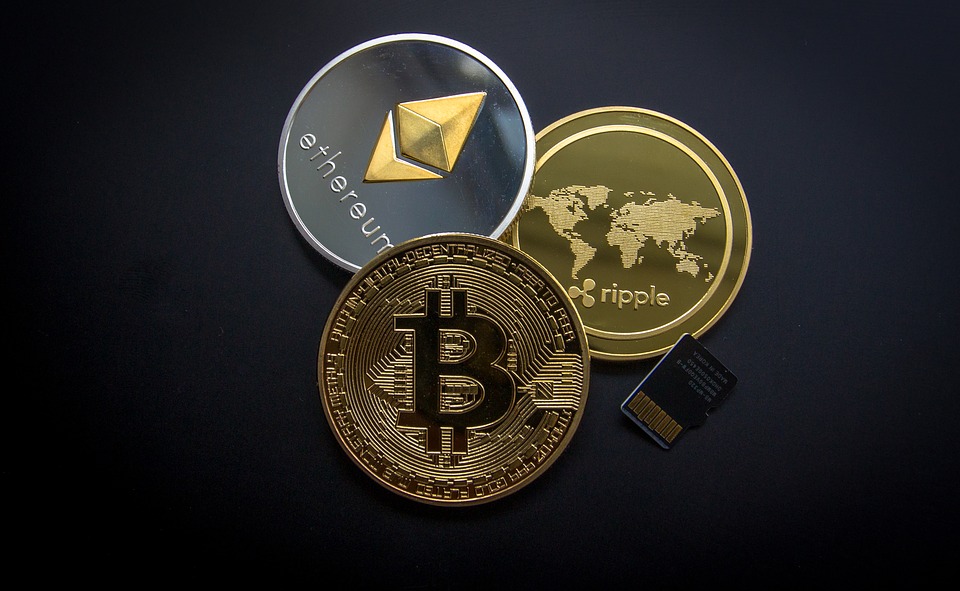
An onchain crypto ramp is a service that allows you to convert your fiat money (such as US dollars or euros) into cryptocurrencies (such as Bitcoin or Ethereum) and vice versa, using a blockchain network. Unlike traditional exchanges, onchain crypto ramps do not require you to create an account, verify your identity, or trust a third-party intermediary. Instead, you can use your own wallet and interact directly with the blockchain, which is a distributed ledger that records all transactions and ensures their security and transparency.

In a recent interview with CoinDesk, Tejpaul said that Coinbase has been investing in building tools and services that cater to the needs of institutional clients, such as custody, prime brokerage, and execution. He also revealed that Coinbase has partnered with leading blockchain analytics firms, such as Chainalysis and Elliptic, to provide its customers with access to on-chain data and intelligence.

Tejpaul explained that on-chain data can help institutions understand the dynamics of the crypto market, such as the supply and demand of different assets, the liquidity and volatility of various trading pairs, and the activity and sentiment of different user segments. He said that on-chain data can also help institutions identify and mitigate risks, such as fraud, money laundering, and regulatory compliance.

An onchain crypto ramp works by connecting you with a network of liquidity providers, who are willing to exchange their cryptocurrencies for your fiat money or vice versa. These liquidity providers can be individuals, businesses, or organizations that have access to both fiat and crypto markets. They can offer competitive rates and fast transactions, depending on the supply and demand of each market.

To use an onchain crypto ramp, you need to have a wallet that supports the blockchain network of your choice. For example, if you want to buy Ethereum, you need a wallet that supports the Ethereum network. You also need to have some fiat money in your bank account or card that you want to convert into crypto.

Then, you can visit the website or app of an onchain crypto ramp service and select the amount and type of crypto that you want to buy. The service will show you the best available rate from its network of liquidity providers and generate a QR code or a link that contains the details of the transaction.

You can scan the QR code or click the link with your wallet and confirm the transaction. The service will then send your fiat money to the liquidity provider and the liquidity provider will send your crypto to your wallet address. The whole process can take from a few minutes to an hour, depending on the network congestion and confirmation time.

Using an onchain crypto ramp has several benefits compared to using traditional exchanges or other methods of buying and selling crypto. Some of these benefits are:

Privacy: You do not need to create an account, verify your identity, or share any personal information with the service or the liquidity provider. You only need to provide your wallet address and your payment method.

Security: You do not need to trust a third-party intermediary or store your funds in a centralized platform that can be hacked or shut down. You have full control over your funds and transactions at all times.

Speed: You do not need to wait for days or weeks for your funds to be deposited or withdrawn from an exchange. You can complete your transactions in minutes or hours, depending on the network speed.

Accessibility: You do not need to have access to a bank account or a card that supports international payments. You can use any payment method that is available in your country or region, such as cash, mobile money, or online transfers.

Flexibility: You do not need to stick to one blockchain network or one cryptocurrency. You can choose from a variety of networks and currencies that are supported by different onchain crypto ramps.

There are many onchain crypto ramp services available in the market, each with its own features, fees, and supported networks and currencies. Some of the most popular ones are:

Ramp Network: A decentralized protocol that connects users with liquidity providers across multiple blockchains and payment methods. It supports Ethereum, Polygon, Binance Smart Chain, Bitcoin, Solana, Tezos, and more.

MoonPay: A centralized platform that enables users to buy and sell cryptocurrencies with fiat money using bank transfers, cards, Apple Pay, Google Pay, Samsung Pay, and more. It supports over 80 cryptocurrencies across 160 countries.

Transak: A centralized platform that allows users to buy and sell cryptocurrencies with fiat money using bank transfers, cards, UPI (India), SEPA (Europe), Faster Payments (UK), and more. It supports over 50 cryptocurrencies across 60 countries.

Wyre: A centralized platform that enables users to buy and sell cryptocurrencies with fiat money using bank transfers, cards, Apple Pay (US), Google Pay (US), Samsung Pay (US), and more. It supports over 10 cryptocurrencies across 50 countries.

On chain crypto ramps are a convenient and secure way of accessing the decentralized web. They allow you to convert your fiat money into cryptocurrencies and vice versa without creating an account, verifying your identity, or trusting a third-party intermediary. They also offer competitive rates and fast transactions from a network of liquidity providers.

You can choose from a variety of onchain crypto ramp services that support different blockchain networks and payment methods. If you are interested in learning more about onchain crypto ramps, you can visit their websites or apps and try them out for yourself.

Tejpaul added that on-chain data can also enable institutions to discover new opportunities and strategies in the crypto space, such as arbitrage, market making, and lending. He said that on-chain data can help institutions optimize their portfolio allocation, execution timing, and risk management.

Tejpaul concluded that on-chain data is becoming a key factor for institutional adoption of crypto, as it provides a transparent and reliable source of information that can enhance their decision making and performance. He said that Coinbase is committed to supporting its institutional customers with the best-in-class on-chain data and analytics solutions, as well as other products and services that can help them navigate the crypto market with confidence and ease.