DD
MM
YYYY

PAGES

DD
MM
YYYY

spot_img

PAGES

Home Blog Page 4077

Why SIM Swap Scams is on the Rise in Crypto

0

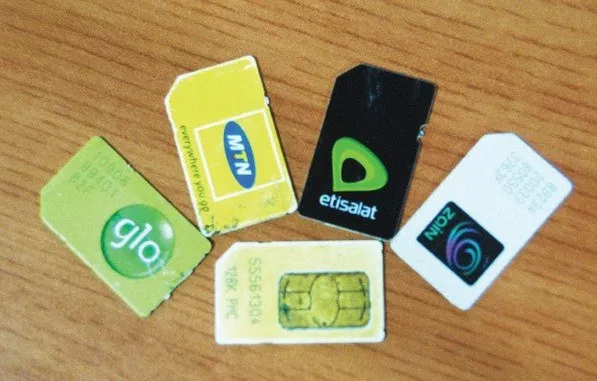
SIM swap scam is a type of cyberattack that involves taking over a victim’s phone number and using it to access their online accounts, such as email, social media, and cryptocurrency wallets. The attacker usually contacts the victim’s mobile service provider and convinces them to transfer the victim’s phone number to a new SIM card that the attacker controls. This way, the attacker can bypass the two-factor authentication (2FA) that many online platforms use to verify the identity of the user.

The cryptocurrency industry is particularly vulnerable to sim swap scams because many crypto platforms rely on phone-based authentication methods, such as two-factor authentication (2FA) or one-time passwords (OTP). These methods are supposed to add an extra layer of security to online accounts, but they can be easily bypassed by sim swap scammers who can intercept the codes and access the accounts. Moreover, cryptocurrency transactions are irreversible and anonymous, which means that once the scammers transfer the funds to their own wallets, there is no way to trace or recover them.

According to a report by CipherTrace, a blockchain security company, sim swap scams accounted for $30 million in losses in 2020, and the trend is expected to continue in 2023. Some of the notable victims of sim swap scams include Michael Terpin, a crypto investor who lost $24 million in 2018; Robert Ross, a father who lost his life savings of $1 million in 2018; and Gregg Bennett, a former Amazon executive who lost $164,000 in 2019.

To perform a SIM swap, scammers need to gather some personal information about you, such as your name, date of birth, phone number, account number, and security questions. They may obtain this information from various sources, such as social media, phishing emails, data breaches, or malicious apps.

Once they have enough information, they contact your mobile carrier and pretend to be you. They claim that they have lost or damaged their SIM card and request a new one to be activated. They may also provide some fake documents or identification to convince the customer service representative.

If the scammers succeed in convincing the mobile carrier, they will receive a new SIM card with your phone number. This means that they can receive all the calls and texts that are meant for you, including the 2FA or 2SV codes that are sent by your bank, email provider, social media platform, or other online service.

With these codes, the scammers can access your online accounts and perform fraudulent activities, such as transferring money, changing passwords, stealing personal data, or locking you out of your accounts.

SIM swap scam is especially common in the cryptocurrency industry because of the following reasons:

Cryptocurrency transactions are irreversible. Once the attacker transfers the victim’s funds to their own wallet, there is no way to get them back.

Cryptocurrency wallets are often protected by 2FA that relies on SMS or phone calls. If the attacker has access to the victim’s phone number, they can easily receive the verification codes and access the wallet.

Cryptocurrency users are often targeted by phishing emails or messages that lure them to reveal their personal information or click on malicious links. The attacker can use this information to impersonate the victim and request a SIM swap from the mobile service provider.

Cryptocurrency users may not notice the SIM swap until it is too late. Unlike bank accounts or credit cards, cryptocurrency wallets do not have any fraud detection or notification systems that alert the user of suspicious activity.

If you are a victim of a SIM swap scam, you may notice some of these signs:

Your phone suddenly loses network signal or shows “No Service” or “Emergency Calls Only”.

You stop receiving calls and texts from your contacts.

You receive messages or emails from your online services that indicate suspicious login attempts or password changes.

You are unable to access your online accounts or find that they have been compromised.

You receive unexpected bills or charges from your mobile carrier or online services.

There are some steps that cryptocurrency users can take to prevent SIM swap scam, such as:

Use a different phone number for 2FA that is not linked to your main phone number. You can use a prepaid SIM card, a virtual phone number, or a hardware device that generates one-time passwords.

Use an app-based 2FA instead of SMS or phone calls. Some examples are Google Authenticator, Authy, or Microsoft Authenticator. These apps generate codes that are stored on your device and do not rely on your phone number.

Do not share your personal information or click on suspicious links from unknown sources. Always verify the sender and the URL before opening any email or message related to your cryptocurrency accounts.

Monitor your phone service and your cryptocurrency accounts regularly. If you notice any unusual activity, such as losing signal, receiving messages about SIM change, or seeing unauthorized transactions, contact your mobile service provider and your cryptocurrency platform immediately.

Use a reputable and secure cryptocurrency wallet that offers additional security features, such as encryption, backup, recovery, or multisig. Some examples are Ledger, Trezor, or Coinbase Wallet.

SIM swapping is a serious threat that can compromise your online security and privacy. By following these tips, you can reduce the risk of falling prey to this scam and protect your digital identity.

What is a Flatcoin and What Are the Underlining Impacts?

0

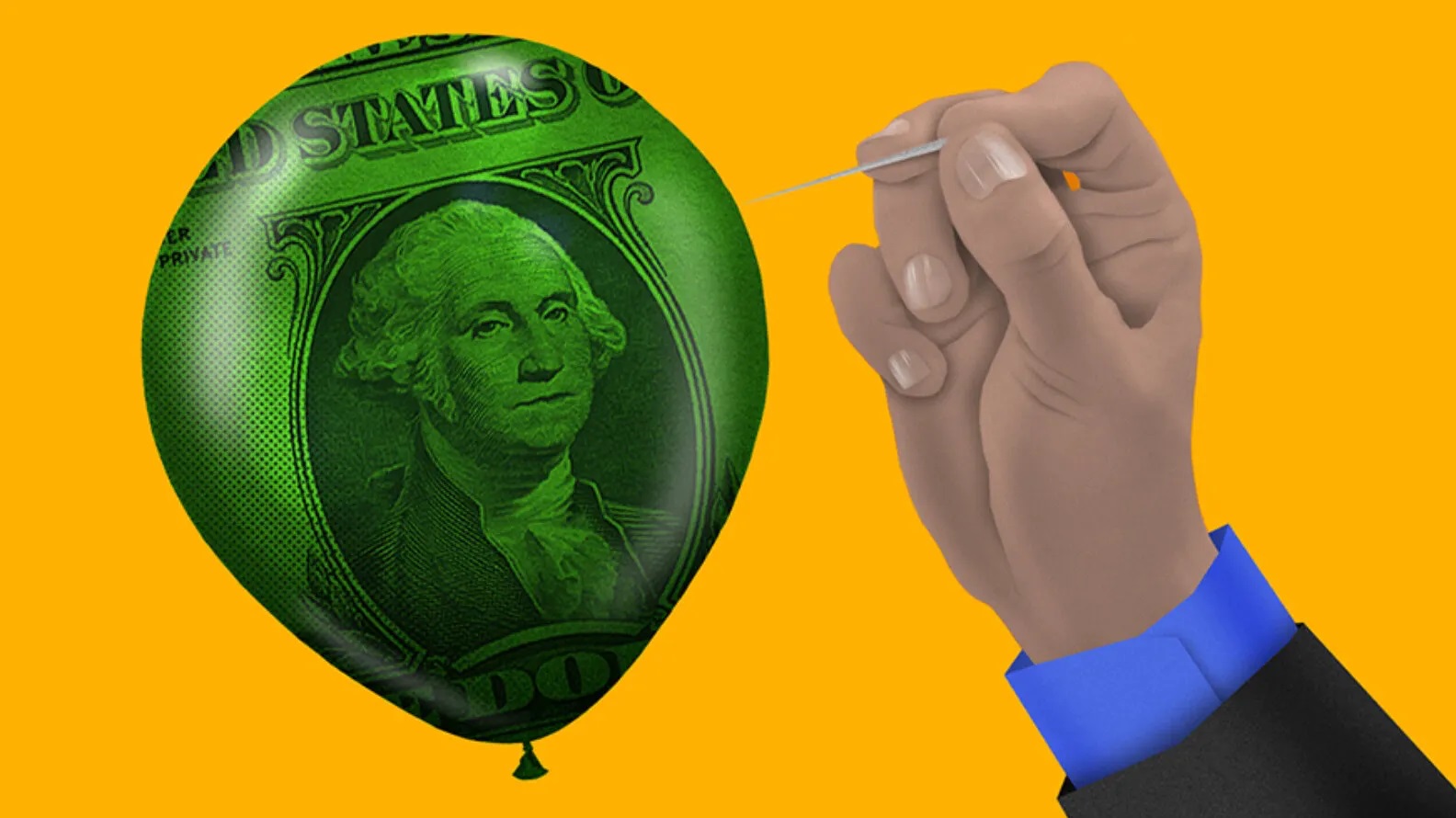
Flatcoins are a type of cryptocurrency that aim to maintain a stable value relative to a fiat currency or a basket of assets. Unlike volatile cryptocurrencies such as Bitcoin or Ethereum, flatcoins are designed to be used as a medium of exchange, a unit of account, and a store of value. Flatcoins can be classified into three categories: fiat-backed, crypto-backed, and algorithmic.

Fiat-backed flatcoins are the most common and straightforward type of flatcoins. They are issued by a centralized entity that holds a reserve of fiat currency or other assets in a 1:1 ratio. For example, Tether (USDT) is a flatcoin that claims to be backed by US dollars, while Binance USD (BUSD) is backed by both US dollars and Paxos Standard (PAX), another flatcoin.

Fiat-backed flatcoins are easy to use and understand, but they rely on the trustworthiness and solvency of the issuer and the custodian of the reserves. They also face regulatory and compliance challenges, as they may be subject to anti-money laundering (AML) and know-your-customer (KYC) rules.

Crypto backed flatcoins are another type of flatcoins that are collateralized by other cryptocurrencies, usually overcollateralized to account for price fluctuations. For example, Dai (DAI) is a flatcoin that is backed by Ethereum (ETH) and other ERC-20 tokens, while BitUSD (BITUSD) is backed by BitShares (BTS).

Crypto-backed flatcoins are more decentralized and transparent than fiat-backed flatcoins, but they are also more complex and riskier. They require users to interact with smart contracts and decentralized applications (DApps), which may have bugs or vulnerabilities. They also expose users to the volatility and liquidity risks of the underlying cryptocurrencies.

Algorithmic flatcoins are the most innovative and experimental type of flatcoins. They are not backed by any collateral, but instead rely on algorithms and mechanisms to adjust the supply and demand of the flatcoins to maintain price stability. For example, Basis (BAS) was a flatcoin that used a three-token system: Basis, which was the stablecoin.

Basis Bonds, which were issued when the price of Basis fell below the target price; and Basis Shares, which were distributed to the initial investors and received dividends when the price of Basis rose above the target price. Algorithmic flatcoins are fully decentralized and autonomous, but they are also the most unproven and unstable. They face technical and economic challenges, such as network effects, incentive alignment, governance, and market manipulation.

One of the main benefits of flatcoins is that they can facilitate cross-border payments and remittances. Flatcoins can be transferred quickly and cheaply across different platforms and jurisdictions, without the need for intermediaries or conversion fees. For example, a person in the US can send flatcoins to a relative in India, who can then exchange them for rupees at a local exchange or use them to pay for goods and services online. This can reduce the cost and time of sending money abroad, as well as the risk of currency devaluation or inflation.

Another benefit of flatcoins is that they can provide access to financial services for the unbanked and underbanked populations. Flatcoins can be stored and managed on mobile devices or online wallets, without the need for a bank account or a credit history. Flatcoins can also enable peer-to-peer lending and borrowing, as well as microfinance and crowdfunding initiatives. For example, a farmer in Africa can use flatcoins to buy seeds and fertilizers, and then repay the loan with interest using the proceeds from the harvest. This can increase financial inclusion and economic empowerment for millions of people around the world.

A third benefit of flatcoins is that they can enhance the efficiency and transparency of various sectors and industries. Flatcoins can be integrated with smart contracts and blockchain technology, which can automate transactions and enforce agreements without human intervention. Flatcoins can also provide verifiable and immutable records of data and information, which can improve accountability and trust among stakeholders. For example, a company can use flatcoins to pay its suppliers and employees, and then track the flow of funds and goods along the supply chain. This can reduce fraud, corruption, and waste, as well as improve customer satisfaction and loyalty.

Flatcoins are not without challenges and risks, however. Some of the issues that need to be addressed include regulatory uncertainty, technical security, scalability, governance, and adoption. Flatcoins also face competition from other forms of digital money, such as central bank digital currencies (CBDCs) or private stablecoins (such as Facebook’s Diem). Nevertheless, flatcoins have the potential to offer significant benefits for individuals, businesses, and societies, as they seek to leverage the advantages of cryptocurrency while minimizing its drawbacks.

Flatcoins are an important innovation in the cryptocurrency space, as they offer the benefits of digital currencies without the drawbacks of volatility. However, they also come with trade-offs and challenges that need to be carefully considered. Flatcoins are not a one-size-fits-all solution, but rather a diverse and evolving landscape that requires users to do their own research and due diligence.

Six Quick Legal Tips for the Weekend; Coverage for Nigerians

0

From the series of questions that I get asked on social media which mostly pertain to criminal defense, police brutality etc  on average  Nigerians, I have collated seven legal tips that everyone might find very helpful. 

1 “Do not ever confess or plead guilty to a crime you are being accused of, even if you are caught red-handed; deny it completely or say no comment unless your lawyer advises otherwise”. 

2 You Need a Lawyer More Than a Doctor. 

“You are entitled to a lawyer, if you cannot afford one, it is the responsibility of the government to provide you a lawyer free of charge”. 

(This is called the right to an attorney and it is a fundamental right). 

3 “It is never your obligation to prove that you are innocent or that you did not commit the crime you are being accused of or charged with rather it is the legal obligation of your accusers or prosecutors to prove that you did commit the crime they are accusing you of”.

(This is the legal principle of “Affirmanti Non Neganti Incumbit Probatio which means he who alleges must prove”), 

4 “No matter the gravity of the crime you are being accused of or charged with, you are still innocent and will always remain an innocent man unless a court of competent jurisdiction finds you guilty”
(This is called the principle of presumption of innocence).

5 “If you ever get arrested for any crime, it is your right not to say anything or write a statement, especially without your lawyer being present”.

(This is called the right to silence or called pleading the fifth in some other jurisdictions). This right is not just available to you, not just in police stations, it is as well available to you even in courtrooms.

6. Stop and Search have been criminalized 

“Policemen are no longer permitted to carry out roadblocks or stop and search in Nigeria, any policeman doing that is doing an unsanctioned and illegal job and should be reported for appropriate disciplinary action”. 


Insurance Coverage For Nigerians

For a country with a high cost of living like Nigeria and a high level of “anyhowness”, insurance should be a big deal and a top priority for everyone living in Nigeria but surprisingly, most people do not even know or have substantial knowledge about what is insurance not to talk of signing up for an insurance policy.

Nigerians will be driving an expensive vehicle that is worth large sums of millions without insurance cover; if the vehicle gets damaged or stolen they will have to bear the total cost of fixing the damage or replacing the car alone instead of an insurance company taking care of that.

Same with houses. A house that is worth hundreds of millions of naira will be mounted or erected without no insurance cover but with only “the God forbid syndrome” or the faith that nothing bad will happen to the property.

What then is Insurance and why it is so important for everyone?

Insurance simply put is a contract or an agreement represented by a policy, in which a policyholder receives financial protection, compensation or reimbursement against losses from an insurance company if what was insured against happens. The insurance company and the pool of clients bear these risks to make payments more affordable for the insured.

There are different classes of insurance one can get insured against; there is home or house insurance which is a policy that covers a house, there is homeowner’s insurance which is insured against home valuables, there is automobile or vehicle insurance, there is health insurance, there is 3rd party insurance, there is travel insurance, there is even mobile phone or gadget insurance.

Anything can be insured against. There is no limit as to what you can get insurance coverage on, the more a property is of value to you the more it is necessary to get insurance on that property no matter how insignificant that property may appear. You insure your everyday property which stands a risk of getting damaged, burgled or stolen. Once this property is insured, if the worst happens, you will stand the chance of either getting full reimbursement or replacement or compensation for the property or getting a fragment of the reimbursement or compensation for the property.

Life is just so uncertain and unpredictable to be living it carelessly or using expensive or valuable properties without insurance coverage. Nobody prays for bad things to happen, we can always “God forbid it” but it is better to be prepared for the worst and it ends up not happening than not to be unready or unprepared for it when it happens.

Enugu State Nigeria Moves to Generate Own Power, Signs Electricity Bill into Law

0

The Governor of Enugu State, Peter Mbah, took a significant step on Friday by signing the state electricity bill into law. This move is aimed at establishing a reliable and self-sustained power supply system for the state.

This move was made possible by the recently passed electricity bill, which empowers states to generate and distribute electricity.

During the bill signing ceremony at the government house, Mbah emphasized the significance of this step, highlighting its role in fostering economic growth and encouraging investments in the state’s electricity sector.

He stressed that his administration’s ambition to boost Enugu’s economy from $4.4 billion to $30 billion is dependent on achieving a consistent and reliable power supply. This underscores the crucial role of stable electricity in supporting the state’s economic development and expansion goals.

“As you know, following the constitutional amendment and the Electricity Act of 2023, electricity is now on the concurrent list,” Mbah said in a statement after signing the bill.

“This will now enable us to play in all the value chain of the electricity industry.

“So, Enugu state has spared no time in making sure that we create our own electricity market. That is the crux of this law.

“We are now able to play in the generation, transmission, and distribution segments of the electricity market.

“We are also, through our regulatory commission, which this law has given us the power to create, going to be able to regulate the activities of these players – the generation, transmission, and distribution companies that will flow from it.

“So, this is a significant and very important law towards the achievement of the Enugu of our dreams because the development and growth of Enugu will all be predicated on the platter that this law has created.

“You cannot talk about industry or private sector investment if you don’t have electricity or power.

“Enugu, under our administration, is designed and indeed prepared to be the premier destination for investment and this law is part of the enablers.”

In June, President Bola Tinubu signed the electricity bill into law, granting states, companies, and individuals the authority to generate, transmit, and distribute electricity.

This new electricity law supersedes the Electricity and Power Sector Reform Act of 2005 and serves as a comprehensive consolidation of the laws governing the Nigerian Electricity Supply Industry (NESI). It signifies a significant reform in the energy sector, allowing greater participation from various entities in the generation, transmission, and distribution of electricity.

By this bill, Enugu joins other states like Lagos, Edo, and Kaduna that have already enacted electricity market laws and can commence regulation of their markets.

Under the provisions of the Act, states are empowered to issue licenses to private investors for the establishment and operation of mini-grids and power plants within their respective jurisdictions.

However, it is important to note that the Act explicitly forbids states from engaging in the distribution of electricity beyond their own borders, whether at the state or national level. This provision aims to maintain a structured and regulated system within the electricity sector, ensuring that distribution activities adhere to defined territorial boundaries.

September’s Top Pick: XRP, ADA Price Prediction vs Elonator Presale

0

Are you looking for a crypto price prediction for $XRP or $ADA? Today, we’ll shed light on these two market leaders while discussing the latest developments in the crypto world, from the Ripple vs. SEC lawsuit to the best new project to hit the market, Elonator (ETOR). While Rippla and Cardano navigate market challenges, Elonator establishes itself as a future leader in the Web3 space.

Crypto Price Prediction For ADA And XRP

Despite the prolonged Ripple vs. SEC lawsuit, XRP has demonstrated remarkable resilience. Recently, a renowned cryptocurrency expert predicted a significant surge for XRP, envisioning it reaching the range of $100 to $130 soon. This forecast is based on an intricate technical pattern, a symmetrical triangle, reminiscent of XRP’s 2017 bull run. Despite XRP’s current trading at $0.50, on-chain activities for the token have not just survived but thrived. According to Santiment’s data, XRP had reached a seven-month high in on-chain volume, totaling an impressive 4.8 billion XRP. Simultaneously, the circulating supply of XRP hit a three-month high, with 2.03 billion in circulation. While skeptics exist, some experts even foresee XRP soaring beyond $20, but only time will tell if it reaches these heights.

Moving on to ADA, Cardano has been making steady strides since its inception in 2017. Although Cardano encountered a few hurdles along the way recently, ADA is trading at $0.2544, displaying relatively lower volatility compared to its crypto counterparts.

<<Click Here To Claim Your Elonator Presale Tokens>>

As for Elonator (ETOR), as a presale token, it’s immune to the market’s volatility, which makes it a secure investment in unpredictable markets. Elonator is currently in the third stage of its presale, with its token selling for the cheap price of $0.0004. Very soon, however, the price will go up as the level ends, so invest quickly to maximize your potential profit.

Will XRP And ADA Reach A New ATH?

Let’s draw a parallel between these crypto powerhouses. Both XRP and ADA have faced their own unique sets of challenges. XRP’s legal battle with the SEC has been ongoing, albeit with recent positive developments as the court ruled that it is not a security. In contrast, significant advancements and landmarks such as the Alonzo and Vasil hard forks have marked Cardano’s journey.

<<Click Here To Claim Your Elonator Presale Tokens>>

As we peer into the future, the crypto market is pulsating with excitement and potential. PricePredictions.com suggests XRP could be trading at around $0.52 by September 30, 2023, while the ADA price predictions for September 2023, range from a minimum of $0.235 to a maximum of $0.280, with an average of $0.257, according to analysts. These projections hint at significant growth potential for both tokens, especially considering their recent corrections.

Looking To The Future Of Crypto With Elonator

But we cannot discuss future potential without discussing Elonator. This new meme coin presale is positioning itself as an intriguing player in the Web3 space with its massive potential ROI, rich ecosystem, and dedicated community. Combining Elon Musk’s entrepreneurial spirit with the Terminator’s unyielding determination, it embodies a fresh and innovative market outlook. Additionally, Elonator’s ecosystem addresses common crypto challenges such as whale dumping, extreme volatility, and bot-driven disruptions.

With its hyper-deflationary mechanism that burns all excess tokens, Elonator protects its token from devaluation due to inflation. And with its innate security features, it counteracts malicious actors, bot attacks, and whaling. Elonator also represents a fresh start for those who are concerned about the legal baggage associated with projects like Ripple.

Elonator’s charting tool, which will be part of the planned ecosystem, will be able to tell you more about the market than any crypto price prediction. So, don’t waste any time and seize the altcoin market today by investing in the hottest presale going on, Elonator. Visit the project’s website today to invest and learn more.


Come With Elonator If You Want To Invest!

Presale: https://buy.elonator.com/
Website: https://elonator.com

Telegram: https://t.me/ElonatorCoin

Twitter: https://twitter.com/ElonatorCoin