DD
MM
YYYY

PAGES

DD
MM
YYYY

spot_img

PAGES

Home Blog Page 409

Congrats Binta Financial for Winning 2025 New Ventures BC Competition

0

Join me to congratulate Binta Financial, a Tekedia Capital portfolio company, for coming first in Canada: ” Binta Financial, a fintech startup building the infrastructure for borderless credit histories, captured first place in the 2025 New Ventures BC Competition, presented by Innovate BC. Along with securing the $110,000 Innovate BC First Place Prize, the Vancouver-based company has cemented itself as the province’s top startup.”

“Binta’s platform enables newcomers to carry verified credit histories across borders and access housing, loans, and employment faster, while also offering tools like rent reporting and an AI-powered financial literacy companion to help build local credit from day one. By turning credit into a truly borderless asset, Binta is making it possible for millions of people to arrive in a new country without having to start from zero.”

Well done CEO Paschal Okwundu, MBA and Team; win more markets.

Ozak AI 3-Year Outlook: Can This Presale Token Move From $0.012 to $5, and What That Means for Investor Returns

0

As the presale for Ozak AI picks up speed, more crypto investors are paying attention to it. The token is already making news for how quickly it is being bought at $0.012. The project is gaining a lot of support, having sold over 925 million $OZ and raised $3.5 million. The next presale phase will raise the price to $0.014, and the long-term goal is $1.00, which means there is a lot of room for growth.

The three-year outlook projects an even more ambitious scenario. If Ozak AI climbs to $5, early investors would see exponential returns. Such growth would imply over 41,000% gains since the presale value and would lead to one of the best ROI opportunities on the market currently.

Presale Progress Strengthens Investor Confidence

One of the reasons why Ozak AI is credible is the presale momentum. The growth of the phases is a confirmation of the need and concern for AI-driven blockchain solutions. Investors are investing capital with the belief that getting in early provides the best returns. The tokens will be sold at the best price points to presale supporters by the time Ozak AI goes live.

Planned growth builds confidence. Each stage has an increased entry price, and this ensures that things do not stall and demand and supply remain in a good balance. This places Ozak AI in a position to access trading markets with more liquidity compared to most other presale projects.

Partnerships and Market Positioning

One of the growth aspects of Ozak AI is partnerships. The collaboration with Hive Intel and Pyth Network enhances the delivery of AI-driven predictive analytics in blockchain ecosystems. These partnerships enhance utility and uptake in decentralized finance, trading, and applications of data sharing. As more industries embrace AI, the strategic position of Ozak AI aligns with one of the fastest-evolving sections of technology.

Path to $5 Over Three Years

The road to $5 requires consistent adoption and sustained market interest. Presale performance already indicates that investor appetite is accelerating, and this trend is likely to continue into the exchange debut of the token. The present phase pricing and continuous capital inflow point to the market demand being built faster than anticipated. On this course, Ozak AI can afford its price boldness in the long run.

Investor Returns at Scale

At the current presale price of $0.012, an investment of $250 secures over 20,000 tokens. Provided Ozak AI hits its target of $1.00, the stake value will be $20,000. In case the three-year forecast of $5 becomes a reality, the same investment may be more than $100,000. Even the conservative scenarios provide transformational results in comparison to traditional asset classes.

Final Outlook

Ozak AI integrates interesting presale organization, well-designed partnerships, and investor momentum. The token presents one of the most promising early-stage growth opportunities in the crypto market with a clear pathway between $0.012 and $1.00 and the potential to hit $5 in only three years. The current presale participants are putting themselves in a better place to take advantage of potentially skyrocketing returns.


For more information about Ozak AI, visit the links below:

Website: https://ozak.ai/

Twitter/X: https://x.com/OzakAGI

Telegram: https://t.me/OzakAGI

Elon Musk’s Net Worth Hits $500bn Following Tesla Board’s $1tn Compensation Plan

0

Tesla CEO Elon Musk on Wednesday became the first person ever to reach a net worth of nearly $500 billion, a landmark fueled by a rebound in Tesla’s shares and soaring valuations of his other ventures.

According to Forbes’ billionaires index, Musk’s fortune stood at $500.1 billion as of 4:15 p.m. E.T., cementing his lead as the richest individual in modern history.

Musk’s wealth remains tied closely to Tesla, where he owns more than 12.4% as of September 15. The electric vehicle maker’s stock has gained more than 14% so far this year, with a 3.3% jump on Wednesday alone, adding over $6 billion to Musk’s net worth.

The rally reflects renewed investor confidence as Musk reasserted his focus on Tesla after months in Washington. Tesla board chair Robyn Denholm recently said Musk was once again “front and center” at the automaker. Days later, Musk himself underscored that commitment by buying about $1 billion worth of Tesla shares in a personal vote of confidence.

Still, Tesla has struggled with declining vehicle sales and persistent margin pressures, leaving it among the weakest performers in the so-called “Magnificent Seven” group of megacap technology stocks. Despite those headwinds, the company is betting big on its future. The Tesla board last month unveiled what could become the most audacious corporate compensation plan in history—a $1 trillion package for Musk – tied to aggressive financial and operational milestones.

The proposed plan aims to secure Musk’s leadership as Tesla pivots from being primarily an electric car manufacturer to positioning itself as an AI and robotics powerhouse. If approved, the package is expected to more than double Musk’s fortune, potentially catapulting him into uncharted territory as the world’s first trillionaire.

The plan’s structure echoes Musk’s earlier controversial pay package, which paid out in tranches based on stock market performance and operational targets, but this new proposal raises the stakes considerably.

The move comes as Musk’s wider portfolio of companies is also gaining in value. His AI startup xAI was valued at $75 billion as of July, according to Pitchbook, with speculation in September of a potential $200 billion valuation. Musk denied plans for fresh fundraising. Meanwhile, Bloomberg reported in July that SpaceX was weighing a share sale valuing the rocket company at around $400 billion. Both ventures add considerable weight to Musk’s already sprawling empire.

The combination of these factors has widened the gap between Musk and the world’s second-richest person, Oracle founder Larry Ellison, whose net worth stood at $350.7 billion as of Wednesday. Ellison’s fortune, rooted in Oracle’s steady cloud and database business, underscores the contrasting paths to wealth—steady growth and dividends versus Musk’s volatility-driven rocket rise.

However, the latest developments revive a broader debate about Musk’s staggering fortune, which comes with the question of whether it is a reflection of transformative innovation or a sign of valuations detached from fundamentals. Although Tesla’s new $1 trillion compensation package has faced criticism and its approval is not certain, it is designed to lock Musk into the company’s future, and is also expected to mark the next step in cementing his place not only as the world’s richest man but potentially as the first trillionaire in history.

Google Deepens Cloud Design Layoffs with More than 100 Employees as AI Spending Reshapes Tech Giants’ Priorities

0

Google has laid off more than 100 employees in its cloud design unit, the latest in a string of cuts that show how the tech industry’s restructuring around artificial intelligence continues to reshape workforces.

Internal documents seen by CNBC revealed that the roles eliminated include teams focused on “quantitative user experience research” and “platform and service experience,” as well as adjacent groups. These jobs — which often relied on user data and behavioral studies to guide product design — have been halved in some cases. Many of the affected employees, most of them based in the United States, were told they have until early December to find another role within the company.

This week’s reductions are part of a long-running trend. Google has been steadily scaling back across multiple divisions since the beginning of the year, offering voluntary exit packages and slashing more than one-third of its managers overseeing small teams. The company has also extended buyouts across human resources, hardware, search, ads, marketing, finance, and commerce, while pressing employees to use AI more directly in their daily work.

The restructuring reflects a deeper shift at the company. Google has pivoted aggressively toward building AI infrastructure, with CEO Sundar Pichai warning in August that the company must “be more efficient as we scale up so we don’t solve everything with headcount.” In practice, that has meant cutting people-focused roles like design and research in favor of the raw engineering capacity required to support AI models and supercomputing.

A History of Cuts

Google’s workforce has already been through several waves of layoffs in recent years. In January 2023, the company eliminated about 12,000 jobs — roughly 6% of its global workforce — in one of its largest rounds of cuts ever. That move followed slower advertising revenue growth and mounting costs as the company prepared for an AI arms race sparked by OpenAI’s ChatGPT. Later that same year, further reductions were made across recruiting and other non-technical divisions.

Other tech giants have followed similar patterns. Microsoft cut about 10,000 workers in early 2023 and announced another 9,000 in July 2025, with the company acknowledging that resources were being funneled into cloud and AI services. Meta launched what CEO Mark Zuckerberg called its “year of efficiency” in 2023, eliminating more than 20,000 roles and flattening its management structure, only to continue trimming teams as it shifted more investment into generative AI and immersive platforms. Amazon, too, has cut tens of thousands of jobs since late 2022, hitting its retail, devices, and cloud divisions.

No End in Sight

What is increasingly clear is that these job cuts are not temporary corrections but part of a structural transformation in Big Tech. As AI systems grow more capable, many roles tied to design, support, and even middle management are being sidelined. Analysts believe this trend will accelerate rather than slow down, as companies trade traditional headcount for the data centers, chips, and algorithmic research needed to stay ahead in the AI race.

It is believed that every new leap in AI makes more categories of work redundant. Thus, if Google and its peers can get better results through AI-driven processes and infrastructure, there’s little incentive to keep large teams doing the old work.

Against this backdrop, the message for employees across Silicon Valley is that the more AI improves, the more human workers risk being cut.

Meta to Use AI Interactions for Ad Targeting, Pushing Personalization Beyond Likes and Follows

0

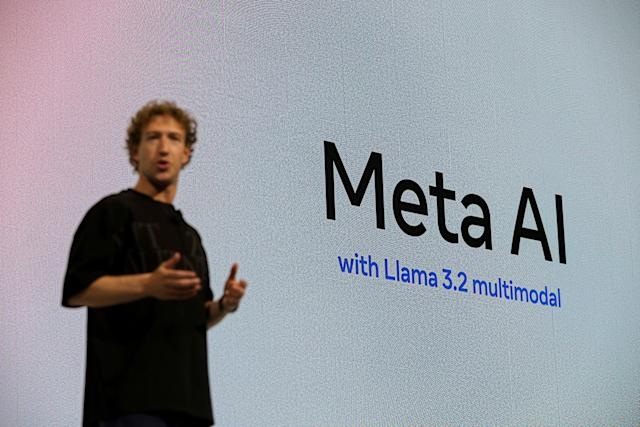
Meta Platforms said on Wednesday it will begin using people’s interactions with its generative AI tools to personalize content and advertising across its apps, including Facebook and Instagram, starting December 16 — a move that extends the company’s decades-long push to refine ad targeting and revives debate over user privacy.

The change, which applies only to users of Meta AI, will roll out in most regions outside the UK, the European Union, and South Korea. Users will be notified beginning October 7, and critically, they will not have an option to opt out, Meta said.

Interactions with Meta AI — whether by text or voice — will now be added to existing signals like likes and follows to shape recommendations for Reels, group suggestions, and ads. For instance, someone chatting with Meta AI about hiking could later see trail updates from friends, be nudged toward outdoor groups, or be served ads for hiking boots.

“People’s interactions simply are going to be another piece of the input that will inform the personalization of feeds and ads,” Christy Harris, Meta’s privacy policy manager, said. “We’re still in the process of building the first offerings that will make use of this data.”

Meta said that while interactions involving sensitive categories such as religion, political views, sexual orientation, health, or racial and ethnic origin will not be used for ad targeting, conversations on more general interests will feed into the company’s recommendation engines.

The update is designed to scale quickly. Meta AI already counts 1 billion monthly active users across its family of apps, giving the company one of the largest datasets of conversational interactions in the consumer internet space.

CEO Mark Zuckerberg has signaled this direction repeatedly. At the company’s annual shareholder meeting earlier this year, he said the “focus for this year is deepening the experience and making Meta AI the leading personal AI with an emphasis on personalization, voice conversations and entertainment.” At its Connect conference last month, Meta launched its first consumer-ready smart glasses with a built-in display, underscoring its commitment to blending hardware, AI, and platform services.

For Meta, the move represents the next stage in a long-running strategy to squeeze more value from its personalization systems. Advertising still accounts for nearly all of the company’s revenue, and AI-powered tools are increasingly seen as the key to maintaining its dominance as user growth matures.

But the decision also arrives against a fraught backdrop. Meta has faced repeated privacy controversies, most notably the Cambridge Analytica scandal in 2018, when the misuse of Facebook user data for political advertising triggered global scrutiny and led to a $5 billion fine from the U.S. Federal Trade Commission. More recently, Apple’s iOS privacy changes in 2021 — which forced apps to obtain permission before tracking users — significantly disrupted Meta’s ad business and wiped billions off its market value. These episodes underscored the risks of over-reliance on user data and remain fresh in the minds of regulators and investors alike.

Comparatively, Google and Amazon have also been monetizing AI, though largely through cloud-based services that target enterprise clients rather than consumer-facing personalization. Meta’s approach — feeding conversational data directly into its multi-platform ad engine — is more ambitious in scope, marrying AI-driven engagement with advertising at a scale unmatched by rivals.

The rollout may also test regulatory boundaries. The company has deliberately excluded the EU, the UK, and South Korea, regions with stricter data protection rules. By contrast, markets in North America, Latin America, and Asia are expected to see full adoption, offering investors a chance to evaluate the revenue potential before a broader global expansion.

The update highlights both opportunity and risk. Meta’s unmatched scale could give it a lead in AI-driven personalization, but its reliance on user trust and regulatory approval may prove a limiting factor. With competitors like Google and Amazon pursuing different monetization pathways, Meta’s strategy of embedding AI into the heart of its ad business faces the test of delivering measurable returns in 2025.