

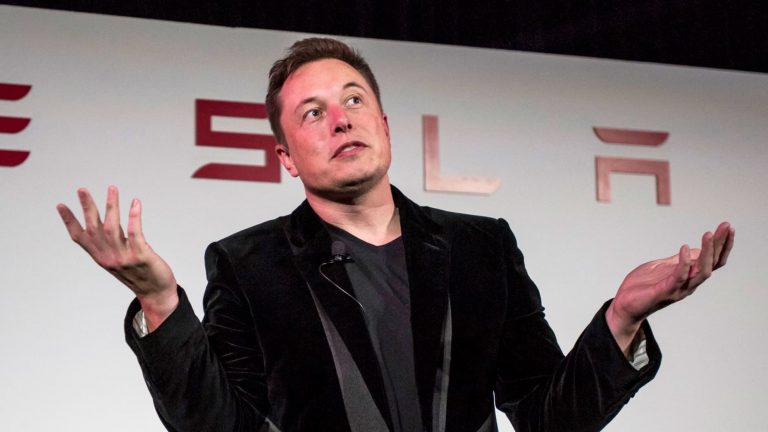
Tesla’s board has unveiled what could become the most audacious corporate compensation plan in history—a $1 trillion package designed to secure Elon Musk’s leadership as the company pushes to reinvent itself as an AI and robotics powerhouse.
The proposal, disclosed in a regulatory filing on Friday, underscores the immense faith Tesla and its board have in Musk at a time when the electric carmaker is battling slowing EV demand, intensifying competition from Chinese manufacturers, and growing investor unease about the CEO’s political ventures.
At its core, the pay package would grant Musk up to 12% of Tesla’s stock, contingent on the company hitting an almost unthinkable target: an $8.6 trillion market valuation, nearly eight times its current worth. If achieved, the payout would lift Musk’s stake far beyond his current 13%, handing him unprecedented voting power over Tesla’s future.
Register for Tekedia Mini-MBA edition 20 (June 8 – Sept 5, 2026).
Register for Tekedia AI in Business Masterclass.
Join Tekedia Capital Syndicate and co-invest in great global startups.
The sheer scale of the award dwarfs Musk’s already controversial 2018 pay deal—then valued at $56 billion—which remains tied up in legal disputes in Delaware. The new plan, worth roughly 18 times that amount, is designed to vest in tranches linked not only to market capitalization but also to operational milestones such as mass-producing robotaxis and humanoid robots.
Tesla has promised Musk no salary and no cash bonuses. Instead, the deal mirrors the 2018 package by tying all compensation to performance. The company argues that this structure both incentivizes Musk and aligns his interests with shareholders.
Tesla’s shares rose 3% after news of the filing.

“This is a ridiculously large pay package. It raises lots of questions, but last year Musk moved Tesla from Delaware to Texas in order to avoid all those questions,” said Brian Quinn, professor at Boston College Law School. “Given that Tesla’s stock price is basically all vibes and appears to have very little to do with the automaker’s actual performance, I suspect they will approve this package.”
Vision of a $25 Trillion Future
Musk has repeatedly said his ambitions for Tesla stretch beyond cars. He envisions humanoid robots, branded as Optimus, ultimately representing 80% of Tesla’s value. At one point, he even predicted they could push the company toward a staggering $25 trillion valuation.
The logic behind the plan is to keep Musk’s undivided attention, lest Tesla risk losing momentum just as it attempts to leap beyond EVs into AI-driven robotics.

That long-term vision was echoed by Tesla Chair Robyn Denholm, who defended the package in an interview with CNBC.
“To me, the plan is super ambitious, and that is what motivates Elon,” she said. “From our perspective, it’s about shooting for the moon and coming up with the ambition — the vision — that we’ve put out with the master plan.”
Denholm also emphasized another motivator: Musk’s desire for greater voting power.
“He’s been very public about getting additional voting power, so that as he develops AI products and AI deliverables and the Optimus robots … he wants to make sure that evil can’t be done with those things,” she said.
Governance Battles Ahead
The record-breaking award is certain to reignite debates about Tesla’s governance. Many believe that Musk, already Tesla’s largest shareholder, does not need further incentive. They warn that the package could worsen share dilution and tighten his grip on the company at a time when questions about succession loom large.
Douglas Chia, president of Soundboard Governance, was blunt in his assessment: “It really seems like what Elon wants, Elon gets from the board and from his shareholders. As ridiculous as it is, they’ll pass it, I have no doubt.”
Tesla has said a special committee of independent directors reviewed the plan and that shareholders will vote on it in November.
The filing also revealed that earlier this year, the board approved an interim compensation package valued at $29 billion in restricted stock—meant to ensure Musk’s leadership through at least 2030 while Tesla pivots to an AI-first strategy.
Politics at the Edges
Overlaying the business debate is Musk’s deepening involvement in U.S. politics, a development that has unsettled some investors. In July, Musk announced a plan to launch a new political movement, the “America Party,” following a public clash with President Donald Trump over a tax cut and government spending bill. Before his fallout with Trump, Musk was the face of the controversial Department of Government Efficiency (DOGE), which stirred protests and attacks against Tesla across the U.S.
Some shareholders have pushed for a policy of political neutrality, demanding more board oversight of Musk’s political activity, but Tesla’s board has urged investors to reject that proposal.
Musk’s extracurricular ventures extend far beyond politics. Since taking over Tesla in 2008, he has founded Neuralink, The Boring Company, acquired Twitter (renamed X), launched xAI, and continued to run SpaceX. His workload across multiple ventures has long raised concerns about focus—concerns Tesla’s board argues the $1 trillion plan is designed to address.
The Stakes
If shareholders approve the plan and Tesla meets its ambitious targets, Musk would receive the largest corporate payout in history, cementing his control and becoming the world’s first trillionaire.
However, the vote in November will serve as a referendum on more than just pay. It will test investor faith in Tesla’s next chapter—whether they believe Musk’s ambition to create a $25 trillion robotics empire is worth giving him even more power to run the company on his terms.
“While bold compensation tied to performance is nothing new, the sheer scale here sets a new bar for CEO incentives and will dominate boardroom debates everywhere,” said Adam Sarhan, chief executive of 50 Park Investments in New York.