DD
MM
YYYY

PAGES

DD
MM
YYYY

spot_img

PAGES

Home Blog Page 4092

Comparative Review: Dogecoin $DOGE, Shiba Inu Coin $SHIB and Hollywood X PEPE $HXPE

0

The world of cryptocurrencies has seen an incredible surge over the last decade, with a deluge of altcoins hitting the market. Among these, Dogecoin $DOGE, Shiba Inu Coin $SHIB, and Hollywood X PEPE $HXPE have garnered significant interest. Yet, it’s Hollywood X PEPE that’s emerging as the unexpected front-runner in this competition.


https://www.youtube.com/watch?v=8-UMATwJNcI

Let’s delve deeper into each of these cryptocurrencies to understand what makes Hollywood X PEPE the apex coin.

Hollywood X PEPE $HXPE

Hollywood X PEPE, unlike the other two meme coins, integrates blockchain technology with the world of entertainment, arts, and celebrities, bringing a unique offering to the market.

Pros:

  • Utility and adoption: Hollywood X PEPE has gained traction by creating digital collectibles of famous celebrities, films, and artworks in the form of non-fungible tokens (NFTs). This not only offers a use case for the currency but also allows for the growth of an ecosystem around it.
  • Celebrity endorsements: It’s backed by a wide range of celebrities and influencers, providing it with a broader reach and appeal.
  • Limited supply: Hollywood X PEPE has a limited supply, which helps maintain its value and prevents inflation.
  • Active development: The team behind Hollywood X PEPE is actively developing new projects and partnerships, showing their commitment to growth and innovation.

Buy Hollywood X PEPE $HXPE Presale Tokens

Dogecoin $DOGE

Dogecoin started as an Internet meme but soon transformed into a full-fledged cryptocurrency. It was created by Billy Markus and Jackson Palmer in 2013, who wanted to create a fun, less serious cryptocurrency that would appeal to the masses.

Pros:

  • Community support: Dogecoin’s community is one of its strongest assets. Known for its charitable endeavors, the community once raised 67.8 million DOGEs ($30,000 at the time) to send the Jamaican Bobsleigh team to the Winter Olympics.
  • Unlimited supply: While this might seem counterintuitive, Dogecoin’s unlimited supply makes it an attractive option as an actual currency, rather than a speculative investment.

Buy Hollywood X PEPE $HXPE Presale Tokens

Cons:

  • Lack of development: Dogecoin has been criticized for its lack of serious development and technological innovation, hampering its growth in the long term.
  • Market volatility: Like many other cryptocurrencies, Dogecoin is highly volatile, which can lead to significant financial loss for uninformed investors.

Shiba Inu Coin $SHIB

Shiba Inu was created in August 2020, and like Dogecoin, was inspired by the Shiba Inu dog breed. It was branded as the “Dogecoin killer” due to its supply of one quadrillion coins, making it far cheaper than Dogecoin.

Pros:

  • Affordability: SHIB’s incredibly low price makes it accessible to the average investor.
  • Strong community: Just like Dogecoin, Shiba Inu benefits from a strong and dedicated community of supporters.

Buy Hollywood X PEPE $HXPE Presale Tokens

Cons:

  • Limited use-case: As of my knowledge cutoff in September 2021, Shiba Inu did not have a broad range of real-world applications, making its long-term value speculative.
  • Concentration of wealth: A large portion of SHIB is held by a few individuals, raising concerns about potential price manipulation.

To summarize, here’s a bullet-point list highlighting the comparative pros and cons:

  • Dogecoin
    • Pros: Community support, unlimited supply.
    • Cons: Lack of development, market volatility.
  • Shiba Inu
    • Pros: Affordability, strong community.
    • Cons: Limited use-case, concentration of wealth.
  • Hollywood X PEPE
    • Pros: Utility and adoption, celebrity endorsements, limited supply, active development.
    • Cons: Regulatory scrutiny, market volatility.

Buy Hollywood X PEPE $HXPE Presale Tokens

It’s clear from this comparison why Hollywood X PEPE $HXPE is coming out on top. Its emphasis on utility, adoption, and active development, coupled with the strong backing of influential personalities, gives it a substantial edge over Dogecoin and Shiba Inu.

However, like all investments, it’s crucial to do thorough research and understand the risks involved before diving in. The world of cryptocurrency is as volatile as it is exciting, and while the rewards can be high, so too can be the risks.


Official Hollywood X PEPE Links | Linktree

Hollywood X PEPE Token | $HXPE Pre-sale is Live

How To Set Up A Licensed Unified Access Service (GSM/Fixed Telephony) Company in Nigeria

0

In February 2005,  a unified business licensing framework was  introduced in Nigeria which provided that :-

 -The market shall be opened up by adopting a unified licensing regime which shall allow existing fixed wireless and mobile licensees to provide both services subject to geographical/regional limitations contained in their licence.

 – For the post exclusivity period all wireless licences shall not be segmented in terms of mobile and fixed service categories. Once a spectrum is allocated, licensees shall be free to offer voice, data or multimedia services as they deem fit. 

-All active wireless licences issued prior to the expiration of the exclusivity period shall be amended accordingly.

These provisions led to a series of public consultations on the unified license option which resulted into a second phase of the consultation involving the appointment of a consultant to conduct a market analysis of the impact of the new license on the market in general and produce a framework for the license. 

 The final step in a series of lengthy consultation processes on this led to the creation of the framework and the introduction of Unified Access Service License. 

This article will thus be looking at the Unified Access Service business license in detail, with a focus on :- 

– Objectives of the licensing framework. 

– The scope of the Unified Access Service license. 

– Its licensing requirements. 

– Post-licensing Regulatory compliance requirements.

What are the business licenses combined into a Unified Access Service business license?

The Unified Service License covers the following services:- 

– Fixed Telephony whether wired or wireless. 

-Digital Mobile (GSM)Services.    

-International Gateway Services 

– National Long Distance (NLDO) Services. 

-Regional Long Distance Services.

In the Unified Access Service License, the following services will be allowed:-     

– FWA and PNL licensees (Fixed Telephony and LEO) will be allowed to provide mobile services subject to the frequency assignment and geographical limitations in the original license.  

– Digital Mobile licensees will be allowed to provide fixed and data services. 

-All Unified Licensees will be able to provide ISP, VAS and Payphone services. 

-International Gateway for own use and third party will be allowed. 

It should be noted that National Carrier Licenses and all other existing licenses will remain unchanged

Which organization is responsible for the grant of Unified Access Service licenses in Nigeria? 

The Nigerian Communications Commission (NCC) is statutorily empowered by the Nigerian Communications Act to receive, process and grant of reject applications for Unified Access Service business licenses in Nigeria.

What are the objectives of the Unified Access Licensing Regulations? 

The introduction of Unified Access Service licensing has the following objectives :-  

-Encouragement of the growth of new applications and services; 

– The simplification of existing licensing procedures to ease market entry and operations; 

– Achieving regulatory flexibility to address market and technological developments. 

-Efficient utilization of network resources, so that individual networks may be used to provide a broad range of ICT services. 

– Encouragement of a full range of operators, including large scale and micro entrepreneurs.   

What is the tenure of a Unified Access Service license? 

A Unified Access Service license has a validity tenure of 10 years renewable for the same term.

What are the qualification criteria for the grant of a Unified Access Service license?

To be eligible for unified license grants, existing licensees must meet the following criteria:- 

-An existing and operating network infrastructure. 

-A customer base of at least 10,000 connected subscribers or justifiable evidence of financial capability for substantial network rollout. 

-Must be up to date Payment of all fees and charges due to the Commission such as Annual Operating Levy (AOL), Spectrum and Numbering fees. 

-Must be up to date on submission of annual audited accounts. 

-Must be up to date on payment of company tax. 

-Must be up to date with equipment type approval. 

-Must be up to date in settlement of Interconnection obligations. 

-New applicants will be subject to the usual licensing application requirement.

What are the rollout obligations of Unified Access Service licenses? 

The NCC states that in line with technological advancements, many regulators are reviewing their universal access policies for the new converged environment. It is no longer fashionable to give rollout obligations to licensees. To spur the growth of rural service provision, regulators are rethinking their strategies and it has been found that reduced entry barriers, lower entry fees, infrastructure sharing and unhindered use of new wireless broadband technologies are more effective measures to promote cost-effective and rapid deployment of last-mile network technologies in rural and unserved areas.  

However, a purely market based approach to universal service has its limits. If stretched, especially remote and rural areas face the risk of remaining significantly underserved. Therefore, it is important to define national universal access targets and to develop mechanisms, such as establishing a universal access fund, designation of universal access operators or service areas subject to special treatment under a universal service approach.   

The Commission is developing universal access regulations in order to achieve service penetration that also includes marginalized groups and disadvantaged regions.  

The Commission will not impose separate rollout obligations on unified licensees, but rather deal with universal access issues in a separate universal access regulation, in which universal access targets and respective designation mechanisms are defined.

What are the operating license fees for Unified Access Service licenses in Nigeria?

A. The Commission proposes the following fee schedule for National and Regional Mobile service  

National Mobility   –   260 Million Naira.       

Regional Mobility     (Based on the tier structure in table below)     

TIER LICENCE FEE    

 Tier 1-33,000,000.00 Naira  

Tier 2-20,000,000.00 Naira  

Tier 3-16,000,000.00 Naira  

Tier 4-14,000,000.00 Naira  

Tier 5 – 9,000,000.00 Naira  

  1. This fee schedule is proposed for any Fixed telephony operator wishing to migrate to a unified License; 

Operating License Fees For Mobile Service – As Appropriate 

Operating license fee for International Data Access (Gateway)   25,000,000.00 Naira.

Operating License fee for National long Distance 20,000,000.00 Naira

Operating license fee for regional long Distance (within a state)     1,000,000.00 Naira

It should be noted that any PTO wishing to migrate to Unified Licensing should surrender its existing licence and would be credited the unexpired portion of its licence fees and issued a unified license of 10 years tenure.

 Fees to be paid by existing mobile operators wishing to migrate to Unified Licence              

Operating licence fee for Fixed Telephony–   44,600,000.00 Naira.  

Operating Licence fee for International Gateway –   50,000,000.00 Naira.   

Operating Licence fee for National Long Distance – 20,000,000.00 Naira   

Are there any limits to the number of Unified Access Service licenses that can be issued by the NCC? 

In the new framework, unified license operations would be open to competition subject however to the availability of frequency spectrum. The NCC may however, consider issuing a new license if it determines that the competitive environment is inadequate. 

You Can Resgn Your Job Whenever

0

Recently, I have been seeing some contracts of employment (offer letters) laced with some obnoxious clauses; one of which caught my attention is the clause that you are not allowed to leave the job for a so-so number of years and if you do you will have to pay the company a so so amount. This is to say that as a part of the employment requirement, you are not allowed to quit or resign from the job for whatever reason for a period of years and if you do or if you intend to do that you will refund the company 80% of the salary they have paid you and if you decide to play smart and relocate out of the country or elope, the guarantor whom you provided and have signed off on your behalf before you got the employment will be closed on by the company. 

A friend who got a job with an investment bank drew my attention to this because his offer letter also contained this clause and 

an internet user recently posted something similar to this; he was offered a job as a medical laboratory scientist, with a pay of N270k per month but with a non-negotiable clause in the offer letter that he must not leave or resign from the job for the next 2 years and if he does or intends to resign before the expiration of two or more years he must refund 80% of every monthly salary ever collected. 

This type of contract of employment clause as I have got to know is quite familiar in the banking and medical industry. 

Now the big question is; what is the legality and enforceability of clauses like this in the contract of employment; are they legal and are they enforceable in court? 

The simple answer is that conditions or clauses like this embedded in a contract of employment are not legal and enforceable. You can leave or resign a job whenever you want despite whatever clause or time bond you signed, as long as you have given the organization a reasonable notice of your intention to resign or quit. Even if you leave without notice, the employer cannot enforce that clause of you staying for stipulated years in court because such clauses are illegal and the court can not be used to enforce an illegality. 

Loosely speaking, parties are at liberty to contract however they wish and add covenants and clauses they deem fit into the contract and the parties are to be bound by those clauses in the contract but such contractual clauses must always conform with legality for it to be valid, legal and enforceable in court. This is to say that the liberty or freedom of contracting parties to make their contract has its limitations.

Why such a clause in a contract of employment of working for a stipulated number of years before you could leave is illegal and enforceable is that such clause subjects an employee to servitude and both the constitution and other labour laws prohibit contract of servitude. 

Lawyer’s closing note; if you get a good job with good pay but the job comes with a time-bound clause, go ahead and take the job and you can leave whenever you like because such clauses are not legal and can never be enforced against you, just ensure to give the organisation a reasonable notice of your intention to resign before you leave so as to satisfy the provisions of the labour law. 

Naira Floatation, Fuel Subsidy Removal: Nigerians Face Hard Economic Realities As Electricity Tariffs Set to Spike by 40%

0

The Nigerian government’s decision to deregulate the forex market is expected to increase the nation’s rate of economic hardship as the cost of goods and services will be determined by exchange rates – which have gone up since the decision was announced.

The economic impact is exacerbated by the government’s decision to remove subsidies: first fuel subsidy that has kept the cost of Premium Motor Spirit (PMS) affordable for the Nigerian people, especially, Small & Medium Enterprises (SMEs) that count on cheaper fuel to power their generators – as an alternative to an epileptic power supply. Then electricity subsidy, which was factored in the Electricity Bill signed by President Bola Tinubu earlier this month. The removal of electricity subsidy means electricity tariff will hence be based on the floated foreign exchange rates.

Currently, the Nigerian government pays N50 billion monthly to make up for the revenue shortfall in the power sector, thereby subsidizing electricity tariff for consumers. The removal of the subsidy is expected to increase the cost of electricity by as much as 40%, starting July, according to Guardian.

The Nigerian Electricity Regulatory Commission (NERC) 2022 Multi-Year Tariff Order (MYTO) has a fixed price based on exchange and inflation rates, which have been impacted by the floating of the naira.

The regulator’s Service Based Tariff (SBT) was established based on an exchange rate of N441 per dollar and an inflation rate of 16.97%. The current tariff rose from cheaper tariffs previously determined by lower inflation and exchange rates.

The 2015 N60 per kilowatt tariff was based on N198.97 per dollar exchange rate. The average rate was reviewed upward in 2020 based on N383.80 per dollar while in 2022, it was N441.78 per dollar. Rising inflation rates were also considered during the tariff revision periods. In 2015, the inflation benchmark used by NERC’s MYTO was 8.3%, in 2020 it was 12%, and 16.97% in 2022, which is currently being used.

With the subsequent increase in inflation rates, which currently sits at 22.41%, and the spike in the exchange rate – orchestrated by the deregulation of the FX market, which has seen the naira depreciate to N770 per dollar, a higher tariff is expected to hit electricity consumers soon.

The bitter expectation is compounded by uncertainties surrounding both the FX market and inflation rates. Experts said there is a likelihood that the exchange rate will jump much higher than it is unless there is enough dollar liquidity to take pressure off the naira. The removal of fuel subsidy is also expected to push inflation further up to 30% in the coming months.

This backdrop means there is going to be a significant increase in electricity tariff. The cost is estimated to rise as much as N90/kilowatt, amid depleting purchasing power of consumers. This means that Nigerians may end up paying up to N5,000 for just 50 units of electricity.

The government decided to remove fuel subsidies and float the naira without making provisions for palliatives that will cushion the effects. The resulting effect is that the Nigerian public will be forced to rely on the N30,000 monthly minimum wage to confront the resulting rise in the cost of living.
Experts said the situation will impact the economy negatively. This is because Nigeria is not generating enough electricity at the moment.

Presently, Nigeria’s electricity generation strength is said to be wobbling at around 3,057.7MW from 17 power plants, falling short of the 5,000 megawatts a year supply, included in the contract the distribution companies (DisCos) signed with NERC.

This backdrop means that while Nigerians pay as much as N90 per kilowatt, they will still have to buy fuel at about N500 –N557 per liter to power their generators due to poor electricity supply emanating from insufficient power generation.

Economists have called on the government to conduct an upward review of minimum wage as a way of boosting the spending power of the people in the wake of these policies.

“Minimum wage of N30,000 is nothing. It must go up to a level that allows consumption. Inflation will rise and fall irrespective of minimum wage but consumption is tied directly to wage earnings and/or credit. Less than 5% of Nigerians have access to a bank loan, so minimum wage must go up,” financial expert Kalu Aja wrote.

Blackrock Files for Bitcoin ETF

0

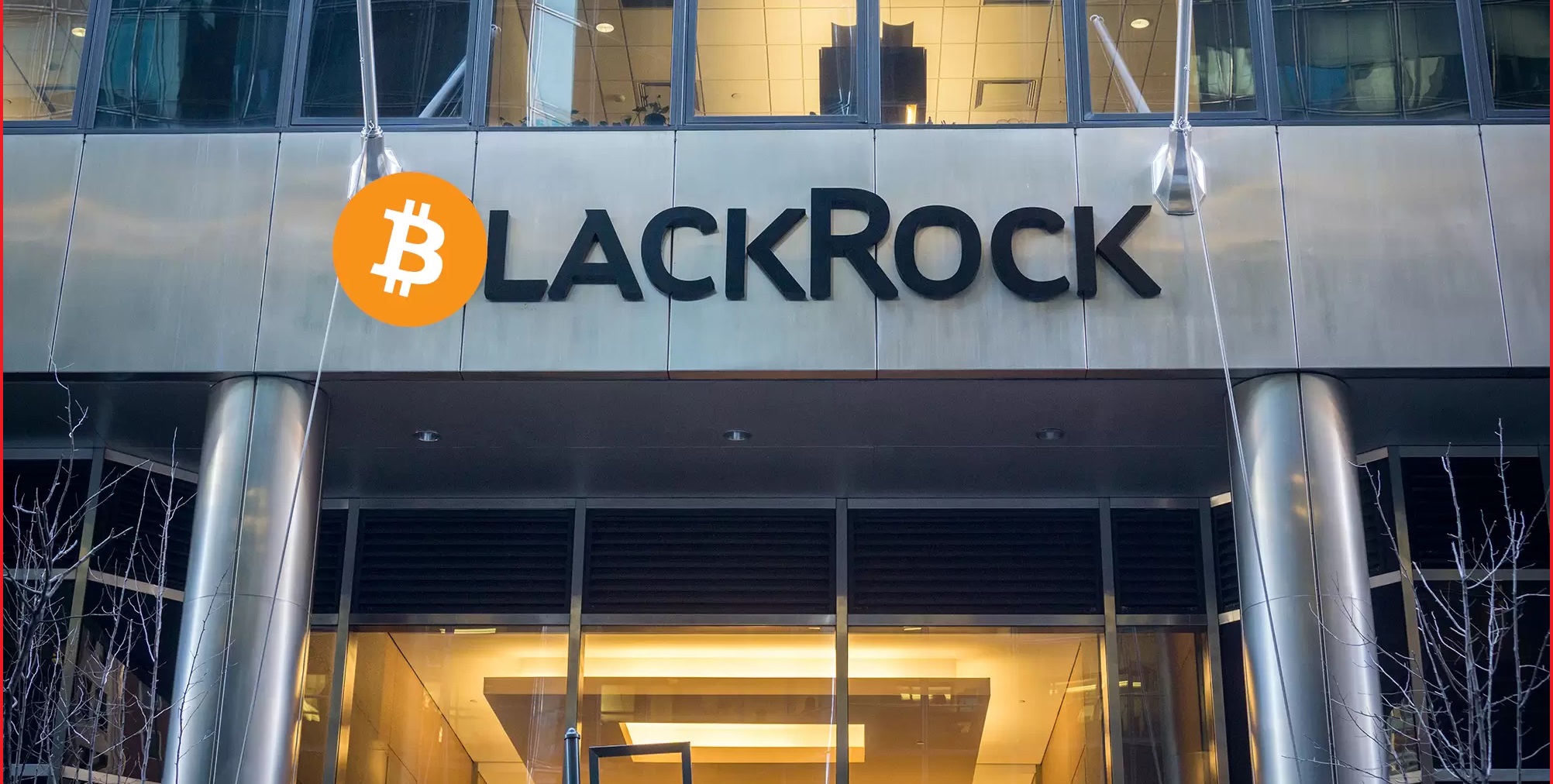
BlackRock, the world’s largest asset manager, has filed an application with the U.S. Securities and Exchange Commission (SEC) to launch a bitcoin exchange-traded fund (ETF). The move signals the growing interest and acceptance of the cryptocurrency among institutional investors.

A bitcoin ETF is a type of investment product that tracks the price of bitcoin and allows investors to buy and sell shares of the fund on a regulated exchange. Unlike buying bitcoin directly from a platform or a wallet, a bitcoin ETF offers more convenience, security and liquidity for investors who want exposure to the digital asset without having to deal with its technical aspects.

BlackRock’s proposed bitcoin ETF, named BlackRock Bitcoin Trust, would use the CME CF Bitcoin Reference Rate as its benchmark index. The fund would invest in bitcoin futures contracts traded on the Chicago Mercantile Exchange (CME), one of the largest and most reputable platforms for bitcoin derivatives. The fund would also hold cash and cash equivalents to meet its daily obligations.

According to the filing, BlackRock believes that investing in bitcoin futures contracts can provide several benefits for investors, such as: Access to a regulated and transparent market for bitcoin trading, Reduced counterparty and operational risks associated with holding or transferring bitcoin. Ability to diversify their portfolio with an alternative asset class that has low correlation with traditional assets; Potential to benefit from the long-term appreciation of bitcoin as a scarce and innovative technology.

However, BlackRock also acknowledges that investing in bitcoin futures contracts involves significant risks, such as:

  • High volatility and unpredictability of bitcoin prices.
  • Limited regulatory oversight and legal protection for bitcoin transactions.
  • Cybersecurity breaches and hacking attacks on bitcoin platforms and networks.
  • Competition from other bitcoin ETFs or similar products that may offer lower fees or better performance.

BlackRock’s filing comes at a time when the SEC is reviewing several other applications for bitcoin ETFs from various companies, such as VanEck, Valkyrie and WisdomTree. The SEC has not approved any bitcoin ETFs so far, citing concerns over market manipulation, fraud and investor protection. However, some analysts believe that the SEC may change its stance under the new leadership of Gary Gensler, a former MIT professor who has taught courses on blockchain and digital currencies.

A bitcoin ETF has several benefits for investors, such as lower fees; Buying and selling shares of a bitcoin ETF is cheaper than buying and selling bitcoin directly on a cryptocurrency exchange or platform, bitcoin ETF has more trading volume and liquidity than the underlying bitcoin market, which means investors can easily enter and exit positions without affecting the price too much.

Regulatory compliance: A bitcoin ETF is subject to the rules and regulations of the market where it is listed, which means investors can enjoy more transparency, security and protection than in the unregulated bitcoin market.

Tax efficiency: A bitcoin ETF may offer tax advantages for investors, depending on their jurisdiction and tax status. For example, in some countries, investors may be able to defer capital gains taxes until they sell their shares of the ETF, rather than paying taxes every time they trade bitcoin.

If approved, BlackRock’s bitcoin ETF would be a major milestone for the cryptocurrency industry, as it would attract more institutional capital and mainstream adoption to the nascent market. BlackRock is not only the largest asset manager in the world with over $9 trillion in assets under management, but also a trusted and influential name in the financial sector. The company has already expressed its interest and optimism in bitcoin in the past, with its CEO Larry Fink calling it a “great asset class” and its chief investment officer Rick Rieder saying it could “take the place of gold” in the future.