DD
MM
YYYY

PAGES

DD
MM
YYYY

spot_img

PAGES

Home Blog Page 4095

WhatsApp Rolls Out ‘Silence Unknown Callers’ Feature to Enhance Users Security And Privacy

0

Meta-owned messaging platform WhatsApp has rolled out a call-blocking feature called ‘silence unknown callers’, to enable users to block spam calls from unknown callers, giving them more privacy and control of their incoming calls.

The call silencing feature was rolled out after Meta received reports from users expressing concerns about fraudulent spam calls on the app.

Reports reveal that most users received spam calls from numbers with international codes from countries such as Kenya (+254), Malaysia (+60), Indonesia (+62), Vietnam (+84), and Ethiopia (+251).

In a bid to address the issue, Meta announced that it quickly ramped up its AI and ML systems to mitigate spam call incidents.

The company wrote via a blog post on its site,

“Protecting the privacy of your messages remains the driving force behind what we’re building at WhatsApp. While End-to-end encryption is the foundation to ensure your calls and messages are secure, we continue to add more layers of privacy on top including the recently launched Chat Lock to protect sensitive chats behind a password, Disappearing Messages that vanish, screenshot blocking for View Once, and the ability to keep your online presence private.

“Today, we’re excited to add two new updates to this growing list: Silence Unknown Callers and Privacy Checkup, which are available to users now. Silence Unknown Callers is designed to give you more privacy and control of your incoming calls. It helps to automatically screen out spam, scams and calls from unknown people for increased protection. These calls will not ring on your phone but will be visible in your Call list, in case it turns out to be someone important.

“To spread the word, we’re introducing Privacy Checkup to help make sure everyone knows about the options of protection on WhatsApp. This step-by-step feature guides you through important privacy settings to help you choose the right level of protection, all in one place. Selecting ‘Start checkup’ in your Privacy settings will navigate you through multiple privacy layers that strengthen the security of your messages, calls, and personal information”.

Also speaking on the rollout of the Silence Unknown Callers feature, a WhatsApp spokesperson said via a statement,

“WhatsApp is a leader among end-to-end encrypted services in protecting user safety. We continue to provide several safety tools within WhatsApp like Block & Report, consistently build user safety education and awareness, as well as, proactively weed out bad actors from our platform. However, bad actors find different ways to scam users. International scam calls are a new way that bad actors have recently adopted. We expect to be able to control the current incident effectively. We will continue to work relentlessly toward ensuring a safe experience for our users”.

WhatsApp’s rollout of the call silencing feature will help to mitigate spam calls received by users which is often used to promote fraudulent jobs. WhatsApp has continued to show that protecting the privacy and security of users is its top priority.

Starting this week, users will be encouraged to check in with one another securely via a private message so that friends and loved ones know they have a safe space to open up. Users can utilize the new Silence Unknown Callers feature to automatically screen spam calls and calls from people they do not know.

Additionally, Meta CEO Mark Zuckerberg introduced WhatsApp’s new Privacy menu to give users an idea about the privacy and security tools available to them. Meta states that the menu will offer instructions on how users can go about selecting the best level of privacy for their experience using the app.

IMF to Develop CBDC for Transactions Between Countries

0

The International Monetary Fund (IMF) is working on a handbook to guide its member countries on how to design and implement Central Bank Digital Currencies (CBDCs). CBDCs are digital forms of money issued by central banks that can be used for payments and transactions by the general public. CBDCs have the potential to enhance financial inclusion, efficiency, and stability, but also pose significant challenges and risks.

Central bank digital currencies (CBDCs) are a new form of money that is issued by central banks and can be used by the general public as a means of payment, store of value, and unit of account. CBDCs are different from traditional cash or bank deposits, as they are digital tokens that can be transferred electronically without intermediaries.

CBDCs have attracted a lot of attention in recent years, as more than 40 countries have approached the International Monetary Fund (IMF) to request assistance through CBDC capacity development (CD). The IMF has been working with these countries to help them assess the potential benefits and risks of CBDCs, as well as to provide guidance on how to design and implement them effectively.

One of the key questions that the IMF handbook will address is how CBDCs can facilitate cross-border transactions between countries. Currently, cross-border payments are slow, costly, and opaque, especially for low-income and developing countries. CBDCs could offer a faster, cheaper, and more transparent alternative, but also raise complex issues related to monetary policy, financial integrity, cybersecurity, and legal frameworks.

The IMF handbook will draw on the experiences and lessons learned from the few countries that have already launched or piloted CBDCs, such as Nigeria, Bahamas, China, Sweden, and Uruguay. The handbook will also explore different models and architectures for CBDCs, such as wholesale versus retail, account-based versus token-based, centralized versus decentralized, and interoperable versus standalone.

Enhancing financial inclusion by providing access to digital payments for the unbanked and underbanked populations.

Improving efficiency and reducing costs of cross-border payments by facilitating interoperability and reducing frictions.

Supporting innovation and competition in the financial sector by enabling new business models and services based on CBDCs.

Strengthening monetary policy transmission and financial stability by providing a reliable and secure alternative to volatile private cryptocurrencies.

Some of the potential risks of CBDCs 

Disintermediating commercial banks and disrupting the financial system by reducing their role in money creation and intermediation.

Eroding central bank seigniorage revenue and fiscal space by reducing the demand for cash and increasing the cost of issuing CBDCs.

Exposing central banks to operational and cyber risks by requiring them to manage complex IT systems and ensure data privacy and security.

Creating legal and regulatory challenges by raising questions about the legal tender status, taxation, consumer protection, and anti-money laundering aspects of CBDCs.

Given these trade-offs, there is no one-size-fits-all approach to CBDCs. Each country needs to carefully weigh the pros and cons of CBDCs based on their own economic, financial, and institutional circumstances. The IMF is developing a CBDC Handbook that will document emerging lessons, analytical findings, and policy views on various aspects of CBDCs. The Handbook will cover topics such as:

Motivations and objectives for issuing CBDCs

Design features and technological options for CBDCs

Legal and regulatory frameworks for CBDCs

Economic and financial implications of CBDCs

Implementation strategies and challenges for CBDCs

The Handbook will be a living document that will be updated regularly based on new evidence, experience, and feedback from stakeholders. The IMF hopes that the Handbook will serve as a useful reference for policymakers, practitioners, researchers, and anyone interested in learning more about CBDCs.

The IMF expects to publish the handbook by the end of 2023, after extensive consultations with its member countries and other stakeholders. The handbook will serve as a reference for countries that are considering or planning to issue CBDCs, as well as a basis for further research and analysis on this emerging topic.

Revolutionizing the Gambling Industry: The Impact of Tech on Affiliate Programs

0

Affiliate Marketing is the process when a business seeks help from partners (affiliates) to sell their products or services in exchange for a fee. Typically, companies encourage affiliates to promote their product by giving them a percentage of the sales coming from their personal affiliate link, just like in other reward programs.

Affiliate marketing should not be confused with a referral marketing program (which works with repeat customers) as affiliates do not have to be existing customers. However, even if partners are not customers, they must have an audience that includes the company’s target market.

Using Affiliate Marketing, affiliates display their personal link as an advertisement on their blog or use it in a piece of content. For example, a blogger might provide a link to a product in their review or article.

In most cases, partners subscribe to a company’s affiliate program. But sometimes a company may ask very popular bloggers and online celebrities for links to certain products and the like (much like an influencer program). Regardless of how a person became an affiliate, there is one thing in common – the affiliate link that the affiliate promotes to their subscribers.

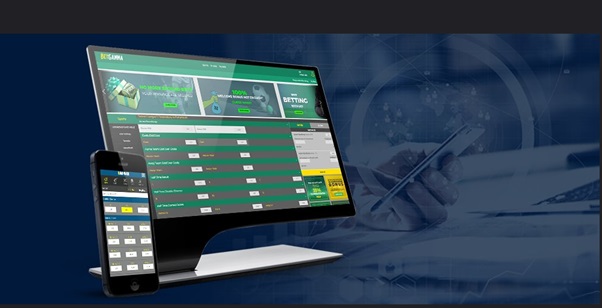
Affiliate marketing and affiliate programs in the modern world are becoming almost as popular as sports betting. Millions of people around the world make money by attracting an audience to betting platforms. Not every beginner can independently figure out how to choose an affiliate program. It all starts with choosing the affiliate platform that you prefer. Check out www.1xbet .ng, which  is an affiliate platform that offers favorable terms of cooperation for audience owners who are ready to attract customers to bookmakers. You can find out about the bonuses and promotions currently available on the main page. They guarantee a safe and profitable collaboration experience. The main principles of the company are trust, smart interaction and loyalty.

How does affiliate marketing work in the gambling Industry? 

Affiliate programs of bookmakers are one of the most profitable verticals in traffic arbitrage. Affiliate Marketing includes performance, rewards, and revenue sharing. Affiliates usually don’t need to directly sell the product, instead they promote the product, for which they receive a commission. That is, the affiliate will receive money when the promotion of a certain product leads to a transaction.

Bookmaker partners in arbitration pay for attracting new players – those who will actively place bets or use forecasting services. This is done by both “newborn” online bookmakers and brands with age – after all, the period of player activity usually does not exceed 3-4 months. To find a fresh audience, bookmakers create affiliate programs.

Payouts in affiliate programs of bookmakers also come in several models:

  • CPA is a fixed payment for a targeted user action. For example, for the fact that you bring a player, he will register and make the first bet;
  • Revenue Share – the bookmaker shares the income from the players you referred. Each affiliate program has its own formulas for calculating RevShare, in the best bookmaker affiliate programs, the arbitrator receives at least 30-40% of the income. And there is also a progressive revshare – the more traffic you bring (that is, players), the greater your percentage of deductions;
  • Hybrid is a mixed model. The first action of the player is paid according to CPA, and then the bookmaker shares the income according to the revshare;
  • CPL is a rare model in betting affiliate programs. Payments are simply for registering a player in a bookmaker or on a prediction site. Rates (commission amount) are lower than for CPA, but it is easier to get registrations.

According to which model to earn better, it is impossible to say unequivocally. If you want to earn income for all the actions of the players while they are active, try RevShare. If you need to make money quickly, CPA or even CPL is better.

Manufacturability 

These are tools for arbitrageurs – a good betting affiliate should have at least ready-made creatives and landing page templates. It is desirable that there be domain parking, postback and trafficback, statistics that are updated in real time, and rental applications. It’s all there in large CPA networks. But direct affiliate programs from online betting shops do everything to make it convenient to work with them.

How much can you earn 

It is impossible to say unequivocally how much you can earn in the betting vertical. After all, earnings on affiliate programs of bookmakers consist of several factors:

  • GEO – the country and region to which you send traffic. There are Tier-1 countries (Western and Northern Europe, USA, Canada) for which payments are higher than for other regions. But it’s harder to get conversions there because the market is overheated;
  • Payment model – for example, CPA payouts are higher than CPL payouts. Revshara is designed for long-term steady income, while CPA is designed for quick profit
  • The relevance of the offer – there are fresh and relevant offers that will be in demand. And there are already squeezed out, burnt-out proposals. You can check the relevance for specific GEOs using Google Trends or spy services – if you find a sea of creatives with the same offers, the offer will most likely already burn out;
  • Honesty of affiliate and advertiser – good affiliate programs pay on time and in full. The same applies to the advertiser – bookmaker’s office;
  • Earnings on the bookmaker’s affiliate program directly or through an intermediary – CPA network. In affiliate programs from direct advertisers, rates are usually higher, since part of the deductions does not go to the intermediary. But in CPA networks, there is more choice of offers;
  • Traffic source – paid or free. There are many shareware sources of traffic for betting – social networks, blogs, Q&A services, forums. At the same time, it is easier to scale up and get high income from paid sources.

And most importantly, what your earnings depend on is the ability to find an approach to the target audience. If you can interest the target audience, motivate them to take action, a high income will not keep you waiting.

Conclusion

Everyone can earn on betting affiliate programs. We wish you successful bays and high profits!

“LET’S KILL ALL THE IGBOS’ incitement and hate speech posts in Nigeria

0

There was a man that tweeted some time ago; “let’s kill all the Igbos”, he has been arrested by the police and is to be charged in court for incitement and hate speech.

The police news update reads;

“Today 15th June 2023, the Osun Police Command has arrested one Kehinde Adesogba Adekusibe ‘m’ 28 years who violated the social media policy on hate speech. It could be recalled that, on 18th May 2023, the suspect, Kehinde Adekusibe, on his twitter handle, tweeted, “Let’s kill all the Igbos. Let’s flush them out of Yoruba lands. I hate these people with a passion. They are violent people. They are the worst. They hate us”.

This arrest was an eye-opener to a lot of social media users who previously thought that “it is just social media” and they can say or post anything and nothing will happen even when what they post is a falsehood, defamatory, inciteful or criminal in nature.

The majority of Nigerian social media users are yet to know that although social media is yet to be totally or strictly regulated in Nigeria, it is loosely regulated to some extent and whatever you post or say while at it you will account for and if it’s criminal you will be made to defend it, defend the intent and defend yourself in court on it.

It is not just social media; Whatever you say on social media is on record and you can be charged for it. In fact, there are security agents whose job descriptions is to monitor social media usage, vet the users and their posts, identify threat made through social media; especially threat made against senior government officials and threat made against the country and quickly move in to arrest those who made that threat before they can execute it, even if the threat was made as a joke or a mere social media banter or cruise.

If you threaten to overthrow a government on social media you can be picked by the State Security Service and subsequently charged for treason or its attempt.

If you post on social media of your plans to organize people for “unpeaceful or violent protest” you can be picked for incitement and disturbance of public peace.

If you defame a person or lie against a person on social media, the person you defamed can file a civil suit against you for libel and the list goes on.

Someone all these serious posts are being made by users in the name of cruise, banter or joke but it had landed most of them in jail; the guy that was recently arrested for posting “Let’s kill all the Igbos” may likely raise the defence that he was joking or catching cruise in court but no judge will believe him or take that post to be just a regular social media bants or cruise.

Verify your information before posting and also be sure to post what you can be able to defend if the need comes up for you to defend it.


Ethereum Foundation to Raise Validators Staking to 2048 Ether

0

Ethereum is a decentralized platform that runs smart contracts and applications on a global network of nodes. Ethereum is currently transitioning from a proof-of-work (PoW) consensus mechanism, which relies on miners to secure the network, to a proof-of-stake (PoS) consensus mechanism, which relies on validators to stake their ether (ETH) and participate in the network.

Validators are essential in guaranteeing the integrity and security of the Ethereum network. They operate by consensus to process transactions on the blockchain by verifying that the conditions specified in each transaction’s smart contract code have been met. Validators also propose and vote on new blocks and receive rewards for their service.

To become a validator on Ethereum, one needs to stake 32 ETH and run a validator software that connects to the network. Staking 32 ETH means locking up the funds in a deposit contract until the validator exits or is slashed for malicious behavior. The validator software requires a dedicated computer connected to the internet at all times, and some technical know-how to set up and maintain.

Currently, there are over 500,000 validators on Ethereum, staking more than 16 million ETH. This number is expected to grow as more users join the network and stake their ETH. However, there is also a limit on how many validators can be active at any given time. This limit is determined by the total supply of ETH and the minimum stake required for each validator. If there’s around 100 million ETH staked, that would be 3 million validators.

However, Ethereum developers have recently announced that they are planning to raise the number of validators to 2048 in the near future. This is part of an effort to improve the scalability and performance of the network, as well as to increase the diversity and decentralization of the validator set. By having more validators, the network can process more transactions per second, reduce latency, and enhance security.

The developers have also stated that raising the number of validators will not affect the rewards or penalties for existing validators. The rewards and penalties are dynamically adjusted based on the total amount of ETH staked and the online rate of validators. The more ETH staked, the lower the rewards, the more validators online, the higher the rewards. The developers have assured that raising the number of validators will not dilute or reduce the rewards for current validators.

One possible scenario is that Ethereum developers may decide to raise the maximum number of validators to 2048, which would correspond to a total staked amount of 65,536 ETH. This would allow more users to become validators and contribute to the security and decentralization of the network. However, this would also require some changes in the consensus algorithm and the network parameters to ensure that the network can handle the increased number of validators without compromising its scalability and efficiency.

Having more validators would make it harder for an attacker to control a majority of the network and compromise its integrity. The attacker would need to stake more ETH and control more nodes to launch a successful attack.

Having more validators would increase the diversity and representation of the network participants and reduce the influence of any single entity or group. This would enhance the fairness and openness of the network and its governance.

Having more validators would increase the total amount of rewards distributed among them. The rewards are proportional to the total staked amount and inversely proportional to the number of validators. Therefore, if the total staked amount increases faster than the number of validators, each validator will receive a higher reward for their participation.

Having more validators would also increase the operational costs and risks associated with running a validator node. Validators need to have a reliable internet connection, a dedicated hardware device, and a secure environment to run their software. They also need to be online most of the time and follow the protocol rules to avoid penalties or slashing.

Having more validators would also increase the complexity of the consensus algorithm and the network parameters. Validators need to communicate with each other and reach agreement on new blocks in a timely manner. They also need to deal with potential issues such as network latency, forks, finality, and synchronization.

Raising Ethereum validators to 2048 is a possible scenario that may have both positive and negative implications for the network and its participants. It is not a trivial decision that can be made without careful analysis and testing. It is ultimately up to Ethereum developers and community members to weigh the pros and cons of such a change and decide whether it is worth pursuing or not.

The exact date and details of how the number of validators will be raised to 2048 are still being discussed and finalized by the developers. They have invited feedback and suggestions from the community on a proposal. They have also encouraged more users to become validators and join the network, as staking is a public good for the Ethereum ecosystem that helps secure the network and earn rewards in the process.