DD
MM
YYYY

PAGES

DD
MM
YYYY

spot_img

PAGES

Home Blog Page 41

Tata’s $14bn Semiconductor Bet Wins Intel Interest, Raising India’s Hopes for a Bigger Slice of the Global Chip Market

0

India’s push to become a serious semiconductor force gained a major boost as Tata Electronics secured Intel as a prospective customer for its upcoming chip facilities, a development that suggests the U.S. chipmaker sees potential in India’s attempt to build a large-scale manufacturing base.

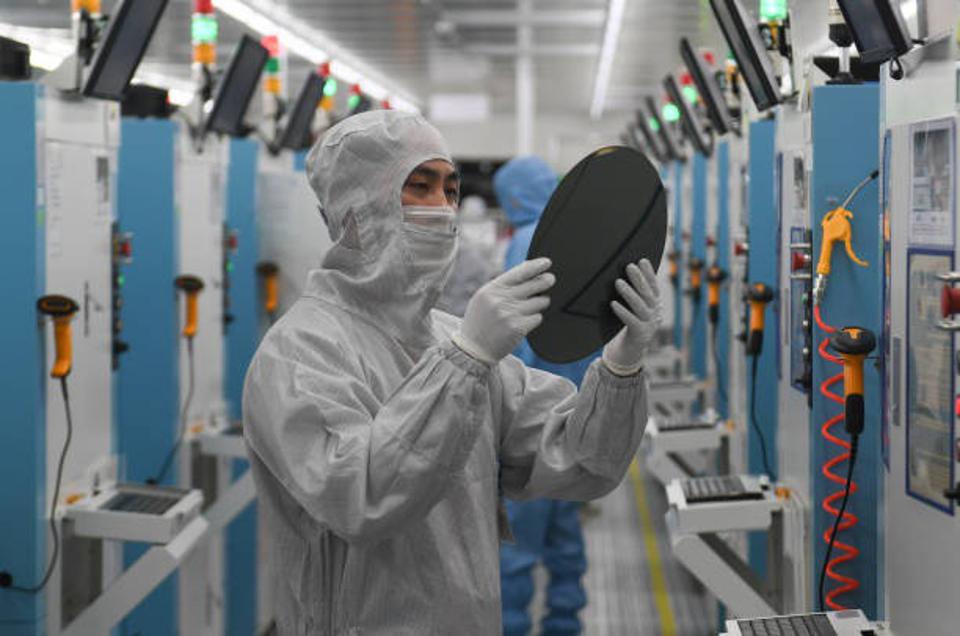
The electronics-manufacturing arm of the 156-year-old Tata Group is investing about $14 billion to build India’s first semiconductor fabrication plant in Gujarat and a chip assembly and testing facility in Assam. The move marks one of the most ambitious industrial undertakings in the country’s modern history, stretching from upstream chip production to downstream packaging.

Prime Minister Narendra Modi has spent the past several years pushing to position India as an alternative node in the global semiconductor chain, aiming to stand beside established giants like Taiwan. The effort has been difficult, dogged by early setbacks, geopolitics, cost concerns, and the sheer technical challenge of building a modern chip ecosystem from scratch. But Intel’s willingness to engage with Tata Electronics hints that India’s nascent progress is beginning to register with global players who are scouting safer, more diversified supply chains.

Intel and Tata Electronics said they will also explore the opportunity to rapidly scale AI PC solutions for India’s consumer and enterprise markets, which they describe as a market expected to become one of the world’s top five by 2030. This is a key point because both companies are betting on the next wave of personal computing, driven by AI-powered systems that require new chip architectures, faster on-device inference, and more specialized accelerators.

Growing demand in India provides Intel with a reason to cultivate hardware partners within the country, while Tata aims to ensure that its new fabs serve strategic segments beyond traditional processors.

The announcement comes at a time when global chipmakers are rethinking their supply-chain exposure and looking for expansion opportunities outside East Asia. The U.S. CHIPS Act has spurred a build-out in America, while Japan and Europe are also investing heavily in local capacity. India has been attempting to insert itself into that realignment, arguing that its mix of market size, political stability, engineering talent, and strategic location could support a manufacturing ecosystem that complements — rather than replaces — established global hubs.

Tata’s fabrication facility in Gujarat is the centerpiece of this effort. A fully functional fab requires extraordinary engineering discipline, extremely pure industrial inputs, and sustained investment over many years. The companion plant in Assam will handle assembly and testing, critical steps in making chips commercially usable. If both plants come online successfully, they could form the backbone of an end-to-end semiconductor value chain inside the country.

Intel’s role as a prospective customer would be significant in symbolic and practical terms. It signals that the company is open to purchasing chips made or packaged in India, giving Tata a credible anchor client as it enters a hyper-competitive sector where yields, reliability, and delivery timelines make or break new entrants. It also gives India something it has long lacked: a marquee partnership that strengthens its pitch to the broader global semiconductor community.

The AI PC collaboration adds another layer of relevance because the category is becoming a battleground for chip designers, hardware manufacturers, and AI service providers. As more tasks shift to on-device inference rather than cloud-only processing, companies like Intel are trying to secure regional hardware partners that can help them deliver systems at scale. India’s consumer base and enterprise sector make it a natural target for such an expansion, and Tata’s new capabilities offer a domestic platform to support that push.

If Tata’s facilities achieve commercial readiness, the long-term payoff could reshape India’s industrial landscape. It would broaden domestic supply chains, attract additional technology partners, and deepen the country’s involvement in strategic sectors where it has long wanted a foothold. For Intel, it offers a diversified production environment at a time when supply-chain resilience has become a boardroom priority.

India’s semiconductor dream remains a marathon rather than a sprint, but Intel’s early interest gives the project a more credible foundation as global technology firms reassess where and how the next generation of chips will be made.

Why the $5tn Humanoid Robot Race Is Accelerating and 25 Companies Likely to Succeed – Per Morgan Stanley

0

The global dash toward humanoid robots is moving from sci-fi fantasy to a corporate arms race, and the heat around it keeps rising. A new research note from Morgan Stanley earlier this month placed a spotlight on the companies that stand to shape — and profit from — what it says could become a market worth more than $5 trillion by 2050.

The analysts did not limit their attention to flashy robot manufacturers. They focused instead on firms that build the core components that make humanoid machines function, including advanced AI chips, cameras, perception systems, sensors, movement hardware, and semiconductor architectures. According to them, these foundational suppliers are poised to be the true winners as humanoid robots eventually enter mainstream use.

Morgan Stanley’s analysts compiled a list of the twenty-five companies they believe are best positioned. The list spans a mix of American, European, and Asian giants such as Nvidia, Samsung, AMD, and Sony, alongside fast-rising players like Hesai, the Chinese lidar manufacturer whose sensing technology could help future robots better orient themselves in complex environments. Semiconductor design firm Synopsys also made the list, and analysts gave it special mention, noting the growing importance of chip-design platforms for building reliable humanoid “brains.” Nvidia underscored that potential by announcing a $2 billion investment in Synopsys on December 1.

The researchers estimate that more than a billion humanoid robots could be deployed worldwide by 2050, a staggering figure that helps explain the current investor frenzy. Yet they also caution that adoption will take time, particularly through the next decade. In their assessment, the curve will stay slow until at least 2035 as engineering challenges continue to demand enormous research and development spending. Even so, long-term expectations remain high.

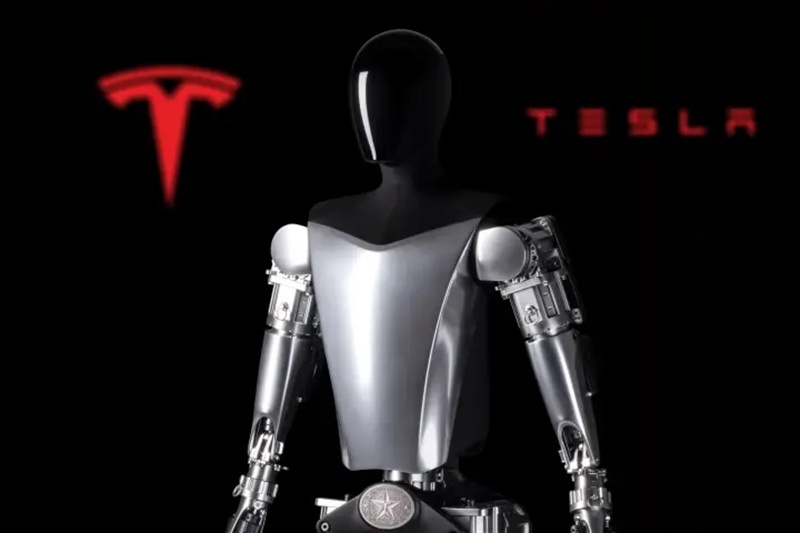
Enthusiasm is not limited to Wall Street. Elon Musk has been one of the most vocal advocates of a humanoid future. Last month, he said Tesla’s Optimus robot has the potential to “eliminate poverty” and boost global economic output tenfold. Tesla plans to begin mass production of Optimus by the end of next year, although it has not provided targets on how many units it intends to build.

Musk’s comments helped intensify attention around the sector, even as most experts agree that consistent breakthroughs in balance, agility, autonomy, safety, and cost will determine how soon humanoids begin to appear broadly in factories, logistics hubs, warehouses, and home environments.

Tesla is far from alone in this race. Chinese automaker Xpeng recently unveiled its eerily lifelike “Iron” humanoid robot, signaling that competition is widening and becoming more international. China itself is already showing signs of overheating, with authorities issuing a warning last week about a possible bubble forming in the domestic robotics industry. More than 150 Chinese companies are now working on humanoid robotics, a number that has raised concern inside the country’s own tech policy circles.

The broader landscape hints at a mix of promise and peril. Legacy industrial robots are already common in automotive factories, semiconductor plants, and logistics centers, but humanoid robots are far more complex. They need to navigate unpredictable spaces, process visual and spatial data on the fly, and execute tasks that require dexterity rather than repetitive motion. That means the companies supplying chips, sensors, and computational systems are becoming central to the next phase of robotics. This explains why Morgan Stanley’s list includes companies operating at nearly every layer of the hardware stack, from Baidu and iFlytek on the AI side, to ARM, Texas Instruments, Onsemi, Microchip, STMicroelectronics, Infineon, Melexis, ROHM, NXP, Ambarella, Renesas, Cadence, Desay, Horizon Robotics, and Joyson.

The growing energy around humanoids also feeds into a larger transformation in global AI markets. Massive investments in generative AI have pushed chipmakers and sensor firms into new levels of relevance, and the same technologies powering AI assistants, autonomous driving systems, and large language models are becoming essential to the mechanical coordination of humanoid robots. This overlap is leading analysts to treat the humanoid boom as an extension of the AI-chip boom rather than a standalone trend.

Even with the excitement, there are clear operational challenges ahead. Companies that want to bring humanoids into commercial environments will face steep barriers such as durability, battery limitations, safety certification, repairability, and workforce integration. Investors are betting that component suppliers, rather than robot manufacturers, will generate the early gains because their technologies can serve multiple markets, including autonomous vehicles, mobile devices, and traditional robotics. In that sense, the humanoid surge is already reshaping corporate strategy across sectors that historically had little overlap.

Below is Morgan Stanley’s list of the 25 companies at the forefront of the humanoid robot boom:

  1. Baidu
  2. iFlytek
  3. Desay
  4. Horizon Robotics
  5. Alibaba
  6. Samsung Electronics
  7. NVIDIA
  8. Cadence
  9. Synopsys
  10. ARM
  11. AMD
  12. Texas Instruments
  13. Samsung Electro-Mechanics
  14. Onsemi
  15. Microchip
  16. Sony
  17. Ambarella
  18. NXP
  19. ROHM Semiconductor
  20. Melexis
  21. STMicroelectronics
  22. Infineon
  23. Renesas
  24. Joyson
  25. Hesai

The next several years will determine whether these companies mature into a genuinely transformative humanoid robot industry or settle into a more modest role within automation.

DSA €120m Fine Against X is Escalating Transatlantic Tensions as Washington Threatens Retaliation: But the EU is Defiant

0

The European Union has issued its first major enforcement blow under the Digital Services Act, hitting Elon Musk’s X with a €120 million fine on Friday — about $140 million — and setting off a diplomatic and corporate firestorm that now spans Brussels, Washington, and Silicon Valley.

The penalty marks the first time any platform has been punished under the DSA, and the episode has quickly evolved beyond a regulatory dispute into a broader clash over sovereignty, competition, and the power of American tech giants inside Europe.

Musk answered the announcement in trademark fashion, firing off a single-word post — “Bullshit” — to his ? profile minutes after the European Commission released the details. But the public confrontation escalated further a day later when X’s head of product, Nikita Bier, accused the Commission of misusing a platform loophole to boost the reach of its announcement and then responded by shutting down the EU executive’s advertising account on X.

Bier said the Commission had not used its ad account since 2021, yet relied on a post format reserved for paid promotions to publish the fine announcement. He claimed the institution used “a link that deceives users into thinking it’s a video and to artificially increase its reach.” The post did, in fact, contain a video showing the Commission’s message, but Bier’s allegation centered on how the link was formatted.

His retaliation, suspending the Commission’s ad account, is unlikely to carry practical consequences. If the account has truly been dormant for three years, withholding it does little to influence the process now underway. X is still expected to pay the €120 million fine unless its appeal succeeds, and the company must, within 60 days, submit a concrete plan to address its use of “deceptive” verified checkmarks or risk further punishment.

As this brewed in Europe, the fine ignited a wave of condemnation across the United States. Officials in Washington warned the EU that the Trump administration may retaliate to defend American tech companies, tying the standoff directly to trade, tariffs, and broader diplomatic relations. Corporate leaders joined the chorus, describing the EU’s increasingly aggressive regulatory posture as harmful to investment. JPMorgan chief executive Jamie Dimon said Europe “has driven business out, driven investment out and driven innovation out.”

Beyond the immediate dispute with X, Brussels is intensifying its confrontation with Big Tech after years of complaints that American digital platforms dominate the European market without adequate oversight. Three months after hitting Google with an unexpected €2.95 billion fine in an unrelated antitrust case, the European Commission followed with this 120-million-euro penalty on X for breaking EU content rules.

The wider conflict now involves the Digital Markets Act, which seeks to rein in power across a long list of companies, including Amazon, Apple, Google, Meta, Microsoft, ByteDance, and Booking.com. It also involves the Digital Services Act, the same law at the center of the dispute with Musk, which requires major platforms to curb illegal content, mitigate harmful material, and provide transparency on how their systems function.

Senior Commission officials show no signs of wavering under American pressure. Teresa Ribera, the EU’s antitrust chief, flatly rejected complaints from Washington, saying, “It is our duty to remind others that we deserve respect. I don’t enter into how they regulate the health standards in the U.S. market. But I am in charge of defending the well-functioning digital markets in Europe and it is not related at all with any type of joint conversation.”

During another public appearance, Ribera dismissed the idea that competition law should be deployed as an economic weapon. She described it instead as “an essential pillar of open, fair, and sustainable markets,” warning it should never serve as a “bargaining chip in trade negotiations or a tool for protectionism.”

Several analysts note that Washington’s threats may already be losing their effect. Daniel Mandrescu, a lawyer at Geradin Partners and associate professor at Leiden University, said the Commission’s announcement of a new investigation into Meta suggests that political pressure from the United States “is rapidly losing its strength,” arguing that adherence to the rule of law leaves Europe little room to compromise.

Some observers believe this moment marks the EU’s most assertive phase of tech enforcement in years. Rupprecht Podszun, a professor at Heinrich Heine University Düsseldorf and director at the Institute for Competition Law, said he was struck by the newfound determination inside the Commission. He warned that the momentum itself creates higher expectations, because backing down later would undermine the entire effort. The Google Ad-Tech case, he said, will serve as a crucial test, as will the outcome of the new Meta AI probe.

Google recently offered to make it easier for publishers and advertisers to use its online advertising tools without switching between different services. The company hopes the proposal can resolve concerns without the forced divestiture the EU has pressed for. A ruling is likely early next year.

Meanwhile, the Commission has launched a fresh investigation into Meta, which could force the company to pause its rollout of new AI features inside WhatsApp on the grounds that the changes may block rivals.

Taken together, the moves create a new collision course between Europe’s historic stance on digital sovereignty and Washington’s determination to defend its most powerful technology firms. The DSA fine against X is more than a penalty for a specific breach; it signals a shift into a more assertive chapter for the EU, one that may complicate relations with the Trump administration and reset the balance of power between regulators and global platforms.

Paramount Skydance Launches $108.4bn Hostile Bid for Warner Bros Discovery, Escalating Industry-Shaking Battle With Netflix

0

Paramount Skydance jolted Hollywood and Wall Street on Monday with a stunning $108.4 billion hostile takeover bid for Warner Bros Discovery, an all-out attempt to topple Netflix’s leading offer and pull one of the world’s biggest entertainment libraries into its orbit.

The move blew open what had seemed, as of late last week, like a settled outcome. Netflix was declared the winning bidder on Friday after securing a $72 billion equity deal for Warner Bros Discovery’s studio assets, HBO, Max, and the DC Comics portfolio.

Paramount’s aggressive intervention ensures the saga is nowhere near done. Instead of a clean end to a fierce bidding race between Paramount, Netflix, and Comcast, the battle has swung into a new phase featuring political intervention, shareholder pressure, regulatory storm clouds, and long-simmering industry rivalries.

Netflix’s deal remains the formal leader, yet it comes with a $5.8 billion break-up fee and a mountain of regulatory hurdles. U.S. President Donald Trump said over the weekend that the planned sale “could be a problem” because of the amount of market power Netflix would gain. His concern was echoed by lawmakers from both parties, along with Hollywood unions that fear another merger could fuel sweeping job losses in a sector already cut down by streaming-era consolidation.

Paramount’s bid, though larger, isn’t free from its own concerns. A merger between Paramount and Warner Bros would create a single studio with enormous sway over theatrical releases, broadcast rights, and global streaming. The consolidation wave has already thinned opportunities in production, visual effects, and distribution, so anxiety about additional layoffs remains high.

Even so, Paramount believes it has a better case than Netflix. The company had already raised its offer to $30 per share last Thursday, according to sources who spoke to Reuters, though Warner Bros Discovery’s board still questioned whether Paramount had fully secured its financing. Paramount also accused Warner Bros of running an unfair sale process and preselecting Netflix as the winner. Executives at Warner Bros had reportedly described the Netflix deal as a “slam dunk” while speaking unflatteringly about Paramount’s offer.

Industry analysts say the situation is now set for a drawn-out fight. Emarketer senior analyst Ross Benes said, “Netflix is in the driver’s seat but there will be twists and turns before the finish line. Paramount will appeal to shareholders, regulators, and politicians to try to stymie Netflix. The battle could become prolonged.”

Paramount CEO David Ellison drove that point home on Monday, saying there is an “inherent bias” working against his company.

“We will be the largest investor in this deal. We’re literally sitting here today because we are fighting for our shareholders, and we’re also fighting for the shareholders of Warner Bros Discovery,” he told CNBC.

Paramount’s bid draws strength from Ellison’s financial backing. His father, Oracle co-founder Larry Ellison, remains one of the world’s wealthiest individuals and maintains warm ties with the Trump administration. That political proximity may matter, given that Trump has openly questioned whether the Netflix deal should be allowed at all.

On Sunday night in Washington, Trump told reporters, “They have a very big market share. And when they have Warner Brothers, you know, that share goes up a lot. It could be a problem.”

He added that he intends to take part in the review process. Trump also said Netflix CEO Ted Sarandos “made no guarantees” about the deal when he visited the Oval Office last week. A senior administration official later told CNBC that the White House views the agreement with “heavy skepticism.”

The concern is rooted in the sheer scale of what Netflix would gain. Exclusive control of HBO, DC Comics, Warner Bros Pictures, Warner TV, and a globe-spanning IP library would give Netflix near-total command of the premium-content landscape. Gaming is another crucial piece. Netflix has been pushing into gaming with modest progress, and analysts say Warner’s characters and franchises would instantly strengthen its ambitions.

Morningstar analysts warned that the combined company would face overlap issues and that its streaming revenue could fall unless Netflix dramatically raises subscription prices or runs separate streaming platforms. Neither option is considered attractive.

Netflix has tried to lower the temperature. Co-CEO Ted Sarandos said the company is “highly confident” in the regulatory process and insisted the deal “will drive value for consumers, shareholders and talent.” Even so, the atmosphere in Washington is tense. Senator Elizabeth Warren called the deal an “anti-monopoly nightmare,” while other lawmakers said the sale risks creating a new era of entertainment-sector concentration.

Paramount is capitalizing on that climate. The company warned Warner Bros Discovery’s legal team that the Netflix sale might “never close” because of the sheer regulatory gauntlet it must pass, according to a report in The Wall Street Journal.

Comcast had also been a contender but withdrew after being outbid. Meanwhile, Warner Bros Discovery has its own restructuring plans in motion. The company intends to spin out Discovery Global, a new entity that would hold CNN, TNT Sports, and core Discovery channels.

The entire saga has left the industry in a state of suspended animation. Media consolidation has already reshaped the sector, swallowing legacy studios, collapsing independent production houses, and reshuffling talent deals. Hollywood workers fear another mega-merger will tighten budgets even further.

What once looked like a straightforward auction will now stretch into a political and corporate contest involving the White House, regulators, Wall Street, Hollywood unions, and competing tech empires. Netflix may still close its deal, but Paramount’s hostile offer has ensured that Warner Bros Discovery’s fate is now the most volatile story in modern entertainment.

IBM Acquires Confluent for $11bn to Anchor Enterprise AI with Real-Time Data

0

IBM has announced a definitive agreement to acquire data streaming pioneer Confluent in a massive $11 billion all-cash transaction.

The deal, which will see IBM pay $31 per share for all issued and outstanding common shares, represents one of IBM’s largest acquisitions since its 2019 purchase of Red Hat, confirming the company’s aggressive strategy under CEO Arvind Krishna to focus on Hybrid Cloud and AI software.

Shares of Confluent soared approximately 29% in premarket trading on the news, reflecting the significant premium over its Friday closing price of $23.14. Conversely, IBM stock dipped about 1%, reflecting investor cautiousness regarding the size and cash component of the deal, though IBM expects the acquisition to be accretive to non-GAAP earnings in the first year and boost free cash flow in the second year after the anticipated mid-2026 closing.

The Central Nervous System for AI

The acquisition is a strategic move to secure the crucial real-time data backbone necessary to fuel the next wave of enterprise AI, particularly Generative AI (GenAI) and Agentic AI. Confluent, founded by the creators of Apache Kafka, offers the leading platform for “data in motion,” turning vast streams of continuous data—such as payment transactions, IoT signals, and application events—into immediately usable intelligence.

IBM CEO Arvind Krishna emphasized that the combined entity “will provide the smart data platform for enterprise IT, purpose-built for AI,” and will “enable enterprises to deploy generative and agentic AI better and faster by providing trusted communication and data flow between environments, applications and APIs.”

As global enterprise data is projected to more than double by 2028, modern AI applications cannot rely on slow, historical batch processing; they require low-latency, contextualized data to make instant decisions. Confluent provides this foundational layer, which is essential for:

  • Generative AI (GenAI) Trust: Integrating Confluent’s real-time data flow is critical for Retrieval-Augmented Generation (RAG) architectures. It prevents AI “hallucinations” by feeding Large Language Models (LLMs) the most current enterprise context, thereby ensuring that AI-driven responses and applications are reliable and based on the latest available information.
  • Agentic AI Enablement: Confluent’s platform is the engine for Agentic AI, allowing autonomous software agents to access, process, and share real-time event data instantly to coordinate actions, such as automated fraud detection or dynamic supply chain re-routing.

Technology and Market Integration

Confluent’s platform, which has an annual revenue run rate topping $1 billion, has deep enterprise penetration, serving more than 6,500 clients across finance, retail, and manufacturing. Its foundational technology, Apache Kafka, is an open-source, distributed event-streaming platform that functions as a highly scalable, fault-tolerant message bus and data storage layer.

The company offers multiple deployment options, including Confluent Cloud (fully managed across major public clouds like AWS, Google Cloud Platform, and Microsoft) and Confluent Platform (self-managed). This hybrid approach is a natural fit for IBM’s own Hybrid Cloud and AI strategy, allowing IBM to integrate Confluent’s streaming capabilities across its entire portfolio, including its watsonx AI platform and the offerings from its Red Hat division.

The acquisition follows IBM’s recent strategic moves to fill out its enterprise software stack, including the $6.4 billion cash acquisition of HashiCorp in 2024 and the $4.6 billion acquisition of Apptio in 2023.

Confluent’s largest shareholders and investors, who collectively hold approximately 62% of the voting power of outstanding common stock, have already entered into a voting agreement supporting the transaction, though regulatory approvals remain a condition for the deal’s completion.