DD
MM
YYYY

PAGES

DD
MM
YYYY

spot_img

PAGES

Home Blog Page 4101

China’s Tesla Rival Nio Slashes Workforce by 10% Amidst Strong Competition

0

Chinese multinational automobile manufacturer and Tesla’s strong rival Nio, has announced plans to slash its workforce by 10% as it moves to improve efficiency and reduce cost amidst fierce competition in the EV industry.

In an internal letter written to employees, Nio CEO William Li announced that the reduction exercise would be completed in November.

The decision was made based on its newly defined priorities to continue its long-term investment in core technologies, to ensure it has the sales and service capabilities to compete.

Also, the restructuring seeks to ensure its products and brands are released as scheduled, consolidate duplicate departments, and remove inefficient positions, thereby improving efficiency and cutting project investment that doesn’t contribute to the company’s financial performance in the coming years.

The letter reads,

“I’m sorry to colleagues who may be impacted by the adjustments. This is a tough but necessary decision against the fierce competition. Our journey is a marathon on a muddy track. Please stay focused on efficient execution and improvement of system capabilities. We still have a gap between our overall performance and expectations”.

Despite the challenges, Nio’s restructuring plan is a crucial step toward financial recovery and long-term success in the competitive Chinese EV market.

The restructuring comes amid a price war started by U.S. automaker Tesla, at the beginning of the year which is dragging down the profitability of EV makers, which have stepped up efforts to prune costs and build partnerships to survive the consolidating competition.

Starting this year, Tesla slashed the prices of its models quite a few times in China and elsewhere, registering a record number of quarterly deliveries. The price cut by Tesla propelled local automakers in China to undercut prices to retain their market share.

Amid a deepening EV price war in China, in June 2023, NIO lowered prices across all its models, including its revamped ES8 and ES6 SUVs (sports utility vehicles).

Notably, NIO delivered 43,854 vehicles in the first five months of 2023, dwarfed by Tesla’s TSLA China sales, which were more than five times that of NIO.

The company is currently encountering growing difficulties attributed to widening financial losses and lackluster sales.

Additionally, Nio has also announced to end of its free battery-swapping services for new buyers. According to an article published by Reuters, it had been offering the swapping services for free at least four times each month to existing owners.

As Nio currently battles with difficult circumstances, investors will closely monitor whether these strategic changes have the potential to increase its sales and strengthen its position in the market.
Nigeria’s NNPC Agrees to Supply Dangote Refinery With Six Million Barrels of Crude in Dec.

0

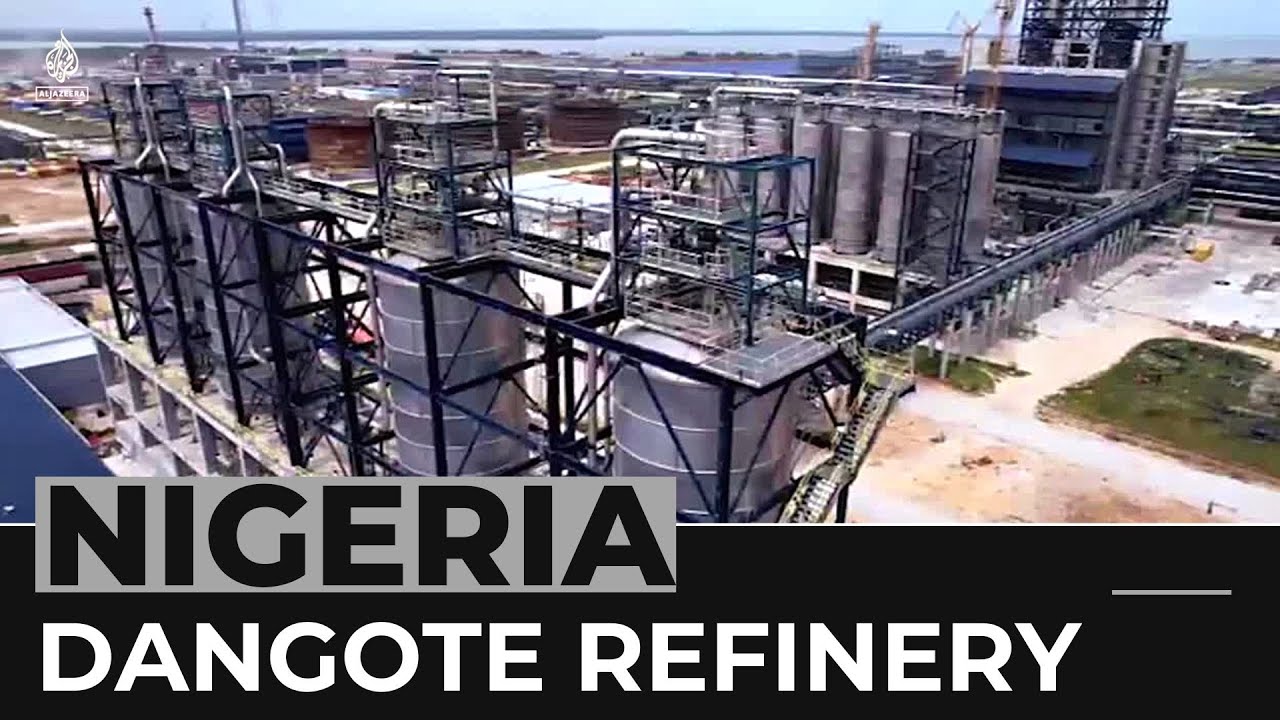
The Nigerian National Petroleum Company Limited (NNPC) is set to provide the new 650,000 barrel-per-day Dangote oil refinery with up to six million barrels of crude oil in December for test runs, according to three reliable industry sources who spoke with Reuters.

This development comes as a significant relief to concerns about the refinery’s capacity to receive the necessary feedstock.

The Dangote oil refinery, funded by Africa’s richest man, Aliko Dangote, is poised to revolutionize the oil trading landscape in the Atlantic Basin. Once fully operational, it is expected to make Nigeria a net exporter of fuels, a long-cherished goal for the oil powerhouse. Currently, Nigeria heavily relies on fuel imports.

An NNPC official, who wished to remain anonymous, confirmed that six cargoes, equivalent to 200,000 barrels per day, would be supplied in December as part of a one-year deal. He added that future volumes would be supplied “based on mutual agreement and availability.”

The other sources indicated plans to supply about 4-5 cargoes, totaling at least 130,000 barrels per day. A Dangote Group official, also preferring anonymity, mentioned that “some of the agreements have confidentiality clauses” when asked about the NNPC supply deal. The NNPC holds a 20 percent stake in the refinery.

The Dangote refinery commenced the commissioning process in May this year after significant delays and cost overruns, with an estimated project cost of $19 billion, surpassing initial estimates of $12-14 billion. The commissioning phase includes testing various units responsible for producing a range of petroleum products, from gasoline to diesel.

The integrated refinery and petrochemical project is expected to create thousands of direct and indirect jobs while meeting Nigeria’s fuel demands, transforming Africa’s largest crude producer into an exporter of refined crude.

A Sales and Purchase Agreement (SPA) is currently in the final stages of preparation between the national oil company and the Dangote refinery, with formalization expected in the coming weeks. The deal is set to be on a purely commercial basis, without any discounts or rock-bottom prices.

The Petroleum Industry Act (PIA) of 2021, specifically Section 109, outlines domestic crude oil supply obligations to refineries, including the Dangote Refinery, as well as NNPC refineries in Port Harcourt, Warri, Kaduna, and the various modular refineries across the country. It stipulates that the supply of crude oil to the domestic market will be conducted on a willing buyer and willing seller basis.

Notably, shortly before the refinery’s inauguration, the NNPC had pledged to supply 300,000 barrels of crude oil to the facility. However, in September, Devakumar Edwin, the Executive Director of Dangote Group, disclosed that the national oil company would not be able to supply the refinery until November, causing concerns and raising eyebrows throughout the country.

The Dangote refinery, with a processing capacity of 650,000 barrels per day, is situated in the Free Zone in Ibeju-Lekki, Lagos, covering an expansive 2,635 hectares of land. The complex is reputed to boast one of the largest pipeline infrastructures globally, with a 1,100-kilometer gas pipeline capable of handling 3 billion standard cubic feet of gas per day and a 400MW power plant meeting the power requirements of Ibadan Distribution Company (Disco). It is also said to be more than six times the size of Victoria Island.

The Nigerian Upstream Petroleum Regulatory Commission (NUPRC), led by Gbenga Komolafe, recently emphasized the urgency of meeting domestic crude obligations to enhance refining capacity. Komolafe said “It is going to be a matter of national shame if we cannot meet our domestic crude obligations to step up our refining capacity,” and stressed the readiness of the Dangote refinery to receive crude oil.

The successful collaboration between the NNPC and the Dangote refinery not only represents a significant step forward for Nigeria’s energy sector but also aligns with the country’s ambitions of becoming a major exporter of refined crude products.

Nigeria Needs To Inject Productivity To Sustain Appreciating Naira Position

0

Good News for Naira: “The news that the Central Bank of Nigeria (CBN) has begun to clear some of its FX backlogs has spurred an appreciation of the naira in both the official and parallel exchange markets. The naira rose to N1,004/$1 in the parallel market and around N793.28/$1 in the official window, underscoring a notable performance compared to Wednesday, when it traded at N1,142/$1 and N799.32/$1 respectively, according to FMDQ OTC Securities Exchange.”

Nigerian banks received dollars from investors and importers some years ago, which they then invested with the CBN in a market known as the Forward Dollar Market. When contracts in that Forward market reached maturity, the CBN was unable to make the payment due to a lack of liquidity in foreign exchange.

Now, the CBN is gradually settling that dollar obligation. This development enables Nigerian banks to reimburse their investors and secure additional funds, which in turn helps stimulate trade and improve FX liquidity.

This is a welcome development. Nigeria is working on the Supply side and if that happens, the pricing equilibrium will shift, ECON 101. That said, we need to think today, tomorrow and the long-term.

Why? If you live in Lagos and borrow from loan app A to pay app B, to avoid wahala, remember that one day app B will come for its money. So, to deal with the root cause and avoid wahala, you need to find that money fast to pay B.

Nigeria, as I have noted, has tools to bring Naira down, in the short-term, as we are a resource-rich nation (gas, crude oil, lithium, etc); the challenge is maintaining the stability over the long-term. Fascinatingly, that requires productivity which goes beyond pre-selling crude oil and gas. I wish the team good luck on this. Help us make things in Nigeria and become more productive. If not, loan app B will come knocking and Naira will bleed again.

Comment on Feed

Comment 1: enator Jimoh Ibrahim Oxford economics. He recommended on Channels TV that we should borrow $100billion to clear existing debt and structure the new debt for repayment to start in 10 years. By then you would have developed infrastructure enough to drive productivity in the economy. This is not me, it’s our Senator from Ondo West.

My Response: “He recommended on Channels TV that we should borrow $100billion to clear existing debt and structure the new debt for repayment to start in 10 years.” – nothing new there. We have been doing that since 2015. The problem is that around 2019, they stopped lending us money without big collateral. That was when Emefiele pre-sold crude oil to get some cash. Maybe, we can give Goldman Sachs Ondo West (just joking) for $100b because they will not do it without something these days.

Nigerian Naira Appreciates on Central Bank’s Move to Clear Matured FX Forwards With Banks

0

The news that the Central Bank of Nigeria (CBN) has begun to clear some of its FX backlogs has spurred an appreciation of the naira in both the official and parallel exchange markets.

The naira rose to N1,004/$1 in the parallel market and around N793.28/$1 in the official window, underscoring a notable performance compared to Wednesday, when it traded at N1,142/$1 and N799.32/$1 respectively, according to FMDQ OTC Securities Exchange.

On Thursday, the market was hit with the news that the CBN is clearing its outstanding matured FX forwards with banks, stirring the naira’s unprecedented performance.

The matured FX forwards context

Nigerian banks received dollars from investors and importers some years ago, which they then invested with the CBN in a market known as the Forward Dollar Market. When contracts in that Forward market reached maturity, the CBN was unable to make the payment due to a lack of liquidity in foreign exchange.

Now, the CBN is gradually settling that dollar obligation. This development enables Nigerian banks to reimburse their investors and secure additional funds, which in turn helps stimulate trade and improve FX liquidity.

Some banks such as Citibank, Stanbic IBTC, and Standard Chartered, have confirmed that the CBN has settled some of its FX obligations through statements.

In a statement released by its Treasury and Trade Solutions department, Citi announced, “CBN HAS DONE IT.”

The statement titled ‘Settlement of Matured FX Forwards by CBN’, said, “We have been directed to inform you that the CBN has delivered all outstanding matured forward forex.

“We thank you for your patience and cooperation and value you for your business and partnership. Please speak with your Relationship Manager or your Trade Service Professional for clarification and additional details.

“It is a gradual payment that was done secretly, CBN didn’t make a fuss about it. It started yesterday and continued all through the night.”

The bank encouraged its customers to reach out to their respective Relationship Manager or Trade Service Professional for further clarification on the matter.

Also, announcing the development, Stanbic IBTC said in a statement, “Yesterday, the apex bank began clearing the backlog of outstanding Retail SMIS obligations. The total amount cleared is yet to be ascertained.”

The development, which is said to have cost the CBN around $2.8 billion, follows several moves by the federal government to boost the nation’s FX inflow. In the past few months, the government has intensified efforts to increase dollar liquidity through borrowing. The borrowing has been executed as part of a strategy that involves securing an immediate cash loan using the expected revenues generated from a designated portion of future crude oil production.

Last month, the government moved to securitize the NLNG dividends over a period of time and use it to borrow money to curb the depreciation of the Naira against the Dollar.

The strategy has birthed the $10bn announced recently by the Minister of Finance and Coordinating Minister of the Economy, Wale Edun, at the 29th Nigerian Economic Summit.

“In addition, from the supply of foreign exchange through NNPC, increased production, reduced expenditure, from transactions such as forward sales, from our discussions with sovereign wealth funds, which are ready to invest and provide advanced alongside that investment, there is a line of sight of $10bn worth of foreign exchange in the relatively near future in weeks rather months,” he said.

Experts have reacted to the development, with a note that it will yield positive economic impacts, especially in the aviation sector. The Chief Executive Officer of Dairy Hills Limited, Kelvin Emmanuel, said that besides the appreciation of the naira, the move will help close the gap in FX rates across markets.

He added that the CBN’s action of clearing forex forwards, particularly commercial letters of credit, initially with correspondent banks and subsequently with Nigerian banks, totaling around $2.8 billion, signifies that banks can secure unencumbered credit lines for facilitating the opening of letters of credit for Nigerian corporations that depend on forwards to import goods.

“Supply from the gas forwards signed between the Ministry of Finance incorporated and international banks that are officially external asset managers to the CBN for financialising five-years of dividends from NLNG that the NNPC holds 49 percent, means that the 45 percent black market premium divergence we have seen that the official I&E rates will close ranks significantly and come back within fair value.

“This is necessary to keep the price of PMS, diesel, and Jet A1 within reasonable limits and ensure that consumer goods from durable goods import do not continue inflating, especially going into the festive season,” he said.

Rwanda: The Implications of No Visa Regime in Africa

0

Rwanda is a country that welcomes all Africans with open arms. It is one of the few nations in the continent that does not require visas or fees for African visitors. This means that any African can get on a plane to Rwanda whenever they wish and will not pay a thing to enter our country. This is a gesture of solidarity and brotherhood that reflects our vision of a united and prosperous Africa.

I will share with you some of the reasons why you should visit Rwanda and what you can expect from this beautiful land of a thousand hills. Whether you are looking for adventure, culture, wildlife, or relaxation, Rwanda has something for everyone. Here are some of the highlights of visiting Rwanda:

Experience the thrill of trekking mountain gorillas in their natural habitat. Rwanda is home to more than half of the world’s remaining mountain gorillas, and you can get up close and personal with these majestic creatures in Volcanoes National Park. This is a once-in-a-lifetime opportunity that you don’t want to miss.

Explore the vibrant and cosmopolitan capital city of Kigali. Kigali is a modern and safe city that offers a variety of attractions, such as museums, markets, restaurants, and nightlife. You can also learn about the history and resilience of Rwanda at the Genocide Memorial, which honors the victims and survivors of the 1994 genocide.

Discover the rich and diverse culture of Rwanda. Rwanda is a country with a strong sense of identity and tradition. You can witness the colorful and energetic dances, music, and crafts of the different ethnic groups, such as the Tutsi, Hutu, and Twa. You can also taste the delicious and healthy cuisine of Rwanda, which features fresh fruits, vegetables, grains, and meat.

Implication of No Visa Regime in Africa

Africa is a continent with diverse cultures, languages, and histories. It is also a continent with many challenges, such as poverty, conflict, and disease. One of the ways that African countries have tried to overcome these challenges is by promoting regional integration and cooperation. One of the initiatives that aims to achieve this goal is the African Union’s Agenda 2063, which envisions a “continent of free citizens and expanded horizons, where the full potential of women and youth is realized”.

One of the pillars of Agenda 2063 is the creation of an African passport and the abolition of visa requirements for all African citizens within the continent. This would allow for free movement of people, goods, and services across borders, and foster a sense of African identity and solidarity.

The benefits of such a policy are manifold: it would boost trade, tourism, and investment; it would enhance cultural exchange and social cohesion; it would facilitate labor mobility and skills transfer; it would improve security and peacebuilding; and it would empower African citizens to participate in the development of their continent.

However, implementing a no visa regime in Africa is not without challenges. Some of the obstacles that need to be overcome include harmonizing immigration policies and standards among different countries; ensuring adequate infrastructure and capacity at border posts; addressing security and health concerns; managing migration flows and preventing irregular migration; protecting the rights and welfare of migrants; and balancing national interests with continental aspirations. These challenges require political will, financial resources, technical expertise, and regional coordination.

The no visa regime in Africa is a bold and ambitious vision that has the potential to transform the continent for the better. It is also a realistic and achievable goal that has been endorsed by many African leaders and supported by many African citizens. The question is not whether it can be done, but how it can be done.

The answer lies in the collective commitment and action of all stakeholders, from governments to civil society, from businesses to academia, from media to ordinary people. Together, we can make Africa a continent of free movement and unlimited opportunities.

Enjoy the stunning scenery and biodiversity of Rwanda. Rwanda is blessed with a variety of landscapes, from lush green hills and valleys to volcanic mountains and lakes. You can admire the beauty of nature and wildlife in several national parks, such as Akagera, Nyungwe, and Gishwati-Mukura. You can also see the endangered golden monkeys, chimpanzees, elephants, giraffes, zebras, and more.