DD
MM
YYYY

PAGES

DD
MM
YYYY

spot_img

PAGES

Home Blog Page 4102

Jungle Destruction of Properties in Nigeria Should STOP

0

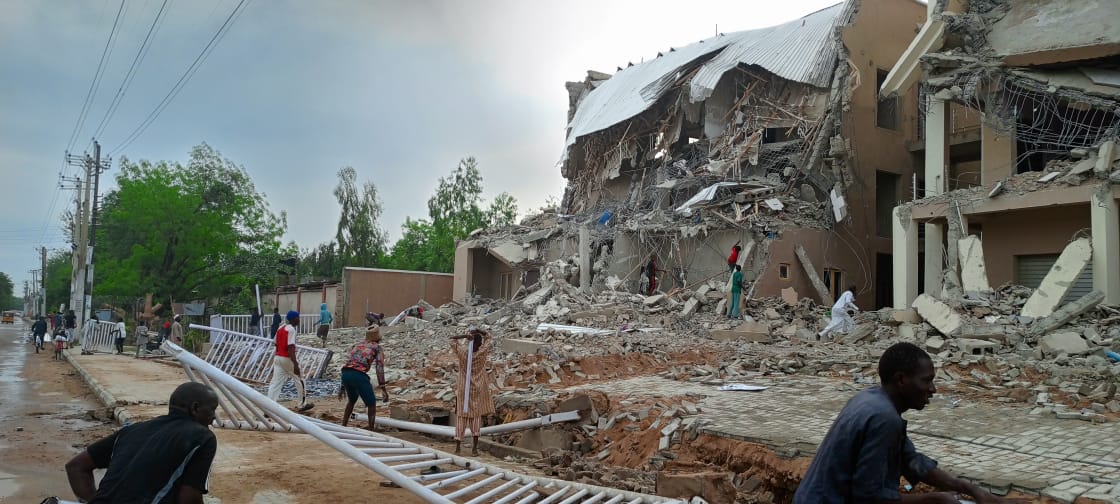
We are lacking empathy in Nigeria and this is very unfortunate. We’re finding it easier to tear down buildings in Kano, Alaba Market and other areas when we have no plans on how new ones could be built. No matter how you see politics, Nigerians must condemn these acts.

If  residents of Salanta Quarters in Kano followed due process for these lands, as stated by a previous government, it is just bluntly unfair to punish them this way. Why not go to the Court and give them the space to defend their rights? It is either Nigeria wants to advance or move backwards. But one thing is clear: jungle destruction will bring more hatred and animosity.

Many years ago in Ovim (Abia State), my village wanted a math teacher to teach the JS3 class as the government option was not “well qualified”. They hired a young teacher named Bukar. Bukar taught me Math in JS3. We became all members of “Bukar for Math”.  In Oriendu Market, he never paid for anything because people paid for whatever he needed for his family. Today, can Bukar live in Abia State?

People, the animosity across Nigeria makes me unhappy. And if you check, most are coming from politicians who are causing troubles because of power.  I used to visit Usman Danfodio University Sokoto which remains the most hospitable university to me in Nigeria. Yes, they treat you really fine when you visit to spend time teaching electronics (I setup their embedded systems lab with Dr Ibrahim). Today, I cannot travel there anymore. Yes, it is impossible.

Nigeria needs help and these leaders should work to bring ALL together. Why destroy these properties even if we assume the last government made a mistake which ordinary families who bought the lands were not parties to?

Residents of Salanta Quarters in the Kano metropolis have accused the state government of demolishing their buildings without prior notice and compensation.

The residents, who described the demolition of their houses as illegal, said they followed due process in acquiring the land on which their houses were built from the immediate past government of the state.

There was tension in the area on Saturday as the residents tried to physically prevent officials, who arrived their community, from demolishing the buildings.

A viral video of the altercation scene showed an injured victim making a phone call, pleading for help from loved ones, whilst alleging that one of his phones was damaged by an official.

“You cannot demolish our properties overnight without prior notification after we have all our documents intact. We all have our families here, and this is injustice. They have voted calamity for us.

Comment on Feed

Comment: You are very correct sir, the demolitions carried out in Kano is not justified. But before demolitions were carried out in alaba a letter have been issued to them you need to see the infrastructures sir it has really decayed. At first I also condemned the demolition at alaba but after watching the clips it is better those buildings are brought down to avert future disaster.

My ResponseThe Nigerian law does not say a LETTER has to be issued to destroy a building. It says a COURT Order. There is a reason for that and that happened in Owerri a couple of years ago. A governor went after an opponent and destroyed a building citing that the structure was not approved and the height was above limit. 

Later, it was realized that the same building was bought by the man from the same government a decade ago. In other words, if it was not just a LETTER but a court order, that would have become evident. 

Alaba was built by the government from grounds-up. If the government built poor structures which citizens bought, it can compensate property owners instead of destroying properties it has already sold and collected money. The same thing is about to happen in an estate in Abuja; the government put nonsense structures; people bought. Then later, you say they’re not habitable anymore and should be taken down without returning the money with interest!

Comment 2: When you hear rascality and illegality, you will over time appreciate how encompassing those two words are in Nigeria.

When we are done tearing down everything that binds people together, in the name of supporting your own and hating on others, our eyes will finally open, of course it’s late by then.

Building materials are very costly now, so anytime a politician is tearing down structures, any other reason outside not meeting integrity test, that politician should tell us where he expects the owners to get money for another one.

One day this sky will drop here and cover everyone, and no single person will escape.

Comment 3: What I see everyday and everywhere is hate. There is no attempt whatsoever to create love and unite the country. When you wantonly destroy peoples source of living or their hard earned assets, they simply never forget.

Comment 4: And you know what’s worse? The social and intellectual framework that serve to legitimize these devious political actors are well entrenched in our ranks: the so-called working class.

It may not take more than a handful of comments to this post before you find one of these scoundrels trying to either justify or euphemize these horrible anti-people actions.

And no, the word ‘scoundrel’ isn’t an insult; it’s a perfectly valid description for dishonesty, especially the dangerous kind we see displayed here every other day. I assure you, these evil politicians would be mostly ineffectual without these lot.

There is nothing as dangerous to a society as intentionally creating moral ambiguity and muddying the waters in terms of what constitutes ‘right’ and ‘wrong’, or more simply ‘just’ and ‘unjust’.

Comment 5: Stop concluding every action taken is politically motivated, have you been to Alaba market.. go and see how people have encroached into areas that are not supposed… right of way, alternative routes and makeshift that has been used by criminals for gun running, drugs and other crimes.. and besides the majority of people affected are the hausa in the Alaba Ravi area… empathy can not fix a country, rule of law and adherence with respect for constituted authority and laws … for the Alaba case, it has nothing to do with politics, it is pure sanity… have you seen trade fair too and encroachment on the Festac area too… we want government to be decisive and also be empathetic… we can have both…

My Response: I have not been to those areas including Kano, Alaba, Festac, Owerri, etc for years. Tell me what you have seen in Kano and these areas and explain if previous governments were not leading them. My position is that some of these citizens are also victims as some of these properties/lands were genuinely sold by the government which wants to destroy them now. 

Take people to a fast-track court system so that the bad government actors will be brought into the midst. In Kano, people have documents duly signed by the government; another comes to destroy their properties. In Alaba, the government built some of those properties and sold them to citizens. In Festac, the government approved some of these illegal structures. A court process will make sure everyone’s voice is heard instead of the jungle you think is “firm” without addressing the root cause.
When the Billionaire Wants To Borrow Funds

0

I think I educated today. Let me share the comments and my responses. It may help some young people going into finance. I write as an ex-banker (a really good one) and founder/chairman of a US-based investment banking institution which invests $$millions across the globe yearly.

QUESTION on if billionaires care when their assets drop in value: “I sometimes wonder if billionaires care about these ratings. Once you make a few billion dollars, what is it that one billionaire can do that you can’t? “

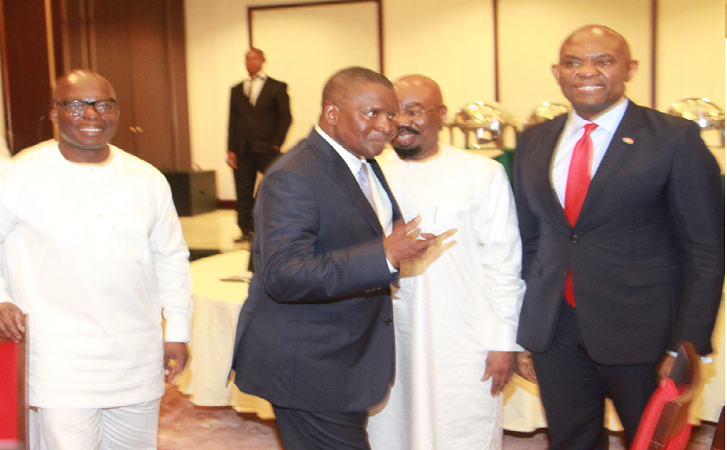
My RESPONSE: Does ranking matter? I respond YES, the higher you’re ranked, the easier banks see you as a good risk for loans. Consider this brief which I will write if I am asked to raise money for Dangote:

“This client is Africa’s richest man and the most dominant businessman in sub-Saharan Africa. For more than 20 years, Forbes, Bloomberg, Fortune, etc have recognized the excellence he has demonstrated in his enterprises. He plans to venture into Sun-Direct Electricity, tapping the inner layers of the sun to power every part of Africa. This has never been done before and it offers a massive opportunity to fix the energy poverty problem in Africa.

Our client is looking for $50billion. Four banks have already committed $35billion and we’re working to close the balance of $15billion. As Africa’s richest man with a durable position on all the major wealth rankings, we model that his risk is well mitigated.

More so, he owns 85% of Dangote Cement and a chunk of other entities within Dangote Group which pay an excess of $1 billion in dividend yearly, meaning that his capacity to service this debt is well contained. Kindly review the attached investment brief and let me read you in three days.

Ndubuisi, Tekedia Capital”

1/2 (I will share a sample of an investment brief later. We have one in Tekedia Startup Masterclass as a sample though) Source


2/2 . QUESTION: “…There are probably very rich people that only farm. I am assuming banks won’t lend them money to launch a satcom business.”

MY RESPONSE: “There are probably very rich people that only farm. I am assuming banks won’t lend them money to launch a satcom business.” If you are rich and need money from a bank, most times, they do not care what you plan to do with that money provided they are sure you will pay back. Due diligence happens extensively for the poor folks.

What do they look to be sure you can pay back? Easy. If you run a farm business (Farm Ltd) and generate $500m in profit and the business is valued at $3B, and want to go into satcom business and need $500m, you will get your funds.

Why? I will ask for 50% of the farm business equity as a collateral and power of attorney for 50-80% all dividends to be paid for the debts. Magically, there is no risk to giving you $500 million since I have secured the bottom. If the shares  of Farm Ltd begin to drop, by the time it drops from $3b to $1b, I will sell to get my money back.

Very rich people do not need to write head-cracking business plans as WE THE PEOPLE do; you actually beg them to borrow because they have limited risks since there are assets which mitigate the risk.

Comment on Feed

Comment 1: But individual person is not the same as a corporate person that is assessed for borrowing purposes. Billionaires use trusts and holding companies to hold shares of companies. Dangote’s resume may get huge loans but in reality it is his companies claims against society that the banks will fund. It will be easier to list the entity that is borrowing.

My Response: Of course, in context, it is Dangote company that borrows. Not sure Dangote as a person needs to borrow money. Borrow for what? Milk or indomie. We’re discussing his company. Yet, if you own 85% of a company, banks will see you as being the company.

Comment 2: I suppose this speaks more to credible counter parties and the reliability of their cash flows backed by assets accumulated overtime from retained earnings. The challenge is that earnings expectations are usually missed and could lead to downgrade of borrowing capacity.

My Response: VERY RICH PEOPLE, not just rich people, meet those yardsticks of “reliability of their cash flows backed by assets accumulated overtime from retained earnings”. The portfolio is designed in such a way that if one side struggles, what is causing the struggles will help the other side.

My Support to Nigeria’s “Poorer” Billionaires

5

Let me send my words of support(!) to Aliko Dangote and other billionaires as many of them become “poorer”, following the floating, swimming or flying of the Naira: Nigeria giveth, Nigeria taketh; it is all good!  But truth be told, if Nigeria can isolate the vagaries of exchange rate in business, the nation will rise.

“Aliko Dangote, the Chairman of Dangote Group, a leading conglomerate in Africa, is no longer the richest man in Africa, according to Forbes. In a billionaire list updated recently by the Magazine, Dangote lost his long-held position to South African billionaire Johann Rupert, after the wealth of the Nigerian plummeted by a whopping $3.4 billion in a day, following the decision of the Nigerian government to float the naira, the nation’s currency.”

Comment On Feed

Comment 1: I sometimes wonder if billionaires care about these ratings. Once you make a few billion dollars, what is it that one billionaire can do that you can’t?

My Response: Provided they put those in their bios, I will assume they care. There are phases of wealth nonetheless. And yes, the more you are ranked, the easier banks see you as a good risk to give loans. Consider this brief which I will write if I am asked as a banker to raise money for Dangote: 

“This client is Africa’s richest man and the most dominant businessman in sub-Saharan Africa. For more than 20 years, Forbes, Bloomberg, Fortune, and other leading brands have recognized the excellence he has demonstrated in his enterprises. He plans to venture into Sun-Direct Electricity, tapping the inner layers of the sun to power every part of Africa. This  has never been done before and it offers a massive opportunity to fix the energy poverty problem in Africa. 

Our client is looking for $50 billion. Four banks have already committed $35billion and we’re working to close the balance of $15 billion. As Africa’s richest man with a durable position on all the major wealth rankings, we model that his risk is well mitigated. More so, he owns 85% of Dangote Cement and a chunk of other entities within Dangote Group which pay an excess of  $1 billion in dividend yearly meaning that his capacity to service this debt is well contained. Kindly review the attached  investment brief and let me read you in three days -Ndubuisi Ekekwe, Tekedia Capital”

Comment 1R: Ndubuisi, this man. I am just having a laugh here. The funny thing is that it’s actually how the framing always goes, it’s a great risk to lend big amount of money to a poor man, no matter how grand his proposed idea is…

Comment 2: Ndubuisi Ekekwe you earlier said the fortune of the naira will be determined not by CBN monetary policies but by factories and warehouses, and now you are still saying “if Nigeria can isolate the vagaries of exchange rate in business, the nation will rise”. I find it hard to really comprehend your position with this floating of the naira.

My Response: Whether you use factories, warehouses, or financial engineering, the destination is one place: ” isolate the vagaries of exchange rate in business,” You already know how we can get there via production, I do not need to repeat it every day. But the point is clear: you need to stabilize the exchange rate, no matter how you plan to do it. There is nothing I wrote here that should confuse or complicate comprehension. 

Comment 2R: I sincerely understand your point that production is the panacea to redeeming the old glory of the naira. However, one should not dismiss the fact that a good financial engineering is also needed that will give investors confidence and help production in the long term.
There’s been so much arbitrage opportunities with the fixed exchange rate, which should be eliminated and also to give investors confidence that they can repatriate their $$$ when they invest in our economy.
We won’t start building factories over night. It’s a long a and painful process. In the short term, we need good monetary policies.

My Response:  “I sincerely understand your point that production is the panacea to redeeming the old glory of the naira” – great that it is clear now

“However, one should not dismiss the fact that a good financial engineering is also needed” – I have NEVER said that we do not need it. If that is the case, we will close CBN. My point is that besides it, you need to make things since financial engineering since 1985 has NEVER worked for Nigeria. It works, then it fades. Simply, we need to have a long-term manufacturing policy (manufacturing here includes service, making things physical and digital)


Nice comments across the ecosystems on the response I left on the Dangote billionaire article: “I like the investment brief introduction, could you share a sample of an investment brief?” Let me respond generally that I will find a way to “declassify” the sample we use in Tekedia Startup Masterclass, and when done, I will share here. But note that I own a banking institution (Tekedia Capital)  in America, and we help organizations raise $$millions all the time. So, that entry was not a social media response; see it as a banker and expert whose akara, moi moi, nkwobi, etc depend on it.

Dangote Loses Forbe’s Africa’s Richest Man Crown, Following Naira’s Floatation

2

Aliko Dangote, the Chairman of Dangote Group, a leading conglomerate in Africa, is no longer the richest man in Africa, according to Forbes.

In a billionaire list updated recently by the Magazine, Dangote lost his long-held position to South African billionaire Johann Rupert, after the wealth of the Nigerian plummeted by a whopping $3.4 billion in a day, following the decision of the Nigerian government to float the naira, the nation’s currency.

Rupert’s staggering $12 billion fortune saw him climbing to the first spot, usurping Dangote’s 10-year reign. The Nigerian serial entrepreneur has occupied the throne since 2013.

But Billionaire Africa noted that Dangote remains Africa’s richest man judging by Bloomberg’s Billionaire Index, which puts his fortune above Rupert’s. While Forbes estimates Dangote’s fortune at $10.8 billion, Bloomberg places his net worth at $16.8 billion, positioning him as the wealthiest individual on the African continent. Meanwhile, Johann Rupert’s net worth remains steady at $13.3 billion.

Dangote’s fortune has faced storms since 2014, when he reached an unprecedented financial milestone with a groundbreaking $20 billion mark, making him the first African entrepreneur to reach the threshold.

The billionaire’s fortune has been in decline over the past decade, according to Forbes records. Starting at $25 billion in 2014, his fortune gradually declined to $14.2 billion, largely influenced by currency devaluations that have negatively impacted the wealth, income, and purchasing power of Nigerians, per the record.

The latest decline to Dangote’s fortune follows Wednesday’s announcement by the Central Bank of Nigeria that the nation’s forex market has been fully deregulated. The naira depreciated as much as N750 per dollar – a major drop from the N4669 per dollar traded in the Investor and Exporter window previously. The development wiped off enormous fortune from the coffers of Nigerian billionaires, not only Dangote.

The floatation of the naira had a severe impact on his assets, including his substantial 86 percent stake in Dangote Cement, his holdings in Dangote Sugar Refinery, and his private interests in Dangote Industries, per Billionaire.

However, the floatation saw other Nigerian billionaires, including industrialist Abdul Samad Rabiu, and telecom and oil mogul Mike Adenuga lose huge fortunes.

Rabiu’s net worth experienced a $2 billion decrease, falling from $8.2 billion to $6.2 billion, causing him to lose his position as the fourth-richest person in Africa to Egyptian billionaire Nassef Sawiris, who currently boasts a net worth of $6.9 billion according to Forbes.

With the deregulation of the Nigerian forex market, which means that market forces will hence determine the value of the naira against the US dollar, Dangote and other Nigerian billionaires will likely see their fortune plunge further.

2023 Price Prediction for Decentraland (MANA), Polygon (MATIC), and Uwerx (WERX) Crypto Presale

0

Brace yourself for a riveting journey into decentralized wonder as we unlock the enigmatic price predictions for three trailblazing crypto projects: Decentraland (MANA), Polygon (MATIC), and Uwerx.

Amidst this crypto symphony, we encounter Uwerx, the freelancing industry’s disruptor, revolutionizing how freelancers and clients collaborate with its distinctive approach and exclusive attributes.

Decentraland (MANA): Empowering Users in the Virtual World

Decentraland (MANA) is an exciting virtual reality platform on the Ethereum blockchain. Its immersive virtual world offers users a remarkable opportunity to explore, create, and earn money.

Think of it as a digital universe where users can buy virtual land, build incredible structures, and unleash creativity.

The live price of Decentraland (MANA) currently stands at $0.461079, with a 24-hour trading volume of $51,505,296. Industry experts anticipate that by Q4 2023, the price of Decentraland (MANA) will rise to an average of $0.5377491597.

Polygon (MATIC): Layer-2 Solutions Redefined

Polygon (MATIC) is a faster, cheaper, and more scalable version of Ethereum. It’s an Ethereum token that works hand in hand with the Polygon Network, a game-changing protocol that builds and connects different blockchain networks compatible with Ethereum.

Polygon (MATIC) is a Layer-2 solution that supercharges Ethereum’s scalability and functionality. By leveraging Layer 2 sidechains, Polygon makes transactions on the Ethereum network faster and more affordable.

The current price of Polygon (MATIC) is $0.8982 per token, with a 24-hour trading volume of $302,247,390. Crypto analysts have been crunching the numbers, and their predictions for Polygon (MATIC) in Q4 2023 show that the price might fluctuate between $1.10 and $1.26 during that period.

Uwerx (WERX): Presale Stages in the Fast Lane

Uwerx’s presale is currently in Stage 5, offering tokens at an attractive rate of $0.041 each, with a generous 15% bonus on every purchase. Don’t miss this golden opportunity to be a part of Uwerx’s growth and success.

Uwerx’s presale stages have achieved remarkable speed, with Stage 1 completed in just 17 days and Stage 2 concluding within 8 days. This rapid progress highlights the enthusiasm and confidence surrounding Uwerx’s mission.

Uwerx sets itself apart from industry giants by offering a minimal transaction fee of just 1%, significantly lower than Upwork’s 10% and Fiverr’s 20%. This equitable fee structure benefits freelancers and clients, fostering a more balanced ecosystem.

Comprehensive audits by SolidProof and InterFi Network assure users of Uwerx’s integrity and reliability. These rigorous evaluations validate the platform’s commitment to security and trust, instilling user confidence.

Demonstrating transparency and autonomy, Uwerx plans to renounce its contracts when ready to launch on centralized exchanges. Additionally, taxes will be reduced to zero, reinforcing Uwerx’s dedication to a fair and independent platform.

Introducing the Uwerx Vault, a secure storage solution for WERX tokens. Users can store their tokens in the vault, engaging in the staking concept and earning rewards based on platform variables. This feature enhances active participation and engagement within the Uwerx ecosystem.

Uwerx’s listing on CoinSniper and its forthcoming listing on Uniswap by August 1st enhance its visibility and accessibility. These listings expand Uwerx’s reach, providing more opportunities for users to engage with the platform and participate in its growth.

Uwerx (WERX): Igniting the Freelance Revolution with Unprecedented Support

Uwerx is gearing up for an exciting Test Airdrop, supported by an overwhelming 98.2% in a Twitter poll. Mark your calendars for July 31st, the end of the presale, when this much-anticipated event will take place.

Responding to the community’s demands, Uwerx is implementing an imminent 25-year token lock, backed by an impressive 82.8% of voters. This move will ensure long-term stability and security, solidifying Uwerx’s commitment to its investors.

With over 5,500 sign-ups, a strong Twitter following of over 1,600, and a vibrant Telegram community of over 1,600 members, Uwerx has garnered significant interest and support. This enthusiastic backing speaks to the platform’s potential for success.

Uwerx (WERX) Approaches Beta: User Testing and Feedback Drive Platform Enhancement

Uwerx’s Alpha Platform is making strides, with the release of a PDF version on May 19th. Exciting updates are on the horizon as the web-based version of Uwerx is ready to debut in the coming weeks. Get ready to explore the platform’s new features, including a landing page, sign-in/sign-up page, and a user dashboard that puts you in control.

Over the next few weeks, Uwerx will continually release additional parts of the Alpha platform, allowing users to experience features like the login page, user dashboard, settings, and job-related functionalities. Uwerx’s commitment to delivering a robust and user-friendly platform is evident.

The transition from the Alpha Version to the Beta Version represents an exciting phase where users can actively test the platform and provide valuable feedback. Their input will contribute to refining and improving the platform, ensuring it meets users’ needs and expectations.

Uwerx values user input and encourages engagement. Users can share their thoughts, recommendations, and ideas on the platform’s design through the dedicated feedback email at feedback@uwerx.network. Their active participation in shaping the platform’s future is highly valued.

Uwerx’s progress, supportive community, and ambitious roadmap position it as a key player in the freelance industry revolution. With its unique approach and exclusive attributes, Uwerx presents a compelling investment opportunity investors should consider maximizing their gains.

Join the presale and take advantage of the 15% bonus!


Presale: invest.uwerx.network

Telegram: https://t.me/uwerx_network

Twitter: https://twitter.com/uwerx_network

Website: https://www.uwerx.network/