DD
MM
YYYY

PAGES

DD
MM
YYYY

spot_img

PAGES

Home Blog Page 4105

The Empires of the Future: Join this July FREE and Let’s Learn Together

1

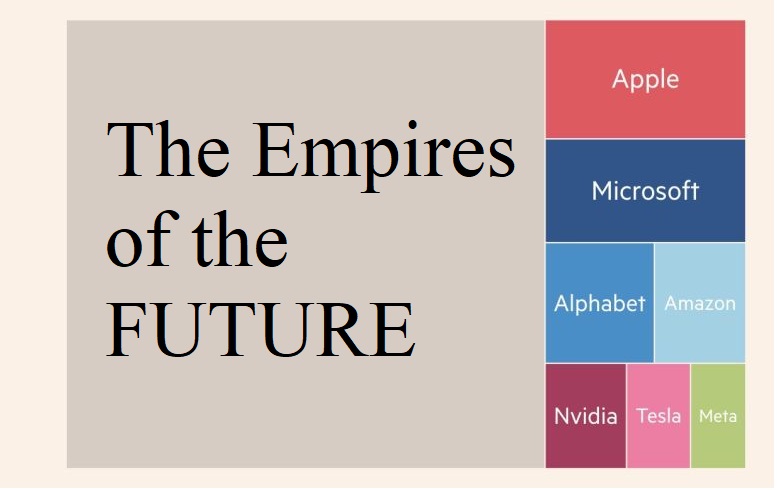
From FAANG (Facebook, Apple, Amazon, Netflix and Google) to ‘Magnificent 7’ (Apple, Microsoft, Alphabet, Amazon, Nvidia, Tesla, and Meta), America’s greatest companies are united by two things now: technology and specifically artificial intelligence. These seven companies make humongous profits and outperform other companies on valuations.

Good People, how time flies. In 1917, when US Steel was leading the American public market, the message was “steel is wealth”. US Steel had become the first US company to hit a market cap of $1 billion in 1901.  In 1955, it was General Motors which touched $10 billion first. But two years later, IBM became the dominant entity, demonstrating the new era of technology infrastructure.

Under Jack Welch of General Electric, in 1995, GE became a $100 billion before Apple ran wild to hit $1 trillion in 2018. Check the trajectory, you will notice one thing: over time, the richest, fastest growing and most capitalized American companies have become native data-anchored companies.

Nigeria which today is dominated by cement, food and telecom infrastructure companies will experience its moment also. It does happen. Simply, the empires of the future will be anchored on Numbers, just as Pythagoras postulated many centuries ago.

From July 3-29, I will be teaching FREE the fundamental constructs of investing here. If possible, join us to listen to an ex-banker, engineer, investor and village boy explain how he processes, understands and makes decisions in markets.

Enforce Your Rights Timely

0

What most litigants do not know about legal actions and enforcing their rights is that you are expected to run to court immediately because there is a time limit as to when you are expected to institute an action in court to enforce your right once you are aggrieved because if you sleep on your right and the time within which you are expected to commence the action elapses you are prohibited or barred from bringing up that action in court any longer. This is called statute barred.

Statute barred as a legal principle is used to describe a legal action that cannot be brought to court because too much time has passed. This is raised as an objection for a court to strike off a matter on the ground that the time the aggrieved person was statutorily expected to commence that action has elapsed and the court is bound to dismiss the claim on the ground that it is statute-barred. It is usually as to time i.e. the bar gives a time limit during which certain actions or steps should be taken, and one is barred from taking action after the period specified in the statute. Any action taken after or outside the specified limit or period is of no avail and has no valid legal effect.

When your right has been trampled upon and you want the court to address that for you, you better run to court on time if not you will lose the right to go to court because the time has elapsed. This supports the (Latin) legal maxim “Vigilantibus Non Dormientibus Jura Subveniunt”  which literally means when translated to English “that the law assists only those who are vigilant, and not those who sleep over their rights”. 

This defense or objection of statute barred is regularly raised on land matters; ie if someone is encroaching on your land or wants to snatch your land from you, there’s a time limit you are expected to take the matter to court if not it will be deemed that you have slept on your rights and you will henceforth be prohibited from coming to court over that matter any longer.  Employment/labour disputes also have time limitations as to when you as an aggrieved employee are expected to go to court to commence an action if you are being aggrieved by your employer. If that time elapses and you didn’t act, you will be prohibited from further taking any legal action on that matter subsequently. 

You should note that this legal principle of statute barred is restricted to civil suits or actions alone; as for criminal actions, there is no time limit or time restriction as to when it should be brought up or instituted in court. A crime that took place 100 years ago can be instituted in court today and there won’t be any defense or objection as to the time limit to have elapsed. This is to say that criminal actions are exemptions to the defense of statute barred. This is why rape cases or robbery cases or other criminal cases that took place a long time ago can successfully be instituted and prosecuted in court at any time and the defendant can not raise the objection of effluxion of time. 

Tinibu’s Advisory Council Proposes Merger of Revenue-generating Agencies

0
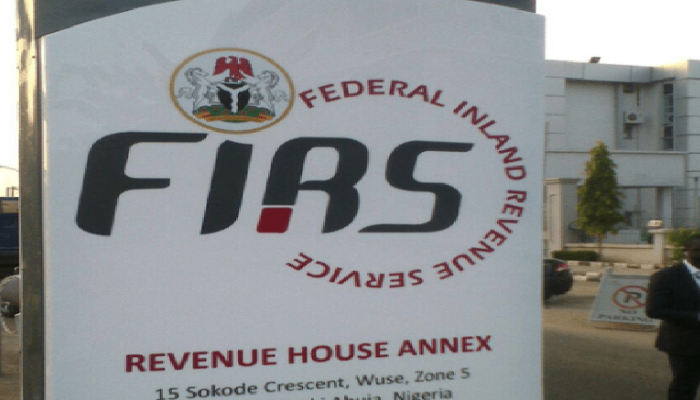
FIRS signpost

The Policy Advisory Council set up by President Bola Tinubu has proposed the merger of some Nigerian revenue-generating agencies – mainly: the Nigerian Customs Service (NCS), the Nigerian Maritime Administration and Safety Agency (NIMASA), and the Federal Inland Revenue Service (FIRS), according to a report submitted by the council on Friday.

The council made up of Senator Tokunbo Abiru (chair), Dr Yemi Cardoso, Sumaila Zubairu, and Dr Doris Anite, was set up to recommend practical ways to resuscitate Nigeria’s dying economy.

Tinubu had, during his campaign, said he would seek ways to increase the government’s revenue generation through taxation. The council proposed the merger to enable an efficient collection of all direct and indirect taxes, as well as levies on behalf of the federal government.

The presidency is seeking the passage of an Emergency Economic Reform Bill, which will grant the President special powers to drive the economic reform agenda and support the delivery of sustainable and inclusive economic growth, According to submissions made by the National Economy Sub-Committee.

With legislative backing, the president will push to implement the recommended economic policies as targets to be achieved within his first 100 in office.

Other recommendations made by the council include the already-implemented removal of fuel subsidy, sale or concession of select government assets, and optimization of operating expenditure to reduce cost.

The report includes the following recommendations:

Passage of an Emergency Economic Reform Bill to grant the President special powers to drive economic reform and declare a state of emergency in revenue generation and national security.

Transform agencies such as FIRS, Customs, NIMASA, etc. into the Nigerian Revenue Service to collect all direct and indirect taxes and levies on behalf of the Federal Government.

Reform the Central Bank of Nigeria and implement civil service reform as suggested in the Oronsaye Report.

Make interim leadership appointments (to be ratified later by the National Assembly) and implement temporary increases in fiscal circuit-breakers, such as debt limits, which will be ratified by the National Assembly.

The report focuses on fiscal and monetary policies, industry, trade, and capital market reforms. It states that changes in the Central Bank of Nigeria and temporary increases in fiscal circuit breakers would contribute to achieving a Gross Domestic Product growth of N1 trillion and creating over 50 million jobs for citizens within eight years.

The report also proposes reforms in the CBN to achieve external reserves of about $50 billion-$60 billion, with a monthly inflow of at least $6 billion-$8 billion from export earnings and other capital inflows, supporting an exchange rate of N500-N600/$.

In terms of fiscal policies, the council recommends achieving a domestic refining capacity of two million barrels per day while providing economic opportunities for host communities. It also proposes one-off Personal Income Tax reliefs for low-income earners as non-cash palliatives to cushion the impact of fuel subsidy removal.

Other fiscal recommendations include settling existing FGN debt obligations with proceeds from the sale of assets, listing shares of strategic and profitable NNPC subsidiaries, and privatizing or selling down FGN’s stake in corporate assets to generate liquidity.

The advisory council also suggests leveraging blockchain technology to create a Government land registry, regionalizing and concessioning the power transmission grid, and extending the circulation of old naira notes until December 2024 to resolve the cash shortage situation.

To transform Nigeria into Africa’s most efficient trading nation, the council proposes decongesting areas within a 4km radius of ports for cargo, roads, and railways, enforcing the 48-hour clearance of goods at seaports as directed by the President, and redefining performance measures of key government agencies to emphasize trade facilitation.

Additionally, they recommend establishing a whistle-blowing mechanism to enable transporters to report and escalate issues with relevant authorities while transporting food and other critical items.

Keep It Simple On That VISION

1

You need $400 to buy a share of that company in the US stock exchange. One company came out and said you can also buy a portion if you have just $1, $2 , etc. Magically, Robinhood invented an amazing business model in America.  They call it fractionalization, splitting of shares, tokenization and many more names.

Forget the name, all we know is that it did one thing: it offered ordinary people ways to own portions of companies irrespective of their financial capacities. In the past, you must have at least $400 to buy a unit share of that company. Today,  you can own a portion for $5 or whatever you can afford.  Through that simple ingenious new business model, Robinhood became a multibillion dollar company.

Innovation should not be a rocket science; those problems we  face daily are opportunities waiting to be solved. Look at the Nigerian stock exchange, what innovation can we deploy? Look at the Nigerian housing market, what can you do? Look at our education, agriculture, etc – what simple ideas could make a great difference?

Keep it simple even though the hardest thing to execute is the simplest idea! Because everyone wants to be seen solving complex problems. #simple

Comment on Feed

Comment 1: Interesting! Sir I’ve been doing some research and reading ? about Fractional real estate investing through equity crowdfunding in Nigeria. The thing is that I’m not a tech person. And I don’t have any experience in real estate investing and finance. However, I’ve been following you closely and reading almost every of your posts on LinkedIn and Facebook, which I find very interesting and educating. If we can really give Nigerians a legit, authentic and ubiquitous equity based crowdfunded investment Platform such as Robinhood, Crowdcube etc where Nigerians will channel their resources and get returns on their invested capital. It would have been much better than all these betting platforms that are turning our citizens into gambling addicts.

Comment 2: In Nigeria, where buying power is limited, embracing fractionalization holds the key to inclusive prosperity. By revolutionizing access to investments, housing, education, and agriculture through fractional ownership, we can empower Nigerians to participate in the nation’s growth via great business model. #innovation through #Simplicity

Comment 3: Thanks Prof! I like the phrase you have used here, ” keep it simple because the hardest thing to execute is the simplest idea”. This is so correct especially if you consider the extent to which some entrepreneurs go just to publicise what they do. The simpler the platform the easier it is to get others to mount your boat…

Comment 4: Tokenization has been integrated into almost all industries where all can access opportunities at their levels.

The business of the future is not just grand innovations but basically value addition and simplifying existing models.

Thank you prof for sharing Ndubuisi Ekekwe

Comment 5: Love this already. I still wonder why our pace of Innovation is really slow. Problems are out there waiting for a very simple solution. With the removal of the fuel subsidy and the unified exchange rate which is now available through I&E window alone, I can picture simple business Ideas from each of these policy.

Our dependency on fussil fuel engines due to subsidy really slowed our development, and now with the high price of fuel alternative energy industries can thrive, providing better and more affordable options for the masses.

Comment 6: Prof don’t we have tokenisation embedded already, how low could we go. We have sachet (pure) water, sachet washing powder, sachet kaikai, sachet noodles, etc. Na mini miniature go b d next level. In Nigeria, wider Africa , infact most of the less developed countries, people have mimimalised most things for the sake of survival. This references we have to western standards has impoverished many globally. New business models and references are now required. Our western education has served, but like everything else, it comes in cycles. Funny the same west is no longer shouting out loud about globalisation, whatever happened to that economics. Did they get it wrong. Have they agreed that they got it wrong. Should the rest of the world wait till they come up with their next ‘blue sky’ thinking, or devise alternative solutions that address local issues. There are too many theories out there, that do not seem practicable

My Response: The message here is Keep Things Simple. It is possible I will use Cowbell and Peak Milk next month on the same message. I decided to use Robinhood today. Nothing is new in this world. What is hard is understanding that greatness can come via simple solutions. I like Tesla but I have only $5, can I also invest in it when it sells for hundreds of dollars? We just have to keep pushing as a people.

Funds Raised by African Startups Surge in May 2023, $645 Million Raised in Over 50 Deals

0
Fund, money cash dollar

Startups in Africa have continued to record significant progress in fundraising deals, after a report revealed that these startups in May 2023, raised the sum of $645 million through at least 50 $100k+ deals.

The amount raised showed a significant increase from the sum recorded in April (4.4x MoM) which saw only $129.8 million raised, also more than the sum recorded in the same month last year, (+50% YoY). From several $100k+ deals points of view, there was a very decent progression compared to April.

The largest three contributors to the funds raised in May 2023, were startups from two sectors, Fintech (one) and energy (two).

Fintech platform that provides digital financial services to underbanked consumers by leveraging data to combine digital micropayments with the Internet of Things (IoT) technology, M-KOPA took the lead with more than $250 million secured in funding ($200m debt + $55 million equity).

M-KOPA disclosed plans to acquire at least 100,000 customers every month to grow its existing three million customer base in Kenya, Nigeria, and Ghana.

One of the largest solar companies in Africa and Asia, Sun King occupied the second position after it secured $130 million in a  funding round and a joint $20 million working capital facility, bringing the total sum to $150 million.

In third position is TymeBank, an exclusively digital retail bank based in South Africa, that provides accessible and affordable banking services, including mobile banking, savings, and loans. The startup raised $77.8 million in a pre-Series C round.

Launched in February 2019, TymeBank employs a hybrid digital banking and physical service operations model and has continually pushed forward the evolution of banking across countries in Africa.

While the total sum raised by startups in May this year is encouraging, the report suggests that they could bring false hope like in February which was a better month than May in terms of both funding raised and the number of deals. February recorded $700 million raised with over 56 deals recorded.

One would have suggested that March would have been better in terms of funds raised and deals sealed. Unfortunately, the numbers significantly plummeted which saw it drop a 10-fold month-on-month with only $ 70 million raised compared to $700 million in the previous month.

Analysts are therefore suggesting that the remarkable funds raised in May should not give false hope and decline massively in the next month (June), just like the scenario that played out between February and March. They are however optimistic that the numbers would continue to increase.

Notably, Africa’s VC scene has so far remained resilient despite major geopolitical and financial headwinds that are precipitating failing startup valuations and sell-offs across the world. In 2022, African startups experienced a successful year for venture capital, raising a total of $6.5 billion. The ecosystem remarkably raked in $1 billion in the first seven weeks of the year.

The African continent has continued to birth remarkable startups catering to the needs of customers and addressing their pain points. Their remarkable innovation and product offerings have seen Africa now home to seven unicorns, making waves across the continent and beyond. These unicorns include Flutterwave, Jumia, Interswitch, Andela, Wave, Opay, and Chipper Cash.

Despite experts suggesting that Africa will witness a decline in funding for startups due to the ongoing economic downturn, African startups have remained resilient, with many continuing to innovate and create new business models to drive growth in the sector

Africa has been touted as the next frontier for tech investment, as projections suggest that African startups will continue to rake in more funds in each passing year.