DD
MM
YYYY

PAGES

DD
MM
YYYY

spot_img

PAGES

Home Blog Page 4114

Let’s Make and Keep Abia State CLEAN – Thank you my fellow citizens for the help

1

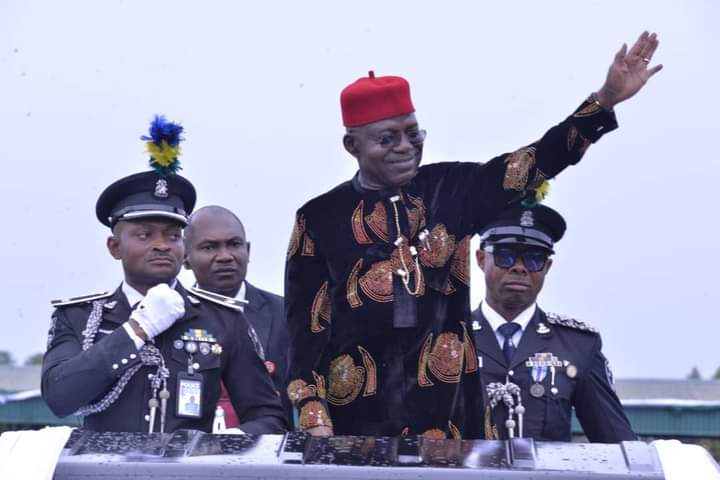
Act 1, Scene 1: clean up the refuse and make Aba and Umuahia clean again. The fact is this: you do not even need to break a bank to do that. Governor Alex Otti of Abia State has commenced cleaning the mess of decades. And you know what? He is tapping into the energy of Abians to do this.

“I wish to thank all those working pro-bono to ensure that our towns are clean, and all who braved the rain to give effect to the directive we gave two days ago, declaring an emergency on the cleanup of Aba and Umuahia,” Otti added.

Kpom kpom kpom kom kom kom – that sound happens every Sunday across many villages in the Igbo Nation. Boys would assemble early in the morning at the village square to clean the square. It has been like that for generations and villages look clean, reducing health hazards. Then every quarter, they will go and clean the village stream, making sure it continues to flow. As a boy who grew up in the village, rising to the President of Uke Udo (peace age grade), it was a duty to my community, to wake up 5am on Sundays to keep the village clean.

Sure, we’re in big cities and cannot execute the village playbooks. But that does not mean that refuse must become neighbours. I thank our fellow citizens who are helping. Thank you so much. I may not be cleaning refuse in Abia right now, but I am also doing something for the state here. Let’s work for the state because Abia belongs to all of us. I have TO DO which I have to deliver to Mr. Governor and that is part of rebuilding the state. What can you do for Abia?

Recent Central Bank of Nigeria (CBN) Circulars – Dorm Accounts, SWIFT Payment, Composed Banknotes, Mortgage Refinance Company

0

Details of the Central Bank of Nigeria (CBN) Circular on Operations of Domiciliary Accounts in Nigeria

The Central Bank of Nigeria (CBN) on the 30th of November 2020, released a circular seeking to provide clarifications on the operations of domiciliary accounts in Nigeria with a view to ensuring the stability of the Foreign Exchange market.

This circular went forward to provide defined categorizations of domiciliary accounts in Nigeria and their operations as follows:-  

Export Proceeds Domiciliary Accounts

These accounts will continue to be operated based on existing regulations which allow account holders use of their funds for business operations only, with any extra funds sold in the Investors & Exporters (I & E) window.

Ordinary Domiciliary Accounts

Where accounts are funded by electronic means/wire transfers, account holders will be allowed unfettered and unrestricted use of these funds for eligible transactions.

This regulation will remain where accounts are funded by cash lodgments.

The circular goes further to state that these clarifications are necessary given the vastly improved capacity of the CBN to monitor transactions in order to forestall money-laundering and prevent adverse effects of dollarizing the Nigerian economy. 

Finally, the circular states that Bank Verification Numbers (BVNs) are to be used to ensure compliance with the circular and all other relevant CBN regulations.

The CBN Circular on Compliance Requirements with the SWIFT Universal Payment Confirmations.

The Central Bank of Nigeria (CBN) released on the 23rd of September,2020 a circular addressed to all banks in Nigeria on compliance requirements with the SWIFT Universal Payment Confirmations.

By virtue of this circular, all banks operating in Nigeria are by this circular reminded of the need to ensure full compliance with SWIFT Universal Payment Confirmation requirements.

What this means is that :-

– All SWIFT customers are required to provide confirmation on the outcome of all their incoming single customer payment (MT 103) messages to SWIFT via a tracker, also known as Universal confirmations.

– The confirmation should get to SWIFT within 2 business days on whether the beneficiary’s account has been credited, payment is rejected or pending.

– All Financial Institutions in the Nigerian Banking & Finance ecosystem will be assessed on whether they confirm at least 80% of their weekly payments.

– SWIFT offers different ways to provide status upgrades through automated or manual methods. These channels are :-

a). The basic tracker manual

b). API calls

c). Automated MT 199 Confirmations

d). Batch confirmation

e). Full GPi

f). ISO 20222(Available from 2022)

– All banks are strongly advised to review and select the appropriate channel that suits their operations with a view to meeting the deadline set for compliance which has actually lapsed since the 22nd of November,2020.

 Details of The CBN Circular on The Treatment of Composed Banknotes in Nigeria

The Central Bank of Nigeria CBN on the 31st of March,2022 released a circular on the use and treatment of composed banknotes. This circular and its contents will be forming the focus of this article which will highlight each detail of the circular as follows :-

– The CBN released this circular based on its rather worrisome observation of an increase in the number of composed banknotes deposited by Deposit Money Banks as well as requests for the replacement of such banknotes by the members of the public.

– The existence of composed banknotes in the economy according to the CBN falsifies the true value of currency in circulation and has also been identified as a possible opportunity for fraudulent activities.

– The CBN specifically defines a composed banknote as a banknote that is composed or made up of several parts of different banknotes of the same denomination put together with the intention of receiving value. 

– The CBN, as a result stated that by virtue of its circular which is to take effect from the 1st of April 2022, any banknote discovered to be in the deposit of DMBs shall attract a penalty of 400% of the value.

The CBN Circular on The Regulatory and Supervisory Framework For The Operations of a Mortgage Refinance Company – Approval To Refinance Non-Member Banks.

The Central Bank of Nigeria on the 21st of October 2020, issued a circular pursuant to S. 7.3.1.5 of the extant regulatory and supervisory framework for the operations of a mortgage refinance company.

This section states that a Mortgage Refinance Company (MRC) shall not, without CBN prior approval, extend total outstanding credit to any single borrower which is equal to one or more than 20 times the value of the borrower’s shares with the MRC or 25% of its shareholders funds unimpaired by losses.

This provision was discovered to have a negative impact on the Mortgages sub sector as it constrains MRCs from refinancing the mortgages of non-shareholder banks.

As a result, the CBN Circular states that the restriction on non-member mortgage lenders from refinancing their mortgages with MRCs has been removed.

MRCs are also now permitted to refinance the qualifying mortgages of lenders that do not hold its equity, subject to all relevant provisions specified in the framework.

This means that according to the circular,an MRC shall not without prior approval from the CBN, extend total outstanding credit to any single borrower which is equal to or more than 25% of its shareholders fund unimpaired by losses.

This provision of the circular is to have immediate effect.

Alibaba Integrates Its ChatGPT-Style Technology Tongyi Tingwu, Into Meeting And Messaging Apps

0

E-commerce giant Alibaba has integrated its chatGPT-style AI technology ‘Tongyi Tingwu’, into meeting and messaging apps, to enhance both personal and workplace productivity.

The large language model, or LLM, developed by Alibaba Cloud called Tongyi Qianwen, is now behind the interactions with a new version of the assistant, dubbed Tongyi Tingwu.

The latest version, which analyzes audio and video files and generates text summaries, has now been opened to the public to try. The technology will also be fused into messaging app DingTalk. DingTalk is Alibaba’s digital collaboration workplace and application development platform, supporting users’ AI demands at work.

The integration of AI technology with the meeting assistant is aimed at the increasing number of videos and audio consumed daily.

In addition to improving workplace efficiency, Tongyi Tingwu can also be used across various multimedia platforms, responding to the growing need for faster and easier knowledge sharing in online education, training, interviews, live streaming, podcasts, and short-form videos.

Speaking on the rollout of the technology, CTO of Alibaba Cloud Intelligence Jingren Zhou said,

“We live at a time when a growing amount of video and audio content is being consumed in various formats every day. In line with this, Tongyi Tingwu aims to use the large language model to facilitate faster and better comprehension and easier sharing of multimedia content.

“As we gradually integrate the Tongyi Qianwen model into our products and services, we hope users can reap the benefits from these compelling AI innovations for their work, study, play, and interaction with each other.”

Tongyi Tingwu harnesses the understanding and summarization capabilities of the Tongyi Qianwen large model, making it a powerful tool for transcription, retrieval, and summarization of audio and video content. It assists users in generating accurate transcriptions, organizing interviews, extracting PPTs, and more.

Also, this AI assistant is like a note-taking companion, that is always ready to help users efficiently complete their tasks.

Alibaba said it will release further features for Tongyi Tingwu later this year including real-time translation between English and Chinese for multimedia content. The service will be a plugin for Google’s Chrome web browser.

Tongyi Tingwu looks set to revolutionize traditional business practices. The technology can automate time-consuming functions, as well as make sure organizations stay efficient and up-to-date. The opportunity for organizations and enterprises to benefit from AI services is just about to start.

The rollout of Alibaba’s latest AI-generated technology comes at a time when Chinese technology giants are integrating Al features into their products, to spur growth for their businesses which have been impacted by a slowing domestic economy and stricter regulation from Beijing.

Implications of Removal of Fuel Subsidies on Crypto Industry

0

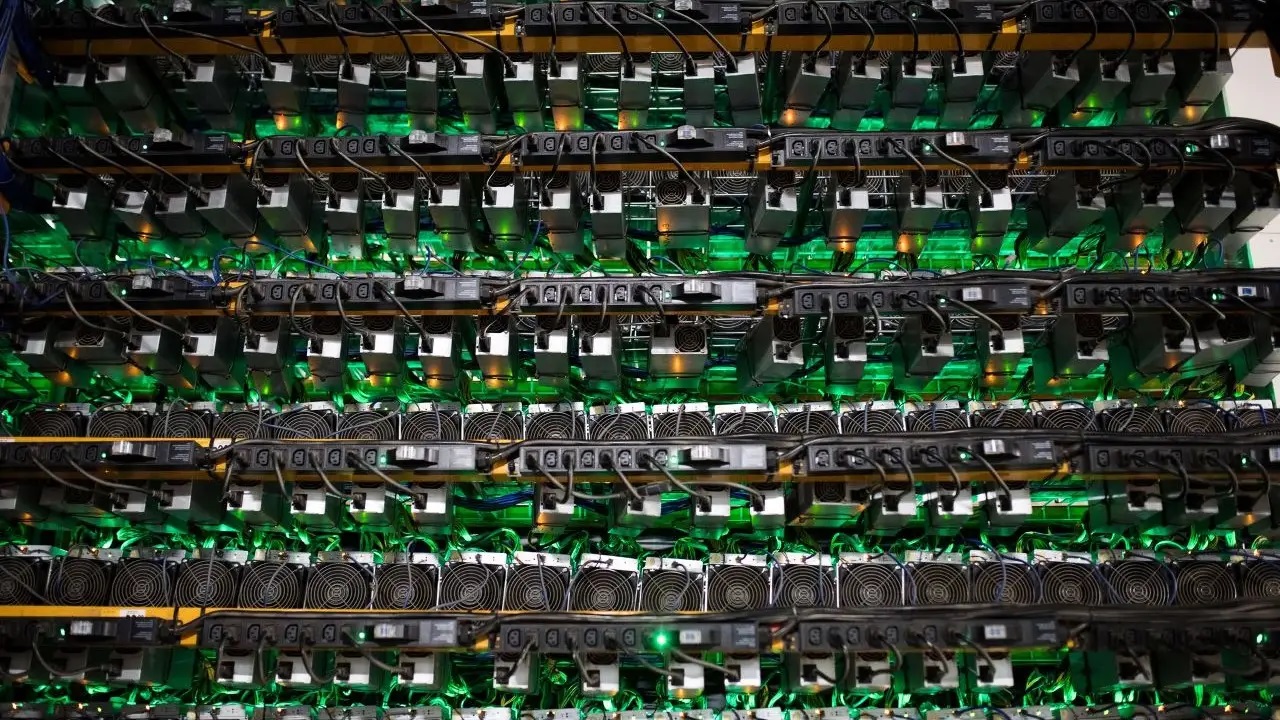
Removal of subsidies on fossil fuels can have significant implications for the crypto industry, as it affects the cost and availability of energy for mining and transactions. According to a report by CoinDesk, crypto miner Hive Blockchain sold its Norwegian unit after the country scrapped a tax subsidy on power consumption for crypto mining. The company cited the increased operating costs and reduced profitability as the main reasons for the decision.

On the other hand, some argue that subsidy removal can also create opportunities for innovation and efficiency in the crypto sector. For instance, a study by Rentschler et al. (2016) suggested that compensating low-income households with cash transfers after removing fuel subsidies in Nigeria could reduce poverty and increase social welfare, while also creating incentives for energy conservation and diversification.

Similarly, crypto companies could benefit from exploring alternative sources of energy, such as renewable or off-grid solutions, to reduce their dependence on subsidized fossil fuels. However, subsidy removal also poses significant risks and challenges for the crypto industry, especially in terms of security and regulation. A recent example is the case of Patricia, a Nigerian crypto exchange that suffered massive losses in crypto assets after a security breach in May 2023.

The company blamed the incident on the unstable power supply and frequent blackouts that followed the subsidy removal, which compromised its security systems and exposed its users’ funds to hackers. The incident also raised questions about the legal status and protection of crypto assets in Nigeria, where the central bank has banned financial institutions from dealing with cryptocurrencies.

Some possible implications of subsidy removal on crypto

Higher energy costs for crypto miners, reducing their profitability and competitiveness. Subsidy removal can affect the profitability and sustainability of crypto mining operations, especially in countries where electricity costs are high. For example, Hive Blockchain, a Canadian crypto miner sold its Norwegian unit after the country removed a tax subsidy on power consumption for data centers in 2021.

Increased poverty and inequality due to higher fuel prices, especially in regions with low income and high fuel consumption. Subsidy removal can also have significant distributional, and welfare impacts on consumers and households, especially the poor and vulnerable. For example, Nigeria’s attempted fuel subsidy removal in 2012 caused fuel prices to more than double, leading to strikes and violent protests. A simulation study estimated that an uncompensated subsidy removal could increase the national poverty rate by 3-4% on average.

Subsidy removal can expose crypto assets to greater risks of security breaches and thefts, as hackers may target platforms with lower security standards or weaker regulations. For example, Patricia, a Nigerian crypto exchange, suffered massive losses in crypto assets after a security breach in 2023. Lastly, greater exposure to cyberattacks and security breaches, resulting in losses of crypto assets and trust.

Some crypto advocates argue that the subsidy removal is a deliberate attempt by the government to stifle the growth and innovations, which poses a threat to its monopoly and control over the financial system. They claim that the government is afraid of losing its revenue and influence as more people adopt crypto as an alternative form of money and payment.

Others, however, support the subsidy removal as a necessary and justified measure to address the environmental and social costs of crypto mining, which consumes a large amount of energy and contributes to global warming and pollution. They also point out that the subsidy removal will level the playing field for other sectors and industries that need electricity for their operations, such as manufacturing, agriculture, and health care.

The subsidy removal will likely have a ripple effect on the Nigerian crypto market, as the country accounts for a significant share of the global hash rate and trading volume. The reduced supply and increased cost of mining could lead to a drop in the price and security of some crypto assets which was the case with Patricia, especially those that use proof-of-work consensus mechanisms, such as Bitcoin and Ethereum.

On the other hand, some crypto enthusiasts believe that the subsidy removal will incentivize innovation and adoption of more energy-efficient and decentralized solutions, such as proof-of-stake consensus mechanisms, renewable energy sources, and peer-to-peer networks.

The implication of subsidy removal on crypto is a complex and multifaceted issue that requires careful analysis and evaluation from various perspectives. The policy change will undoubtedly have profound consequences for the crypto industry and society at large, both in the short term and in the long term. It remains to be seen how the crypto community and the government will adapt and respond to this new reality.

Fidelity Downgrades Twitter Value to $8.8 Billion

0

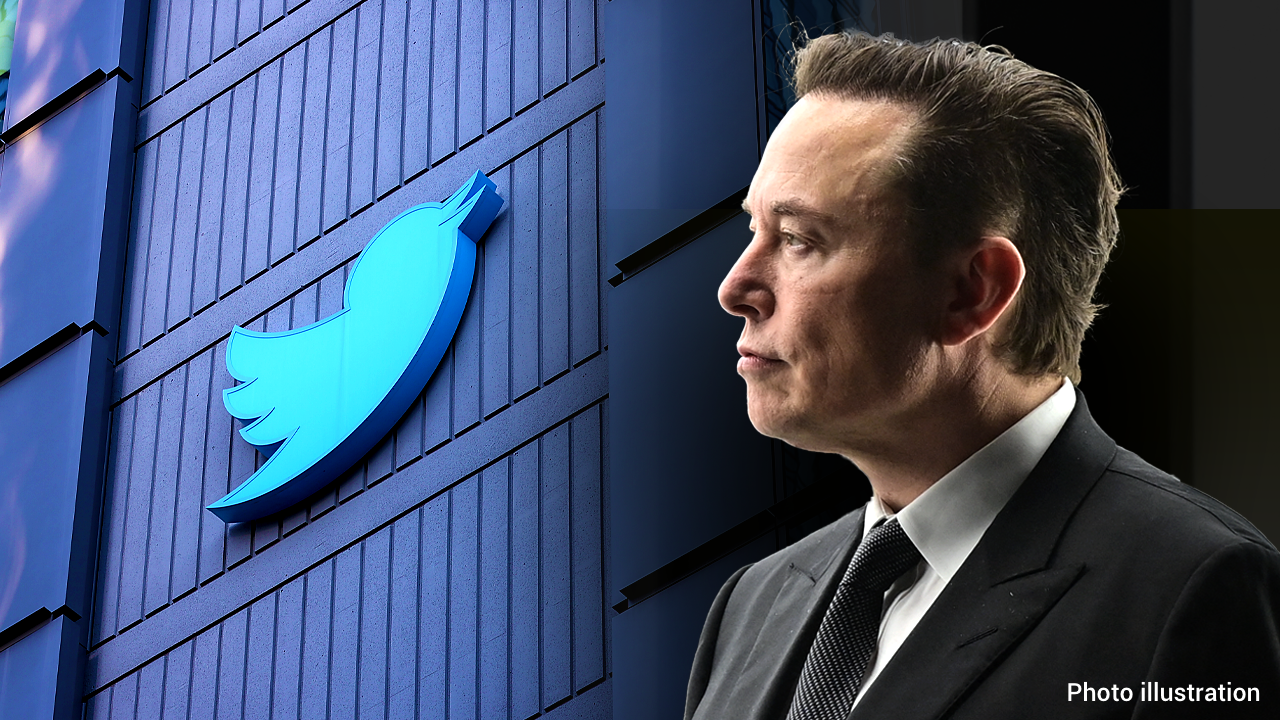
Twitter’s value keeps going down despite Elon Musk’s efforts to make the social media platform profitable. Following its recent evaluation resulting in a markdown of the value of its equity stake in Twitter, Fidelity Investment Fund said the company is now worth just one-third of the $44 billion Musk paid for its acquisition.

Fidelity, which helped Musk to finance his Twitter acquisition, slashed its stakes on Twitter by 56% in December 2022. The investor had valued the stake as being worth $8.63 million in November but has since pared that back twice, most recently valuing it at $6.55 million, per Investopedia. Only 0.16% of Fidelity Blue Chip Growth Fund’s assets in April were in X Holdings.
In March, Musk said in an email to employees – addressing issues of Twitter stock compensation program and the attribution to employees of stock in X Holdings, that Twitter’s value was down to $20 billion.

It’s not clear how Fidelity arrived at its new valuation, which is quite lower than where Musk has placed the social media company last two months. The valuation puts Twitter’s worth at about $8.8 billion, thereby taking about $850 million from Musk’s $187 billion net worth, according to Bloomberg estimates.

Musk put in more than $25 billion to acquire an estimated 79% stake in Twitter last year.
Musk has struggled in his efforts to revamp and diversify Twitter revenue with moves such as monetizing the verification mark. The social media platform has been confronted with many challenges, including a mass exodus of advertisers, following Musk’s takeover late last year.

Twitter has an enormous $13 billion debt to service with meager revenue. The exodus of advertisers, who left due to disagreement with Musk on content moderation, resulted in a 50% revenue decline.

Musk said in March that the company is gradually recovering as advertisers return.

But the advertisers’ return has not been as expected as controversy continues to trail how the platform is being run. Some of the platform’s top users have quit while others are threatening to do so if Musk does not address some of their concerns ranging from hate to cyberbullying.

Musk’s attempt to revive Twitter’s revenue through Twitter Blue subscriptions has also failed to take off great. Many Twitter users whose legacy verifications were removed have refused to pay for subscriptions. At the end of March, less than 1% of Twitter’s monthly users had signed up to Twitter Blue.

Musk recently announced the appointment of Linda Yaccarino as Twitter’s new CEO, but said she will focus primarily on business operations, while he focuses on product design and new technology.

There was not much excitement about the appointment of Yaccarino, a former NBCUniversal advertising executive. Apart from Tesla shareholders, who believe the appointment of Yaccarino will shift Musk’s focus on the electric vehicle company, many others believe that the new CEO will change little or nothing from the way Musk is currently running Twitter.

We will have to wait to see if Yaccarino has what it takes to win the confidence of users and pull the advertisers back. Twitter relies on advertisements for more than 90% of its revenue.