DD
MM
YYYY

PAGES

DD
MM
YYYY

spot_img

PAGES

Home Blog Page 4118

NIPOST Reports N3bn Revenue for 2022, Recording A 17% Loss

0

The Nigerian Postal Service (NIPOST) has reported a revenue decline in 2022, with a total revenue of N3 billion, marking another annual loss in three years, according to the latest data from the Nigerian Bureau of Statistics (NBS).

According to the statistics agency, the revenue represents a 17% decline from the N3.6 billion that NIPOST reported in 2022, underscoring a steady decline since 2019 when it reported a 5-year high of N5.37 billion. The 2022 report marks a 44% revenue drop in five years.

The revenue decline was drawn from poor performances in several areas of NIPOST services.

According to the NBS; the total number of Post Offices and Postal Agencies decreased by 19.43% from 2,794 in 2021 to 2,251 in 2022.

The total number of boxes installed in 2022 was 836,731, showing a decrease of 0.08% from 837,428 in 2021.

The total number of PMBs available in 2022 stood at 20,775, showing a fall of 8.44% from 22,689 in 2021.

The total number of postal articles handled in 2022 increased by 102.05% from 17.7 million in 2021 to 35.7 million in 2022.

Lagos state had the highest number of boxes installed in 2022 with 143,416, while Jigawa recorded the least with 1,800.

Nipost also reported that it handled a total of 35,676,118 domestic and international mains out of which 19,463,153 were mails received from abroad and delivered to Nigeria.

However, data analysis shows that EMS/Speedpost business was NIPOST’s major income generator contributing N838.8 million to revenues. But it underlines a massive decline from the N1.2 billion reported a year earlier and N1.9 billion 5 years earlier.

Also, NIPOST reported that it generated N209.7 billion from Courier Companies license fees, a whopping 800% increase from N25.2 million a year earlier.

Five years ago, this division generated a mere N12 million in revenue, highlighting a significant rise in courier services offered by private enterprises. NIPOST charges them a fee while also functioning as their regulator and competitor.

Additionally, a substantial source of revenue for NIPOST was its Business Venture Service, which saw an extraordinary 38-fold growth, soaring from N8.2 million to N323.5 million.

NIPOST has embarked on a series of reforms, geared towards optimal services and increased revenue, for several years now. A major move to reform the agency came during the past administration led by Muhammadu Buhari.

The reform initiated by former Minister of Communication and Digital Economy Isa Pantami, aimed to unbundle NIPOST by creating three new subsidiaries out of it. The proposed subsidiaries were; NIPOST Transport and Logistics, NIPOST Properties and Development, and NIPOST Microfinance Bank.

In January 2022, Pantami unveiled the NIPOST debit card and agency banking platform, which he said was targeted at keying NIPOST into e-governance and a sustainable digital economy.

However, these reform initiatives have failed to lift the veil off NIPOST – a development that has been largely attributed to massive corruption.

Experts have advocated subsidized postal services, to keep NIPOST afloat. The idea is to promote commerce through cheaper logistics, which will in turn boost the economy and put more money in the government’s purse through taxes.

Be like the dragonfly – define your paths.  #bebold

1

To thrive in markets, you must accumulate capabilities. But greatness comes when you master how to compound those capabilities. Do not allow your environments to constantly define your paths, like lifeless feathers do on waters. For those feathers, the water will toss them and move them wherever the water flows. Be like the dragonfly, which despite going against the mild water currents, reaches its destination.

The world is going through a structural redesign across many vistas, economic, technological, etc. The innovation society era which began towards the end of the 18th century, ending the invention society era, is now making way for the accelerated society era. For people, for organizations, and for nations, only the bold and dynamic will thrive, because scarcity, in the midst of abundance, will be unprecedented, for many who cannot adjust and recalibrate.

In the innovation society era, the performance of a great carpenter to an average carpenter could be a factor of 3. In the accelerated society era, with AI and autonomous system, across many areas, you can see orders of 1000s, between the deployed and non-deployed, on performance. The implication is massive because a new basis of competition will be created – and that will change many things.

Be like the dragonfly – define your paths.  #bebold.


The Wickedness of Some Senior Lawyers Against Young Lawyers in Nigeria

0

There is a big elephant in the room of the legal practice in Nigeria that nobody wants to address; not even senior lawyers or activist lawyers or even the Nigerian Bar Association is ready to open this up because it appears that everyone is complicit and guilty. 

This elephant is the remuneration and salary scale of young lawyers working in some law firms in Nigeria. 

99% of young lawyers in Nigeria are taking home meager sums as meager as ten thousand naira as monthly pay. You need to speak to some young lawyers to see them complaining bitterly about how they are unduly exploited by their bosses whom they work for. They work them like elephants but pay them like ants. How can you be paying a lawyer who spent 6 or more years acquiring education ten thousand naira per month? Some law firms pay 15k, some pay 20k, some pay 30k, some pay 40k. 

Just a few elite law firms in Nigeria are paying young lawyers N100,000 and above and young lawyers fortunate enough to be earning such amounts are less than 1%. 

Some law firms have working hours of 7 a.m. daily resumption time and close by 7 p.m. The lawyers are meant to be in the office by 7 a.m. and close by 7 p.m. otherwise they will be queried. This is pathetic.

It is shameful that this payment of meager salaries goes on not just in the offices of established senior lawyers but also in law firms of senior advocates of Nigeria. Unfortunately, in some of these law offices, a young lawyer is not just an in-house counsel but the office secretary, a Personal Assistant to the boss, an errand boy/girl and (s)he will still go to court to file and argue cases for a take-home pay of 20k. This is unjustifiable. 

You will step into a big office and you will think that no lawyer in that office is earning less than 100k a month only to be told that some lawyers in that beautiful and well-furnished big law firm located in the heart of the city are earning 25k a month. I am not making this up, I promise. 

It is high time we open up and have this conversation about how senior lawyers are exploiting junior lawyers in disguise of employment. Everyone has been avoiding it but this is the time. It has gotten to the point where the NBA will have to step in and set up a committee to look into young lawyers’ remuneration, make stipulations as to what is commensurate pay of young lawyers and implement it. 

For a start, the Legal Practitioners Privileges Committee need to start making remunerations of young lawyers in the firms of the SAN applicants as one of the qualifications for becoming a SAN; the requirement should be included that no lawyer in the office of a SAN applicant should be earning less than a stipulated amount, and any SAN paying his or her lawyers less than a stipulated amount should have his or her SAN title withdrawn; this requirement will be much appreciated compared to the requirement of a SAN applicant having a working library. 

It should also be the NBA’s requirement for its officials or those contesting to be elected into the NBA offices that no lawyer in their firms should be earning less than a stipulated amount if not they will be disqualified. 

It is as simple as if you as a senior law cannot afford to retain and pay lawyers a sufficient amount, you should not employ them and if you must employ them, employ them as consultants or part-time workers; you should not employ lawyers and use them to boost your human strength or use them as show off or boast of the number of lawyers working for you when you can not afford to pay them a substantial amount. It is sheer wickedness. 

As for some of the senior lawyers who always make excuses and justify this wickedness by comparing it to what they got paid when they were young lawyers, with all due respect, they should understand that what was in play in the 70s, 80s, 90s or early 2000s when they were young lawyers and budding in the legal practice is no longer in play in today’s Nigeria. For starters, the economy is far harsher now.

And as for those who are quick to ask young lawyers to open their own law offices if they feel they are not well paid by their employers, they should understand that not everyone has the dream of opening and running a law firm. Every lawyer in practice must not open his own law firm before he can excel. Some lawyers want to work under other lawyers but they should be properly taken care of while they are at it. 

UAE Lifts Visa Ban on Nigerians, Following Tinubu’s Intervention

0

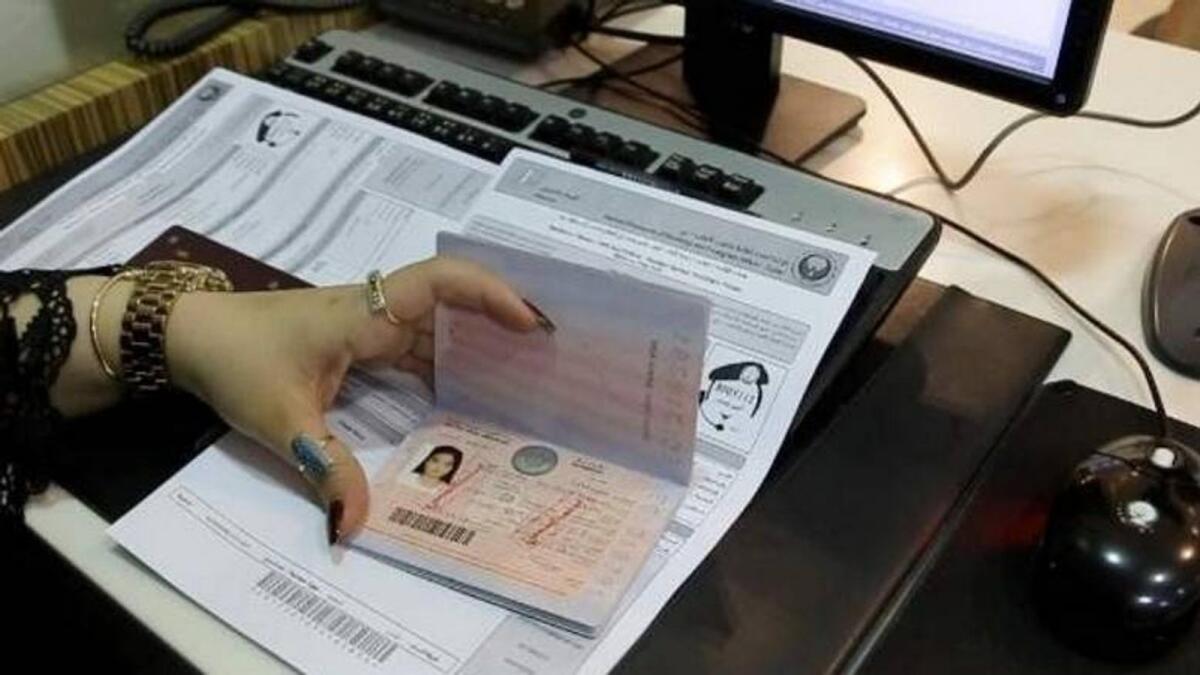
Nigerian President Bola Tinubu has reached a deal with the United Arab Emirates (UAE) to lift the visa ban it placed on Nigerians, according to a statement issued by the presidency.

The statement titled: “President Tinubu secures landmark deal with United Arab Emirates across sectors; visa ban on Nigerian travelers is lifted immediately” and was signed by Chief Ajuri Ngelale, Special Adviser to the President on Media & Publicity, said that Tinubu and the President of the UAE, Mohamed bin Zayed Al Nahyan, on Monday in Abu Dhabi, finalized the historic agreement.

It disclosed that the agreement “has resulted in the immediate cessation of the visa ban placed on Nigerian travelers.”

It could be recalled that the UAE stopped issuing visas to Nigerians late last year, following a series of issues involving Nigerians living in the oil-rich country, with some resulting in diplomatic interventions.

The UAE’s total visa ban follows earlier rules restricting visa issuance to Nigerians under the age of 40. A statement issued by the Nigerian Ministry of Foreign Affairs last September said some Nigerians “were denied entry and advised to return to their country and apply for the appropriate visas” because they ignored the rules.

Other issues, including the failure of Emirates Airlines to repatriate its trapped fund – which resulted in the company’s decision to suspend its operation in Nigeria, contributed to the dented relationship between Nigeria and the UAE.

On Sunday, Ngelale announced that Tinubu will meet with the leadership of the UAE during a technical stopover in Abu Dhabi, UAE, after the President’s departure from New Delhi, India.

The presidential spokesperson said the meeting will serve as a follow-up discussion to address specific, salient issues within the bilateral relationship after conversations held during a recent visit by the UAE Ambassador to the President at the State House in Abuja.

“The President is to address lingering bilateral issues while maximizing the opportunity of the stopover to equally advance his investment promotion objectives with high-level authorities in the public and private sectors of the United Arab Emirates,” he said.

Ngelale added that besides lifting the visa ban, the historic agreement has enabled both Etihad Airlines and Emirates Airlines to immediately resume flight schedules into and out of Nigeria, without any further delay.

“As negotiated between the two Heads of State, this immediate restoration of flight activity, through these two airlines and between the two countries, does not involve any immediate payment by the Nigerian government,” he said.

In addition, presidents Mohamed bin Zayed Al Nahyan and Tinubu established an agreed framework, which will involve several billions of U.S. dollars worth of new investments into the Nigerian economy across multiple sectors, including defense, agriculture, and others, by the investment arms of the Government of the United Arab Emirates, according to the statement.

“Additionally, President Tinubu is pleased to have successfully negotiated a joint, new foreign exchange liquidity programme between the two Governments, which will be announced in detail in the coming weeks,” he said.

The End of “Pure Payment” Startups in Africa; AI Readiness Assessment for AI Projects

0

How do you launch an AI startup if data is a very important component of that business? There are many ways, and  I will provide the main two here: 

(1) Spend tons of money at launch to collect data which will be used to improve your AI models. A good case study is Temu, an ecommerce company, which uses AI to soup recommendations on what to buy and wear. Temu spent close to $5 million during the last Super Bowl, America’s largest yearly event, to quickly collect data to improve its models. With millions on-boarded as a result of that massive media blitz, Temu has enormous data to quickly improve its technology. 

(2) Partner with a company which has tons of data. That is for OpenAI, the owners of ChatGPT. By partnering with Microsoft, ChatGPT became a category-king product which would not have been possible without the decades-old data which Microsoft provided. Indeed, besides the code, the best raw material here is the data! And I posit that there are better AI models somewhere in the universities. But those schools do not have the datasets which Microsoft has across its product lines like Xbox, Bing, etc.

If I have explained how to launch AI startups, what of a fintech company which focuses on payment (i.e. a paytech) in Africa? I can posit that starting a startup in most African markets with a clear mission to offer pure-payment is largely stale. To a large extent, in markets like Nigeria, Kenya, Ghana, etc, payment is not necessarily a major friction anymore. And if that is the case, launching a paytech company may be very hard. Indeed, the incumbents have built moats and getting to the castle may be challenging. 

So, to launch a paytech, you need to add many other goodies as part of the product. Indeed, your payment must come with other services because just collecting payment will not take you far. And as you offer those services, explore partnerships because the most important layer now is distribution. Your tech means really nothing; what matters now is scale via partnerships since pure play organic growth is harder. Simply, you have to connect into promising ecosystems, thereby offering a lot more than payments to your customers.

Such could include inventory management solutions, accounting, project management tools, etc which many of your customers can use to run their operations. In other words, you need to offer more value than the ability for users to just move money via your channel. Those channels are everywhere and adding another one may not bring growth.

That is what everyone is doing: Flutterwave is in partnership with an Indian bank even as Interswitch expands Google Pay in Nigeria.

Interswitch, a leading African integrated payments and digital commerce platform company headquartered in Lagos, has integrated Google Pay on its Payment Gateway (IPG) platform.

This integration will enable individuals and businesses in Nigeria to make a wide range of financial transactions, including in-person contactless purchases, for goods and services, peer-to-peer money transfers, and more, using their mobile devices.

In this Tekedia AI in Business Masterclass courseware [we used AI to record some of the modules], we explain what happens with AI, Data and Value in AI Projects. In my last post here , I listed some ways to launch AI startups; this short video notes the sequence to turn that data into value. Remember: the most important phase is the AI readiness assessment, and there, you examine the business case and technical feasibilities for that project.

Comment on Feed

Comment 1: What a valuable piece of content. ?
Prof, I completely agree with you.

It is very true that the most important phase is the AI readiness assessment, which involves checking for both the technical and business factors for successful AI projects.

It’s very important that development teams understand how serious this phase is.

It’s not just about technology. The most important factor is identifying valuable business problems where AI can provide significant business value and competitive advantage. Focusing on the business needs comes first. The business case justifies the investment.

Also, on the technical side,

From my opinion, focusing on data health comes first – Bad data equals bad models and so data collection, labeling, cleansing, security, monitoring has to be rigorous. I consider this part of the pain in building your own model or fine-tuning an existing one.

The importance of doing a readiness assessment cannot be overemphasized.