DD
MM
YYYY

PAGES

DD
MM
YYYY

spot_img

PAGES

Home Blog Page 4128

Understanding What SEC’s Security Assets are

0

The Securities and Exchange Commission (SEC) is a federal agency that regulates the securities markets in the United States. The SEC’s mission is to protect investors, maintain fair and orderly markets, and facilitate capital formation.

One of the SEC’s responsibilities is to define and classify different types of securities, which are financial instruments that represent ownership or debt obligations in a company, a government, or another entity. Securities can be traded on exchanges or over-the-counter markets, and they can have various features and risks.

One of the categories of securities that the SEC defines is security assets. Security assets are securities that are backed by specific assets, such as mortgages, loans, receivables, or leases. Security assets can also be called asset-backed securities (ABS) or securitized products.

Security assets are created when an entity (called the originator) sells a pool of assets to another entity (called the issuer), which then issues securities that represent claims on the cash flows generated by the underlying assets. The issuer typically transfers the assets to a special purpose vehicle (SPV), which is a legal entity created solely for the purpose of holding the assets and issuing the securities.

The main benefit of security assets is that they allow the originator to raise funds by selling its assets without giving up control over them. The originator can also reduce its credit risk by transferring some or all of the default risk to the investors who buy the securities. The investors, on the other hand, can diversify their portfolios by accessing different types of assets and cash flows that may not be available otherwise.

The main risk of security assets is that they depend on the performance and quality of the underlying assets. If the borrowers or lessees fail to make their payments, or if the value of the collateral declines, the cash flows to the investors may be reduced or interrupted. The investors may also face legal or operational risks if the issuer or the SPV fails to comply with their obligations or if there are disputes over the ownership or transfer of the assets.

Security assets are subject to various regulations and disclosure requirements by the SEC and other agencies. The SEC requires issuers of security assets to register their offerings with the SEC and provide periodic reports on their financial condition and performance. The SEC also enforces anti-fraud and anti-manipulation rules to prevent misconduct and protect investors.

Security assets are an important and complex part of the securities markets. They offer benefits and risks for both originators and investors, and they require careful analysis and due diligence before investing. By understanding what SEC security assets are, you can make more informed decisions about your financial goals and strategies.

The SEC has jurisdiction over securities and securities transactions, which include stocks, bonds, mutual funds, exchange-traded funds (ETFs), and derivatives. The SEC also has authority over any digital asset that is considered a security under the securities laws.

How does the SEC determine whether a digital asset is a security or not?

The SEC does not have a specific definition of a digital asset or a cryptocurrency. Instead, it applies the same principles and tests that it uses for any other type of asset to determine whether it is a security or not.

The most common test that the SEC uses is called the Howey Test, which comes from a 1946 Supreme Court case involving orange groves. The Howey test states that an asset is a security if it involves:

An investment of money.

In a common enterprise.

With an expectation of profits.

Predominantly from the efforts of others.

The SEC has applied the Howey test to various digital assets and found that some of them are securities, while others are not. For example, the SEC has concluded that Bitcoin and Ether are not securities, because they are decentralized networks that do not rely on the efforts of a third party to generate profits for investors. However, the SEC has also concluded that many initial coin offerings (ICOs) and tokens are securities, because they involve raising money from investors who expect to profit from the development and promotion of a project by a central entity.

If a digital asset is deemed to be a security by the SEC, it means that it is subject to the same rules and regulations as any other security. This has important implications for both investors and issuers of SEC security assets.

For investors, it means that they have certain rights and protections when they buy or sell SEC security assets. For example, they have the right to receive accurate and timely information about the asset, such as its price, performance, risks, fees, and financial statements. They also have the right to sue for fraud or misrepresentation if they are misled or deceived by the issuer or any other party involved in the transaction. Additionally, they have access to various mechanisms for dispute resolution and recovery of funds if they suffer losses due to misconduct or insolvency.

For issuers, it means that they have certain obligations and responsibilities when they offer or sell SEC security assets. For example, they have to register their securities with the SEC or qualify for an exemption from registration. They also have to comply with various disclosure, reporting, auditing, and anti-fraud requirements. They also have to follow certain rules regarding trading, custody, transfer agents, broker-dealers, exchanges, and market makers.

Fintech Company Unlimit Receives License to Operate in Kenya Two Months After Expansion in Nigeria

0

Global leading fintech and payment solutions company, Unlimit, has received its Central Bank of Kenya license, to operate in the East African country, two months after expansion in Nigeria.

Unlimit’s recent expansion solidifies the company’s recognition as a reputable provider of payment solutions within the African region.

By offering diverse payment solutions, Unlimit will cater to the preferences and support the unique requirements of local enterprises in Kenya. This milestone demonstrates Unlimit’s dedication to advancing the payment landscape in Africa and empowering businesses with cutting-edge payment solutions.

Speaking on its expansion to Kenya, Unlimit CEO Kirill Evstratov said,

“We have ambitious plans for Kenya and East Africa and are looking forward to supporting local businesses on their expansion goals. For 14 years we have successfully been aiding

companies worldwide to enter new markets and go beyond borders, strengthening their business outreach, and expanding their customer base. Now, we are bringing those years of expertise to Africa. Our unwavering ambition is to establish ourselves as the benchmark in the payments processing industry, setting the standard for excellence and innovation, and allowing companies around the globe to go borderless with their payments.”

Reports reveal that the demand for fintech solutions within Kenya has seen a rise, with figures from Statista showing that the number of people using digital payment methods is expected to amount to 39.14 million by 2027.

By expanding its operations to Kenya, Unlimit strengthens its position in the continent’s payment landscape as part of its mission to lead Africa’s payment evolution in the coming years.

Since launching in 2009, the startup is on a mission to deliver solutions that enable businesses to operate with ease both locally and internationally across EMEA, APAC, and LatAm. It also has a vision to eliminate financial borders for businesses all over the world.

The company currently boasts of one the world’s most extensive in-house payment infrastructures, encompassing payment processing services, banking as a service (BaaS), and a fiat gateway for cryptocurrencies, DeFi, and GameFi.

Being present on 4 continents, Unlimit not only helps individuals to accept and make payments but to scale their businesses with its deep tech expertise and local insights.

The startup is constantly adding new payment methods and implementing innovative solutions for ambitious businesses around the world. It provides unlimited global growth opportunities for customers, freeing them of payment constraints.

Unlimit protects businesses with passion, by implementing a high-tech anti-fraud and risk management solution that protects customer’s revenues and their reputation.  The startup security system analyzes hundreds of behavior indicators and device IDs constantly, feeding into a rule management system with best-in-class approval rates.

House of Reps Declares the Launch of Nigerian Air Fraudulent

0

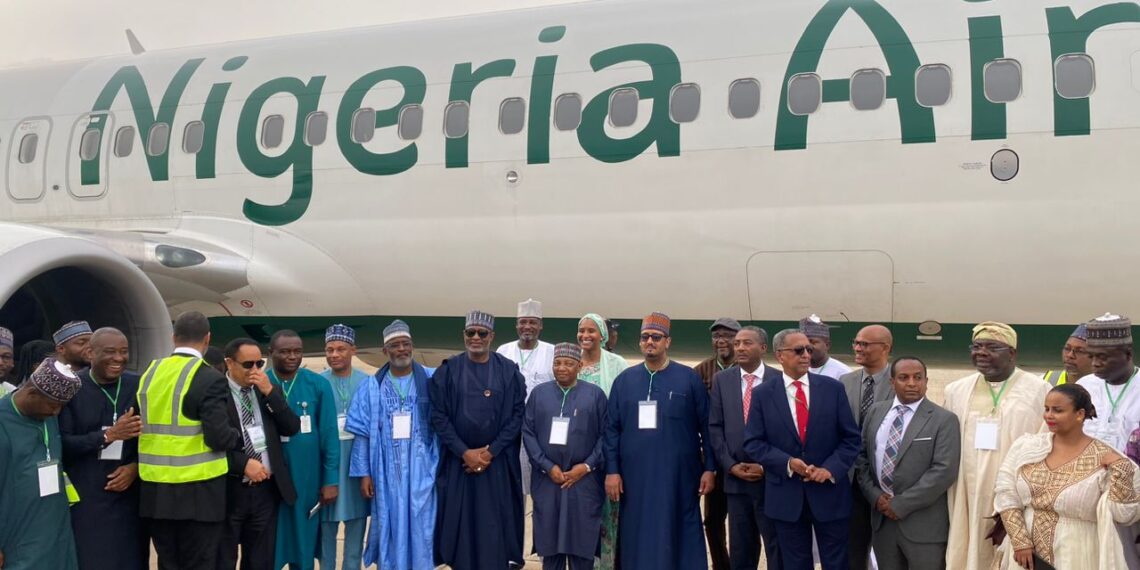
The House of Representatives has declared the launch of Nigerian Air fraudulent, ordering that the national carrier project, which reportedly gulped N85 billion, be suspended immediately.

Chairman of the House Committee on Aviation, Nnolim Nnaji, made the declaration following an investigation that witnessed the major stakeholders in the deal between the Federal Government and Ethiopian Airlines denying knowledge of the launch.

As part of the investigation, the committee summoned the Permanent Secretary of the Ministry and other relevant stakeholders to present themselves and provide the necessary information.

In its response to the inquiry, the Ministry of Aviation claimed Nigeria Air was only unveiled and not launched. The committee however dismissed the response as an attempt to divert lawmakers’ attention.

Last month, after the former Minister of Aviation Hadi Sirika unveiled a plane with the name Nigerian Air, investigative journalist David Hundeyin was quick to point out that the aircraft belongs to Ethiopian Airlines, and had been fraudulently rented for the launch.

Days later, Hundeyin reported that the plane had returned to its route in service to the Ethiopian Airline.

Aviation expert and analyst, Captain Ado Sanusi, also said in an interview with ChannelsTV then that it is practically impossible for Nigeria Air to start commercial passenger operation in two days given the rigorous process involved, upholding the Hundeyin’s report that the launch is fraudulent.

During the investigation, the Nigerian Airspace Management Agency (NAMA) told members of the committee that the aircraft bearing Nigerian colors was on a chartered flight to Nigeria. According to other stakeholders who confirmed NAMA’s disclosure, a chartered flight could be painted in any color and with any inscriptions.

In his testimony to a Senate committee on Aviation, Capt. Dapo Olumide, the Interim Managing Director of Nigerian Air, confirmed that the unveiled Nigeria Aircraft was hired. According to him, the aircraft that came and left was a legitimate chartered flight which can be done by anyone who doesn’t have a license as long as you pay for it.

At the meeting, the Chairman of the Senate Aviation Committee, Senator Biodun Olujimi had wondered why the immediate past Minister of Aviation hurriedly unveiled a national carrier on the last day of the Muhammadu Buhari administration.

Olumide, who boasts of over four decades of experience in the aviation industry, noted that for Nigeria to operate an airline, the aircraft must be registered in Nigeria.

He testified that the particular aircraft that was unveiled was not registered and came into Nigeria with a few days’ clearance from Ethiopia and was returned after use.

Nigerian Air is not licensed to fly

Following the controversy surrounding the launch of Nigerian Air and the allegation of fraud leveled against it, further investigations revealed that the airline is not fully certified to fly.

Olumide confirmed that in his testimony to the senate committee. He said that Nigeria only has airport license which is one of two licenses required for operating an airline and it does not permit one to carry out commercial service operations

He further explained that Nigeria Air needs at least three registered aircraft before it could be issued a license and approved for operation by the Nigeria Civil Aviation Authority.

The captain, who confirmed that he was appointed in February 2022, to secure the air operating certificate for Nigerian Air, disclosed that Nigeria is not at a point of operating the airline yet, as Nigeria Air does not have terminals for international operations.

He further explained that there are five phases or steps one goes through to get the needed license and Nigeria Air is still in phase one of the process.

RESOLUTION OF THE HOUSE OF REPS COMMITTEE ON AVIATION

The Committee after careful evaluation of the issues on deliberation is totally dissatisfied with the actions of the former Minister of Aviation, Sen, Hadi Sirka in going ahead to flag off the operations of Nigeria Air despite a standing Court injunction against such, and without any provision for sustaining the operations of the airline.

We are equally irked by the role played by Ethiopian Airline in this whole process. It does not speak well of the excellent brotherly relationship existing between our two nations.

A careful review of the process indicates the exercise to be highly opaque, shrouded in secrecy, shoddy and capable of ridiculing and tarnishing the image of Nigeria before the international community.

We want to put on record, that the Committee and indeed the National Assembly had no role in the purported launch of Nigeria Air or anything related thereof.

While the Committee and indeed the parliament is not opposed to Nigeria having a National Carrier, as a matter of fact having a National Carrier is highly desirable to us as a people and Nigeria, as a nation. However, such a process should be transparent and all embracing.

We, as a Committee, would not accept any attempt by any individual or group of individuals or organization to hide under the project and siphon our commonwealths.

Consequently, the Committee hereby resolves to:

  1. Direct the Federal Ministry of Aviation and its partners in the Nigeria Air project to immediately suspend flights operations and every other actions with respect to the Nigeria Air;

  2. Urge our new President, Bola Ahmed Tinubu, GCFR the President and C-in-C, to as a matter of urgency constitute a high-level Presidential Committee to undertake a holistic Review of the Processes of the whole Nigeria Air project, and advice the government on the way forward.

  3. Ensure that all individuals, or groups, or organization involved in the controversial shenanigan named “Nigeria Air Take-Off” are brought to book, prosecuted and sanctioned.

Tim Cook Says Apple is Watching ChatGPT Closely

0

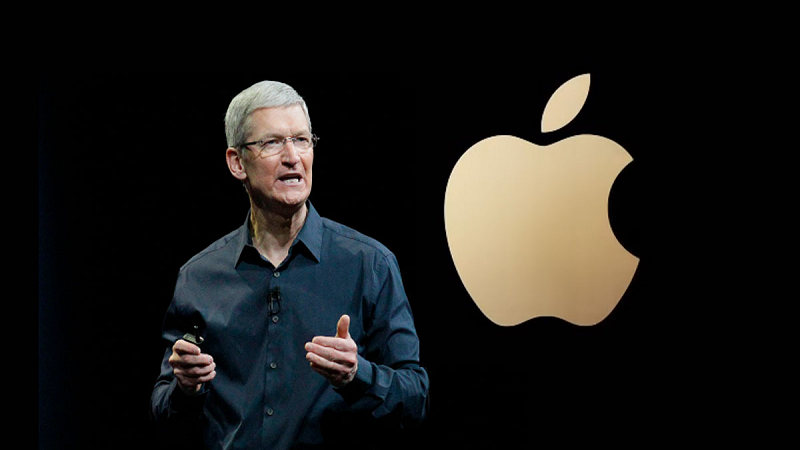
Apple CEO Tim Cook has revealed that he is a fan of ChatGPT, the high-flying OpenAI chatbot known for its impressive ability in handling various tasks.

In an interview with ABC’s “Good Morning America”, Cook, who disclosed recently that he uses ChatGPT and is excited about the tool’s unique applications, said that Apple is watching the AI tool closely.

AI language models such as ChatGPT and Google’s Bard have been taking center stage in tech and business discussions since late last year. ChatGPT has shown an incredible ability to handle tasks such as writing essays, music, articles, codes, etc. but has raised serious concerns about safety and misinformation.

Despite the concerns, the AI tool has seen wide adoption with Microsoft investing billions of dollars in the technology and has incorporated it into some of its businesses like the Bing and Microsoft Teams. Several other companies are expected to onboard the ChatGPT soon.

Cook said that the general public doesn’t think of AI that Apple clearly integrates into its products today as artificial intelligence features.

While the Cupertino giant’s chief admits that large language models show great promise, he expressed concern that they have the potential for “things like bias, things like misinformation [and] maybe worse in some cases.”

CNBC quoted the CEO as saying that there is a need for AI, which is powerful and fast-moving tech development, to be regulated.

“If you look down the road, then it’s so powerful that companies have to employ their own ethical decisions,” Cook said. “Regulation will have a difficult time staying even with the progress on this because it’s moving so quickly. So, I think it’s incumbent on companies as well to regulate themselves.”

The AI race is happening amid great concern about the technology’s risks. Elon Musk, the co-founder of OpenAI, has warned that artificial intelligence has the potential to end civilization if not regulated. Musk’s concern has been acknowledged by political and tech leaders, including OpenAI CEO Sam Altman.

CNBC reported that a host of tech leaders, including DeepMind CEO Demis Hassabis, Anthropic CEO Dario Amodei, and Altman, signed a statement last week about AI risks.

However, there is another concern per CNBC. AI researchers and critics increasingly say that overarching statements about AI’s growing power and threats distract from the real-life harms that the algorithms can cause to marginalized communities right now, rather than in an unspecified future.

Cook did not say if Apple plans to integrate ChatGPT in the future, but at the company’s annual developer conference, WWDC, it touted new applications of machine learning for the iPhone, iPad, and Mac.

The applications are AI models that can issue smart prompts to users for potential journal entries, better AI tools for autocorrect and dictation in messaging, and more comprehensive facial recognition features for identifying friends, family, and pets in photos, according to CNBC.

U.S. Securities and Exchange Commission (SEC) Goes After Crypto Exchanges

0

What is happening? SEC sues Coinbase, just days after it launched the legal high-voltage signal on Binance: “The U.S. Securities and Exchange Commission (SEC) has filed a lawsuit against Coinbase Global Inc., the largest U.S. crypto asset trading platform, for allegedly violating securities laws. The SEC claims that Coinbase has been operating as an unregistered broker, exchange and clearing agency since 2019, and has allowed its users to trade 13 crypto tokens that were actually unregistered securities.”

Hodlers, the government is making its point. Let’s see how you guys react. It is an illusion to think you can be on this earth and have another god!

I have maintained this point for years: the government does not need to pursue the decentralized coins (debatable since the mining is under the control of few lords), all it needs is to disconnect the exchanges, and once that is done, everything will fade for institutional investors, even if small peer-to-peer marginal hodlers continue to believe. Shine ya eyes!

The Securities and Exchange Commission sued Coinbase for violating securities laws on Tuesday in New York federal court, just a day after charging crypto rival Binance. The SEC alleges that Coinbase, the biggest U.S. crypto platform, broke its rules by operating without registering with the regulator and letting users trade 13 assets that are securities. It comes just a day after the SEC charged fellow crypto platform Binance and its founder Changpeng Zhao with securities law violations, leading investors to pull $780 million in 24 hours, reports Reuters.

The SEC lawsuit alleges that Binance misused customer funds and lied to regulators and investors, with claims that it commingled billions of dollars in client funds and diverted them to a separate firm run by Zhao.

In a statement, Binance said allegations that user assets were put at risk “are simply wrong.”

Exchanges outside the United States will be celebrating now as most US holders will move their assets outside the US. This is not the end of the crypto economy; it could just be a transmutation in the US.

The crypto world has been rocked in the past 48 hours, as the Securities and Exchange Commission clamps down on both Binance and Coinbase. The move deeply affected its CEOs’ wallets in the last two days, per the Bloomberg Billionaires Index. Binance boss Changpeng Zhao saw his wealth drop by $1.4 billion to $26 billion, while Coinbase CEO Brian Armstrong’s fell $361 million to $2.2 billion. The SEC charged Binance and Zhao with several securities law violations Monday and the following day filed a lawsuit against U.S. crypto platform Coinbase. A lawyer for the platform said it was prepared to take its legal fight with the SEC to the Supreme Court.

The SEC has also asked a federal court to freeze the assets of Binance’s U.S. operation, alleging that the world’s largest crypto exchange has shown “disregard” for the law and that customers’ funds are at risk.

Binance said allegations that user assets were ever put at risk “are simply wrong.”

The two exchanges both saw net outflows — the difference between deposits and withdrawals — of more than $1 billion in the 24 hours after the SEC’s lawsuits were announced, Fortune reports. (LinkedIn News)