
DD
MM
YYYY

PAGES

DD
MM
YYYY

spot_img

PAGES

Home Blog Page 4132

United States Securities and Exchange Commission (SEC) Sues Binance and Changpeng Zhao

0

The Securities and Exchange Commission (SEC) has filed a lawsuit against Changpeng Zhao (CZ), the founder and CEO of Binance, and Binance, the world’s largest cryptocurrency exchange by trading volume. The lawsuit alleges that CZ and Binance violated federal securities laws by offering and selling unregistered securities in the form of digital tokens on their platform.

According to the complaint, Binance has facilitated the trading of hundreds of different tokens, many of which are considered securities under the U.S. law. However, Binance has not registered with the SEC as a broker-dealer, exchange, or alternative trading system, nor has it sought an exemption from registration. The SEC claims that this exposes investors to significant risks, such as fraud, manipulation, and lack of transparency.

The SEC also accuses CZ of being directly involved in the operations and management of Binance, and of making false and misleading statements to the public about the regulatory status of Binance and its tokens. The SEC seeks to enjoin CZ and Binance from further violating the securities laws, and to impose civil penalties and disgorgement of ill-gotten gains.

This is not the first time that Binance has faced regulatory scrutiny. In recent months, several countries, including the UK, Japan, Canada, and Singapore, have issued warnings or taken actions against Binance for operating without proper authorization or compliance. Binance has also been reportedly under investigation by the U.S. Department of Justice and the Internal Revenue Service for possible money laundering and tax evasion.

Binance has not yet issued an official response to the SEC lawsuit. However, CZ has previously stated that Binance respects the rules and regulations of every jurisdiction it operates in, and that it strives to comply with local laws and cooperate with regulators. Previously, Binance has stated that it does not serve U.S. customers on Binance.com and that it has robust risk management and anti-money laundering policies.

The SEC’s lawsuit could have significant implications for Binance, Zhao, and the cryptocurrency industry as a whole. If the SEC prevails in court, Binance and Zhao could face hefty fines, disgorgement of profits, injunctions, and possibly criminal charges. The lawsuit could also affect the reputation and trust of Binance among its customers and partners, as well as the liquidity and stability of the crypto market.

The SEC’s lawsuit is part of its broader effort to regulate the crypto space and protect investors from fraud and manipulation. The SEC has previously sued other crypto platforms and issuers, such as Ripple Labs, BitConnect, Telegram, Kik Interactive, and Block.one. The SEC has also issued guidance and warnings to investors about the risks and challenges of investing in crypto assets.

As the crypto industry continues to grow and innovate, it also faces increasing regulatory scrutiny and uncertainty. The SEC’s lawsuit against Binance and Zhao is a reminder that crypto platforms and participants must comply with the law or face serious consequences.But CZ has tweeted that he is confident that Binance will prevail in court. He also said that Binance will continue to serve its customers and comply with local laws and regulations. He urged the crypto community to stay calm and trust the process whilst emphasizing that customer funds are safe on Binance amid current fuds.
Fuel Prices Rise in Neighboring Countries As Nigeria Removes Subsidy

2

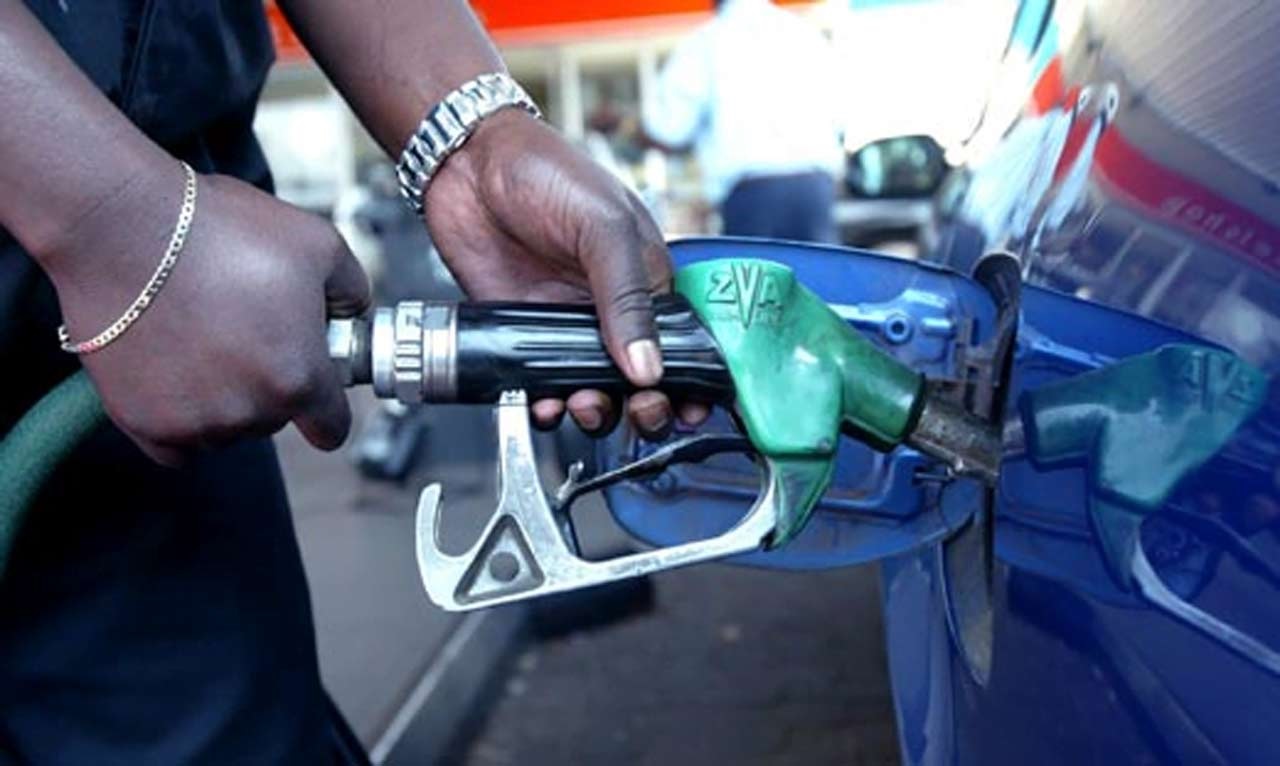
The prices of petroleum products have nearly doubled in Nigeria’s neighboring countries such as the Benin Republic and Niger Republic – a development linked to the removal of fuel subsidies in Nigeria. Citing sources, the BBC reported that prices of petroleum products are being sold for 700 CFA or 800 CFA in the Benin Republic — nearly double the previous price of 450 CFA.

The removal of fuel subsidy was announced on Monday last week by President Bola Tinubu, during his inaugural speech.

The development lends credence to reports that a significant volume of Nigeria’s subsidized petroleum products were being smuggled into other African countries. Petrol from Nigeria was regularly smuggled into neighboring countries including Cameroon, Ghana, Benin Republic, and as far as Sudan – a north African country.

A report by DW noted that vendors in Cameroon make huge profits from illegal sales of fuel smuggled from Nigeria. According to the report, commuters in the West African country prefer not to buy from petrol stations as it’s cheaper to buy from illegal vendors who sourced the products from Nigeria.

“Even when Nigerians are faced with fuel shortage, supply is constant in Cameroon,” the report said. “Cameroon produces its own fuel, but selling Nigerian petrol is far cheaper here.”

In Cameroon, fuel from Nigeria sells for 350 CFA while fuel from Cameroon sells for 650 CFA in petrol stations.

Nigerian porous land borders have enabled the smuggling of oil into other African countries, even after the borders were closed in August 2019 by former president Muhammadu Buhari.

The CEO of the Nigerian National Petroleum Company Limited (NNPCL), Mele Kyari, said in an interview with ChannelsTV on Thursday that there is no credible data to ascertain the daily consumption of petrol in Nigeria.

He said: “I don’t think there is any credible data on consumption but there is credible data on evacuation from the depots. They are very distinct.

“Every truck that leaves every depot in this country is known – the truck driver and the planned destination of that product. We have these numbers (referring to trucks’ movement from depots).

“We assume that this is our consumption but we know that it might not be our consumption. We know that petroleum products are being smuggled out of the country.”

The NNPCL chief said there is data on how much oil Nigeria supplies, which makes it clear that everything is not consumed in the country.

“We know how much we supply. There is data on this. Is all of this consumed in the country? The answer is no. The reason is very simple. We have an arbitrage environment. For instance: before this decision we made, fuel sells for N185 in Abuja, just across your border there is nowhere you have prices that are lower than N500 to a liter.

“We are actually subsidizing everybody else in West Africa. I can tell you a personal experience. I travel to Sudan for a visit when a Nigerian met me and said: ‘Gentleman, I understand you work for NNPC. Can you help me have access to fuel because people are bringing fuel here to make money from it?

“That means the fuel in this country goes as far as Sudan. For other neighboring countries around us, you cannot even talk about it. They call it Nigerian fuel in many countries.

“None of the countries around us imports petroleum products and you can’t do something about it because there is an arbitrage environment that we have created. We have 4,500km of land borders and you don’t have all the resources to man these,” he said.

Fuel subsidy, which remains one of the most heated issues in the Nigerian polity, has gulped trillions of naira in national budgets despite indications that most of the products being subsidized were stolen and smuggled into other countries.

Spotify to Layoff Over 100 Employees in Its Podcast Division

0
London, UK - August 01, 2018: The buttons of Spotify, Podcasts, Netflix, WhatsApp and Music on the screen of an iPhone.

Swedish audio streaming and media services provider Spotify has announced plans to lay off 200 employees in its podcast division which represents 2% of the company’s worldwide workforce.

The layoffs in the podcast division are coming months after the company cut 6% of its workforce in January this year, which impacted 600 employees.

In an internal memo shared by Spotify’s head of Podcast division Sahar Elhabashi, she announced that the company was making changes that would lead to a workforce reduction of 2%, noting that those who are impacted have already received an invite for a one-on-one conversation with someone from the HR department as Spotify is committed to ensuring each step is taken with utmost empathy and respect.

Part of the memo reads,

“We are expanding our partnership efforts with leading podcasters from across the globe with a tailored approach optimized for each show and creator. This fundamental pivot from a more uniform proposition will allow us to support the creator community better. However, doing so requires adapting over the past few months, our senior leadership team has worked closely with HR to determine the optimal organization for this next chapter.

“As a result, we have made the difficult but necessary decision to make a strategic realignment of our group and reduce our global podcast vertical and other functions by approximately 200 people, or 2% of Spotify’s workforce. Unfortunately, this means saying goodbye to close colleagues and friends. We know news like this is never easy, especially for those impacted. These decisions are not something we take lightly. I want to express my appreciation for everything those leaving have done for podcasting and Spotify.

“Our continued success in growing the podcast ecosystem is predicated on the necessity that the Spotify Machine is always in motion. And with these changes, we will accelerate into the next chapter for podcasts on Spotify with strong discovery and podcast habits for users, thriving monetization and audience growth for creators, and a valuable, high-margin business for Spotify. I want to thank everyone for your continued understanding and collaboration. I firmly believe in this team and that this next phase brings opportunities beyond anything we’ve seen”.

Spotify further disclosed that it will support laid-off employees with generous severance packages, including extended Healthcare coverage and immediate access to outplacement support.

In early 2019, Spotify saw an opportunity to invest in the rapidly growing podcasting space, and since then, it has helped transform the industry. The platform is the most-used audio podcast platform in most areas of the world, and is the No. 1 podcast publisher in the U.S. based on reach.

Its users and subscribers are based largely in the US and Europe, jointly accounting for around 53% of users and 67% of revenue. Overall, Spotify has more than 100 million podcast listeners.

The next phase of Spotify’s podcast strategy is focused on delivering even more value for creators and users. That starts with maximizing consumption from the massive audience it has  established through format innovation and ensuring that more creators in more places achieve success. Simultaneously, in collaboration with the podcasting community, the company is broadening its analytics capabilities by expanding Spotify For Podcasters, which will help creators maximize their audience on Spotify and beyond.

Optimism(OP) And Uwerx(WERX) Will Look Forward To Profitable Upgrades

0

2023 has been a regular year for cryptocurrencies, but enthusiasts look forward to even more promising trends and price action. The year has had several narratives for cryptocurrencies and the market at large, but what’s important is not to miss out on an opportunity to profit when it presents itself.

Optimism(OP) and Uwerx are standout opportunities for the year, but Uwerx is particularly preferred for its low-risk, high-reward offering.

Optimism(OP) Upgrades Could Mean More

Optimism(OP), an Ethereum blockchain layer-2 scalability solution, has chosen June 6 as the date for its Bedrock hard fork. The Bedrock hard fork was proposed by the community in April and is intended to introduce additional levels of modularity, simplicity, and Ethereum equivalency.

Optimism is in fierce competition with Arbitrum for market share as a top Ethereum scaling solution. Such competitive energy is one to bet on, and Optimism(OP) seems to be building to improve.

Optimism(OP) also recently integrated the Ethereum Attestation Service to enable the assessment of trustworthiness by users on the network. This will promote positive on-chain culture, and we can expect the layer-2 solution to grow as a DeFi solution. Optimism has gained huge triumphs in recent months, with both the crypto exchange Coinbase and venture capital company Andreessen Horowitz (known as a16z) confirming intentions to build on the network.

Uwerx(WERX) Presents Huge Opportunity For Profits

Uwerx is an Ethereum-based freelance platform, and being the first of its kind, it creates a derived market that would attract a lot of big fund investments. The trend has been particularly evident in its trajectory on presale; the project has raised over $1 million and will be looking to push for me as it closes out on its stage 4 presale.

It’s the most potentially profitable play on the market right now as it allows incredibly low entry to users who are looking to secure some profit towards launch. The presale offers users early access to the alpha version of the app, where they can test out the platform and see the unique features it will bring to the global gig economy.

Uwerx recently crossed the milestone of 5,000 early sign-ups and is projected for even higher growth as the presale progresses. Uwerx’s unique platform will see mass adoption from freelancers and clients because it costs less to use. It will also include unique features such as incentivization, personalized matching, transparent pricing, and built-in collaboration and dispute-resolution tools.

WERX will serve as the native token of the platform, allowing holders exclusive access to the platform’s features. However, users can transact with other cryptocurrencies as a means of payment.

WERX is currently on presale at $0.041; you get extra 15% tokens when you buy now. A price increase and bonus decrease are imminent as the presale nears Stage 5, so take the opportunity to enter cheap now.


Presale: invest.uwerx.network

Telegram: https://t.me/uwerx_network

Twitter: https://twitter.com/uwerx_network

Website: https://www.uwerx.network

Chipper Cash Executes Third Round of Layoffs, COO Affected

0

African fintech startup Chipper Cash has reportedly executed a third round of layoffs in under one year, which has affected the company’s COO.

A report revealed that the Vice President of Marketing Alicia Levin, the global chief operating officer (COO), and Leon Kiptum, the country director for Kenya, were part of those affected by the recent round of layoff which was executed last week. Also, several product managers were affected.

The company executed the third round of layoffs as part of its previously announced restructuring plan, to focus on core products and markets. It however did not disclose the total number of employees that were affected in its recent layoff round.

In February 2023, it would be recalled that Chipper Cash laid off 12.5 percent of its workforce, which was more than 50 employees as the engineering team took the biggest hit with around 60% of those laid off coming from the department.

Also, the company saw its valuation slashed from $2 billion to $1.25 billion before FTX bankruptcy. In March 2023, insiders disclosed that Chipper Cash had been exploring potential options before the collapse of SVB.

In a statement regarding the probable impact of SVB’s collapse, the company wrote, “While this is a very worrying time for so many tech firms, the impact of SVB’s collapse on Chipper is insignificant”. The firm has further insisted that the bank’s failure will not impact global customer operations. Besides, in addition to the numerous banking relationships it has in the US, Chipper Cash is confident in the investors that remain supportive of its long-term vision”.

The company allegedly received multiple merger and acquisition proposals from various parties, which were evaluated to different extents. However, no final decisions were made, as the company chose not to pursue any options.

Meanwhile, Chipper Cash clarified that it had never intended to be acquired, as receiving such proposals was a common practice for them. The startup is one of the top unicorns in Africa with over 5 million customers and $1.5 billion in total process volume per quarter. However, amid the reported growth, the company has experienced a couple of challenges.

As regards the global fintech space, Economic headwinds have hit the sector hard, as companies have had to lay off employees and prune their valuations. PayPal was one of the largest companies to announce layoffs, which saw about 2,000 full-time employees affected.

As a result of macroeconomic factors, several startups plan to take a more cautious approach to spending and investments. As the funding winter aggravates, fintech firms, which are famous for hiring in droves and now laying off in droves too.

Layoffs have become the norm as rising interest rates and an extended bull run that swept across private and public markets over the last couple of years, among other factors, combine to make life difficult for tech companies.

Notably, amidst recession fears, investors are being stringent with their money, mainly toward growth and late-stage startups. As a result, startups have had to cut costs and trim down workforces to survive, those who have had some success raising capital have had to adjust to pre-pandemic valuations.