DD
MM
YYYY

PAGES

DD
MM
YYYY

spot_img

PAGES

Home Blog Page 4145

Filecoin (FIL) Price Drops, Holders Invest in Collateral Network (COLT) for 3500% Returns

0

In the highly dynamic world of cryptocurrencies, trends shift rapidly, opening up new investment opportunities while causing others to lose steam. One recent example involves Filecoin (FIL), a decentralized storage system, and Collateral Network (COLT), a web3 peer-to-peer lending platform.

As the value of FIL experiences a downturn, savvy investors are channeling their assets into COLT, lured by the promise of staggering returns during its presale.

>>BUY COLT TOKENS NOW<<

Filecoin (FIL): The Decentralized Storage System

The token that allegedly stores humanity’s most important information, Filecoin, is making news. Filecoin has increased its utility lately, possibly leading to becoming a more popular platform.

Filecoin, also known as FIL, is a decentralized storage platform designed to “store humanity’s most important information.” This ambitious project was first proposed in 2014 as an incentivized layer for the Interplanetary File System (IPFS), a peer-to-peer storage network. The system allows users to pay for data storage and distribution services using the platform’s native currency, FIL. Filecoin’s blockchain, backed by proof-of-replication and proof-of-spacetime mechanisms, records all commitments made by the network’s participants.

Juan Benet, an American computer scientist, and Stanford University alum, founded Filecoin. Benet, who also created IPFS, founded Protocol Labs in May 2014, aiming to support both IPFS and Filecoin, along with other projects. Filecoin’s unique feature is its dedication to storing data in a decentralized manner, differing from centralized cloud storage companies like Amazon Web Services or Cloudflare. This decentralization aims to ensure the integrity of a data’s location, making it easily retrievable and hard to censor.

Recently, Filecoin introduced Filecoin Data Tools (FDT) for seamless data onboarding, further strengthening the platform’s utility. However, despite the platform’s innovative features and potential, FIL has experienced a recent price drop.

Collateral Network (COLT): An Opportunity for Significant Returns

Collateral Network is an upcoming project that aims to disrupt the traditional lending industry. It is an Ethereum blockchain-based web3 peer-to-peer lending platform that enables users to unlock liquidity by using physical items, such as fine wines, artwork, vintage cars, watches, and jewelry, as collateral.

The distinctive offering from Collateral Network is that it fractionalizes the NFTs it mints against borrowers’ tangible assets and enables multiple people to fund the loans. As a result, it is the first project that allows borrowers to unlock liquidity by bringing their tangible assets on-chain through NFTs.

On Collateral Network, both lenders and borrowers stand to gain significantly from its proposal. The loans lenders provide are secured by actual, tangible assets, and they earn weekly passive income. On the other side, borrowers can swiftly and discretely access cash from their assets with customizable terms and competitive rates.

With a projected 3500% (35x) increase during the presale and a 100x increase once it is listed on major exchanges, analysts see a big price spike for COLT. The token is currently available at $0.014, following a 40% increase from its original price. Collateral Network may be the first asset-backed loan marketplace for physical assets on the blockchain.

Find out more about the Collateral Network presale here:

Website: https://www.collateralnetwork.io/

Presale: https://presale.collateralnetwork.io/register

Telegram: https://t.me/collateralnwk

Twitter: https://twitter.com/Collateralnwk

Is Cardano (ADA) a Good Investment? Investors Flock to Litecoin (LTC) and Collateral Network (COLT)

0

As the cryptocurrency market continues to evolve, investors are seeking opportunities that offer potential growth and value. In this article, we delve into the prospects of Cardano (ADA) as an investment while also exploring the increasing interest in Litecoin (LTC) and the promising lending protocol, Collateral Network (COLT). With recent news and developments shaping these projects, investors are closely evaluating their potential for long-term success.

>>BUY COLT TOKENS NOW<<

Cardano (ADA): Technological Advancements and Surging DeFi Activity

Cardano, one of the largest proof-of-stake (PoS) blockchains, has recently made significant strides in technological advancements. The latest weekly development report showcases the progress made, with a particular focus on the Marlowe smart contracts tool. These enhancements highlight Cardano’s commitment to improving its ecosystem and providing a robust platform for decentralized applications.

Furthermore, Cardano has experienced a strong rebound in DeFi activity, particularly in 2023. Emerging from the depths of the 2022 bear market, Cardano has witnessed a tripling of its total value locked (TVL) to $210 million. This growth rate of 12.55% in the last 30 days positions Cardano as one of the best-performing chains. These positive indicators attract investors who recognize the potential of Cardano as a solid investment option.

Litecoin (LTC): A Strong Start to June with Halving and Increased Market Activity

Litecoin, often referred to as the silver to Bitcoin’s gold, has been gaining momentum in recent times. The cryptocurrency has outperformed both Bitcoin and Ethereum over the last 30 days, capturing the attention of investors.

Additionally, Litecoin has witnessed a surge in activity as Bitcoin NFTs cause gas fees to rise considerably. This increased activity has led people to turn to Litecoin as a more cost-effective alternative.

Litecoin’s upcoming August halving event has also generated excitement among investors. Similar to Bitcoin’s halving events, Litecoin’s halving reduces block rewards and increases scarcity. Investors expect this will lead to substantial price appreciation for Litecoin.

With these factors in play, investors are eyeing Litecoin as a potential investment opportunity in the crypto market.

>>BUY COLT TOKENS NOW<<

Collateral Network (COLT): Bridging Physical Assets and Decentralized Finance for Investors and Borrowers

As the crypto market continues to evolve, Collateral Network presents an innovative lending protocol that bridges the gap between physical assets and decentralized finance. Collateral Network is the first peer-to-peer lending platform that allows users to unlock liquidity against their real-world assets. Borrowers can obtain liquidity against a wide range of tangible assets such as real estate, fine art, vintage cars, gold, fine wines, watches, diamonds, and collectibles.

Collateral Network’s solution addresses various problems in the lending sector, including difficulty obtaining loans for non-traditional assets, outdated pawnbroking systems, geographical limitations, and excessive red tape for short-term loans.

Collateral Network mints NFTs that represent borrowers’ physical assets and further fractionalizes them, allowing multiple lenders to buy fractions of the NFT to fund a loan. Furthermore, Collateral Network offers several benefits and features for both lenders and borrowers. Lenders can enjoy a weekly passive income with flexible payment terms, as liquidity is asset-backed, and the physical assets are securely stored in a vault for the loan duration.

In case of borrower default, Collateral Network repossesses and sells the assets to recover the funds.

Borrowers, on the other hand, can benefit from fast turnaround times, discreet borrowing against their assets without affecting their credit file, transparent contractual information stored on the blockchain, competitive rates, and flexible terms. Collateral Network operates in a borderless manner, allowing borrowers from any location to access credit against their assets.

At the moment, Collateral Network is in its presale stage, with COLT tokens currently available to buy at $0.014. However, this price could increase soon, as experts are predicting a 3500% return before the presale ends and a further 100x increase once the token hits major exchanges.

Find out more about the Collateral Network presale here:

Website: https://www.collateralnetwork.io/

Presale: https://presale.collateralnetwork.io/register

Telegram: https://t.me/collateralnwk

Twitter: https://twitter.com/Collateralnwk

President Tinubu Signs Student Loans Bill into Law

0

In accordance with his pledge to bring reform to the nation’s education sector, President Bola Tinubu has taken first bold step by signing into law the Student Loan Bill which provides interest-free loan for indigent students of the higher institutions of learning in the country.

The spokesperson to the Federal Government, Mr Dele Alake, made this announcement on Monday while addressing newsmen at the presidential villa, Abuja. According to Dele Aleke, the education loan fund which will be in the custody of the ministry of education is only accessible to indigent students of tertiary institution.

A committee drawn from all the relevant educational stakeholders will be set up to facilitate the process for the disbursement of the loans, Mr Dele Aleke said.

According to Mr Andrew Adejo, the Permanent Secretary in the Ministry of Education, the bill would rest the case of lack of funds hindering indigents’ educational pursuit.

The student loan bill which was sponsored by the Speaker of the 9th House of Representatives, Femi Gbajabiamila, gives allowance of two years grace period after the completion of the National Youth Service Corps for the commencement of the repayment of the loan by the beneficiaries and it recommended two years imprisonment or N500,000 or both for students who default in repayment or anyone found aiding defaulters.

This is the document which was signed (PDF).

Available Telecommunications/ICT Business Licenses in Nigeria

0

One particular opinion defines Telecommunications as “Communication over a distance by cable, telegraph, telephone, or broadcasting”, while another defines ICT (Information & Communications Technology, a term that will be used interchangeably in this article with “Telecommunications” or ‘Telecomms’) as “An extensional term which places great emphasis on the functions of unified communications and the integration of telecommunications(Telephone lines & wireless signals) & computers as well as necessary enterprise software, middleware, storage & audio-visuals, that enable users to access, store, transmit, understand & manipulate information”.

Whichever angle you choose to view the topic from, the importance of telecommunications/ICT cannot be over-stated in every aspect of human existence from communications across continent-sized distances, the enhancement, support & storage of all financial transactions, and even the seeking of helpful information in various ways including but not limited to your ability to read this article right now as a good example.

This has also brought telecommunications as a foremost business sector with tons of active and potential investors seeking to partake in the Nigerian ICT services market which is believed to be by far one of the biggest telecoms markets in the world.

This article will thus be focused on outlining for potential investors, the business licenses available in the Nigerian Telecommunications sector as well as their permissible license activities and licensing requirements

Which government agency is in charge of regulating Telecommunications Business operations in Nigeria?

Telecommunications is regulated by the Nigerian Communications Commission (NCC) which is empowered by virtue of the Nigerian Communications Act to license, regulate and where applicable, penalize businesses in the telecomms sector.

Do business licenses in the Nigerian Telecommunications sector have categories of any sort and if they do, what are they?

Yes, they do. Business licenses in the Telecomms sector are categorized into :-

Individual licenses :- These are license authorisations having terms, conditions,obligations & a scope limitation to the license service being provided. Licensing processes under this category can take the form of “Auctioning” processes, “First come, First served” processes, “Beauty Contest” processes or a standard administrative procedure.

Class Licenses :- These are under another category of business licenses in which the terms and conditions/obligations are common to all license holders. This license requires only registration with the NCC for applicants to commence operation.

Unified Licenses :- These fall under a separate business license category that allows the licensee to provide a bouquet of Telecoms services under a composite or unified license. 

Who are the eligibility requirements needed to apply for a Telecoms business license in Nigeria?

To apply for a Telecomms business license you need :-

– To be a company registered in Nigeria with the Corporate Affairs Commission (CAC).

– An NCC license application form (2 copies).

– A Tax Clearance Certificate.

– A certified true copy of your applicant country’s Memorandum and Articles of Association (MEMART) .

– A copy of your proposed Telecommunications service feasibility report.

– 3 passport photos of your applicant company’s authorized representative.

– Certificates of qualified technical staff where applicable.

– Certified True Copies(CTCs) of your applicant company’s CAC Forms on the particulars of the directors of your company as well as their passport photos.

– Evidence of funding for the project.

– Payment of a non-refundable administrative charge which is 5% of the relevant license fee.

– For investors seeking Automated Vehicle Tracking Service (AVTS) applicants henceforth must obtain a security clearance from the State Security Service (SSS) for the proposed service before applying for the license, as a condition precedent for the grant of license by the NCC. 

– For investors seeking VAS(Value Added Service) licenses which basically allow a business to provide content services using short code , the following must be presented :-

a) evidence of an agreement or Memorandum of Understanding (MOU) entered between the company and a VAS Aggregator;

b) alternatively, a copy of licenses duly issued by other regulatory agencies such as the Central Bank of Nigeria (CBN) for Mobile Money Operation Services (MMO) or the National Lottery Regulatory Commission (NLRC) for lottery/gaming/betting services.

Is it possible to seek additional licensing in the Telecoms sector while already operating under a previously issued license granted by the NCC? If yes, would any regulatory requirements also apply to the renewal of Telecoms business licenses?

Yes, it is. This is as long as the applicant is up to date on their existing licensing obligations which can include the payment of Annual Operating Licenses (AOL), obtaining prior approval from the NCC before change in the shareholdings of a licensee above 10% of its share capital and for renewal, submitting renewal applications 6 months before the expiration of the licenses.

What are the business licenses available in the Nigerian Telecoms sector and what are their validity periods and license fee requirements?

The following Telecomms business licenses are currently available in Nigeria :- 

Class Licenses 

  1. Licensing for the Sales & Installation of Terminal Equipment including mobile cellular phones and HF/VHF/UHF radio , fixed telephone sets, modems, cordless phones, Fax machines and PABV as well as switches not exceeding a 30-line capacity.

License Fee – 10,000.00 Naira (One-off).

  1. Licensing for the repair and maintenance of Telecoms facilities in the following categories

a) . Category A – for an individual technician operating a small workshop.

b). Category B – for companies operating small & medium workshop.

c). Category C – for companies operating comprehensive workshops 

Licensing Fee – 10,000.00 Naira (One-off)

  1. Public Payphone Licensing

License Fee – 10,000.00 Naira (One-off).

  1. Tele-Centre/Cyber-cafe Licensing

– This includes commercial telephone call centre only.

– In both urban and rural areas.

– This covers commercial telephone call services plus retail internet services.

– Category A – for individual technicians (cabling within premises only).

Licensing Fee – 10,000.00 Naira (One-off).

  1. Cabling Services Licensing.

Category A – (Individual technicians cabling within premises only)

Category B – for companies cabling within premises and/or estates

Category C – for companies (including underground cabling)

Licensing Fee – 10,000.00 Naira (One-off).

Individual Telecoms Business Licenses

1. Licensing for the sales and installation of terminal equipment under which we have :-

– Sales & installation of satellite telecomms equipment.

License Validity Tenure :- 5 years

License fee – 500,000.00 Naira.

Sales & installation of switching equipment for a capacity of more than 600 lines & a major network

License Validity Tenure :- 5 years

License Fee – 2 Million Naira

2. Value Added Service (VAS) Licensing under which we have :

Prepaid Calling Card (PPCC) Licensing

License Validity Tenure – 5 years

License fee – 1 Million Naira.

Call Directory Services Licensing

License Validity Tenure – 5 years

License Fee – 500 Thousand Naira

Special Numbering Services Licensing

License Validity Tenure – 5 years

License Fee – 3 Million Naira

– Call Centre Services Licensing

License Validity Tenure – 5 years

License Fee – 500 Thousand Naira

Licensing for Content Services using short code

License Validity Tenure – 5 years

License Fee – 500 Thousand Naira

– VAS Aggregator Licensing

License Validity Tenure – 5 years

License Fee – 10 Million Naira.

3. Automated Vehicle Tracking Service (AVTS) Licensing

License Validity Tenure – 5 years

License Fee – 500 Thousand Naira.

4. Internet Service Provider (ISP) Licensing

License Validity Tenure – 5 years

License Fee – 500 Thousand Naira.

5. Paging Services Licensing

License Validity Tenure – 5 years

License fee – 500 Thousand Naira.

6. Licensing for Commercial Basic Radio Communications Network Services

License Validity Tenure – 5 years

License Fee – 250 Thousand Naira.

7. Trunk Radio Network Licensing

License Validity Tenure – 10 years

License Fee – 3 Million Naira.

8. Licensing for Collocation/Infrastructure Sharing Services 

License Validity Tenure – 10 years

License Fee – 2 Million Naira.

9. Licensing for Internet Exchange Services

Licensing Validity Tenure – 10 years

License Fee – 1 Million Naira.

10. Licensing for Interconnect Exchange Services

License Validity Tenure – 10 years

License Fee – 1 Million Naira.

11. Licensing for Privately Network Links (PNL) Local Exchange Operator Services (Cable only) under which we have :-

Urban PNL

Tier 1

License Tenure – 10 years

License Fee – 2 Million Naira.

Tier 2

License Tenure – 10 years

License Fee – 1.2 Million Naira

Tier 3 

License Tenure – 10 years

License Fee – 1 Million Naira

Tier 4 

License Tenure – 10 years

License Fee – 857 Thousand Naira

Tier 5 

License Tenure – 10 years

License Fee – 571 Thousand Naira.

– Semi-Urban PNL

Tier 1

License Tenure – 10 years

License Fee – 1 Million Naira.

Tier 2 

License Tenure – 10 years

License Fee – 600 Thousand Naira

Tier 3

License Tenure – 10 years

License Fee – 500 Thousand Naira

Tier 4 

License Tenure – 10 years

License Fee – 428,500 Naira

Tier 5

License Tenure – 10 years

License Fee – 285,500 Naira

Rural PNL

Tier 1

License Tenure – 10 years

License Fee – 300 Thousand Naira

Tier 2

License Tenure – 10 years

License Fee – 180 Thousand Naira

Tier 3 

License  Tenure – 10 years

License Fee – 150 Thousand Naira

Tier 4 

License Tenure -10 years

License Fee – 128,500 Naira

Tier 5

License Tenure – 10 years

License Fee – 85,650 Naira

12. Licensing for Regional Private Network Links (PNL) Services under which we have:-

National Licensing

Licensing Tenure – 10 years

License Fee – 44.6 Million Naira

Tier 1

License Tenure  – 10 years

License Fee – 2,800,000 Naira

Tier 2

License Tenure – 10 years

License Fee – 1,680,000 Naira

Tier 3

License Tenure – 10 years

License Fee – 1,400,000 Naira

Tier 4

License Tenure – 10 years

License Fee –

Tier 5

License Tenure – 10 years

License Fee -800 Thousand Naira.

  1. Licensing for Global Mobile Personal Communication Services via Satellite (GMPCS)  under which we have :- 

Service Provider Licensing

License Tenure – 10 years

License Fee – 5 Million Naira

– Land Earth Station Operator

License Tenure – 10 years

License Fee – 10 Million Naira

– Group Licensing

License Tenure – 10 years

License Fee – Not yet specified

  1. Metropolitan Fibre Cable Network (MFCN) Licensing

License Tenure – 20 years

License Fee – 1 Million Naira plus 500 Thousand Naira for each location of service.

  1. Full Gateway Services (FGS) Licensing 

License Tenure – 10 years

License Fee – 50 Million Naira

  1. National Long Distance Operator (NLDO) Licensing

License Tenure – 20 years

License Fee – 20 Million Naira

  1. Open Access Fibre Infrastructure Licensing

License Tenure – 20 years

License Fee – 2.5 Million Naira.

  1. Unified Access Service Licensing (Made up of Fixed Telephony National/Regional,DML, RLDO, NLDO, IDA, & FGS Licensing combined) under which we have the following categories-

National Licensing

License Tenure – 20 years

Tier 1 Licensing

License Tenure – 20 years

– Tier 2 Licensing

License Tenure – 20 years

Tier 3 Licensing

License Tenure – 20 years

Tier 4 Licensing

License Tenure – 20 years

Tier 5 Licensing

License Tenure – 20 years

License Fee :- This fee would depend on the services within the Unified Access Service License Category that the applicant is interested in. 

  1. Licensing for Non-Commercial/Closed User Radio Networks For Non-Telecoms Companies under which we have –

– 2-way Radio System Licensing

License Tenure – 5 years

License Fee – 125 Thousand Naira.

– Licensing for 3-30 Fixed and/or mobile (HF/VHF/UHF) Stations

License Tenure – 5 years

License Fee – 500 Thousand Naira

Licensing for 31-50 Fixed and/or mobile (HF/VHF/UHF) Stations

License Tenure – 5 years

License Fee – 1.25 Million Naira.

– Licensing for more than 50 Fixed and/or Mobile stations including microwave & VSAT  networks

License Tenure – 5 years

License Fee – 2.5 Million Naira

– Licensing for fixed and/or mobile stations including microwave & VSAT networks for embassies

License Tenure – 5 years

License Fee – Not applicable

  1. International Cable Infrastructure & Landing Station Licensing

License Tenure – 20 years

License Fee – $210,000.00

  1. Licensing for Mobile Number Portability

Licensing Tenure – 5 years

Licensing Fee – 1 Million Naira.

  1. Mobile Virtual Network Operator (MVNO) Licenses

– MVNO licenses are sort of a Telecomms equivalent for Digital Microfinance/Super-Agent Licenses in the Financial services sector and are basically regulatory authorizations for running Mobile Communication services via license leveraging agreements with established Mobile Network Operations .

The next article in the Telecoms series will be focused on how to set up MVNOs in Nigeria.. 

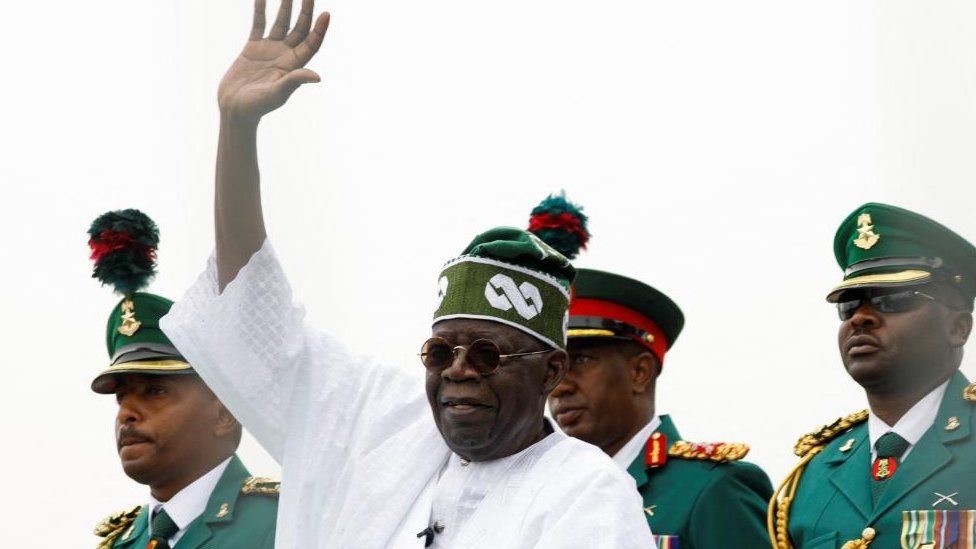
President Tinubu’s Democracy Day Address

0

President Tinubu addressed Nigerians today in celebration of the nation’s 2023 democracy day and commemoration of late Chief Monshood Kashimawo Olawale Abiola who is nationally recognised as a hero of democracy. Abiola became a symbol and martyr of democracy in Nigeria after the then Babangida-led military junta annulled the June 12, 1993 Presidential election which Abiola was reported to have won with a wide margin. It was in the course of the struggle to regain his stolen mandate that Abiola died.

President Tinubu speech which detailed some key circumstances of the June 12 election and their impact on the Nigeria’s evolving democracy has been lauded by many Nigerians as one of the greatest speeches to have been made by a Nigerian head of state.

The full speech is here below:

  1. Fellow Nigerians,

  2. It is exactly three decades today that Nigerians went to the polls to exercise their inalienable right to elect a President of their choice to lead the transition from military dictatorship to a representative government of the people.

  3. The abortion, by military fiat, of the decisive victory of Chief Moshood Kashimawo Olawale Abiola of the defunct Social Democratic Party (SDP) in the June 12, 1993, presidential election, up to that time, the fairest and freest election in the country’s political evolution, turned out, ironically, to be the seed that germinated into the prolonged struggle that gave birth to the democracy we currently enjoy since 1999.

  4. In rising to strongly oppose the arbitrary annulment of the will of the majority of Nigerians as expressed in that historic election, the substantial number of our people who participated in the struggle to de-annul the election signified their fierce commitment to enthroning democracy as a form of government that best ennobles the liberty, the dignity of the individual and the integrity as well as the stability of the polity. The fierce opposition to the annulment of the June 12, 1993 presidential election and the unrelenting pro-democracy onslaught it unleashed was the equivalent of the battle against colonial rule by our founding fathers that resulted in the gaining of Nigeria’s independence in 1960.

  5. Just like the anti-colonial movement, the pro-June 12 vanguard demonstrated, once again, the enduring validity of the 19th century historian, Arnold Toynbee’s eternal postulation, that civilization and societies experience progress as they are forced to respond to challenges posed by the environment. The unjust annulment of a widely acknowledged free and fair election was a challenge that elicited resistance by a resurgent civil society, leading ultimately to the attainment of our ‘second independence’ as exemplified by the return of democratic governance in 1999.

  6. Fellow compatriots, we celebrate a day that has remained a watershed in our nation’s history, not just today, but for every June 12, for the endless future that our beloved country shall exist and wax stronger and stronger, generations of Nigerians will always remind themselves that the democracy that is steadily growing to become the defining essence of our polity was not gifted to us on a silver platter.

  7. We can easily recall the sacrifice and martyrdom of Chief MKO Abiola, the custodian of the sacred mandate that was so cruelly annulled. He sacrificed his life in unyielding, patriotic defense of the ideals of democracy as symbolized in his choice, by his fellow countrymen and women, as their duly-elected President. There was an easier choice for him. It was to forgo the justice of his cause and opt for the path of ease and capitulation in the face of the tyranny of power. To his eternal credit and immortal glory, Abiola said no. He demonstrated the time-tested eternal truth that there are certain ideals and principles that are far more valuable than life itself.

  8. Everyday, on this day, down the ages we will recall the several other heroes of democracy such as Kudirat Abiola, wife of Chief Abiola, who was brutally murdered while in the trenches fighting on the side of the people. We remember Pa Alfred Rewane, one of the heroes of our independence struggle and Major General Shehu Musa Yar’Adua (rtd) who were silenced by the military junta while in pursuit of democracy. They gave their yesterday for the liberty that is ours today.

  9. The point is that we must never take this democracy for granted. We must forever jealously guard and protect it like a precious jewel. For, a people can never truly appreciate the freedoms and rights democracy guarantees them until they lose it

  10. We have traversed the dark, thorny path of dictatorship before and those who experienced it can readily testify to the unbridgeable gap between the dignity of freedom and the humiliation and degradation of tyranny. True, rancorous debates, interminable wrangling, ceaseless quarrels, bitter electoral contestations may be perceived by some as unattractive features of democracy. But they also testify to its merit and value.

  11. This year, we held the seventh in the cycle of elections that have become sacred rituals of our democratic practice in this dispensation since 1999.

  12. That the polls were intensely contested is in itself positive evidence that democracy is well and alive in our land. It is only natural that even as those who won and experienced victory in the various elections are elated and fulfilled, those who lost are disenchanted and disappointed. But the beauty of democracy is that those who win today can lose tomorrow and those who lose today will have an opportunity to compete and win in the next round of elections.

  13. Those who cannot endure and accept the pain of defeat in elections do not deserve the joy of victory when it is their turn to triumph. Above all, those who disagree with the outcome of the elections are taking full advantage of the constitutional provisions to seek redress in court and that is one of the reasons why democracy is still the best form of government invented by man.

  14. For Chief MKO Abiola, the symbol of this day, in whose memory June 12 became a national holiday, democracy is eternal.

  15. It is about rule of law and vibrant judiciary that can be trusted to deliver justice and strengthen institutions. It has become imperative to state here that the unnecessary illegal orders used to truncate or abridge democracy will no longer be tolerated.

  16. The recent harmonization of the retirement age for judicial officers is meant to strengthen the rule of law, which is a critical pillar of democracy. The reform has just started.

  17. The democracy that will yield right dividends to the people who are the shareholders means more than just freedom of choice and right to get people into elective offices. It means social and economic justice for our people. To the winner of June 12, democracy offers the best chance to fight and eliminate poverty. Thirty years ago, he christened his campaign manifesto, ‘Farewell to Poverty’ because he was convinced that there is nothing divine about poverty. It is a man-made problem that can be eliminated with clearly thought out social and economic policies.

  18. It is for this reason that, in my inauguration address on May 29, I gave effect to the decision taken by my predecessor-in-office to remove the fuel subsidy albatross and free up for collective use the much-needed resources, which had hitherto been pocketed by a few rich. I admit that the decision will impose extra burden on the masses of our people. I feel your pain. This is one decision we must bear to save our country from going under and take our resources away from the stranglehold of a few unpatriotic elements.

  19. Painfully, I have asked you, my compatriots, to sacrifice a little more for the survival of our country. For your trust and belief in us, I assure you that your sacrifice shall not be in vain. The government I lead will repay you through massive investment in transportation infrastructure, education, regular power supply, healthcare and other public utilities that will improve the quality of lives.

  20. The democracy MKO Abiola died for is one that promotes the welfare of the people over personal interests of the ruling class and one where the governed can find personal fulfillment and happiness. That is the hope MKO Abiola ignited throughout our country in 1993.

  21. On this year’s Democracy Day, I enjoin us all to rededicate ourselves to strengthening this form of government of free peoples that has been our guiding light these past 24 years. In particular, those of us who have been privileged to be elected into public offices at various levels in both the executive and legislative arms of government must recommit ourselves to offering selfless service to the people, and delivering concrete democracy dividends in accordance with our electoral promises.

  22. On my part and that of my administration, I pledge anew our commitment to diligently fulfilling every component of our electoral pact with the people – the ‘Renewed Hope’ agenda.

  23. We shall be faithful to truth. Faithful to equity. And faithful to justice. We shall exercise our authority and mandate to govern with fairness, respect for the rule of law, and commitment to always uphold the dignity of all our people.

  24. On this note, I wish us all a happy Democracy Day celebration and pray that the light of liberty shall never be extinguished in our land.

  25. Thank you all and may God continue to bless the Federal Republic of Nigeria.