DD
MM
YYYY

PAGES

DD
MM
YYYY

spot_img

PAGES

Home Blog Page 4146

Understanding Smart Contracts

0

Smart Contract is a self-executing agreement that is written in code and deployed on a blockchain network. A smart contract can facilitate, verify, and enforce the terms of a contract between two or more parties without the need for intermediaries or trusted third parties.

Smart contracts were first proposed by Nick Szabo in 1994 as a way to extend the functionality of electronic transactions to the digital realm. He envisioned smart contracts as computerized protocols that could enforce the terms of a contract using cryptography and logic. Since then, smart contracts have evolved with the development of blockchain technology, especially on platforms like Ethereum.

Smart contracts are composed of code and data that reside at a specific address on the blockchain. They can receive and send transactions, store and manipulate data, and interact with other smart contracts. They can also have a balance of cryptocurrency that they can use to pay for their execution.

Smart contracts are executed by a network of nodes that run the blockchain. Each node follows the same set of rules and verifies that the smart contract code is executed correctly and consistently. Once a smart contract transaction is confirmed, it becomes part of the immutable ledger and cannot be changed or reversed.

Smart contracts have many potential applications in various domains, such as finance, supply chain, insurance, healthcare, and more. For example, a smart contract can be used to automate the payment of dividends to shareholders, to track the delivery of goods and services, to manage insurance claims, or to verify the identity and credentials of patients and providers.

Smart contracts are immutable, meaning that once they are deployed on the blockchain, they cannot be modified or deleted. This makes it difficult to fix bugs, update features, or resolve disputes that may arise from the contract execution.

Smart contracts are deterministic, meaning that they will always produce the same output given the same input and state of the blockchain. This makes it hard to incorporate external data or events that may affect the contract logic, such as market prices, weather conditions, or user inputs.

Smart contracts are transparent, meaning that anyone can view the code and the transactions of the contract on the blockchain. This may raise privacy and security issues for some users who do not want their data or activities to be exposed to the public.

Smart contracts are costly, meaning that they consume computational resources and network fees to execute on the blockchain. This may limit the scalability and efficiency of some applications that require high throughput or low latency.

Therefore, smart contracts are not a one-size-fits-all solution for every use case. They require careful design, testing, and auditing to ensure their correctness, security, and performance. They also require a clear understanding of the legal and regulatory implications of using them in different jurisdictions and contexts.

A US House Committee advances anti-CBDC Bill despite Democratic Overhang

0

The House Financial Services Committee has voted to approve a bill that would prohibit the Federal Reserve from issuing a central bank digital currency (CBDC) in the US. The bill, titled the “Keep Big Tech Out of Finance Act”, was introduced by Republican Representative Patrick McHenry and co-sponsored by 14 other Republicans. The bill aims to prevent the Fed from creating a digital dollar that could compete with or replace the existing fiat currency system.

CBDC stands for central bank digital currency, a form of money that is issued and regulated by a central authority, such as the Federal Reserve. CBDC is different from traditional fiat currency, which is physical cash or coins, and from cryptocurrencies, which are decentralized and operate on a peer-to-peer network.

The bill also seeks to prevent large technology companies, such as Facebook, Google, and Amazon, from offering financial services or issuing digital assets that could function as money. The bill defines a large technology company as one that has an annual global revenue of at least $25 billion and offers an online platform service with at least 50 million monthly active users in the US.

The bill’s supporters argue that a CBDC would pose a threat to the privacy and security of Americans, as well as undermine the stability and sovereignty of the US dollar. They also claim that a CBDC would give the Fed too much power and discretion over monetary policy, and that it would enable the government to track and control every transaction made by citizens.

One of the main benefits of CBDC is that it can enhance the efficiency and inclusiveness of the payment system. CBDC can reduce transaction costs, increase speed and security, and enable access to digital payments for the unbanked or underbanked population. CBDC can also foster innovation and competition in the financial sector, as well as provide new tools for monetary policy and financial stability.

Another benefit of CBDC is that it can strengthen the international role of the US dollar. CBDC can facilitate cross-border payments and remittances, reduce dependence on foreign currencies and intermediaries, and increase the attractiveness of the dollar as a reserve currency. CBDC can also enhance the US leadership and influence in the global financial system, as well as promote the adoption of high standards and best practices for digital finance.

However, CBDC also poses some challenges and risks that need to be carefully addressed. CBDC can have implications for the banking system, such as affecting the profitability and intermediation function of commercial banks. CBDC can also raise legal, regulatory, and operational issues, such as ensuring compliance with anti-money laundering and consumer protection laws, protecting data privacy and cybersecurity, and managing technical glitches and cyberattacks. Moreover, CBDC can have geopolitical implications, such as creating tensions with other countries that may perceive CBDC as a threat or a challenge to their sovereignty or interests.

The bill’s opponents, mainly Democrats, contend that a CBDC would offer many benefits to the US economy and society, such as increasing financial inclusion, reducing transaction costs, enhancing efficiency and innovation, and strengthening the competitiveness of the US in the global digital economy. They also assert that a CBDC would not necessarily replace cash or bank deposits, but rather complement them as an alternative form of money.

The bill was passed by a narrow margin of 26-25, with all Republicans voting in favor and all Democrats voting against. The bill will now move to the House floor for a full vote, where it is expected to face strong resistance from the Democratic majority. If the bill passes the House, it will still need to be approved by the Senate and signed by the President before becoming law.

Therefore, the design and implementation of CBDC require a comprehensive and collaborative approach that involves various stakeholders, such as policymakers, regulators, financial institutions, technology providers, academics, and the public. The US should also coordinate with other countries and international organizations to ensure consistency and interoperability of CBDC standards and frameworks. By doing so, the US can harness the potential benefits of CBDC while mitigating the possible drawbacks.

Salute to Staff of Nigerian Embassy in Washington DC; Well Done

0

Good People, join me to commend the men and women who work in Nigeria’s embassy in Washington DC. I was there yesterday, and I met very happy people. Yes, everyone there was smiling and genuinely happy to meet their fellow citizens.

To the ambassador of Nigeria’s mission in the US (if we have one now), Consul-General, Directors, Head of Immigration and all our fellow citizens working there, a BIG SALUTE.

And the biggest: Nigerian citizens. Everything was organized, people followed the turns and life was just working. I want to thank the leaders and the government for whatever changes they have made on this. When I finished the capture, I was offered to wait for hours to get the passport. I said “really, I had planned it would arrive in 3 months”. Well done, Good People. It was like visiting Ovim.

MicroStrategy Acquires additional 5,445 BTC, As Bitcoin Gets Recognized in Shanghai People’s Court

0

MicroStrategy, the leading business intelligence and cloud-based software company, has announced that it has purchased 5,445 more bitcoins for approximately $147.3 million in cash. The company said that the average price of the acquired bitcoins was $27,053 per coin, inclusive of fees and expenses.

This latest acquisition brings MicroStrategy’s total bitcoin holdings to 114,042 bitcoins, which were bought for $3.16 billion at an average price of $27,713 per bitcoin. The company has been steadily increasing its bitcoin exposure since August 2020, when it made its first purchase of 21,454 bitcoins for $250 million.

MicroStrategy’s CEO Michael Saylor said that the company remains committed to its bitcoin strategy, which he believes is the best way to preserve and enhance shareholder value in the long term. He said that bitcoin is a superior store of value, a scarce and deflationary asset, and a hedge against inflation and currency devaluation.

Saylor also said that MicroStrategy is not only investing in bitcoin, but also innovating on the bitcoin network. The company recently launched a subsidiary called MicroStrategy LLC, which holds its bitcoin assets and provides treasury services to other corporations that want to adopt bitcoin as a primary treasury reserve asset.

MicroStrategy is one of the most prominent and vocal corporate advocates of bitcoin and has influenced other companies to follow its example. Some of the notable firms that have invested in bitcoin include Tesla, Square, PayPal, and Twitter. According to Bitcoin Treasuries, a website that tracks the bitcoin holdings of public and private companies, there are currently 42 entities that collectively own more than 1.4 million bitcoins, worth over $38 billion at current prices.

In a landmark ruling by the Shanghai People’s Court has officially recognized a unique digital currency as a form of property that can be protected by law. This is the first time that a Chinese court has granted legal status to a digital currency that is not issued by the state.

The case involved a dispute between two parties over the ownership of 3,000 units of a digital currency called “Q Coin”, which is used as a virtual currency in online games and social platforms operated by Tencent, one of China’s largest internet companies. The plaintiff claimed that he had purchased the Q Coins from the defendant for 12,000 yuan (about $1,860) in 2017, but the defendant refused to transfer them to his account. The defendant argued that Q Coins are not real money and have no legal value, and that the transaction was invalid.

The court ruled in favor of the plaintiff, stating that Q Coins are a unique digital currency that can be exchanged for goods and services within Tencent’s platforms, and that they have economic value and marketability. The court also noted that Q Coins are different from other digital currencies, such as Bitcoin or Ethereum, because they are not decentralized and are subject to Tencent’s management and regulation. Therefore, the court concluded that Q Coins are a type of virtual property that can be protected by law and ordered the defendant to transfer the 3,000 Q Coins to the plaintiff within 10 days.

This ruling is significant because it sets a precedent for the legal recognition of digital currencies in China, which has been cracking down on cryptocurrency trading and mining in recent years. While China does not allow its citizens to use digital currencies as legal tender, it does not prohibit them from owning or using them as virtual property. The ruling also shows that China is willing to embrace innovation and technology in the digital economy, as it is developing its own central bank digital currency (CBDC), which is expected to launch soon.

The implications of this ruling are far-reaching, as it could open up new possibilities and challenges for the development and regulation of digital currencies in China and beyond. It could also inspire more people to explore the potential and benefits of digital currencies, as well as the risks and responsibilities involved. As digital currencies become more mainstream and widely accepted, they could transform the way we exchange value and interact with each other in the digital age.

Meta Announces Plan to Roll Out Separate Account Deletion For Threads by December

0

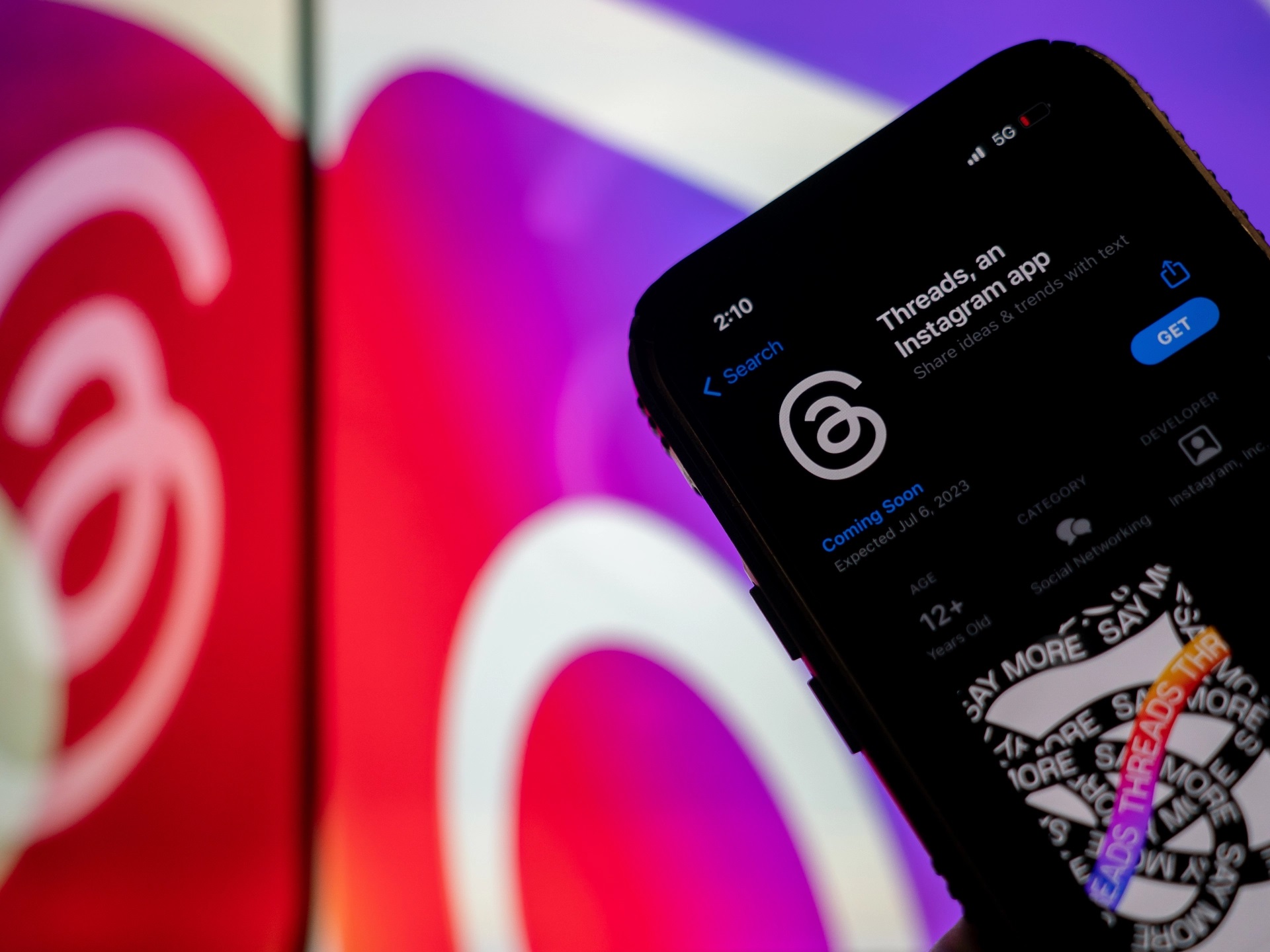
Meta has announced plans to roll out a separate account deletion for its social networking app Threads, by December.

Meta’s Chief Privacy Officer for product, Michel Protti said the company has been deliberating on how to tackle deletion requests at the beginning, noting that it was technically challenging to separate the two accounts at launch.

So the company decided to roll out tools that will enable users to set their account private, deactivate their account, and delete the Threads app.

In his words,

“Technically, it was extremely challenging to allow deletion of a separate Threads account without also deleting your overall Instagram account out of the gate. So we paid particular attention to ensuring the user could still exercise their deletion rights, by deactivating the account to sort of hide all content, setting it to private, or deleting individual threads”.

Recall that Threads’ explosive growth during its launch in July this year positioned the platform as a high-profile alternative to Twitter, which saw the platform gain significant traction.

However, many users were later surprised at the discovery that deleting a Threads account also means deleting the associated Instagram account, as explained in Meta’s Supplemental Privacy Policy.

The rationale behind the account deletion requirement saw Meta disclose that the account deletion requirement is an integral part of the user’s Instagram account.

In other words, the company disclosed that Threads is deeply intertwined with the user’s Instagram presence, making the deletion of one dependent on the deletion of the other.

The revelation about the account deletion process stirred up mixed reactions from users.

A large percentage of users were disappointed by the lack of flexibility and control over their Threads presence, while others expressed concerns about the impact on their Instagram accounts, which hold separate values and connections.

After receiving users’ criticisms over Threads deletion policy, Instagram head Adam Mosseri clarified how account deletion would work. He said that users can deactivate their Threads account to hide their profile and content, also, they can set their profile to private or can delete all their individual Threads posts without deleting their Instagram account.

However, Mosseri added that the company was looking into a way for users to delete their Threads accounts separately.

Finally, the meta-owned social networking platform has today announced plans to roll out a separate account deletion by the end of the year.

This move by Meta would spur a balance between integration and user empowerment to ensure a positive user experience on both platforms.

The metaverse isn’t dead yet, and Meta has a new mixed-reality headset to prove it. The Facebook parent launched the $500 Quest 3 at its Meta Connect event Wednesday, touting improvements including “passthrough” tech that lets users see the outside world with the headset on. It will be $200 more than the Quest 2 but a seventh the price of Apple’s $3,499 Vision Pro, which Meta CEO Mark Zuckerberg has said is a niche product. Meta is doubling down on that theme, calling the Quest 3 “the world’s first mass-market mixed reality headset.” Other announcements included AI Studio, which will let companies build chatbots for use on Meta platforms, and redesigned smart glasses made in partnership with Ray-Ban.