DD
MM
YYYY

PAGES

DD
MM
YYYY

spot_img

PAGES

Home Blog Page 4154

Innovation Unleashed: Crafting Nigeria’s Blueprint for Hub Expansion I

0

Global innovation hubs are defined as cities or metropolitan areas that can lead the flow of global innovation elements and influence the efficiency of resource allocation, drawing on their unique advantages in science and technology innovation. In technological and industrial competitions, they emerge as global cities that integrate research innovation, an innovation economy and a supportive ecosystem for innovation

Innovation hubs, as the key nodes in the global innovation network, have emerged as centres of scientific activity and pivots of innovation economy. Innovation hubs are geographic areas that bring together R&D institutions (such as tech-enabled corporations, universities, and medical facilities), as well as venture capital, incubators, and start-ups.

Our preliminary analysis of the network of innovation hubs shows that 68 hubs are actively contributing to the growth of technology-driven entrepreneurship and innovation. These hubs offer unique value propositions that align with the playbook for fostering innovation across the country. Some of these hubs specialize in Innovation Start-up Incubation, providing entrepreneurs with the critical support needed to transform their ideas into tangible products and businesses. They offer technology transfer, skill development, and even prototype fabrication services. This aligns perfectly with the playbook’s emphasis on creating a supportive environment for startups. Others focus on talent development and outsourcing, recognizing the importance of nurturing a skilled workforce. These hubs offer training programmes and connect skilled individuals with innovative businesses, fostering the development of a tech-savvy workforce as outlined in the playbook.

Several hubs are dedicated to co-working and business services, providing entrepreneurs with cost-effective workspaces and support services. They create an environment conducive to collaboration and resource sharing, aligning with the playbook’s goal of building a comprehensive innovation ecosystem. Some hubs have a strong social impact focus, aiming to address pressing societal challenges through innovation. They work in areas such as health, education, and governance, and they often partner with government initiatives to find tech-driven solutions, in line with the playbook’s objectives.

There are also hubs that prioritize support for startups and access to networks, helping early-stage companies grow by connecting them with networks and markets. They actively engage with government policies and provide vital support to startups, supporting the playbook’s goal of nurturing entrepreneurship. Policy advocacy and networking hubs, like the Innovation Support Network, play a crucial role in shaping policies that promote hub sustainability and growth. They connect entrepreneurs with policymakers and development partners, strengthening the innovation ecosystem.

Regional development hubs in cities like Ilorin and Kaduna aim to spread technology adoption beyond major urban centers, contributing to regional economic growth. This regional focus resonates with the playbook’s emphasis on promoting innovation outside of traditional tech hubs. Other hubs, such as the Humanitarian and Social Innovation centers, focus on tackling pressing societal issues. They collaborate with government agencies to find innovative solutions, aligning with the playbook’s goal of using technology for societal benefit.

Global tech network and funding hubs, like MEST Africa, bridge Nigerian startups with international resources and markets, fostering global competitiveness—a key aspect of the playbook’s vision. Hubs that offer support for early-stage startups are crucial for the growth of innovative businesses. They provide mentorship and incubation services, supporting the playbook’s aim of nurturing a thriving startup ecosystem.

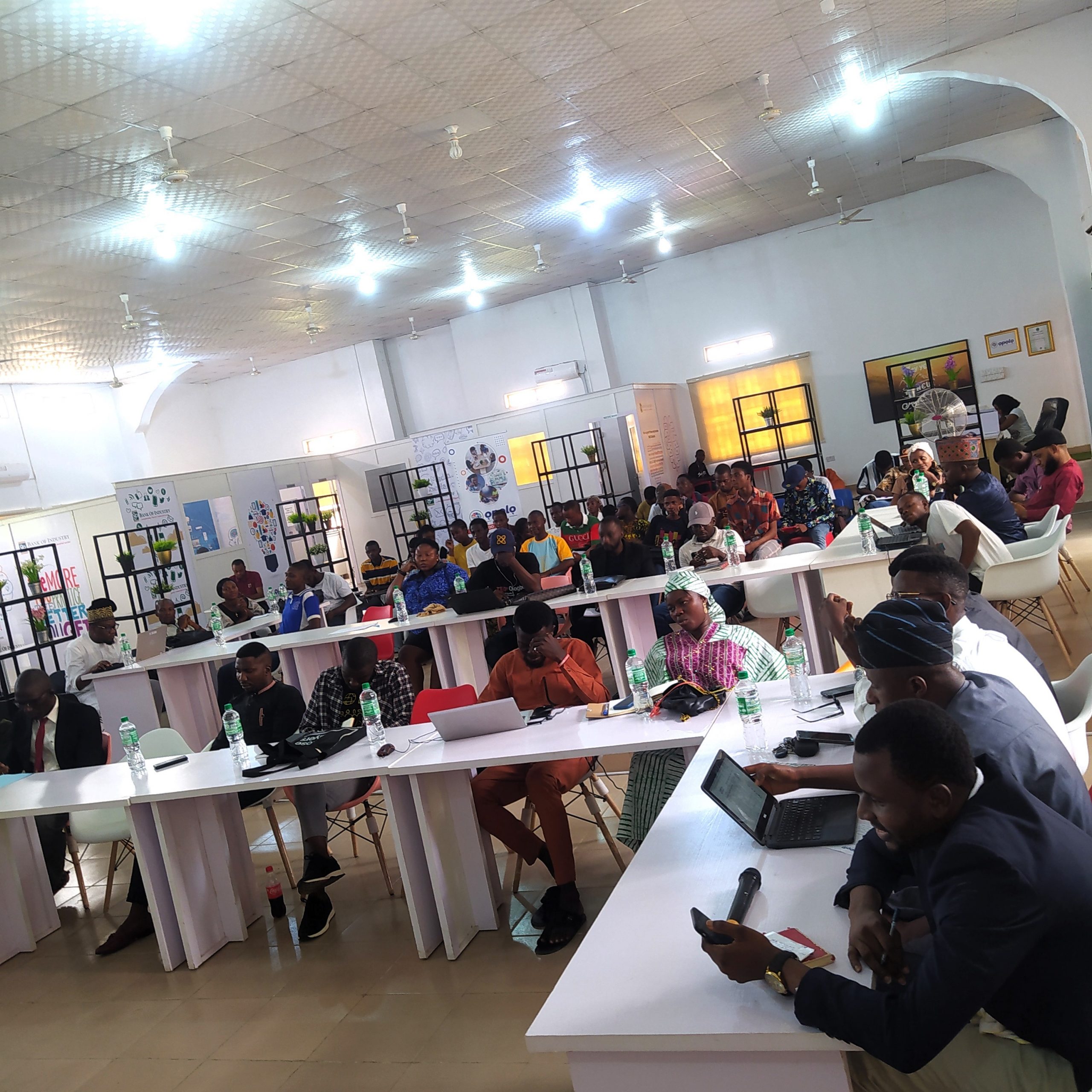
Digital skill development hubs, such as KAD ICT Hub, address the digital skills gap by offering training and education programs. They align with the playbook’s goal of equipping the workforce with essential digital skills. Empowerment and inclusivity hubs like Enable Africa Hub focus on providing opportunities for marginalized communities. They contribute to the playbook’s vision of making technological education accessible to all. Youth-focused hubs, like the one in Jos, aim to empower young entrepreneurs and reduce unemployment by incubating and accelerating ideas. This supports the playbook’s objective of fostering entrepreneurship from an early stage. There are other inn0vation companies like Opolo Global Innovation whose aim is to foster innovation in both urban and rural communities as well as the universities. The Opolo Global example is a good case of using the quadruple helix approach to foster adoption of technologies, skill up youths, help them to commercialize their skills. For companies like Opolo Global, the mission does not stop there but extends to commercialization of research on university campuses. The Co-Creation Hub in Lagos also belongs to the caliber fostering innovation and digital technologies across the continent of Africa.

Apart from the nature of the hubs, here are some other insights derived from the preliminary data:

The Geographical Distribution of Innovation Hubs

Our data reveals that innovation hubs are not evenly distributed across Nigeria. Lagos, the commercial capital, appears to have the highest concentration of innovation hubs, particularly in areas like Yaba, Victoria Island, Ikoyi, and other parts of the city. The reason for this is not far-fetched. As the commercial capital of Nigeria, Lagos has a concentration of corporate organizations who are interested in innovation hubs. Abuja, the federal capital, also has a significant presence. This is due to the presence of policy makers and institutions that drive innovation and digital economy in the country. Nevertheless, this concentration implies that these regions are more attractive to innovation and technology-driven activities.

Establishment of innovation hubs are highly urban-centered

It is noticeable that most innovation hubs are located in urban centers, such as Lagos, Abuja, Port Harcourt, Benin, and others. This is likely because urban areas tend to have better infrastructure, access to talent, and a more conducive environment for innovation and technology development. It is also explainable because most internet infrastructures also work well in the urban centres as against the rural areas. This bias leaves a gap. Like most other issues of development, rural areas become underserved in the innovation sector.

Regional variation in the distribution of innovation hubs 

The data shows some regional variation with innovation hubs in states like Akwa Ibom, Kwara, Adamawa, and others. This suggests that innovation is not limited to major cities and regions (South West and North Central) but is spreading to other regions, albeit at a slower pace. Encouraging innovation in these regions can help promote economic growth and reduce regional disparities. Identifying regions with a lower concentration of innovation hubs, such as some northern states, provides an opportunity for targeted interventions and collaborations between government, private sector players, and local communities to stimulate innovation and entrepreneurship.

Government Investment; Private Sector Engagement

The presence of multiple innovation hubs in the Federal Capital Territory (FCT) and Lagos is an indication of two indices. While the location in Abuja indicates government interest and investment in fostering innovation, the abundant presence of hubs in Lagos is a pointer to the involvement of the private sector in the innovation ecosystem. This is a positive sign, as government support can play a crucial role in the growth of the technology ecosystem. In the same vein, the presence of private sector underscores the importance of public-private partnerships in driving innovation. This suggests a high potential for collaboration of both the private players and the public agency.




The time is 4pm WAT on Saturday, Oct 14 2023 | Tekedia Demo Day

0

The time is 4pm WAT on Saturday, Oct 14 2023 – and ten great startups will present before members of Tekedia Capital Syndicate.  To check these startups and be part of our community where we breed startup unicorns, begin here and join.

Look at that clock; it is time to be a member.

Tekedia Capital offers a specialty investment vehicle (or investment syndicate) which makes it possible for citizens, groups and organizations to co-invest in innovative startups and young companies in Africa and around the world. Capital from these investing entities is pooled together and then invested in a specific company or companies.

Nigerian Government Denies Reintroducing Petrol Subsidy

0

The Federal Government of Nigeria has denied claims that it has reintroduced the petrol subsidy regime. The government clarified that the recent queues observed at petrol stations across the country were due to distribution challenges, not a lack of supply.

This statement comes in response to concerns raised by oil marketers, organized labor groups, and experts who believed that the government had reinstated the fuel subsidy, despite previous announcements indicating its removal.

Mele Kyari, the Group Chief Executive Officer of the Nigerian National Petroleum Company (NNPC) Limited, emphasized that there is no fuel subsidy in place. President Bola Tinubu had in May announced the removal of the subsidy, and this clarification seeks to reaffirm that stance.

The fuel subsidy issue has been a contentious one in Nigeria, with the government making efforts to eliminate it as part of broader economic reforms. The recent distribution challenges have led to temporary disruptions in the supply chain, causing queues at petrol stations. The government’s position is that these challenges are not indicative of a return to the subsidy regime.

“I told you there’s no subsidy whatsoever, we are recovering our full cost from the products that we import. We sell to the market, we understand why the marketers are unable to import. We hope that they do this very quickly and these are some of the interventions the government is doing. There is no subsidy,” Kyari said.

The stability of the pump price of petrol in Nigeria despite rising oil prices and the continuous fall of the naira in the FX market indicate that the government is silently paying subsidy.

Last Friday, the National President of the Petroleum and Natural Gas Senior Staff Association of Nigeria (PENGASSAN), Festus Osifo, said that the Nigerian government has restored the subsidy on petrol.

“The speculation has been there looking at the fundamentals because two basic things that contribute to the pricing today are the exchange rate and the price of the crude in the international market.

“You know, in the last few weeks, the price of crude has been going up, and inches towards $95 per barrel. Based on this, there are speculations that there may be an increase in the price of Premium Motor Spirit (PMS) but behind the scenes, we have been engaging the government and trying to make them understand that there is no basis for that.

“Because for us, you know when they floated the exchange rate, you would recall that the exchange rate was moving at a very fast speed before some interventions came,” Mr Osifo said.

Kyari triggered the latest conclusion with his statement on Monday: “We are the only company importing petrol into the country. None of them can do it today. For them, access to foreign exchange is difficult. We create foreign exchange (FX), therefore we have access to FX, while their access to FX is limited.”

The removal of fuel subsidy means that the right to solely import petroleum products has been taken away from the NNPC Limited, allowing petrol marketers to apply for import licenses from the Nigerian Midstream and Downstream Petroleum Regulatory Authority (NMDPRA).

The deregulation is expected to drive, among oil marketers, competition that will determine fuel prices. Against this backdrop, Kyari’s statement that the NNPC Limited is back to being the sole importer of petrol is seen as an acknowledgment that fuel subsidy is back.

eNaira Does Not Pose A Threat to Nigeria’s Financial Stability, CBN Debunks Claim

0

The Central Bank of Nigeria (CBN), has debunked the claim that the country’s digital currency eNaira, poses a threat to Nigeria’s financial stability.

This was addressed by the CBN Director of Corporate Communications, Isa AbdulMumin, who stated that the claim represented a misunderstanding of the bank’s recently released publication, ‘Economics of Digital Currencies: A Book of Readings’.

He further stated that there was no concern whatsoever about the eNaira posing a risk to the nation’s financial stability but enhancing financial inclusion in the country.

In his words,

“The attention of the Central Bank of Nigeria has been drawn to news items on some media platforms traditional and social suggesting that the country’s Central Bank Digital Currency (CBC), the naira, is a threat to the nation’s financial stability.

“After reviewing the reports, which appear to have been syndicated, there seems to be a lack of understanding of portions of the Foreword, and some articles, in the bank’s recently released Economics of Digital Currencies: A Book of Readings.

“A recurring theme in the book is the interest of regulators, such as the CBN, in the role of cryptocurrencies as speculative investments, and the potential threat they harbor for financial stability. Under that, the articles in the book provides an in-depth understanding of CBDCS generally and the workings of the naira in particular, highlighting issues and challenges in implementation and adoption.

“One of the media reports speaks of concerns about Nigeria’s central bank digital currency, naira, indicating potential risks to financial stability despite its success in narrowing the country’s financial inclusion gap. The nexus implied is unconvincing. In the ordinary course of things, the CBN does not join issues on news commentary; however, we are constrained to clarify the reports to ensure that misunderstandings are not fostered.”

The Central Bank of Nigeria launched the eNaira in October 2021, to improve the country’s financial inclusion with a target of  95% by 2024, and also to ensure ease of payments and reduction of cost in International funds transfer.

Last year September, the CBN reported that the eNaira recorded over 583,000 consumer wallets and about 83,000 merchant wallets downloads. It also reported over 34,000 transactions amounting to over N188 million which suggested an excellent adoption rate.

At the launch of the eNaira last year, the CBN projected that the eNaira would bring multiple benefits that would manifest as the digital currency becomes more widespread and is supported by a robust regulatory system.

One of the major benefits of eNaira is an increase in financial inclusion. Its coverage is expected to expand to anyone with a mobile phone, even if they do not have a bank account.

It is worth nothing that the eNaira uses the same blockchain technology as Bitcoin or Ethereum and can be stored in digital wallets used for payment transactions like the other two.

Also, it can be transferred digitally and at virtually no cost to anyone in the world. Unlike Bitcoin or Ethereum, the eNaira has been incorporated with stringent access right controls by the CBN.

The launch of the eNaira by the Central Bark of Nigeria is a significant step in the digital transformation of the country’s financial sector. It is expected to play a pivotal role in advancing financial inclusion, reducing transaction costs, and enhancing transparency in financial transactions across Nigeria.

However, its successful implementation will depend on factors such as infrastructure development, regulatory compliance, and public adoption.

Atiku Slams Tinubu’s Media Propaganda, Says It Doesn’t Change the Fact Certificate Was Forged

0

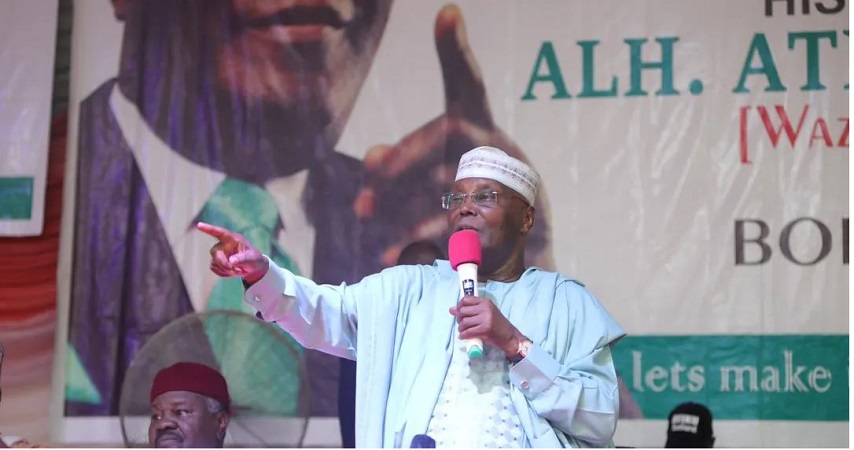
Former Vice President Atiku Abubakar has reiterated his stance that President Bola Tinubu is guilty of forgery, despite attempts by Tinubu and his associates to distort the facts.

The Peoples Democratic Party (PDP) presidential candidate in the February 25 elections, who is challenging the outcome of the election at the Supreme Court, also accused President Tinubu’s aides of launching a propaganda campaign to create confusion regarding the forgery allegations against the president.

Furthermore, Atiku raised concerns about a potential plot by the Tinubu administration to suppress the media in preparation for the release of records related to his criminal investigations by the Federal Bureau of Investigation (FBI).

Atiku’s statement follows his suit that sought the release of Tinubu’s academic record at Chicago State University. Following the release of his credentials, it was determined during the deposition that the certificate that Tinubu submitted to the Independent National Election Commission (INEC) in June 2022, was forged.

Atiku also called on Tinubu to take the honorable path and resign from his office in light of the allegations. He argued that public officials should be held accountable for their actions, especially when it comes to matters as serious as forgery.

A statement by Atiku’s Media Adviser, Paul Ibe, said “Since Tuesday last week, when the deposition regarding President Bola Tinubu’s educational qualifications came to the fore in the United States, there have been several attempts to twist the facts of the matter, which deliberately aim to confuse the mind of the public concerning the matter.

“Some media aides to the president have come out openly to ‘push back on the narrative’, while some media houses, especially one, have persistently slanted their story to justify a corrupted interpretation of the facts in the disposition.

“Sadly, however, the truth of the matter remains that Nigeria’s President, Bola Tinubu falsified a document he submitted to the Independent National Electoral Commission (INEC) and swore an affidavit under oath to back up his forgery.

“On page 26 of the deposition, which is publicly available, the Registrar of the Chicago State University, Caleb Westberg, under oath, was asked a simple question, ‘CSU has determined that it does not have a true and correct copy of the diploma issued to Bola Tinubu in 1979, correct?

“To which the Registrar responded, ‘that’s correct.’ Also, on page 27, a similar question was put to Mr. Westberg: ‘So, CSU, after going through every diploma, was unable to find an authentic copy of any diploma that CSU issued to Tinubu in 1979. Is that correct? The CSU Registrar, in his response, said: ‘We did not find any diploma issued by CSU in 1979 to Mr. Tinubu,” he said.

The former vice president added, “And coming straight to the specific issue of whether the CSU is aware of or in possession of the diploma that Tinubu submitted to INEC, to which Mr. Westberg simply said, ‘Correct, we are not aware of it.

“Indeed, anyone who has taken time to do a thorough reading of the deposition will come to the unambiguous conclusion that the footprints of Tinubu’s odyssey as far as the CSU documents concerned are filled with profound forgeries and abuse of administrative due process.

“President Tinubu’s supporters and spin doctors will want to force the narrative of, at least, ‘Tinubu graduated from the CSU down our throat, even when the narrative has no foothold in logic.”

Accordingly, the former vice-president said, the question remained, “How does a candidate graduate from a university that you were never qualified for?

“According to information in the open, President Tinubu applied to the CSU with a pre-qualifying 1970 certificate from Government College Lagos, whereas the school did not come into existence until 1974. Maybe this should make Tinubu the first man ever to have an anticipatory certification from the school four clear years before the founding of the school.

“Another mystery is that in addition to the non-existing Government College Lagos certificate, Tinubu presented a certificate from another school in the United States that belongs to a female candidate and a Cambridge HSC of 1970 – the same year he purportedly graduated from a secondary school in Nigeria.

“Long before the CSU discovery of last week, Tinubu, has had a history of forgery and perjury. In his form CF001, he filed ahead of his governorship election in 1999, Tinubu had claimed albeit fraudulently that he attended St John’s Primary School Aroloya, Government College Ibadan and University of Chicago as different from Chicago State University. The late lawyer and human rights icon, Gani Fawehinmi, would have succeeded in bursting him but for the immunity he enjoyed as Governor of Lagos State. President Tinubu must be a man of mystery. No wonder his supporters call him Idan (a distorter).”

The PDP presidential candidate said he strongly believes that the question of integrity and morality lies at the heart of the forgery scandal against President Tinubu.

He said, “If the president would not do what is honourable by resigning from office and saving the country an imminent embarrassment, at least his supporters should desist from telling shameful lies to confuse the public.”

Atiku said part of the propaganda is the continuous reference to Tinubu’s transcript from the Chicago State University as evidence of his studentship in the school.

“We are alarmed how his NYSC certificate bears Bola Adekunle Tinubu, even when the CSU said under oath that the middle name of ‘A’ was never interpreted in any document in his file.”

He added that “Every Nigerian, who has undergone the NYSC programme understands that the names on the NYSC are never a creation of the candidate, but the official name that the student was officially known as, from their tertiary institution.

“Tinubu was allegedly never known as Adekunle at CSU. Thus, the only way to understand how Adekunle was smuggled on his NYSC discharge certificate can only be explained as a forgery. Yet, his media aides will come to the open to make a shameful alternative fact.

“It is even more shameful that just when this whole scandal continues to unfold, media handlers of President Tinubu have, from nowhere, smuggled a middle name of Adekunle into his Wikipedia account. The word Adekunle in Yoruba is a house filled with royalty. But in this instance, we daresay it is a house filled with forgeries.

“It is, therefore, becoming very obvious that there is no end point to how President Tinubu and his spin doctors will continue to use one forgery to cover the other,” Atiku stated.

Atiku also expressed concern that the recent warning issued by AriseTV suggests that the Tinubu administration had already perfected ‘an elaborate and sinister plot’ to gag the media ahead of the release of the records containing his criminal investigations by the FBI.

The American intelligence agency said it will start to release Tinubu’s documents, starting in October.

A statement released by his Atiku’s Special Assistant on Public Communication, Phrank Shaibu, accused the NBC of being partisan. He said the NBC had been watching as Tinubu’s media platforms like Television Continental (TVC) had been constantly attacking Atiku and had refused to even air opposition views.

“Back in February, NBC tried to show a bit of fairness and fined TVC for unprofessional broadcasts including the airing of the Joint Media Directorate of the APC Presidential Campaign Council press briefing, where Festus Keyamo said Obasanjo and Atiku ran a criminal enterprise and an empire of fraud in Abuja.

“However, since Tinubu became president on May 29, the NBC has become more partisan than ever. The NBC boss, Balarabe Ilelah, is obviously seeking to retain his appointment and is now dancing to the tune of the APC and their master at the Presidential Villa.

“The NBC has now been co-opted into a grand plot to gag the media over Tinubu’s certificate scandal. Having lost the battle in the court of public opinion, they are now trying to use the powers of the state to browbeat the media into silence. This is indeed shameful for a man, who claimed to be a hero of the June 12 struggle.”

“But this is not the time for the Nigerian media to show any weakness. The trove of documents that the FBI is set to release this month will expose details of the investigation that tied Bola Tinubu to heroin trafficking.

“The dissemination of this information must not be left to social media alone. The media must rise up to its role as the watchdog of society as enshrined in Section 22 of the 1999 constitution.”

He questioned why the educational standards expected of the president appeared to be less stringent than those for a ministerial nominee or even a young individual like Mmesoma Ejikeme, who had forged her JAMB results through a third-party vendor.