DD
MM
YYYY

PAGES

DD
MM
YYYY

spot_img

PAGES

Home Blog Page 4168

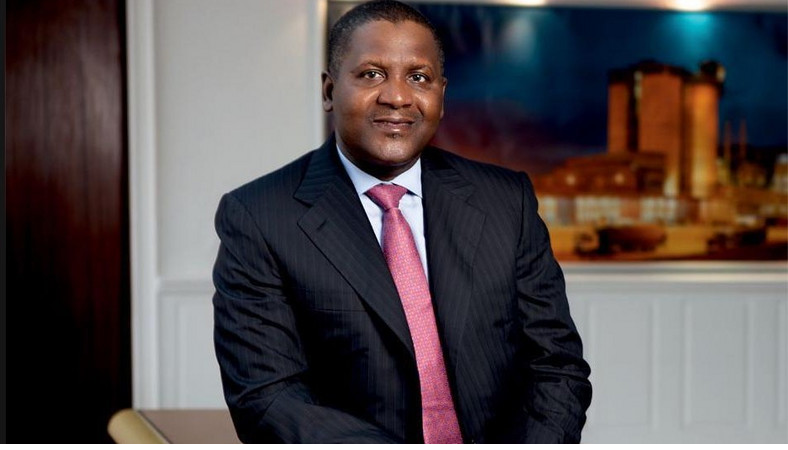
Dangote Has Picked Cement and Refinery, Pick Electricity, Clean Water, Roads, and Ask for Government Support

41

So many interesting comments on my piece on Dangote Refinery. Let’s respect and commend Alhaji Aliko Dangote. Here you see me, even as a village boy from Ovim Abia State, if you have $5 billion to invest in Nigeria and you have money to rent my brain, my advisory package will include getting some major concessions from the government for you. I have called that Conglomerate Tax and it is global (Amazon HQ2 got $billions of waivers from US cities, GE got waivers to develop special plastic for US military, etc).

Dangote’s problem is that he is alone in doing many production things in Nigeria, and that is why we have the jealousy from many who do not understand how markets work. There is no businessman or woman with $10 billion to invest that will not ask for special treatments. Not doing so is stupidity!

I am a player in the US semiconductor industry. As I write, the US government is distributing $52.7 billion to major players. While Nigeria does not have funds to distribute, it offers some incentives to great pioneering entrepreneurs with capacities to do big things.

In the US, they do not have silver or bronze in competitions; win or go home. That is why Elon Musk has received $billions via grants, incentives, etc from the US government because he is always #1 in the categories. You can accuse the US government of favouritism for picking Tesla, SpaceX and The Boring, and ignoring other companies which fade over; they do not care.

While a student in Johns Hopkins, there was a specific year Johns Hopkins received close to 18% of the National Institute of Health grant, with other universities in the whole US sharing the rest. Why?  Focus on the best, winners, the Gold, with capacities to do big things.

Let us celebrate this man. If you are offended, raise your $10 billion and ask the government what you need to fix our electricity, clean water, health care, transportation, etc. Those are opportunities which remain available. But dismissing his efforts on the grounds of government support is unfair to aspiring entrepreneurs who want to do big things in the future.

Note this: the government of Tanzania promised him $600 million incentives. He built and they reneged. He was about to close the factory when the new president realized the risk and acted up. He won 100% and the president understood that you do not threaten a man who is putting $$billions in your economy.

For almost a year, Tanzanian officials had been in a bitter $600 million dispute with Dangote Cement over investment incentives related to a new cement plant in Mtwara, southern Tanzania.  The Nigerian company had claimed the government was reneging on promises made by the previous administration of president Jakaya Kikwete, who left office thirteen months ago.

The cement plant launched last year and was flourishing until John Magufuli became president. In the last 12 months, new regulatory challenges undermined operations to such a degree, that the company suspended production last month. It caused an uproar in Tanzania. And Magufuli had to get directly involved and eventually struck a last-minute deal with Dangote on Saturday (Dec. 10) to keep the factory in the country and save thousands of jobs that were at risk if it closed.

My Response: I am not sure about that. There are many banks in Nigeria today. Dangote’s Liberty Bank did not survive because govt had given winners the goodies. People like to make it look like Dangote has a strike rate of 100%. Check, Dangote Capital, Dangote Noodles, Liberty Merchant Bank, etc all went bankrupt. He competes and fails on some but whenever he wins,  many think it is because of the government. I find that offensive from Nigerians. What has govt done for him that bank owners do not get in our distorted FX regime?

Take time and see investments he wasted $$billions and recalibrate this illusion that he wins because of govt. In 3 years, someone will write “How Nigeria Gave Dangote Our Petrol Sector” as memory fades on how it used to be

My Response: Even China picks winners. In short, China’s one is legendary. It is an illusion to think someone will invest $10b without incentives.  Tanzania was giving Dangote Cement trouble. He closed the factory. Then months later, those local entrepreneurs could not create an alternative and the govt came calling because cement scarcity hit the land. This is not an app, this is an asset-heavy industry.

Comment 3: The Ibeto cement was killed by the Nigerian government for the obvious . Now, the refineries owned by the Nigerian government cannot function but the NNPC already has a stake in Dangote refinery. It is outrageous!

My Response: Yes, it is Dangote that killed all the refineries in Nigeria. Yes, Nigeria has not allowed them to work for decades so that Dangote will own the sector. Yes, it is because of the investment NNPC made in Dangote Refinery a few years ago that precipitated the collapse of all refineries in Nigeria. That is not fair!

Comment 4: Sir, I must say one admirable quality of your submissions lies in their unwavering objectivity, to my mind. Despite being delivered at nearly lightning-fast speeds, reminding me of a mass-production conveyor belt, your responses rarely compromise the depth and accuracy of your knowledge base. It is indeed impressive to see such a consistent level of excellence you maintain in your submissions. I like how you deliver top-notch content with impartiality.

To my mind, it’s the cultural conditioning that is causing many to wonder about the issue of this laudable and indeed patriotic venture. Imagine DanCash entering the Nigerian business space with this same chef-d’oeuvre and easily drawing in a profound ‘sense’ of assurance, confidence and trust(the type the Super Eagles-in their winning ways,O- inspire in all of us, or even Hilda Baci, last 2 weeks)! Such a heightened sense of collective ownership and patriotism would significantly impact the entire country, giving it that hard-to-describe energy that moves nations to prosperity and well-being. Respectfully, please.???????


Eight statements from CEOs on Generative A.I.

0

Here are eight statements from global CEOs on Generative A.I.

 “People have watched the capability of generative A.I. to deliver really, really thoughtful responses, sometimes fully accurate, sometimes not fully accurate. And it has opened up this question about, well, how do we use this in the right way? How do we use it in a responsible way? And every single client I’m talking to is trying to figure out how to go fast, but how to go fast in a responsible way.”

Joe Atkinson, chief products and technology officer for PwC

We’ve literally seen thousands of startups in the last six months move into this space. I’m in San Francisco, and there’s a hackathon happening three or four times a week. The amount of energy going into this is palpable…There are companies going after marketing, companies going after customer support, a lot of tooling focused on speech recognition. You name it.”

—Chris Young, Microsoft Executive Vice President

Every single board meeting we’ve had this year has had a standing agenda item of A.I. and ChatGPT and this whole space, to make sure we’ve got our board kind of pacing with us as we’re thinking about where we’re going.”

—Pat Geraghty, CEO, GuideWell

Our introduction to generative A.I. course has had four times the enrollment of the next most popular course of all time for us.”

—Jeff Tarr, CEO, Skillsoft

“We think of our financial advisers as being experts in ‘head math’ and ‘heart math.’ I think generative A.I. has a huge potential to offer personalized head math. But I think it will be years before generative A.I. can replace the heart math, because the heart math doesn’t always align with the head math.”

—Terry Rasmussen, CEO, Thrivent

“We all remember the old-school travel agent who was a human being, who knows something about you and what you could afford, and would do it all for you when putting together your travel…That’s what generative A.I. is basically going to do. You’re going to have that conversation again. And it’s going to be with an A.I. agent.”

—Glenn Fogel, CEO, Booking.com

We have two guidelines that we’ve established for ourselves in terms of using generative A.I. One is that we are only going to use it on our closed data sets….which means approved data that has been vetted….The second is, it’s always going to have a human in the loop.”

—Rohit Kapoor, CEO, EXL

We use ChatGPT to write code….[Software development that] used to take anywhere from eight to 10 weeks…now can be done in less than a week.”

—Girish Mathrubootham, CEO, Freshworks

When you asked the question, ‘Does anybody here use generative A.I. to write code,’ there was silence probably because nobody on this call is actually coding. But I think we all need to assume that many of our developers are using generative A.I. in their own coding.”

—Rob Lake, CEO, Boulevard

Reasons Why You Need Legal Services, Ethical Offenses For Which a Lawyer can be Penalized in Nigeria

0

Reasons Why You Need Legal Services

Legal Services, as prevalent as they might be, are still not properly understood in a lot of jurisdictions, Nigeria included. This is because legal practice in some jurisdictions is viewed strictly from the relatively narrow lens of Dispute Resolution practice which still claims the bulk of legal professions across the world. 

As a result, many people with no dispute resolution matters have trouble understanding WHY they need legal services, which this article aims to explain by pointing out the reasons you need legal services which are as follows:-

Cautionary Reasons :- These involve hiring legal services in a cautionary capacity (typically, legal advisor capacities) that enables you to be properly guided at the pre-entry, negotiation, and pre-execution stages of several transactions and business relationships.

Regulatory Reasons :- This involves having legal services on a revolving basis for the purpose of satisfying regulatory compliance requirements in a wide range of business operations, the opposite of which would put your business at a great risk.

Remedial Reasons :– You need legal services in a remedial capacity at the point of business relationships going awry, having your rights violated/suffering loss, or at the point of transactions falling apart using Courtroom litigation and Alternative Dispute Resolution measures. 

Statutory Reasons:- By operation of law, certain business functions are required to be manned by legal practitioners ranging from Non-Executive & Independent Director roles to Company Secretarial to Manager/Receiver roles to corporate restructuring roles.

Transaction support reasons :- From due diligence reports to documentation services to perfection of land titles to business license procurement to business relationship renewals and alternative business model set-up for specialized business sectors like Financial services & Financial Technology, the importance of legal services cannot be overestimated.

 Ethical Offenses For Which a Lawyer can be Penalized in Nigeria

That lawyers and in particular, legal practitioners, are held to a higher standard of behavior is not exactly new. But there is still a lack of clarity as to the exact acts , types of conduct, or omissions that would be enough to get lawyers into trouble in Common Law jurisdictions like Nigeria.

This article will be outlining and briefly explaining what these ethical offenses are as follows:-

1). Infamous Conduct in a Professional Respect/Regard or Manner :– This involves an act or omission of a dishonorable nature that would be reasonably contemplated as bringing disrepute to the legal profession as a whole.

2). A Conviction By a Court in Nigeria for Offences Incompatible with the status of a lawyer :- This does not have to necessarily involve acts or omissions arising from the performance or practice of the profession. 

3). Enrolment by Fraud:- This involves being called to the Nigerian Legal profession on the basis of a fraudulent misrepresentation including but not limited to the falsification of qualifying certificates or being found unfit in character to be made a lawyer in Nigeria e.g. Secret Society Membership.

4). Conduct Incompatible with the status of a Legal Practitioner :- This would apply to behavior that would be deemed unbecoming of the status of a legal professional e.g. Public drunkenness or street fighting. 

Virtual Reality and Augmented Reality: What’s the Future?

0

Virtual reality helmets will get cooler and increase screen resolution. Graphics in VR games will definitely become more beautiful. Augmented reality on smartphones will become more realistic and faster. On PlayAmo, for example, gambling has never seemed so real in a virtual world. These evolutionary processes are the trends of any year. But 2020 has shown that the industry has more interesting ways to develop.

The trends of the next few years did not suddenly appear. Everything listed below has existed and has been developing for decades.

Virtual Offices 

Having to stay at home almost all year because of the 2020 Covid-19 pandemic has suddenly made people take a closer look at VR. Many have switched to remote work and are faced with the fact that in isolation from the team, work is no longer so effective. Phone calls in Zoom do not completely solve the problem – via video communication, the feeling of presence is fully transmitted so-so. Because of this, many large companies have started talking about the need to create virtual offices in which people can interact with colleagues in virtual reality.

Even the main legislator of VR fashion – Facebook – has presented a ready-made solution – Infinite Office. Global testing of Zuckerberg’s virtual office is ongoing.

Learning in VR 

The year 2020 clearly showed that education is the most promising area for the use of VR and AR. There have been advances in this direction before, but this direction attracted close attention when students around the world switched to remote learning due to the pandemic. It quickly became clear that video communication was not enough here either: not all professions can be mastered in this way, and the level of immersion in the educational process is not at all the same. This is where VR came to the rescue.

VR helps educate people in the most unexpected areas. What can we say about doctors and firefighters, on whose professional preparedness the lives of other people literally depend. The direction of VR-learning has been developing for many years, and there will undoubtedly be more such examples in the next year.

More Lightweight, Standalone and Wireless VR Headsets

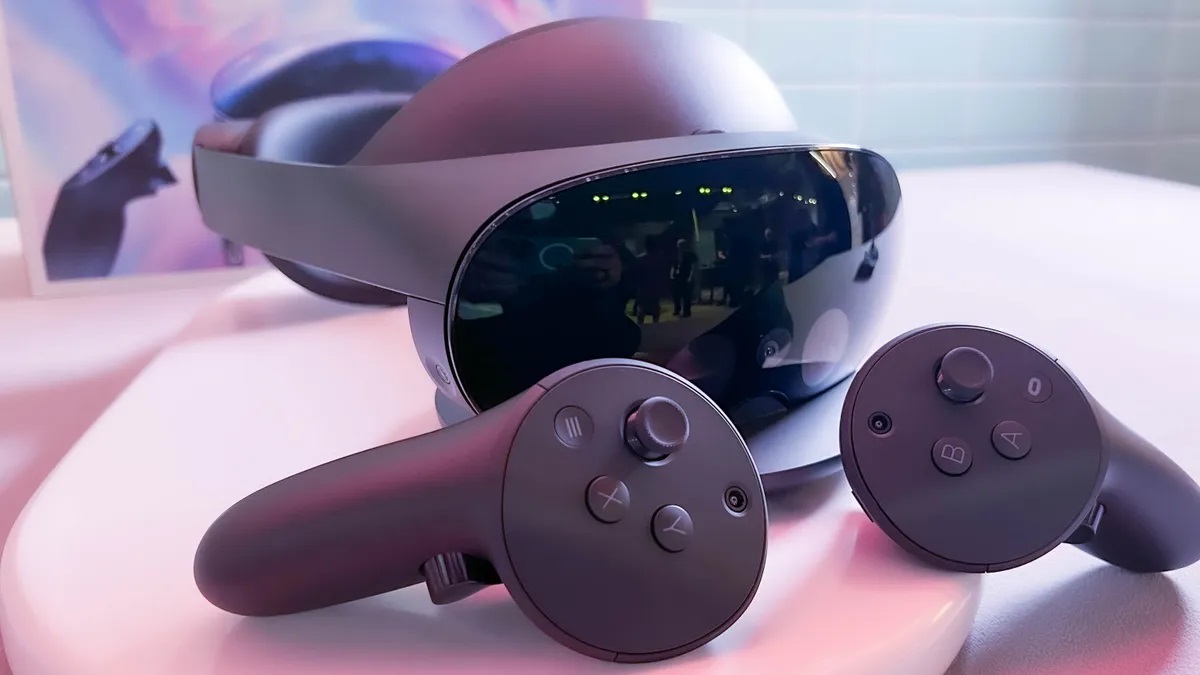
To be honest, VR began to catch the attention of the masses when some helmets got rid of the so-called “base stations”. The average normal person doesn’t want to fill the room with cameras to chop cubes in Beat Saber a couple of times a week! The standard consumer also doesn’t want to build a $2,000 computer for VR, get tangled up in wires, and suffer neck pain caused by the weight of VR headsets. All of this has yet to be dealt with by the industry. And so more and more compact standalone helmets will be released, especially given the excellent start of Oculus Quest 2 at the end of 2020.

There are already examples, and Panasonic showed the brightest at the beginning of the year at CES-2020. Their device is not even a VR helmet, but VR glasses in a steampunk design. They are beautiful and very light, but still show super-high-definition images without a “mesh”, and even support HDR. But this is still a prototype – when the glasses go on sale is unknown. On similar grounds, the former head of HTC Peter Chow spoke, introducing the XRSpace Mova VR headset, the lightest among autonomous ones, according to the company. Huawei and many other companies also presented their device – the trend for lightweight and autonomous devices will intensify.

Apple will be part of the race. Recently, the famous ‘fruit’ company announced that it will break into virtual reality with ‘Reality One’, ‘Reality Pro’ and ‘Reality Processor’ products.

Apple’s next product line could start with a device called “Reality One”. An entity associated with the Cupertino company recently filed trademarks for “Reality One”, “Reality Pro” and “Reality Processor”.

Experts suggest that these names are a signal that Apple, like Meta*(Zuckerberg’s product), intends to actively work to create a metaverse and offer products and services.

Earlier in 2021, it was reported that Apple engineers are working on a speed boost that has 12 cameras that track the movement of the user’s head, as well as the ability to perform an action that makes it possible to follow the movement of the eyeballs. Its price could be in the order of $ 3,000.

Concerts, Museums and Travel in VR 

Another consequence of the global pandemic era. The story here is the same as that of VR training and virtual offices. You can look at reproductions in Google Images, watch a kayak on a river on YouTube or a concert of your favorite band, but the feeling of presence will not be the same. Therefore, in 2020, many event organizers jumped in and started organizing VR broadcasts of everything in a 360-degree format. At a time of the most severe restrictions, this has greatly helped the concert, museum and tourism industries not to throw back their hooves. Needless to say, even the famous Burning Man festival was also held in VR format in 2020!

Although the transfer of live shows and museum exhibitions to the virtual space was spurred on by the pandemic, the phenomenon is unlikely to disappear after it: it turned out to be very convenient, inexpensive and immersive. In addition, the direction has huge potential for growth. For example, museums can organize interactive VR performances. Art has been friends with virtual and augmented reality for a long time. And there are interesting options for concerts: remember Travis Scott’s performance in Fortnite? Now imagine the same thing, but only in VR! In general, VR events can become not a substitute for real ones, but a separate self-sufficient experience and a large industry.

We Will Hear the Term XR More and More Often 

XR stands for Extended Reality, that is, enhanced, extended reality. This is not a new technology, but a collective term that includes everything at once – virtual reality in helmets, augmented reality in glasses and smartphones, and all the software and opportunities that these technologies provide. The term was coined by marketers back in 2019 and has been used more and more often since then.

Why is it needed? But for convenience! After all, VR and AR technologies are getting closer and closer to each other and are striving for complete unification, and in the future we will hear about it more and more often.

DNA-Based Data Storage System: Is It Real and How Does It Work?

0

Data storage systems based on DNA can become an outlet for humanity, which generates ever greater amounts of information. Compared to all other carriers, DNA has a phenomenal data density. But there is another very interesting advantage. You can get access to the best casino with a lot of advantages online and get a Bizzo Casino bonus. Data storage does not need energy to work. Plus, information can be stored for hundreds of years. After a few centuries, data can be read without problems – of course, subject to the availability of appropriate technologies.

But DNA also has its downsides. For example, there are currently no standards for encoding information in a DNA strand. The process consisting in the synthesization of artificial molecules has a price. And a pretty high one. Plus, reading the stored information can take days or weeks. Repeated recourse to DNA strands for information leads to a violation of the structure of molecules, so that in the end errors can occur. A method has now been proposed to help solve some of these problems. The data storage system is a cross between a regular file system and a metadata-based database.

More About the Issues

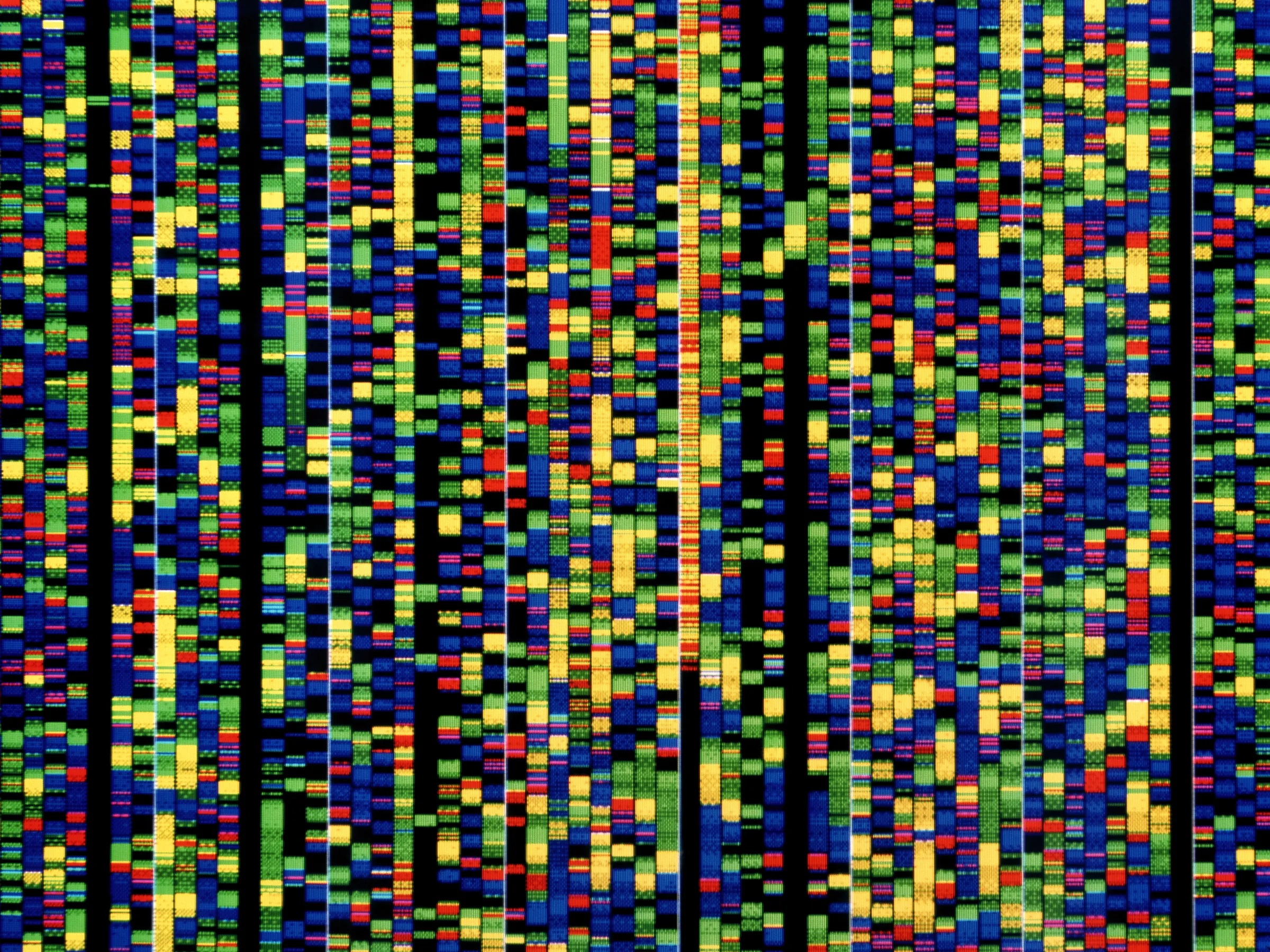
Developed systems for storing data in DNA provide for the addition of certain sequence tags (sequence tags) to sections of DNA that contain data. To obtain the necessary information, regions are added to the molecule that are capable of forming base pairs with the desired labels. All this is used to amplify the complete sequence. Like tagging each image in a collection with its own ID, and then setting everything up to amplify one specific ID.

The method is quite effective, but it has two limitations. First, the amplification step, which is performed by the polymerase chain reaction (PCR) process, has limitations on the size of the sequence to be amplified. However, each tag takes up a portion of the already limited space, so adding detailed tags reduces the amount of data storage space.

Another limitation is that PCR amplifying certain DNA fragments with data consumes part of the original DNA library. That is, every time we read data, some of it is destroyed. Scientists compare this way of searching for information with burning a haystack to find a needle. If you do this often, you can end up losing the entire database altogether. True, there are ways to recover lost sections, but this method is not ideal, since it increases the likelihood of errors in the DNA and data sections.

The new method allows you to separate label information from the main data. In addition, the researchers have created a system that makes it possible to access only the data that interests us. The rest of the information remains intact, so that the DNA molecules remain intact and are not damaged.

New System

The technology is based on silicon dioxide capsules in which individual files are stored. DNA tags are attached to each capsule, which show what is in the file. The size of each capsule is about 6 micrometers. Thanks to such a system, scientists were able to learn how to extract individual images with 100% accuracy. The set of files built is actually pretty short. There are only 20 of them. But given the capabilities of DNA, then such a system can be scaled up to a sextillion files. These 20 files were encoded into DNA fragments about 3000 nucleotides long, which is about 100 bytes of data. A single silica capsule can hold a file up to a gigabyte in size. After the file is wrapped, single-stranded DNA labels are placed on its surface. Multiple labels can be attached to a single shell, which serve as keywords. For example, “red”, “cat”, “animal”.

Silica capsules labeled with this pattern are merged to become one unique data library. It is not as compact as pure DNA storage, but the data is not damaged in this case.

File Research

To search for files, a group of keywords is used – labels. For example, if you want to find a picture of a cat, the labels “orange”, “cat” and “home” are used. If you’re searching for a tiger, then you’ll use two words of the three:  “orange” and “cat”. The minus here is the search speed. It is unfortunately still pretty low in such a system. Something around 1 kB per second.

Another trick is that each label is associated with fluorescent molecules of a different color. Therefore, during the request, any capsules with the desired labels will glow in a certain color. Nowadays, devices with lasers integrated to separate objects by fluorescence color exist. So it is technically possible to extract the desired data. In this case, the remaining part of the library will not be impacted, which then means that the data will not be affected. It is no longer necessary to burn a haystack for the sake of finding one needle. An additional plus is the possibility of a logical search with different criteria. For example, query conditions can be complex: true for “cat”, false for “home”, true for “black”, etc.

Not Only Research

Yes, because the task of finding the right data is only part of the matter, and not even half. The discovered data still needs to be sequenced. And this requires opening the shell of silica, removing the thread stored in the capsule, introducing DNA into the bacterium, and then reading the data. This is an extremely slow process, compared to which even streamers are very fast technology.

On the other hand, DNA-based systems will not be fast, their main purpose is to store huge amounts of information that does not need to be retrieved often. In addition, over time, technology will be improved, so that the speed of reading information, hopefully, will increase.\