DD
MM
YYYY

PAGES

DD
MM
YYYY

spot_img

PAGES

Home Blog Page 4183

Nigeria Offers Organized Labour N35,000 Wage, Monthly N25,000 to 15m Households to Avert Strike

0

President Bola Tinubu has approved a series of measures, including an N35,000 provisional wage award for all treasury-paid federal government workers for six months, following a meeting between the federal government and the leaders of organized labor.

The four-hour meeting was aimed at averting the proposed nationwide strike by organized labor, which was billed to take effect from October 3. The federal government delegation at the meeting, which was held at the State House, Abuja, was led by the Chief of Staff to the President, Hon Femi Gbajabiamila.

The labor delegation led by the Nigerian Labour Congress (NLC) President, Joe Ajaero, Dr. Tommy Etim Okon, Deputy President, of Trade Union Congress (TUC), NLC General Secretary, Emma Ugboaja, TUC General Secretary, Nuhu Toro, among others, had clamored for a wage increase as a way to cushion the effect of fuel subsidy removal.

A statement released by the Minister of Information and National Orientation, Mallam Mohammed Idris, noted that Tinubu also approved the payment of N75,000 to 15 million households at N25,000 per month, for a three-month period from October-December 2023.

It says: “The Federal Government, on Sunday, October 1, 2023, met with the leadership of the Nigeria Labour Congress (NLC) and Trade Union Congress (TUC) on measures to address the dispute arising from the removal of subsidy on Premium Motor Spirit (PMS).

“The parties noted the following:

“i) The Federal Government has announced N35,000 only as a provisional wage award for all treasury-paid federal government workers for six months following further consultation with President Bola Tinubu.

“ii) The Federal Government is committed to fast-tracking the provision of Compressed Natural Gas (CNG) buses to ease public transportation difficulties associated with the removal of PMS subsidy.

“iii) The Federal Government commits to the provision of funds for micro and small-scale enterprises.

“In light of the discussions held during the meeting, the following were the major highlights:

“The Federal Government urged the Labour unions not to embark on strike action as the issues in dispute can only be resolved when workers are at work.

“Labour Unions made case for higher wage award. A sub-committee is to be constituted to work out the details of the implementation of all items regarding government interventions to cushion the effect of fuel subsidy removal.

“The Federal Government commits to the provision of funds for micro and small-scale enterprises.

“VAT on diesel will be waived for the next 6 months.

“The Federal Government will commence payment of N75,000 to 15 million households at N25,000 per month, for a three-month period from October-December 2023.”

“The issues in dispute can only be resolved when workers are at work and not when they are on strike.

“Labour Unions argued for higher wage awards and the Federal Government Team promised to present Labour’s request to President Bola Tinubu for further consideration.

“A sub-committee to be constituted to work out the details of implementation of all items for consideration regarding government interventions to cushion the effect of fuel subsidy removal.

“The lingering matter of Road Transport Employees Association of Nigeria (RTEAN) and National Union of Road Transport Workers (NURTW) in Lagos State needs to be addressed urgently and Lagos State Governor, Babajide Sanwo-Olu, who participated virtually, pledged to resolve the matter.”

The leadership of the major wings of organized labor, the NLC, and the TUC, said they will consider the offers by the federal government with a view to suspending the planned strike to allow for further consultations on the implementation of the resolutions above.
State-Owned Enterprises in Africa Generate estimated $75B in Revenue

0

According to a recent report by the African Development Bank (AfDB), state-owned enterprises (SOEs) in Africa have generated an estimate of 75 billion in revenue in the last fiscal year. This represents a significant increase from the previous year, when SOEs accounted for 65 billion in revenue. The report attributes this growth to several factors, such as improved governance, increased efficiency, and enhanced competitiveness of SOEs in various sectors.

Some of the challenges faced by SOEs are:

Governance and accountability: SOEs often operate under different rules and regulations than private sector firms, which may create conflicts of interest, political interference, corruption, or lack of transparency. SOEs may also have multiple and unclear objectives, such as social, environmental, or strategic goals, that are not aligned with their financial performance. Moreover, SOEs may lack effective oversight and monitoring mechanisms, such as independent boards of directors, external audits, or performance evaluations.

Competition and market distortions: SOEs may enjoy preferential treatment from the government, such as subsidies, tax exemptions, guarantees, or access to credit, which may give them an unfair advantage over private competitors. Conversely, SOEs may also face regulatory barriers or restrictions that limit their ability to operate in certain markets or sectors. Additionally, SOEs may face political pressure to maintain employment levels or prices, which may reduce their incentives to innovate or improve their productivity.

Financial sustainability and efficiency: SOEs may face financial difficulties due to low profitability, high debt levels, or insufficient capitalization. SOEs may also suffer from operational inefficiencies, such as overstaffing, outdated technology, or poor management practices. Furthermore, SOEs may face challenges in accessing capital markets or attracting private investment, due to their perceived riskiness or lack of credibility.

These challenges pose significant risks for the fiscal health and economic development of the countries where SOEs operate. Therefore, it is crucial for governments to adopt sound policies and reforms to improve the performance and governance of SOEs. Some of these policies and reforms may include:

Clarifying and prioritizing the objectives and roles of SOEs and ensuring that they are consistent with the national development strategy and the public interest. Strengthening the legal and regulatory framework for SOEs and ensuring a level playing field with private sector firms.

Enhancing the governance and accountability of SOEs, by establishing clear ownership arrangements, independent and professional boards of directors, transparent reporting and disclosure standards, and effective oversight and evaluation mechanisms.

Promoting the financial sustainability and efficiency of SOEs, by reducing or eliminating subsidies and guarantees, improving their cost recovery and pricing policies, optimizing their capital structure and debt management, and encouraging operational improvements and innovation.

Fostering the participation of the private sector in SOEs, through various forms of partnership, such as joint ventures, concessions, leases, management contracts, or privatization.

The report also highlights some of the challenges and opportunities that SOEs face in the current global context. It notes that SOEs have to balance their commercial objectives with their social and environmental responsibilities, as well as cope with the impacts of the COVID-19 pandemic and the climate crisis. It recommends that SOEs adopt best practices in transparency, accountability, and innovation, and foster partnerships with the private sector and civil society.

By addressing these challenges and implementing these policies and reforms, governments can ensure that SOEs contribute positively to the economic growth and social welfare of their countries. The report concludes that SOEs have a vital role to play in advancing sustainable development and achieving the 2030 Agenda. It calls for more research and dialogue on how to leverage the potential of SOEs to contribute to economic growth, social inclusion, and environmental protection.

The report also highlights the potential benefits of SOEs for African development, such as providing public goods and services, promoting industrialization and diversification, creating employment and income opportunities, and mobilizing domestic resources. SOEs can contribute to the achievement of the Sustainable Development Goals (SDGs) and the African Union’s Agenda 2063.

Ethiopia wants to be the new giant of Africa; they have the population and heritage, as never colonized

0

Ethiopia is a country with a rich history and a large population. It is one of the few African nations that was never colonized by European powers, and it has a strong sense of national identity and pride. Ethiopia is also a country with ambitious goals and aspirations. It wants to become the new giant of Africa, a regional leader and a global player.

I will explore some of the factors that make Ethiopia a potential powerhouse in Africa, and some of the challenges and opportunities that it faces in achieving its vision. I will also discuss how Ethiopia can leverage its strengths and overcome its weaknesses to realize its full potential.

Ethiopia has several advantages that give it an edge over many other African countries. First, it has a large and young population of about 115 million people, which is the second largest in Africa after Nigeria. This means that Ethiopia has a huge domestic market and a vast pool of human capital. It also means that Ethiopia has a demographic dividend, which is the economic growth that results from having a large share of working-age people in the population.

Second, Ethiopia has a diverse and rich cultural heritage that spans thousands of years. It is the cradle of humanity, where some of the oldest human fossils have been found. It is also the origin of coffee, one of the most popular beverages in the world. Ethiopia has a unique alphabet, calendar, and clock system, as well as several languages and religions. Ethiopia’s culture is a source of pride and identity for its people, as well as an attraction for tourists and investors.

Third, Ethiopia has a strategic location in the Horn of Africa, which connects it to the Middle East, Europe, and Asia. Ethiopia is landlocked, but it has access to the sea through its neighbor Djibouti, where it operates a major port. Ethiopia also has several rivers that flow through its territory, including the Blue Nile, which is the main tributary of the Nile River. Ethiopia’s location gives it an opportunity to trade with other regions and to harness its water resources for hydropower and irrigation.

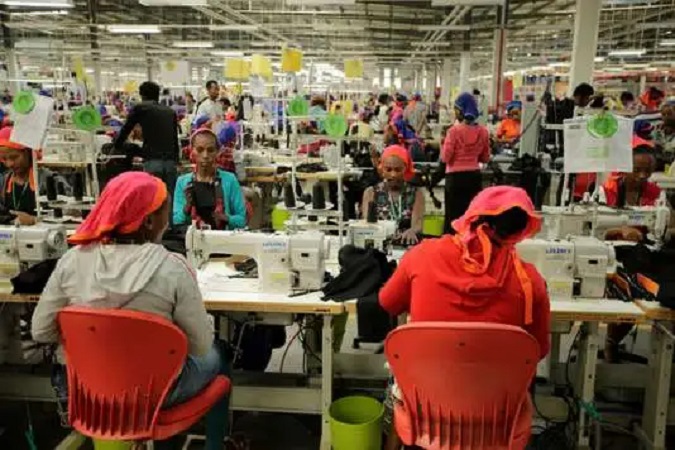
Ethiopia’s vision is to become a middle-income country by 2025 and a high-income country by 2050. To achieve this, Ethiopia has embarked on an ambitious development plan that focuses on industrialization, infrastructure, agriculture, education, health, and governance. Ethiopia has made significant progress in reducing poverty, improving social services, and expanding economic opportunities for its people. It has also attracted foreign investment and aid from countries like China, Turkey, India, and the United States.

However, Ethiopia also faces many challenges and risks that could derail its progress and undermine its stability. Some of these include:

Ethnic tensions and conflicts: Ethiopia is composed of more than 80 ethnic groups, each with its own language, culture, and history. While this diversity is a strength, it can also be a source of division and violence. Ethiopia has experienced several ethnic clashes and protests in recent years, especially in the Oromia and Tigray regions. These conflicts have resulted in deaths, displacements, human rights violations, and humanitarian crises.

Political instability and repression: Ethiopia has been ruled by the same party since 1991, which has been accused of authoritarianism, corruption, nepotism, and human rights abuses. The party has faced growing opposition and discontent from various segments of society, especially the youth. In 2018, Ethiopia underwent a political transition when Abiy Ahmed became the prime minister after his predecessor resigned. Abiy initiated several reforms and peace initiatives that earned him the Nobel Peace Prize in 2019. However, he also faced resistance and criticism from some factions within his own party and from other parties. Ethiopia has some success stories that demonstrate its potential and inspire hope for its future.

Some of these are:

The Grand Ethiopian Renaissance Dam (GERD): This is a mega-project that aims to build the largest hydroelectric dam in Africa on the Blue Nile River. The dam will have a capacity of 6.4 gigawatts and will generate enough electricity to power Ethiopia and export to neighboring countries. The dam will also provide irrigation and flood control benefits. The project is expected to be completed by 2023 and will cost about $5 billion. The dam is a symbol of Ethiopia’s national pride and ambition, as well as a source of controversy and tension with Egypt and Sudan, who fear that the dam will reduce their water supply.

The Ethiopian Airlines: This is the flag carrier of Ethiopia and the largest airline in Africa by passengers, fleet, and destinations. The airline operates flights to more than 120 international and domestic destinations, including the United States, Europe, Asia, and Australia. The airline is known for its safety, efficiency, and profitability, and has won several awards and accolades. The airline is also a catalyst for Ethiopia’s tourism and trade sectors, as well as a role model for other African airlines.

The Sheba Valley: This is a nickname for the emerging tech hub in Ethiopia, where several startups, incubators, accelerators, and investors are based. The Sheba Valley is home to some of the most innovative and successful tech companies in Africa, such as Gebeya, which trains and connects African software developers to global clients; ZayRide, which offers ride-hailing and delivery services; and Kana TV, which produces and broadcasts popular entertainment content.

The Sheba Valley is also a hub for social impact and education initiatives, such as GirlCode Academy, which empowers young women to pursue careers in STEM fields; and iCog Labs, which develops artificial intelligence and robotics solutions. These are just some of the examples of how Ethiopia is transforming itself into a new giant of Africa. Ethiopia has a long way to go to achieve its vision and overcome its challenges, but it also has a lot of potential and opportunities to make it happen. Ethiopia is a country that deserves our attention and admiration.

How Fintechs Align With And Contribute to Achieving The United Nations Sustainable Development Goals

0

The proliferation of Financial Technology (Fintechs) across the globe has without a doubt continued to play a crucial role in the contribution and achievement of the United Nations Sustainable Development Goals.

As Fintechs launch to become key drivers for financial inclusion, this, in turn, underlies a sustainable balanced development, as embodied in the United Nations Sustainable Development Goals (SDGs).

Fintechs are an evolving intersection of financial services and technologies which have been used to improve access to finance, lower transaction costs and enhance the efficiency of the financial sector.

There are reports and evidence that economies with high financial inclusion rates have significantly lowered poverty rates. The World Bank has identified financial inclusion as an enabler for 7 of the 17 SDGs.

What Are the United Nations Sustainable Development Goals?

On September 25, 2015, the United Nations adopted the Sustainable Development Goals (SDGs) which was formally adopted by (193 out of 195 countries in the world, as a universal call to action to address a wide range of social economic, and environmental challenges, to work toward a more sustainable and equitable future by the year 2030.

The United Nations adopted 17 goals which are

1.) No Poverty

2.) Zero Hunger

3.) Good health and well-being

4.) Quality Education

5.) Gender Equality

6.) Clean Water and Sanitation

7.) Affordable and Clean Energy

8.) Decent Work and Economic Growth

9.) Industry, Innovation and Infrastructure

10.) Reduced Inequalities

11.) Sustainable Cities and Communities

12.) Responsible Consumption and Production

13.) Climate Action

14.) Life Below Water

15.) Life on Land

16.) Peace, Justice, and Strong Institutions

17.) Partnerships for the goals

At its heart are the 17 Sustainable Development Goals (SDGs), which are an urgent call for action by all countries, developed and developing in a global partnership.

They recognize that ending poverty and other deprivations must go hand-in-hand with strategies that improve health and education, eradicate inequality, and spur economic growth, amongst others.

As Fintechs continue to roll out innovative modern technologies, it has continued to play a pivotal role in assisting the United Nations in achieving its SDGs.

Check Out How Fintechs Are Contributing to The Achievement of The United Nations Sustainable Development Goals

1.) No Poverty: Fintech Solutions such as digital banking and Microfinance, provide access to financial services for unbanked and underserved populations, helping to reduce poverty and promote financial inclusion.

Some of these Fintech platforms offer microloans to individuals and small entrepreneurs who lack access to traditional banks. These small loans can be used for income-generating activities and to lift individuals out of poverty.

According to the World Bank, financial inclusion means that individuals and businesses have access to useful and affordable financial products and services that meet their needs delivered in a responsible and sustainable way.

2.) Zero Hunger: Fintech solutions have continued to develop technologies that improve access to credit and insurance for small-scale farmers, enabling them to invest in their agricultural practices and reduce food insecurity.

Some of these solutions facilitate digital payments and remittances, which can improve the efficiency of food supply chains. Farmers get to receive payments digitally, reducing the reliance on cash and the associated risks.

These Fintech-driven initiatives have the potential to empower smallholder farmers and strengthen food systems in both rural and urban areas.

3.) Good Health and Well-Being: Fintech innovations support healthcare access by facilitating digital payments for medical services, insurance coverage, and telemedicine, promoting better health outcomes.

Several of these Fintech platforms offer innovative solutions for healthcare financing, including health savings accounts (HSAs) and health insurance plans. These tools allow individuals to save for future medical expenses and provide coverage for healthcare services, reducing the financial burden of medical treatments.

4.) Quality Education: Fintech significantly contributes to improving the quality of education by addressing financial barriers, enhancing access to educational resources, and streamlining administrative processes.

These innovative technologies enable digital payment solutions for educational institutions by enabling digital payments for school fees, providing online learning platforms, and facilitating educational financing options.

Also, fintech facilitates payments for online courses and e-learning platforms, expanding access to education for individuals who may not have access to traditional institutions.

5.) Work And Economic Growth: Fintech fosters economic growth by supporting SMEs with access to financing, streamlining payments, and enhancing the efficiency of financial transactions.

Fintech platforms facilitate access to capital for small and medium-sized enterprises and startups through digital lending, crowdfunding, and peer-to-peer lending. This helps businesses expand, invest in new technologies, and create jobs, driving economic growth.

6.) Reduced Inequality: Fintech reduces economic inequality by providing financial services to marginalized communities and facilitating remittances at lower costs, helping to bridge income disparities.

These platforms provide access to financial services for underserved and unbanked populations, including those in remote areas or low-income communities. This inclusion helps bridge the gap between the financially excluded and the formal financial system, reducing economic inequality.

Conclusion

Fintech’s ability to reach underserved populations, streamline financial processes, and foster innovation, positions it as a valuable tool in advancing the UN’s sustainability agenda.

As more fintechs continue to launch innovative technologies, this will play a key role in enabling the United Nations to achieve a significant amount of their goals by the year 2030.

Rejuvenating Institutions for Sustainable Innovation Ecosystem in Nigeria

0

In any country, creating new products and services, as well as ensuring the sustainability of existing ones by restoring their prior level of functionality when issues have prevented them from delivering the expected value, is crucial for economic growth. This is also expected to lead to direct or indirect personal growth for individuals, regardless of their socioeconomic status or political class. At the heart of initiating and executing plans for developing and revamping existing offerings—products and services—lies innovation, a concept that has been theorized and researched worldwide over the years. From political leaders to captains of industries and professionals who execute various ideas into the commercialization stage, innovation serves as the bedrock for ensuring the hyper-commercialization of ideas, benefiting everyone and the country at large.

This has been one of the reasons for measuring the innovation ecosystem by different organizations and individuals at global, regional, national, and local levels. Nigeria is not an exception in this regard. The country has been among those studied by various organizations and researched by academics with the intention of understanding what works and what doesn’t work in its innovation ecosystem over the years. Leveraging the research conducted by the World Intellectual Property Organization and others that have studied the country’s innovation ecosystem, the outcomes have consistently been mixed, with a significant focus on the poor status of institutions – including political, regulatory, and business environments – in ensuring good innovation ecosystem performance.

Primarily, World Intellectual Property Organisation and others assess various factors, including institutions, human capital and research, infrastructure, market sophistication, and business sophistication. These factors serve as inputs for gauging the knowledge, technology, and creative outputs in any given country. The “institution” pillar encompasses political, economic, and business environments. Sub-indicators for the “human capital and research” pillar include the presence of high schools and higher education institutions teaching innovation, as well as active engagement in research and development. Under the “infrastructure” pillar, WIPO and others evaluate the strength of information and communication facilities, general infrastructure quality, and ecological sustainability in countries. The “market sophistication” pillar considers financial support, diversification, and the ability to scale products and services in markets as relevant sub-indicators.

Similarly, “business sophistication” aims to gauge the ability of workers to absorb innovation knowledge and skills. However, this alone is insufficient. They must also possess the capability to connect various innovations to develop sustained innovation outputs. In this regard, they should be able to create and disseminate impactful knowledge without neglecting the capacity to generate intangible assets, creative products, and services, whether online or in physical stores.

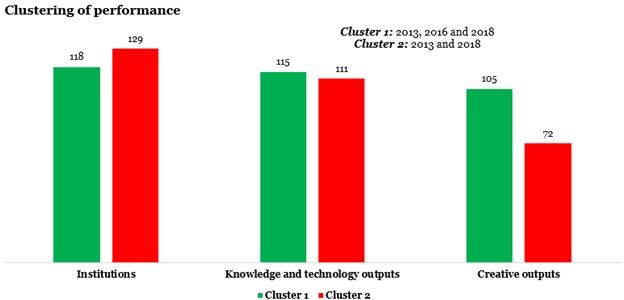
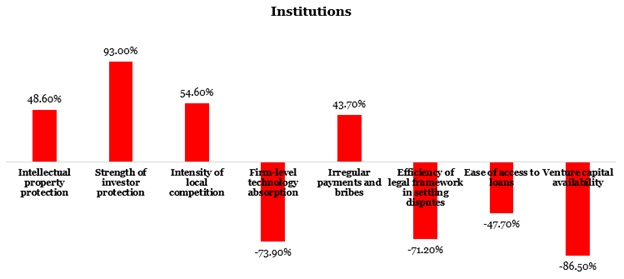
Unfortunately, considering these pillars, Nigeria did not perform well within the institution pillar between 2013 and 2022. The average ranking during this period was 120, while innovation stood at 117, reflecting suboptimal results over the course of a decade. An analysis during this timeframe reveals that the strength of institutions contributed only 11.2% towards creating a more favourable innovation ecosystem. However, when examining the impact on specific aspects, institutions had a significant influence on knowledge and technology outputs, accounting for 42.8%, and also affected creative outputs by 23.4%. These findings suggest that institutions showed relatively good performance, helping the country achieve nearly half of the expected 100% outcome of institutions in fostering a better innovation ecosystem. This also indicates that businesses, non-profit organizations, and individuals were able to overcome some obstacles related to the political, regulatory, and business environment while pursuing creativity and disseminating impactful knowledge across various sectors and industries.

When we break down the years, it becomes apparent that institutions performed better in 2018 compared to other years between 2013 and 2022, particularly in contrast to 2013 and 2014. Although 2013 wasn’t a favourable year for the country in terms of institutional ranking, it was relatively successful in terms of innovation outputs, especially in the realm of creativity. On the other hand, 2014 exhibited slight improvements, particularly in knowledge and technology output.

What the future holds if the status remains?

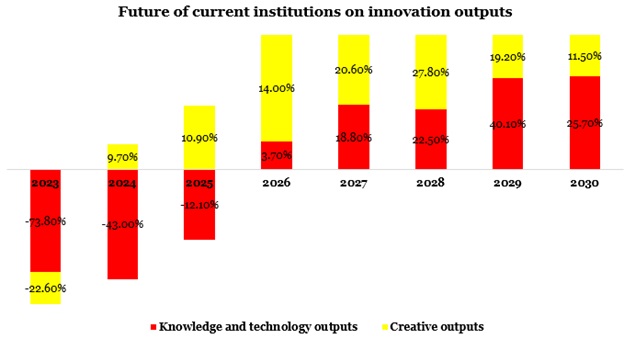
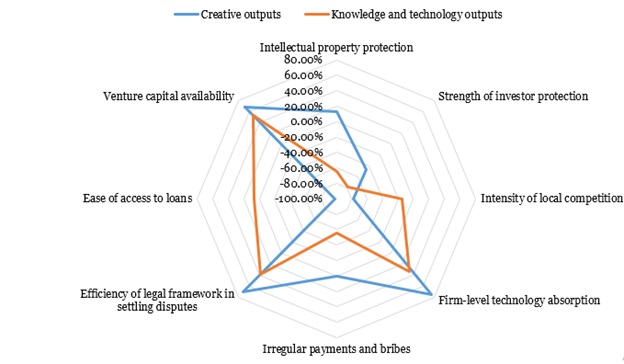
In the future, the current status of institutions will be bleak on attaining innovation outputs, at least between 2023 and 2025. During this period, Nigeria is expected to feel the significant effects of political, regulatory, and business environments on knowledge, technology, and creative outputs. However, there is optimism for more positive outcomes from 2026 to 2030. To mitigate the adverse effects of these institutions on innovation outputs and to enhance future results from 2026 to 2030, political and business leaders must address inherent challenges within the political, regulatory, and business environments. Political leaders at all levels, from federal to state and local, should create a conducive environment that facilitates the effectiveness of legal frameworks aimed at resolving various disputes related to intellectual property.

Moreover, access to loans that do not hinder innovation should be made available by avoiding stringent requirements that might deter innovators from exploring the potential of launching new products and services. Venture capitalists should recognize the importance of innovation financing as a key driver of the country’s economy and should actively support innovators. Additionally, businesses and their employees should strive to adopt existing innovative products or services more effectively, thus enhancing efficiency and productivity.


Source: Global Innovation Index, 2013-2022; World Economic Forum, 2013-2022

In order to hone the different institutional framework for rejuvenating the ecosystem, steps must be taken to improve the health of the political, regulatory and business environment. Based on the data, we suggest the following remedies.

Improved policy implementation and environment

From observations, it was noticed that the innovation and digital ecosystem in Nigeria started receiving serious governmental attention perhaps from 2015 or thereabout when the ministry of communication was reconfigured to also include digital economy. From then till the new administration of President Ahmed Bola Tinubu came on board, there was a flurry of policies upon policies probably to give shape to enhanced prosperity through the digital economy. There is a need to accelerate the provisions of the policies and find a place of convergence and divergence between them. It is then new policies could be put in place if there is a need for such. In driving a mechanism for accelerated growth in the innovation ecosystem, it is important to avoid policy glut and improve the policy environment. 

Activate the National Startup Act

In order to address the issue of funding inadequacy for innovation ecosystem, the National Startup Act has extensively addressed access to funding by the ecosystem players. The Act has provisions that cater to the financial needs of startups in Nigeria through the Startup Investment Seed Fund. It is our advice to the Minister of Communication and Digital Economy to fast track the establishment of the National Council for Digital Innovation and Entrepreneurship for the current administration. We also advise a strong coordination with the state governments through the Nigeria Governors Forum (NGF).  Efforts such as these would assist the drive for the growth of innovation and entrepreneurship in the country. 

Increased and Enhanced Public-Private Partnership

To grow the digital and innovation ecosystem in the country, it is critical to increase and enhance public-private partnership. This is to address the issue of sustainability of programmes put in place by government. From observation, governments at state levels are also seriously considering growing innovation and digital prosperity in their various states. However, the capacity of the state civil service bureaucracy to successfully run some of the needed programmes to bring this to a reality is in doubt. This is where the need for private operators in the ecosystem comes in. With their established processes, programmes and experience, the private sector working hand in hand with public institutions would bring far reaching impact to the drive for innovation and digital economy. A good example of this is what Opolo is doing across higher institutions where it has presence. We help in talent management of the ecosystem through offering programmes that plug the gaps in curriculum especially in entrepreneurship and and student work experience programmes. In Osun State University, Opolo partnered the Faculty of Engineering to provide facilitation in Data Science for 200 Level Engineering students in the university. In the same vein, the hub at the Rivers State University of Science and Technology had an engagement with the startup ecosystem on campus addressing issues such as ideation, incubation, acceleration and funding for their ideas. Improved and enhanced partnership would go a long way to accelerate innovation in the country.

Time for Innovation to Flourish but more needs to be done 

It is a good time for digital economy to boom in Nigeria. This is not farfetched from the fact that the personality and professionalism of the new driver of the national vehicle of digital economy has been a strong and established player in the terrain before his appointment. Still, there is a need to pay attention to factors that could make the job well-coordinated, easier and more impactful. Addressing improved policy implementation and environment, fostering partnership with established private players and putting up a structure to implement the provision of the National Startup Act would show the needed result.