DD
MM
YYYY

PAGES

DD
MM
YYYY

spot_img

PAGES

Home Blog Page 4185

The CBN Guidelines on Point of Sale Card Acceptance Services in Nigeria

0

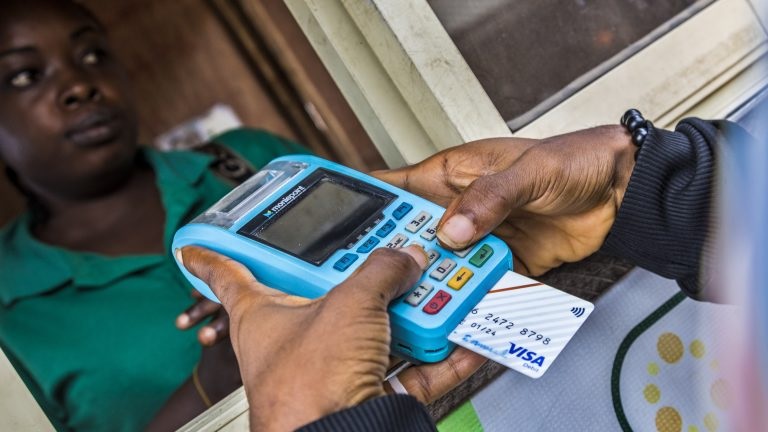
The Central Bank of Nigeria CBN released its guidelines on POS Card Acceptance Services in order to provide a Regulatory Framework for  card acceptance services in Nigeria. 

This article will be focused on certain provisions of the guidelines with a focus on :-

– Objectives of the guidelines

– Stakeholders and their roles/responsibilities

– Minimum standards

– Provisions on exclusivity agreements

What are the objectives of the CBN Guidelines?

The guidelines were issued with the objective of having a framework for the provision of minimum standards and requirements for the operations of Point of Sale (POS) card acceptance services. 

Who are the named stakeholders in the provision of card acceptance services according to the guidelines and their respective roles/responsibilities?

The guidelines name the following entities as stakeholders in POS card acceptance services :-

  1. Merchant  Acquirers

Roles and Responsibilities

– Only CBN licensed entities can be merchant acquirers.

– Merchant acquirers can own POS terminals, but shall only deploy & support POS terminals through a licensed Payments Terminal Services Provider (PTSP) . However, exceptions can be granted by the CBN where PTSP services are unavailable.

– Every merchant acquirer shall connect all its POS terminals or other acquiring devices directly to a Payment Terminal Services Aggregator.

  1. Card Issuers
  1. Merchants

Roles and Responsibilities

  1. A merchant shall enter into agreements with merchant acquirers, specifying in clear terms the obligations of each party.
  1. A merchant shall accept cards and other payment tokens as methods of payment for goods and services.
  1. The merchant shall be held liable for fraud with the card arising from its negligence and/or connivance.
  1. Cardholders

Roles and Responsibilities

– Store the payment card and protect his PIN with care.

– To not make the payment card available to unauthorized persons.

.- To notify the issuer without delay, about missing, stolen, damaged,lost or destroyed cards.

  1. Card schemes

Roles and Responsibilities

– All card schemes in Nigeria shall reserve the right to assess the market? to confirm objectivity vis-a-vis international standards.

– No card scheme shall engage in the business of acquiring neither shall any entity that has a management contract with a card scheme engage in the business of acquiring. 

  1. Switching Companies

Roles and Responsibilities

  1. To ensure that the transactions relating to all cards issued by Nigerian banks are successfully switched between acquirers & issuers.
  1. To achieve the interconnectivity of all new and existing switching companies.
  1. Open their networks for reciprocal exchange of transactions and messages with the Nigerian Central switch and Payment Terminal Service Aggregator
  1. Payments Terminal Service Aggregator (PTSA)

Roles and Responsibilities

– The Nigerian Interbank Settlement Systems (NIBBS) owned by all Nigerian banks and the CBN, shall act as the Payments Terminal Service Aggregator for the financial system.

– The establishment of a communication network for reliable POS data traffic, that shall satisfy the service and availability standards and expectations of the industry on a cost effective basis. 

  1. Payments Terminal Service Providers (PTSPs)

Roles and Responsibilities

– Only CBN-licensed PTSPs shall deploy, maintain & provide support for POS terminals in Nigeria.

– To ensure effectiveness of POS operations and a proper support/maintenance infrastructure.

– PTSPs can identify merchant opportunities & market potential merchants on behalf of acquirers.

– Any party other than a PTSP that deploys POS terminals shall be fined 50 Thousand Naira per day that the terminal remains deployed. 

What are the provisions of the guidelines on exclusivity agreements?

The guidelines provide that there shall be no form of exclusivity in any area of payment service, including but not limited to issuing, acquiring, processing and sale/maintenance of hardware and software. 

What are the provisions of the guidelines on compliance?

Non-compliance with the provisions of the guidelines will attract sanctions from the CBN.

How to Manage Crypto Liquidity Crisis

0

Liquidity is a key factor for any market, especially for cryptocurrencies. Liquidity refers to the ease of buying and selling an asset without affecting its price. A liquid market has high trading volume, low bid-ask spread, and fast order execution. A liquidity crisis occurs when there is a sudden shortage of cash or convertible assets in a market, making it difficult for traders and investors to execute their transactions.

Crypto liquidity crisis is a situation where crypto exchanges and platforms lack the cash or convertible assets to help users finance their transactions. This can happen when there is a sudden drop in the demand or supply of crypto assets, or when there is a regulatory or technical disruption that affects the normal functioning of the market.

A crypto liquidity crisis can have serious consequences for both crypto users and providers, as it can lead to delays, losses, defaults, and even bankruptcies. Therefore, it is important to know how to manage and prevent a crypto liquidity crisis, especially in times of high volatility and uncertainty.

Here are some tips on how to manage a crypto liquidity crisis:

Do your research: Before you invest in any crypto asset or platform, do your due diligence and check their liquidity metrics, such as trading volume, order book depth, bid ask spread, and slippage. Also, check their security measures, reputation, regulatory compliance, and customer support. Avoid platforms that have low liquidity, high fees, poor service, or frequent issues.

Have a backup plan: Always have a contingency plan in case of a liquidity crisis. For example, you can keep some fiat currency or stablecoins in a separate account that you can access quickly and easily. You can also use decentralized exchanges (DEXs) or peer-to-peer platforms that allow you to trade directly with other users without intermediaries or custodians.

Stay calm and rational: Don’t panic or act impulsively during a liquidity crisis. Don’t sell your crypto assets at a loss or buy them at a premium. Don’t fall for scams or rumors that may exploit your fear

Diversify your portfolio: Do not put all your eggs in one basket. Having a diversified portfolio of different crypto assets can help you reduce your exposure to specific risks and shocks that may affect one or a few coins. For example, if you hold both Bitcoin and Ethereum, you can hedge against the possibility of one of them losing value or facing technical issues.

Use reputable and regulated platforms: Choose platforms that have a good reputation, a large customer base, and a strong regulatory compliance. These platforms are more likely to have adequate liquidity reserves, security measures, and contingency plans in case of a crisis. They are also more likely to follow the rules and protect your rights as a customer.

Monitor the market conditions: Stay informed and updated on the latest developments and trends in the crypto market. Look out for signs of potential liquidity problems, such as widening spreads, increasing fees, decreasing volumes, or delayed transactions. If you notice any red flags, act quickly and adjust your strategy accordingly.

Have an exit plan: Always have a backup plan in case things go wrong. Know how much you are willing to lose and when you should cut your losses. Have alternative ways of accessing your funds, such as using different platforms, wallets, or payment methods. Be prepared to switch to more stable or liquid assets if needed.

The Great Caution on Nigeria’s Trending Street Slang on Twitter

0

Recent tweets about Idan, a Yoruba word for supernatural power, have brought to light the political and ideological dimensions of language use in Nigerian society. The use of Idan to describe extraordinary people raises important questions about how we perceive success and power in Nigeria. Based on 22 narratives drawn from 76 tweets posted by Nigerians between 1 a.m. and 8:30 a.m., our analyst argues that people should be cautious of how they use the word in political and wealth contexts.

By focusing on individual achievement and power, we risk ignoring the social and political structures that enable or hinder success. Success is not simply a matter of individual effort or ability; it is also shaped by factors such as social class, access to resources, and systemic inequality. When we focus exclusively on individual achievement, we may overlook the ways in which systemic inequality and injustice limit opportunities for many Nigerians.

By idolizing individuals with extraordinary achievements, we risk overlooking the collective efforts and contributions of ordinary Nigerians who may not have achieved such spectacular success but who nonetheless play important roles in building our society.

When we celebrate individuals solely for their achievements, we may overlook their flaws and shortcomings as leaders. This can create a culture of impunity and corruption in which leaders are insulated from accountability and scrutiny.

When we celebrate only those individuals who have achieved extraordinary success, we may overlook the perspectives and experiences of ordinary Nigerians who may have different ideas and values. This can lead to a political system that is disconnected from the needs and aspirations of ordinary Nigerians.

Our analyst submits that while celebrating individual achievement and excellence is important, we must also be mindful of the social and political structures that hinder success. We must also recognize the contributions of ordinary Nigerians and prioritize shared values and principles over personal loyalty and patronage in politics for us to build a more inclusive and just society for all Nigerians.

Political orientations and ideologies in the tweets

Pan-Africanism: The reference to Idan as a source of power that transcends national boundaries and unites people of African descent suggests a pan-Africanist perspective, which emphasizes the solidarity and unity of African peoples across the world.

Socialism: The reference to Idan as a force for the common good and the upliftment of the masses implies a socialist or social-democratic ideology, which emphasizes the importance of social justice, equality, and the welfare of the people.

Populism: The use of emoticons such as “??” and “?” suggests a populist tone, which seeks to mobilize popular support for a charismatic leader or cause by appealing to people’s emotions, values, and aspirations.

Anti-establishment: The reference to Idan as a means of challenging the status quo and disrupting the existing power structures implies an anti-establishment or radical political orientation, which seeks to overthrow or transform the dominant political and economic system.

Identity politics: The use of the term “Yoruba first” in one of the tweets suggests an identity politics perspective, which emphasizes the importance of group identity, representation, and recognition in politics.

Overall, these political orientations and ideologies reflect a diverse range of views and values that are shaped by historical, cultural, and social factors, and which continue to shape the political landscape of Nigeria and the wider African continent.

Crypto is not Designed to Facilitate FRAUD

0

One of the most common misconceptions about crypto and Non fungible tokens is that they are designed to facilitate fraud and scam. This is far from the truth. In fact, cryptocurrencies are based on the principles of transparency, security and decentralization, which make them more resistant to manipulation and corruption than traditional forms of money.

Cryptocurrencies are digital assets that use cryptography to secure their transactions and control their creation. They operate on a peer-to-peer network, where users can exchange value directly without intermediaries or central authorities. This means that no one can censor, freeze or confiscate your funds, as long as you have access to your private keys.

Cryptocurrencies also have a public ledger, called a blockchain, that records every transaction ever made. Anyone can verify the validity and authenticity of the transactions, as well as the supply and distribution of the coins. This creates a high level of trust and accountability among the users and prevents double-spending, counterfeiting and fraud.

Cryptocurrencies are not created to ease scam, but to empower people with more freedom, privacy and control over their own money. They offer a new way of exchanging value that is more efficient, inclusive and innovative than the traditional financial system. They also have the potential to transform various sectors and industries, such as e-commerce, remittances, gaming, social media and more.

However, like any new technology, cryptocurrencies also come with some challenges and risks. They are still in their early stages of development and adoption, and they face various technical, regulatory and social hurdles. They also require a certain level of knowledge and responsibility from the users, who need to understand how they work and how to protect their funds.

The vast majority of Crypto scams can be divided into either Rugpulls or Honeypots. So let’s start with

Rug-pulls

Why are they called rugpulls? Imagine you’re standing on a carpet. You’re safe because the carpet is your support. Now, this evil guy comes along and pulls out the rug underneath your feet. That’s a rugpull. You lost your support. It works the same way with coins. When you buy a coin, it is usually supported by a Liquidity Pool. It’s a collection of funds which are locked in the contract and provide a “pool” for you to buy and sell coins. Rather than waiting for someone to come along to match your buying or selling, you use the pool to trade faster.

What the scammers do is they launch a new coin, attach a liquidity pool to it and wait for people to start buying coins. Once enough people have bought the coin, the scammer will pull the liquidity pool, run off with the money and leave you with a worthless coin.

You won’t find out until it’s too late. It’s usually that moment when your coin’s value drops from maybe $0.0034823 down to $0.0000000 or $0.0000002.

Honeypots

To be honest, I never found an explanation as to why they are called honeypots, but you can pretty much figure out why on your own. It’s basically a pot of honey where your money gets stuck and can’t leave. They are often less obvious to the untrained eye and therefor also often more difficult to detect, even for people who trade smaller coins on a daily basis. Experienced traders routinely fall victim to honeypots because they see a coin pumping and jump in without verifying everything first.

What the scammers do is basically insert a piece of code into the contract which allows only their own wallets to withdraw from the coin. They launch the coin and people start buying. You see the coin pumping and think wow, this is amazing. It’s just going up and up. There’s little or no red candles on the chart. You will likely stay for a while until you think it’s enough and try to cash out.

And that’s when you notice that you can’t, because the contract says nobody except specific wallets can cash out. Your money is stuck forever and there is nothing you can do about it. The scammer can withdraw any time, though. Some of these scams go on for days or weeks and people think they found a real gem of a coin that is going to the moon and will keep buying.

Therefore, it is important to educate yourself before investing or using cryptocurrencies. Do your own research, learn from reputable sources, and be aware of the potential scams and pitfalls that may arise. Always use trusted platforms and wallets, and never share your private keys or passwords with anyone. And remember: if something sounds too good to be true, it probably is.

Delivery Startup Nuro Plans to Lay Off 30% of Its Workforce

0

American delivery startup Nuro has revealed plans to downsize its workforce by 30%, which is about 340 employees, as part of a restructuring meant to extend its capital runway.

Nuro co-founders Dave Ferguson and Jiajin Zhu via a blog post disclosed that the downsizing of its workforce was necessary as the company plans to shift resources away from commercial operations.

Also, owing to the fact that over the past year and a half, capital markets in general, and deep tech funding, have significantly retracted, the company revealed it had to implement new strategies to be more efficient with its balance sheet.

Part of the blogpost read,

There is a fundamental tension in the development of self-driving between capital efficiency and speed in building an initial service. We have historically invested heavily in deploying commercial services and have learned a great deal from our customers. But commercial deployments come at a significant cost, both in terms of resources and autonomy focus. And until the unit economics of these services make sense, we think it is prudent to focus on what we can do efficiently as a startup.

Going forward, we will change our approach to building the Nuro business. While in the past we developed autonomy systems, designed and built custom vehicles, and deployed commercial pilots with partners in parallel, we will now pursue a more sequential development model.

At the center of this new approach is our hyper-focus on autonomy. Recent advancements in AI have increased our confidence and ability to reach true generalized and scaled autonomy faster. We have invested in AI and ML from day one, and a large portion of our autonomy stack is already directly learnable from data. Our focus now will be on making our autonomy stack even more data-driven, enabling us to scale to larger operating areas even more rapidly.

“In addition, we will delay the previously planned production line of our third-generation vehicle, reduce the scale of our commercial pilots in the near term, and explore more efficient deployment models with partners. This focus on accelerating autonomy progress and sequential development of our service will provide a leaner model for AV development and will more than double our runway from about 1.5 years to nearly 3.5 years”.

Nuro will provide laid-off employees with 12 weeks of severance, plus two additional weeks for employees with two or more years of tenure. Eligible employees will also receive 62.5% of the target bonus (prorated for new hires) or payment of spring bonus amounts for employees on a biannual performance bonus.

This is the second time in less than a year that Nuro has laid off workers in a bid to cut costs and extend the capital runway. In November, the company laid off about 300 people, which is 20% of its workforce.

By implementing a new strategy, the company will be able to operate twice as long, by giving it enough capital to operate the firm for another three years without the need to raise more money for operational purposes.